SUBSCRIBE TO OUR FREE NEWSLETTER
Daily news & progressive opinion—funded by the people, not the corporations—delivered straight to your inbox.
5
#000000
#FFFFFF
To donate by check, phone, or other method, see our More Ways to Give page.
Daily news & progressive opinion—funded by the people, not the corporations—delivered straight to your inbox.
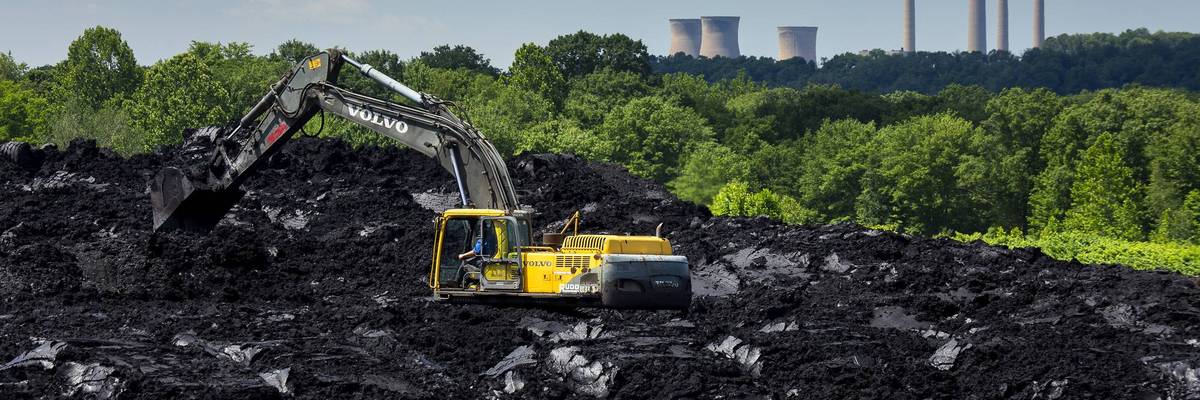
A worker moves coal refuse to be prepared for transport at a land reclamation project site in Center Township, Pennsylvania, with the shuttered Homer City Generating Station in the background, on June 12, 2024.
"Ultimately, if this rule is finalized, human health will suffer, and taxpayers will be left with the cost of cleaning up their rivers and drinking water."
Amid mounting calls for the removal of US Environmental Protection Agency Administrator Lee Zeldin, the EPA chief on Thursday announced proposed changes to coal ash rules, which critics blasted as another gift to polluters at the expense of public health.
Officially called coal combustion residuals (CCR), "coal ash—the toxic byproduct of burning coal—contains hazardous pollutants, including arsenic, boron, cadmium, chromium, lead, radium, and selenium, which are linked to serious health harms such as cancer, heart disease, and brain damage, among other lasting impacts," noted the Natural Resources Defense Council (NRDC).
Specifically, as The Associated Press reported, the EPA "proposed easing standards for monitoring and protecting groundwater near some coal ash sites, rolling back rules forcing the cleanup of entire coal properties instead of just places where ash was dumped. The revisions would also make it easier to reuse coal ash for other purposes."
While Zeldin claimed the "commonsense changes to the CCR regulations reflect EPA's commitment to restoring American energy dominance, strengthening cooperative federalism, and accommodating unique circumstances at certain CCR facilities," Environmental Protection Network's Marc Boom responded that "letting companies avoid cleaning up waste sites that may be leaching toxic metals into groundwater and nearby waterways, while weakening protections and accountability, is not common sense."
"EPA's top priority should be protecting people's health, not sacrificing it for corporate expediency," argued Boom, senior director of public affairs at the group, which is made up of former agency staff. "EPA may call these safeguards 'impractical,' but anyone living downstream of coal ash sites holding thousands of tons of waste knows that requiring cleanup and monitoring is a necessary and basic standard."
NRDC senior attorney Becky Hammer called the pending rollback just "the latest in a long, long, line of Trump administration giveaways to fossil fuels industries," which have also included repealing EPA rules that targeted chemical pollution from coal-fired power plants, declaring a national energy emergency, and scrapping the 2009 "endangerment finding" that underpins all federal climate regulations.
Other advocacy organizations were similarly critical of Thursday's announcement. Daniel Estrin, Waterkeeper Alliance's general counsel and legal director, pointed out that "coal ash is contaminating water at nearly every active and retired coal plant in the US."
"By gutting these safeguards, EPA is abandoning its duty to protect impacted communities by allowing preventable contamination of our rivers, lakes, streams, and groundwater," he said. "The longer the coal industry is allowed to delay closing and cleaning up its toxic waste sites, the more difficult and costly it becomes to fix the damage. By failing to enforce the law, EPA is letting polluters continue harming people and wildlife without accountability."
Like Estrin and Hammer, Earthjustice senior counsel Lisa Evans framed that proposal as "yet another handout to the coal power industry at the expense of our health, water, and wallets," and warned of the dangers of delaying closure and cleanup. She said that "ultimately, if this rule is finalized, human health will suffer, and taxpayers will be left with the cost of cleaning up their rivers and drinking water."
Although "the Trump administration just took a sledgehammer to the health protections in place for toxic coal pollution," Evans added, "Earthjustice has successfully defended these safeguards in court and will do so again."
Nick Torrey, senior attorney at the Southern Environmental Law Center, which has secured commitments to clean up over 270 million tons of coal ash in US communities, similarly said that "doing the bidding of industrial polluters instead of protecting ordinary families and clean water is shameful, but we are ready to keep fighting against coal ash pollution."
"Letting coal-burning utilities set the agenda has been a disaster for communities across the South, resulting in coal ash spills and hundreds of families forced to live on bottled water for years under the threat of coal ash pollution," Torrey highlighted. "The Trump administration and coal ash polluters want to take us back to the bad old days of arsenic, lead, and mercury from coal ash contaminating our water."
In addition to facing a flurry of lawsuits over policies prioritizing the climate-wrecking fossil fuel industry—whose campaign cash helped President Donald Trump return to the White House last year—the administration has recently been hit with demands to remove Zeldin from more than 160 advocacy groups and nearly 300 health experts.
"This EPA's actions to put polluters first, at the expense of our health, are dangerous and will be deadly," states the health experts' open letter, organized and released Thursday by the Climate Action Campaign. "Administrator Zeldin has abandoned his sworn duty and must be held accountable for his agenda."
Dear Common Dreams reader, It’s been nearly 30 years since I co-founded Common Dreams with my late wife, Lina Newhouser. We had the radical notion that journalism should serve the public good, not corporate profits. It was clear to us from the outset what it would take to build such a project. No paid advertisements. No corporate sponsors. No millionaire publisher telling us what to think or do. Many people said we wouldn't last a year, but we proved those doubters wrong. Together with a tremendous team of journalists and dedicated staff, we built an independent media outlet free from the constraints of profits and corporate control. Our mission has always been simple: To inform. To inspire. To ignite change for the common good. Building Common Dreams was not easy. Our survival was never guaranteed. When you take on the most powerful forces—Wall Street greed, fossil fuel industry destruction, Big Tech lobbyists, and uber-rich oligarchs who have spent billions upon billions rigging the economy and democracy in their favor—the only bulwark you have is supporters who believe in your work. But here’s the urgent message from me today. It's never been this bad out there. And it's never been this hard to keep us going. At the very moment Common Dreams is most needed, the threats we face are intensifying. We need your support now more than ever. We don't accept corporate advertising and never will. We don't have a paywall because we don't think people should be blocked from critical news based on their ability to pay. Everything we do is funded by the donations of readers like you. When everyone does the little they can afford, we are strong. But if that support retreats or dries up, so do we. Will you donate now to make sure Common Dreams not only survives but thrives? —Craig Brown, Co-founder |
Amid mounting calls for the removal of US Environmental Protection Agency Administrator Lee Zeldin, the EPA chief on Thursday announced proposed changes to coal ash rules, which critics blasted as another gift to polluters at the expense of public health.
Officially called coal combustion residuals (CCR), "coal ash—the toxic byproduct of burning coal—contains hazardous pollutants, including arsenic, boron, cadmium, chromium, lead, radium, and selenium, which are linked to serious health harms such as cancer, heart disease, and brain damage, among other lasting impacts," noted the Natural Resources Defense Council (NRDC).
Specifically, as The Associated Press reported, the EPA "proposed easing standards for monitoring and protecting groundwater near some coal ash sites, rolling back rules forcing the cleanup of entire coal properties instead of just places where ash was dumped. The revisions would also make it easier to reuse coal ash for other purposes."
While Zeldin claimed the "commonsense changes to the CCR regulations reflect EPA's commitment to restoring American energy dominance, strengthening cooperative federalism, and accommodating unique circumstances at certain CCR facilities," Environmental Protection Network's Marc Boom responded that "letting companies avoid cleaning up waste sites that may be leaching toxic metals into groundwater and nearby waterways, while weakening protections and accountability, is not common sense."
"EPA's top priority should be protecting people's health, not sacrificing it for corporate expediency," argued Boom, senior director of public affairs at the group, which is made up of former agency staff. "EPA may call these safeguards 'impractical,' but anyone living downstream of coal ash sites holding thousands of tons of waste knows that requiring cleanup and monitoring is a necessary and basic standard."
NRDC senior attorney Becky Hammer called the pending rollback just "the latest in a long, long, line of Trump administration giveaways to fossil fuels industries," which have also included repealing EPA rules that targeted chemical pollution from coal-fired power plants, declaring a national energy emergency, and scrapping the 2009 "endangerment finding" that underpins all federal climate regulations.
Other advocacy organizations were similarly critical of Thursday's announcement. Daniel Estrin, Waterkeeper Alliance's general counsel and legal director, pointed out that "coal ash is contaminating water at nearly every active and retired coal plant in the US."
"By gutting these safeguards, EPA is abandoning its duty to protect impacted communities by allowing preventable contamination of our rivers, lakes, streams, and groundwater," he said. "The longer the coal industry is allowed to delay closing and cleaning up its toxic waste sites, the more difficult and costly it becomes to fix the damage. By failing to enforce the law, EPA is letting polluters continue harming people and wildlife without accountability."
Like Estrin and Hammer, Earthjustice senior counsel Lisa Evans framed that proposal as "yet another handout to the coal power industry at the expense of our health, water, and wallets," and warned of the dangers of delaying closure and cleanup. She said that "ultimately, if this rule is finalized, human health will suffer, and taxpayers will be left with the cost of cleaning up their rivers and drinking water."
Although "the Trump administration just took a sledgehammer to the health protections in place for toxic coal pollution," Evans added, "Earthjustice has successfully defended these safeguards in court and will do so again."
Nick Torrey, senior attorney at the Southern Environmental Law Center, which has secured commitments to clean up over 270 million tons of coal ash in US communities, similarly said that "doing the bidding of industrial polluters instead of protecting ordinary families and clean water is shameful, but we are ready to keep fighting against coal ash pollution."
"Letting coal-burning utilities set the agenda has been a disaster for communities across the South, resulting in coal ash spills and hundreds of families forced to live on bottled water for years under the threat of coal ash pollution," Torrey highlighted. "The Trump administration and coal ash polluters want to take us back to the bad old days of arsenic, lead, and mercury from coal ash contaminating our water."
In addition to facing a flurry of lawsuits over policies prioritizing the climate-wrecking fossil fuel industry—whose campaign cash helped President Donald Trump return to the White House last year—the administration has recently been hit with demands to remove Zeldin from more than 160 advocacy groups and nearly 300 health experts.
"This EPA's actions to put polluters first, at the expense of our health, are dangerous and will be deadly," states the health experts' open letter, organized and released Thursday by the Climate Action Campaign. "Administrator Zeldin has abandoned his sworn duty and must be held accountable for his agenda."
Amid mounting calls for the removal of US Environmental Protection Agency Administrator Lee Zeldin, the EPA chief on Thursday announced proposed changes to coal ash rules, which critics blasted as another gift to polluters at the expense of public health.
Officially called coal combustion residuals (CCR), "coal ash—the toxic byproduct of burning coal—contains hazardous pollutants, including arsenic, boron, cadmium, chromium, lead, radium, and selenium, which are linked to serious health harms such as cancer, heart disease, and brain damage, among other lasting impacts," noted the Natural Resources Defense Council (NRDC).
Specifically, as The Associated Press reported, the EPA "proposed easing standards for monitoring and protecting groundwater near some coal ash sites, rolling back rules forcing the cleanup of entire coal properties instead of just places where ash was dumped. The revisions would also make it easier to reuse coal ash for other purposes."
While Zeldin claimed the "commonsense changes to the CCR regulations reflect EPA's commitment to restoring American energy dominance, strengthening cooperative federalism, and accommodating unique circumstances at certain CCR facilities," Environmental Protection Network's Marc Boom responded that "letting companies avoid cleaning up waste sites that may be leaching toxic metals into groundwater and nearby waterways, while weakening protections and accountability, is not common sense."
"EPA's top priority should be protecting people's health, not sacrificing it for corporate expediency," argued Boom, senior director of public affairs at the group, which is made up of former agency staff. "EPA may call these safeguards 'impractical,' but anyone living downstream of coal ash sites holding thousands of tons of waste knows that requiring cleanup and monitoring is a necessary and basic standard."
NRDC senior attorney Becky Hammer called the pending rollback just "the latest in a long, long, line of Trump administration giveaways to fossil fuels industries," which have also included repealing EPA rules that targeted chemical pollution from coal-fired power plants, declaring a national energy emergency, and scrapping the 2009 "endangerment finding" that underpins all federal climate regulations.
Other advocacy organizations were similarly critical of Thursday's announcement. Daniel Estrin, Waterkeeper Alliance's general counsel and legal director, pointed out that "coal ash is contaminating water at nearly every active and retired coal plant in the US."
"By gutting these safeguards, EPA is abandoning its duty to protect impacted communities by allowing preventable contamination of our rivers, lakes, streams, and groundwater," he said. "The longer the coal industry is allowed to delay closing and cleaning up its toxic waste sites, the more difficult and costly it becomes to fix the damage. By failing to enforce the law, EPA is letting polluters continue harming people and wildlife without accountability."
Like Estrin and Hammer, Earthjustice senior counsel Lisa Evans framed that proposal as "yet another handout to the coal power industry at the expense of our health, water, and wallets," and warned of the dangers of delaying closure and cleanup. She said that "ultimately, if this rule is finalized, human health will suffer, and taxpayers will be left with the cost of cleaning up their rivers and drinking water."
Although "the Trump administration just took a sledgehammer to the health protections in place for toxic coal pollution," Evans added, "Earthjustice has successfully defended these safeguards in court and will do so again."
Nick Torrey, senior attorney at the Southern Environmental Law Center, which has secured commitments to clean up over 270 million tons of coal ash in US communities, similarly said that "doing the bidding of industrial polluters instead of protecting ordinary families and clean water is shameful, but we are ready to keep fighting against coal ash pollution."
"Letting coal-burning utilities set the agenda has been a disaster for communities across the South, resulting in coal ash spills and hundreds of families forced to live on bottled water for years under the threat of coal ash pollution," Torrey highlighted. "The Trump administration and coal ash polluters want to take us back to the bad old days of arsenic, lead, and mercury from coal ash contaminating our water."
In addition to facing a flurry of lawsuits over policies prioritizing the climate-wrecking fossil fuel industry—whose campaign cash helped President Donald Trump return to the White House last year—the administration has recently been hit with demands to remove Zeldin from more than 160 advocacy groups and nearly 300 health experts.
"This EPA's actions to put polluters first, at the expense of our health, are dangerous and will be deadly," states the health experts' open letter, organized and released Thursday by the Climate Action Campaign. "Administrator Zeldin has abandoned his sworn duty and must be held accountable for his agenda."