
SUBSCRIBE TO OUR FREE NEWSLETTER
Daily news & progressive opinion—funded by the people, not the corporations—delivered straight to your inbox.
5
#000000
#FFFFFF
To donate by check, phone, or other method, see our More Ways to Give page.


Daily news & progressive opinion—funded by the people, not the corporations—delivered straight to your inbox.
"Ultra-deep-water drilling is ultradangerous, full stop," said an attorney with the Center for Biological Diversity.
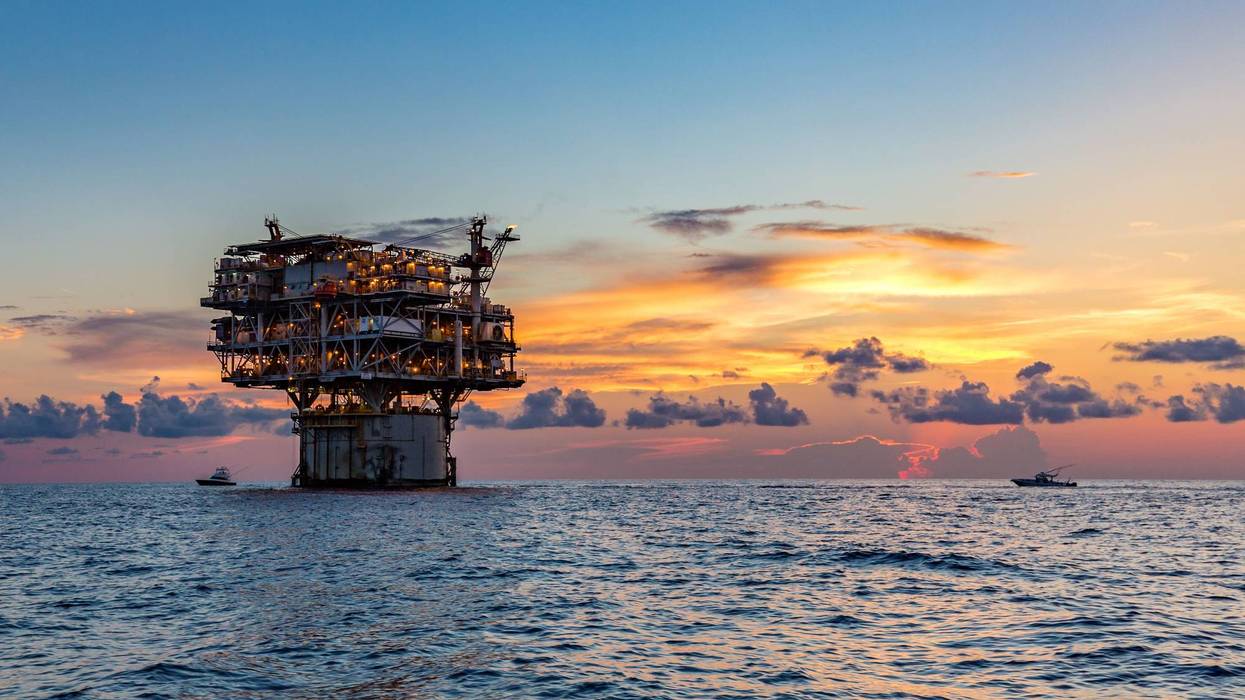
Determined to prevent a "sequel" to the worst oil spill in US history, BP's deadly Deepwater Horizon disaster in the Gulf of Mexico in 2010, six environmental protection groups on Monday sued the Trump administration over what they said was its illegal approval of the British fossil fuel giant's $5 billion plan to drill in the body of water's lowest depths off the coat of Louisiana.
BP has boasted that its planned Kaskida oil field is a "world-class project that reflects decades of technological innovation," but environmental legal firm Earthjustice argued that the company has failed to prove its has the "experience, expertise, and certified equipment to conduct safe drilling under extreme conditions" in waters deeper than 5,600 feet, where opponents of the plan say extreme pressure and temperatures will make a blowout and oil spill more likely than they'd be in a typical drilling project.
A "loss of well control" was blamed for the Deepwater Horizon explosion and spill that killed 11 people, harmed and killed more than 100,000 birds and marine animals as well as untold numbers of fish, and devastated local economies—and that type of accident is 6-7 times more likely in an ultra-deep drilling project like Kaskida, according to Earthjustice.
The organization wrote in a regulatory filing last year when it was trying to block the project that "deep-water and ultra-deep-water oil spills and accidents are also much more difficult to respond to and contain.”
"BP did not show in its proposals that it will have the necessary containment capabilities in case the company needs to stop a blown-out well from spilling 4.5 million barrels of oil or more across the Gulf."
The group is representing Healthy Gulf, Turtle Island Restoration Network, Habitat Recovery Project, Sierra Club, and Center for Biological Diversity in the lawsuit, which argues that President Donald Trump's Interior Department adopted in its environmental analysis of Kaskida a severe underestimation—by about half a million barrels of oil—of what a worst-case scenario oil spill would look like.
"BP did not show in its proposals that it will have the necessary containment capabilities in case the company needs to stop a blown-out well from spilling 4.5 million barrels of oil or more across the Gulf," said Earthjustice.
Rachel Mathews, a senior attorney with the Center for Biological Diversity, said it was "appalling that the Trump administration has authorized this deep-water drilling project without having information critical to preventing harm to marine life."
“This will put Rice’s whales, sea turtles, and other Gulf wildlife at terrible risk," said Mathews. "Ultra-deep-water drilling is ultradangerous, full stop.”
The Bureau of Ocean Energy Management's (BOEM) approval of the Kaskida project was preceded by several industry-friendly actions by the Trump administration, including a meeting last month of the federal Endangered Species Committee, which voted to exempt fossil fuel companies from following policies intended to protect endangered species in the Gulf. Advocates argued that the decision was made illegally because the panel is required to meet publicly.
The administration has also proposed weakening "well control" rules for offshore drilling operations, and the White House is consolidating the BOEM and the Bureau of Safety and Environmental Enforcement—two agencies that were intentionally separated following the Deepwater Horizon disaster after an investigative commission found that conflicts of interest were created when they acted as one regulatory agency.
“Kaskida is emblematic of a new era in offshore oil extraction: corporate hoarding of risky, ultra-deep water leases in an attempt to monopolize the future of oil production, with little to no oversight from the Trump administration. We, as citizens of the Gulf South, are not standing for it,” said Martha Collins, executive director of Healthy Gulf. “BP has shown how they handle oil spills on this anniversary of the Deepwater Horizon disaster—their risky drilling and inexperience at this great depth will ensure their continued legacy of the Gulf never being the same again.”
Despite the fact that the Trump administration has taken numerous actions to ramp up oil and gas production—as the US already produces record amounts of fossil fuels—those measures are doing little to reduce oil prices, noted Earthjustice.
“Offshore drilling is one of the riskiest kinds of oil extraction, but the Trump administration is ignoring the law to allow Big Oil CEOs to endanger coastal communities for the sake of corporate profit,” said Devorah Ancel, senior attorney at Sierra Club’s Environmental Law Program. “This permit would allow BP to develop multiple ultra-deep high-pressure wells, which is already exceptionally risky, and with BP’s track record in the Gulf, coastal ecosystems face extraordinary danger. We’re suing the Trump administration to ensure the coastal communities that would suffer the consequences of BP’s actions get their day in court.”
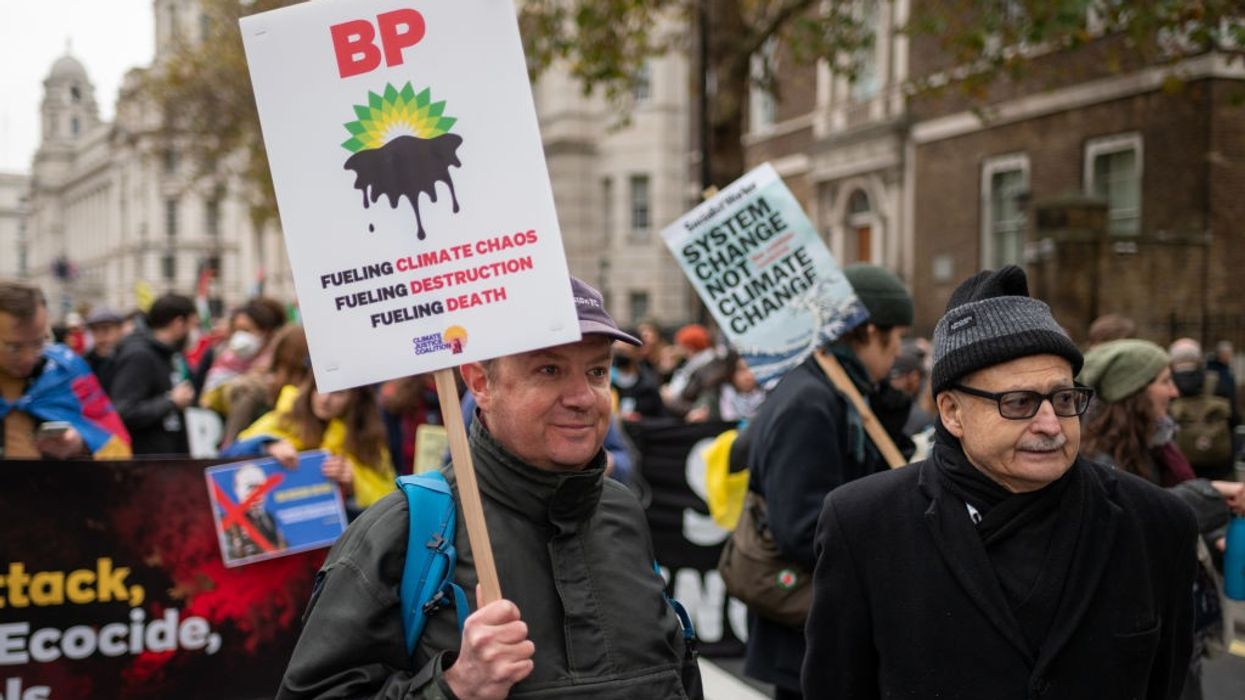
"By facilitating the transport of oil that fuels military operations in Gaza, BP has contributed to the humanitarian catastrophe unfolding in the region," said the director of the organization backing the claimants.
A group of Palestinians whose family members have been killed in Israeli attacks on the Gaza Strip over the past 14 months have initiated legal action in the United Kingdom against the British fossil fuel giant BP, arguing the company is aiding the assault on the enclave via its ownership of a pipeline that provides Israel with crude oil.
In a 36-page letter before claim, the group contends that BP's role in supplying oil to Israel violates the company's stated commitments to human rights, including its expressed support for the United Nations Guiding Principles on Business and Human Rights.
"Israel relies heavily on crude oil and refined petroleum imports to run its large fleet of fighter jets, tanks, and other military vehicles and operations, as well as the bulldozers implicated in clearing Palestinian homes and olive groves to make way for unlawful Israeli settlements," the letter notes. "Some fuel from refineries goes directly to the armed forces, while much of the rest appears to go to ordinary gas stations where military personnel can refuel their vehicles under a government contract."
The group demands from BP an "immediate cessation of oil supply to Israel and facilitation through" the Baku-Tbilisi-Ceyhan pipeline as well as an "admission liability and a commitment to mediation for assessing damages."
"Our clients seek justice for the profound suffering and loss they have endured and call on BP to act responsibly by immediately halting its involvement."
Tayab Ali, head of international law at Bindmans LLP and director of the International Centre of Justice for Palestinians (ICJP)—which is supporting the group of claimants—said in a statement Monday that "this legal action marks a new phase in accountability for those that are complicit in alleged war crimes and crimes against humanity."
"The evidence against BP demonstrates a clear failure to adhere to its own human rights policies and international law," said Ali. "By facilitating the transport of oil that fuels military operations in Gaza, BP has contributed to the humanitarian catastrophe unfolding in the region. Our clients seek justice for the profound suffering and loss they have endured and call on BP to act responsibly by immediately halting its involvement."
According to ICJP, the claimants include "a British citizen of Palestinian origin who lost 16 family members to Israeli airstrikes," "a second British Palestinian claimant whose relatives in Gaza have suffered fatalities and displacement," and "additional claimants who have endured catastrophic physical and psychological harm including amputations and loss of family members."
The group sent its legal letter just over a month after a coalition of environmental groups published a report identifying BP as one of the "top corporate suppliers of oil to Israel."
"The major international oil companies, including BP, Chevron, Eni, ExxonMobil, Shell, and TotalEnergies, may be linked to 35% of
the crude oil supplied to Israel since October [2023]," the report states. "These companies, as well as state-owned entities and other private and publicly traded oil producers, profit from supplying oil to Israel's refineries, where a proportion is likely refined into fuels for Israel's war machine."
Last week, the Centre for Research on Multinational Corporations argued that "foreign governments have an obligation" under international law "to end the supply of fuel to Israel unless they can guarantee it will only be used for nonmilitary purposes."
"This includes both a ban on the export of crude oil, military jet fuel, and other fuels, as well as a prohibition on the transport of these commodities through their territory," the group said.
"The complicity of international corporations and governments in fueling Israel's war machine represents the latest chapter in a long history of fossil fuel companies enabling genocide and mass atrocities," said one campaigner.
On the fourth day of the United Nations Climate Change Conference, or COP29, in Azerbaijan, green groups highlighted how fossil fuel companies "enable and profit from Israel's genocide in Gaza," continuing "a long history of the industry's complicity in mass atrocities worldwide."
"The fossil fuel industry is culpable in death and destruction around the world, not only through the climate crisis they cause but through the violence they fuel," Oil Change International said in a statement Thursday.
"Every shipment of oil to Israel carries the weight of Palestinian lives."
The group—along with others including Friends of the Earth Palestine/PENGON and Tipping Point U.K.—is seizing the opportunity presented by COP29 to draw attention to an aspect of the Gaza war often overlooked amid the staggering death and destruction wrought by Israel's 13-month onslaught, which a United Nations panel on Thursday
said is consistent with the "characteristics of genocide."
"Investor-owned and private oil companies supply 66% of oil to Israel—more than a third of that from major oil companies like Chevron, Shell, and BP—despite genocide warnings from the International Court of Justice," Oil Change said. "BP is among the top corporate suppliers of oil to Israel. It operates and is the largest owner of the BTC pipeline, which transports Azeri oil that is ultimately sent to Israel."
The BTC pipeline runs from Baku—the Azeri capital and COP29 host city on the Caspian Sea—through Azerbaijan, Georgia, and Turkey and, according to Oil Change, supplies Israel with 28% of its oil, belying Thursday's claim by Turkish President Recep Tayyip Erdoğan that the country has severed all ties with Israel.
An
investigation published in September by Energy Embargo for Palestine showed how oil transported via the BTC pipeline is refined into jet fuel for Israel Defense Forces warplanes.
Oil Change continued:
BP has also been granted gas exploration licenses in occupied Palestinian waters. By providing it with fuel, BP enables the Israeli government to commit genocide in Gaza. Chevron operates and partially owns the two largest Israeli-claimed fossil gas fields, Tamar and Leviathan, making it the main international actor extracting fossil gas claimed by Israel in the Mediterranean. In 2022, 70% of Israel's power was generated from fossil gas extracted by Chevron. Through the millions of dollars it pays Israel for its gas extraction licenses, Chevron is also directly contributing to financing Israel's regime of genocide, apartheid, settler colonialism, and occupation.
"The complicity of international corporations and governments in fueling Israel's war machine represents the latest chapter in a long history of fossil fuel companies enabling genocide and mass atrocities,"
Mohammed Usrof, a member of the Palestinian Youth Climate Negotiation Team at COP29 who lost 21 relatives to Israel's onslaught, said in a statement Thursday. "Every shipment of oil to Israel carries the weight of Palestinian lives."
Tipping Point U.K. organizer Sadie DeCost said that "BP originated as a key enabler of the British empire, and continues as one of the top 10 largest carbon emitters in the world."
"It operates and is the largest owner of the BTC pipeline, which ships Azeri oil to fuel Israel's genocide in Gaza," DeCost added. "BP's historic colonial harms continue through its support of violent regimes. Its emissions are estimated to cause hundreds of billions of dollars of loss and damage. We must shut down BP to end this injustice, and demand climate reparations for impacted communities around the world."
Mahmoud Nawajaa, general coordinator of the Boycott, Divestment, and Sanctions movement for Palestinian rights, lamented that "criminal fossil fuel companies that have shamefully been invited to join COP29 are not only responsible for destroying the planet, they are also responsible for fueling genocide and other atrocity crimes around the world, from Gaza to Myanmar to the Amazon region."
"Prime among these is Chevron, [which] continues to supply Israel and its military with energy and millions of dollars in tax revenues through fossil fuel extraction activities in the Mediterranean," Nawajaa added.
Oil Change International U.S. campaign manager Allie Rosenbluth asserted Thursday that "the fossil fuel industry is not just destroying our climate—it's actively profiting from genocide."
"These companies and the governments enabling them know exactly how their supplies are being used against Palestinian civilians," she continued. "Palestinian groups and their allies around the world have called for an energy and arms embargo demanding governments and companies cease all fuel and arms shipments to Israel until it ends the genocide and its regime of apartheid against the Palestinian people."
"The fossil fuel industry is not just destroying our climate—it's actively profiting from genocide."
"Despite these strong demands, the U.S. continues to be a key supplier of JP8 jet fuel to Israel, which is crucial for its military operations," Rosenbluth added. "This isn't just business—it's complicity in mass atrocities."
Oil Change noted that while many governments have prioritized profit and national interest over human rights in Palestine, Colombia—which is led by leftist President Gustavo Petro—"has set a strong precedent and issued an embargo on coal exports to Israel" as part of a broader suspension of relations due to the Gaza onslaught.
This is more than just a symbolic move, as Israel imports more than half of its coal from Colombia.
"Others must follow suit," Oil Change stressed.