SUBSCRIBE TO OUR FREE NEWSLETTER
Daily news & progressive opinion—funded by the people, not the corporations—delivered straight to your inbox.
5
#000000
#FFFFFF
To donate by check, phone, or other method, see our More Ways to Give page.
Daily news & progressive opinion—funded by the people, not the corporations—delivered straight to your inbox.
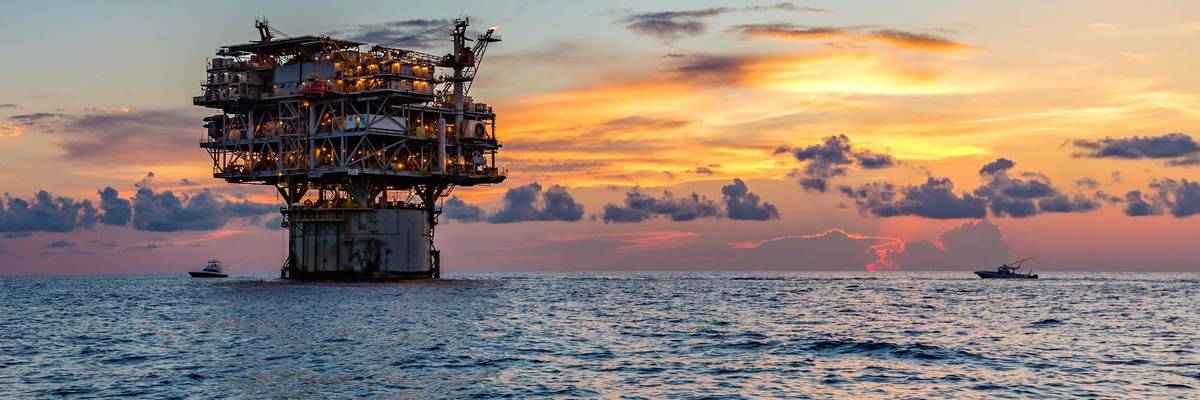
Private fishing boats are seen near an offshore petroleum drilling rig in the Gulf of Mexico in August 7, 2020.
"Ultra-deep-water drilling is ultradangerous, full stop," said an attorney with the Center for Biological Diversity.
Determined to prevent a "sequel" to the worst oil spill in US history, BP's deadly Deepwater Horizon disaster in the Gulf of Mexico in 2010, six environmental protection groups on Monday sued the Trump administration over what they said was its illegal approval of the British fossil fuel giant's $5 billion plan to drill in the body of water's lowest depths off the coast of Louisiana.
BP has boasted that its planned Kaskida oil field is a "world-class project that reflects decades of technological innovation," but environmental legal firm Earthjustice argued that the company has failed to prove its has the "experience, expertise, and certified equipment to conduct safe drilling under extreme conditions" in waters deeper than 5,600 feet, where opponents of the plan say extreme pressure and temperatures will make a blowout and oil spill more likely than they'd be in a typical drilling project.
A "loss of well control" was blamed for the Deepwater Horizon explosion and spill that killed 11 people, harmed and killed more than 100,000 birds and marine animals as well as untold numbers of fish, and devastated local economies—and that type of accident is 6-7 times more likely in an ultra-deep drilling project like Kaskida, according to Earthjustice.
The organization wrote in a regulatory filing last year when it was trying to block the project that "deep-water and ultra-deep-water oil spills and accidents are also much more difficult to respond to and contain.”
"BP did not show in its proposals that it will have the necessary containment capabilities in case the company needs to stop a blown-out well from spilling 4.5 million barrels of oil or more across the Gulf."
The group is representing Healthy Gulf, Turtle Island Restoration Network, Habitat Recovery Project, Sierra Club, and Center for Biological Diversity in the lawsuit, which argues that President Donald Trump's Interior Department adopted in its environmental analysis of Kaskida a severe underestimation—by about half a million barrels of oil—of what a worst-case scenario oil spill would look like.
"BP did not show in its proposals that it will have the necessary containment capabilities in case the company needs to stop a blown-out well from spilling 4.5 million barrels of oil or more across the Gulf," said Earthjustice.
Rachel Mathews, a senior attorney with the Center for Biological Diversity, said it was "appalling that the Trump administration has authorized this deep-water drilling project without having information critical to preventing harm to marine life."
“This will put Rice’s whales, sea turtles, and other Gulf wildlife at terrible risk," said Mathews. "Ultra-deep-water drilling is ultradangerous, full stop.”
The Bureau of Ocean Energy Management's (BOEM) approval of the Kaskida project was preceded by several industry-friendly actions by the Trump administration, including a meeting last month of the federal Endangered Species Committee, which voted to exempt fossil fuel companies from following policies intended to protect endangered species in the Gulf. Advocates argued that the decision was made illegally because the panel is required to meet publicly.
The administration has also proposed weakening "well control" rules for offshore drilling operations, and the White House is consolidating the BOEM and the Bureau of Safety and Environmental Enforcement—two agencies that were intentionally separated following the Deepwater Horizon disaster after an investigative commission found that conflicts of interest were created when they acted as one regulatory agency.
“Kaskida is emblematic of a new era in offshore oil extraction: corporate hoarding of risky, ultra-deep water leases in an attempt to monopolize the future of oil production, with little to no oversight from the Trump administration. We, as citizens of the Gulf South, are not standing for it,” said Martha Collins, executive director of Healthy Gulf. “BP has shown how they handle oil spills on this anniversary of the Deepwater Horizon disaster—their risky drilling and inexperience at this great depth will ensure their continued legacy of the Gulf never being the same again.”
Despite the fact that the Trump administration has taken numerous actions to ramp up oil and gas production—as the US already produces record amounts of fossil fuels—those measures are doing little to reduce oil prices, noted Earthjustice.
“Offshore drilling is one of the riskiest kinds of oil extraction, but the Trump administration is ignoring the law to allow Big Oil CEOs to endanger coastal communities for the sake of corporate profit,” said Devorah Ancel, senior attorney at Sierra Club’s Environmental Law Program. “This permit would allow BP to develop multiple ultra-deep high-pressure wells, which is already exceptionally risky, and with BP’s track record in the Gulf, coastal ecosystems face extraordinary danger. We’re suing the Trump administration to ensure the coastal communities that would suffer the consequences of BP’s actions get their day in court.”
Dear Common Dreams reader, It’s been nearly 30 years since I co-founded Common Dreams with my late wife, Lina Newhouser. We had the radical notion that journalism should serve the public good, not corporate profits. It was clear to us from the outset what it would take to build such a project. No paid advertisements. No corporate sponsors. No millionaire publisher telling us what to think or do. Many people said we wouldn't last a year, but we proved those doubters wrong. Together with a tremendous team of journalists and dedicated staff, we built an independent media outlet free from the constraints of profits and corporate control. Our mission has always been simple: To inform. To inspire. To ignite change for the common good. Building Common Dreams was not easy. Our survival was never guaranteed. When you take on the most powerful forces—Wall Street greed, fossil fuel industry destruction, Big Tech lobbyists, and uber-rich oligarchs who have spent billions upon billions rigging the economy and democracy in their favor—the only bulwark you have is supporters who believe in your work. But here’s the urgent message from me today. It's never been this bad out there. And it's never been this hard to keep us going. At the very moment Common Dreams is most needed, the threats we face are intensifying. We need your support now more than ever. We don't accept corporate advertising and never will. We don't have a paywall because we don't think people should be blocked from critical news based on their ability to pay. Everything we do is funded by the donations of readers like you. When everyone does the little they can afford, we are strong. But if that support retreats or dries up, so do we. Will you donate now to make sure Common Dreams not only survives but thrives? —Craig Brown, Co-founder |
Determined to prevent a "sequel" to the worst oil spill in US history, BP's deadly Deepwater Horizon disaster in the Gulf of Mexico in 2010, six environmental protection groups on Monday sued the Trump administration over what they said was its illegal approval of the British fossil fuel giant's $5 billion plan to drill in the body of water's lowest depths off the coast of Louisiana.
BP has boasted that its planned Kaskida oil field is a "world-class project that reflects decades of technological innovation," but environmental legal firm Earthjustice argued that the company has failed to prove its has the "experience, expertise, and certified equipment to conduct safe drilling under extreme conditions" in waters deeper than 5,600 feet, where opponents of the plan say extreme pressure and temperatures will make a blowout and oil spill more likely than they'd be in a typical drilling project.
A "loss of well control" was blamed for the Deepwater Horizon explosion and spill that killed 11 people, harmed and killed more than 100,000 birds and marine animals as well as untold numbers of fish, and devastated local economies—and that type of accident is 6-7 times more likely in an ultra-deep drilling project like Kaskida, according to Earthjustice.
The organization wrote in a regulatory filing last year when it was trying to block the project that "deep-water and ultra-deep-water oil spills and accidents are also much more difficult to respond to and contain.”
"BP did not show in its proposals that it will have the necessary containment capabilities in case the company needs to stop a blown-out well from spilling 4.5 million barrels of oil or more across the Gulf."
The group is representing Healthy Gulf, Turtle Island Restoration Network, Habitat Recovery Project, Sierra Club, and Center for Biological Diversity in the lawsuit, which argues that President Donald Trump's Interior Department adopted in its environmental analysis of Kaskida a severe underestimation—by about half a million barrels of oil—of what a worst-case scenario oil spill would look like.
"BP did not show in its proposals that it will have the necessary containment capabilities in case the company needs to stop a blown-out well from spilling 4.5 million barrels of oil or more across the Gulf," said Earthjustice.
Rachel Mathews, a senior attorney with the Center for Biological Diversity, said it was "appalling that the Trump administration has authorized this deep-water drilling project without having information critical to preventing harm to marine life."
“This will put Rice’s whales, sea turtles, and other Gulf wildlife at terrible risk," said Mathews. "Ultra-deep-water drilling is ultradangerous, full stop.”
The Bureau of Ocean Energy Management's (BOEM) approval of the Kaskida project was preceded by several industry-friendly actions by the Trump administration, including a meeting last month of the federal Endangered Species Committee, which voted to exempt fossil fuel companies from following policies intended to protect endangered species in the Gulf. Advocates argued that the decision was made illegally because the panel is required to meet publicly.
The administration has also proposed weakening "well control" rules for offshore drilling operations, and the White House is consolidating the BOEM and the Bureau of Safety and Environmental Enforcement—two agencies that were intentionally separated following the Deepwater Horizon disaster after an investigative commission found that conflicts of interest were created when they acted as one regulatory agency.
“Kaskida is emblematic of a new era in offshore oil extraction: corporate hoarding of risky, ultra-deep water leases in an attempt to monopolize the future of oil production, with little to no oversight from the Trump administration. We, as citizens of the Gulf South, are not standing for it,” said Martha Collins, executive director of Healthy Gulf. “BP has shown how they handle oil spills on this anniversary of the Deepwater Horizon disaster—their risky drilling and inexperience at this great depth will ensure their continued legacy of the Gulf never being the same again.”
Despite the fact that the Trump administration has taken numerous actions to ramp up oil and gas production—as the US already produces record amounts of fossil fuels—those measures are doing little to reduce oil prices, noted Earthjustice.
“Offshore drilling is one of the riskiest kinds of oil extraction, but the Trump administration is ignoring the law to allow Big Oil CEOs to endanger coastal communities for the sake of corporate profit,” said Devorah Ancel, senior attorney at Sierra Club’s Environmental Law Program. “This permit would allow BP to develop multiple ultra-deep high-pressure wells, which is already exceptionally risky, and with BP’s track record in the Gulf, coastal ecosystems face extraordinary danger. We’re suing the Trump administration to ensure the coastal communities that would suffer the consequences of BP’s actions get their day in court.”
Determined to prevent a "sequel" to the worst oil spill in US history, BP's deadly Deepwater Horizon disaster in the Gulf of Mexico in 2010, six environmental protection groups on Monday sued the Trump administration over what they said was its illegal approval of the British fossil fuel giant's $5 billion plan to drill in the body of water's lowest depths off the coast of Louisiana.
BP has boasted that its planned Kaskida oil field is a "world-class project that reflects decades of technological innovation," but environmental legal firm Earthjustice argued that the company has failed to prove its has the "experience, expertise, and certified equipment to conduct safe drilling under extreme conditions" in waters deeper than 5,600 feet, where opponents of the plan say extreme pressure and temperatures will make a blowout and oil spill more likely than they'd be in a typical drilling project.
A "loss of well control" was blamed for the Deepwater Horizon explosion and spill that killed 11 people, harmed and killed more than 100,000 birds and marine animals as well as untold numbers of fish, and devastated local economies—and that type of accident is 6-7 times more likely in an ultra-deep drilling project like Kaskida, according to Earthjustice.
The organization wrote in a regulatory filing last year when it was trying to block the project that "deep-water and ultra-deep-water oil spills and accidents are also much more difficult to respond to and contain.”
"BP did not show in its proposals that it will have the necessary containment capabilities in case the company needs to stop a blown-out well from spilling 4.5 million barrels of oil or more across the Gulf."
The group is representing Healthy Gulf, Turtle Island Restoration Network, Habitat Recovery Project, Sierra Club, and Center for Biological Diversity in the lawsuit, which argues that President Donald Trump's Interior Department adopted in its environmental analysis of Kaskida a severe underestimation—by about half a million barrels of oil—of what a worst-case scenario oil spill would look like.
"BP did not show in its proposals that it will have the necessary containment capabilities in case the company needs to stop a blown-out well from spilling 4.5 million barrels of oil or more across the Gulf," said Earthjustice.
Rachel Mathews, a senior attorney with the Center for Biological Diversity, said it was "appalling that the Trump administration has authorized this deep-water drilling project without having information critical to preventing harm to marine life."
“This will put Rice’s whales, sea turtles, and other Gulf wildlife at terrible risk," said Mathews. "Ultra-deep-water drilling is ultradangerous, full stop.”
The Bureau of Ocean Energy Management's (BOEM) approval of the Kaskida project was preceded by several industry-friendly actions by the Trump administration, including a meeting last month of the federal Endangered Species Committee, which voted to exempt fossil fuel companies from following policies intended to protect endangered species in the Gulf. Advocates argued that the decision was made illegally because the panel is required to meet publicly.
The administration has also proposed weakening "well control" rules for offshore drilling operations, and the White House is consolidating the BOEM and the Bureau of Safety and Environmental Enforcement—two agencies that were intentionally separated following the Deepwater Horizon disaster after an investigative commission found that conflicts of interest were created when they acted as one regulatory agency.
“Kaskida is emblematic of a new era in offshore oil extraction: corporate hoarding of risky, ultra-deep water leases in an attempt to monopolize the future of oil production, with little to no oversight from the Trump administration. We, as citizens of the Gulf South, are not standing for it,” said Martha Collins, executive director of Healthy Gulf. “BP has shown how they handle oil spills on this anniversary of the Deepwater Horizon disaster—their risky drilling and inexperience at this great depth will ensure their continued legacy of the Gulf never being the same again.”
Despite the fact that the Trump administration has taken numerous actions to ramp up oil and gas production—as the US already produces record amounts of fossil fuels—those measures are doing little to reduce oil prices, noted Earthjustice.
“Offshore drilling is one of the riskiest kinds of oil extraction, but the Trump administration is ignoring the law to allow Big Oil CEOs to endanger coastal communities for the sake of corporate profit,” said Devorah Ancel, senior attorney at Sierra Club’s Environmental Law Program. “This permit would allow BP to develop multiple ultra-deep high-pressure wells, which is already exceptionally risky, and with BP’s track record in the Gulf, coastal ecosystems face extraordinary danger. We’re suing the Trump administration to ensure the coastal communities that would suffer the consequences of BP’s actions get their day in court.”