

SUBSCRIBE TO OUR FREE NEWSLETTER
Daily news & progressive opinion—funded by the people, not the corporations—delivered straight to your inbox.
5
#000000
#FFFFFF
To donate by check, phone, or other method, see our More Ways to Give page.
Daily news & progressive opinion—funded by the people, not the corporations—delivered straight to your inbox.
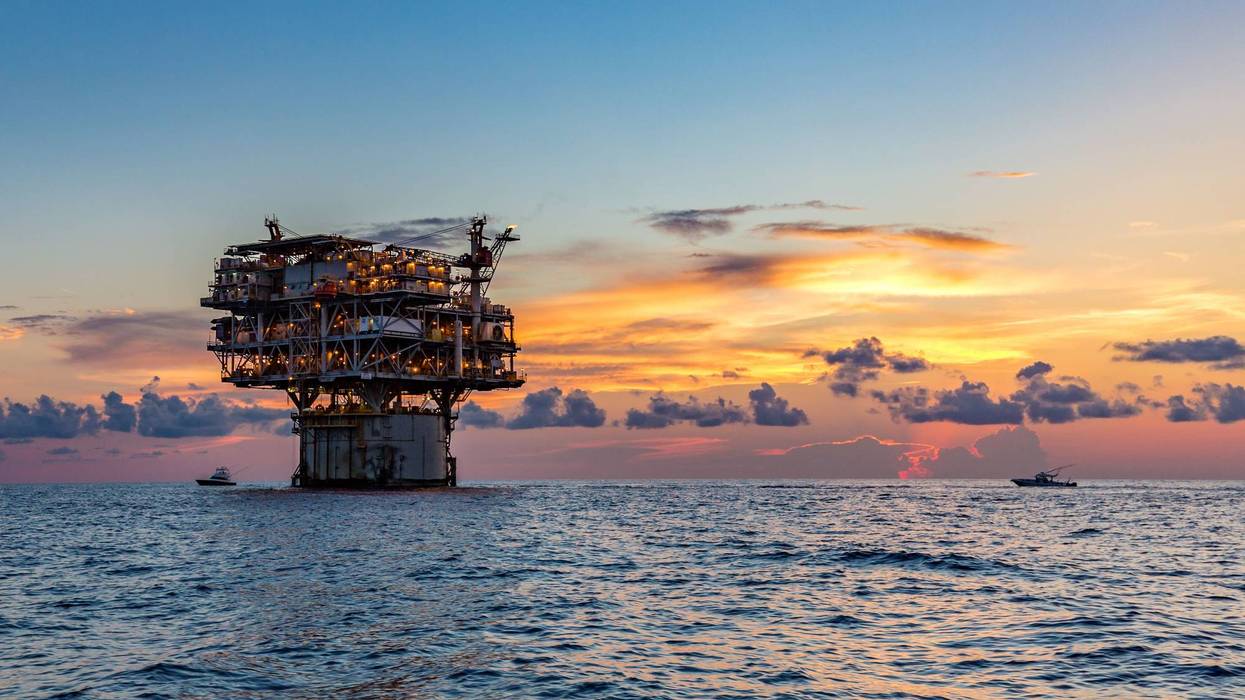
"Ultra-deep-water drilling is ultradangerous, full stop," said an attorney with the Center for Biological Diversity.
Determined to prevent a "sequel" to the worst oil spill in US history, BP's deadly Deepwater Horizon disaster in the Gulf of Mexico in 2010, six environmental protection groups on Monday sued the Trump administration over what they said was its illegal approval of the British fossil fuel giant's $5 billion plan to drill in the body of water's lowest depths off the coast of Louisiana.
BP has boasted that its planned Kaskida oil field is a "world-class project that reflects decades of technological innovation," but environmental legal firm Earthjustice argued that the company has failed to prove its has the "experience, expertise, and certified equipment to conduct safe drilling under extreme conditions" in waters deeper than 5,600 feet, where opponents of the plan say extreme pressure and temperatures will make a blowout and oil spill more likely than they'd be in a typical drilling project.
A "loss of well control" was blamed for the Deepwater Horizon explosion and spill that killed 11 people, harmed and killed more than 100,000 birds and marine animals as well as untold numbers of fish, and devastated local economies—and that type of accident is 6-7 times more likely in an ultra-deep drilling project like Kaskida, according to Earthjustice.
The organization wrote in a regulatory filing last year when it was trying to block the project that "deep-water and ultra-deep-water oil spills and accidents are also much more difficult to respond to and contain.”
"BP did not show in its proposals that it will have the necessary containment capabilities in case the company needs to stop a blown-out well from spilling 4.5 million barrels of oil or more across the Gulf."
The group is representing Healthy Gulf, Turtle Island Restoration Network, Habitat Recovery Project, Sierra Club, and Center for Biological Diversity in the lawsuit, which argues that President Donald Trump's Interior Department adopted in its environmental analysis of Kaskida a severe underestimation—by about half a million barrels of oil—of what a worst-case scenario oil spill would look like.
"BP did not show in its proposals that it will have the necessary containment capabilities in case the company needs to stop a blown-out well from spilling 4.5 million barrels of oil or more across the Gulf," said Earthjustice.
Rachel Mathews, a senior attorney with the Center for Biological Diversity, said it was "appalling that the Trump administration has authorized this deep-water drilling project without having information critical to preventing harm to marine life."
“This will put Rice’s whales, sea turtles, and other Gulf wildlife at terrible risk," said Mathews. "Ultra-deep-water drilling is ultradangerous, full stop.”
The Bureau of Ocean Energy Management's (BOEM) approval of the Kaskida project was preceded by several industry-friendly actions by the Trump administration, including a meeting last month of the federal Endangered Species Committee, which voted to exempt fossil fuel companies from following policies intended to protect endangered species in the Gulf. Advocates argued that the decision was made illegally because the panel is required to meet publicly.
The administration has also proposed weakening "well control" rules for offshore drilling operations, and the White House is consolidating the BOEM and the Bureau of Safety and Environmental Enforcement—two agencies that were intentionally separated following the Deepwater Horizon disaster after an investigative commission found that conflicts of interest were created when they acted as one regulatory agency.
“Kaskida is emblematic of a new era in offshore oil extraction: corporate hoarding of risky, ultra-deep water leases in an attempt to monopolize the future of oil production, with little to no oversight from the Trump administration. We, as citizens of the Gulf South, are not standing for it,” said Martha Collins, executive director of Healthy Gulf. “BP has shown how they handle oil spills on this anniversary of the Deepwater Horizon disaster—their risky drilling and inexperience at this great depth will ensure their continued legacy of the Gulf never being the same again.”
Despite the fact that the Trump administration has taken numerous actions to ramp up oil and gas production—as the US already produces record amounts of fossil fuels—those measures are doing little to reduce oil prices, noted Earthjustice.
“Offshore drilling is one of the riskiest kinds of oil extraction, but the Trump administration is ignoring the law to allow Big Oil CEOs to endanger coastal communities for the sake of corporate profit,” said Devorah Ancel, senior attorney at Sierra Club’s Environmental Law Program. “This permit would allow BP to develop multiple ultra-deep high-pressure wells, which is already exceptionally risky, and with BP’s track record in the Gulf, coastal ecosystems face extraordinary danger. We’re suing the Trump administration to ensure the coastal communities that would suffer the consequences of BP’s actions get their day in court.”
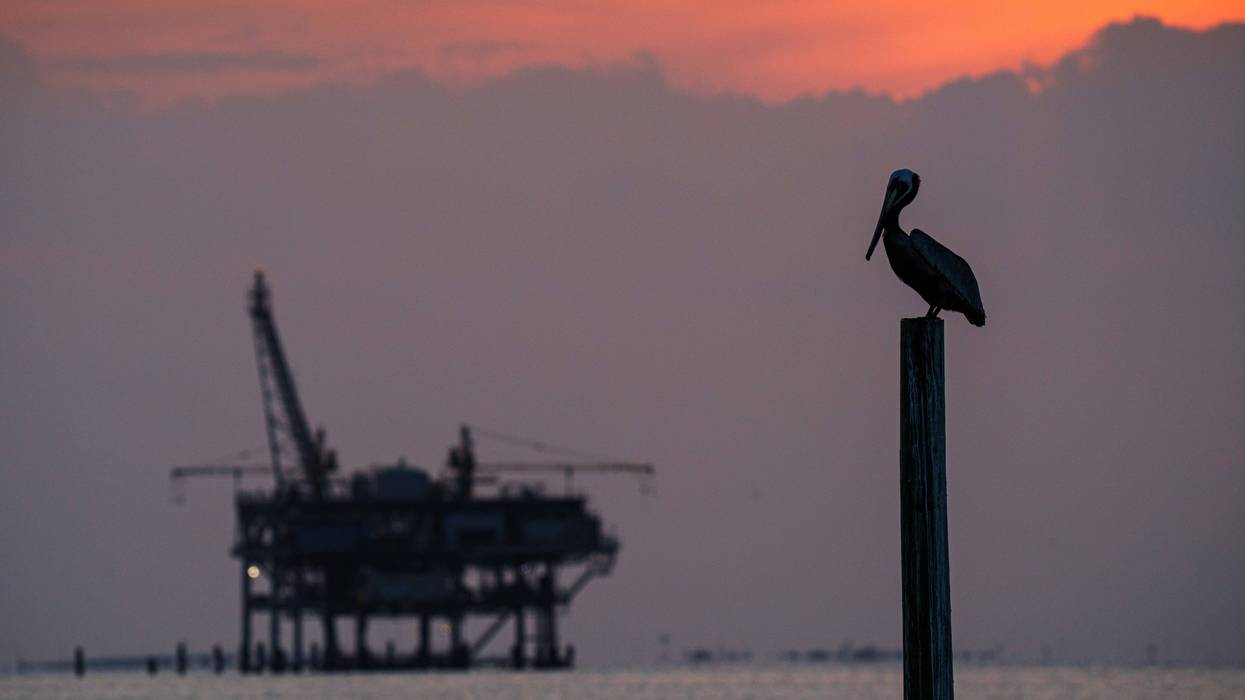
The Center for Biological Diversity estimates that Trump's new five-year offshore drilling plan could release over 12 million gallons of oil into ocean waters around the US.
President Donald Trump's plan to dramatically expand offshore drilling could result in thousands of additional oil spills and put dozens of endangered species at increased risk, according to a new analysis by a leading conservation group.
In November, the US Department of the Interior published a draft plan to expand drilling over the next five years, replacing a more restrictive one drawn up by the Biden administration.
The proposal includes as many as 34 potential offshore lease sales across American coasts, covering approximately 1.27 billion acres, far more than previous administrations have offered.
The new plan opens up drilling in 21 areas off the coast of Alaska, seven in the Gulf of Mexico, and six along the Pacific Coast. These are in addition to 36 new offshore oil lease sales mandated in last year's Republican budget reconciliation package.
An analysis published Tuesday by the Center for Biological Diversity found that the increase in drilling could lead to an additional 4,232 oil spills and dump an extra 12.1 million gallons of oil into ocean waters.
The calculation is based on average spill rates from pipelines and platforms from 1974 to 2015. However, it does not even include catastrophic events like the 2010 BP oil spill, which resulted in more than 210 million gallons of oil being released into the Gulf of Mexico.
"Trump’s ridiculously reckless drilling plan could cause thousands of new oil spills, threatening almost every US coast,” said Kristen Monsell, the oceans legal director at the Center for Biological Diversity.
The group estimates, based on prior figures, that 2,627 of those spills—more than half—will occur in the Gulf of Mexico, releasing about 7.5 million gallons of oil into the ecosystem.
The Gulf is home to several endangered species likely to be affected by the new drilling. The black-capped petrel's population is in rapid decline as pollution has destroyed its food source. Rice's whale has only about 50 individuals remaining and lost 20% of its population in the BP spill. Kemp's ridley sea turtle, which has experienced a population rebound after dropping to near extinction, would be imperiled by another spill.
In the Pacific, sea otters are uniquely vulnerable to oil spills because they coat their fur, which acts as insulation against the cold. Killer and blue whales, whose populations have been nearly wiped out, would also be in danger.
Meanwhile, Arctic animals already affected by climate change—like bowhead whales, Pacific walruses, and beluga whales—all face potential further damage to their habitats due to drilling off the coast of Alaska.
“Nobody wants beaches and marine life coated in crude, but that’ll be our future if Trump’s scheme goes forward," Monsell said. "Every new drilling project signs us up for decades of problems, and our wildlife and coastal economies will suffer the most.”
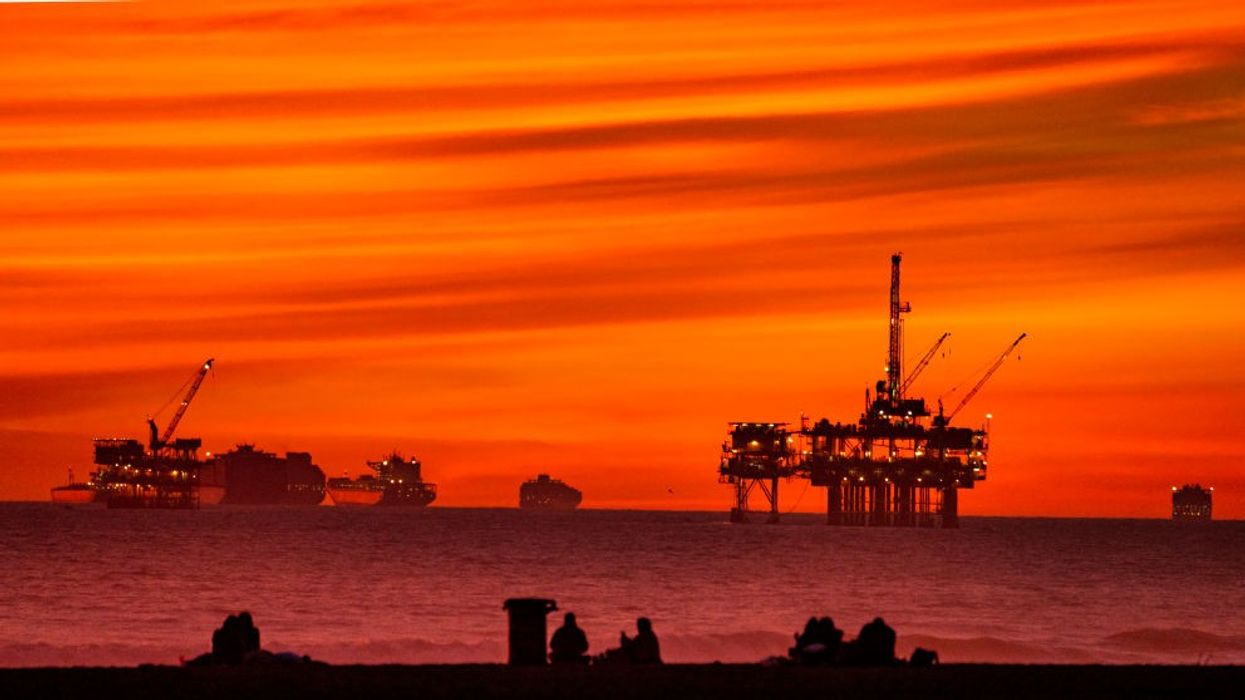
While calling the public lands decision "an important victory," one campaigner also warned that "this threat is far from over."
Critics of Republican efforts to continue wrecking the planet celebrated some small victories after the U.S. Senate parliamentarian on Monday advised that multiple provisions cannot be passed as part of a megabill that only requires a simple majority.
Senate Parliamentarian Elizabeth MacDonough found that some GOP legislative proposals about offshore drilling and mandatory public land sales could not be included in the package due to the so-called Byrd Rule, which bars provisions considered "extraneous to the purpose of implementing budget resolution policies."
Specifically, MacDonough axed a provision that deems offshore oil and gas projects as automatically compliant with the National Environmental Policy Act (NEPA), nullifying their environmental review processes. She also ruled against a proposal requiring offshore fossil fuel leases to be issued to successful bidders within 90 days after the sale, and a separate mandate for the sale of millions of acres of public land.
"This wasn't just an obscure and damaging policy—it was an assault on the places where generations of Americans have hiked, hunted, fished, camped, and connected with the natural beauty of our country."
MacDonough also blocked provisions allowing natural gas exporters to pay to have their project deemed in the public interest; requiring a permit for the construction of Ambler Road, a controversial mining route in Alaska; directing the interior secretary to hold yearly geothermal lease sales; and revoking the secretary's discretion to reduce fees for solar and wind projects on Bureau of Land Management land.
Other provisions under the Senate Energy and Natural Resources Committee's jurisdiction that are still being reviewed include policies that would require that 90% of the revenue from lease sales in the Cook Inlet go to the state of Alaska, starting in 2035; mandate fossil fuel lease sales in the National Petroleum Reserve in Alaska; and force the interior secretary to approve new coal lease applications.
Senate Majority Leader Chuck Schumer (D-N.Y.) on Tuesday applauded MacDonough's decision on the "cruel" GOP policy that "would have gutted America's public lands and auctioned them off to the highest bidder, in yet another bid to benefit the wealthy."
"This wasn't just an obscure and damaging policy—it was an assault on the places where generations of Americans have hiked, hunted, fished, camped, and connected with the natural beauty of our country," Schumer said. "Republicans tried to rip away hundreds of millions of acres of public land—not to help families, not to solve real problems—but to hand yet another gift to the wealthy and well-connected. It was outrageous, it was shameless, and it would have forever changed the character of the country."
"Senate Democrats fought tooth and nail to keep public lands in public hands because these lands belong to everyone—not just the privileged few," Schumer said of Sen. Mike Lee's (R-Utah) proposal that put those lands at risk.
Senate Energy and Natural Resources Committee Ranking Member Jeff Merkley (D-Ore.) also put out a statement welcoming MacDonough's latest moves against what critics are calling the "Big, Ugly Bill" and highlighting his party's opposition.
"Democrats continue to show up and fight every provision of this Big, Beautiful Betrayal of a bill, because this bill is an attack on workers and families everywhere," Merkley said Monday. "Democrats will not stand idly by while Republicans attempt to circumvent the rules of reconciliation in order to sell off public lands to fund tax breaks for billionaires. We will make sure the Byrd Rule is followed and review any changes Republicans attempt to make to the bill."
Like the Democratic leaders, Trust for Public Land CEO and president Carrie Besnette Hauser on Tuesday called MacDonough's latest decisions "an important victory in the fight to protect America's public lands from short-sighted proposals that would have undermined decades of bipartisan work to protect, steward, and expand access to the places we all share."
"Across the country and across party lines, Americans have made it overwhelmingly clear: They do not want to see their public lands sold off to the highest bidder. Land sell-off proposals are deeply out of step with the will of a vast majority of Americans," she noted. "But make no mistake—this threat is far from over. Efforts to dismantle our public lands continue, and we must remain vigilant as proposals now under consideration including a proposal to roll back the landmark, bipartisan Great American Outdoors Act and threaten full, dedicated funding for conservation through the Land and Water Conservation Fund (LWCF)."
"Public lands are not political bargaining chips, but national treasures that power local economies, strengthen public health, and connect millions of people to the outdoors every day," she added. "Trust for Public Land will continue to stand with communities, tribal nations, and bipartisan champions in Congress to defend public lands and ensure they remain protected, accessible, and thriving—for all people, for all future generations."
Senate Majority Leader John Thune (R-S.D.) has suggested that Republicans will not overrule the parliamentarian. According to Reuters, he told reporters on Monday that the review process is "something we have to go through," and "they're working through it. And in some cases, as things are flagged, we're making counteroffers."
Although MacDonough dealt a blow to the GOP agenda, the Trump administration on Monday continued its assault on the planet, announcing plans to end a rule that protects tens of millions of acres in the National Forest System, which would enable road development and timber production on those lands.