February, 15 2017, 08:00am EDT

New Data Finds Climate-Friendly, Healthy Meals Within Reach for Public Schools
New data finds climate-friendly, healthy meals within reach for public schools Study shows how less meat and cheese on school food menus fights climate change and saves money
BERKELEY, CALIF.
A new case study is the first of its kind to use life-cycle assessment data to show how meat and cheese reduction in school food is an effective strategy for both mitigating climate change and serving affordable, healthy meals. Friends of the Earth partnered with Oakland CA Unified School District to document how a 30 percent reduction in meat, poultry and cheese purchases over two years shrank the school district's carbon footprint by 14 percent. The study found that the district saved 42 million gallons of water annually, and captured $42,000 in cost savings which was used for increased purchases of healthy fruits, vegetables, legumes and organic pastured beef.
The case study reviewed all school food purchasing data during the 2012-13 and 2014-15 school years, applying carbon footprint data published in an article in the Journal of Industrial Ecology by Dr. Martin Heller and G.A. Keoleian.
"This is a landmark moment for school food. We were so excited to see how the data showed that we could reduce our carbon and water footprint by serving healthy, delicious food -- like the vegetarian tostadas with fresh made in-house salsa, that kids absolutely love -- all while saving money,'' said Jennifer LeBarre, executive director of nutrition services for Oakland Unified School District.
Menus that emphasize less meat and more plant-based foods have become the gold standard for nutrition directors, public health experts and environmentalists seeking to combat the twin threats of diet-related diseases and climate change due to overconsumption of animal foods. The 2016 Menus of Change report from the Culinary Institute and Harvard's School of Public Health is among expert studies that promote plant proteins as key to better health and environmental sustainability. The success of Meatless Mondays, adopted by over 200 school districts nationwide, has signaled a shift away from meat, and local, seasonal produce purchasing is on the rise. Yet, before the Friends of the Earth cooperative study, no data had been available to quantify the multiple climate, water and financial benefits of reducing meat and cheese and adopting more plant-forward menu items.
"While our study focused on school food, it's clear that meat and cheese reduction is a powerful climate mitigation strategy for all restaurants and institutions that want to reduce their environmental impact," said Kari Hamerschlag, deputy director of food and technology at Friends of the Earth. "While cities and states are leading efforts to combat climate change, shifting institutional food purchasing has rarely been tapped as a climate mitigation strategy. We hope this report inspires more public institutions to serve less and better meat and more plant-based foods as a cost effective way to achieve both environmental and public health goals."
The report also showed how these goals can be achieved while sourcing better quality, organic meat. The Oakland Unified School District purchased a portion of its meat from Mindful Meats, a Northern California company that sources meat from pastured, organic dairy cows. Meat that comes from dairy cows has far lower greenhouse gas emissions than beef from meat cows because the footprint is spread across both meat and dairy products. Serving smaller portions and mixing beef with legumes such as beans, which also count towards the USDA protein quota, meant not only a meat reduction, but an introduction of high-quality meat plus additional plant-based nutrition.
With over seven billion school food meals served annually nationwide, including 800 million meals in California, this case study shows how modest reductions in purchases of animal foods implemented on the scale of school food service could translate into significant climate change and water conservation benefits for California and the nation -- while saving money and providing kids with increased access to healthy plant-based foods. The report found that if every school district in the nation took similar action, the GHG reductions would be akin to taking 150,000 cars off the road every year or installing 100,000 residential solar systems.
Friends of the Earth fights for a more healthy and just world. Together we speak truth to power and expose those who endanger the health of people and the planet for corporate profit. We organize to build long-term political power and campaign to change the rules of our economic and political systems that create injustice and destroy nature.
(202) 783-7400LATEST NEWS
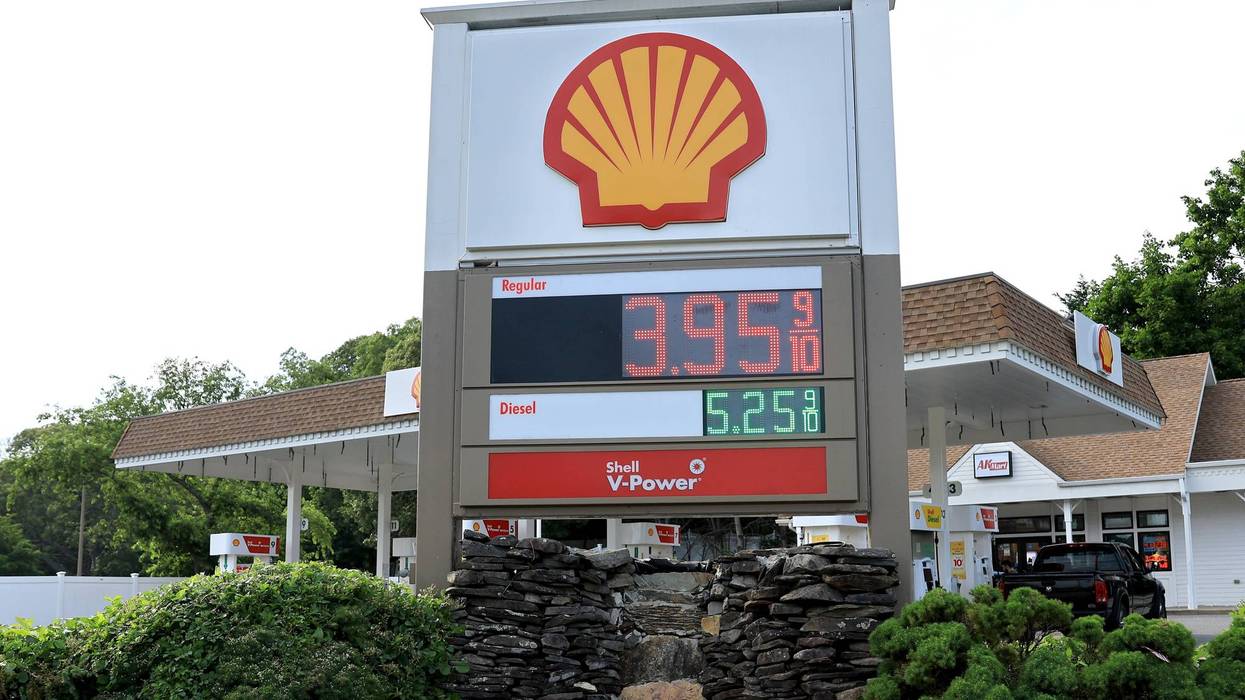
Thanks to Trump's Iran War Disaster, Fossil Fuel Industry to Enjoy $700 Billion Windfall in 2026
"We witness not only a massive fossil fuel crisis but a vast upward transfer of wealth built on instability of fossil fuel markets and pain," said an expert at 350.org.
Jun 18, 2026
US President Donald Trump’s war with Iran may finally be reaching a close. But consumers and businesses around the world will continue to pay the price in the months ahead as still-elevated energy costs funnel hundreds of billions of dollars to fossil fuel giants.
That’s according to a report from the environmental group 350.org released Thursday, following Trump’s signing of a memorandum of understanding with Iran this week to begin the process of formally ending a war that has sent global oil prices skyrocketing and saddled ordinary people with record fuel prices.
The group estimated that just 110 days of war resulted in the transfer of an additional $374 billion from consumers and businesses into the coffers of oil and gas companies beyond what would have been expected had the war never been launched.
And while Trump claims his agreement to end the war this week will avert an “economic catastrophe,” there will likely still be tremendous pain even if the Strait of Hormuz reopens promptly.
Using oil and gas pricing scenarios from the International Monetary Fund’s April 2026 World Economic Outlook and data on global consumption, 350.org predicted that by the end of the year, consumers and businesses will spend an additional $199.8 billion on oil and $128.1 billion on gas above a non-war scenario, making for a grand total of more than $700 billion as a result of the war.
This, the group said, is a conservative estimate, as it does not even take into account knock-on effects. The war will ultimately end up costing much more when factoring in inflation across the rest of the economy, resulting from higher fuel costs or fertilizer shortages caused by the strait's closure, which has affected food prices.
It also does not take into account the resulting effects on economic output or employment as rising costs and lower consumer spending force companies to tighten their belts.
"The oil and gas industry is draining billions from people and businesses on the back of a war that has killed thousands and pushed millions toward poverty and hunger," said Andreas Sieber, head of political Strategy at 350.org.
"Even if the Strait of Hormuz reopens tomorrow, we should expect prices to remain above pre-crisis levels," he said. "We witness not only a massive fossil fuel crisis but a vast upward transfer of wealth built on instability of fossil fuel markets and pain."
While the war has brought it into starker relief, previous reports from 350.org have shown that even if the US had never attacked Iran, the continued global dependence on fossil fuels was resulting in trillions of dollars of avoidable costs each year, including $9.3 trillion to mitigate climate-related damages and air pollution-related deaths each year, costs that disproportionately fall on the world's poorest.
In order to alleviate economic strain from the war, Sieber said, "governments should tax these excess profits now and use the revenues to protect people, cut bills, and rapidly deploy renewables that make households and small businesses less vulnerable to the next fossil fuel shock.”
Estimates of inflation also do not account for how the war has heightened global instability and poverty, which will require additional resources for humanitarian relief efforts. In late April, the United Nations Development Program estimated that even if the conflict had ended then, more than 32 million people worldwide would be pushed into economic precarity.
This is not to mention the resources that will need to be expended to address the harms caused by the war itself.
In exchange for negotiations on Iran's nuclear program, a portion of the memorandum of understanding requires the US to work with "regional partners," presumably other Persian Gulf allies, to scrounge up at least $300 billion to help Iran pay for reconstruction and economic development after the country was devastated by American and Israeli attacks on civilian infrastructure and millions were displaced.
As a report from the International Rescue Committee detailed last week, the Iran war has also had cascading effects on other conflicts and catastrophes.
"Six months ago, the IRC warned that a New World Disorder was emerging," said David Miliband, the humanitarian group's president and CEO. "Since then, disorder has not only grown but accelerated. A war with Iran. A million people have been forced to flee their homes in Lebanon. A brewing global food security catastrophe that risks plunging millions more people into acute hunger. An expanding Ebola outbreak. Defanged diplomacy and collapsing aid budgets."
"The Iran war couldn’t have happened at a worse time," Miliband said in a New Yorker article published Thursday. "It set off a chain of events that’s very damaging.”
Keep ReadingShow Less

'Another Unauthorized Trump Fund': Democrats Fume Over $300 Million in Taxpayer Money for Ballroom
"While Republicans slash healthcare and other programs Americans depend on, President Trump is reportedly using hundreds of millions of taxpayer dollars for a White House ballroom," said US Rep. Raja Krishnamoorthi.
Jun 18, 2026
Democratic lawmakers are reacting with disgust amid new reporting on how the White House has been using sneaky budget maneuvering to get US taxpayers to fund President Donald Trump's luxury ballroom that was never approved by Congress.
According to a Thursday report in The Washington Post, the White House Office of Management and Budget (OMB) mysteriously shifted $352 million within the US Secret Service budget that had been earmarked for training and recruitment, but that will now be spent on White House security measures.
An insider familiar with the process told the Post that the redirected funds were related to the construction of the ballroom.
A White House spokesperson did not deny that the money was going toward the ballroom project, while insisting that "the East Wing Modernization Project is inextricably tied to the security of the president, the White House grounds, and the certain security infrastructure assets."
Sen. Jeff Merkley (D-Ore.), ranking member of the Senate Budget Committee, told the Post he was concerned that money "intended to pay Secret Service agents and ensure they have the technology and resources they need to keep individuals under their protection safe" is now being spent on the president's "vanity project."
In a Wednesday interview with NOTUS, Sen. Chris Coons (D-Del.) said it appears Trump "was just flat out lying when he said the taxpayers will not pay a dime for his ballroom," adding that it appears "he is now trying to find ways to funnel public money into it."
In a Thursday social media post, Rep. Raja Krishnamoorthi (D-Ill.) contrasted Trump's willingness to use taxpayer cash for his ballroom with cuts he and the GOP made to vital healthcare and food assistance programs.
"While Republicans slash healthcare and other programs Americans depend on," Krishnamoorthi wrote, "President Trump is reportedly using hundreds of millions of taxpayer dollars for a White House ballroom he claimed would be privately funded."
Rep. Jonathan Jackson (D-Ill.) similarly argued that while the GOP's 2025 budget law "kicked 4.3 million people off SNAP and 5 million people off [Affordable Care Act] health insurance coverage," the administration is now "dishonestly spending millions of dollars of YOUR money to fund a ballroom instead of helping struggling Americans put food on the table and receive essential medical care."
Rep. Jamie Raskin (D-Md.) linked the ballroom money to other Trump schemes to enrich himself through the presidency, including his acceptance of a luxury jet from the government of Qatar and his $1.8 billion slush fund for political allies.
"Now we learn that Trump’s bad architecture obsession is costing us all $600 million," Raskin wrote, in reference to earlier reporting on how the ballroom project has ballooned in costs from the White House's early estimates. "Turn your illegal Qatari jet over to the people and we’ll sell it for $400 million and we’ll take the rest out of other illegal emoluments and slush funds, including the $1.776 billion fund for insurrectionists, and the Board of Peace, another unauthorized Trump fund bankrolled by money misallocated from the State Department."
Keep ReadingShow Less
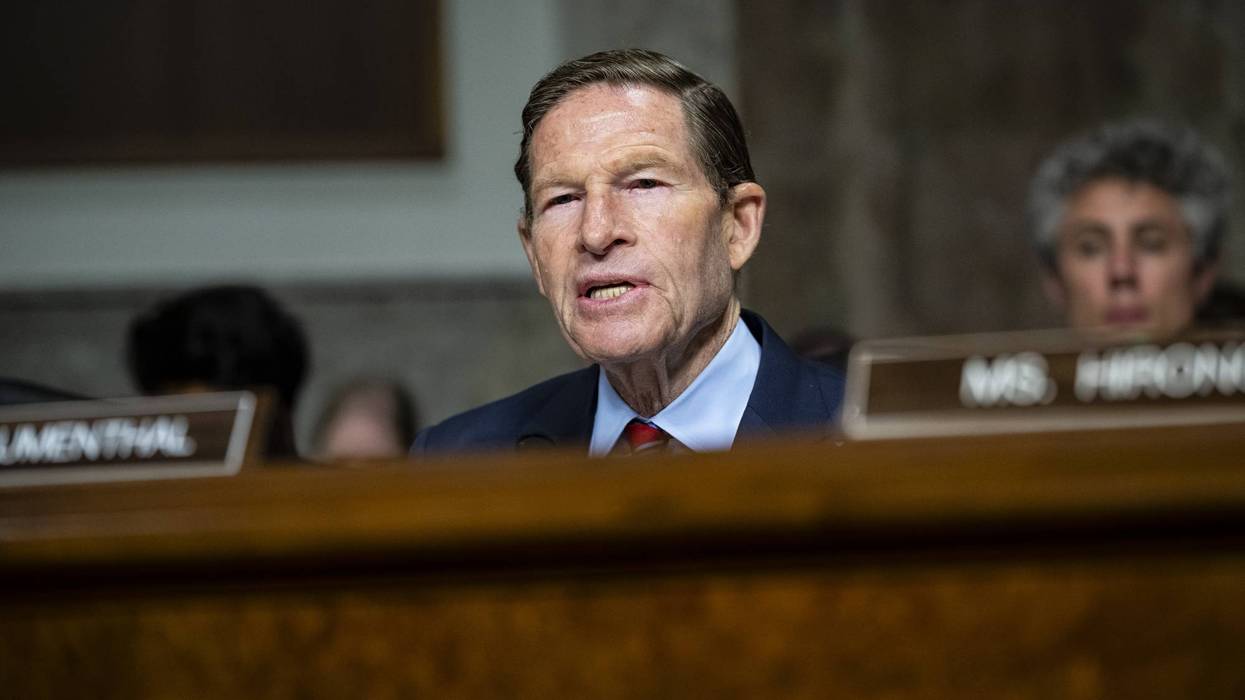
'Would You Rather Go Back to War?' Critics Ask Democrats Fuming Over Trump's Iran Deal
"Trump currently owns this failed war," said one expert, "but if the Democrats help torpedo the MOU and war resumes, then they will co-own the next war."
Jun 18, 2026
Supporters of a diplomatic resolution to the illegal war that US President Donald Trump launched against Iran earlier this year are pushing back against Democratic critics of the interim peace agreement signed on Wednesday, warning it is politically and morally foolish to attack efforts to end a conflict that has killed thousands and plunged the global economy into chaos.
"Would you rather go back to war?" Matt Duss, executive vice president of the Center for International Policy and a former adviser to Sen. Bernie Sanders (I-Vt.), asked Sen. Richard Blumenthal (D-Conn.), one of several Democrats joining war-hawk Republicans in openly decrying the new memorandum of understanding (MOU).
In a series of social media posts on Wednesday, Blumenthal pointed to "bipartisan condemnation" of what he called "a disgraceful deal" and "unconditional surrender" on the part of the US. The senator added that "anything like this deal will be dead on arrival in the Senate" and declared, "It must be approved here to have enforceable effect."
Other prominent Democrats offered similar critiques. Sen. Adam Schiff (D-Calif.) said it is "hard to imagine a more thorough capitulation," while Sen. Cory Booker (D-NJ) called the deal a "dangerous giveaway" to "this enemy," referring to Iran.
"His war proved only one thing: that diplomacy was the answer all along."
Trita Parsi, executive vice president of the Quincy Institute for Responsible Statecraft, warned Thursday that such criticisms of the interim peace deal imply that "a war should not be brought to an end until it has produced better terms—even when the war itself is failing."
"Taken seriously, that logic leads to a dangerous conclusion: that a failed war must continue until the battlefield fortunes somehow improve and a more favorable outcome becomes attainable. Perhaps that day will come. Perhaps it never will. In the meantime, the costs—in lives, treasure, regional stability, and strategic credibility—are treated as secondary considerations," Parsi wrote. "This is how endless wars are born."
Parsi expressed disappointment at the rhetoric of some Democrats "because it echoes the same bad-faith tactics Republicans deployed" against the Obama-era Joint Comprehensive Plan of Action (JCPOA), which Trump ripped up in 2018, setting the stage for war.
"To be sure, Trump has invited some of this treatment. He spent years attacking Obama’s agreement with a barrage of misleading arguments and exaggerated claims," Parsi noted. "But that does not make it wise for Democrats to return the favor. Trump currently owns this failed war, but if the Democrats help torpedo the MOU and war resumes, then they will co-own the next war. Trump’s disaster will become theirs as well."
Many Democrats appear to understand that risk and are welcoming diplomatic progress—while also condemning the illegal war and its consequences for the US and the world.
"Matters of war and peace must rise above partisan politics," said Rep. Joaquin Castro (D-Texas). "Democrats must not replicate Republicans’ irresponsible opposition to the Obama administration’s Iran nuclear agreement, which placed real constraints on Iran’s nuclear program before President Trump foolishly tore it up, setting the stage for this disastrous war."
Rep. Ro Khanna (D-Calif.), in a Thursday morning appearance on Fox News, said the emerging deal between the US and Iran "is not as good as the JCPOA was," while also expressing support for efforts to end the war.
Watch:
Ro Khanna on Maria Bartiromo's show makes the case for why Trump's deal with Iran is far inferior to the JCPOA (Note that Bartiromo acknowledges he's making "important points, and good ones") pic.twitter.com/n1nm3LyBcd
— Aaron Rupar (@atrupar) June 18, 2026
Rep. Jim McGovern (D-Mass.) wrote in a social media post on Thursday that "any move toward diplomacy and away from violence is welcome news," calling Trump's Iran war "reckless" and "illegal."
"This war should be a lesson. The push for military adventurism and regime change by neocon war hawks was, unsurprisingly, an unmitigated disaster," said McGovern. "After three months of death and destruction, the rest of us are now left paying the price. His war proved only one thing: that diplomacy was the answer all along."
Keep ReadingShow Less
Most Popular