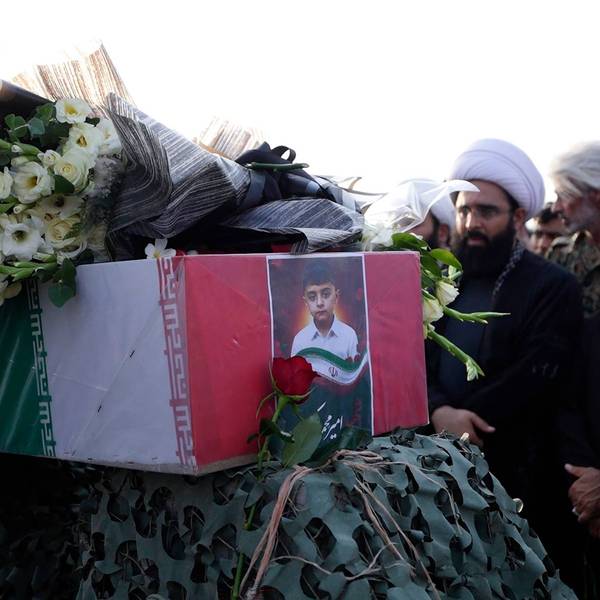
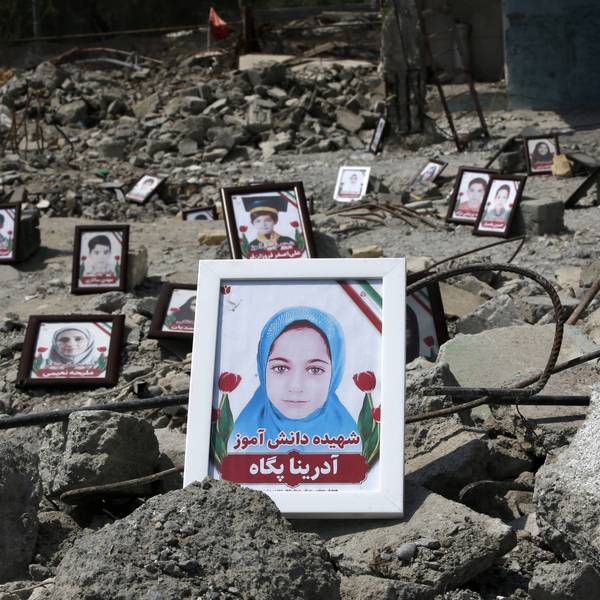
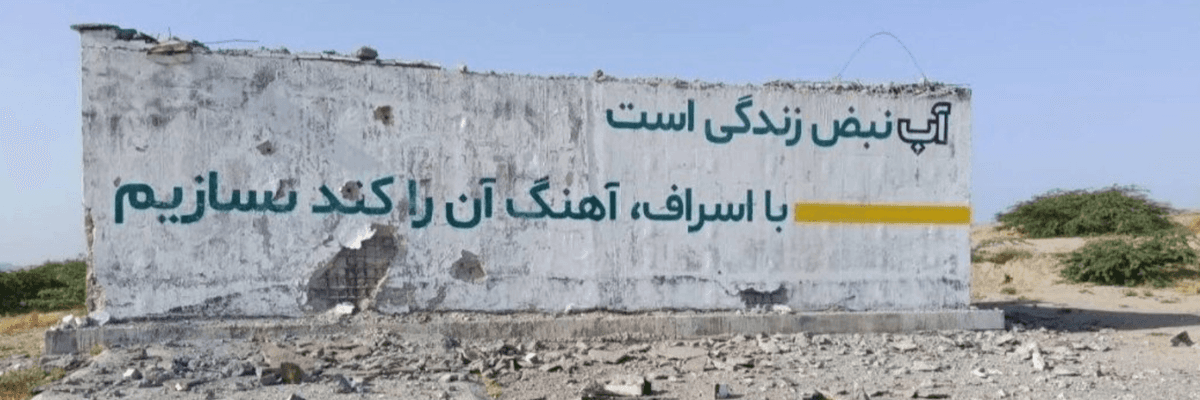
A water facility is seen in Bemani, Iran after an attack that a New York Times analysis showed was likely a US precision strike on June 10, 2026. Deliberately attacking civilian infrastructure is a war crime under international law.
'War Crimes': Analysis Suggests US Bombed Water Facilities Used by 20,000 Iranians in Precision Strike
"Destroying a drinking water facility is not an attack on a target of war, but a mafia-style operation designed to harm the Iranian people," said one academic.
As temperatures in the village of Bemani, Iran, near the Strait of Hormuz, reached above 100°F this week, two water facilities were struck by bombs, cutting off the drinking water supply for 20,000 people in the area.
An analysis by The New York Times late Wednesday indicated that the attack on the drinking-water storage facilities appeared to be a precision strike by the US, raising questions about whether the Trump administration intentionally attacked civilian infrastructure, which would constitute a war crime under international law.
As the provincial water authority in the area reported that two storage tanks had been destroyed in an attack early Wednesday, US Central Command said on social media that the US Air Force and Navy had used "precision munitions" to strike "Iranian air defense, ground control stations, and surveillance radar sites near the Strait of Hormuz."
Esmaeil Baqaei, a spokesperson for the Iranian Ministry of Foreign Affairs, posted a video of damage to one of the facilities, whose light blue pipes were consistent with water infrastructure.
"As part of its aggression against Iran, the US military has deliberately struck vital civilian water infrastructure in Sirik, Hormozgan, destroying two reservoirs with a combined capacity of 2,500 cubic meters," said Baqaei. "These facilities supplied drinking water to more than 20,000 residents across ten villages. This is not collateral damage—it is a calculated war crime and a flagrant violation of human rights and international humanitarian law. The US must be held accountable for committing such systematic brutal attacks on civilian life-sustaining infrastructure."
The analysis of the strikes came as the US waged more attacks Wednesday night and early Thursday, including on an oil tanker in the Gulf of Oman and against Iranian radars and air defenses.
In its analysis, the Times said commercial satellite imagery showed two water facilities in Bemani whose descriptions matched those given by Abdolhamid Hamzehpour, the chief executive of the province’s water authority, on Wednesday, when he reported the structures had been damaged by missiles.
Hamzehpour said in a statement that the high temperatures in the area were “unbearable” for residents without drinking water, and said that mobile water tanks had been deployed to nearby villages.
The roof of one of the facilities collapsed, according to videos released by Iranian state media, and the center of the roof of the other structure appeared to have been struck by a bomb.
The Times noted that both buildings were remotely located, with no other infrastructure located in the immediate vicinity, suggesting a likely precision strike.
Tasnim, a semiofficial news agency in Iran, released photos of bomb fragments that it said were recovered from the site. Researchers with the Open Source Munitions Portal identified the fragments as parts of a GBU-39 bomb, which is used by the US Air Force.
The precision-guided bomb was "consistent with the damage shown in the footage of the damaged building: a clean hole punched through the building’s roof and limited blast damage around it," reported the Times.
Alleged U.S. airstrikes overnight hit two water storage reservoirs in Iran's Sirik County, Hormozgan Province, reportedly leaving many without water.Images of remnants posted by Iranian media show the remains of a U.S.-made GBU-39 air-delivered bomb.osmp.ngo/osmp2336/
[image or embed]
— Open Source Munitions Portal (@munitionsportal.bsky.social) June 10, 2026 at 3:30 PM
The bombing came as President Donald Trump complained that Tehran was taking too long to finalize a peace deal. The US and Iran have each carried out attacks this week, raising doubts about a ceasefire deal that was reached in April following Trump's threats to wipe out Iran's civilization.
"Trump is so angry that Iran will not give him a deal that he is telling the US military to commit war crimes," said Phillips P. O'Brien, a professor of strategic studies at the University of St. Andrews. "Destroying a drinking water facility is not an attack on a target of war, but a mafia-style operation designed to harm the Iranian people."
We are at a crossroads
This country and this world are at a monumental crossroads. In a few short weeks, US voters will have an opportunity to beat back the forces of fascism and confront the billionaires who are rigging the economy, our media system, and our democracy, making it increasingly impossible for ordinary people to get by. We’re not just talking about the election. We’re talking about what must be done once these fascist elements are vanquished from power. We need a bolder set of solutions than what either major party has so far been willing to offer and a working-class movement ready to fight like hell for it. Trump didn't emerge from nowhere. The conditions that fueled MAGA authoritarianism were created by decades of radical neoliberal economic policies and a corrupt political system dominated by corporate interests. They slashed taxes on the super-rich, promising that the benefits would trickle down. They said giveaways to the corporate titans would make life more affordable for the rest of us. It was all bullshit. And when a bitter, betrayed populace searches for someone to blame, right-wing demagogues have little trouble finding scapegoats. People know when they're being lied to, but you won't hear any of this from the corporate media. Only independent journalism—powered and funded by people who believe in building a better world—can deliver truly trustworthy daily news. Our Fall Campaign is underway, and we need your help. To power our newsroom through the rest of the year, we need to raise $125,000 by midnight on October 31. So if you share our vision, please contribute whatever you can to sustain our work. |
As temperatures in the village of Bemani, Iran, near the Strait of Hormuz, reached above 100°F this week, two water facilities were struck by bombs, cutting off the drinking water supply for 20,000 people in the area.
An analysis by The New York Times late Wednesday indicated that the attack on the drinking-water storage facilities appeared to be a precision strike by the US, raising questions about whether the Trump administration intentionally attacked civilian infrastructure, which would constitute a war crime under international law.
As the provincial water authority in the area reported that two storage tanks had been destroyed in an attack early Wednesday, US Central Command said on social media that the US Air Force and Navy had used "precision munitions" to strike "Iranian air defense, ground control stations, and surveillance radar sites near the Strait of Hormuz."
Esmaeil Baqaei, a spokesperson for the Iranian Ministry of Foreign Affairs, posted a video of damage to one of the facilities, whose light blue pipes were consistent with water infrastructure.
"As part of its aggression against Iran, the US military has deliberately struck vital civilian water infrastructure in Sirik, Hormozgan, destroying two reservoirs with a combined capacity of 2,500 cubic meters," said Baqaei. "These facilities supplied drinking water to more than 20,000 residents across ten villages. This is not collateral damage—it is a calculated war crime and a flagrant violation of human rights and international humanitarian law. The US must be held accountable for committing such systematic brutal attacks on civilian life-sustaining infrastructure."
The analysis of the strikes came as the US waged more attacks Wednesday night and early Thursday, including on an oil tanker in the Gulf of Oman and against Iranian radars and air defenses.
In its analysis, the Times said commercial satellite imagery showed two water facilities in Bemani whose descriptions matched those given by Abdolhamid Hamzehpour, the chief executive of the province’s water authority, on Wednesday, when he reported the structures had been damaged by missiles.
Hamzehpour said in a statement that the high temperatures in the area were “unbearable” for residents without drinking water, and said that mobile water tanks had been deployed to nearby villages.
The roof of one of the facilities collapsed, according to videos released by Iranian state media, and the center of the roof of the other structure appeared to have been struck by a bomb.
The Times noted that both buildings were remotely located, with no other infrastructure located in the immediate vicinity, suggesting a likely precision strike.
Tasnim, a semiofficial news agency in Iran, released photos of bomb fragments that it said were recovered from the site. Researchers with the Open Source Munitions Portal identified the fragments as parts of a GBU-39 bomb, which is used by the US Air Force.
The precision-guided bomb was "consistent with the damage shown in the footage of the damaged building: a clean hole punched through the building’s roof and limited blast damage around it," reported the Times.
Alleged U.S. airstrikes overnight hit two water storage reservoirs in Iran's Sirik County, Hormozgan Province, reportedly leaving many without water.Images of remnants posted by Iranian media show the remains of a U.S.-made GBU-39 air-delivered bomb.osmp.ngo/osmp2336/
[image or embed]
— Open Source Munitions Portal (@munitionsportal.bsky.social) June 10, 2026 at 3:30 PM
The bombing came as President Donald Trump complained that Tehran was taking too long to finalize a peace deal. The US and Iran have each carried out attacks this week, raising doubts about a ceasefire deal that was reached in April following Trump's threats to wipe out Iran's civilization.
"Trump is so angry that Iran will not give him a deal that he is telling the US military to commit war crimes," said Phillips P. O'Brien, a professor of strategic studies at the University of St. Andrews. "Destroying a drinking water facility is not an attack on a target of war, but a mafia-style operation designed to harm the Iranian people."
- Nuclear Plants 'Must Never Be Attacked,' Says Watchdog as Iran Reports US-Israeli Strike at Bushehr Facility ›
- 'Maniacal Tyrant' Trump and Iran Trade Threats to Energy Infrastructure Over Strait of Hormuz ›
- Opinion | Trump Is Playing War Crime Roulette With the Livability of the Persian Gulf | Common Dreams ›
As temperatures in the village of Bemani, Iran, near the Strait of Hormuz, reached above 100°F this week, two water facilities were struck by bombs, cutting off the drinking water supply for 20,000 people in the area.
An analysis by The New York Times late Wednesday indicated that the attack on the drinking-water storage facilities appeared to be a precision strike by the US, raising questions about whether the Trump administration intentionally attacked civilian infrastructure, which would constitute a war crime under international law.
As the provincial water authority in the area reported that two storage tanks had been destroyed in an attack early Wednesday, US Central Command said on social media that the US Air Force and Navy had used "precision munitions" to strike "Iranian air defense, ground control stations, and surveillance radar sites near the Strait of Hormuz."
Esmaeil Baqaei, a spokesperson for the Iranian Ministry of Foreign Affairs, posted a video of damage to one of the facilities, whose light blue pipes were consistent with water infrastructure.
"As part of its aggression against Iran, the US military has deliberately struck vital civilian water infrastructure in Sirik, Hormozgan, destroying two reservoirs with a combined capacity of 2,500 cubic meters," said Baqaei. "These facilities supplied drinking water to more than 20,000 residents across ten villages. This is not collateral damage—it is a calculated war crime and a flagrant violation of human rights and international humanitarian law. The US must be held accountable for committing such systematic brutal attacks on civilian life-sustaining infrastructure."
The analysis of the strikes came as the US waged more attacks Wednesday night and early Thursday, including on an oil tanker in the Gulf of Oman and against Iranian radars and air defenses.
In its analysis, the Times said commercial satellite imagery showed two water facilities in Bemani whose descriptions matched those given by Abdolhamid Hamzehpour, the chief executive of the province’s water authority, on Wednesday, when he reported the structures had been damaged by missiles.
Hamzehpour said in a statement that the high temperatures in the area were “unbearable” for residents without drinking water, and said that mobile water tanks had been deployed to nearby villages.
The roof of one of the facilities collapsed, according to videos released by Iranian state media, and the center of the roof of the other structure appeared to have been struck by a bomb.
The Times noted that both buildings were remotely located, with no other infrastructure located in the immediate vicinity, suggesting a likely precision strike.
Tasnim, a semiofficial news agency in Iran, released photos of bomb fragments that it said were recovered from the site. Researchers with the Open Source Munitions Portal identified the fragments as parts of a GBU-39 bomb, which is used by the US Air Force.
The precision-guided bomb was "consistent with the damage shown in the footage of the damaged building: a clean hole punched through the building’s roof and limited blast damage around it," reported the Times.
Alleged U.S. airstrikes overnight hit two water storage reservoirs in Iran's Sirik County, Hormozgan Province, reportedly leaving many without water.Images of remnants posted by Iranian media show the remains of a U.S.-made GBU-39 air-delivered bomb.osmp.ngo/osmp2336/
[image or embed]
— Open Source Munitions Portal (@munitionsportal.bsky.social) June 10, 2026 at 3:30 PM
The bombing came as President Donald Trump complained that Tehran was taking too long to finalize a peace deal. The US and Iran have each carried out attacks this week, raising doubts about a ceasefire deal that was reached in April following Trump's threats to wipe out Iran's civilization.
"Trump is so angry that Iran will not give him a deal that he is telling the US military to commit war crimes," said Phillips P. O'Brien, a professor of strategic studies at the University of St. Andrews. "Destroying a drinking water facility is not an attack on a target of war, but a mafia-style operation designed to harm the Iranian people."
- Nuclear Plants 'Must Never Be Attacked,' Says Watchdog as Iran Reports US-Israeli Strike at Bushehr Facility ›
- 'Maniacal Tyrant' Trump and Iran Trade Threats to Energy Infrastructure Over Strait of Hormuz ›
- Opinion | Trump Is Playing War Crime Roulette With the Livability of the Persian Gulf | Common Dreams ›