SUBSCRIBE TO OUR FREE NEWSLETTER
Daily news & progressive opinion—funded by the people, not the corporations—delivered straight to your inbox.
5
#000000
#FFFFFF
To donate by check, phone, or other method, see our More Ways to Give page.
Daily news & progressive opinion—funded by the people, not the corporations—delivered straight to your inbox.
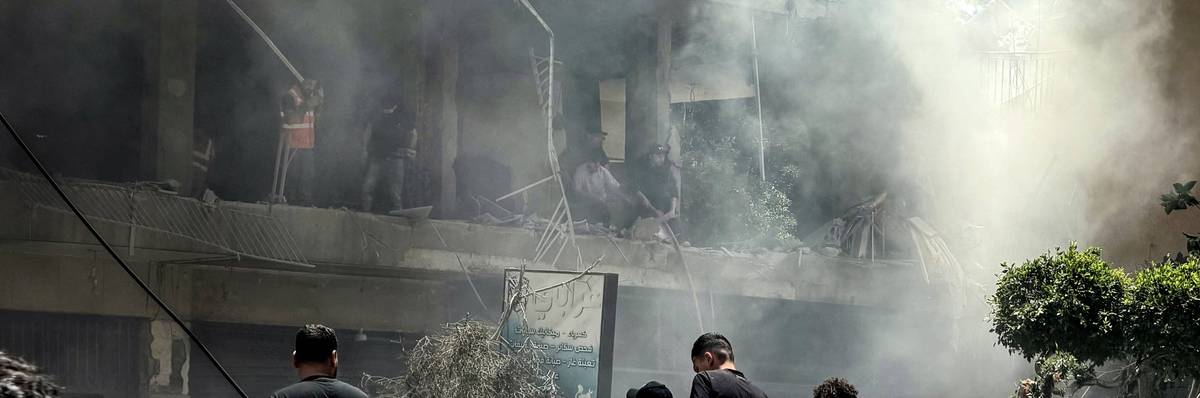
People look for survivors at the site of an Israeli airstrike that targeted a building in Beirut's southern suburbs on June 14, 2026.
Iran's chief negotiator accused the Trump administration of giving the Israeli government a "green light" to continue attacking Lebanon and undermining diplomatic talks.
Update:
US President Donald Trump, Pakistan's prime minister, and the Iranian Foreign Ministry said Sunday that the US and Iran have reached an agreement on a framework to end the war that Trump launched in late February.
Iran's deputy foreign minister, Kazem Gharibabadi, said the terms of the deal will be made public after the memorandum of understanding is signed on Friday in Switzerland. Pakistani Prime Minister Shehbaz Sharif wrote on social media that "both sides have declared the immediate and permanent termination of military operations on all fronts, including in Lebanon."
The memorandum of understanding is expected to extend the current ceasefire agreement by 60 days while detailed negotiations take place.
Gharibabadi said the start of the 60-day negotiations will be contingent on the US lifting its naval blockade of Iranian ports, "ending the state of war and military operations," and "releasing Iran's frozen funds."
Earlier:
The Israeli military bombed the southern suburbs of Beirut on Sunday just as Iranian and US officials voiced optimism that a diplomatic agreement is in reach, prompting accusations that the government of Prime Minister Benjamin Netanyahu is trying to derail the negotiations.
Israel's strikes reportedly targeted a five-story apartment building, killing at least three people, according to Lebanese authorities. Netanyahu said the bombing was a response to Hezbollah rocket fire into northern Israel.
The latest bombing of Beirut came hours after US President Donald Trump said he expected a memorandum of understanding (MOU) to be signed as early as Sunday, potentially setting the stage for negotiations to end the illegal war Trump started in late February. Iranian officials have pushed back on the US president's claim that the MOU will be signed Sunday, but Iran's foreign minister said Friday that an agreement had "never been closer."
The Associated Press reported Sunday that Israel's new strikes on Beirut "threatened to hamper negotiations over a deal, which in its current form is a deep disappointment to Israel’s government."
"The last time Israel struck the Beirut suburbs a week ago, it set off the most serious escalation of fighting between Iran and Israel since the tenuous ceasefire took hold April 7," AP added.
Kenneth Roth, former executive director of Human Rights Watch, wrote on social media that "as a US-Iranian deal seems like it might be closer, Israel predictably bombs the Beirut suburbs, evidently hoping to sabotage the deal."
"Why does Trump put up with this and continue to arm and fund such obstructionism?" Roth asked.
Mohammad Bagher Ghalibaf, Iran's chief negotiator and speaker of parliament, said Israel's strikes indicate that the US "either does not have the will or the ability to fulfill its obligations."
"You cannot gain concessions by giving [Israel] a green light," he added. "The good cop, bad cop routine has become old. If you do not have the will or the ability to fulfill your commitments, then there is no basis for talking about continuing down this path."
As the US & Iran reportedly near a deal that includes ending the war in Lebanon, Israel is attacking Beirut again.
Either Trump can't restrain Netanyahu, or the deal is already being violated before it's signed.
Either way, it undermines the deal's value for Iran. pic.twitter.com/v08c21i7wa
— Sina Toossi (@SinaToossi) June 14, 2026
While the MOU that's reportedly under consideration has not been released in full, its broad outlines have been reported in media outlets and divulged by Iranian and US officials in recent days. Reuters reported Sunday that "a final draft of the memorandum of understanding with the US covered a range of issues, from Tehran’s nuclear work to reopening the Strait of Hormuz and US waivers on oil sanctions, with a final deal to be discussed in the 60 days following agreement by the two sides."
Under the MOU, Iran would immediately reopen the Strait of Hormuz and the US would end its illegal blockade of Iranian ports, according to Reuters. The US would also agree to waive oil sanctions on Iran and release $25 billion in frozen Iranian assets, while Iran would agree to "maintain the current status of its nuclear program, refraining from further uranium enrichment and expansion of nuclear facilities."
Abbas Araghchi, Iran's foreign minister, said in a television interview on Friday that the MOU's proposed 60-day ceasefire extension would include Lebanon.
Axios reported that Netanyahu has "found himself in the dark" as US-Iran negotiations have progressed in recent days, "calling allies close to the Trump administration to try and gather information."
Following Sunday's strike on Beirut, Trump told Axios' Barak Ravid that Netanyahu "has no fucking judgment."
"I passed this message on to him—that I am very unhappy with the attack in Beirut," said Trump, whose administration has approved billions of dollars worth of weapons sales to the Israeli government.
Trita Parsi, executive vice president of the Quincy Institute for Responsible Statecraft, warned that "Israel will do more sabotage unless Trump imposes a cost on Israel."
"Netanyahu knows exactly what he is doing and is judging that an attack on Beirut—rather than southern Lebanon—is exactly what's needed to derail the pending US-Iran deal," Parsi argued.
Dear Common Dreams reader, It’s been nearly 30 years since I co-founded Common Dreams with my late wife, Lina Newhouser. We had the radical notion that journalism should serve the public good, not corporate profits. It was clear to us from the outset what it would take to build such a project. No paid advertisements. No corporate sponsors. No millionaire publisher telling us what to think or do. Many people said we wouldn't last a year, but we proved those doubters wrong. Together with a tremendous team of journalists and dedicated staff, we built an independent media outlet free from the constraints of profits and corporate control. Our mission has always been simple: To inform. To inspire. To ignite change for the common good. Building Common Dreams was not easy. Our survival was never guaranteed. When you take on the most powerful forces—Wall Street greed, fossil fuel industry destruction, Big Tech lobbyists, and uber-rich oligarchs who have spent billions upon billions rigging the economy and democracy in their favor—the only bulwark you have is supporters who believe in your work. But here’s the urgent message from me today. It's never been this bad out there. And it's never been this hard to keep us going. At the very moment Common Dreams is most needed, the threats we face are intensifying. We need your support now more than ever. We don't accept corporate advertising and never will. We don't have a paywall because we don't think people should be blocked from critical news based on their ability to pay. Everything we do is funded by the donations of readers like you. When everyone does the little they can afford, we are strong. But if that support retreats or dries up, so do we. Will you donate now to make sure Common Dreams not only survives but thrives? —Craig Brown, Co-founder |
Update:
US President Donald Trump, Pakistan's prime minister, and the Iranian Foreign Ministry said Sunday that the US and Iran have reached an agreement on a framework to end the war that Trump launched in late February.
Iran's deputy foreign minister, Kazem Gharibabadi, said the terms of the deal will be made public after the memorandum of understanding is signed on Friday in Switzerland. Pakistani Prime Minister Shehbaz Sharif wrote on social media that "both sides have declared the immediate and permanent termination of military operations on all fronts, including in Lebanon."
The memorandum of understanding is expected to extend the current ceasefire agreement by 60 days while detailed negotiations take place.
Gharibabadi said the start of the 60-day negotiations will be contingent on the US lifting its naval blockade of Iranian ports, "ending the state of war and military operations," and "releasing Iran's frozen funds."
Earlier:
The Israeli military bombed the southern suburbs of Beirut on Sunday just as Iranian and US officials voiced optimism that a diplomatic agreement is in reach, prompting accusations that the government of Prime Minister Benjamin Netanyahu is trying to derail the negotiations.
Israel's strikes reportedly targeted a five-story apartment building, killing at least three people, according to Lebanese authorities. Netanyahu said the bombing was a response to Hezbollah rocket fire into northern Israel.
The latest bombing of Beirut came hours after US President Donald Trump said he expected a memorandum of understanding (MOU) to be signed as early as Sunday, potentially setting the stage for negotiations to end the illegal war Trump started in late February. Iranian officials have pushed back on the US president's claim that the MOU will be signed Sunday, but Iran's foreign minister said Friday that an agreement had "never been closer."
The Associated Press reported Sunday that Israel's new strikes on Beirut "threatened to hamper negotiations over a deal, which in its current form is a deep disappointment to Israel’s government."
"The last time Israel struck the Beirut suburbs a week ago, it set off the most serious escalation of fighting between Iran and Israel since the tenuous ceasefire took hold April 7," AP added.
Kenneth Roth, former executive director of Human Rights Watch, wrote on social media that "as a US-Iranian deal seems like it might be closer, Israel predictably bombs the Beirut suburbs, evidently hoping to sabotage the deal."
"Why does Trump put up with this and continue to arm and fund such obstructionism?" Roth asked.
Mohammad Bagher Ghalibaf, Iran's chief negotiator and speaker of parliament, said Israel's strikes indicate that the US "either does not have the will or the ability to fulfill its obligations."
"You cannot gain concessions by giving [Israel] a green light," he added. "The good cop, bad cop routine has become old. If you do not have the will or the ability to fulfill your commitments, then there is no basis for talking about continuing down this path."
As the US & Iran reportedly near a deal that includes ending the war in Lebanon, Israel is attacking Beirut again.
Either Trump can't restrain Netanyahu, or the deal is already being violated before it's signed.
Either way, it undermines the deal's value for Iran. pic.twitter.com/v08c21i7wa
— Sina Toossi (@SinaToossi) June 14, 2026
While the MOU that's reportedly under consideration has not been released in full, its broad outlines have been reported in media outlets and divulged by Iranian and US officials in recent days. Reuters reported Sunday that "a final draft of the memorandum of understanding with the US covered a range of issues, from Tehran’s nuclear work to reopening the Strait of Hormuz and US waivers on oil sanctions, with a final deal to be discussed in the 60 days following agreement by the two sides."
Under the MOU, Iran would immediately reopen the Strait of Hormuz and the US would end its illegal blockade of Iranian ports, according to Reuters. The US would also agree to waive oil sanctions on Iran and release $25 billion in frozen Iranian assets, while Iran would agree to "maintain the current status of its nuclear program, refraining from further uranium enrichment and expansion of nuclear facilities."
Abbas Araghchi, Iran's foreign minister, said in a television interview on Friday that the MOU's proposed 60-day ceasefire extension would include Lebanon.
Axios reported that Netanyahu has "found himself in the dark" as US-Iran negotiations have progressed in recent days, "calling allies close to the Trump administration to try and gather information."
Following Sunday's strike on Beirut, Trump told Axios' Barak Ravid that Netanyahu "has no fucking judgment."
"I passed this message on to him—that I am very unhappy with the attack in Beirut," said Trump, whose administration has approved billions of dollars worth of weapons sales to the Israeli government.
Trita Parsi, executive vice president of the Quincy Institute for Responsible Statecraft, warned that "Israel will do more sabotage unless Trump imposes a cost on Israel."
"Netanyahu knows exactly what he is doing and is judging that an attack on Beirut—rather than southern Lebanon—is exactly what's needed to derail the pending US-Iran deal," Parsi argued.
Update:
US President Donald Trump, Pakistan's prime minister, and the Iranian Foreign Ministry said Sunday that the US and Iran have reached an agreement on a framework to end the war that Trump launched in late February.
Iran's deputy foreign minister, Kazem Gharibabadi, said the terms of the deal will be made public after the memorandum of understanding is signed on Friday in Switzerland. Pakistani Prime Minister Shehbaz Sharif wrote on social media that "both sides have declared the immediate and permanent termination of military operations on all fronts, including in Lebanon."
The memorandum of understanding is expected to extend the current ceasefire agreement by 60 days while detailed negotiations take place.
Gharibabadi said the start of the 60-day negotiations will be contingent on the US lifting its naval blockade of Iranian ports, "ending the state of war and military operations," and "releasing Iran's frozen funds."
Earlier:
The Israeli military bombed the southern suburbs of Beirut on Sunday just as Iranian and US officials voiced optimism that a diplomatic agreement is in reach, prompting accusations that the government of Prime Minister Benjamin Netanyahu is trying to derail the negotiations.
Israel's strikes reportedly targeted a five-story apartment building, killing at least three people, according to Lebanese authorities. Netanyahu said the bombing was a response to Hezbollah rocket fire into northern Israel.
The latest bombing of Beirut came hours after US President Donald Trump said he expected a memorandum of understanding (MOU) to be signed as early as Sunday, potentially setting the stage for negotiations to end the illegal war Trump started in late February. Iranian officials have pushed back on the US president's claim that the MOU will be signed Sunday, but Iran's foreign minister said Friday that an agreement had "never been closer."
The Associated Press reported Sunday that Israel's new strikes on Beirut "threatened to hamper negotiations over a deal, which in its current form is a deep disappointment to Israel’s government."
"The last time Israel struck the Beirut suburbs a week ago, it set off the most serious escalation of fighting between Iran and Israel since the tenuous ceasefire took hold April 7," AP added.
Kenneth Roth, former executive director of Human Rights Watch, wrote on social media that "as a US-Iranian deal seems like it might be closer, Israel predictably bombs the Beirut suburbs, evidently hoping to sabotage the deal."
"Why does Trump put up with this and continue to arm and fund such obstructionism?" Roth asked.
Mohammad Bagher Ghalibaf, Iran's chief negotiator and speaker of parliament, said Israel's strikes indicate that the US "either does not have the will or the ability to fulfill its obligations."
"You cannot gain concessions by giving [Israel] a green light," he added. "The good cop, bad cop routine has become old. If you do not have the will or the ability to fulfill your commitments, then there is no basis for talking about continuing down this path."
As the US & Iran reportedly near a deal that includes ending the war in Lebanon, Israel is attacking Beirut again.
Either Trump can't restrain Netanyahu, or the deal is already being violated before it's signed.
Either way, it undermines the deal's value for Iran. pic.twitter.com/v08c21i7wa
— Sina Toossi (@SinaToossi) June 14, 2026
While the MOU that's reportedly under consideration has not been released in full, its broad outlines have been reported in media outlets and divulged by Iranian and US officials in recent days. Reuters reported Sunday that "a final draft of the memorandum of understanding with the US covered a range of issues, from Tehran’s nuclear work to reopening the Strait of Hormuz and US waivers on oil sanctions, with a final deal to be discussed in the 60 days following agreement by the two sides."
Under the MOU, Iran would immediately reopen the Strait of Hormuz and the US would end its illegal blockade of Iranian ports, according to Reuters. The US would also agree to waive oil sanctions on Iran and release $25 billion in frozen Iranian assets, while Iran would agree to "maintain the current status of its nuclear program, refraining from further uranium enrichment and expansion of nuclear facilities."
Abbas Araghchi, Iran's foreign minister, said in a television interview on Friday that the MOU's proposed 60-day ceasefire extension would include Lebanon.
Axios reported that Netanyahu has "found himself in the dark" as US-Iran negotiations have progressed in recent days, "calling allies close to the Trump administration to try and gather information."
Following Sunday's strike on Beirut, Trump told Axios' Barak Ravid that Netanyahu "has no fucking judgment."
"I passed this message on to him—that I am very unhappy with the attack in Beirut," said Trump, whose administration has approved billions of dollars worth of weapons sales to the Israeli government.
Trita Parsi, executive vice president of the Quincy Institute for Responsible Statecraft, warned that "Israel will do more sabotage unless Trump imposes a cost on Israel."
"Netanyahu knows exactly what he is doing and is judging that an attack on Beirut—rather than southern Lebanon—is exactly what's needed to derail the pending US-Iran deal," Parsi argued.