June, 16 2015, 08:45am EDT

For Immediate Release
Contact:
Hoda Baraka, 350.org Global Communications Manager, +201001840-990, hoda@350.org
Papal Encyclical Reinforces Moral Impetus to the Growing Movement for Fossil Fuel Divestment
VATICAN CITY
Fossil fuel divestment campaigners expect the release of Pope Francis' climate encyclical this week to add momentum and moral weight to the fast growing movement, as well as help expand its reach in faith communities around the world.
In the encyclical, to be released on Thursday in six languages, the Pope is expected to call for an ethical and economic revolution to prevent catastrophic climate change and growing inequality. With 1.2 billion Catholics in the world, and the Pope's electrifying reputation, the encyclical is already causing major shockwaves even before its release.
Robert Massie, Episcopal priest, and long-time activist and expert on climate finance says: "In an action both simple and bold, Pope Francis will pierce humanity's blindness to the realities of modern life. At a vital moment in world history, he is calling on us to halt our wanton destruction of people and planet and move decisively to a global economy that is just, compassionate, and sustainable."
Over the past months, dozens of religious institutions have divested from coal, oil and gas companies or endorsed the effort, including the World Council of Churches representing half a billion Christians in 150 countries. In May 2015, the Church of England announced it had sold PS12m in thermal coal and tar sands. In total, more than 220 institutions have committed to divest from fossil fuels with faith institutions making up the biggest segment.
Rev. Fletcher Harper, Executive Director of GreenFaith, an interfaith environmental group, says "The Pope's encyclical will be a powerful game-changer. It will make clear that the fossil fuel industry is a devastation. It will be clear that climate change is a crime against life. It will be eloquent about the fact that if our leaders have a shred of humanity in them, they need to reach a strong deal in Paris. And it will affirm that profiting from an industry that's destroying the planet is flat out wrong."
Ellie Roberts, UK church divestment campaigner at Christian charity Operation Noah says: "The coming encyclical will send a strong message about the Catholic Church's commitment to tackle the climate crisis. We hope this will inspire Catholic communities around the world to look at how their own investments might be financing climate change, and to commit to disinvesting from fossil fuels as a matter of faith. This is essential for building the political will we need for governments to produce a strong climate deal in Paris at the end of this year."
Gunnela Hahn, head of responsible investment at the Church of Sweden that has already divested from coal, oil and gas and in turn increased investments in renewable energy, says: "To act for a transition to a more sustainable and equitable world we need to look at the impacts we have on the climate as a church. One is how our financial resources are used. We want to inspire other asset owners and the financial industry as a whole to redirect their assets into climate solutions. We are confident that this can be achieved with the same, or even enhanced, financial returns, and it makes no sense to postpone what we all know is coming, a transition of society to a low-carbon economy."
350 is building a future that's just, prosperous, equitable and safe from the effects of the climate crisis. We're an international movement of ordinary people working to end the age of fossil fuels and build a world of community-led renewable energy for all.
LATEST NEWS
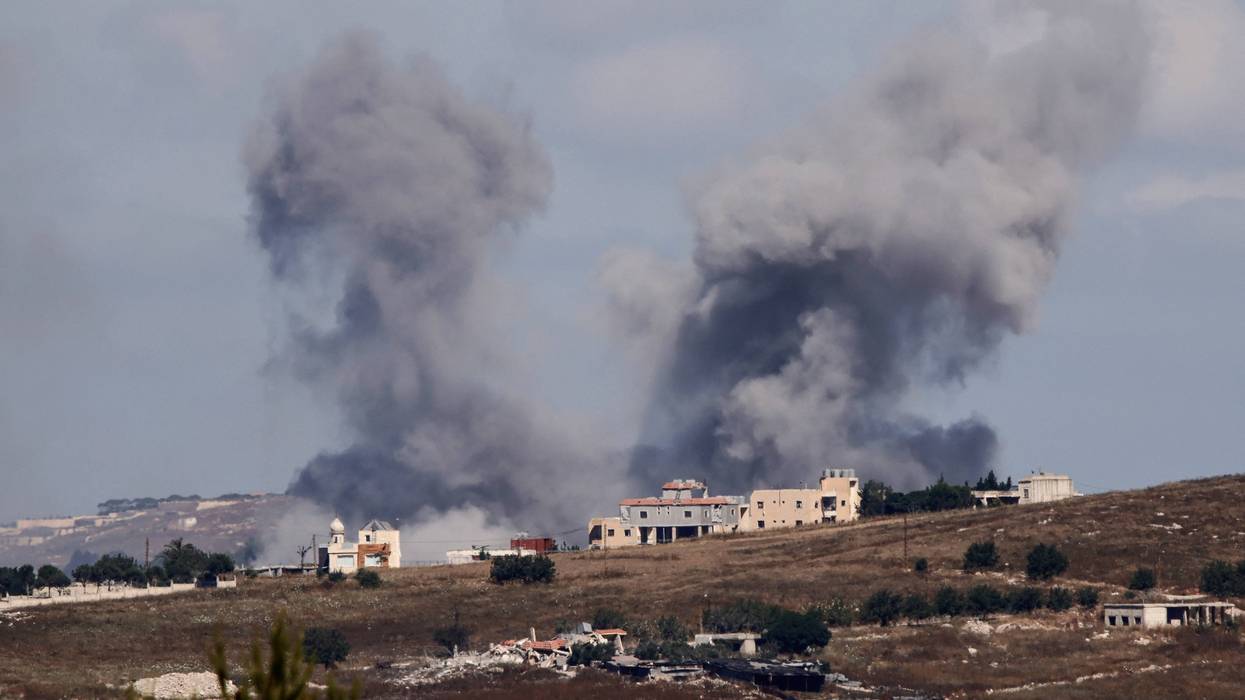
US-Iran Talks Delayed as 'Renewed Israeli Aggression' in Lebanon Kills at Least 18
One Lebanese writer reported that Israeli forces were "committing massacres" in residential areas across southern Lebanon, threatening to derail progress toward a US-Iran peace deal.
Jun 19, 2026
US and Iranian delegations delayed plans to travel to Switzerland on Friday for the opening round of talks to cement the details of a peace agreement as the Israeli military bombarded southern Lebanon, killing at least 18 people and threatening once again to derail momentum toward a diplomatic resolution.
The Associated Press reported that "mediators worked to reschedule the meetings crucial for starting talks over a permanent end to the Iran war, with much of the attention focused on Lebanon." Iran's leadership has insisted that ending Israeli attacks on Lebanon is critical to ending the war, and the memorandum of understanding signed earlier this week calls for "the immediate and permanent termination of military operations on all fronts, including in Lebanon."
Israel's military, which joined the US in launching the war on Iran in late February, carried out strikes throughout southern Lebanon on Friday, hours after US Vice President JD Vance—who was supposed to travel to Switzerland—publicly complained about the Israeli leadership's tendency to launch bombing campaigns during critical stages of the Trump administration's talks with Iran. Last weekend, Israeli forces bombed Beirut shortly after US President Donald Trump announced plans to sign the memorandum of understanding.
"We seem to be right on the cusp of a major breakthrough in the agreement, and then all of a sudden, there's a major explosion that goes off in a civilian population center in Beirut, and a lot of people who have nothing to do with Hezbollah lose their lives," Vance told reporters on Thursday. "That's not acceptable."
JD Vance criticizes Israel:
We seem to be right on the cusp of a major breakthrough in the agreement, and then all of a sudden there's a major explosion that goes off in a civilian population center in Beirut, and a lot of people who have nothing to do with Hezbollah lose their… pic.twitter.com/Roi6BVtpnt
— Clash Report (@clashreport) June 18, 2026
Roqayah Chamseddine, a southern Lebanese writer, reported that "the intense Israeli bombardment" on Friday "targeted populated residential neighborhoods in the Nabatieh district, committing massacres in the towns of Dweir Harouf, Al-Sharqiya, and Kfar Sir, while also striking Kfar Roumman, Haboush, Jebchit, Toul, and Deir al-Zahrani."
"People had only just begun returning to their villages," Chamseddine wrote. "The renewed Israeli aggression quickly expanded into the Western Bekaa Valley, where Israeli warplanes targeted the heights of Abu Rashed and launched attacks along the Litani River valley near the town of Zalaya."
Apocalyptic scenes in Harouf, South Lebanon.
Israel dropped bombs on residential buildings in the middle of the night.
Entire families are now buried under the rubble. pic.twitter.com/kuKVB0ffjQ
— sarah (@sahouraxo) June 19, 2026
Four Israeli soldiers were killed in southern Lebanon on Friday by a Hezbollah attack on an Israeli tank, according to the Israel Defense Forces. The attack prompted Israel's far-right national security minister, Itamar Ben-Gvir, to declare that "all of Lebanon must burn."
"With all due respect to the Americans, Israel must make it clear to the entire world that the blood of our sons and the security of our citizens are not forfeited," Ben-Gvir added.
The Trump White House cited logistical challenges in a statement announcing the delay of the US delegation's departure to Switzerland, not mentioning Lebanon.
But the Lebanese outlet Al Mayadeen reported that the Israeli assault on Lebanon was central to the Iranian delegation's decision to postpone its planned trip on Friday.
"The delegation had already been preparing to depart Iran and launch the first round of negotiations, scheduled to span 60 days, before the decision to suspend the trip was made," Al Mayadeen reported, citing an unnamed source. "Tehran had previously informed both Washington and the mediators that the Lebanon file remains a central component of the negotiations and will directly influence whether the talks proceed."
Keep ReadingShow Less
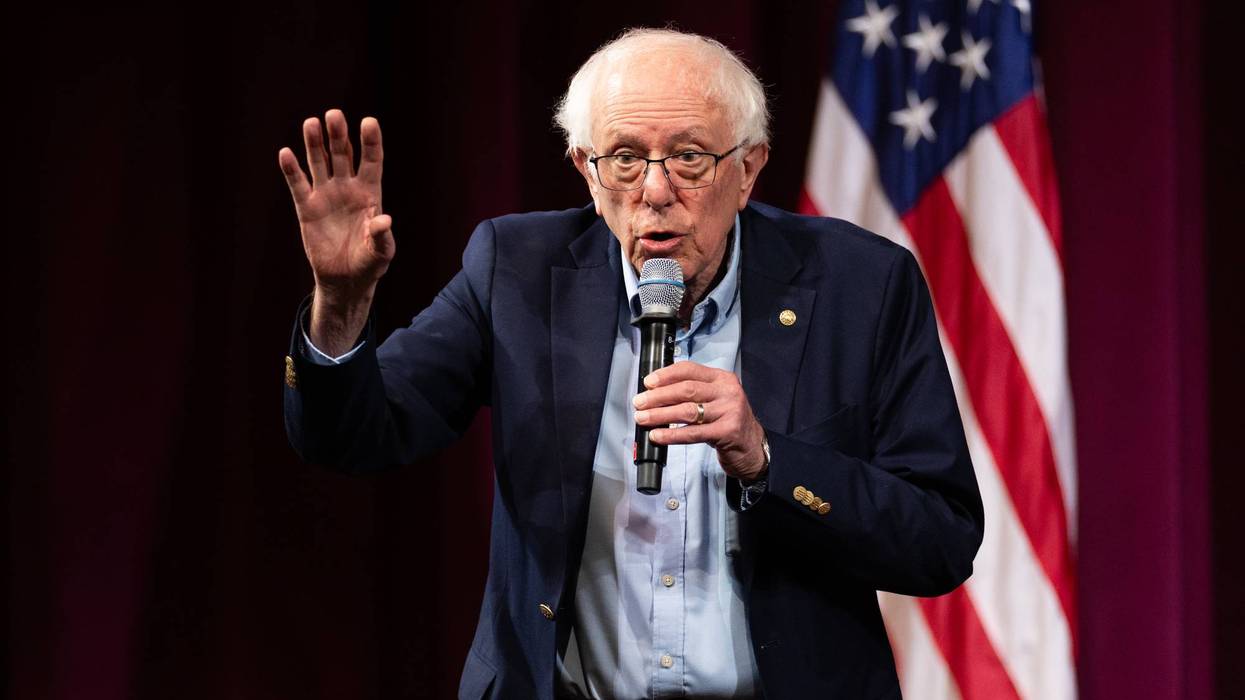
Sanders Introduces Bill to 'Thwart Big Tech Oligarchs' Via 50% Public Stake in AI Giants
The senator said his legislation aims to ensure "that AI benefits humanity, not just the richest people on the planet."
Jun 18, 2026
US Sen. Bernie Sanders on Thursday introduced legislation that would give the American public a 50% ownership stake in the largest artificial intelligence companies, a move that comes as AI capitalism is rewarding a handful of plutocrats with unprecedented wealth at the eventual expense of many millions of jobs—and possibly humanity's very existence.
Sanders' American AI Sovereign Wealth Fund Act would give the public a direct ownership stake in the largest AI companies in America via a one-off 50% tax on the companies' stock. The taxed shares would be deposited into the sovereign wealth fund, a state-owned investment vehicle similar in purpose to Norway's Government Pension Fund, which is funded by oil revenue.
The senator estimates that the tax would generate around $7 trillion for the fund.
“The principle is simple: When a public resource generates wealth, the public should share in that wealth,” Sanders said in a statement. “The future of AI and the fate of humanity must not be decided behind closed doors in Silicon Valley by billionaires seeking to maximize their power and profit. It must be decided by workers, parents, teachers, artists, scientists, communities, and the American people.”
Sanders' proposal comes as AI and related companies have generated trillions of dollars for their shareholders and executives. Meanwhile, AI deployments have resulted in thousands of lost jobs per month in the United States, with that number expected to increase dramatically as the technology improves exponentially.
Eventually, recursive self-improvement—AI that evolves independently of human control—is widely expected to result in Artificial General Intelligence, a tipping point when AI matches or exceeds human capabilities across virtually all cognitive tasks. Experts say that this could lead to wildly varying outcomes, ranging from a "golden age" of AI-driven prosperity to techno-authoritarian government to malicious artificial intelligence wiping out humanity.
In addition to the sovereign wealth fund proposal, Sanders is also calling for a nationwide moratorium on AI data centers, which cause tremendous environmental harm while consuming a staggering amount of energy amidst a worsening climate emergency.
“As a society, we can no longer sit back and allow a handful of Big Tech oligarchs to determine the future of this revolutionary technology with no democratic input," Sanders said Thursday.
"AI was not created out of thin air. It was not a brilliant idea that just popped into Mark Zuckerberg’s head or Elon Musk’s imagination," he added. "The foundation of AI is based on the collective knowledge of humanity and the creative work of tens of millions of people. The American people must have the ability to slow it down and make sure that AI benefits humanity, not just the richest people on the planet. That’s precisely what this legislation does.”
Keep ReadingShow Less
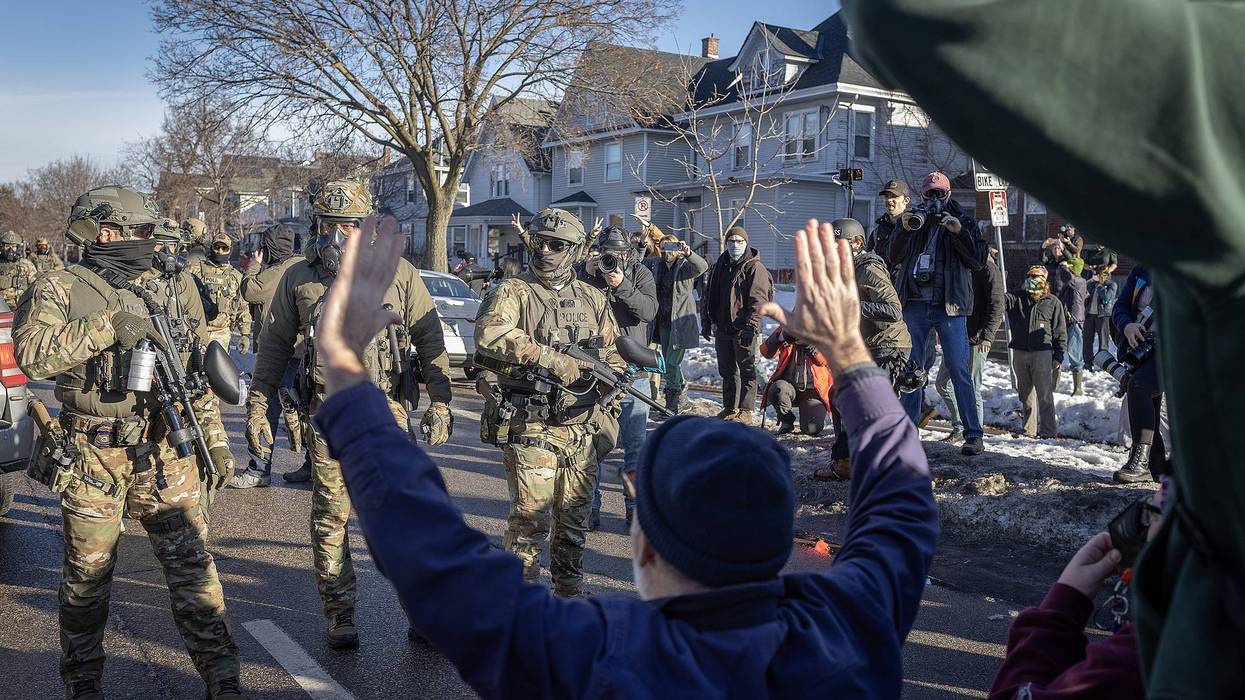
Report Details 'Human Rights Crisis' Wrought by Trump ICE Surge in Minnesota
“The federal government sent hordes of masked, armed agents to grab people off the street, whisk them away in shackles, and abuse those who sought to bear witness,” Human Rights Watch said of the deadly blitz.
Jun 18, 2026
Human Rights Watch on Thursday published a scathing report detailing how President Donald Trump "caused a human rights crisis" in Minnesota by ordering the deadly federal invasion of the Twin Cities in service of the administration's mass deportation agenda.
HRW called Operation Metro Surge, launched by Trump last December, "an unprecedented deployment of thousands of federal immigration agents and officers to the state of Minnesota," including members of Immigration and Customs Enforcement (ICE) and Customs and Border Protection (CBP).
"The Trump administration claimed that Operation Metro Surge was designed to keep Americans safe and often stated that it was targeting noncitizens with violent criminal histories," the report states. "But the operation itself caused significant harm, and nearly two out of three immigrants arrested by ICE during Operation Metro Surge had no prior US criminal history whatsoever."
At least three people have been killed in connection with the operation. ICE agent Jonathan Ross fatally shot Renée Good, a 37-year-old US citizen, in Minneapolis on January 7. A week later, 36-year-old Nicaraguan detainee Victor Manuel Díaz, who was arrested during the operation, became the third person to die at the notorious East Montana concentration camp in Texas. On January 24, CBP officer Raymundo Gutierrez and Border Patrol agent Jesus Ochoa shot and killed nurse Alex Pretti, 37, also in Minneapolis.
"Federal agents shot a third Minneapolis resident and pulled guns on dozens more," the report continues. "Agents also violently smashed car windows without justification, physically threw people to the ground who were not resisting arrest, and deployed chemical irritants and flash-bang grenades on dozens of occasions, sometimes at close range and without warning, resulting in injuries, including to journalists."
Furthermore, federal agents "unlawfully arrested and detained hundreds; engaged in racial profiling, harassment, and surveillance; and terrorized Minnesotans, chilling their rights to freedom of expression and assembly, and impacting their rights to education and health, among others," HRW said, adding that "residents faced further abuses when they collectively acted to protest, prevent, and stop these violations of their rights."
The HRW report calls for an immediate end to abusive federal enforcement operations in Minnesota; independent investigations into alleged unlawful killings, racial profiling, arbitrary arrests, excessive force, and other rights violations; and full accountability for officials responsible.
“The federal government sent hordes of masked, armed agents to grab people off the street, whisk them away in shackles, and abuse those who sought to bear witness,” Reagan Williams, HRW's crisis and conflict researcher, said in a statement. “Minnesotans mobilized to protest, to document abuse, and to provide critical aid to one another. National-level action is needed to ensure accountability, end ongoing abuses, remedy the harm, and prevent another crisis of this scale.”
“Operation Metro Surge put the violent and abusive practices of these agencies on full display,” Williams added. “We have clear proof of how they operate when impunity prevails, and we need to urgently chart a new way forward through accountability and structural reforms that put an end to these abuses.”
Keep ReadingShow Less
Most Popular