

SUBSCRIBE TO OUR FREE NEWSLETTER
Daily news & progressive opinion—funded by the people, not the corporations—delivered straight to your inbox.
5
#000000
#FFFFFF
To donate by check, phone, or other method, see our More Ways to Give page.
Daily news & progressive opinion—funded by the people, not the corporations—delivered straight to your inbox.

Tony Newman 646-335-5384 or Jerry Otero 718-664-7420
The federal government's National Institute on Drug Abuse released its annual Monitoring the Future survey today. Monitoring the Future is now in its 40th year and is considered the 'gold standard' of teen drug use surveys. It surveys 40,000 to 50,000 students in 8th, 10th and 12th grade in schools nationwide about their use of alcohol, legal and illegal drugs and cigarettes.
Marijuana use in the past year by students in all three grades declined slightly, from 26% in 2013 to 24% in 2014. The survey also found that students in 8th and 10th grades reported that marijuana is less available than it once was. Also, daily marijuana use among 12th graders is down, from 6.5% in 2013 to 5.8% in 2014.
These declines in marijuana use among teens follow the implementation of the nation's first marijuana legalization laws in Colorado and Washington. Those laws were adopted in 2012, and retail sales of marijuana in those states began earlier this year. Each of the marijuana legalization laws clearly specify that legalization applies to adults 21 and over, and contain built-in safeguards that restrict sales to minors. Last month, voters in Alaska, Oregon and Washington, D.C. also decisively passed initiatives to legalize marijuana in those jurisdictions.
"The results from the Monitoring the Future survey showing a decline in teen marijuana use - even as legalization initiatives have passed - is very encouraging, though not surprising," said Marsha Rosenbaum, PhD, of the Drug Policy Alliance. "Now that the national conversation about marijuana is 'above ground,' parents and teachers are able have honest conversations with teens based on sound science, health, and safety. The declines in use revealed in MTF may well indicate that teens are listening, and choosing to make wise decisions."
Rosenbaum is the author of the influential publication Safety First: A Reality-Based Approach to Teens and Drugs. Earlier this month, DPA released a revised edition of Safety First with new sections addressing marijuana legalization and adolescent brain development.
Over half of teens (56%) say they would not try marijuana, even it were legal for adults. Some opponents of marijuana legalization have speculated that use will increase with the expansion of legally regulated marijuana. Rather, the findings from Monitoring the Future echo the results of other studies on marijuana laws and underage use.
Numerous researchers have looked at the extent of teen marijuana use in states where medical marijuana is legal. Their findings, published in prestigious journals such as the American Journal of Public Health and the Journal of Adolescent Health, generally show no association between changes in marijuana laws and rates of teenage marijuana use. A 2012 study published in the Annals of Epidemiology found that medical marijuana laws actually "decreased past-month use among adolescents...and had no discernible effect on the perceived riskiness of monthly use." Preliminary data from the 2013 Healthy Kids Colorado Survey, released by the Colorado Department of Public Health and Environment (CDPHE) in August of 2014, found that high school marijuana use in the past month slightly decreased from 22 percent in 2011to 20 percent in 2013.
"States are legalizing marijuana, Congress is debating and enacting drug policy reform, and teen drug use rates are declining - this is not a coincidence," said Bill Piper, director of national affairs for the Drug Policy Alliance. "Young people respond well to frank, honest conversations about drugs and drug use. The less taboo talking about drugs becomes the more successful prevention efforts will be."
Cigarette and alcohol use also continued their long-term decline, reaching their lowest point since the survey began polling teenagers in 1975. Notably, this was the first year that the survey asked about use of e-cigarettes, and it found that more teens used e-cigarettes than traditional tobacco cigarettes or any other tobacco product.
"It's great news that teen tobacco use is continuing to decrease," said Jerry Otero, youth policy manager for the Drug Policy Alliance. "Let's remember, we have been able to drive down teen smoking rates from a peak of 28% in 1997 to just 8% in 2014. And we did this without criminalizing tobacco use or arresting and locking up people who smoke. We need to continue doing what works by giving young people honest and credible information about tobacco--the best choice for teens is not to use tobacco, but e-cigarettes pose less a risk to health than smoking."
The Drug Policy Alliance is the nation's leading organization promoting drug policies grounded in science, compassion, health and human rights.
(212) 613-8020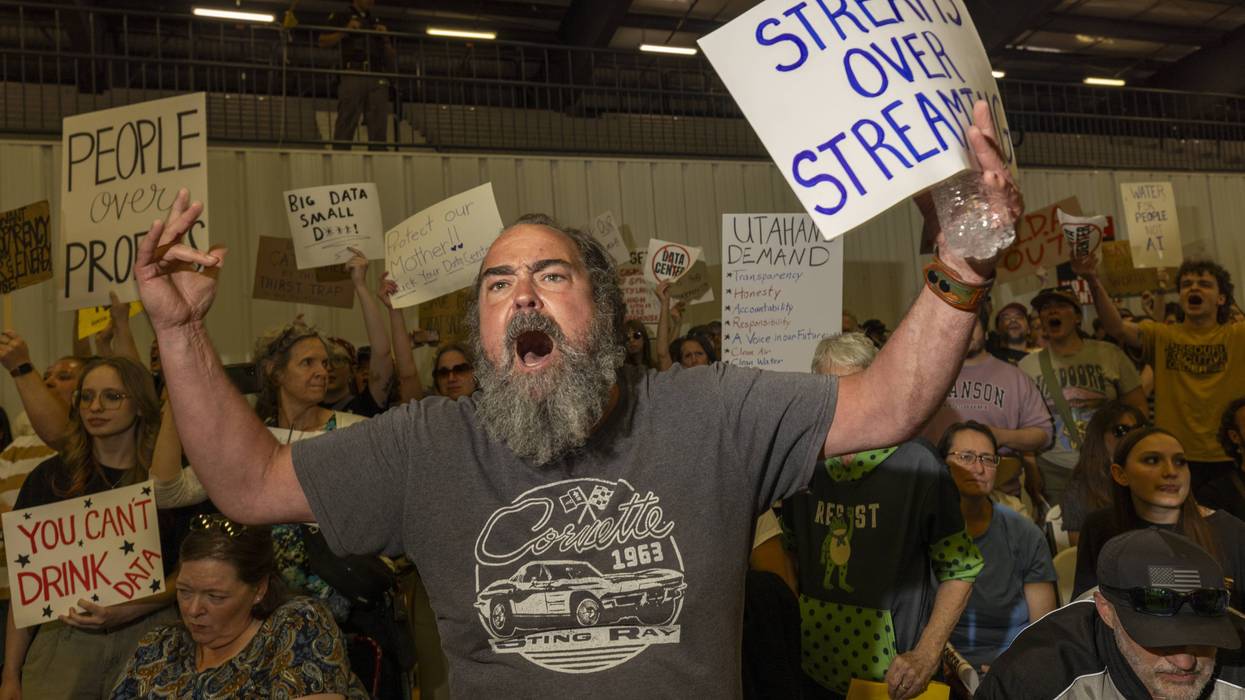
The project, which residents were informed of just last week, is expected to more than double Utah’s electricity usage, hike its carbon footprint by 50%, and potentially drain more water from the depleted Great Salt Lake.
County commissioners in Box Elder County, Utah, were deluged with chants of "Shame! Shame! Shame!" from a crowd of hundreds on Monday night as they voted unanimously to move forward with a sprawling "hyperscale" artificial intelligence data center project that many residents fear will cause energy prices to soar and imperil water access.
The project, known by state officials as "Stratos," was proposed by the celebrity venture capitalist Kevin O'Leary and has been rushed along by Utah's Military Installation Development Authority, which recently approved a gigantic energy tax break for the program to help "lure" the billionaire "Shark Tank" investor.
The development, dubbed "Wonder Valley" after O'Leary's "Mr. Wonderful" TV persona, would span more than 40,000 acres of northern Utah—more than two and a half times the size of Manhattan—and would consume more than twice the electricity currently used by the entire state if approved, according to Axios.
CBS 2 KUTV called it "the biggest thing in the region since the completion of the first transcontinental railroad." And yet Utahns say they've been given little information about the plan and few opportunities to voice their concerns.
Residents were given short notice before Box Elder commissioners gathered at the county fairgrounds on Monday for a "special" meeting to vote on the project, but an estimated 500 still showed up to voice their displeasure.
They raised fears that they'd have to endure the same dramatic energy price spikes as other states with high concentrations of data centers. Residential utility costs have jumped 13-20% year over year in Virginia, Illinois, Ohio, and New Jersey, a trend attributed to the rollout of data centers in these states.
The developers of the Utah project have emphasized that it will be powered by an on-site natural gas plant, which they claim would limit the impact on utility bills.
However, that still leaves the massive environmental concern, especially since natural gas is almost entirely made of methane, one of the worst planet-heating pollutants.
Kevin Perry, a professor of atmospheric sciences at the University of Utah, has said that the estimated nine gigawatts of power the center would require, "would increase the carbon dioxide emissions for the state of Utah by more than 50%," meaning "there’s a huge climate footprint associated with that proposal.”
Environmental advocates also warn that the facility will further drain water from the Great Salt Lake amid an already severe drought.
The Salt Lake Tribune has found that Utah's dozens of other data centers consume wildly different amounts of water depending on the technology they use.
The developers of the Box Elder facility have claimed the project will use "zero water turbine" technology that allows it to recycle water, resulting in "net zero" consumption.
But Samantha Hawkins, the communications director for Grow the Flow Utah, a group dedicated to protecting the Great Salt Lake, said it's impossible to know if the developers are telling the truth when they say their facility is designed to limit water usage.
"So far, there’s no publicly available hydrologic analysis or independent review to support those claims," she said, "and there haven’t been any manufacturers, technologies, or contracts cited in relation to the 'zero water turbine' technology."
Even if the centers limit water use, they still need to remain cool, which the Tribune said often requires more energy.
Many of the Utahns who showed up to protest Monday's vote felt they were being kept in the dark about the facility's potential harms and that the plans for the facility, which were not made public until last week, were being kept from them.
“I’m outraged," said Colleen Flanagan, a resident of Sandy who spoke with Fox 13 Salt Lake. "I am absolutely angry that there was no studies done—it just came up out of the community. Nobody knew about it."
Mitchell Tousley, who drove more than an hour from Draper to protest the decision, said, "A project of this scale just absolutely requires public input, and there really hasn’t been."
Deals to build these facilities have often been made in secret, with contract details hidden from the public by nondisclosure agreements that stifle dissent until the project has already been approved. Despite this, these projects have often drawn fearsome backlash from the communities where they are planned. In some cases—like in Virginia late last month, where a 2,100-acre center was set to be built—it has led developers to pull out.
But the commissioners in Box Elder County, who said they'd reviewed more than 2,500 public comments on the proposal, appeared unmoved by the outpouring of public concern on Monday night. They said water and air quality issues were not factors in their vote and that the water rights were held by the private landowners.
As the crowd jeered, with chants of "cowards" and "people over profits," Commissioner Boyd Bingham, a Republican, shouted them down.
“For hell’s sakes, grow up,” he yelled. “This is beyond a joke.” The commissioners then left the room and addressed the crowd via a virtual meeting.
In a video response to Monday night's protest, O'Leary said: "I’m the only developer of data centers on Earth that graduated from environmental studies. I'm pretty aware of what these concerns are. They are around air, water use, heat, noise pollution. So sustainability is at the heart of what we do in terms of all these proposals."
He claimed without evidence that 90% of the opponents of the data center project were "being bused in" from out of state. He also claimed that the facility would be powered in part by "solar, wind, and batteries," when it is actually powered entirely by natural gas.
Opponents continue to characterize Stratos as a billionaire vanity project to loot Utah's vast natural resources with little consideration for how it will affect residents.
Utah State University physics professor Robert Davies told Fox 13 that the Great Salt Lake "is occupied by amazing living systems" and that "projects like this go into environments like this and scrape the living systems right off the face of the Earth.”
He said, “This is a private enterprise that is coming in to extract from our natural wealth and pipe it out of the state… and leave us with a few crumbs.”

"You represent the majority of people not only in the United States who overwhelmingly in the public opinion polls, say they're against the war, but of course the majority of people in the world," said peace activist Medea Benjamin.
As the one-man protest of activist Guido Reichstadter reached its fifth day, 168 feet above the Anacostia River on the Frederick Douglass Memorial Bridge in Washington, DC, the anti-war activist is receiving praise both at home and worldwide as he said Tuesday he would go another day even though he has run out of both food and water.
"We are profoundly touched," said CodePink co-founder Medea Benjamin during a visit Monday, standing below Reichstadter's perch at the top of one of the bridge's arches, which he has been occupying since last Friday in protest of President Donald Trump's war on Iran and the rapid proliferation of unregulated artificial intelligence.
"It's such a beautiful act of profound civil disobedience that is making waves all over the world," said Benjamin in a video clip posted on social media by documentary filmmaker Ford Fischer.
2) Guido Reichstadter spoke by phone with Medea Benjamin of CODEPINK, saying he's "touched" by their support.
"We are just amazed that you did this!" Benjamin told him. "Just something beyond our belief."
Police over a loudspeaker continued to implore Reichstadter to accept… pic.twitter.com/cnBXv0mNTy
— Ford Fischer (@FordFischer) May 4, 2026
Reichstadter climbed up to the arch on Friday and unfurled a long black banner that he says represents the "shame and grief" of those who have been forced to be complicit in the US-Israeli war on Iran.
He released a statement saying he was demanding "an immediate end to the Trump regime’s illegal war on Iran and the removal of the regime’s power through mass nonviolent direct action and non-cooperation.”
The 45-year-old activist and father of two has staged other high-profile acts of civil disobedience in the past, but this one garnered the attention of Explosive Media, an independent media group that has released several viral videos skewering the Trump administration's deeply unpopular war. Reichstadter appeared in a video released by the group over the weekend, portrayed as a heroic LEGO figure.
As Benjamin spoke to Reichstadter, police continued trying to convince him to climb down from the arch, which he said he planned to leave Tuesday afternoon.
Now: Police get some exercise as they monitor Guido Reichstadter, now on his fifth day of occupying the Frederick Douglass Memorial Bridge in a one-man protest against the Iran War and AI proliferation. https://t.co/DFkhA6zABG pic.twitter.com/0dumNmXk20
— Ford Fischer (@FordFischer) May 5, 2026
He survived on Chex Mix and dried cranberries for the first day of his occupation, before running out on Saturday. He ran out of water Monday afternoon and was almost out of phone battery, but Fischer reported that he "managed to get something working."
Reichstadter said that he would stay for "possibly another day or two."
With reporters assembled nearby, Benjamin asked him if he wanted to share any message about the war in Iran, in which hostilities were continuing this week in the Strait of Hormuz, despite Defense Secretary Pete Hegseth's insistence that a ceasefire that was reached last month is holding.
"We have to end it," said Reichstadter.
"We're so worried that the bombing is going to start once again," said Benjamin, "and that's why you being up there is so important at this moment, because you represent the majority of people not only in the United States who overwhelmingly in the public opinion polls, say they're against the war, but of course the majority of people in the world... So what you're doing is on behalf of people all over the world, who are saying, 'This war was unprovoked, it's illegal, it's reckless, and it has to end."
More than 60% of Americans view Trump's war on Iran as a "mistake," according to a Washington Post/ABC News/Ipsos poll released the day Reichstadter climbed on top of the bridge.
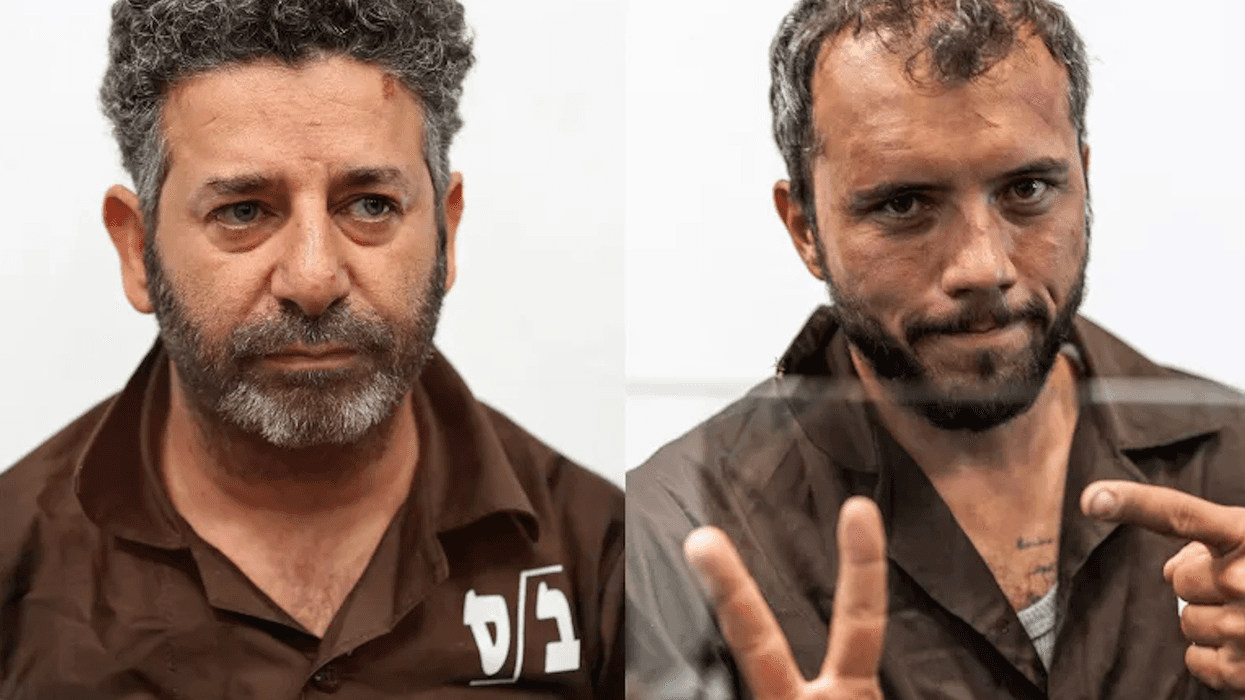
Brazil's president called Israel's continued detention of Brazilian Thiago Ávila and Spanish-Swedish national Saif Abu Keshek "a serious affront to international law."
Brazilian President Luiz Inácio Lula da Silva on Tuesday condemned Israel's twice-extended detention of two Global Sumud Flotilla members abducted last week off the coast of Greece while attempting to break the decadeslong Israeli blockade of Gaza and deliver humanitarian aid to its people amid an ongoing genocide.
"Maintaining the imprisonment of Brazilian citizen Thiago Ávila, a member of the Global Sumud Flotilla, is an unjustifiable action by the Israeli government, causes great concern, and must be condemned by all," Lula said on X.
"The detention of the flotilla activists in international waters had already represented a serious affront to international law," he added. "For this reason, our government, together with that of Spain, which also had a citizen detained, demands that they receive full guarantees of safety and be immediately released."
Spain's government has also condemned Israel’s capture of Abu Keshek and demanded his immediate release, and like Lula, called the detention illegal because it occurred in international waters. Abu Keshek is also a citizen of Sweden, which has not condemned his detention—or even mentioned him by name—but has asked that "the rights of any Swedish citizens will be respected."
Adalah Legal Center, the Palestinian group in Israel representing Ávila and Abu Keshek, said Tuesday that the Ashkelon Magistrates’ Court approved Israel's request to extend the pair's detention through May 10. This, after the court on Sunday prolonged their detention by two days.
“The court’s decision to extend the detention of humanitarian activists abducted in international waters amounts to judicial validation of the state’s lawlessness,” Adalah assertedad, vowing to appeal the decision, which the group said was based on "secret evidence."
Adalah noted that “because the activists were abducted over 1,000 kilometers away from Gaza and are not Israeli citizens, Israeli domestic law does not apply to them."
Israel contends that it is enforcing a lawful naval blockade of Gaza Strip, and that under the laws of naval warfare, that blockade can be enforced not only in its territorial waters, but also on the high seas.
Adalah said, "Crucially, the court granted the full six-day extension requested by the state without imposing any limitations or judicial constraints on the interrogation period,” adding that the stated purpose of their continued detention is further interrogation.
"Ávila reported being subjected to repeated interrogations lasting up to eight hours,” the group reported. “Interrogators have explicitly threatened him, stating he would either be ‘killed’ or ‘spend 100 years in jail.'”
“Both activists remain in total isolation, subjected to 24/7 high-intensity lighting in their cells, and kept blindfolded whenever they are moved, including during medical examinations,” Adalah said, accusing interrogators of "trying all the time to connect the humanitarian aid with Hamas to present it as a service to Hamas."
Israel's Ministry of Foreign Affairs claims that both men were affiliated with the Popular Conference for Palestinians Abroad, which the US government accuses of "clandestinely acting on behalf of" Hamas, the militant Palestinian resistance group that led the October 7, 2023 attack on Israel.
Still, no charges have been filed against the pair, who Adalah said have been on hunger strike since April 30 in protest of their detention.
Abu Keshek and Ávila were among the more than 170 Global Sumud Flotilla members intercepted and seized last week in international waters 45 nautical miles west of the Greek island Kythira and 600 nautical miles from Gaza in what many critics have called an act of piracy.
All of the other flotilla members have been released. Many said they brutally abused by their Israeli captors, who threatened to kill them. The Washington Post reported 34 people—including citizens of Australia, Colombia, Italy, Ukraine, and the United States—required medical attention for broken ribs, noses, and other injuries. Detained activists also said they were denied food and water, and were forced to sleep on deliberately flooded floors. Both Abu Keshek and Ávila had visible facial injuries during their first court appearances.
In a statement issued on Monday, Global Sumud Flotilla said Abu Keshek and Ávila "are being subjected to systemic psychological torture and explicit threats to the lives of their families."
The statement also noted the growing calls for their release from advocacy organizations and governments.
"We urge the international community and their representatives to immediately take action for the safety and freedom of Saif and Thiago, the freedom of all Palestinian hostages, and the end of Israel's illegal siege of Gaza and its genocide," Global Sumud added.
American journalist Alex Colston, who was aboard the flotilla on assignment for Zeteo, said he was beaten by his captors, and corroborated accounts of broken bones, concussion symptoms, and other signs of abuse inflicted by Israeli forces on flotilla members, as well as death threats, property theft, and other mistreatment.
Hannah Smith, a representative of the flotilla's public affairs team who was also aboard one of the vessels, told Democracy Now! on Monday that, after intercepting the boats, Israeli forces "pointed guns at us. They had lasers pointed at us. We had our hands in the air. They threatened lethal force."
"Many people were subject to aggressive physical force," she said. "We were denied access to adequate water. We were denied access to sanitary supplies."
Smith continued:
The nights were extremely cold. People’s jackets were stolen. When I advocated for one of the participants, who’s a doctor, who was pacing for two hours trying to stay warm—she had a short-sleeve shirt in like 50-degree weather that was cold and damp. When I advocated for blankets, they flooded the sleeping area. And then we had a dozen people pacing, trying to stay warm, trying not to get hypothermia.
When we nonviolently resisted, many people were beat. Many people were dragged. I was held in a stress position for many hours... I heard people screaming. I heard people being dragged around. And it was absolutely horrifying.
The reports of torture and other abuse are consistent with Israeli forces' brutal treatment of members of past Gaza flotillas, including Ávila, who has taken part in at least three such missions. Victims have included Swedish climate campaigner Greta Thunberg, who was allegedly dragged, beaten, and made to kiss an Israeli flag in which she was allegedly wrapped after Israeli forces intercepted last October's Global Sumud mission.
It's not just activists who reported Israeli brutality. Journalist Noa Avishag Schnal—who was covering last October's flotilla—described rape threats and being “hung from the metal shackles on my wrists and ankles and beaten in the stomach, back, face, ear, and skull by a group of men and women guards, one of whom sat on my neck and face, blocking my airways.”
In 2010, Israeli forces raided one of the first Freedom Flotilla Coalition convoys carrying humanitarian aid intended for Gaza, which Israel blockaded three years earlier. The Israeli attackers killed nine volunteers aboard the MV Mavi Marmara, including Turkish-American teenager Furkan Doğan.
In a letter to his daughter dictated to his lawyer from prison, Ávila said, "I’m sorry for not being home with you right now."
"Today over a million children are suffering a genocide, being starved to death, being amputated without anesthesia, and suffering from horrific, hateful ideas, despite not knowing what Zionism and Imperialism is," he continued.
More than 250,000 Palestinians have been killed or wounded by Israeli forces in Gaza since October 2023. Around 2 million others have been forcibly displaced, starved, or sickened. Israeli Prime Minister Benjamin Netanyahu and former Defense Minister Yoav Gallant are wanted by the International Criminal Court for alleged crimes against humanity and war crimes in Gaza, and Israel is facing an International Court of Justice genocide case filed by South Africa and formally supported by numerous nations, including Brazil and Spain.
"Your world will be safer because many parents decided to give everything to build this better world for you," Ávila added. "I hope someday you understand that because I love you so much there was nothing more dangerous for you and for other children than living in a world that accepts genocide."