
SUBSCRIBE TO OUR FREE NEWSLETTER
Daily news & progressive opinion—funded by the people, not the corporations—delivered straight to your inbox.
5
#000000
#FFFFFF
To donate by check, phone, or other method, see our More Ways to Give page.


Daily news & progressive opinion—funded by the people, not the corporations—delivered straight to your inbox.
"The flawed legislation passed in the Senate today threatens to repeat the same mistakes that were made with the so-called ‘war on drugs,'" wrote one leader at a civil rights group.
The U.S. Senate on Friday passed a bill that would make permanent harsh criminal penalties for fentanyl-related drugs—but critics warn that the Halt All Lethal Trafficking of Fentanyl Act takes the wrong approach to drug prevention by prioritizing criminalization.
The bill passed by a vote of 84-16, with all the no votes coming from members of the Democratic caucus. The legislation now goes back to the House of Representatives for a procedural vote where it's expected to pass again and then go on to U.S. President Donald Trump, who is expected to sign it into law, according to the group the Drug Policy Alliance, which fights for equitable and nonpunitive drug policy.
The legislation would automatically and permanently put fentanyl-related substances in Schedule I under the Controlled Substances Act, the U.S. Drug Enforcement Agency's list of most dangerous drugs. The bill is expected to increase the number of criminal convictions for fentanyl-related substances, according to the Congressional Budget Office (CBO).
The HALT Fentanyl Act cements policy changes first enacted by the first Trump administration, which temporarily classified fentanyl-related substances as Schedule I drugs in 2018.
Drug policy and rights groups argue the passage of the bill doubles down on "failed, punitive" drug policy.
"Overdose deaths are declining not because of harsh sentencing laws, but because we are finally investing in what works—harm reduction, expanded treatment, and proven public health strategies," said Amy Fettig, acting co-executive director of the group Fair and Just Prosecution, in a statement on Friday.
"The HALT Fentanyl Act threatens this progress by doubling down on ineffective and extreme sentences and fueling unjust prosecutions that disproportionately target communities of color. We have decades of evidence showing that harsh sentencing laws don't stop drug use or save lives," Fettig continued. "Why are we repeating the same mistakes?"
The U.S. Centers for Disease Control and Prevention (CDC) released data in February predicting a nearly 24% decline in drug overdose deaths in the United States for the 12 months ending in September 2024, compared to the previous year.
The CDC credits multiple factors for the drop, including "widespread, data-driven distribution of naloxone," "better access to evidence-based treatment for substance use disorders," and "shifts in the illegal drug supply."
Jesselyn McCurdy, executive vice president for government affairs at the Leadership Conference on Civil and Human Rights, made similar comments to Fettig, writing: "The flawed legislation passed in the Senate today threatens to repeat the same mistakes that were made with the so-called 'war on drugs'... This legislation will not deter crime, protect public safety, or decrease drug use or trafficking."
Maritza Perez Medina, director of federal affairs at the Drug Policy Alliance, said in a Friday statement, "Our elected leaders must invest more in these lifesaving health approaches, yet Congress is doing the opposite."
There are nearly 360,000 American behind bars due to a drug offense, according to the Drug Policy Alliance.
With only weeks left of his administration, President Joe Biden has earned praise from rights groups and advocates for exercising his clemency powers, including announcing Monday that he is commuting the death sentences of 37 individuals on federal death row—but the Congressional Progressive Caucus is urging him to go further.
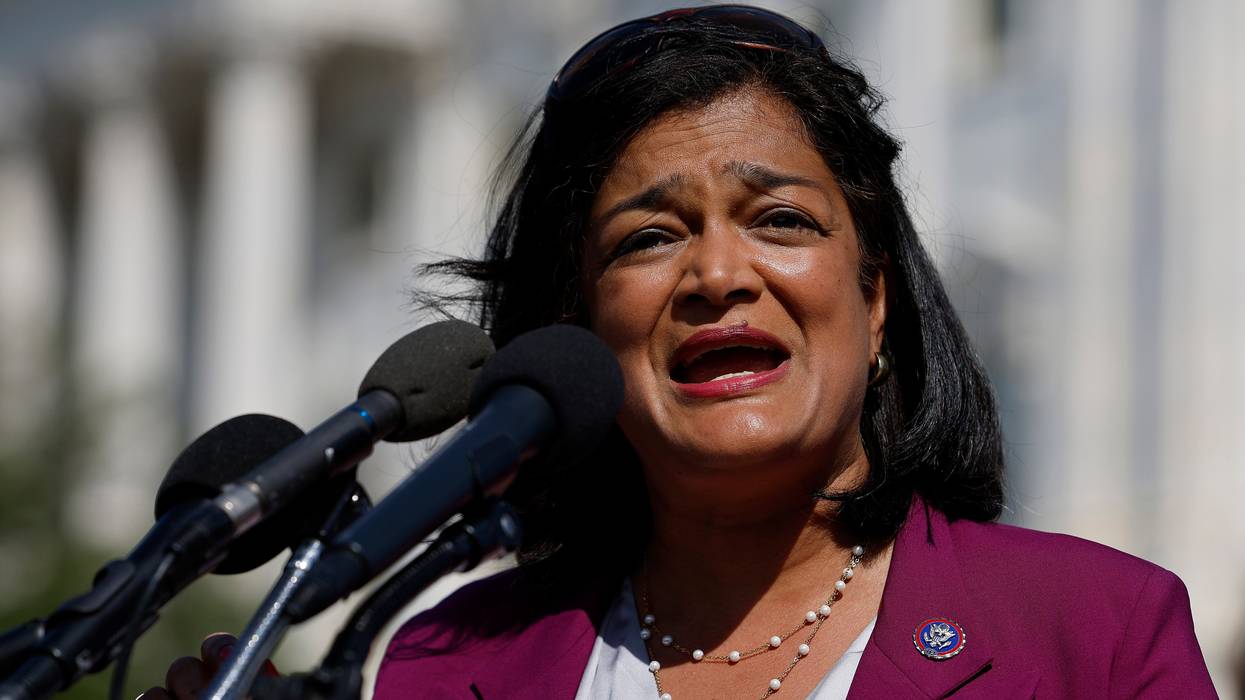
"We thank the president for this significant step and urge him to use his last few days in office to commute the sentences of the thousands of Americans impacted by the War on Drugs and decades of harmful, disparate convictions and sentencing," wrote Congressional Progressive Caucus Chair Rep. Pramila Jayapal (D-Wash.) in a statement on Monday.
Per Drug Policy Alliance, a nonprofit that addresses the harms of drug use and drug criminalization, there are nearly 360,000 American behind bars due to a drug offense. "This includes thousands of people charged with federal marijuana offenses or who are serving long federal mandatory minimum sentences due to the unfair crack-powder cocaine sentencing disparity," according to the group.
On December 12, Biden commuted the sentences of nearly 1,500 Americans and pardoned 39 people convicted of nonviolent crimes, a move the White House called "the largest single-day grant of clemency in modern history."
Reacting to those commutations and pardons, the Drug Policy Alliance wrote that "President Biden's historic actions today acknowledge what Americans have long known: that our country's practice of doling out lengthy prison sentences to people for drug offenses has put lives at risk, broken families apart, and wasted billions of dollars."
However, the group continued, "he must issue additional pardons and commutations to bring all victims of our country's failed drug war home. But we cannot stop there. President Biden can still play a role in mitigating the harms of federal marijuana criminalization through executive action."
The Drug Policy Alliance has drafted a proposed executive order for Biden to issue that would create a council to guide the federal government in repairing harms caused by marijuana criminalization and advance more fair and just policies in future, and mandate that federal agencies be tasked with evaluating how their-marijuana related policies and programs created barriers for underserved communities, among other actions.
Biden did in 2022 grant full and unconditional pardons to all U.S. citizens convicted of simple federal marijuana possession—a move that was cheered by advocates.
In her statement on Monday, Jayapal called Biden's decision to largely clear federal death row an "extraordinary act" that was only possible thanks to "tireless organizing and activism of progressives in Congress and on the ground."
Three people, Dylann Roof, Robert Bowers, and Dzhokhar Tsarnaev, will remain on death row. The 37 people whose sentences were commuted will receive life in prison without the possibility of parole.
"When it comes to the DOJ's proposal to reschedule marijuana, public opinion could not be clearer," said a campaigner with Drug Policy Alliance, which analyzed public comments on the pending change.
Shortly after the public comment period for the Biden administration's proposed rule to reschedule marijuana closed, a reform group on Tuesday released an analysis showing that the majority of submissions advocate for federal decriminalization.
When President Joe Biden pardoned U.S. citizens and lawful permanent residents convicted of simple federal marijuana possession in October 2022, he also ordered the departments of Justice (DOJ) and Health and Human Services to review how cannabis is treated under the Controlled Substances Act.
Marijuana is currently Schedule I, the federal law's most restrictive category, despite dozens of states allowing adult recreational or medicinal use. In May, the Drug Enforcement Administration (DEA), which is part of the DOJ, proposed a shift to Schedule III and initiated the public comment period that ended Monday.
"Participation in public comment processes gives the American public a chance to speak from personal experience and provide feedback on proposed legal changes—and it gives the federal government an opportunity to adjust their proposals to reflect public opinion," said Cat Packer of the Drug Policy Alliance (DPA), which reviewed submissions.
"When it comes to the DOJ's proposal to reschedule marijuana, public opinion could not be clearer," added Packer, DPA's director of drug markets and legal regulation. "Rescheduling is simply not enough."
As DPA detailed in a statement, after analyzing the 42,910 public comments, the group found:
"The people are demanding the Biden administration do more to deliver on the marijuana reforms that communities deserve," Packer said, pointing to previous promises from Biden and Vice President Kamala Harris, the presumptive Democratic nominee to face former Republican President Donald Trump and U.S. Sen. JD Vance (R-Ohio) in the November election.
Packer highlighted that nearly half of the comments "recognize that ending federal criminalization is key to achieving racial justice and social equity," and "this is something that the Biden administration has repeatedly identified as a priority in their marijuana reform efforts."
"However, under Schedule III, communities of color would still face disproportionate harms and lifelong consequences from federal marijuana criminalization," she explained. "Under Schedule III, people could still be jailed or deported for marijuana violations, even in states where it is legal. Under Schedule III, people could lose their jobs, their housing, their... food stamp benefits, or even lose custody of their children for marijuana violations."
Earlier this month, DPA and Human Rights Watch released a 91-page report detailing how the U.S. War on Drugs has impacted the lives of immigrants, "punishing people with deep connections to the United States, where they have formed families, attained education, and built their lives."
Packer argued Tuesday that "if the Biden administration wants to be responsive to public opinion and live up to their own stated values of racial justice and repair, marijuana must be federally decriminalized and additional actions must be taken to end the lifelong collateral consequences that result from marijuana criminalization."
"This is a galvanizing moment for our movement for drug policies grounded in health, equity, and reinvestment," she stressed. "Even if marijuana is ultimately rescheduled through this process, there are additional actions that President Biden and Congress can take. In the coming weeks and months, we will continue working with our allies to urge President Biden to take a whole government approach to advance equity in federal marijuana policy and mitigate the harms of criminalization."
"That means expanding pardons and commutations, protecting state marijuana programs, and directing federal agencies to cease punishing people for marijuana use," she said. "We know that the people and the evidence are on our side. It is time that our federal government listened."
Despite support from top figures including Senate Majority Leader Chuck Schumer (D-N.Y.), there is little hope that the current divided Congress would decriminalize marijuana. As Marijuana Moment reported shortly before House Speaker Mike Johnson (R-La.) was voted into his role last year, he "has consistently voted against cannabis-related legislation."
The cannabis industry analytics firm Headset on Tuesday also reviewed public submissions for the new proposal and noted that "this comment period has shattered previous DEA records, surpassing even the highly contentious 2020 telemedicine rules that garnered approximately 38,000 comments."
"To put this into perspective, that's roughly equivalent to the entire population of Juneau, the capital city of Alaska," the firm highlighted. "It's as if every resident of a small state capital took the time to voice their opinion on this crucial issue."
Headset found that 92.45% of comments were in favor of changing cannabis' schedule, with 61.7% of them advocating for descheduling and 38.3% supporting a shift to a less restrictive category. Just 7.55% wanted to retain Schedule I.
"Those supporting rescheduling emphasized potential medical benefits, increased research opportunities, and alignment with state laws," Headset said. "Proponents of descheduling, the largest group, advocated for complete legalization, citing social justice concerns, economic opportunities, and personal liberty."
"It's imperative that the U.S. government revises federal law to match current state-based drug policy reforms to end and prevent the immense human suffering being inflicted in the name of the drug war."
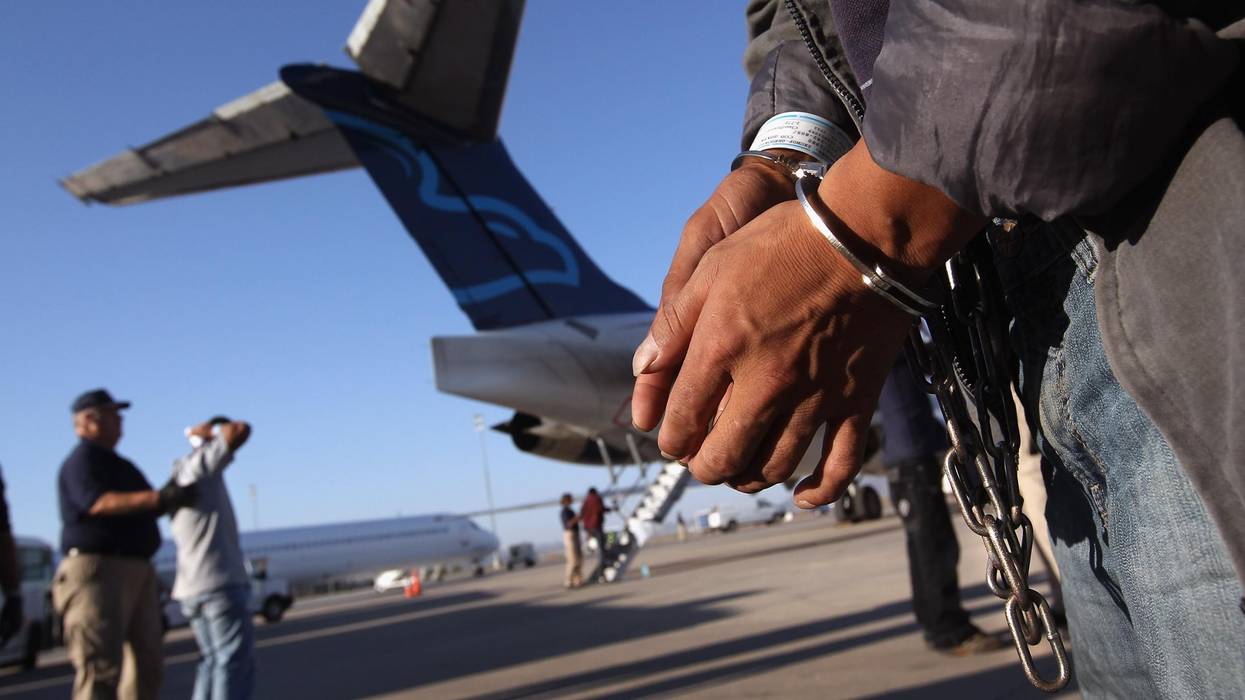
Thousands of people are deported from the United States each year for past drug offenses that often aren't even crimes anymore under evolving state narcotics laws, a report published Monday revealed.
The 91-page Human Rights Watch (HRW) and Drug Policy Alliance (DPA) report—titled Disrupt and Vilify: The War on Immigrants Inside the U.S. War on Drugs—highlights the experiences of people deported years or even decades after they committed drug offenses.
One of those immigrants, Natalie Burke of Jamaica, was convicted in 2003 of cannabis-related offenses but pardoned last August by Democratic Arizona Gov. Katie Hobbs, who acted on the unanimous recommendation of a state clemency board, which found that Burke was a victim of domestic violence who was "lured" into trafficking marijuana.
However, according to the report:
She cannot move on with her life because U.S. immigration authorities are trying to deport her, even though marijuana is now legal in Arizona and she has a pardon...
Natalie explained that one day in 2009, her probation officer asked her to come into the Tucson office to fill out some paperwork. Her son, who was in fifth grade at the time, waited for her outside in the parking lot. Natalie never came back to him that day. Immigration and Customs Enforcement (ICE) officers took her directly to an immigration detention center because her conviction made her deportable from the United States.
"Even with a hard-won gubernatorial pardon, and even in a state where marijuana is now legal, ICE is still trying to deport Natalie," the report adds. "She continues to fight back and is currently pursuing new legal arguments based on the pardon."
Burke is far from alone. Analyzing data from 2002-20, the report's authors found approximately 500,000 deportations of people whose most serious offense was drug-related. More than 150,000 of those deportations were the result of convictions for drug use or possession, including 47,000 for marijuana—which is now legal for recreational or medicinal use in a majority of U.S. states.
"The uniquely American combination of the drug war and deportation machine work hand in hand to target, exclude, and punish noncitizens for minor offenses—or in some states legal activity—such as marijuana possession," DPA federal affairs director Maritza Perez Medina said in a statement.
"This report underscores that punitive federal drug laws separate families, destabilize communities, and terrorize noncitizens, all while overdose deaths have risen and drugs have become more potent and available," she added. "It's imperative that the U.S. government revises federal law to match current state-based drug policy reforms to end and prevent the immense human suffering being inflicted in the name of the drug war."
The publication notes that "of all immigrants deported with criminal offenses, people with drug-related offenses had lived in the U.S. for the longest periods of time."
This has resulted in the deportation of immigrants who have lived in the United States since childhood and U.S. military veterans being separated from their families.
The report's authors interviewed some people living under the threat of deportation who have become parents or even grandparents of U.S. citizens during their time in the country.
"I'm not able to live and operate without fear because I'm not a citizen," one California resident convicted for marijuana and paraphernalia possession said in the report. "I've lived here for more than 20 years now. This is my home. I have children here. I want to be a citizen, and I'm making every effort to do that. But it seems like that's not going to be possible."
"Congress should reform immigration law to ensure immigrants with criminal convictions, including for drug offenses, are not subject to 'one-size-fits-all' deportations."
HRW immigration and border policy director Vicki Gaubeca said: "Why should parents or grandparents be deported away from children in their care for decades-old drug offenses, including offenses that would be legal today? If drug conduct is not a crime under state law, it should not make someone deportable."
The report also highlights cases of legal permanent residents lawfully employed in states' marijuana industries who cannot become citizens because, due to enduring federal criminalization of cannabis, they are considered to lack "good moral character," and immigrant women who have been sexually abused by corrections officers who know their victims would soon be deported.
HRW and DPA asserted that "Congress should reform immigration law to ensure immigrants with criminal convictions, including for drug offenses, are not subject to 'one-size-fits-all' deportations."
"Instead," the authors argue, "immigration judges should be given the discretion to make individualized decisions. As an important first step, Congress should impose a statute of limitations on deportations, so people can move beyond old offenses and get on with their lives."
Sen. Cory Booker urged fellow lawmakers to "follow the lead of states around the country and legalize cannabis for adult use and create a comprehensive taxation and regulatory scheme."
U.S. marijuana legalization advocates greeted Tuesday's news that the Drug Enforcement Administration is proposing rescheduling cannabis to a less restrictive class by calling on President Joe Biden to fully deschedule the plant, which is approved for recreational or medicinal use in the vast majority of states.
The Associated Press reported the DEA is proposing rescheduling marijuana from Schedule I—which includes heroin, MDMA, and LSD—to Schedule III, a far less restrictive class that includes ketamine, anabolic steroids, testosterone, and over-the-counter products containing less than 90 milligrams of codeine per dose. According to the DEA, Schedule I drugs have "no currently accepted medical use and a high potential for abuse."
While it would not legalize cannabis for recreational use, the DEA proposal—which is subject to review by the White House Office of Management and Budget—would affirm medicinal marijuana and recognize that the plant has a lower potential for abuse than other widely used recreational drugs.
The Drug Policy Alliance (DPA)—which works to end the failed 53-year War on Drugs—warned that "under this proposed shift, marijuana criminalization would continue at the federal level and most penalties, including those for simple possession, would continue as long as marijuana remains anywhere on the Controlled Substances Act (CSA)."
While running for president in 2020, Biden repeatedly vowed to decriminalize marijuana and expunge the criminal records of people convicted of cannabis possession. In 2022 the president issued a "full, complete, and unconditional pardon to all current United States citizens and lawful permanent residents" convicted of simple federal marijuana possession—a move that affected thousands of people but excluded those who are in the United States without authorization.
The following year, Health and Human Services (HHS) Secretary Xavier Becerraconfirmed that his department would recommend rescheduling cannabis to Schedule III.
Sen. Cory Booker (D-N.J.) on Tuesday urged Congress to "follow the lead of states around the country and legalize cannabis for adult use and create a comprehensive taxation and regulatory scheme."
"Thousands of people remain in prisons around the country for marijuana-related crimes. Thousands of people continue to bear the devastating collateral consequences that come with a criminal record," the senator continued. "Legal marijuana businesses, especially those in communities hardest hit by the War on Drugs, still have to navigate a convoluted patchwork of state laws and regulatory schemes."
"I hope that my colleagues on both sides of the aisle, especially those who represent constituents benefiting from medical or adult-use programs, join me to pass federal legislation to fix these problems," Booker added.
Senate Majority Leader Chuck Schumer (D-N.Y.) said that "it is great news that DEA is finally recognizing that restrictive and draconian cannabis laws need to change to catch up to what science and the majority of Americans have said loud and clear."
"While this rescheduling announcement is a historic step forward, I remain strongly committed to continuing to work on legislation like the SAFER Banking Act as well as the Cannabis Administration and Opportunity Act, which federally deschedules cannabis by removing it from the Controlled Substances Act," he added.
Booker and Schumer were among the 21 senators who last week sent a letter to U.S. Attorney General Merrick Garland and DEA Administrator Anne Milgram noting that it's been 18 months since Biden ordered HHS October to review cannabis scheduling and eight months since the agency's rescheduling recommendation.
"While we understand that the DEA may be navigating internal disagreement on this matter, it is critical that the agency swiftly correct marijuana's misguided placement in Schedule I," the letter states.
Legalization advocates, meanwhile, pushed the Biden administration to go much further, as 24 states plus the District of Columbia have approved adult-use recreational marijuana and 38 states have legalized medicinal cannabis.
"Supporting federal marijuana decriminalization means supporting the removal of marijuana from the Controlled Substances Act, not changing its scheduling," DPA director of drug markets and legal regulation Cat Packer said in a statement. "We all deserve a federal framework for marijuana that upholds the health, well-being, and safety of our communities—particularly Black communities who have borne the brunt of our country's racist enforcement of marijuana laws."
"Rescheduling marijuana is not a policy solution for federal marijuana criminalization or its harms, and it won't address the disproportionate impact that it has had on Black and Brown communities," Packer added.
Dasheeda Dawson, chair of the Cannabis Regulators of Color Coalition and founder of Cannabis NYC, said: "The time for descheduling cannabis is not just a matter of policy; it's an imperative for justice and equity. Rescheduling would undermine the hard-fought progress made by cannabis equity and policy reform leaders like the Cannabis Regulators of Color Coalition, jeopardizing the livelihoods and futures of those entrepreneurs and communities disproportionately affected by past criminalization."
"We cannot afford to backtrack on our commitment to repair the harm inflicted by outdated policies," Dawson added. "Descheduling is not just about legality; it's about rectifying historic injustices and ensuring a fair and inclusive future for all."
The landmark decriminalization measure passed by state voters in 2020 "now stands as a cautionary tale about the failure to match bold policy reform with competent administration," said one reporter.
The Drug Policy Alliance's leader expressed disappointment on Friday after Democratic Oregon Gov. Tina Kotek confirmed that she plans to sign legislation rolling back the state's historic measure that decriminalized possession of small amounts of all drugs.
"Today is not the end, just a detour. While I am saddened by today's developments, we at the Drug Policy Alliance will continue to advocate fiercely for an evidence-based, health approach to drugs in Oregon and across the United States," said Kassandra Frederique, executive director of the advocacy group, which is part of the Oregonians for Safety and Recovery (OSR) coalition.
"The recriminalization of drugs in Oregon is happening in a difficult national environment where criminal justice reforms at large are under attack by special interests," she added. "As politicians learn that criminalization will not solve—and will worsen—the problems that Oregonians care about, opportunities to establish a true health-based drug policy should emerge. Despite this setback, the movement to replace drug criminalization with care continues. We won't back down until our communities are healthy."
Our ED @Kassandra_Fred responds to Oregon's return to failed drug war policies. Her vision? We actually ensure people get the resources that they need to thrive. Decriminalization of all drugs is a part of that vision - one part of a tapestry of interventions communities need. pic.twitter.com/ih8n87Eepz
— Drug Policy Alliance (@DrugPolicyOrg) March 8, 2024
Oregon voters passed Measure 110, also called the Drug Addiction Treatment and Recovery Act, by a 17% margin in 2020, and it took effect the following February. The state was the first and only in the country to take the decriminalization and treatment approach, a shift widely lauded by drug policy groups. However, the measure "now stands as a cautionary tale about the failure to match bold policy reform with competent administration," Tim Dickinson wrote Thursday for Rolling Stone.
The Oregon Health Authority "provided inadequate support to the Oversight and Accountability Council, the body responsible for Measure 110 funding allocations," a Drug Policy Alliance memo explains. "This resulted in a significant delay in funding getting to service providers."
"The state failed to provide any training or standardized citation forms to law enforcement, many of whom were opposed to Measure 110," the memo continues. "The state deliberately chose not to advertise the screening hotline to the public. Rather than working to improve Measure 110 and provide real solutions, policymakers caved to a rollback effort bankrolled by business interests and led by the former chief of Oregon's prisons."
"Locking people up for possessing drugs or forcing them into court-ordered programs does not end drug use, but it does increase harms, including death."
In a wide-ranging statement about the end of this year's legislative session, Kotek announced Thursday that "reforms to Measure 110 will start to take shape, as I intend to sign House Bill 4002 and the related prevention and treatment investments within the next 30 days."
"As governor, my focus is on implementation. My office will work closely with each implementing authority to set expectations, specifically in response to the Criminal Justice Center's Racial Equity Impact Statement, which projected disproportionate impacts to communities of color and the accompanying concerns raised by advocates," she said. "House Bill 4002 will require persistent action and commitment from state and local government to uphold the intent that the legislature put forward: to balance treatment for individuals struggling with addiction and accountability."
As OPB detailed on Monday:
The system created by H.B. 4002 is complex; people found with drugs can be charged with a crime, but there will be multiple paths they might take to avoid conviction. Lawmakers have envisioned a "deflection" system that is meant to be a major step in that direction. Under the proposal, counties that choose to participate would create a way for police to route people caught with drugs to service providers, rather than to jail and the courts system.
So far, at least 23 counties—accounting for the vast majority of Oregon's population—have signaled interest. But what kind of policies they might create is unknown, hinging partly on state funding.
"H.B. 4002 is being touted as a compromise, but we ask at the cost to whom?" Jennifer Parrish Taylor, director of advocacy and public policy at the Urban League of Portland, an OSR member, said after Oregon legislators passed the bill with bipartisan support last week, with a 21-8 vote in the state Senate and 51-7 vote in the House.
"It is an unacceptable compromise when we know that there will be disparate impacts to Oregonians of color," she argued. "It is not enough to monitor the system when we know it is a system that has bias built into it. I fear that we will be back next year, hearing those stories of harm, figuring out how to make our communities whole."
Frederique warned in an opinion piece for The Daily Beast that "this recriminalization is dangerous. We've been down this road before. More than 50 years of evidence demonstrates that locking people up for possessing drugs or forcing them into court-ordered programs does not end drug use, but it does increase harms, including death."
Jessica Maravilla, policy director at the ACLU of Oregon, another OSR member, noted that as lawmakers debated the bill, "thousands of us took action and engaged in our democracy—calling and emailing lawmakers and submitting testimony for hearings."
"We asked for real solutions including more treatment, housing, prevention programs, community revitalization efforts, and nonpolice mobile crisis response teams," she said. "The ACLU of Oregon community has deep gratitude for the lawmakers who voted 'no' to the false promises of criminalization in H.B. 4002—and its unconscionable human and other costs to our state."
As Current Affairs' Nathan Robinson concluded while Oregon legislators considered their options last month, "This is not a story about the failure of decriminalization, it's a story about how U.S. politicians, even in a liberal state, seem incapable of addressing any social problem through means other than cruelty."
"The goal of any federal cannabis policy reform ought to be to address the existing, untenable chasm between federal marijuana policy and the cannabis laws of the majority of U.S. states," said NORML's deputy director.
Cannabis reform advocates and industry representatives on Wednesday renewed demands for legalizing marijuana at the federal level as U.S. Health and Human Services Secretary Xavier Becerra confirmed his department's rescheduling recommendation.
Marijuana is currently a Schedule I drug—the most restricted category under the Controlled Substance Act (CSA)—but President Joe Biden ordered Becerra and Attorney General Merrick Garland to initiate a review last October, when he issued a mass pardon for simple federal cannabis possession.
Bloomberg initially reported Wednesday that a Department of Health and Human Services (HHS) official on Tuesday wrote to Drug Enforcement Administration (DEA) chief Anne Milgram to recommend reclassifying cannabis Schedule III, a development Becerra confirmed on social media at 4:20 pm ET.
"Following the data and science, HHS has expeditiously responded to President Biden's directive to HHS Secretary Becerra and provided its scheduling recommendation for marijuana to the DEA on August 29, 2023," an HHS spokesperson told Marijuana Moment. "This administrative process was completed in less than 11 months, reflecting this department's collaboration and leadership to ensure that a comprehensive scientific evaluation be completed and shared expeditiously."
A DEA spokesperson confirmed to the outlet that it received the HHS letter and said: "DEA has the final authority to schedule or reschedule a drug under the Controlled Substances Act. DEA will now initiate its review."
Asked about Bloomberg's reporting on Wednesday, White House Press Secretary Karine Jean-Pierre stressed to reporters that Biden requested the scheduling review, "it's going to be an independent process," and "it's going to be guided by evidence." She declined to comment regarding Biden's position on decriminalization.
NORML declared in an email that "rescheduling is not enough," and in response to the letter, deputy director Paul Armentano said that "it will be very interesting to see how DEA responds to this recommendation, given the agency's historic opposition to any potential change in cannabis' categorization under federal law. Further, for decades, the agency has utilized its own five-factor criteria for assessing cannabis' placement in the CSA—criteria that as recently as 2016, the agency claimed that cannabis failed to meet. Since the agency has final say over any rescheduling decision, it is safe to say that this process still remains far from over."
Armentano argued that "the goal of any federal cannabis policy reform ought to be to address the existing, untenable chasm between federal marijuana policy and the cannabis laws of the majority of U.S. states," and rescheduling "fails to adequately address this conflict."
"Just as it is intellectually dishonest to categorize cannabis in the same placement as heroin, it is equally disingenuous to treat cannabis in the same manner as anabolic steroids," he added. "The majority of Americans believe that cannabis ought to be legal and that its hazards to health are less significant than those associated with federally descheduled substances like alcohol and tobacco. Like those latter substances, we have long argued the cannabis plant should be removed from the Controlled Substances Act altogether, thereby proving state governments—rather than the federal government—the ability to regulate marijuana in the manner they see fit without violating federal law."
Medicinal use of cannabis is allowed by 38 states, three U.S. territories, and the District of Columbia while recreational adult use is permitted in 23 states, two territories, and D.C., according to the National Conference of State Legislatures.
Under the HHS plan, "state medical and adult-use marijuana programs will still remain federally illegal, meaning patients, consumers, and workers would remain subject to federal arrest; noncitizens would remain subject to deportation simply for possessing marijuana or working in the industry; and federal marijuana arrests and prosecutions will continue, previous arrests will not be expunged, and thousands will remain incarcerated in federal prison for marijuana violations," emphasized Cat Packer, director of drug markets and legal regulation at the Drug Policy Alliance.
"It also means that federal benefits, such as housing and nutritional assistance, will still be denied to certain people with previous marijuana convictions and the federal government will continue to be unable to foster a fair business environment that allows small and minority-owned marijuana businesses to compete with large corporate marijuana operators," noted Packer, urging the president to "limit the harms of marijuana criminalization" and work with Congress to pass the Cannabis Administration and Opportunity Act (CAOA).
U.S. Senate Majority Leader Chuck Schumer (D-N.Y.)—an advocate of federally legalizing cannabis and an original CAOA co-sponsor—said in a statement that "HHS has done the right thing and DEA should now quickly follow through on this important step to greatly reduce the harm caused by draconian marijuana laws."
"While this is a step forward, there is still much more that needs to be done legislatively to end the federal prohibition on cannabis and roll back the War on Drugs," Schumer added. "I am committed to continuing to work in Congress to pass important marijuana legislation and criminal justice reform."
U.S. Cannabis Council "enthusiastically" welcomed the HHS recommendation, saying on social media: "We believe that rescheduling to Schedule III will mark the most significant federal cannabis reform in modern history. President Biden is effectively declaring an end to [former President Richard] Nixon's failed war on cannabis and placing the nation on a trajectory to end prohibition."
While recognizing the range of benefits from the potential rescheduling—from making research easier to tax deductions for businesses—the industry group also emphasized its commitment to full cannabis legalization at the federal level.
National Cannabis Industry Association CEO Aaron Smith said that "moving cannabis to schedule III could have some limited benefit but does nothing to align federal law with the 38 U.S. states which have already effectively regulated cannabis for medical or adult use. The only way to fully resolve the myriad of issues stemming from the federal conflict with state law is to remove cannabis from the Controlled Substances Act and regulate the product in a manner similar to alcohol."
This post has been updated with comment from the Drug Policy Alliance.
"Take whatever steps are necessary to make sure marijuana is descheduled and encourage Congress to pass comprehensive legislation that includes criminal justice reform."
As cannabis enthusiasts across the United States and around the world celebrated 4/20 Thursday, more than 80 advocacy groups urged the administration of President Joe Biden to remove marijuana from the Controlled Substances Act and to back comprehensive legal reform.
In a letter to the president and key administration officials, the groups—led by the Drug Policy Alliance—acknowledged Biden's October 2022 pardon of all U.S. citizens and legal residents convicted of simple federal marijuana possession—less than 100 people in total—and other moves like encouraging state governors to forgive cannabis offenses and launching an administrative review of the plant's listing in the most severe category on the Controlled Substances Act (CSA).
"Nonetheless, these actions alone will neither fully end future harms of marijuana criminalization nor repair past harms," the letter states. "Accordingly, we urge you and your administration to take the steps necessary to deschedule marijuana in conjunction with other administrative actions that center Black, Indigenous, and people of color (BIPOC) communities."
"Additionally," the groups wrote, "we implore your administration to support comprehensive marijuana reform legislation in Congress, such as the Cannabis Administration and Opportunity Act (CAOA), a bill that deschedules marijuana, repairs the past harms of prohibition, and provides a regulatory framework for marijuana markets."
"Marijuana must be fully removed from the CSA and descheduled," the letter argues. "Rescheduling marijuana to a less restrictive schedule in the CSA would do little to address the harms of federal criminalization. As long as marijuana remains anywhere in the CSA, the majority of the problems associated with its criminalization will persist."
Acknowledging that Biden cannot unilaterally end federal cannabis prohibition, the letter's signers urged the president to "take whatever steps are necessary to make sure marijuana is descheduled and encourage Congress to pass comprehensive legislation that includes criminal justice reform, repairing and centering communities most harmed by prohibition and criminalization, and a regulatory framework that is rooted in equity, justice, and public health."
Over a year after the then-Democratic-controlled House of Representatives passed the Marijuana Opportunity Reinvestment and Expungement (MORE) Act—which would decriminalize marijuana nationwide and expunge federal cannabis convictions—numerous members of Congress also called for an end to cannabis criminalization.

"We need to legalize marijuana AND make the industry more accessible to those who have been unjustly criminalized at its hands so that Black and Brown communities aren't being incarcerated while others are making millions," Rep. Jamaal Bowman (D-N.Y.) tweeted.
Noting that Black people are around five times more likely than whites people to be arrested in Pennsylvania for marijuana possession, Rep. Summer Lee (D-Pa.) asserted that "it's time to legalize cannabis, expunge all marijuana convictions, and release everyone incarcerated on nonviolent marijuana-related charges."
On Tuesday, Reps. Dave Joyce (R-Ohio) and Alexandria Ocasio-Cortez (D-N.Y.) reintroduced bipartisan legislation—the Harnessing Opportunities by Pursuing Expungement (HOPE) Act—that, if passed, would incentivize states to offer people with nonviolent marijuana convictions federal grants.
"Over 100,000 of our loved ones being lost to avoidable overdoses a year is not because of a lack of enforcement, it's a direct result of it," the director of the Drug Policy Alliance argued.
U.S. drug policy reform advocates condemned President Joe Biden's commitment to "accelerating the crackdown on fentanyl trafficking" as part of his administration's strategy for tackling the opioid crisis, a policy the White House announced in a preview of Tuesday night's State of the Union address.
Although the SOTU preview says the administration will be "expanding access to evidence-based prevention, harm reduction, treatment, and recovery," the document says Biden will "work with Congress to make permanent tough penalties on suppliers of fentanyl," fentanyl analogs, and fentanyl-related substances (FRS).
The outline states that Biden "looks forward to working with Congress on its comprehensive proposal to permanently schedule all illicitly produced FRS into Schedule I," the most severe Drug Enforcement Administration classification.
"The push to place all fentanyl-related substances in Schedule I is unfortunate and misguided. Schedule I is supposed to be for substances that we know to be harmful and not helpful."
"Traffickers of these deadly substances must face the penalties they deserve, no matter how they adjust their drugs," the preview asserts.
In response to the SOTU preview, Maritza Perez Medina, director of the office of federal affairs at the Drug Policy Alliance, said in a statement that "we are glad to see President Biden continue to call for increased access to evidence-based treatment, harm reduction, and recovery services."
"But, his support for harsher penalties for fentanyl-related substances—which will result in broader application of mandatory minimum sentencing and disproportionately harm Black, Latinx, and Indigenous communities—in the same breath is incredibly counterproductive and fails to recognize how we got to this place to begin with," she asserted. "Over 100,000 of our loved ones being lost to avoidable overdoses a year is not because of a lack of enforcement, it's a direct result of it."
Gregory Dudley, who chairs the chemistry department at West Virginia University, argued that "the push to place all fentanyl-related substances in Schedule I is unfortunate and misguided. Schedule I is supposed to be for substances that we know to be harmful and not helpful."
"We don't know which of these substances would be harmful or helpful, and how could we without testing them?" Dudley asked. "Some of these substances could be lifesaving opioid antagonists like naloxone, or better. This proposal prioritizes criminalization over healthcare."
Susan Ousterman, who lost her son Tyler to an accidental overdose in 2020 and subsequently founded the Vilomah Memorial Foundation, said that "it's incredibly disheartening to see the president co-opting the grief of mothers like me in an attempt to increase penalties, rather than prioritizing the health measures that are desperately needed to save lives."
"Increased penalties for people who use or sell drugs, including fentanyl-related substances, would not have kept my son alive or the countless children of other mothers I have met," Ousterman stressed. "In fact, it's policies such as these that created the increased stigma and fear that kept our children from accessing help, and it's what has led to the increasingly dangerous drug supply that resulted in their deaths."
"It's time for the president and other policymakers to prioritize the lives of all humans by embracing a health approach rather than engaging in politics that only perpetuate this disastrous war on drugs," she added. "As a person who understands the profound impact both substance use and child loss have on families, I expected more."
Biden was one of the architects of the 1980s escalation of the War on Drugs. He coined the term "drug czar" while advocating the establishment of the cabinet-level position and was a key supporter of the 1994 Violent Crime Control and Law Enforcement Act, legislation that accelerated U.S. mass incarceration.
Declaring her intent to "right the wrongs of a flawed, inequitable, and outdated criminal justice system," outgoing Democratic Oregon Gov. Kate Brown on Monday pardoned tens of thousands of people convicted of simple marijuana offenses.
"Oregonians should never face housing insecurity, employment barriers, and educational obstacles as a result of doing something that is now completely legal."
Brown's pardon applies to people convicted at the state level of possessing an ounce (28 grams) or less of marijuana when they were at least 21 years old in pre-2016 cases, regardless of their immigration status. According to Brown's office, approximately 45,000 people will be impacted by the pardon and more than $14 million in fines and fees will be forgiven.
"No one deserves to be forever saddled with the impacts of a conviction for simple possession of marijuana--a crime that is no longer on the books in Oregon," Brown said in a statement. "Oregonians should never face housing insecurity, employment barriers, and educational obstacles as a result of doing something that is now completely legal, and has been for years. My pardon will remove these hardships."
"While Oregonians use marijuana at similar rates, Black and Latina/o/x people have been arrested, prosecuted, and convicted at disproportionate rates," said Brown. "We are a state, and a nation, of second chances... For the estimated 45,000 individuals who are receiving a pardon for prior state convictions of marijuana possession, this action will help relieve the collateral consequences arising from these convictions."
Brown's move came six weeks after U.S. President Joe Biden announced pardons for people convicted of federal simple marijuana offenses with one major caveat--non-U.S. citizens are ineligible. Observers noted the difference between this and Brown's all-inclusive pardons, as well as the fact that the Oregon pardons are automatic, while people seeking federal forgiveness must apply.
Oregon legalized medical-use cannabis in 1998 and recreational marijuana in 2014. In 2020, under Brown, the state became the first in the U.S. to decriminalize the possession of small amounts of all drugs for personal use. That same year Oregon voters passed a ballot measure that legalized psilocybin, the psychoactive ingredient in "magic" mushrooms, with a deadline for implementation by January 2023.
Although Brown's policy won't free anyone currently serving prison time for marijuana offenses, drug reform advocates cheered her move, with the Drug Policy Alliance calling it "great news!"
"Today's announcement is a move towards justice for people convicted under outdated drug laws that now haven't been in place for years," the ACLU tweeted.
"Now, we need every governor to embrace their power to set people free and rectify the harms caused by the failed War on Drugs."
"Since it began, the War on Drugs has robbed hundreds of thousands of people of liberty and freedom," the group continued. "Black and Brown communities especially have been targeted, surveilled, and devastated by unjust sentencing laws that fuel mass incarceration."
"We and the ACLU of Oregon are happy to see clemency provide a second chance for thousands of people who are unjustifiably imprisoned in Oregon," ACLU added. "Now, we need every governor to embrace their power to set people free and rectify the harms caused by the failed War on Drugs."
U.S. Sen. Ron Wyden (D-Ore.) said in a statement that "pardoning simple possession in Oregon is absolutely necessary to repair the damage done by the failed War on Drugs. It is the proper use of the governor's clemency powers and I hope that every governor and state legislature will follow suit."
"The American people have consistently shown overwhelming support for expungement and reform of our marijuana laws," Wyden added. "It is time for Congress to step up and begin to right these wrongs at the federal level. As we approach the end of this Congress, I will continue to push for meaningful cannabis reform, and will fight to get as much done as we possibly can."
Although the U.S. House of Representatives passed marijuana decriminalization bills in 2020 and 2022, similar legislation has stalled in the Senate.
Marijuana remains illegal at the federal level, where is classified along with substances including heroin, LSD, and MDMA--but not cocaine, methamphetamine, or fentanyl--as a Schedule I narcotic, defined as "drugs with no currently accepted medical use and a high potential for abuse."
Last month, a Morning Consult/Politico survey revealed that 3 in 5 U.S. voters believe marijuana should be legal nationwide. With the passage of midterm ballot measures in Maryland and Missouri, 21 states, the District of Columbia, and two U.S. territories have now legalized recreational marijuana, while 37 states allow medical use of the plant and its derivatives.
According to a 2020 ACLU report, marijuana possession arrests make up between 40%-50% of all U.S. drug apprehensions, and "Black people are still more likely to be arrested for marijuana possession than white people in every state, including those that have legalized marijuana."