SUBSCRIBE TO OUR FREE NEWSLETTER
Daily news & progressive opinion—funded by the people, not the corporations—delivered straight to your inbox.
5
#000000
#FFFFFF
To donate by check, phone, or other method, see our More Ways to Give page.
Daily news & progressive opinion—funded by the people, not the corporations—delivered straight to your inbox.
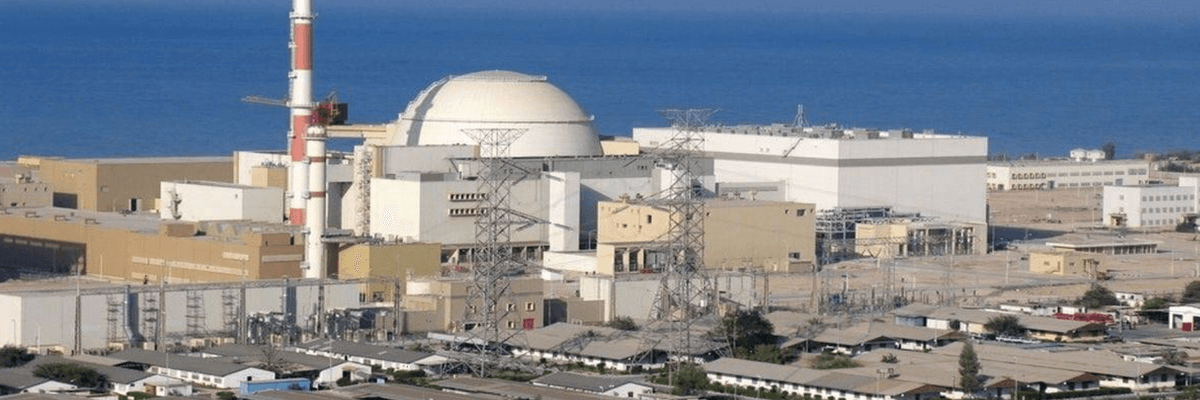
Bushehr nuclear power plant is seen in Bushehr province, Iran.
The International Atomic Energy Agency warned of "the paramount importance of adhering to the seven pillars for ensuring nuclear safety and security during a conflict."
The director general of the International Atomic Energy Agency on Saturday demanded "maximum military restraint" from the US and Israel as it confirmed reports that strikes had targeted a location close to Iran's Bushehr Nuclear Power Plant, killing at least one person.
In a statement released via social media, the IAEA relayed a message from Director General Rafael Mariano Grossi, who expressed "deep concern about the reported incident."
Grossi warned that nuclear power plants or nearby areas "must never be attacked, noting that auxiliary site buildings may contain vital safety equipment" and stressed "the paramount importance of adhering to the seven pillars for ensuring nuclear safety and security during a conflict."
The IAEA said the attack near the Bushehr plant, Iran's only operational nuclear power facility, was the fourth such attack since Israel and the US began its invasion of Iran on February 28. The plant lies in a city inhabited by about 250,000 people.
A security staff member was killed by a projectile fragment and a building on the Bushehr site was impacted by shockwaves and fragments. Grossi said that no increase in radiation levels was reported.
Iranian Foreign Minister Abbas Araghchi also condemned the Bushehr strike and issued a reminder of the "Western outrage about hostilities near Zaporizhzhia Nuclear Power Plant in Ukraine" when Russia attacked the site.
"Israel-US have bombed our Bushehr plant four times now. Radioactive fallout will end life in [Gulf Cooperation Council] capitals, not Tehran. Attacks on our petrochemicals also convey real objectives," said Araghchi.
Al Jazeera reported that at least two petrochemical facilities had been hit by the US and Israel in southern Iran’s Khuzestan province, an energy hub in the country. At least five people were injured in those attacks,
Iranian news agency Mehr reported that the state-run Bandar Imam petrochemical complex, which produces liquefied petroleum gas and chemicals as well as other products, sustained damage.
President Donald Trump said late last month that he would delay any attacks on Iran's energy infrastructure until April 6 and said the delay was "subject to the success of the ongoing meetings and discussions.”
He has threatened to destroy Iran's power plants and other civilian infrastructure if Iranian leaders don't end the blockade on the oil export waterway the Strait of Hormuz, which they began in retaliation for the US-Israeli strikes that started more than a month ago and which has fueled skyrocketing global energy prices.
The threat amounted to Trump warning that he could soon commit a war crime, said international law experts.
Dear Common Dreams reader, It’s been nearly 30 years since I co-founded Common Dreams with my late wife, Lina Newhouser. We had the radical notion that journalism should serve the public good, not corporate profits. It was clear to us from the outset what it would take to build such a project. No paid advertisements. No corporate sponsors. No millionaire publisher telling us what to think or do. Many people said we wouldn't last a year, but we proved those doubters wrong. Together with a tremendous team of journalists and dedicated staff, we built an independent media outlet free from the constraints of profits and corporate control. Our mission has always been simple: To inform. To inspire. To ignite change for the common good. Building Common Dreams was not easy. Our survival was never guaranteed. When you take on the most powerful forces—Wall Street greed, fossil fuel industry destruction, Big Tech lobbyists, and uber-rich oligarchs who have spent billions upon billions rigging the economy and democracy in their favor—the only bulwark you have is supporters who believe in your work. But here’s the urgent message from me today. It's never been this bad out there. And it's never been this hard to keep us going. At the very moment Common Dreams is most needed, the threats we face are intensifying. We need your support now more than ever. We don't accept corporate advertising and never will. We don't have a paywall because we don't think people should be blocked from critical news based on their ability to pay. Everything we do is funded by the donations of readers like you. When everyone does the little they can afford, we are strong. But if that support retreats or dries up, so do we. Will you donate now to make sure Common Dreams not only survives but thrives? —Craig Brown, Co-founder |
The director general of the International Atomic Energy Agency on Saturday demanded "maximum military restraint" from the US and Israel as it confirmed reports that strikes had targeted a location close to Iran's Bushehr Nuclear Power Plant, killing at least one person.
In a statement released via social media, the IAEA relayed a message from Director General Rafael Mariano Grossi, who expressed "deep concern about the reported incident."
Grossi warned that nuclear power plants or nearby areas "must never be attacked, noting that auxiliary site buildings may contain vital safety equipment" and stressed "the paramount importance of adhering to the seven pillars for ensuring nuclear safety and security during a conflict."
The IAEA said the attack near the Bushehr plant, Iran's only operational nuclear power facility, was the fourth such attack since Israel and the US began its invasion of Iran on February 28. The plant lies in a city inhabited by about 250,000 people.
A security staff member was killed by a projectile fragment and a building on the Bushehr site was impacted by shockwaves and fragments. Grossi said that no increase in radiation levels was reported.
Iranian Foreign Minister Abbas Araghchi also condemned the Bushehr strike and issued a reminder of the "Western outrage about hostilities near Zaporizhzhia Nuclear Power Plant in Ukraine" when Russia attacked the site.
"Israel-US have bombed our Bushehr plant four times now. Radioactive fallout will end life in [Gulf Cooperation Council] capitals, not Tehran. Attacks on our petrochemicals also convey real objectives," said Araghchi.
Al Jazeera reported that at least two petrochemical facilities had been hit by the US and Israel in southern Iran’s Khuzestan province, an energy hub in the country. At least five people were injured in those attacks,
Iranian news agency Mehr reported that the state-run Bandar Imam petrochemical complex, which produces liquefied petroleum gas and chemicals as well as other products, sustained damage.
President Donald Trump said late last month that he would delay any attacks on Iran's energy infrastructure until April 6 and said the delay was "subject to the success of the ongoing meetings and discussions.”
He has threatened to destroy Iran's power plants and other civilian infrastructure if Iranian leaders don't end the blockade on the oil export waterway the Strait of Hormuz, which they began in retaliation for the US-Israeli strikes that started more than a month ago and which has fueled skyrocketing global energy prices.
The threat amounted to Trump warning that he could soon commit a war crime, said international law experts.
The director general of the International Atomic Energy Agency on Saturday demanded "maximum military restraint" from the US and Israel as it confirmed reports that strikes had targeted a location close to Iran's Bushehr Nuclear Power Plant, killing at least one person.
In a statement released via social media, the IAEA relayed a message from Director General Rafael Mariano Grossi, who expressed "deep concern about the reported incident."
Grossi warned that nuclear power plants or nearby areas "must never be attacked, noting that auxiliary site buildings may contain vital safety equipment" and stressed "the paramount importance of adhering to the seven pillars for ensuring nuclear safety and security during a conflict."
The IAEA said the attack near the Bushehr plant, Iran's only operational nuclear power facility, was the fourth such attack since Israel and the US began its invasion of Iran on February 28. The plant lies in a city inhabited by about 250,000 people.
A security staff member was killed by a projectile fragment and a building on the Bushehr site was impacted by shockwaves and fragments. Grossi said that no increase in radiation levels was reported.
Iranian Foreign Minister Abbas Araghchi also condemned the Bushehr strike and issued a reminder of the "Western outrage about hostilities near Zaporizhzhia Nuclear Power Plant in Ukraine" when Russia attacked the site.
"Israel-US have bombed our Bushehr plant four times now. Radioactive fallout will end life in [Gulf Cooperation Council] capitals, not Tehran. Attacks on our petrochemicals also convey real objectives," said Araghchi.
Al Jazeera reported that at least two petrochemical facilities had been hit by the US and Israel in southern Iran’s Khuzestan province, an energy hub in the country. At least five people were injured in those attacks,
Iranian news agency Mehr reported that the state-run Bandar Imam petrochemical complex, which produces liquefied petroleum gas and chemicals as well as other products, sustained damage.
President Donald Trump said late last month that he would delay any attacks on Iran's energy infrastructure until April 6 and said the delay was "subject to the success of the ongoing meetings and discussions.”
He has threatened to destroy Iran's power plants and other civilian infrastructure if Iranian leaders don't end the blockade on the oil export waterway the Strait of Hormuz, which they began in retaliation for the US-Israeli strikes that started more than a month ago and which has fueled skyrocketing global energy prices.
The threat amounted to Trump warning that he could soon commit a war crime, said international law experts.