

SUBSCRIBE TO OUR FREE NEWSLETTER
Daily news & progressive opinion—funded by the people, not the corporations—delivered straight to your inbox.
5
#000000
#FFFFFF
To donate by check, phone, or other method, see our More Ways to Give page.
Daily news & progressive opinion—funded by the people, not the corporations—delivered straight to your inbox.

The next six months could be the ultimate in teachable moments, with rapidly rising prices for oil, and rapidly rising temperatures.
I am (mostly) going to take a break from writing about the war for a day, because big though it is, it’s not quite the biggest thing happening on our planet. Or rather, its widespread destruction is taking place inside a larger context.
President Donald Trump’s endless folly (first tariffs, now a desperately stupid war that has closed the Strait of Hormuz) has caused what everyone is beginning to understand is widespread economic damage. As The New York Times reported today, “This is the big one,” and “the fallout is rattling households and businesses in neighborhoods all over the globe.”
On a stable planet, though, the damage might be contained and repaired; someone as incompetent as Trump (who is now describing his war as a “short excursion” and insisting that the Strait is in “very good shape”) will eventually (please God) burn himself out. Our bigger problem, as we’re about to be reminded, is that the planet is the furthest thing from stable. The backdrop is about to become the foreground, and with that the drama will shift once more.
It’s already hot, all over the world and here in the United States. That’s been a little hidden these past months, because the country’s population and power center—the northeast corridor from Boston to DC—has had a cold winter; until the last few days of rapid-onset mud season it’s felt like an old-school winter in New England (with sublime skiing, which has kept me sane). And Minnesota, the source of much of the year’s news so far, was cold too, at least in bursts. But we’ve been the exception: in fact, it was the second-warmest winter on record in the continental US, and that’s because the West broke every possible record, usually by a mile:
Several cities can now claim winter 2025-26 as their warmest on record, including locations with over a century of data, like Salt Lake City (152 years of data), Tucson (130 years of data), and Rapid City, South Dakota (114 years of data).
Phoenix, Arizona, obliterated its previous record (a record that was only a year old, mind you) by almost 3°F, a pummeling of a record in the realm of three-month temperature data.
Albuquerque, New Mexico clobbered its previous record warmest winter by 3°F, according to the Southeast Regional Climate Center. Helena, Montana, Las Vegas, and Lubbock, Texas were among the other cities record warm this winter.
I don’t want to brush by those numbers. Phoenix and Albuquerque have temperature records going back more than a century. If they were going to beat the old record for a three-month stretch, something that shouldn’t happen very often, it should be by a tenth of a degree. That’s how statistics work on a set that large—or it’s how they did work on a stable planet. Three degrees is insane. And if that’s insane, then what’s going to happen in the next week is truly bonkers. A giant heat dome is set to settle in over the Southwest, bringing new temperature records. As The Washington Post reported Thursday, Palm Springs California is projected to reach 104°F on Monday; the old record for the date is 95°F. Again, that’s statistically bizarre in a way that makes my head hurt:
This record-breaking heat dome will contribute to worsening drought conditions across the Intermountain West.
In Utah, snowpack remains at record low levels according to Meyer. He said that it would take a foot of snow in Salt Lake City for the season to catch up with even the second-lowest seasonal snowfall total—and that a storm of that magnitude isn’t expected to come.
“The knockout punch comes in the form of Utah’s reservoirs, which are only at 40% of capacity right now,” Meyer said. “All this means we are likely going to see some very tangible water supply cuts and conservation efforts by the state this year.”
The weather forecast and climate outlook community in Utah was “filled with trepidation” because drought relief looked unlikely, added Meyer, stressing that much more meaningful impacts were possible for agricultural communities as water conservation efforts grow.
“Right now, every drop is going to count this year,” he said.
Across the region, New Mexico was also reporting its lowest snowpack on record and Colorado was in a similar situation.
Here’s how Daniel Swain and the good folks at Weather West described the heat dome that is forming as of Friday morning:
In fact: the strongest mid-tropospheric ridge ever observed in the southwestern US in March is expected to develop by Friday, and then will probably go on to break that new record (set this week) when it re-organizes into an even broader and stronger ridge next week.
In case you’re wondering, this heat is in no way confined to land. The oceans, which have soaked up most of the planet’s excess warmth, are crazily warm right now too:
Sea surface temperatures off the coast of Southern California have risen as much as 5°F above average for the time of year, causing a strong, Category 2 marine heat wave to develop.
These unusually warm waters will provide a boost to air temperatures near the coast, especially at night, preventing them from dropping off as much as they otherwise would.
“A strong to severe marine heatwave is ongoing off the coast of California,” wrote Colin McCarthy, a storm chaser affiliated with the University of California at Davis.
In early March, ocean temperatures reached the mid- to upper 60s at Scripps Pier in La Jolla, California.
“That’s the average ocean temperature for mid-June,” McCarthy said.
And here’s the kicker. All this is happening during a La Niña “cool phase” of the Pacific, something that will soon change. I alerted you exactly a month ago to the likelihood we were going to see an El Niño kick off sometime this summer; in the last few weeks the chances of that have grown stronger, and more to the point it looks like it could be an exceptionally strong “super” version of the warming current. The normally cautious-almost-to-a-fault climate scientist Zeke Hausfather came out with his new forecast Thursday afternoon, and it was a doozy:
I’ve collected 11 different models that have been updated since the beginning of March. Each of these in turn features a number of ensemble members, so that we end up with 433 total ENSO forecasts…
These clearly show that a strong El Niño is indeed likely to develop later in the year. While I’d probably discount some of the higher values (much above 3°C) as outliers here, the median and mean across all the models still gives an estimate around 2.5°C, which would put it notably stronger than the 2023-2024 El Niño and close to if not matching what we saw back in 2015-2016.
So what does this mean for global temperatures this year and in 2027? All things being equal, the lag between peak El Niño conditions and the global surface temperature response would result in the largest impacts on 2027 temperatures (as El Niño events generally peak between November and January). It would still boost 2026, but probably not enough to set a new record this year.
However, I have to be a bit cautious here. Long time readers may remember my post in May 2023 where I deemed it unlikely that 2023 would set a new record (given this historical lag in global temperature response to El Niño) and argued that 2024 would instead. I was partially wrong–2023 was weird, and the heat came much earlier than expected. We think the extended triple-dip La Niña event between 2020 and 2023 may have primed the system for more rapid heating, something absent this time around. But we don’t know for sure. Fool me once, and all that.
Either way, this means that 2027 looks increasingly likely to set a new record, perhaps by a sizable margin if we end up on the high end of the range of El Niño forecasts.
That Hausfather and the brasher Jim Hansen are in basic agreement here should terrify us. We’re going to see temperatures unlike any that humans have seen before, which means we’re going to see chaotic weather unlike humans have seen before. If you think this is some kind of lefty enviro fantasy, check out this source:
“Due to the increasing concentration of greenhouse gases, the climate system cannot effectively exhaust the heat released in a major El Niño event before the next El Niño comes along and pushes the baseline upward again,” Defense Department meteorologist Eric Webb said.
Therefore, a super El Niño in 2026-27 would disperse more heat than other very strong events in 1982-83, 1997-98, and 2015-16.
And were not going to know what hit us, in several ways. The substack Future Earth Catalog published an interview Wednesday with veteran Florida weatherman John Morales which was the best account I’ve seen yet of what the Trump cuts to our scientific system mean in real time:
The cuts to NOAA and the National Weather Service have been devastating. If you look at the statistics of forecast accuracy for tropical cyclone tracks and intensities from the National Hurricane Center, they were off in 2025. And anecdotally, I’m not the only meteorologist who will tell you that day-to-day forecasting has become more challenging. The weather models are flip-flopping from one solution to the next.
Think about how many times TV meteorologists in the fall of 2025 had to show you two or three models with different solutions and say, “Well, this is what this model says, but yesterday it was saying something different.” That leads to more confusion among the public—and it makes our job of saving life and property more difficult.
We’ve been missing 15 to 20% of our weather balloon data. And those missing balloons are upstream—out West, in the Plains, in the Intermountain West, and especially in Alaska. That’s where our weather comes from. We’re no longer able to really know what’s going on out there. And nothing provides the detail weather balloons can: every 15 feet, all the way up to 100,000 feet.
So we may not know what’s coming, but we can guess it’s going to be bad. For instance, I noted before that the Western snowpack is at record low levels. Even in California, which, due to a couple of record-level atmospheric rivers off the warm Pacific saw lots of midwinter snow, the early heat in the Sierras has already led to widespread melt. I do not think it’s fear-mongering to warn that fire may be a serious danger this season in the West.
And what’s happening in the US will be paralleled in places around the planet as El Niño takes us up the escalator. A new study just found that rising temperatures are already taking many humans past the point where they can live with any kind of comfort. As Todd Woody reports:
The number of days where extreme heat makes it too dangerously hot to walk the dog, sweep the porch, and engage in other ordinary pursuits has doubled around the world over the past 75 years, according to new research.
Scientists determined that on average, those 65 and older experience a month a year when heat prevents them from routine activities. Parts of Asia, Africa, Australia, and North America are becoming unlivable for senior citizens, the researchers said. Younger adults also are losing time as climate-driven heat restricts their lives for 50 hours a year.
Overall, more than a third of the global population resides in regions where heat severely affects daily life, according to the peer-reviewed paper published Tuesday in the journal Environmental Research: Health.
But it may be getting too hot for some key physical systems too. It seems likely that this is the year the Colorado River system may finally have to deal with the fact that it simply can’t provide the water people have been counting on. A new study last week found clear signs that the Gulf Stream is beginning to drift northward, a “clear sign” that worries about the collapse of the Atlantic Meridional Overturning Current (AMOC) are no mere phantasm:
The findings indicate that the movement of the Gulf Stream could be a “canary in the coal mine” for the AMOC’s collapse. According to their analysis of satellite data, the Gulf Stream has already been nudged northwards from the coast near Cape Hatteras, North Carolina, since the early 1990s. This is likely to be the result of the AMOC dwindling and losing its grip.
We don’t know for sure how the Iran war will play out, nor the El Niño; at the moment, though, things look ominous. All I’m saying is, the next six months could be the ultimate in teachable moments, with rapidly rising prices for oil, and rapidly rising temperatures. And what do you know, we have a midterm exam coming up on November 3.
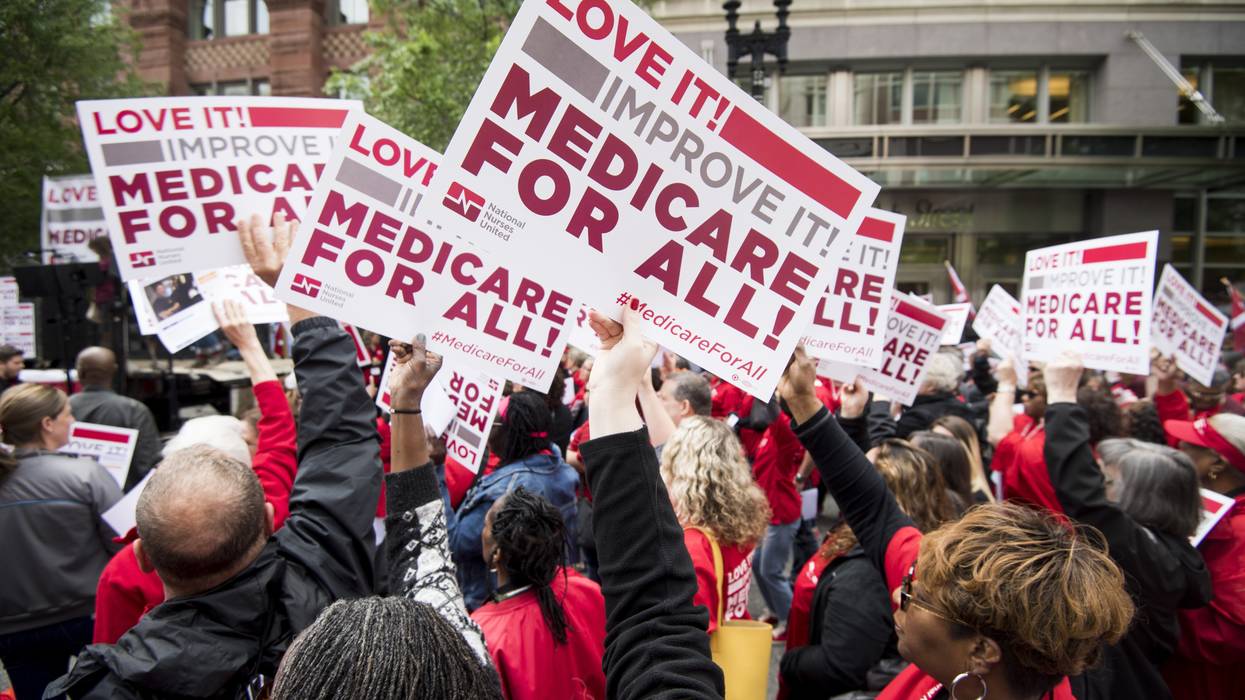
Our healthcare ‘system’—with or without the Affordable Care Act—is unsustainable: we have reached the end of the line.
Those without employer sponsored insurance (or Federal insurance like Medicare or the VA) in Red states, who signed up for the Affordable Care Act (aka Obamacare), are now learning what they voted for: higher premiums for health insurance, maybe unaffordable. Meanwhile, premiums continue to rise relentlessly for employers and employees.
Our healthcare "system" is unsustainable: we have reached the end of the line.
Americans pay more for healthcare (about18 percent of GDP) than any other developed country, with mediocre outcomes. Yet the other countries, with better outcomes, have universal coverage.
It is time for change. Extend traditional Medicare to all Americans (gradually, over the course of several years). Medicare is familiar; it works. Private for profit-health insurance, less than a century old, makes no sense today.
Sick and injured patients have turned to medicine—to healers—since time immemorial. Health insurance is new: Blue Cross started as a community non profit organization in 1929, to cover surgery in hospitals.
Private for profit-health insurance, less than a century old, makes no sense today.
Yes, we are a capitalist country, and markets are efficient at producing many things, like commodities: groceries, shoes, cars, even some insurance, when it is straightforward and highly regulated, like auto insurance. But for-profit health insurance does not work.
The idea of insurance is to spread risk over a maximum number of subscribers, each of whom is at the same low risk of unpredictable casualty, like fire. This was essentially the situation of Americans a century ago—illness and injury were acute and unpredictable, patients either recovered or died. Everyone was at similar risk, only surgery was expensive.
Today is different: illness is not only predictable, it can be chronic, even life long. Moreover, today’s scientific care is expensive. The social determinants of health—income security, education, adequate food and shelter, social support (your zip code, not your genetic code)—plus public health, keep healthy people healthy.
Medical care is for the sick.
For-profit health insurers maximize premiums, minimize cost (provider fees), keep the difference, and most important, avoid the sick. Insurers exclude those with “pre-existing” conditions whenever allowed (not under the ACA), deny "authorization" where they can. They tailor "plans" with carefully engineered restrictions you don’t discover until you file a claim. They are not even providing insurance: the payments from the Federal government are risk adjusted, so the insurers are paid more for riskier patients (and they are now illegally upcoding). The providers are not. Making this happen entails huge administrative expense, which adds no value for patients or providers, only massive returns to investors. United Health Group is the third largest company in the Fortune 500.
Healthy people don’t know what plan is "right for them"; they hate the annual "choice." They only know what they can afford. (Sick people know what they need.) They do want to choose their doctor.
Traditional Medicare eliminates these problems for its beneficiaries: by law, everything medically necessary is covered. The Federal government determines fees for doctors and hospitals based on cost, as it did historically when markets didn’t work. Beneficiaries pay premiums based on income.
Fee-for-service works when we pay the right fees for the right services. Today, based on 1950’s medicine, Medicare pays too little for office visits, so-called ‘cognitive’ services (versus procedures) both primary and specialized, so there are too few providers, especially as Medicare rolls expand with retiring
Boomers. No office doctor can make a living from Medicare anymore. That is, however, easy to fix: pay providers more to care for the sickest people, who need the services only highly skilled, experienced physicians can provide. Pay surgeons less.
Best of all, Medicare is simple—ask your grandmother.
But where will the money come from?
Start by eliminating Medicare Advantage (MA) and Part D, while updating Medicare to cover prescription drugs, along with vision, hearing aids, etc. MA was supposed to save taxpayers money by providing care more efficiently. Instead, Medicare pays MA companies 20 percent more than traditional Medicare for comparable patients.
Then, require all employers (including those who currently don’t provide insurance) to pay premiums to Medicare based on payroll. Require employees to pay Medicare premiums based on wages. Just like Social Security (of which Medicare is technically a provision). The Federal government continues to pay a share.
Everyone pays, everyone gets the care they need and nobody is left out. People can choose any qualified provider. Providers remain private, and are paid enough to attract and sustain the clinicians we want and need.
We have tried every kind of private for profit health insurance there is: employer sponsored, government subsidized, market based, capitation, value-based, catastrophic, health savings accounts—it no longer works for employers, taxpayers, or the sick. This year premiums will go up, coverage will go down.
Americans’ health will suffer.
Americans need care, not coverage. We clinicians have dedicated our lives to providing it. Medicare has served millions of us well for 60 years. We cannot allow opportunistic capitalists to stand in the way for the rest.
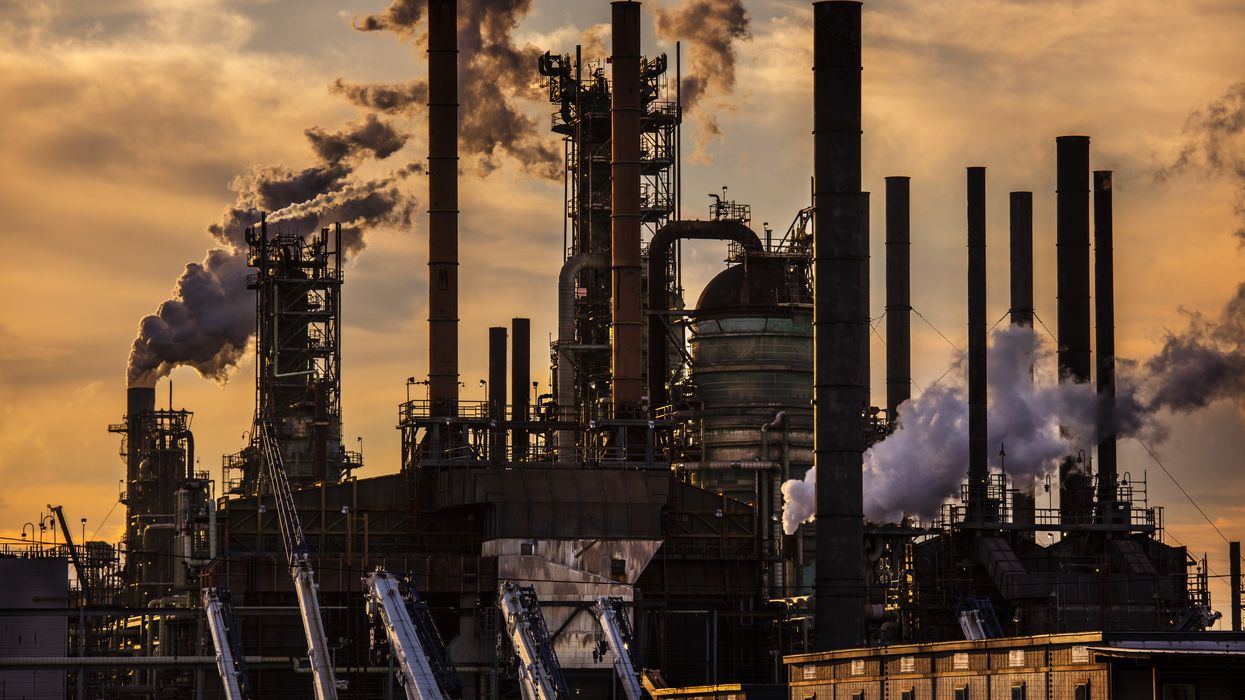
The EPA’s decision to erase the value of lives lost or saved by regulations is a horror beyond the pale. It opens the door for government-sanctioned death with a baked-in cover-up.
Last March, I interviewed staffers at the Environmental Protection Agency’s Region 5 headquarters in Chicago who were horrified by the Trump administration’s staff and funding cuts, which notably included eliminating environmental justice and diversity, equity, and inclusion programs.
The threat of those cuts was so severe that Brian Kelly, an on-site emergency coordinator based in Michigan, predicted: “People will die. There will be additional deaths if we roll back these protections.”
How many additional deaths? The Trump EPA will not say. As part of President Donald Trump’s crusade to destroy federal science and roll back environmental safeguards, his EPA announced recently that it will no longer consider the monetary value of saving lives by regulating fine particulate matter, commonly called soot, smaller than 2.5 micrometers in diameter (PM 2.5) and ozone smog from vehicles, fossil-fuel-burning power plants, and other polluting industries.
In other words, the agency intends to conduct cost-benefit analyses by only considering the cost.
The data documenting soot’s deadly damage even with environmental rules in place is voluminous, much coming from the federal government itself, suggesting that we need stronger regulations, not weaker ones.
A 1997 EPA report found the first 20 years of the 1970 Clean Air Act were so effective that 205,000 premature deaths were avoided from all air pollution sources in 1990. The same report concluded that the 1990 amendments to the law would save more than 230,000 lives a year by 2020 and prevent 2.4 million asthma attacks.
By disbanding DEI and environmental justice programs, the Trump administration is ensuring that communities of color are collateral damage in sucking the Earth dry of oil and gas and mining for the last lump of coal.
Even so, air pollution remains mortally high in a nation that is now the world’s biggest producer of oil and gas and stubbornly prioritizes individually owned vehicles over public transportation. A 2021 study funded by the EPA and published in the journal Science Advances found that PM 2.5 alone still accounts for 85,000 to 200,000 excess deaths a year.
The conclusions of nongovernmental studies echo the EPA’s own findings. A 2022 University of Wisconsin study, for example, estimated that if the United States eliminated all fine particulate, sulfur dioxide, and nitrogen oxide emissions from electricity generation, vehicles, factories, and buildings, 53,200 premature deaths a year could be prevented, providing $600 billion in health benefits from avoided illness and mortality.
The Trump EPA’s recent announcement is just another of a string of nonsensical—and dangerous—moves by the agency. They include abandoning the Paris Climate Accord and killing the agency’s 2009 “endangerment finding” determining that carbon pollution threatens human health, which the Environmental Defense Fund (EDF) estimates will cut short the lives of as many as 58,000 people over the next 30 years due to additional pollution.
Taken together, the Trump administration’s assault on public health has the potential of triggering an environmental massacre, particularly among the most vulnerable Americans.
Because of our nation’s history of housing discrimination, communities of color, regardless of income, face more than twice the risk of exposure to PM 2.5 than white communities. According to the 2021 Sciences Advances study, this “phenomenon is systemic, holding for nearly all major sectors, as well as across states and urban and rural areas, income levels, and exposure levels…. Targeting locally important sources for mitigation could be one way to counter this persistence.”
By disbanding DEI and environmental justice programs, the Trump administration is ensuring that communities of color are collateral damage in sucking the Earth dry of oil and gas and mining for the last lump of coal. An August 2025 Science Advances study found that the life cycle of oil and gas extraction, storage, transporting, refining, and combustion results in 91,000 annual premature deaths due to exposure to PM 2.5, nitrogen dioxide, and ozone. It found that, with rare exception, “Asian, Black, Hispanic, and Native American groups experience the worst exposures and burdens for all life-cycle stages and pollutants.” A 2023 New England Journal of Medicine study, meanwhile, concluded that reducing PM 2.5 pollution alone would disproportionately benefit Blacks at all income levels as well as low-income whites.
Without a single fact to back up its claim, the Trump EPA—led by the fossil fuel industry-friendly Lee Zeldin—stated it did away with calculating lives saved because prior estimates were done with “false precision and confidence.” In fact, the agency is now simply repeating the talking points of the oil and gas industry and the US Chamber of Commerce, which has a long history of lobbying Congress to resist climate legislation and filing endless amicus briefs on behalf of polluters to counter environmental lawsuits.
In 2018, during the first the Trump administration, the chamber asserted—also with no evidence—that previous to the Trump EPA, the agency “historically misinformed and misled the public by using inconsistent and opaque analytical and communication methods regarding costs and benefits.”
That same year, the Trump EPA offered a revealing nugget of information that was hardly opaque. It admitted that its effort to kill the Obama administration’s Clean Power Plan, which would have reined in power plant carbon pollution, would result in in as many as 1,400 premature deaths a year by 2030, and thousands more annual cases of respiratory diseases. At the time, Trump was also trying to roll back Obama-era clean air vehicle standards that were projected to save nearly 40,000 lives a year by 2030.
In its last year in office, the Biden administration proposed tightening PM 2.5 standards, estimating that it could prevent as many as 4,500 premature deaths in 2032 and lead to $46 billion in health benefits in 2032.
There is not a single word about protecting lives or lowering healthcare costs in the EPA’s February 12 press release announcing its repeal of the endangerment finding nor in its February 20 press release hailing the repeal of tighter mercury and air toxics standards enacted by the Biden administration. Instead, Zeldin claimed—without proof—that the air pollution rules would have “destroyed reliable American energy” and revoking the endangerment finding would save Americans more than $1.3 trillion, including an average cost savings of more than $2,400 on a new vehicle.
While Zeldin is trying to use the greater availability of cheaper, gas-guzzling cars as a lure to seduce the public to look the other way on environmental regulations, the pollution they emit will smoke the nation. EDF estimates that higher-polluting vehicles could, by 2055:
None of that mattered to the first Trump administration, which admitted its regulatory rollbacks could kill people. When the second Trump administration barreled into office with its cutbacks and deep-sixing of environmental justice and DEI programs, staffers in the EPA Chicago Region 5 office feared the worst. They included Kayla Butler, a Superfund community involvement coordinator. The stories her team collects in the field of people living with toxic horrors are precisely the stories she said the Trump administration is “trying to erase.”
The EPA’s decision to erase the value of lives lost or saved by regulations is a horror beyond the pale. It opens the door for government-sanctioned death with a baked-in cover-up. With the death toll from air pollution still so high, the Trump EPA is burying the data with the bodies, so we will never know the cause.
This article first appeared at the Money Trail blog and is reposted here at Common Dreams with permission.
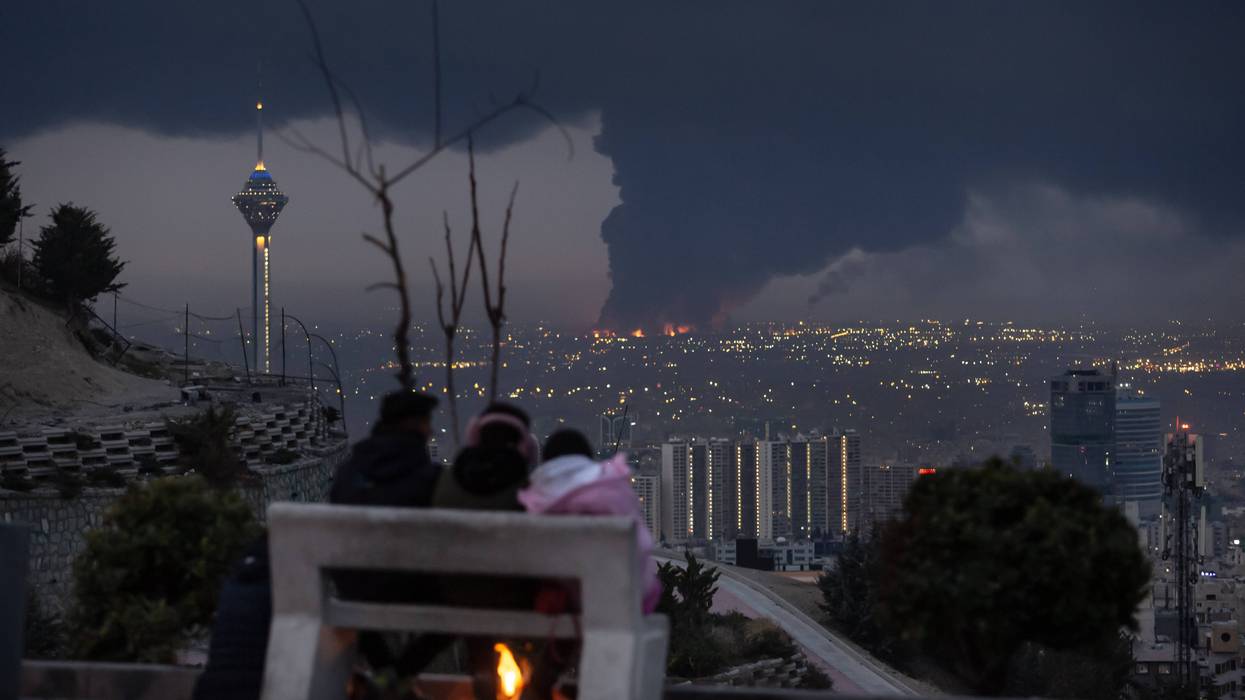
The lesson that Iranian government and the world has learned is that NOT developing a nuclear weapon will lead to the US and Israel assassinating the leadership of your country and bombing the hell out of the rest of the country.
Including the minute when the US and Israel fired missiles and dropped bombs on the home of Iranian leader Ayatollah Ali Khamenei and his wife and other members of his family killing over 40 members of the leadership of Iran, senior Iranian officials had maintained that Iran would never develop a nuclear bomb.
The Omani foreign minister who was in discussions with Iran and the United States on February 27, 2026 only days before the US-Israeli attack on Iran said Iran agreed to "never, ever have… nuclear material that will create a bomb."
“There was no evidence that Iran was close to a nuclear weapon,” said Jeffery Lewis of of the James Martin Center for Nonproliferation Studies at the Middlebury Institute of International Studies after the US attack on Iran.
Arms control experts have disputed President Donald Trump’s claim that Iran “soon” could have missiles capable of reaching the US, and they say there’s a lack of evidence that the country “attempted to rebuild” nuclear enrichment facilities damaged by US strikes last year.
Prior to the US-Israeli June, 2025 attack on Iran’s nuclear facilities, in March 2025, the US Intelligence Agencies' 31-page “threat assessment” states that “we continue to assess Iran is not building a nuclear weapon and that Khamenei has not reauthorized the nuclear weapons program he suspended in 2003, though pressure has probably built on him to do so.” (Page 26)
The lesson that Iranian government and the world has learned is that NOT developing a nuclear weapon will lead to the US and Israel assassinating the leadership of your country and bombing the hell out of the rest of the country.
All you have to do is ask the Russians, Chinese, and North Koreans about the value of nuclear weapons to deter the United States from attacking them.
Will developing and testing nuclear weapons keep the United States from attacking? So far, the answer is YES.
So that’s the foreign policy imperative of 2026: Develop nuclear weapons or always be threatened by the United States.
Venezuela had no nuclear weapons and its head of state Nicolás Maduro and the former Attorney General and President of the National Assembly, Maduro’s spouse Cilia Flores, were kidnapped and imprisoned in the US on January 3, 2026 by the military of the United States and the other leadership of the country threatened with the same treatment.
Afghanistan: No Nuclear Weapons—US Attacked
Iraq: No Nuclear Weapons—US Attacked
Cuba has no nuclear weapons, and after the Cuban missile crisis of 1961, has no means of strategic defense of the country, and its leadership is threatened daily by Trump.
Nicaragua has no nuclear weapons, and its leadership is threatened by the United States.
Canada, Greenland, Denmark, and Mexico have no nuclear weapons and the threats from the US come almost daily.
When is enough… enough?
When 72,000 are killed by US bombs in the genocide of Gaza—is that enough?
When the head of state of another country is kidnapped and imprisoned in the US—is that enough?
When Israel dictates when the US goes to war on a country that has not attacked the US and has not developed nuclear weapons—is that enough?
When the US threatens a 70-year-old revolution 90 miles off the United States with decapitation and destruction—is that enough?
When the president of the United States orders the assassination of 125-plus?? persons in boats allegedly transporting drugs and then pardons the former president of Honduras who was convicted by a federal court and sentenced to 45 years in prison for drug operations while president of his country—is that enough?
When the president pardons over 1,000 persons convicted of the 2020 rioting and destruction of the US Capitol—is that enough?
When its policy for 100,000 non-criminal human beings to be locked up in horrific detention or prison facilities—is that enough?
And on and on! Is that enough?
In the words of religious friends, “Sweet Jesus, What will be Enough?”
It ends at the White House when the people of the United States have had enough.
It ends when the US Congress, both Republicans and Democrats, have had enough.
Have we had enough yet?
On one level, it seems like NOT---but on other levels, we are reaching that point.
Will There Be Blowback from these Policies?
In one word: YES