

SUBSCRIBE TO OUR FREE NEWSLETTER
Daily news & progressive opinion—funded by the people, not the corporations—delivered straight to your inbox.
5
#000000
#FFFFFF
To donate by check, phone, or other method, see our More Ways to Give page.
Daily news & progressive opinion—funded by the people, not the corporations—delivered straight to your inbox.
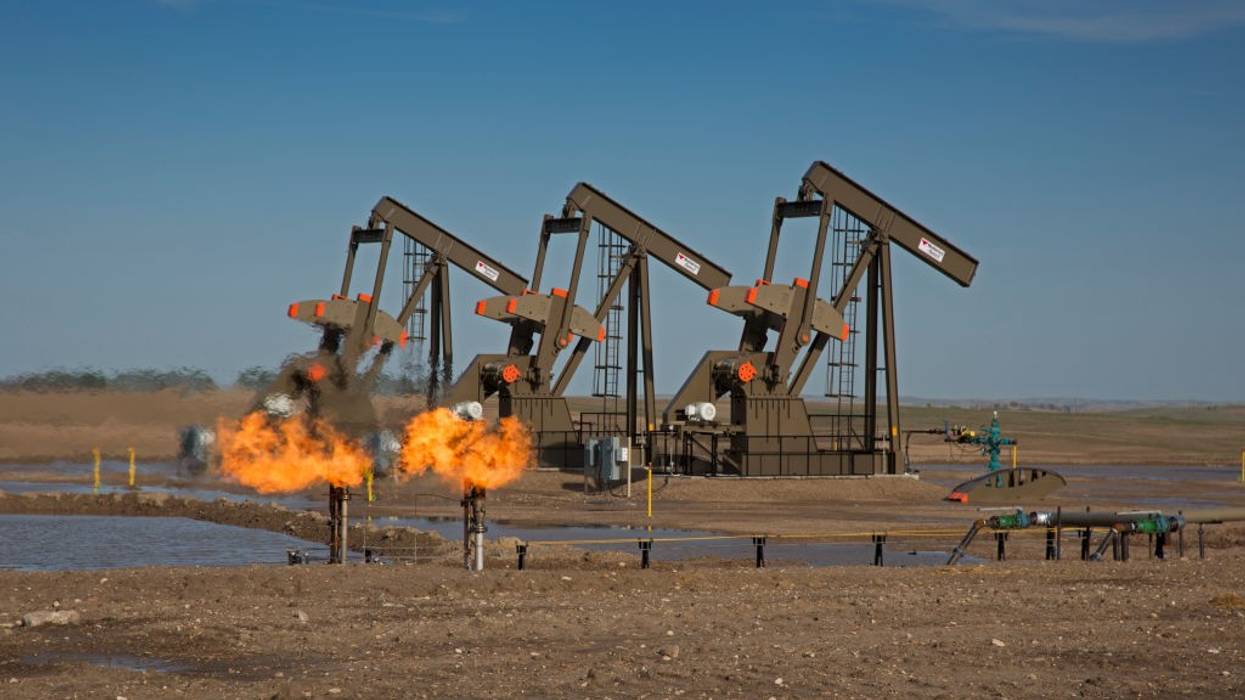
As promised, Trump is rewarding the industry for its campaign spending by adopting its policy agenda as his own.
Fossil fuel interests donated heavily to US President Donald Trump’s 2024 reelection bid. Months after his victory, oil and gas moguls have continued to pump money into his political coffers. Now, as promised by Trump during the campaign, his administration is embracing their policy agenda and governing in a way that is netting the industry billions.
Trump asked oil and gas executives in 2024 to raise $1 billion for his campaign and told them he’d grant their policy wish list if he won. The investment, he said, would be a “deal” given the taxes and regulation they would avoid under his presidency. He also offered to help fast-track fossil fuel industry mergers and acquisitions if he won.
The industry responded by spending lavishly to elect Trump, giving at least $75 million to his campaign and affiliated PACs, thereby making them a top corporate backer of his reelection bid and a crucial source of funding. Several oil tycoons gave millions on their own and hosted fundraisers with Trump and his associates. Some oil and gas executives who hadn’t given Trump money during previous cycles made major donations after attending fundraisers where he pledged to start acting on the industry’s policy priorities as soon as he retook the White House.
That’s just the spending we know about. The 2024 election saw record levels of “dark money” spending, where wealthy interests keep their role secret by funneling money through groups that do not disclose their donors. The fossil fuel industry has a history of deploying dark money tactics, and any such spending in 2024 would inherently be obscured.
The fossil fuel industry is reaping major returns on its investment in the Trump administration. But what about the costs?
Even after Trump’s victory in 2024, oil and gas interests have continued to pour money into his political operation. They gave $11.8 million to his inauguration fund, and even though Trump cannot run for a third term, his main super PAC has raked in millions more from the industry since he took office—including $25 million from oil producer Energy Transfer Partners and its CEO, Kelcy Warren.
As promised, Trump is rewarding the industry by adopting its policy agenda as his own. His signature legislative package—which one executive deemed “positive for us across all of our top priorities”—gives oil and gas firms $18 billion in tax incentives while rolling back incentives for clean energy alternatives. He’s placed fossil fuel allies in charge of the agencies that oversee the industry and fast-tracked drilling projects on public lands. In just his first 100 days back in office, Trump took at least 145 actions to undo environmental rules—more than he reversed during his entire first term as president. Before Trump even reentered the White House, the industry was reportedly pre-drafting executive orders for him to issue.
The profits are already rolling in for the industry. Take Warren and Energy Transfer Partners. Trump ended a Biden-era pause on liquefied natural gas exports and cleared the way for Energy Transfer Partners (which extracts liquefied natural gas) to extend a major project. Warren’s personal wealth grew nearly 10% after the administration green-lit the project as Energy Transfer Partners reported a boost in profits.
There’s also Occidental Petroleum, which donated $1 million to Trump’s inaugural committee, and whose CEO cohosted a major fundraiser for Trump in May 2024. Occidental is especially well positioned to see boosted profits from the sprawling array of favorable subsidies and tax incentives in his signature bill, passed into law this summer.
Now the Trump administration is taking its biggest swing yet for fossil fuel interests: repealing the “endangerment finding,” the federal government’s formal acknowledgement that global warming from greenhouse gases, produced by burning fossil fuels, endangers the public. The finding gives the government legal authority to set clean air rules, and it’s long been the subject of the fossil fuel lobby’s ire, surviving more than 100 challenges in court. Revoking the finding would erase scores of clean air rules that the industry opposes.
The fossil fuel industry is reaping major returns on its investment in the Trump administration. But what about the costs? Extreme weather events such as flooding, wildfires, and severe storms—which overwhelming scientific consensus has concluded are driven by global warming from fossil fuel usage—are becoming increasingly common, inflicting billions of dollars of damage on American communities and costing thousands of people their lives and livelihoods each year. Life-threatening summer heat affected more than 255 million Americans this year alone. It does not appear that these concerns are having any major impact on government policy, and instead, the administration fired hundreds of scientists tasked with tracking these issues.
Trump is far from the first president to use the office in ways that reward wealthy donors. Decades of harmful Supreme Court decisions, decaying anticorruption and campaign finance guardrails, and inadequate enforcement of existing rules around money in politics have enabled an unprecedented concentration of wealth and political power. So while Trump’s embrace of the fossil fuel industry’s agenda isn’t breaking entirely new ground, it offers yet another stark example of how wealthy interests are shaping policies that affect the lives of all Americans.
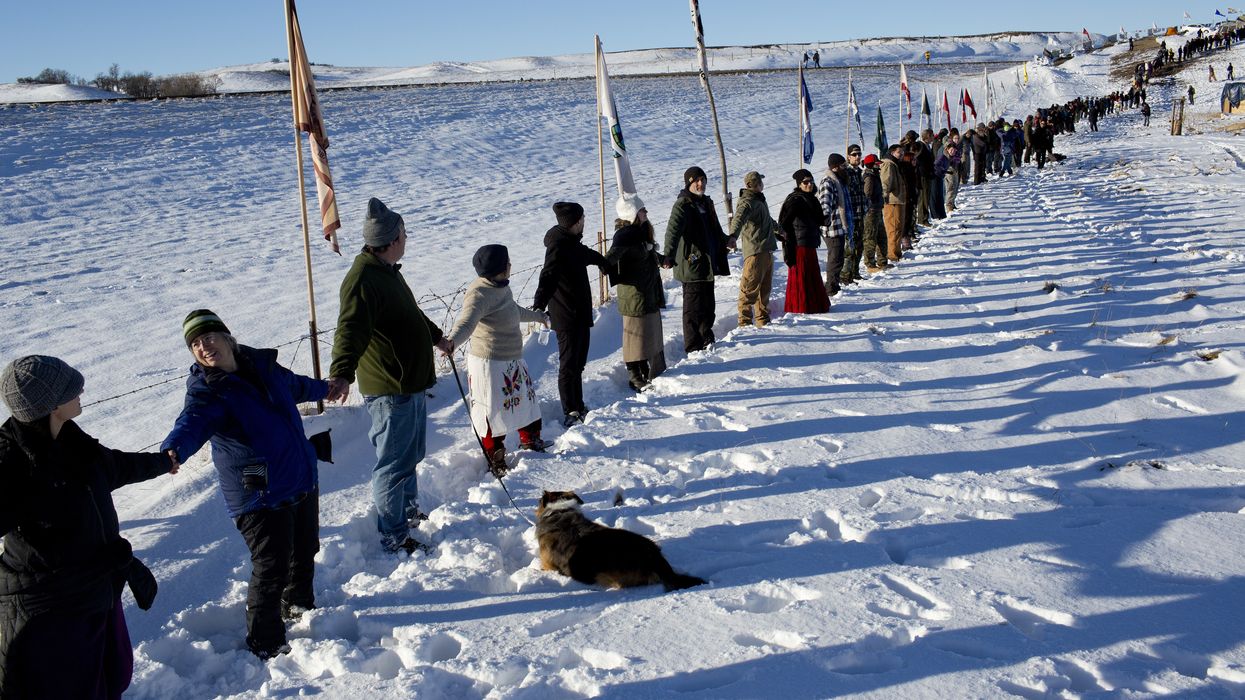
What to do? Stand our ground. Make the solutions. And keep working together.
This story was originally published by Barn Raiser, your independent source for rural and small town news.
The preamble for the next war over water is here. Aggressive corporations are coming after the few remaining pristine places on Mother Earth—mainly on the land of Indigenous people. Nowadays, it’s not just Native people being targeted, it’s our allies.
Last month, two separate court decisions highlighted the repression being leveled on our Water Protector allies.
On March 19, a jury in Mandan, North Dakota, in Morton County, leveled a blistering $660 million verdict against Greenpeace for its part in the Standing Rock resistance against the Dakota Access Pipeline (DAPL). Anyone who was at Standing Rock knows that Greenpeace was barely there, but they have a name, and Energy Transfer, the pipeline’s owner, made an example out of them. I was in the courtroom when the verdict came in. It was sickening.
When Energy Transfer sues people for so-called defamation, they send a clear message: If you stand up, you will be punished in a lawsuit.
On March 10, Marian Moore, a Water Protector who had participated at a gathering to pray for healing, had her charges reversed by a Minnesota Court of Appeals. Her story: Marian, 67, a long-human rights advocate and environmentalist, was the daughter of Paul Moore Jr., the Episcopal bishop of New York from 1972 to 1989 who had walked with Martin Luther King Jr. during the civil rights movement. In this century, Marian had been active in opposing Enbridge’s Line 3 pipeline, which crosses northern Minnesota, on its way from Calgary, Alberta, to Superior, Wisconsin, on lands that are subject to Native treaty rights and through waters full of wild rice, an essential food to the Anishinaabe.
On January 9, 2021, Moore was among the more than 100 Water Protectors who gathered on state Highway 169 for a prayer ceremony near a Line 3 construction site in Aitkin County. For that, she caught three charges, including trespass on critical infrastructure (a gross misdemeanor), unlawful assembly and, rather redundantly, presence at an unlawful assembly (both misdemeanors). I was a witness in her defense.
In November, 2023, an Aitkin County jury found her guilty of gross misdemeanors and sentenced her to six months in county jail, but with a stay of execution for nine months, allowing her to appeal. “I had to not trespass on any Enbridge property and be law-abiding, or I would be in Aitkin County jail for six months,” she explains to me.
Six months seems like a long time for someone who stood on a state highway to pray, looked at a construction site, and left once a dispersal order was given. “I think they targeted me because I was friends with Indigenous people and [was] bringing money to the movement against the pipeline,” says Marian.
Meanwhile out in Morton County, Greenpeace is getting socked with that ridiculous verdict. $660 million is a lot of money for some folks who were barely at Standing Rock. Aitkin County, Minnesota, and Morton County, North Dakota, are trying to teach a lesson; or, more appropriately, through these cases, corporations are trying to stifle resistance and discourage allies.
Welcome to the New Order, the one where corporations are now considered legal “persons,” protected by law enforcement and the judicial system as they press the law’s boundaries and extract precious resources.
The entire trial against Greenpeace was shameful.
Here’s how it went: The law firm Gibson Dunn carefully picked Mandan in Morton County, an oil-friendly jurisdiction where Judge James Gion denied most important motions made by Greenpeace. Four motions to change the venue from Mandan were denied. Gion would not let Greenpeace tell the jury of Energy Transfer’s terrible safety record. According to a report by Greenpeace and Waterkeeper Alliance, the Pipeline Hazardous and Materials Safety Administration (PHMSA) issued 106 safety violations to Energy Transfer and Sunoco between 2002 and 2018, including failures to conduct corrosion inspections, to maintain pipeline integrity, and to repair unsafe pipelines in a timely manner within five years.
What’s so sad is that the North Dakota jury couldn’t even stand up for the water, the land, and the people.
Greenpeace was not allowed to tell the jury that Energy Transfer’s identical federal lawsuit against Greenpeace was dismissed by a federal judge. The judge effectively limited defense evidence.
Gion would not allow live streaming, so if you wanted to “see justice” you had to go to Mandan. It’s said that justice is blind, and, in North Dakota, justice is literally blind and asleep. I saw jurors asleep while on duty in the court room.
“Greenpeace did not manipulate Standing Rock, but Energy Transfer has manipulated Morton County,” Janet Alkire, chairwoman of the Standing Rock Sioux Tribe, said in a statement shortly after the verdict.
As I drove toward Bismark from my own reservation, White Earth, a verse from the Rolling Stones’ “You Can’t Always Get What You Want” stuck in my head: I went down to the County Courthouse to get my share of abuse. At least that’s how I sing it. I’ve had my share. That’s what it’s like being on trial in the Deep North, especially if you’re a Water Protector.
The chances for a Native person to get justice in North Dakota or northern Minnesota are probably pretty small. Native people represent a third of the people in jail in Becker, Hubbard, and Aitkin counties. Yet, we represent only 5.2% of the population.
Standing Rock Tribal Chairwoman Alkire was appalled at the state of justice in Mandan:
I take offense to the jury verdict… We expect more from North Dakota judges and members of the jury from our neighboring communities… Neither Greenpeace nor anyone else paid or persuaded Standing Rock to oppose DAPL… Energy Transfer’s false and self-serving narrative that Greenpeace manipulated Standing Rock into protesting DAPL is patronizing and disrespectful to our people. We understand that many Morton County residents support the oil industry… But we are your neighbors, and you should not be fooled that easily.
The lawsuit against Greenpeace is called a SLAPP suit, or Strategic Litigation against Public Participation. It is intended to silence opposition. There are anti-SLAPP laws in 35 states, including Minnesota. Fundamentally, this is a question of free speech. When Energy Transfer sues people for so-called defamation, they send a clear message: If you stand up, you will be punished in a lawsuit.
“To me, this is a freedom of speech case and freedom of association case,” attorney Sarah Vogel, a onetime assistant U.S. attorney and former North Dakota agriculture commissioner, told the North Dakota Monitor before the case went to trial. Vogel, who grew up in Mandan, said, “As residents of a small state without a whole lot of power, we’d better be able to speak up. Who knows? I mean, this time, it’s Greenpeace, but who will it be next time?”
The case in Aitkin County was a little different but had some of the same premises. The idea that “outside agitators” came and did not do nice things was a theme. Greenpeace fits that narrative for Energy Transfer, and Marian Moore, who is a striking six feet two inches tall, does not quite look like a local gal.
Trey Cox is Energy Transfer’s lead attorney from Gibson Dunn (the same law firm that brought us the Chevron Donziger verdict). Cox kept referring to Water Protectors as outsiders and paid protesters. One might wonder, where Energy Transfer is from? Certainly not from Mandan. They are from Texas. Where was TigerSwan, the private security company hired by Energy Transfer from? North Carolina. And where was Frost Kennels, the company whose employees unleashed dogs on Water Protectors, from? Ohio. In other words, mercenaries.
In Minnesota, remember that Enbridge is a foreign corporation from Canada, with big swaths of pipeline networks across our north country, including aging pipes and the dirtiest oil in the world that poses a major threat to the Great Lakes, repository of a fifth of the world’s freshwater. Yet, Enbridge received priority policy protection in Minnesota during the Covid-19 pandemic and was allowed to bring in 4,300 people to build Line 3 as a part of “essential industry” in the state.
These companies also want to censure and erase any mentions of their abysmal safety records. Energy Transfer has a multitude of fines for spills, and Enbridge has the two largest oil spills on the U.S. mainland to its name. In the North Dakota trial, Greenpeace could not bring up Energy Transfer’s safety record, while in Aitkin County, the judge did not allow Marian Moore to say “treaty rights” or allude to the Minnesota case where Anishinaabe Water Protectors’ charges were dismissed in September 2023, based on the treaty and cultural beliefs, and “in the interests of justice.”
The Trump administration intends to further criminalize Water Protectors, and certainly protests in general. That much is clear. This is on top of the more than 300 anti-protest bills introduced in state legislatures since 2017, according to the International Center for Not-for-Profit Law, 54 of which have been enacted and currently undermine the First Amendment right to freedom of speech and assembly.
Moreover, over the past half-century, a dangerous doctrine of “qualified immunity” has been hatched up, underwritten by the Supreme Court, to limit the ability of individuals to hold police officers accountable for violating their constitutional rights. Qualified immunity basically gives officers expanding impunity to injure, or even kill, civilians like Water Protectors.
In April 2024, North Dakota Federal Judge Daniel Traynor dismissed Sophia Wilansky’s case against North Dakota law enforcement on the grounds that law enforcement had “qualified immunity.”
Greenpeace was inspired by a story called the Rainbow Warrior, where people of all colors would come together to protect Mother Earth.
A blast from an “explosive munition” was leveled at her in the early hours of November 21, 2016. Law enforcement had constructed a barricade across Backwater Bridge on North Dakota Highway 1806 to prevent unarmed Water Protectors, including Wilansky, from using the road. Morton County Deputy Jonathon Moll, had positioned himself on the turret of a Humvee and fired a flashbang grenade from his 12-gauge shotgun, hitting Wilansky, nearly severing her hand and destroying almost all of the arteries, skin, tissue, muscles, nerves, tendons, and bone in her left forearm. “At 21-years-old, I lost the use of my arm because a police officer shot me from a gun turret with an exploding grenade at a protest. My life will never be the same, but I will also not be scared away from fighting for what is right,” Wilansky said in a Civil Liberties Defense Center media release on April 6, 2024. An additional statement read: “The doctrine of Qualified Immunity is repulsive in that it allows police officers to… shoot protestors with anything they want without repercussions.”
Yes, there will be appeals. Marian Moore won on appeal. And a Greenpeace spokesperson told Barn Raiser the nonprofit will appeal the verdict, but the timing and process of the appeal has yet to be determined.
But what’s so sad is that the North Dakota jury couldn’t even stand up for the water, the land, and the people. Instead, that jury gave a Texas oil pipeline company, founded by Trump-supporting billionaire Kelcy Warren, everything it wanted and then some. That was shameful. And, without that appeals court, an Aitkin County jury would have been content to let Marian Moore sit in the slammer.
Marty Garbus is a trial attorney who has represented, among others, Nelson Mandela, Leonard Peltier, Daniel Ellsberg, Lenny Bruce, Elie Wiesel, Cesar Chavez, and Vaclav Havel. Garbus is also a member of the Energy Transfer v. Greenpeace Trial Monitoring Committee, a group that followed the trial day in and day out. Here is what he said when the jury returned its shameful verdict:
In my six decades of legal practice, I have never witnessed a trial as unfair as the one against Greenpeace that just ended in the courts of North Dakota. This is one of the most important cases in American history. The law that can come down in this case can affect any demonstration, religious or political. It’s far bigger than the environmental movement. Yet the court in North Dakota abdicated its sacred duty to conduct a fair and public trial and instead let Energy Transfer run roughshod over the rule of law.
Greenpeace has very strong case on appeal. I believe there is a good chance it ultimately will win both in court and in the court of public opinion.
What to do? Stand our ground. Make the solutions. And keep working together.
In Minnesota, we call ourselves the Home Team, and we are many colors. Marion and thousands of others told their stories and faced a lot of police for the sake of protecting water. I, for one, am grateful to them, and the new work underway by groups like Rise and Repair in Minnesota that does multi-racial organizing work around climate justice.
Weweg bi azhe giiwewag. The snow geese return.
There is greatness in the flocks of birds returning to these lands of water. Each year, they return and remind us of the life that is here, a life which needs water. I am reminded that’s who I work for. Greenpeace was inspired by a story called the Rainbow Warrior, where people of all colors would come together to protect Mother Earth. Critics say the story wasn’t a real prophecy, but I see it happening today. People of all colors coming together to protect Mother Earth is a good story for epic times. Thank you, allies.
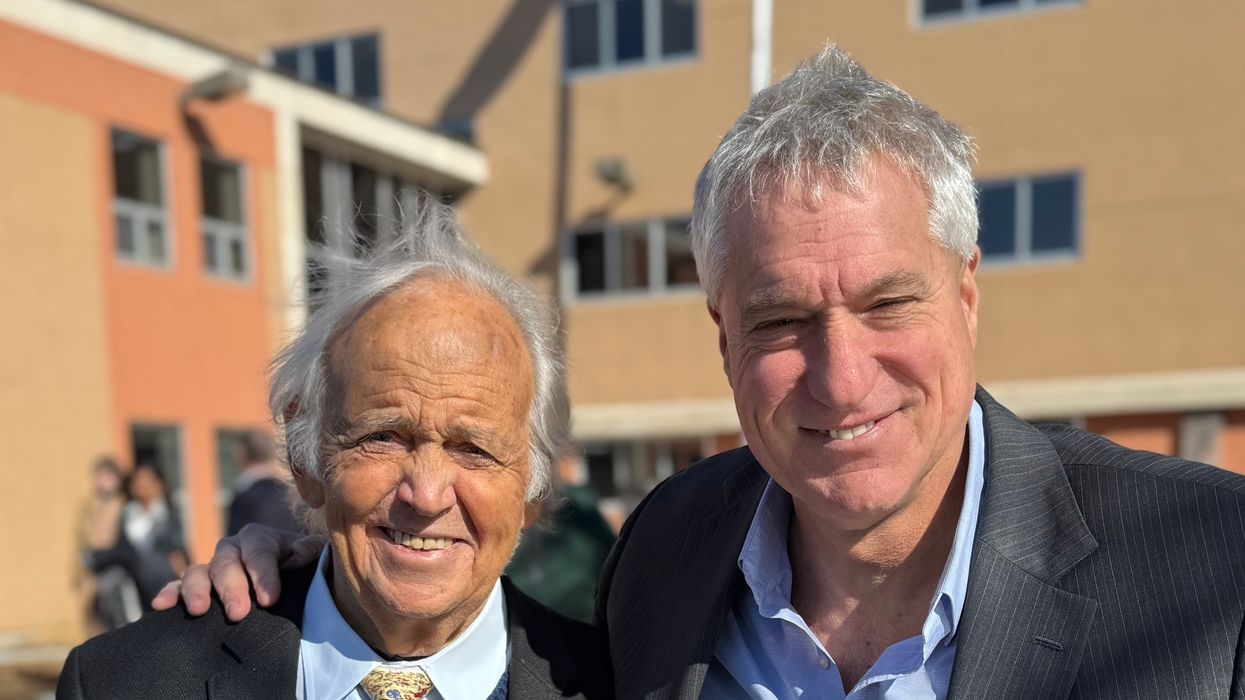
It is critical for Greenpeace and its allies to lean into the verdict and issue a call to action to the entire environmental movement and broader civil society organizations.
The stunning jury verdict in North Dakota of a $667 million judgement against Greenpeace is a direct attack on the climate movement, Indigenous peoples, and the First Amendment. This case is so deeply flawed—at core the trial was about crushing dissent—that I believe there is a good chance it will be reversed on appeal and ultimately backfire against the Energy Transfer pipeline company.
I was part of an independent trial monitoring team of nine attorneys and four prominent human rights advocates that sat through every minute of the three-week trial, held in a nondescript courthouse in rural North Dakota. Energy Transfer sued Greenpeace for alleged damages it claimed derived from the historic Indigenous-led Standing Rock protests in 2016 against the Dakota Access pipeline. Our presence in court was essential given that the company was able to shroud the trial in secrecy. There was no court reporter, and there still is no public transcript or recording of the proceedings.
What we observed was shocking. Greenpeace lost the trial not because it did something wrong, but because it was denied a fair trial.
If the theory of the case stands, pretty much anyone in the United States can face ruin for exercising their constitutional right to speak on an issue of public importance—even adherents of conservative causes.
The legendary human rights attorney Marty Garbus, a member of our team who has practiced law for more than six decades and who represented Nelson Mandela and Vaclav Havel, said it was the most unfair trial he had ever witnessed. This is precisely why many of us on the monitoring team believe there is a good chance Greenpeace will not pay the first dollar of the judgement and might actually recoup significant damages from EnergyTransfer in a separate case in Europe. That case, currently being heard in Dutch courts, would entitle Greenpeace to compensation based on a finding that the North Dakota case is an illegitimate attempt to squelch free speech.
This case against Greenpeace is widely regarded by legal observers and First Amendment scholars as a SLAPP (Strategic Lawsuit Against Public Participation) harassment lawsuit. SLAPPs are designed not to resolve legitimate legal claims but to use courts to intimidate, silence, and even bankrupt an adversary. SLAPP suits by their very nature violate the U.S. Constitution because they trespass on the First Amendment right to speech. Allowing these cases to proceed almost always saddles the target with backbreaking legal expenses that can silence even the most resilient leaders and organizations.
This clearly was Energy Transfer’s plan for Greenpeace, but the case was never just about Greenpeace. It was about using Greenpeace as a proxy to attack the Standing Rock Sioux’s autonomy, leadership, and sovereignty as well as the broader climate justice movement, which is trying mightily to transition our country to a clean energy economy. The protests and the climate movement’s goals are a direct threat to Energy Transfer’s business model.
That might explain why Kelcy Warren, the founder and CEO of Energy Transfer, said the main purpose of the lawsuit against Greenpeace was to “send a message” rather than to collect money. A major Trump supporter and the mastermind of the lawsuit, Warren once gave an interview in which he said activists “should be removed from the gene pool.” After he made a major contribution to Donald Trump’s inaugural committee in 2017, the Trump administration quickly approved a key easement for the North Dakota pipeline that had been denied by former President Barack Obama.
The case against Greenpeace in North Dakota had all the telltale signs of an illegitimate SLAPP—so much so that it was originally thrown out of federal court in 2019. In that case, Energy Transfer openly claimed Greenpeace had engaged in a racketeering conspiracy and “terrorism,” by speaking out against the pipeline and by doing training at the site in nonviolent direct action. The company quickly refiled the case days later in the more friendly confines of state court. Literally every single judge in the judicial district where it was filed recused themselves because of conflicts of interest.
Here are some of the more fundamental problems we observed that clearly violated the fair trial rights of Greenpeace:
The inability of Judge Gion to manage the case such that Greenpeace’s fair trial rights were respected was evident. It was almost excruciating to watch. It felt more like a choreographed show than an adversarial proceeding. Greenpeace was consistently—and in our opinion, falsely—portrayed by Energy Transfer lawyer Trey Cox as a criminal enterprise that exploited Indigenous peoples for its own gain. He used words like “mafia” and “coded language” to describe the group’s operations. (Cox works for the same law firm Chevron used to orchestrate my 993-day detention after I helped Amazon communities win the $10 billion Ecuador pollution case.)
The verdict represents more than a financial blow against Greenpeace. It has huge and very troubling implications for free speech across the nation. The result threatens the rights of religious groups and political organizations. It implicates the rights of churches and charities. If the theory of the case stands, pretty much anyone in the United States can face ruin for exercising their constitutional right to speak on an issue of public importance—even adherents of conservative causes. It’s really a corporate playbook that started with Chevron’s legal attacks on me and the Amazon communities in 2009, and continues with the assault on Greenpeace. It’s being carried out by the same law firm (Gibson Dunn & Crutcher) that markets the playbook to its corporate clients.
This case also highlights the Trump administration’s broader attack on progressive activism. From proposed legislation that would allow the Treasury Department to unilaterally revoke the nonprofit status of organizations deemed "terrorism-supporting" to the FBI’s reported plans to criminally prosecute climate groups, the goal is clear: suppress dissent. Greenpeace is in the crosshairs because its brand is global and its success in fighting polluters over the last several decades is outstanding.
This is why it is critical for Greenpeace and its allies to lean into the verdict and issue a call to action to the entire environmental movement and broader civil society organizations. Greenpeace is without question the world’s largest environmental activist group with chapters in 25 countries. It gave birth to the non-Indigenous part of the modern environmental movement in the early 1970s and captured the imagination of the world by engaging in spectacular and creative actions to save whales in the North Pacific and to stop nuclear testing. Greenpeace needs to be protected in this critical moment.
There is more than a glimmer of hope. A hearing is scheduled for July in Amsterdam on the Greenpeace lawsuit against Energy Transfer. If Greenpeace prevails on appeal in North Dakota and wins in Europe, it might be Energy Transfer paying substantial sums to Greenpeace rather than the other way around. This judgement is not nearly as dismal as many in the media are making it appear.
There are realistic scenarios where Greenpeace emerges from this experience strongerthan ever. The key is to keep grinding and calling out this abuse loudly and publicly. The world will respond.
This piece was also published on Steven Donziger’s Substack.
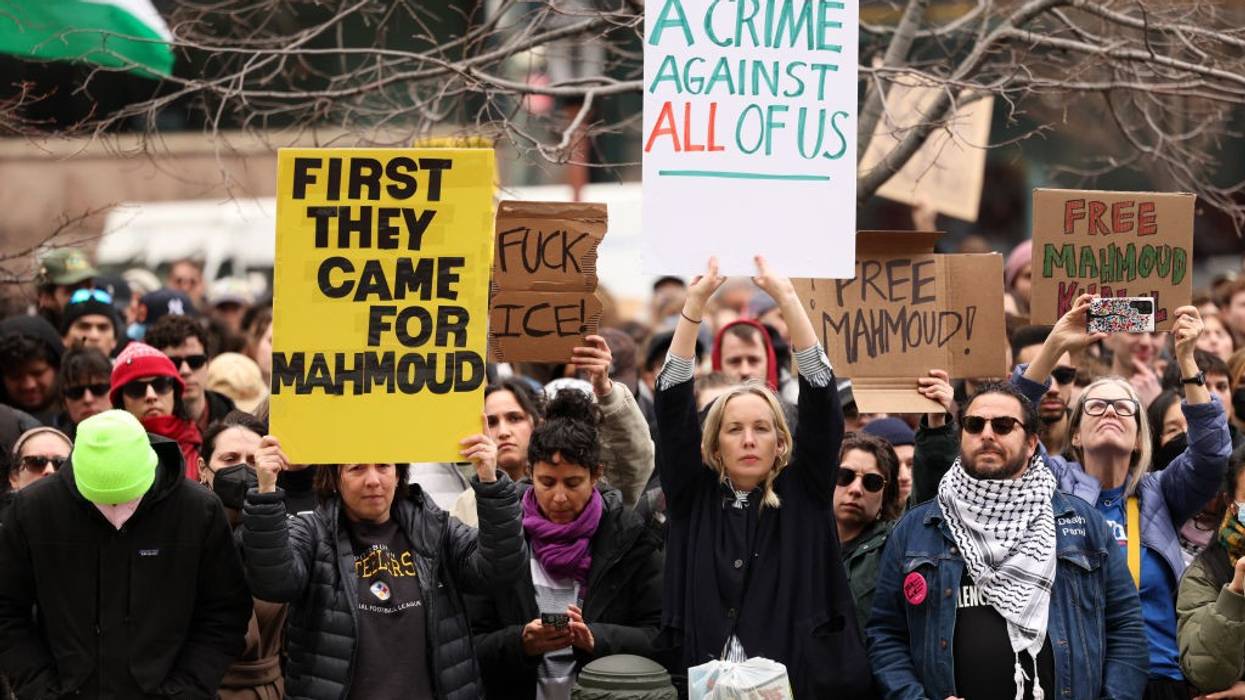
If the White House can punish anybody who engages in speech it dislikes, nobody will be free to criticize the government—and corporate criminals will be free to run amok.
Earlier this March, agents from the Department of Homeland Security, or DHS, arrested Mahmoud Khalil at his Columbia University-owned apartment building in New York City. Khalil, a lawful permanent resident of the United States, was then promptly disappeared by federal agents, who refused to tell Khalil’s wife (a U.S. citizen) why he was being detained or where he was being held. He has since been found by his attorneys and partner in a private Louisiana detention facility notorious for abuse. His deportation was successfully, though only temporarily, halted by a federal judge.
An initial hearing in Khalil’s case was subsequently heard—without him present—in New York City. There, the Department of Justice defended the kidnapping, and backed the White House’s claimed rationale: the Trump administration doesn’t approve of Khalil’s speech, and therefore it has the right to forgo due process, revoke his green card without judicial order, and deport him.
Khalil is a prominent pro-Palestinian leader at Columbia University. He was one of students’ lead negotiators during the anti-genocide encampments that formed on its campus in 2024. It is this right to speech, enshrined in the U.S. Constitution, and affirmed over and over and over again, that President Donald Trump and Secretary of State Marco Rubio are endeavoring to unilaterally, and with no constraints, gut.
Trump and his allies seemingly hope to manufacture a future in which any public critic of the administration or its friends can be defined, and prosecuted, as a “terrorist” for whom basic civil liberties can be summarily suspended.
To this end, the federal government has made no case that Khalil has committed a crime. Instead, the Trump administration has continuously boasted that Khalil is being targeted with the full force of the state for engaging in speech it doesn’t like; speech that is unambiguously guaranteed by the First Amendment, and that the White House now seeks to classify as “terrorism.”
Should Trump and Rubio succeed, as The Intercept aptly summarized, it will symbolize the death of free speech for American citizens and green-card holders alike.
Of course, it isn’t just Khalil—though if the government succeeds in his case it will be a chilling bellwether for the state of speech and protest in the Trump years and beyond. Even just in the weeks since kidnapping Khalil, it’s been reported that DHS officers have arrested another student protester at Columbia, stripped a different Columbia student of their visa status, denied a French scientist entry to the United States reportedly because of their expressed political disagreement with the administration, disappeared dozens of New Mexico residents, and more.
Of course, this playbook isn’t new, and Republicans have long sought to gut protected speech, and protected protest in particular. Indeed, dozens of Stop Cop City protesters and organizers are still navigating an abusive investigation and prosecution regime in Georgia that functionally seeks to render public displays of political dissent as violent conspiracy and “domestic terrorism,” including speech activities as mundane as handing out pamphlets.
As baseless and unconstitutional as those prosecutions were and still are, it’s this principle that is being pushed to new and even-more horrifying depths, as Trump and his allies seemingly hope to manufacture a future in which any public critic of the administration or its friends can be defined, and prosecuted, as a “terrorist” for whom basic civil liberties can be summarily suspended.
Indeed, Donald Trump, while turning the White House into a car dealership earlier this month, told reporters that people protesting Elon Musk’s hostile takeover of the U.S. federal government at Tesla storefronts, or protesting “any company,” should be labeled domestic terrorists, and that was something he “will do.”
Should the political persecution of Khalil succeed, it will foster a new era of the militarized American police state that greenlights the arbitrary and capricious abduction of organizers, dissidents, and critics of the Trump administration and the corporations it serves.
It should not need to be said, but to say it anyway: If foundational constitutional rights can be unilaterally suspended by the government, with no trial or even formal documentation of so-called wrongdoing, then those rights do not actually exist for anyone.
Who stands to benefit from such a bleak future? Advocates for authoritarianism for one, and corporations for another.
While the executive branch targets protesters’ rights to speech on White House orders, Trump’s own corporate allies and donors are pursuing adjacent tactics to divest normal people of the right to criticize the corporate hegemons ruining our lives.
Greenpeace, for example, just lost the trial brought against it by Energy Transfer, which seeks to functionally sue the group out of existence in the U.S. for criticizing the Dakota Access Pipeline (DAPL). That notorious project, controlled by Energy Transfer, is well-known for its environmental racism and for deploying extreme force against environmental advocates, Indigenous communities, and others who opposed it.
Greenpeace is set to appeal the verdict, but if Energy Transfer should ultimately succeed, it would not just spell the end of Greenpeace’s U.S. operations, but will also usher in a new era in which corporate money can not just silence, but wholly eradicate, organizations that are critical of corporate polluters, labor abusers, price-gougers, and more. Such a future would place a price tag on First Amendment protections, with only the most well-resourced entities in the country seemingly eligible to enjoy it, and everyone else left vulnerable to their whims and machinations.
The political kidnapping of Mahmoud Khalil is an egregious attempt to undo 233 years of American constitutional law, and—regardless of what Trump or others claim—threatens to end the right to free speech, and democracy, as we know it. Should the political persecution of Khalil succeed, it will foster a new era of the militarized American police state that greenlights the arbitrary and capricious abduction of organizers, dissidents, and critics of the Trump administration and the corporations it serves. That, to be clear, would wholly cement the United States’ descent into full-fledged fascism.
Crucially, though, even if they fail to make Khalil the defining, and chilling, example of a new epoch of American political prisoners, Donald Trump and his allies in and outside of government have made it clear: They want to eliminate the First Amendment, and will do whatever it takes to do so.
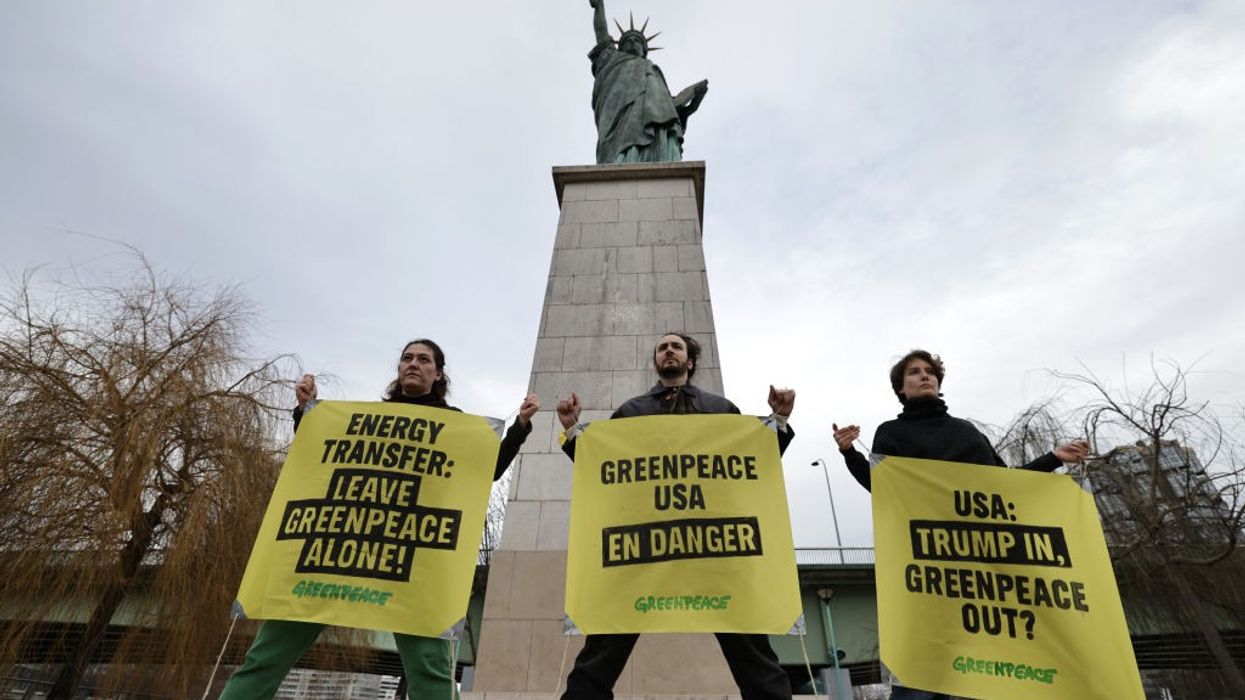
"We will not be silenced," the green group said in response to the verdict.
Climate campaigners swiftly sounded the alarm on Wednesday after a North Dakota jury awarded Energy Transfer and its subsidiary more than $660 million in the fossil fuel giant's case targeting Greenpeace for protests against the Dakota Access crude oil pipeline.
While Energy Transfer called the verdict a "win... for the people of Mandan and throughout North Dakota," environmentalist Jon Hinck condemned it as a "travesty of justice."
Hinck and others argue the case against Greenpeace International and two of its entities in the United States is a strategic lawsuit against public participation (SLAPP) intended to intimidate opponents of climate-wrecking fossil fuel projects.
OUTRAGE: A Big Oil-stacked jury just sided with corporate power, slapping Greenpeace with millions in damages for standing with Indigenous water protectors against DAPL. This is a dangerous attack on the right to protest, but the fight is not over. apnews.com/article/gree...
[image or embed]
— Center for Constitutional Rights ( @ccrjustice.org) March 19, 2025 at 6:04 PM
"This case should alarm everyone, no matter their political inclinations," said Sushma Raman, interim executive director of Greenpeace's U.S. entities, in a statement. "It's part of a renewed push by corporations to weaponize our courts to silence dissent. We should all be concerned about the future of the First Amendment, and lawsuits like this aimed at destroying our rights to peaceful protest and free speech. These rights are critical for any work toward ensuring justice—and that's why we will continue fighting back together, in solidarity. While Big Oil bullies can try to stop a single group, they can't stop a movement."
As The New York Times reported Wednesday:
Greenpeace had maintained that it played only a minor part in demonstrations led by the Standing Rock Sioux Tribe. It had portrayed the lawsuit as an attempt to stifle oil industry critics, but a jury apparently disagreed.
The nine-person jury in the Morton County courthouse in Mandan, North Dakota, about 45 minutes north of where the protests took place, returned the verdict after roughly two days of deliberating.
Addressing the legal loss on social media, Greenpeace International vowed that "we will not be silenced."
🚨BREAKING🚨 The trial verdict is in. A jury in the Morton County courthouse found Greenpeace International and two Greenpeace entities in the United States liable for over US$ 660 million combined in Energy Transfer’s meritless SLAPP lawsuit. #WeWillNotBeSilenced
[image or embed]
— Greenpeace International 🌍 ( @greenpeace.org) March 19, 2025 at 5:39 PM
Greenpeace International executive director Mads Christensen echoed that sentiment and pointed to U.S. President Donald Trump's second term as a danger to people and the planet. As the advocacy leader put it: "We are witnessing a disastrous return to the reckless behavior that fueled the climate crisis, deepened environmental racism, and put fossil fuel profits over public health and a livable planet. The previous Trump administration spent four years dismantling protections for clean air, water, and Indigenous sovereignty, and now along with its allies wants to finish the job by silencing protest."
Asked by The Associated Press if Greenpeace plans to appeal just after the verdict, senior legal adviser Deepa Padmanabha said, "We know that this fight is not over."
While the case has sparked fears that a loss in court could end Greenpeace, Padmanabha told AP that the globally known group's work "is never going stop." The adviser added, "That's the really important message today, and we're just walking out and we're going to get together and figure out what our next steps are."
I hate it here. www.nytimes.com/2025/03/19/c...
[image or embed]
— Dr. Genevieve Guenther (she/they) (@doctorvive.bsky.social) March 19, 2025 at 4:19 PM
An independent trial monitoring committee said in a statement that the verdict "reflects a deeply flawed trial with multiple due process violations that denied Greenpeace the ability to present anything close to a full defense."
Marty Garbus, a longtime First Amendment lawyer who is part of the committee, said: "In my six decades of legal practice, I have never witnessed a trial as unfair as the one against Greenpeace that just ended in the courts of North Dakota. This is one of the most important cases in American history."
"The law that can come down in this case can affect any demonstration, religious or political. It's far bigger than the environmental movement. Yet the court in North Dakota abdicated its sacred duty to conduct a fair and public trial and instead let Energy Transfer run roughshod over the rule of law," he added. "Greenpeace has a very strong case on appeal. I believe there is a good chance it ultimately will win both in court and in the court of public opinion."
Greenpeace International general counsel Kristin Casper later said in a statement that "Energy Transfer hasn't heard the last of us in this fight. We're just getting started with our anti-SLAPP lawsuit against Energy Transfer's attacks on free speech and peaceful protest. We will see Energy Transfer in court this July in the Netherlands."
As the
Times detailed, the global group "this year had countersued Energy Transfer in the Netherlands, invoking a new European Union directive against SLAPP suits as well as Dutch law."
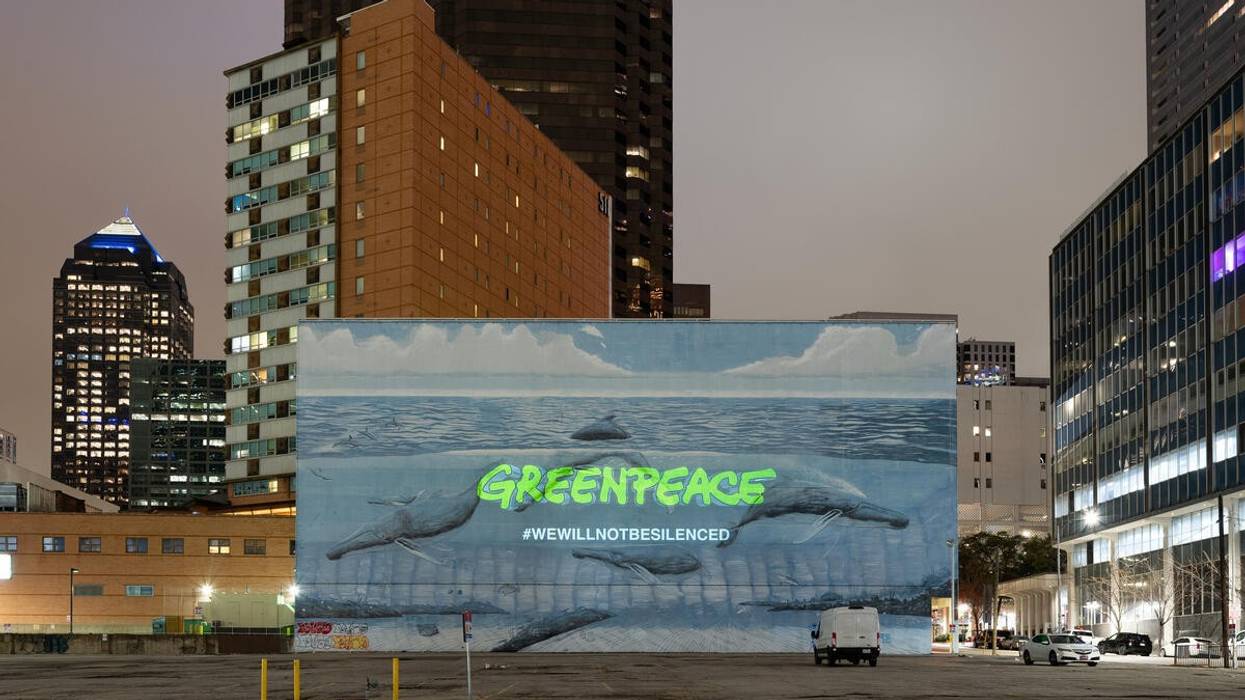
Energy Transfer’s case against Greenpeace could redefine First Amendment rights for everyone in the U.S. It must be exposed for the grave threat it is.
The strategic lawsuit against public participation, or SLAPP, lawsuit by Energy Transfer Partners against Greenpeace is a blatant attack on free speech, enabled by a biased legal system stacked with unqualified, partisan judges. It exemplifies how corporate power, run amok, threatens one of the most fundamental American rights—the right to dissent.
In late February, we watched this unfold in a small courtroom in Mandan, North Dakota—a town just across the Missouri River from Bismarck, now the site of a legal mugging. The victims? The entire climate and environmental movement, represented by Greenpeace. The assailants? Energy Transfer Partners (ETP), Dakota Access Pipeline, and their legal enforcers at the infamous fossil fuel law firm Gibson, Dunn, & Crutcher.
In President Donald Trump’s dystopian America, stacked juries and sham trials may soon become the new normal.
ETP’s CEO, Kelcy Warren, isn’t even pretending otherwise. He admitted the lawsuit’s purpose is “to send a message.” When asked if he wanted to cut off funding for groups like Greenpeace, he answered, “Absolutely.” He has even suggested that environmental activists should be “removed from the gene pool.” Now Warren has commandeered a public court and stolen public resources and citizens’ time, all to wage his revenge attack and get his “pound of flesh.” He’s just picked out the biggest environmental justice name he could think of—Greenpeace—as his victim.
In truth, this case is about silencing dissent. It continues the long-standing erasure of Native American rights, sidelining the Standing Rock Sioux Tribe—the true leaders of the DAPL protest movement—while targeting anyone who dares challenge corporate billionaires and fossil fuels.
We've seen this playbook before. When Chevron lost a $9.5 billion judgment in Ecuador for its deliberate dumping of billions of gallons of cancer-causing oil waste as Texaco. It decimated Indigenous communities and is a big reason why Native Americans should be worried fossil fuels will poison their water—Chevron did it intentionally. Then, to escape justice in Ecuador, it weaponized the U.S. legal system to wage SLAPP attacks and denied access to justice for Indigenous peoples, which culminated in the unprecedented imprisonment of a U.S. lawyer for a misdemeanor contempt charge—via a private corporate prosecution.
Gibson Dunn, central to both cases, is a prime example of how unethical lawyers manipulate the courts to crush free speech. In the Greenpeace case, they claim “tortious interference” over statements Greenpeace repeated from news reports—statements that were true. More chillingly, ETP argues that Greenpeace is liable for any alleged crimes at Standing Rock because it trained activists in deescalation, nonviolence, and safety. If the same logic applied, those who trained January 6 insurrectionists in political activism would be held liable for the Capitol riot—an irony that exposes the selective use of accountability.
The world saw the footage from Standing Rock: brutal police crackdowns, mass arrests, and unchecked violence against Indigenous and allied protesters. Yet no security personnel faced consequences—only demonstrators. Now, ETP seeks to gaslight the public in a courtroom where nearly every juror has admitted bias against Native Americans and environmental activists, with direct ties to the fossil fuel industry. In President Donald Trump’s dystopian America, stacked juries and sham trials may soon become the new normal.
This case could redefine First Amendment rights for everyone in the U.S. It must be exposed for the grave threat it is. Bipartisan efforts are underway to bring a federal anti-SLAPP law into effect to help protect the right to free speech. This case should light a fire under those efforts because, for many, the ability to peacefully protest and organize is all we have left.
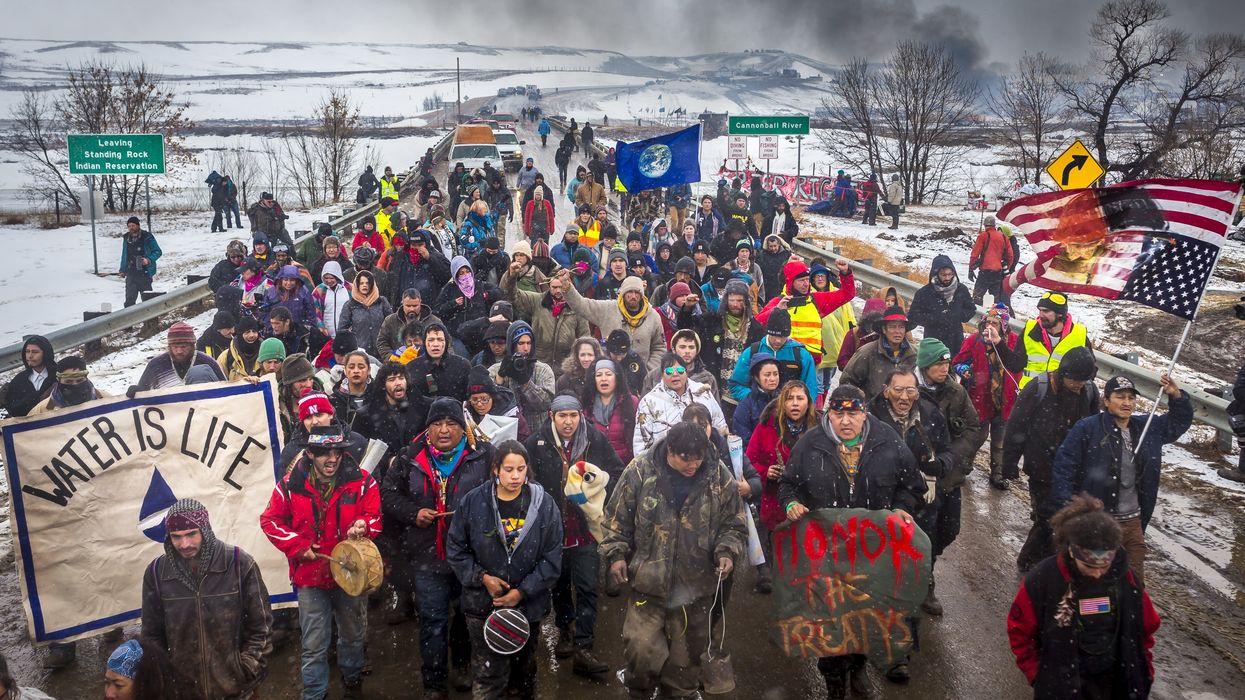
A lawsuit against Greenpeace in North Dakota threatens the existence of all nonprofits.
Imagine a world without effective nonprofit advocacy. When a corporation exploits a local community, no one speaks up or resists. Everyone is too afraid of the weaponized legal system, too vulnerable to liability. The ultra-wealthy take whatever they want and leave others to pick up the pieces. Opposition and resistance have been extinguished.
Those are the risks of a lawsuit against Greenpeace, now going to trial in North Dakota after a seven-year legal battle. Energy Transfer, the company behind the Dakota Access Pipeline, is seeking $300 million for tort damages, including defamation. Energy Transfer’s previous attempt to sue Greenpeace under federal anti-racketeering laws was blocked by the courts. But the state charges have been upheld, with a trial beginning on February 24, and free-speech advocates are raising alarms about the dangerous precedent that would follow a loss for Greenpeace, or even from the trial proceeding at all.
I recently spoke with Scott W. Badenoch, Jr., a visiting attorney at the Environmental Law Institute. He’s part of a team of distinguished international legal scholars, including Steven Donziger and Jeanne Mirer, who have launched a Trial Monitoring Committee to ensure the case against Greenpeace proceeds fairly and transparently.
While the Trial Monitors and some activists will be on the ground in North Dakota, we need to make noise online and in the media, ensuring that as many people as possible know what’s at stake.
As Badenoch described it, the court is trying to maintain “as much of a black box as you could possibly create in the U.S. court system.” Judge James Gion recently denied a motion to allow live streaming of the trial proceedings.
Instead, Badenoch said the case should be dismissed immediately. The allegations attempt to hold Greenpeace responsible for the actions of activists and volunteers unaffiliated with the group. Legal advocates and climate organizers have called it an unconstitutional SLAPP suit, intended to burden Greenpeace with costly legal fees, shut them down, and restrict the free speech of nonprofits more broadly. “There is absolutely no justification for this trial happening in this court, at this time, with this judge,” Badenoch said. “Just none.”
In a press release from the Trial Monitoring Committee, Steven Donziger pointed to recent trends, writing that “this appears to be part of a broader strategy by the fossil fuel industry to weaponize the courts against activists and weaken organizations like Greenpeace in retaliation for their advocacy.”
While the trial itself presents dangers, the recent actions of Energy Transfer have also brought accusations of jury-tampering. In October, residents of rural Morton County, North Dakota, where the trial will be set, received what appeared to be a legitimate newspaper. However, it contained almost exclusively critical attacks on Greenpeace and the pipeline protests, while praising Energy Transfer. The “newspaper” was actually a political mailer from a company called Metric Media, with links to electioneering and fossil fuel companies, as reported in the North Dakota News Cooperative. Even more concerning, financial records link the CEO of Energy Transfer, Texas billionaire Kelcy Warren, to the creation of the fake newspaper. It looks a like blatant attempt to taint the jury pool. Despite this, Judge Gion refused to allow Greenpeace to investigate the origins of the biased mailer.
The crucial role of the Trial Monitoring Committee is to bring attention to these abuses of due process. “We are going to monitor this case one way or the other,” Badenoch told me. “But the more that [Judge Gion] withholds transparency and access from us, the more obvious it is that something is going on that they don’t want people to see.”
Meanwhile, the stakes of the case extend far beyond Greenpeace. If Energy Transfer is successful, Badenoch said, the precedent would be cataclysmic for nonprofit advocacy. An organization could be held liable for any actions by any activists, however tenuously affiliated. “Literally every social justice, climate justice, civil rights, human rights organization across the country—and maybe the planet—is at risk of legal murder in a courtroom, where an organization is put to death by a SLAPP suit.”
As members of the public, that means we all have a responsibility to advocate for transparency, fairness, and ideally dismissal of Energy Transfer’s lawsuit. While the Trial Monitors and some activists will be on the ground in North Dakota, we need to make noise online and in the media, ensuring that as many people as possible know what’s at stake. Badenoch was emphatic about this: “The number one thing is to bring attention to the case. Don’t let Greenpeace die with a whimper.”
In a time of chaos and distraction, it’s all too easy to let cases like this one go unnoticed. But the risks are simply too dire to ignore. “It’s absolutely terrifying for advocacy in this country and beyond. The risks are really hard to overstate,” Badenoch told me. “If Greenpeace is allowed to die in this field in North Dakota, then every single nonprofit is next in line.”

"This fight is bigger than Greenpeace. This lawsuit is a blatant attempt to silence critics and hide destructive practices," said the campaign director of Greenpeace USA.
With a high-stakes court trial between the environmental organization Greenpeace and the developer of the Dakota Access Pipeline, Energy Transfer, set to begin Monday, the green group earlier this month lit up multiple locations in both Dallas and Washington, D.C. with giant projections that displayed messages such as, "You Can't Put a Movement on Trial" and, "Big Oil Is Suing Greenpeace."
The Dallas-based oil and gas company Energy Transfer—whose executive chairman Warren Kelcy is a donor to U.S President Donald Trump, according to the The Guardian—has accused Greenpeace and other activists of inciting protests that took place against the Dakota Access Pipeline in 2016 and 2017, as well as spreading misinformation about and vandalizing the project.
The lawsuit names Greenpeace International and two U.S. Greenpeace entities. Greenpeace maintains that the protests were directed by Indigenous leaders, not Greenpeace.
The Standing Rock Sioux tribe and its allies said the pipeline, which has been in operation since 2017 and carries crude oil from the Brakken oil fields in North Dakota to Illinois, would endanger the water supply for the reservation and violate the tribe's right to its land.
If successful, the $300 million lawsuit could inflict "financial ruin" on the group, according to Greenpeace. This would have a chilling effect on the organization's work, but leaders within the group have also cast it as an attack on the environmental movement and free speech more broadly.
"This fight is bigger than Greenpeace. This lawsuit is a blatant attempt to silence critics and hide destructive practices," said Rolf Skar, the campaign director of Greenpeace USA, in a Tuesday statement.
Of the projections in D.C. and Dallas, Skar said they "are a testament to that resilience, shining a light on the truth and reminding everyone fighting for a just and livable future that we will not back down."
In a similar vein, Deepa Padmanabha, Greenpeace's deputy general counsel, told The Guardian that "Energy Transfer and the fossil fuel industry do not understand the difference between entities and movements. You can't bankrupt the movement. You can't silence the movement. There will be a backlash and a price to pay when you pursue these kinds of tactics."
" People power is more powerful," she added.
The case has also been decried as an example of what are known as "Strategic Lawsuits Against Public Participation"—or "SLAPP" lawsuits, meritless cases whose goal it to bankrupt civil society groups and nonprofits with years of litigation and legal fees.
Greenpeace International, which is based in Amsterdam, has been the first group to initiate a lawsuit under the European Union's new anti-SLAPP directive. The group has sued in a Dutch court to recoup losses it has incurred as a result of its legal fight with Energy Transfer.
Of its bid under the anti-SLAPP directive, Daniel Simons, senior legal counsel at Greenpeace International, said in early February that "if we prevail, it will send a message to corporate bullies that the age of impunity is ending. That would be a boost for civil society in the E.U., and point to solutions for those battling the SLAPP phenomenon elsewhere."
There is no federal anti-SLAPP law on the books in the United States.
There has also been intrigue surrounding the circumstances of the upcoming trial in North Dakota. Greenpeace unsuccessfully sought to have the case moved to a different court over concerns of potential jury bias. The Guardian and the local outlet the North Dakota Monitor have reported on mysterious mailers that were sent to local residents that contain written material slanted against Dakota Access Pipeline protestors and in favor of Energy Transfer.

"This facility has a long track record of pollution, accidents, and violations of the law," said one advocate.
For the second time in less than four weeks on Thursday, residents of the fifth-largest metropolitan area in the United States were notified of an emergency and ordered to shelter in place due to an accident at one of the region's many oil facilities.
A plant operated by PEMEX, Mexico's state-owned oil company, was the site of a deadly hydrogen sulfide leak in the suburb of Deer Park, with at least two workers found dead at the scene.
At least 35 others were hospitalized due to their exposure or treated at the scene, Harris County Sheriff Ed Gonzalez told reporters.
Gonzalez said the leak occurred while PEMEX employees were working on a flange at the plant.
According to the Occupational Safety and Health Administration (OSHA), the colorless gas hydrogen sulfide—known for its strong "rotten egg" smell at low levels and commonly used in oil and gas refining—is extremely toxic at high concentrations, and can cause headaches, eye irritation, or serious effects including unconsciousness and death.
City officials in Deer Park and the neighboring city of Pasadena called on residents to stay indoors, keep all windows and doors closed, and turn off their air conditioners—on a day when the temperature was as high as 88°F—before assessing the air quality and determining the public was not at risk.
In mid-September, a fire at a liquefied natural gas pipeline owned by fossil fuel giant Energy Transfer went on for four days, damaged nearby homes and a playground, melted vehicles, and forced about 100 households to evacuate Deer Park and another nearby town, La Porte.
"This facility has a long track record of pollution, accidents, and violations of the law. Unfortunately Texas has a poor track record of forcing this and other petrochemical facilities to take safety and compliance seriously."
Luke Metzger, executive director of Environment Texas Research and Policy Center, called for a "comprehensive investigation of what happened in Deer Park" and said officials must "make sure people and the companies are held accountable for letting this happen."
Environment Texas noted that it joined Sierra Club in 2008 in filing a lawsuit against the PEMEX plant for Clean Air Act violations. The suit was settled the following year, with PEMEX committing to make upgrades, pay a penalty, and reduce its air pollution, but the group found in a 2021 analysis that state regulators have failed to crack down on toxic industrial emissions.
Earlier this week, Oil and Gas Watch at the Environmental Integrity Project found that the PEMEX plant is "the worst source of benzene air pollution among U.S. refineries, as measured by the amount of the carcinogen measured by air monitors around the perimeter of the facility."
Prolonged exposure to benzene can cause blood disorders, threaten the immune system, and increase the risk of leukemia.
"My thoughts are with those who have lost their lives or are injured, and their loved ones, following this chemical leak," said Metzger. "It's just terrible. This facility has a long track record of pollution, accidents, and violations of the law. Unfortunately Texas has a poor track record of forcing this and other petrochemical facilities to take safety and compliance seriously. It makes me wonder if this awful incident could have been prevented."
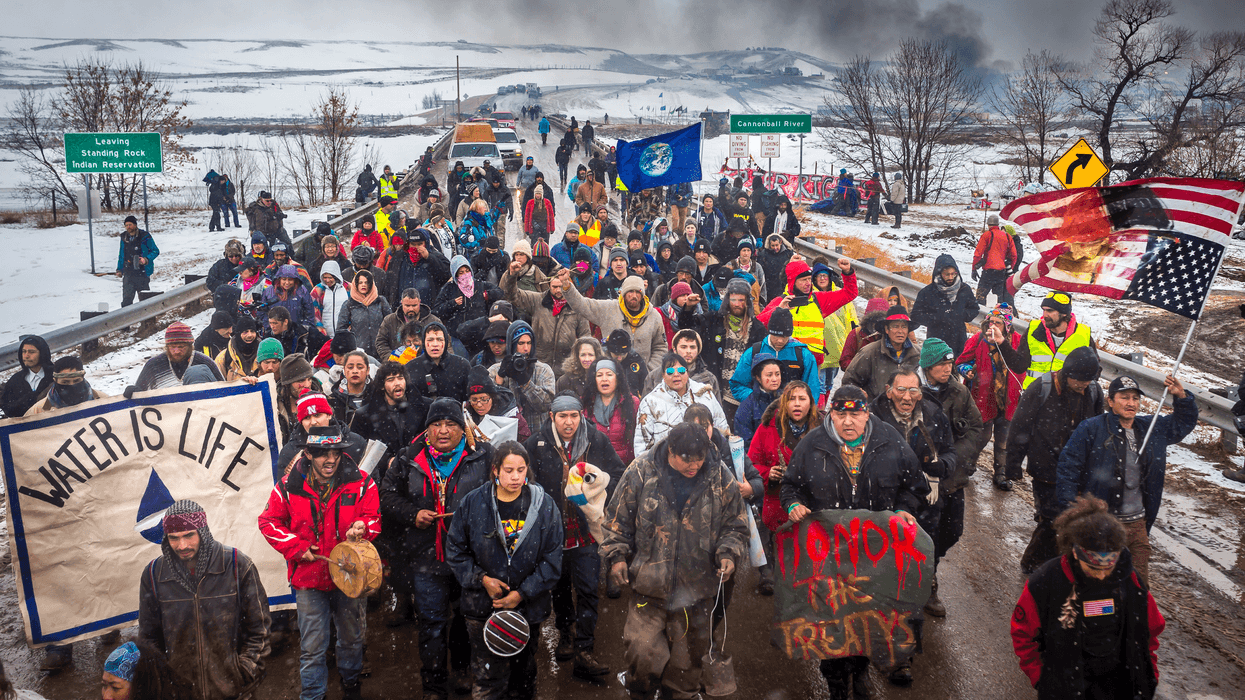
"No matter who you are, no matter what your politics are, this is one of the most important issues in America right now," one Greenpeace spokesperson said.
Nearly 300 organizations and tens of thousands of individuals have signed an open letter supporting Greenpeace USA against a $300 million lawsuit brought against the environmental group by Energy Transfer—a company with a majority stake in the Dakota Access pipeline.
The corporation is falsely accusing Greenpeace of being the driving force behind Indigenous-led protests against the Dakota Access pipeline (DAPL) in 2016 and 2017.
Greenpeace USA announced its supporters on Thursday as it launched a campaign to raise awareness about the lawsuit—which it said could "functionally bankrupt" the organization, threatening its "existence." However, Greenpeace said that the dangers posed by strategic lawsuits against public participation (SLAPPs), like the one it faces, extend far beyond one organization.
"No matter who you are, no matter what your politics are, this is one of the most important issues in America right now," Greenpeace USA spokesperson Rolf Skar said in a statement. "Energy Transfer built the Dakota Access pipeline. But they're suing anyway in order to send a message: If you dare to oppose us, we will financially ruin you."
The Dakota Access pipeline drew massive protests from the Standing Rock Sioux Tribe, more than 300 other tribal nations, and non-Indigenous allies. While former U.S. President Donald Trump forced the pipeline through shortly after taking office in early 2017, the protests rattled the fossil fuel industry and their allies in government. After 2016, 18 states passed anti-protest laws that shielded around 60% of U.S. oil and gas production and related infrastructure from peaceful protests. The industry also turned to "judicial harassment."
Energy Transfer (ET) initially brought suits against Standing Rock Tribal Chairman Dave Archambault and other Water Protectors, as well as a federal suit against Greenpeace in 2017.
At the time, ET CEO Kelcy Warren told a reporter: "Could we get some monetary damages out of this thing, and probably will we? Yeah, sure. Is that my primary objective? Absolutely not. It's to send a message—you can't do this, this is unlawful, and it's not going to be tolerated in the United States."
"Everyone who says they care about freedom—of whatever political stripe—should join together to support the Greenpeace campaign to protect people's right to speak out against corporate abuses."
While the 2017 cases were all dismissed, ET immediately filed a similar case against Greenpeace in North Dakota state court in 2019. The new case, which is scheduled to go to trial in February 2025, makes what Greenpeace called a "deeply racist" case that Greenpeace, and not Indigenous leaders, coordinated the Dakota Access protests.
"The lawsuit against Greenpeace is also an attack on the Indigenous movement in our fight for self-determination to protect Mother Earth, our waters, sacred and cultural sites, and our youth and future generations," Morgan Brings Plenty of the Standing Rock Youth Council said in a statement. "These colonialist lawsuits are trying to send a warning to anyone who might consider speaking out and to be quiet—any of you could be next."
ET also makes several claims that would set a dangerous precedent if upheld, including denouncing legitimate speech as defamatory and making anyone who is present at a protest liable for things that occurred at the same protest.
"The whole point of this type of lawsuit is to limit freedom of expression, so even if you don't care about climate change, or you don't care about Greenpeace, you should pay attention," Skar said. "What's at stake isn't just Greenpeace or environmentalism, but the fundamental American rights to freedom of peaceful expression and advocacy for all of us."
Greenpeace has circulated a letter to ET that has so far been signed by more than 290 organizations—including 350.org, Public Citizen, ACLU North Dakota, SEIU, Indigenous Environmental Network, and Amnesty International USA—and tens of thousands of individuals, including prominent celebrities and activists like Jane Fonda, Susan Sarandon, Billie Eilish, and Adam McKay.
"This is corporate overreach that is part of a disturbing trend of attacks on advocacy and speech around the world," the letter reads. "We will not allow lawsuits like this one to stop us from advocating for a just, green, and peaceful future. On the contrary, we will ensure they have the opposite effect, increasing the support for organizations like Greenpeace and strengthening the broader movement for justice."
"This legal attack on Greenpeace is an attack on us all," the letter continues. "We will not stand idly by. We will not be bullied. We will not be divided and we will not be silenced."
Organizations also issued individual statements of support.
"Everyone who says they care about freedom—of whatever political stripe—should join together to support the Greenpeace campaign to protect people's right to speak out against corporate abuses," said Robert Weissman, co-president of Public Citizen. "As Greenpeace knows from its own experience, too often corporations use their political, economic, and legal power not just to run PR campaigns justifying their wrongdoing, but to threaten public interest advocates with bad-faith lawsuits (SLAPPs) and other intimidation tactics."
Brian Hauss, a senior staff attorney for the ACLU, said: "Protesters and advocacy groups should never have to fear the weight of groups like ETP as a condition for expressing their First Amendment rights. The court should see this lawsuit for what it is and toss it."
Progressives are also calling for a national legislative solution to the problem of SLAPP suits. While most states do have laws on the books against them, North Dakota is one of the 18 that do not.
Rep. Jamie Raskin (D-Md.) introduced the Strategic Lawsuits Against Public Participation (SLAPP) Protection Act during Congress' last session, and plans to reintroduce it in September of this year.
"The case against Greenpeace illustrates how mega-corporations can use lawsuits to silence, intimidate, and ruin their critics," Raskin said. "America must demand, and Congress must pass, bipartisan legislation to protect First Amendment rights against ruinous litigation practices."