SUBSCRIBE TO OUR FREE NEWSLETTER
Daily news & progressive opinion—funded by the people, not the corporations—delivered straight to your inbox.
5
#000000
#FFFFFF
To donate by check, phone, or other method, see our More Ways to Give page.
Daily news & progressive opinion—funded by the people, not the corporations—delivered straight to your inbox.
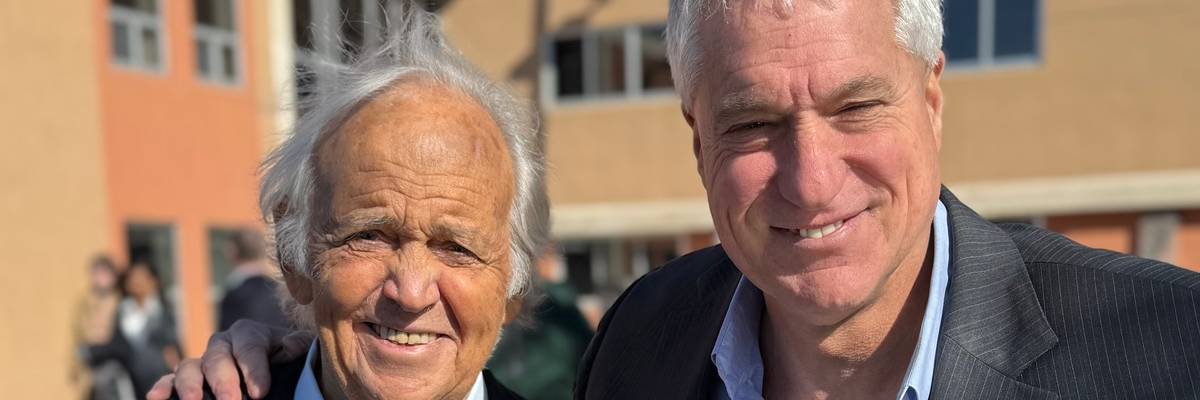
Independent trial monitors Martin Garbus and Steven Donziger stand outside the North Dakota courthouse where the Energy Transfer case against Greenpeace was held.
It is critical for Greenpeace and its allies to lean into the verdict and issue a call to action to the entire environmental movement and broader civil society organizations.
The stunning jury verdict in North Dakota of a $667 million judgement against Greenpeace is a direct attack on the climate movement, Indigenous peoples, and the First Amendment. This case is so deeply flawed—at core the trial was about crushing dissent—that I believe there is a good chance it will be reversed on appeal and ultimately backfire against the Energy Transfer pipeline company.
I was part of an independent trial monitoring team of nine attorneys and four prominent human rights advocates that sat through every minute of the three-week trial, held in a nondescript courthouse in rural North Dakota. Energy Transfer sued Greenpeace for alleged damages it claimed derived from the historic Indigenous-led Standing Rock protests in 2016 against the Dakota Access pipeline. Our presence in court was essential given that the company was able to shroud the trial in secrecy. There was no court reporter, and there still is no public transcript or recording of the proceedings.
What we observed was shocking. Greenpeace lost the trial not because it did something wrong, but because it was denied a fair trial.
If the theory of the case stands, pretty much anyone in the United States can face ruin for exercising their constitutional right to speak on an issue of public importance—even adherents of conservative causes.
The legendary human rights attorney Marty Garbus, a member of our team who has practiced law for more than six decades and who represented Nelson Mandela and Vaclav Havel, said it was the most unfair trial he had ever witnessed. This is precisely why many of us on the monitoring team believe there is a good chance Greenpeace will not pay the first dollar of the judgement and might actually recoup significant damages from EnergyTransfer in a separate case in Europe. That case, currently being heard in Dutch courts, would entitle Greenpeace to compensation based on a finding that the North Dakota case is an illegitimate attempt to squelch free speech.
This case against Greenpeace is widely regarded by legal observers and First Amendment scholars as a SLAPP (Strategic Lawsuit Against Public Participation) harassment lawsuit. SLAPPs are designed not to resolve legitimate legal claims but to use courts to intimidate, silence, and even bankrupt an adversary. SLAPP suits by their very nature violate the U.S. Constitution because they trespass on the First Amendment right to speech. Allowing these cases to proceed almost always saddles the target with backbreaking legal expenses that can silence even the most resilient leaders and organizations.
This clearly was Energy Transfer’s plan for Greenpeace, but the case was never just about Greenpeace. It was about using Greenpeace as a proxy to attack the Standing Rock Sioux’s autonomy, leadership, and sovereignty as well as the broader climate justice movement, which is trying mightily to transition our country to a clean energy economy. The protests and the climate movement’s goals are a direct threat to Energy Transfer’s business model.
That might explain why Kelcy Warren, the founder and CEO of Energy Transfer, said the main purpose of the lawsuit against Greenpeace was to “send a message” rather than to collect money. A major Trump supporter and the mastermind of the lawsuit, Warren once gave an interview in which he said activists “should be removed from the gene pool.” After he made a major contribution to Donald Trump’s inaugural committee in 2017, the Trump administration quickly approved a key easement for the North Dakota pipeline that had been denied by former President Barack Obama.
The case against Greenpeace in North Dakota had all the telltale signs of an illegitimate SLAPP—so much so that it was originally thrown out of federal court in 2019. In that case, Energy Transfer openly claimed Greenpeace had engaged in a racketeering conspiracy and “terrorism,” by speaking out against the pipeline and by doing training at the site in nonviolent direct action. The company quickly refiled the case days later in the more friendly confines of state court. Literally every single judge in the judicial district where it was filed recused themselves because of conflicts of interest.
Here are some of the more fundamental problems we observed that clearly violated the fair trial rights of Greenpeace:
The inability of Judge Gion to manage the case such that Greenpeace’s fair trial rights were respected was evident. It was almost excruciating to watch. It felt more like a choreographed show than an adversarial proceeding. Greenpeace was consistently—and in our opinion, falsely—portrayed by Energy Transfer lawyer Trey Cox as a criminal enterprise that exploited Indigenous peoples for its own gain. He used words like “mafia” and “coded language” to describe the group’s operations. (Cox works for the same law firm Chevron used to orchestrate my 993-day detention after I helped Amazon communities win the $10 billion Ecuador pollution case.)
The verdict represents more than a financial blow against Greenpeace. It has huge and very troubling implications for free speech across the nation. The result threatens the rights of religious groups and political organizations. It implicates the rights of churches and charities. If the theory of the case stands, pretty much anyone in the United States can face ruin for exercising their constitutional right to speak on an issue of public importance—even adherents of conservative causes. It’s really a corporate playbook that started with Chevron’s legal attacks on me and the Amazon communities in 2009, and continues with the assault on Greenpeace. It’s being carried out by the same law firm (Gibson Dunn & Crutcher) that markets the playbook to its corporate clients.
This case also highlights the Trump administration’s broader attack on progressive activism. From proposed legislation that would allow the Treasury Department to unilaterally revoke the nonprofit status of organizations deemed "terrorism-supporting" to the FBI’s reported plans to criminally prosecute climate groups, the goal is clear: suppress dissent. Greenpeace is in the crosshairs because its brand is global and its success in fighting polluters over the last several decades is outstanding.
This is why it is critical for Greenpeace and its allies to lean into the verdict and issue a call to action to the entire environmental movement and broader civil society organizations. Greenpeace is without question the world’s largest environmental activist group with chapters in 25 countries. It gave birth to the non-Indigenous part of the modern environmental movement in the early 1970s and captured the imagination of the world by engaging in spectacular and creative actions to save whales in the North Pacific and to stop nuclear testing. Greenpeace needs to be protected in this critical moment.
There is more than a glimmer of hope. A hearing is scheduled for July in Amsterdam on the Greenpeace lawsuit against Energy Transfer. If Greenpeace prevails on appeal in North Dakota and wins in Europe, it might be Energy Transfer paying substantial sums to Greenpeace rather than the other way around. This judgement is not nearly as dismal as many in the media are making it appear.
There are realistic scenarios where Greenpeace emerges from this experience strongerthan ever. The key is to keep grinding and calling out this abuse loudly and publicly. The world will respond.
This piece was also published on Steven Donziger’s Substack.
Dear Common Dreams reader, It’s been nearly 30 years since I co-founded Common Dreams with my late wife, Lina Newhouser. We had the radical notion that journalism should serve the public good, not corporate profits. It was clear to us from the outset what it would take to build such a project. No paid advertisements. No corporate sponsors. No millionaire publisher telling us what to think or do. Many people said we wouldn't last a year, but we proved those doubters wrong. Together with a tremendous team of journalists and dedicated staff, we built an independent media outlet free from the constraints of profits and corporate control. Our mission has always been simple: To inform. To inspire. To ignite change for the common good. Building Common Dreams was not easy. Our survival was never guaranteed. When you take on the most powerful forces—Wall Street greed, fossil fuel industry destruction, Big Tech lobbyists, and uber-rich oligarchs who have spent billions upon billions rigging the economy and democracy in their favor—the only bulwark you have is supporters who believe in your work. But here’s the urgent message from me today. It's never been this bad out there. And it's never been this hard to keep us going. At the very moment Common Dreams is most needed, the threats we face are intensifying. We need your support now more than ever. We don't accept corporate advertising and never will. We don't have a paywall because we don't think people should be blocked from critical news based on their ability to pay. Everything we do is funded by the donations of readers like you. When everyone does the little they can afford, we are strong. But if that support retreats or dries up, so do we. Will you donate now to make sure Common Dreams not only survives but thrives? —Craig Brown, Co-founder |
The stunning jury verdict in North Dakota of a $667 million judgement against Greenpeace is a direct attack on the climate movement, Indigenous peoples, and the First Amendment. This case is so deeply flawed—at core the trial was about crushing dissent—that I believe there is a good chance it will be reversed on appeal and ultimately backfire against the Energy Transfer pipeline company.
I was part of an independent trial monitoring team of nine attorneys and four prominent human rights advocates that sat through every minute of the three-week trial, held in a nondescript courthouse in rural North Dakota. Energy Transfer sued Greenpeace for alleged damages it claimed derived from the historic Indigenous-led Standing Rock protests in 2016 against the Dakota Access pipeline. Our presence in court was essential given that the company was able to shroud the trial in secrecy. There was no court reporter, and there still is no public transcript or recording of the proceedings.
What we observed was shocking. Greenpeace lost the trial not because it did something wrong, but because it was denied a fair trial.
If the theory of the case stands, pretty much anyone in the United States can face ruin for exercising their constitutional right to speak on an issue of public importance—even adherents of conservative causes.
The legendary human rights attorney Marty Garbus, a member of our team who has practiced law for more than six decades and who represented Nelson Mandela and Vaclav Havel, said it was the most unfair trial he had ever witnessed. This is precisely why many of us on the monitoring team believe there is a good chance Greenpeace will not pay the first dollar of the judgement and might actually recoup significant damages from EnergyTransfer in a separate case in Europe. That case, currently being heard in Dutch courts, would entitle Greenpeace to compensation based on a finding that the North Dakota case is an illegitimate attempt to squelch free speech.
This case against Greenpeace is widely regarded by legal observers and First Amendment scholars as a SLAPP (Strategic Lawsuit Against Public Participation) harassment lawsuit. SLAPPs are designed not to resolve legitimate legal claims but to use courts to intimidate, silence, and even bankrupt an adversary. SLAPP suits by their very nature violate the U.S. Constitution because they trespass on the First Amendment right to speech. Allowing these cases to proceed almost always saddles the target with backbreaking legal expenses that can silence even the most resilient leaders and organizations.
This clearly was Energy Transfer’s plan for Greenpeace, but the case was never just about Greenpeace. It was about using Greenpeace as a proxy to attack the Standing Rock Sioux’s autonomy, leadership, and sovereignty as well as the broader climate justice movement, which is trying mightily to transition our country to a clean energy economy. The protests and the climate movement’s goals are a direct threat to Energy Transfer’s business model.
That might explain why Kelcy Warren, the founder and CEO of Energy Transfer, said the main purpose of the lawsuit against Greenpeace was to “send a message” rather than to collect money. A major Trump supporter and the mastermind of the lawsuit, Warren once gave an interview in which he said activists “should be removed from the gene pool.” After he made a major contribution to Donald Trump’s inaugural committee in 2017, the Trump administration quickly approved a key easement for the North Dakota pipeline that had been denied by former President Barack Obama.
The case against Greenpeace in North Dakota had all the telltale signs of an illegitimate SLAPP—so much so that it was originally thrown out of federal court in 2019. In that case, Energy Transfer openly claimed Greenpeace had engaged in a racketeering conspiracy and “terrorism,” by speaking out against the pipeline and by doing training at the site in nonviolent direct action. The company quickly refiled the case days later in the more friendly confines of state court. Literally every single judge in the judicial district where it was filed recused themselves because of conflicts of interest.
Here are some of the more fundamental problems we observed that clearly violated the fair trial rights of Greenpeace:
The inability of Judge Gion to manage the case such that Greenpeace’s fair trial rights were respected was evident. It was almost excruciating to watch. It felt more like a choreographed show than an adversarial proceeding. Greenpeace was consistently—and in our opinion, falsely—portrayed by Energy Transfer lawyer Trey Cox as a criminal enterprise that exploited Indigenous peoples for its own gain. He used words like “mafia” and “coded language” to describe the group’s operations. (Cox works for the same law firm Chevron used to orchestrate my 993-day detention after I helped Amazon communities win the $10 billion Ecuador pollution case.)
The verdict represents more than a financial blow against Greenpeace. It has huge and very troubling implications for free speech across the nation. The result threatens the rights of religious groups and political organizations. It implicates the rights of churches and charities. If the theory of the case stands, pretty much anyone in the United States can face ruin for exercising their constitutional right to speak on an issue of public importance—even adherents of conservative causes. It’s really a corporate playbook that started with Chevron’s legal attacks on me and the Amazon communities in 2009, and continues with the assault on Greenpeace. It’s being carried out by the same law firm (Gibson Dunn & Crutcher) that markets the playbook to its corporate clients.
This case also highlights the Trump administration’s broader attack on progressive activism. From proposed legislation that would allow the Treasury Department to unilaterally revoke the nonprofit status of organizations deemed "terrorism-supporting" to the FBI’s reported plans to criminally prosecute climate groups, the goal is clear: suppress dissent. Greenpeace is in the crosshairs because its brand is global and its success in fighting polluters over the last several decades is outstanding.
This is why it is critical for Greenpeace and its allies to lean into the verdict and issue a call to action to the entire environmental movement and broader civil society organizations. Greenpeace is without question the world’s largest environmental activist group with chapters in 25 countries. It gave birth to the non-Indigenous part of the modern environmental movement in the early 1970s and captured the imagination of the world by engaging in spectacular and creative actions to save whales in the North Pacific and to stop nuclear testing. Greenpeace needs to be protected in this critical moment.
There is more than a glimmer of hope. A hearing is scheduled for July in Amsterdam on the Greenpeace lawsuit against Energy Transfer. If Greenpeace prevails on appeal in North Dakota and wins in Europe, it might be Energy Transfer paying substantial sums to Greenpeace rather than the other way around. This judgement is not nearly as dismal as many in the media are making it appear.
There are realistic scenarios where Greenpeace emerges from this experience strongerthan ever. The key is to keep grinding and calling out this abuse loudly and publicly. The world will respond.
This piece was also published on Steven Donziger’s Substack.
The stunning jury verdict in North Dakota of a $667 million judgement against Greenpeace is a direct attack on the climate movement, Indigenous peoples, and the First Amendment. This case is so deeply flawed—at core the trial was about crushing dissent—that I believe there is a good chance it will be reversed on appeal and ultimately backfire against the Energy Transfer pipeline company.
I was part of an independent trial monitoring team of nine attorneys and four prominent human rights advocates that sat through every minute of the three-week trial, held in a nondescript courthouse in rural North Dakota. Energy Transfer sued Greenpeace for alleged damages it claimed derived from the historic Indigenous-led Standing Rock protests in 2016 against the Dakota Access pipeline. Our presence in court was essential given that the company was able to shroud the trial in secrecy. There was no court reporter, and there still is no public transcript or recording of the proceedings.
What we observed was shocking. Greenpeace lost the trial not because it did something wrong, but because it was denied a fair trial.
If the theory of the case stands, pretty much anyone in the United States can face ruin for exercising their constitutional right to speak on an issue of public importance—even adherents of conservative causes.
The legendary human rights attorney Marty Garbus, a member of our team who has practiced law for more than six decades and who represented Nelson Mandela and Vaclav Havel, said it was the most unfair trial he had ever witnessed. This is precisely why many of us on the monitoring team believe there is a good chance Greenpeace will not pay the first dollar of the judgement and might actually recoup significant damages from EnergyTransfer in a separate case in Europe. That case, currently being heard in Dutch courts, would entitle Greenpeace to compensation based on a finding that the North Dakota case is an illegitimate attempt to squelch free speech.
This case against Greenpeace is widely regarded by legal observers and First Amendment scholars as a SLAPP (Strategic Lawsuit Against Public Participation) harassment lawsuit. SLAPPs are designed not to resolve legitimate legal claims but to use courts to intimidate, silence, and even bankrupt an adversary. SLAPP suits by their very nature violate the U.S. Constitution because they trespass on the First Amendment right to speech. Allowing these cases to proceed almost always saddles the target with backbreaking legal expenses that can silence even the most resilient leaders and organizations.
This clearly was Energy Transfer’s plan for Greenpeace, but the case was never just about Greenpeace. It was about using Greenpeace as a proxy to attack the Standing Rock Sioux’s autonomy, leadership, and sovereignty as well as the broader climate justice movement, which is trying mightily to transition our country to a clean energy economy. The protests and the climate movement’s goals are a direct threat to Energy Transfer’s business model.
That might explain why Kelcy Warren, the founder and CEO of Energy Transfer, said the main purpose of the lawsuit against Greenpeace was to “send a message” rather than to collect money. A major Trump supporter and the mastermind of the lawsuit, Warren once gave an interview in which he said activists “should be removed from the gene pool.” After he made a major contribution to Donald Trump’s inaugural committee in 2017, the Trump administration quickly approved a key easement for the North Dakota pipeline that had been denied by former President Barack Obama.
The case against Greenpeace in North Dakota had all the telltale signs of an illegitimate SLAPP—so much so that it was originally thrown out of federal court in 2019. In that case, Energy Transfer openly claimed Greenpeace had engaged in a racketeering conspiracy and “terrorism,” by speaking out against the pipeline and by doing training at the site in nonviolent direct action. The company quickly refiled the case days later in the more friendly confines of state court. Literally every single judge in the judicial district where it was filed recused themselves because of conflicts of interest.
Here are some of the more fundamental problems we observed that clearly violated the fair trial rights of Greenpeace:
The inability of Judge Gion to manage the case such that Greenpeace’s fair trial rights were respected was evident. It was almost excruciating to watch. It felt more like a choreographed show than an adversarial proceeding. Greenpeace was consistently—and in our opinion, falsely—portrayed by Energy Transfer lawyer Trey Cox as a criminal enterprise that exploited Indigenous peoples for its own gain. He used words like “mafia” and “coded language” to describe the group’s operations. (Cox works for the same law firm Chevron used to orchestrate my 993-day detention after I helped Amazon communities win the $10 billion Ecuador pollution case.)
The verdict represents more than a financial blow against Greenpeace. It has huge and very troubling implications for free speech across the nation. The result threatens the rights of religious groups and political organizations. It implicates the rights of churches and charities. If the theory of the case stands, pretty much anyone in the United States can face ruin for exercising their constitutional right to speak on an issue of public importance—even adherents of conservative causes. It’s really a corporate playbook that started with Chevron’s legal attacks on me and the Amazon communities in 2009, and continues with the assault on Greenpeace. It’s being carried out by the same law firm (Gibson Dunn & Crutcher) that markets the playbook to its corporate clients.
This case also highlights the Trump administration’s broader attack on progressive activism. From proposed legislation that would allow the Treasury Department to unilaterally revoke the nonprofit status of organizations deemed "terrorism-supporting" to the FBI’s reported plans to criminally prosecute climate groups, the goal is clear: suppress dissent. Greenpeace is in the crosshairs because its brand is global and its success in fighting polluters over the last several decades is outstanding.
This is why it is critical for Greenpeace and its allies to lean into the verdict and issue a call to action to the entire environmental movement and broader civil society organizations. Greenpeace is without question the world’s largest environmental activist group with chapters in 25 countries. It gave birth to the non-Indigenous part of the modern environmental movement in the early 1970s and captured the imagination of the world by engaging in spectacular and creative actions to save whales in the North Pacific and to stop nuclear testing. Greenpeace needs to be protected in this critical moment.
There is more than a glimmer of hope. A hearing is scheduled for July in Amsterdam on the Greenpeace lawsuit against Energy Transfer. If Greenpeace prevails on appeal in North Dakota and wins in Europe, it might be Energy Transfer paying substantial sums to Greenpeace rather than the other way around. This judgement is not nearly as dismal as many in the media are making it appear.
There are realistic scenarios where Greenpeace emerges from this experience strongerthan ever. The key is to keep grinding and calling out this abuse loudly and publicly. The world will respond.
This piece was also published on Steven Donziger’s Substack.