

SUBSCRIBE TO OUR FREE NEWSLETTER
Daily news & progressive opinion—funded by the people, not the corporations—delivered straight to your inbox.
5
#000000
#FFFFFF
To donate by check, phone, or other method, see our More Ways to Give page.
Daily news & progressive opinion—funded by the people, not the corporations—delivered straight to your inbox.

"Big Oil and the gas industry knew decades ago that methane was a harmful climate pollutant, but they manufactured the myth of ‘clean’ natural gas in order to protect and expand their business."
Gas companies knew about the climate harms of natural gas much earlier than previously thought and downplayed them to the public, according to a new trove of documents unearthed by an environmental activist group on Monday.
A report released Monday by the Center for Climate Integrity (CCI) found that—much like Big Oil had deceived the public about the planet-heating impact of oil—gas companies that pushed their product as a "clean" alternative had downplayed natural gas' production of methane, a greenhouse gas that is about 80 times more potent than carbon dioxide over the first 20 years.
The report, which was created through an examination of newly discovered documents and confidential reports, as well as expert interviews, determines that the industry was aware of these harms as far back as 1968, when a report commissioned by the American Petroleum Institute found that methane in the atmosphere was connected to “oil fields” and “[gas] distribution system leakage."
"Big Oil and the gas industry knew decades ago that methane was a harmful climate pollutant, but they manufactured the myth of ‘clean’ natural gas in order to protect and expand their business, with no regard for public health or the climate impacts that they knew would result,” said Richard Wiles, president of CCI.
The report examines how the American Gas Association (AGA), an industry group representing many industry giants, hired top public relations firms to change the nation's perceptions of gas as a dangerous pollutant.
Despite acknowledging behind the scenes that they lacked “clear, simple, substantiating facts" to vouch for its safety, industry ad campaigns sought to associate gas with nature, simplicity, and cleanliness. One campaign emphasized that it was "cleaner than coal" and created "virtually no emissions."
The industry also created its own research institute to peddle studies to the public that disrupted a growing consensus around the dangers of methane by emphasizing the uncertainty of the findings and casting doubt on their connection to natural gas.
All the while, internal industry research was finding that methane was not only a major driver of the greenhouse effect, but was being released in far greater quantities than previously known, to the point where it was just as dirty, if not dirtier than coal.
Despite this, the industry helped to keep the "myth" of clean natural gas alive for decades. In the 1990s, the industry funded and provided much of the underlying data for an Environmental Protection Agency (EPA) study concluding that the amount of methane produced by natural gas was low enough that it could be considered a "bridge fuel" to reduce emissions.
Though later research would demonstrate that the study had vastly underestimated the amount of methane being emitted by gas producers, the damage had been done, and the number was cited by the industry for decades to promote its product as a green alternative.
According to a poll conducted by CCI with Data for Progress, 50% of likely voters still believe that natural gas is a form of "clean energy."
“The fraud of clean natural gas has been essential to the industry’s success in the marketplace, and the idea that gas is climate-friendly has been at the heart of the rapid expansion of gas infrastructure over the last two decades,” the report says.
The Center for Climate Integrity has argued that fossil fuel companies should be required to compensate the public for decades of deception that has contributed to the climate crisis.
"Officials who continue to justify expanding natural gas reliance by still claiming it’s clean or safe for the climate are using the same script and manipulated science that gas executives and their PR teams concocted decades ago," Wiles said. "It’s time that these profoundly dangerous lies are finally put to rest. By exposing the gas industry’s deception, we can get one step closer to accountability.”
“Such corporate impunity would twist the knife of the climate crisis that is already directly harming people across the country," said one campaigner.
Green groups warned Friday that Big Oil-backed Republican legislation would give fossil fuel companies immunity from laws or lawsuits aimed at holding them accountable for their role in causing the climate emergency.
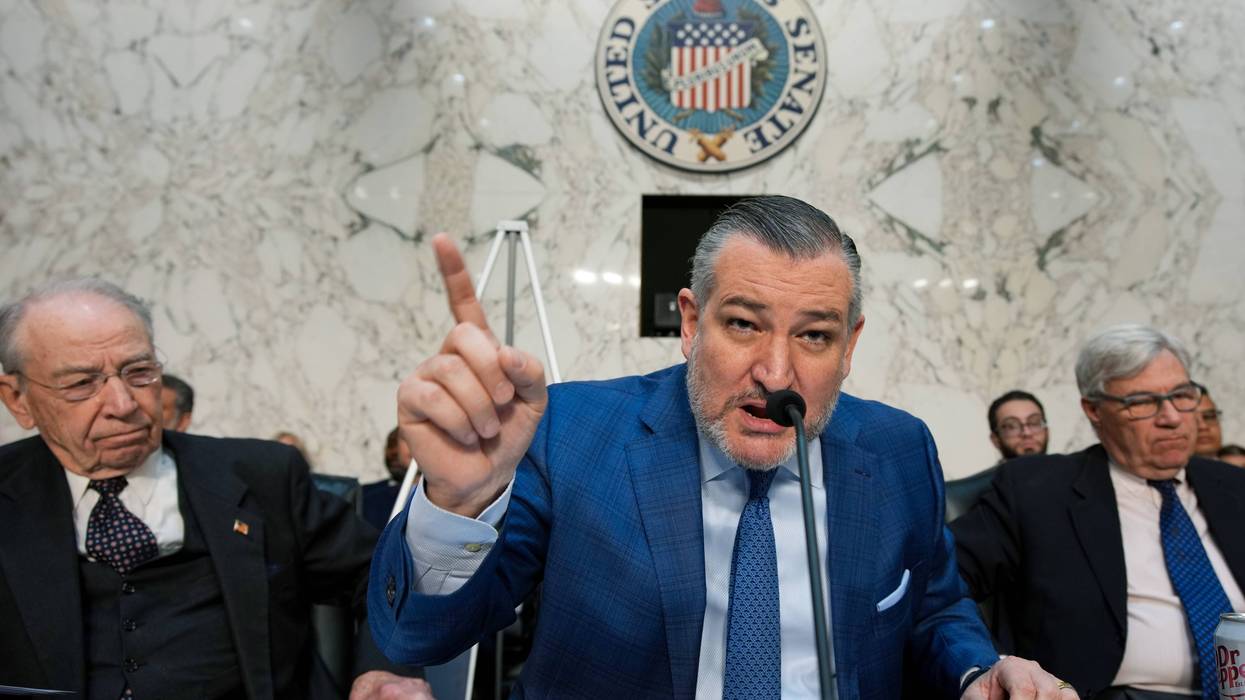
On Thursday, Sen. Ted Cruz (R-Texas) introduced a bill co-sponsored by Sens. Ted Budd (R-NC), Tom Cotton (R-Ark.), and Mike Lee (R-Utah) that, if passed, would "prohibit liability against those engaged in the mining, extraction, production, refinement, transportation, distribution, marketing, manufacture, or sale of energy for damages or injunctive or other relief from the use of their products, and for other purposes."
Congresswoman Harriet Hageman (R-Wyo.) on Friday introduced the House version of the legislation, dubbed the Stop Climate Shakedowns Act of 2026, "to protect American energy from leftist legal crusades punishing lawful activity," as her office put it.
🚨After months of fossil fuel industry lobbying, Republican lawmakers have introduced federal legislation that would give oil and gas companies immunity from any laws or lawsuits that aim to hold them accountable for their role in the climate crisis. Time to get loud: 📣 NO IMMUNITY FOR BIG OIL 📣
[image or embed]
— Center for Climate Integrity (@climateintegrity.org) April 17, 2026 at 12:30 PM
If passed, the legislation would ban retroactive climate liability lawsuits, dismiss any such litigation pending upon the law's enactment, void all state energy penalty laws, and affirm that the federal government maintains exclusive authority and jurisdiction over the regulation of greenhouse gas emissions and other interstate environmental standards.
Other Republican-controlled states including Tennesseee and Utah have recently passed such legislation, and others—including Iowa, Louisiana, and Oklahoma—have introduced similar bills.
“This blatant championing of some of the world’s largest polluters shows how far certain elected officials will go to undermine democratic policymaking and deny people and communities access to justice," Kathy Mulvey, climate accountability campaign director at the Union of Concerned Scientists, said Friday.
"No company should be above the law, especially those that planned, funded, and continue to engage in a coordinated decadeslong campaign to protect their profits by deceiving the public and blocking climate action," Mulvey continued.
"Such corporate impunity would twist the knife of the climate crisis that is already directly harming people across the country," she added. "Congress must not capitulate to wealthy special interests. Communities deserve the right to hold polluters accountable for the deadly and costly harms they are causing.”
Former Democratic Washington Gov. Jay Inslee said in a statement that “every elected official who cares about the interests of their constituents more than those of corporate polluters should oppose this disgraceful proposal."
"Juries are a fundamental bastion of democracy, and it’s beyond dangerous to allow powerful and wealthy corporations to shield themselves from ever having to face jurors’ judgment," he added.
The Center for Climate Integrity said the bill "would put Big Oil above the law."
“Big Oil companies have raked in massive profits at the pump while lying to the American people about the catastrophic harm of their products, and now they want to deny Americans their rightful day in court and stick taxpayers with the bill for the mess they made," Center for Climate Integrity president Richard Wiles said Friday. "If fossil fuel companies have done nothing wrong, why do they need immunity?”
While these and other climate advocates denounced the bill, their congressional sponsors—and those lawmakers' fossil fuel industry campaign donors—applauded its introduction.
“Energy security is national security, and we will not self-sabotage our critical industries with a cascade of costly lawsuits and extreme penalties that jeopardize American drilling,” Hageman said in a statement. “America’s energy producers should be protected from the dangerous legal precedent that would be set by the retroactive punishment of lawful activity.”
American Fuel & Petrochemical Manufacturers president and CEO Chet Thompson and American Petroleum Institute president and CEO Mike Sommers said in a joint statement, "We thank Sen. Cruz and Rep. Hageman for introducing legislation to stop a growing patchwork of state laws and lawsuits that threaten American energy and risk raising costs for consumers.”
“These efforts to retroactively penalize companies for lawfully meeting consumer demand are misguided and counterproductive," the lobbyists added. "Congress should act decisively to reaffirm federal authority over national energy policy and end this activist-driven state overreach.”
Eleven states—California, Connecticut, Delaware, Hawaii, Maine, Massachusetts, Michigan, Minnesota, New Jersey, Rhode Island, and Vermont—along with the District of Columbia and dozens of city, county, and tribal governments have ongoing lawsuits seeking to hold fossil fuel companies accountable for lying to the public about their products’ role in causing and worsening climate change.
On Friday, the right-wing US Supreme Court unanimously issued an important procedural ruling that certain environmental damage lawsuits—in this case, one challenging Chevron's destruction of coastal wetlands in Louisiana—can be moved from state to generally friendlier federal courts. This, after a jury in Plaquemines Parish ordered Chevron and two other companies to pay $744 million in damages for harming coastal wetlands, a verdict that was appealed.
The US Supreme Court's decision came as its justices prepare to hear Suncor Energy Inc. v. County Commissioners of Boulder County, a case in which the plaintiffs—three Suncor entities and ExxonMobil—are seeking to relocate a climate damages lawsuit from Colorado to federal court.
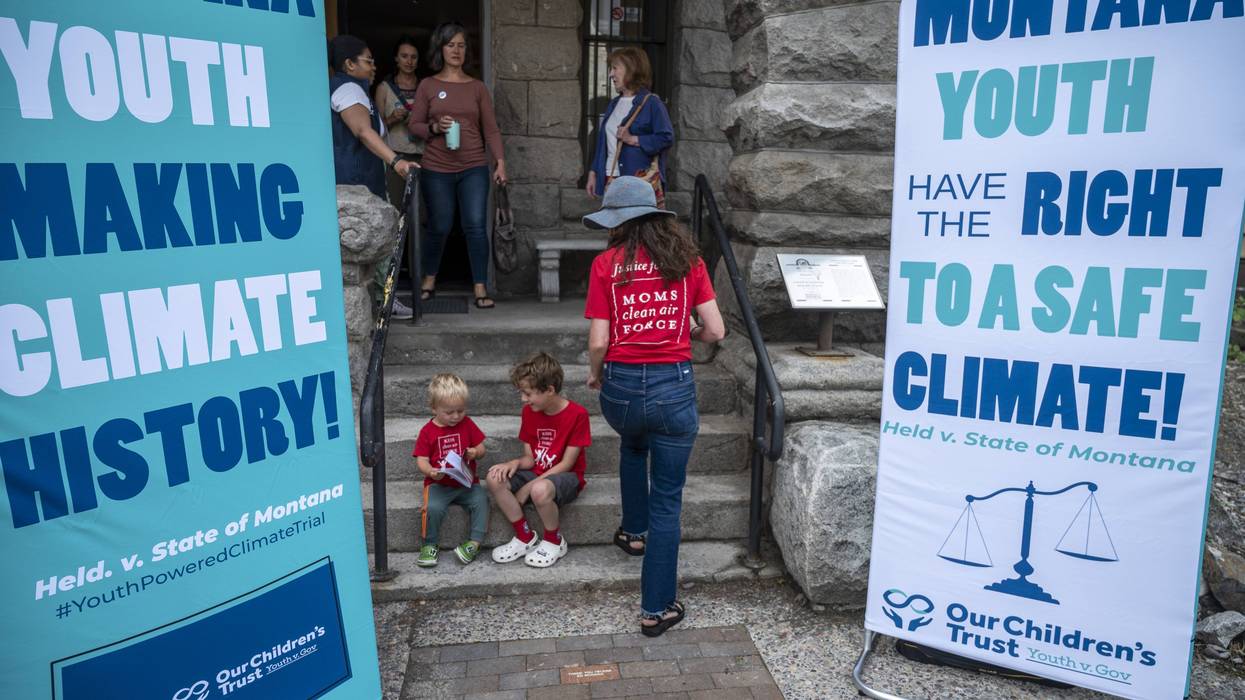
Big Oil-backed efforts to relocate cases to friendlier forums come amid wins for climate defenders, most notably Held v. Montana, a historic 2024 state court ruling in favor of youth-led plaintiffs based on the Montana Constitution's right to "a clean and healthful environment."
"Big Oil’s climate lies are the most consequential and harmful corporate deception campaign in history."
The US Supreme Court on Monday agreed to hear a case that could effectively crush efforts to hold the fossil fuel industry accountable for the climate crisis.
As reported by the New York Times, the court has agreed to hear arguments related to a petition filed by ExxonMobil and Canadian energy firm Suncor related to a 2018 lawsuit by the city of Boulder, Colorado that seeks financial damages from the companies for their role in causing global climate change.
The Times report noted that dozens of similar lawsuits have been filed by states and municipalities over the last decade, and they generally seek money from energy firms to help mitigate or repair damage done by extreme weather exacerbated by the climate crisis.
According to the Associated Press, attorneys for the energy companies are petitioning to have the case moved from state courts to federal courts that have in the past dismissed similar complaints.
“The use of state law to address global climate change represents a serious threat to one of our nation’s most critical sectors,” the attorneys claimed.
The Supreme Court's decision to hear the case comes months after the Colorado Supreme Court ruled that Boulder's lawsuit could initiate the discovery process and move toward a trial.
In an interview with the Colorado Sun, Boulder County Commissioner Ashley Stolzmann said that the city wasn't backing down from its efforts make the fossil fuel industry pay for the damage it's done.
"The oil companies have tried every avenue to delay our climate accountability case or move it to an out-of-state court system,” said Stolzmann. “As everyone continues to face rising costs that put budgets under pressure, we must hold oil companies accountable for the significant harm they’ve caused our communities."
Richard Wiles, president of the Center for Climate Integrity, said that the merits of the Boulder lawsuit are clear, regardless of the Supreme Court's intervention.
"Big Oil’s climate lies are the most consequential and harmful corporate deception campaign in history," Wiles said, "and the communities paying the price for that deception deserve to put these companies on trial. Exxon’s desperation to escape accountability does not change the evidence of their wrongdoing or the law that lower courts agree is on Boulder’s side."
Alyssa Johl, vice president of legal and general counsel at the Center for Climate Integrity, said the Supreme Court should simply affirm lower court rulings stating that "communities like Boulder have the right to seek accountability in their state courts when corporations have knowingly caused local harms."
The case accuses "four of the largest energy companies in the world" of conspiring "to forestall meaningful competition from renewable energy and maintain their dominance in the energy market."
While several US states and municipalities have sued fossil fuel companies by citing consumer protection and public nuisance laws, Michigan on Friday launched an antitrust lawsuit against four industry giants and their trade association, accusing them of operating as a "cartel" to impede a transition to clean power and transportation.
Twenty months after state Attorney General Dana Nessel announced that she was seeking proposals from lawyers and firms "to pursue litigation related to the climate change impacts caused by the fossil fuel industry," the Democrat sued BP, Chevron, ExxonMobil, Shell, and the American Petroleum Institute (API) in the US District Court for the Western District of Michigan.
"Michigan is facing an energy affordability crisis as our home energy costs skyrocket, and consumers are left without affordable options for transportation. Whether you own a home, a small business, or run a large corporation, rising energy and transportation costs harm everyone," Nessel said in a statement.
"These out-of-control costs are not the result of natural economic inflation, but due to the greed of these corporations who prioritized their own profit and marketplace dominance over competition and consumer savings," she continued.
As the complaint says: "Defendants are four of the largest energy companies in the world and their industry's largest trade association. The fossil fuel defendants produce fossil fuels and have at times invested in clean energy products and related technologies, such as solar power and batteries, that could provide energy to power buildings, infrastructure, and cars as an alternative to fossil fuels."
"But for decades, defendants have conspired with each other to forestall meaningful competition from renewable energy and maintain their dominance in the energy market," the filing continues. "They have done so as a cartel, agreeing to reduce the production and distribution of electricity from renewable sources and to restrain the emergence of electric vehicles (EV) and renewable primary energy technologies in the United States."
"To achieve this end," the document details, "they have abandoned renewable energy projects, used patent litigation to hinder rivals, suppressed information concerning the hidden costs of fossil fuels and viability of alternatives, infiltrated and knowingly misdirected information-producing institutions, surveilled and intimidated watchdogs and public officials, and used trade associations to coordinate market-wide efforts to divert capital expenditures away from renewable energy—all to further one of the most successful antitrust conspiracies in United States history."
Lumping in this case with others previously filed against fossil fuel companies and API, Ryan Meyers, senior vice president and general counsel for the trade group, said in a statement to the Detroit News that "these baseless lawsuits are a coordinated campaign against an industry that powers everyday life, drives America's economy, and is actively reducing emissions."
While Shell declined to comment to Reuters, and BP and Exxon did not respond, a lawyer for Chevron, Theodore Boutrous Jr., similarly called the suit "baseless as demonstrated by multiple related court dismissals," and told the news agency that it "ignores the fact that Michigan is highly dependent on oil and gas to support the state's automakers and workers."
According to Nessel's complaint: "In the world that would have existed but for defendants' conspiracy, EVs would not be a fringe technology or a luxury alternative. They would be a common sight in every neighborhood—rolling off assembly lines in Flint, parked in driveways in Dearborn, charging outside grocery stores in Grand Rapids, and running quietly down Woodward Avenue."
"Reliable and fast chargers would be integrated into new development and ubiquitous at highway rest stops and converted gas stations," it states. "A family needing a car would have dozens of affordable electric options, and the renewable energy needed to power EVs efficiently would be supplied at scale—integrated into the grid or delivered through a dedicated 100% renewable network—spurred by public and private investment responding to competitive market signals."
"Michiganders would also have additional, renewable energy options for providing primary energy to their homes and businesses, such as solar, wind, hydropower, and geothermal; these options would improve reliability, reduce costs to Michiganders, and reduce reliance on natural gas, fuel oil, and propane," the document adds.
Tim Minotas, legislative and political director for Sierra Club Michigan, welcomed the filing. He said in a statement that "at a time when the federal government is rolling back critical environmental protections and families are facing an energy affordability crisis, we commend Attorney General Nessel for standing up for Michiganders and holding major fossil fuel companies accountable."
"In Michigan, these companies have used their outsized political influence to preserve the status quo and pave the way for a wave of energy-intensive data center projects across the state, even as renewable energy remains the cheapest source of new power and what Michiganders deserve," he noted. "For far too long, fossil fuel and utility companies have polluted Michigan's air, water, and land while driving up energy costs for families. This action sends a clear message: Michigan families and communities must come before corporate profits."
Richard Wiles, president of the Center for Climate Integrity, also celebrated the development: "Michigan's groundbreaking case reveals how the Big Oil cartel conspired to deny Americans cleaner and cheaper energy choices and make life less affordable by keeping consumers hooked on their dirty fossil fuel products. Eleven states and dozens of municipalities are now fighting to put Big Oil companies on trial for their climate lies and make them pay for the harm they've caused."
"Big Oil is desperate to keep the evidence of their climate lies from juries in cases like Michigan's, and that's why the fossil fuel industry is now lobbying Congress for a get-out-of-jail-free card," Wiles added, pointing to a push for a so-called liability shield. "Congress must protect the right of the people of Michigan and every state to hold Big Oil accountable for the harm their climate lies have caused."
“Big Oil is openly asking Congress for a ‘get-out-of-jail-free’ card because fossil fuel companies are desperate to avoid facing the evidence of their climate lies in court," said one critic.
As Big Oil and its Republican defenders vow to fight a flurry of state and local lawsuits seeking to hold the industry accountable for its role causing catastrophic global heating and lying to the public about it, one climate defender on Monday urged congressional lawmakers to reject a so-called "liability shield" aimed at protecting fossil fuel companies from litigation.
With more than two dozen state and local climate lawsuits against Big Oil ongoing from Maine to Hawaii—and a successful outcome for youth litigants in Montana in 2023—Republicans from President Donald Trump down to state lawmakers are scrambling to find ways to stem the tide of legal action against one of their biggest sources of financial support.
In June, Republican attorneys general in 16 states asked the Trump administration for protections from climate lawsuits. The AGs suggested modeling such policy on a 2005 law protecting gun manufacturers from litigation when their products are used in crimes. As a result, no gun company accused of negligence has ever been brought to trial. Gun control advocates have been trying to repeal the law for years.
“Big Oil is openly asking Congress for a ‘get-out-of-jail-free’ card because fossil fuel companies are desperate to avoid facing the evidence of their climate lies in court," Richard Wiles, president of the Center for Climate Integrity (CCI), said Tuesday in a statement. "Congress must make clear that any proposal to strip Americans of their right to hold corporations accountable for the damage they cause when they lie to the public about the harms of their products will be dead on arrival."
The CCI statement came in response to an announcement by the American Petroleum Institute—the nation's biggest oil lobby—that fighting state climate lawsuits is one of its top priorities for 2026. API has been named as a defendant in several state climate accountability and deception lawsuits.
🚨 Big Oil wants to take away your right to sue fossil fuel companies for the harm they cause.No matter your politics, we should all agree that no industry should be above the law. Say it with us: 📣 NO IMMUNITY FOR BIG OIL 📣
[image or embed]
— Center for Climate Integrity (@climateintegrity.org) January 13, 2026 at 11:03 AM
As CCI explained earlier:
Communities across the country are paying nearly $1 trillion per year for damages from extreme heat, floods, wildfires, and rising seas and other extreme weather events that fossil fuel-driven climate change is making more intense, deadly, and destructive. Major oil and gas companies knew decades ago that their products would fuel these climate damages, but they orchestrated a Big Tobacco-style campaign of deception to mislead the public and protect their profits. More than 1 in 4 Americans now live in a state or community taking Big Oil companies to court to hold them accountable for this deception and make polluters pay for the harm they have caused.
"A legal shield for Big Oil could forever shut the courthouse doors for all Americans, forcing the rising bill for climate change onto taxpayers, and setting a harmful legal precedent that protects corporations instead of communities," CCI added. "No industry should be above the law—especially one with a documented history of deceiving the public. Congress must oppose the fossil fuel industry’s lobbying efforts and keep the courthouse doors open for communities seeking accountability."
CCI's advocacy against a liability shield for Big Oil follows last year's plea by nearly 200 nonprofit organizations to Democratic leaders in Congress asking them to oppose such legislation.
"Our communities across the country are suffering grave threats to our public health, safety, and economic security as a result of Big Oil’s climate deception and pollution," the groups said. "Governments, residents, businesses, and others must have access to legal and legislative remedies in order to hold fossil fuel companies accountable, seek justice, and make polluters pay."
"Big Oil's climate deception has evolved from lying about the problem to lying about solutions," said the head of the Center for Climate Integrity.
A group that supports communities' efforts to hold Big Oil accountable for decades of deception related to the climate emergency released a report on Thursday after reviewing more than 300 advertisements from four fossil fuel giants since 2000.
Over the past decade, people across academia, civil society, Congress, and journalism have examined the evolving lies of oil and gas giants, which have long been accused of using Big Tobacco's playbook.
"Using evidence from congressional investigations, advertising, and public relations documents, independent journalism, and watchdog reports," the new analysis states, "Big Oil's Deceptive Climate Ads explains how the pervasive and misleading messaging in BP, Chevron, ExxonMobil, and Shell’s advertisements has not only misrepresented the companies' business practices, but, over the span of two and a half decades, effectively cultivated a larger, deceptive narrative that oil and gas companies are leaders in the fight against climate change, when in fact they are actively fueling climate catastrophe around the globe."
The Center for Climate Integrity (CCI) report notes that "while oil and gas companies and their trade associations publicly denied the risks and realities of climate change for decades, growing public understanding of climate science around the turn of the 21st century eventually meant that outright denial was no longer sufficient to protect their bottom line."
NEW: For 25 years, four oil giants sold false climate promises through deceptive ad campaigns.Our report examined 300+ ads from BP, Chevron, Exxon, and Shell from 2000-2025. Together they push a false narrative that Big Oil is leading climate solutions. In reality, they're fueling catastrophe.
[image or embed]
— Center for Climate Integrity (@climateintegrity.org) December 11, 2025 at 8:54 AM
"During this period, major oil and gas companies began to reposition themselves publicly as active partners in the fight against climate change, even while they continued to increase fossil fuel production, invest minimally in clean energy, oppose energy efficiency initiatives, and promote technically or economically infeasible solutions," the document details.
"To convey this misleading image to the public," the publication continues, "Big Oil companies carried out extensive advertising campaigns, inundating the public with messaging that creates an overall deceptive portrait of their true role in the climate crisis."
CCI sorted the ads across seven categories of deception: emissions reductions, renewables investments, individual action, natural gas, carbon capture and storage, hydrogen, and algae biofuels. The group found that "these skillfully crafted advertisements often include partially truthful statements but omit relevant contextual information to create an inaccurate or incomplete representation of the initiative, product, or technology they promote."
"For instance, advertisements that portray natural gas as beneficial for the climate because it 'lowers emissions' are misleading by omission, because although gas produces less CO2 and other pollutants than coal when burned, it still emits significant quantities of greenhouse gases, including CO2 and methane, that pose a serious threat to the climate," the publication points out. "This tactic, known as paltering, has been at the core of Big Oil companies' climate advertisements for the past 25 years."
 (Image: Big Oil's Deceptive Climate Ads)
The report also acknowledges the public response: "Market research shows BP's 'Beyond Petroleum' campaign increased brand favorability among US and UK audiences, leading viewers to associate the oil giant with efforts to reduce carbon emissions at a time when it was the largest producer of fossil fuels in the UK and North America. Chevron's 'Real Issues' campaign, which promoted its energy conservation initiatives and renewables investments, improved the company's reputation among ad-exposed audiences."
The publication comes as the climate emergency continues to worsen, with deadly impacts, and world leaders fail to take adequate steps toward "a just, equitable, fossil-free future." Meanwhile, communities continue to call for not only action to limit future global warming but also consequences for the big polluters that created the global crisis.
The report similarly concludes that "oil and gas companies—including BP, Chevron, ExxonMobil, and Shell—must be held accountable for the damages their deception has caused. As climate accountability lawsuits filed by communities across the US make their way through the courts, ongoing advertising deception by the four oil majors' in this report demands further scrutiny and investigation."
CCI president Richard Wiles echoed that demand in a Thursday statement: "Big Oil's climate deception has evolved from lying about the problem to lying about solutions. For two-and-a-half decades now, these companies have sold the public a false and misleading image of their industry as working to solve the climate crisis, all while doubling down on fossil fuels and making the problem worse."
According to Wiles, "Any business that floods consumers with such brazenly deceptive advertising must be held accountable."

"With this latest denial, the fossil fuel industry's worst nightmare—having to face the overwhelming evidence of their decades of calculated climate deception—is closer than ever to becoming a reality," said one advocate.
Climate campaigners and scientists on Monday welcomed the U.S. Supreme Court's decision to reject attempts by fossil fuel giants to quash the Hawaii capital's lawsuit aiming to hold the major polluters accountable for the devastating impacts of their products.
"This is a significant day for the people of Honolulu and the rule of law," Ben Sullivan, executive director and chief resilience officer at the City and County of Honolulu's Office of Climate Change, Sustainability, and Resiliency, said in a statement.
"This landmark decision upholds our right to enforce Hawaii laws in Hawaii courts, ensuring the protection of Hawaii taxpayers and communities from the immense costs and consequences of the climate crisis caused by the defendants misconduct," he added.
Honolulu first sued companies including BP, Chevron, ConocoPhillips, ExxonMobil, Shell, and Sunoco in March 2020. The companies have fought to shut down the case—like dozens of other climate liability lawsuits that states and municipalities have filed against Big Oil at the state level.
Shell and Sunoco led a pair of appeals to the Supreme Court, arguing that Honolulu's suit was "a blueprint for chaos" because it could inform other legal actions against fossil fuel companies and such cases "could threaten the energy industry." Similar to three previous decisions, the justices declined to intervene.
Center for Climate Integrity president Richard Wiles connected Monday's victory to the other cases, saying in a statement that "Big Oil companies keep fighting a losing battle to avoid standing trial for their climate lies."
"With this latest denial, the fossil fuel industry's worst nightmare—having to face the overwhelming evidence of their decades of calculated climate deception—is closer than ever to becoming a reality," Wiles continued. "Communities everywhere are paying dearly for the massive damages caused by Big Oil's decadeslong climate deception. The people of Honolulu and communities across the country deserve their day in court to hold these companies accountable."
Delta Merner, lead scientist for the Union of Concerned Scientists' Science Hub for Climate Litigation, similarly celebrated the decision, which she called "a resounding affirmation of Honolulu's right to seek justice under state law for the mounting climate impacts caused by fossil fuel companies' deceptive practices."
"For more than 50 years, fossil fuel companies have conducted sophisticated disinformation campaigns to obscure their own research showing that burning fossil fuels would drive climate change," Merner highlighted. "This case lays bare how these actions have contributed to rising seas, intensified storms, and coastal erosion that are devastating Honolulu's people, infrastructure, and natural resources."
"Scientific evidence is unequivocal: The human-caused emissions from fossil fuels are the primary driver of climate change," she stressed. "Honolulu's case stands as an example of how communities are using both science and the law to challenge corporate misconduct and demand accountability for climate damages."
Merner added that "the people of Honolulu are demonstrating remarkable leadership in standing up to powerful fossil fuel companies whose disinformation campaigns have directly contributed to the climate harms they now face. Their efforts serve as a powerful example for communities around the world. This decision is one step in a larger effort to seek accountability and justice."
The Supreme Court's latest blow to the oil and gas industry came just a week before the second inauguration of President-elect Donald Trump, who courted Big Oil executives on the campaign trail and pledged to "drill, baby, drill" if he won the November election.
The high court—which has a right-wing supermajority that includes three Trump appointees—had asked the Biden administration to weigh in. Last month, U.S. Solicitor General Elizabeth Prelogar
urged the justices not to intervene. Merner said at the time that her briefs "represent an important step in the pursuit of climate accountability."
"The Justice Department has affirmed again that communities deserve their day in court to put Big Oil companies on trial for their climate lies and the resulting harms."
Campaigners and experts on Wednesday welcomed the Biden administration's new briefs urging the U.S. Supreme Court not to intervene in state and local lawsuits that aim to hold fossil fuel giants accountable for lying to the public about their contributions to the climate emergency.
The Tuesday filings in Sunoco v. the City and County of Honolulu and Alabama v. California align with U.S. Solicitor General Elizabeth Prelogar's amicus brief last year, which stemmed from Colorado communities suing Big Oil. Following that filing, the justices declined to hear five appeals from fossil fuel companies trying to shift climate liability cases from state to federal court.
The U.S. Supreme Court—which has a right-wing supermajority—asked Prelogar to weigh in again this past June and October. Her new filings have climate advocates hopeful that the justices will follow their previous path and let the cases against major polluters advance in state court.
"The Justice Department has affirmed again that communities deserve their day in court to put Big Oil companies on trial for their climate lies and the resulting harms," said Richard Wiles, president of the Center for Climate Integrity (CCI), in a statement. "Big Oil companies are desperate to avoid facing the evidence of their deception in a courtroom, but wanting to escape the consequences for your actions is not the same thing as having the law on your side."
"As the solicitor general makes clear, there is no legal basis for the Supreme Court to intervene in these cases."
In Honolulu's case—intended to make companies including BP, Chevron, ExxonMobil, and Shell pay for local climate damages—the Hawaii Supreme Court rejected the fossil fuel industry's argument that "state law claims alleging the deceptive marketing of fossil fuel products were either governed by the federal common law of transboundary air pollution or preempted by the Clean Air Act."
Prelogar made the case that the country's highest tribunal "does not have jurisdiction to review the Hawaii Supreme Court's interlocutory decision" that allowed Honolulu's suit to proceed, "and even if it did, further review at this time would be unwarranted."
For the other case—which involves 19 state attorneys general trying to stop climate deception suits in California, Connecticut, Minnesota, New Jersey, and Rhode Island—Prelogar wrote that "there is no merit to the contention that the federal common law of transboundary air pollution governs (and therefore precludes) the defendant states' claims."
The solicitor general also argued that the attorneys general working on behalf of Big Oil lack standing; "the only interests directly at stake are the interests of private energy companies," not the citizens of each state; and "the very suits that the complaint seeks to enjoin are better forums for resolving the issues raised."
Alyssa Johl, vice president of legal and general counsel for CCI, said that "as the solicitor general makes clear, there is no legal basis for the Supreme Court to intervene in these cases. State and local governments are seeking to hold corporations accountable for lying about their harmful products, and state courts have the authority to hear those claims. The justices should reject these meritless requests and allow communities to have their day in court to hold Big Oil accountable."
Experts at the Union of Concerned Scientists (UCS) agreed. Delta Merner, lead scientist for the group's Science Hub for Climate Litigation, said the new briefs "represent an important step in the pursuit of climate accountability" and "reaffirm that communities have the right to hold fossil fuel companies accountable for decades of misleading the public about the harms associated with their products."
"Research has shown how fossil fuel companies knowingly concealed the dangers of their products while misleading the public—a pattern of misconduct that contributed directly to today's climate crisis," she noted. "These cases seek to give communities the chance to present this evidence in court, shining a light on the broader impacts of corporate disinformation campaigns."
"We applaud the Biden administration's continued support for these lawsuits and urge the incoming Trump administration to continue following science and clear legal arguments."
Kathy Mulvey, director of the climate accountability campaign at UCS, stressed that "communities like Honolulu are bearing the financial burden of addressing climate damages, using public dollars to remediate harms caused by decades of deception by fossil fuel companies."
"A core principle of accountability is timely access to justice through the courts. Honolulu and other communities have already waited years to present their evidence and argue their claims," she added. "We applaud the Biden administration's continued support for these lawsuits and urge the incoming Trump administration to continue following science and clear legal arguments."
Honolulu's suit is just one of dozens that state and local governments have filed against the fossil fuel industry—and Prelogar's brief last year notably represented a departure from the first Trump administration's support for Big Oil. Her new briefs come as the nation prepares for President-elect Donald Trump to return to the White House next month, with a Republican-controlled Congress.
Shortly after the GOP electoral victories last month, Emily Sanders a senior reporter for the CCI project ExxonKnews, spoke with multiple legal experts who framed the courts as key to Big Oil accountability with Trump and Republican lawmakers in power.
"It's not a stretch to say the message coming from the federal executive branch writ large and large numbers of Congress is going to be climate denial and misrepresentations," said Pat Parenteau, an environmental law professor and senior fellow at Vermont Law School. "So these cases and these jury verdicts are going to be even more important to correct the record to the extent you can."
"With Maine's lawsuit, the demands that Big Oil faces accountability for decades of climate lies are growing louder and more powerful," said Richard Wiles, president of the Center for Climate Integrity.
Maine on Tuesday joined a group of eight other U.S. states that have sued major oil and gas companies for deceiving the public about their products' role in the climate crisis.
Maine Attorney General Aaron Frey's office announced that he has filed a suit in state court against Exxon, Shell, Chevron, BP, Sunoco, and the American Petroleum Institute.
Frey's suit accuses the companies of knowing about the potentially catastrophic consequences of continued dependence on fossil fuels for decades, thanks to companies' internal research, but that the defendants undertook a disinformation campaign to discredit the scientific consensus on climate change, delay a transition to a green energy economy, and sow doubt in the public's mind about the impact of burning fossil fuels.
"The state seeks to hold the defendants accountable for failing to warn Mainers and concealing their knowledge about the devastating consequences of the increasing use of fossil fuels on Maine's people, economy, and environment. This conduct has resulted in enormous financial burdens, public health impacts, property damage, and other harms across Maine as a result of extreme weather, sea-level rise, and warmer temperatures," according to the release from Frey's office.
"For over half a century, these companies chose to fuel profits instead of following their science to prevent what are now likely irreversible, catastrophic climate effects," Frey said in a statement. "In so doing, they burdened the state and our citizens with the consequences of their greed and deception."
Frey's lawsuit asks the court to require the companies pay for both "past and future climate harms caused by the defendants" and ensure that the companies end their "ongoing deception" in the state. The state is demanding a jury trial and numerous forms of relief, including penalties and disgorgement of profits, according to the release.
Frey is the 11th attorney general (including the District of Columbia and Puerto Rico), to take such a legal move. More than 20 states, tribes, cities and counties have so far pursued similar climate deception lawsuits to date, according the Maine attorney general's office. Earlier this fall, California's attorney general filed a lawsuit against ExxonMobil, alleging that the company falsely touted chemical recycling as a solution to the plastics crisis.
A September report from Oil Change International and Zero Carbon Analytics found that the number of climate cases brought against fossil fuel corporations—many of which center on climate damages, misleading advertising about fossil fuels, or failure to reduce emissions in line with legal agreements—has been ticking upward since the 2015 Paris climate accords.
Richard Wiles, president of the Center for Climate Integrity, whose organization helps communities hold fossil fuel companies accountable, applauded the move.
" Big Oil companies have lied for decades about the catastrophic harm they knew their products would cause, and now Maine has joined a growing wave of communities across the U.S. that are demanding accountability," said Wiles. "These polluters continue to fuel the climate crisis and lie about it to protect their profits. It’s only right that Big Oil companies pay their fair share of the damage their deception has caused. With Maine's lawsuit, the demands that Big Oil faces accountability for decades of climate lies are growing louder and more powerful."
Republican attorneys general are engaged in what one critic called "an obvious attempt to shield fossil fuel companies from facing accountability for their climate lies."
In yet another recent display of what's at stake in this year's U.S. presidential race, the U.S. Supreme Court on Monday requested that the Biden administration weigh in on a case intended to thwart climate lawsuits against fossil fuel companies.
The justices invited U.S. Solicitor General Elizabeth Prelogar—an appointee of Democratic President Joe Biden who represents the federal government in court—to file a brief "expressing the views of the United States" regarding Alabama v. California.
In May, Alabama Attorney General Steve Marshall and 18 of his Republican colleagues launched their bid to block lawsuits that several Democrat-led states including California have brought against energy giants for deceiving the public while fueling the global climate emergency. Multiple U.S. municipalities have filed similar suits against Big Oil.
Although justices have rejected the oil and gas industry's efforts to shift those suits from state to federal court, six of them are right-wingers with a record of anti-environment rulings. A spokesperson for Marshall told Reuters that the new request of Prelogar is "an encouraging sign that the justices are taking seriously the complaint of 19 states."
"Communities deserve their day in court to hold Big Oil accountable."
Meanwhile, Richard Wiles, president of the Center for Climate Integrity (CCI), took aim at the Alabama-led case, saying in a statement that "this meritless, politically driven request is an obvious attempt to shield fossil fuel companies from facing accountability for their climate lies and the monumental damage they're causing."
"It should be a no-brainer for the solicitor general to oppose this petition and for the Supreme Court to reject it," he added. "Communities deserve their day in court to hold Big Oil accountable."
Wiles responded similarly in June, when the Supreme Court asked Prelogar to weigh in on a case brought by the City and County of Honolulu.
Alyssa Johl, CCI's vice president of legal and general counsel, said at the time that "lawsuits like Honolulu's are not seeking to solve climate change or regulate emissions—these plaintiffs simply want Big Oil to stop lying and pay their fair share of the damages they knowingly caused. The solicitor general should make clear that federal laws do not preempt the ability of communities to hold companies accountable for their deceptive claims under state law."
Reuters pointed out Monday that Prelogar has not yet filed a brief in that case, but has some history with these suits:
The Democratic-led states have noted that the Supreme Court has previously rejected bids by oil companies to move several such lawsuits to federal court, after numerous U.S. appeals courts said the claims are not preempted by federal law.
Prelogar had weighed in on that issue as well and had successfully urged the justices to reject the oil companies' appeals.
Although it's not yet clear where the Biden administration will come down on either of these cases—and the U.S. Department of Justice has infamously fought a climate suit that youth plaintiffs filed against the federal government—the high court's move comes less than a month away from a presidential election in which the fossil fuel-driven global emergency is a divisive issue.
The Republican nominee, former Republican President Donald Trump, has pledged to roll back the Biden administration's insufficient yet historic progress on climate policy if the fossil fuel industry pours $1 billion into his campaign.
His Democratic opponent, Vice President Kamala Harris, is facing some criticism for watering down her previous climate policies but also had broad support from green groups, including some that had declined to endorse Biden before he dropped out and endorsed her in July.
Some climate campaigners and survivors of extreme weather events hope that Harris' election in November will lead to the Department of Justice launching a criminal case against fossil fuel companies, as Sen. Sheldon Whitehouse (D-R.I.) and Rep. Jamie Raskin (D-Md.) called for in May after conducting a three-year congressional investigation.
Harris is "the perfect person to prosecute the case against Big Oil," Fossil Free Media director Jamie Henn wrote in a Common Dreams opinion piece this summer. As California's attorney general, she "went after ConocoPhillips (the company behind the Willow Project in Alaska) for air quality violations at their gas stations and prosecuted a pipeline company for a 2015 spill in Santa Barbara. Before that, as San Francisco district attorney, she set up the city's first environmental justice division."
While many names have been floated as Harris' potential pick for attorney general, some climate advocates have recently urged her to pick Raskin to lead the Department of Justice. As progressive organizer Aaron Regunberg wrote for The New Republic in August, "Who better to ensure the DOJ stops bowing to fossil fuel industry pressure than the head of the House Oversight Committee's push to hold Big Oil accountable?"
Regardless of which cases are filed and how far they go, concerns remain about conflicts of interests in the courts, particularly at the highest level of the federal judiciary.
Justice Samuel Alito "has recused himself from Honolulu and other climate accountability cases—likely because of his investments in oil companies," CCI highlighted on social media Monday. "But today he did not recuse himself from the request from 19 Republican AGs to block lawsuits against Big Oil."
"Justice Amy Coney Barrett has also faced calls to recuse herself from cases against Big Oil because her father was a top attorney for Shell for 29 years," the group added. "But she has not."