

SUBSCRIBE TO OUR FREE NEWSLETTER
Daily news & progressive opinion—funded by the people, not the corporations—delivered straight to your inbox.
5
#000000
#FFFFFF
To donate by check, phone, or other method, see our More Ways to Give page.
Daily news & progressive opinion—funded by the people, not the corporations—delivered straight to your inbox.
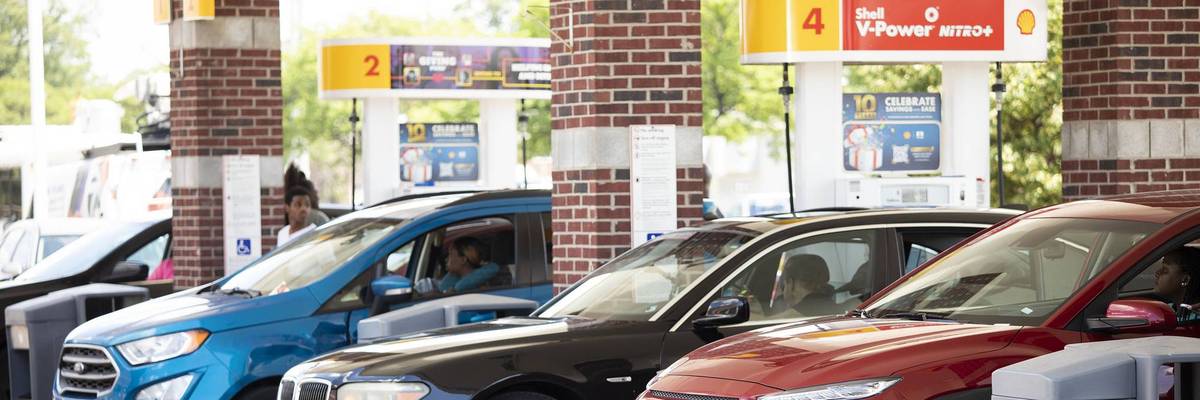
People get $40 of free fuel at a gas giveaway event at a Shell gas station on July 18, 2022 in Oak Park, Michigan.
The case accuses "four of the largest energy companies in the world" of conspiring "to forestall meaningful competition from renewable energy and maintain their dominance in the energy market."
While several US states and municipalities have sued fossil fuel companies by citing consumer protection and public nuisance laws, Michigan on Friday launched an antitrust lawsuit against four industry giants and their trade association, accusing them of operating as a "cartel" to impede a transition to clean power and transportation.
Twenty months after state Attorney General Dana Nessel announced that she was seeking proposals from lawyers and firms "to pursue litigation related to the climate change impacts caused by the fossil fuel industry," the Democrat sued BP, Chevron, ExxonMobil, Shell, and the American Petroleum Institute (API) in the US District Court for the Western District of Michigan.
"Michigan is facing an energy affordability crisis as our home energy costs skyrocket, and consumers are left without affordable options for transportation. Whether you own a home, a small business, or run a large corporation, rising energy and transportation costs harm everyone," Nessel said in a statement.
"These out-of-control costs are not the result of natural economic inflation, but due to the greed of these corporations who prioritized their own profit and marketplace dominance over competition and consumer savings," she continued.
As the complaint says: "Defendants are four of the largest energy companies in the world and their industry's largest trade association. The fossil fuel defendants produce fossil fuels and have at times invested in clean energy products and related technologies, such as solar power and batteries, that could provide energy to power buildings, infrastructure, and cars as an alternative to fossil fuels."
"But for decades, defendants have conspired with each other to forestall meaningful competition from renewable energy and maintain their dominance in the energy market," the filing continues. "They have done so as a cartel, agreeing to reduce the production and distribution of electricity from renewable sources and to restrain the emergence of electric vehicles (EV) and renewable primary energy technologies in the United States."
"To achieve this end," the document details, "they have abandoned renewable energy projects, used patent litigation to hinder rivals, suppressed information concerning the hidden costs of fossil fuels and viability of alternatives, infiltrated and knowingly misdirected information-producing institutions, surveilled and intimidated watchdogs and public officials, and used trade associations to coordinate market-wide efforts to divert capital expenditures away from renewable energy—all to further one of the most successful antitrust conspiracies in United States history."
Lumping in this case with others previously filed against fossil fuel companies and API, Ryan Meyers, senior vice president and general counsel for the trade group, said in a statement to the Detroit News that "these baseless lawsuits are a coordinated campaign against an industry that powers everyday life, drives America's economy, and is actively reducing emissions."
While Shell declined to comment to Reuters, and BP and Exxon did not respond, a lawyer for Chevron, Theodore Boutrous Jr., similarly called the suit "baseless as demonstrated by multiple related court dismissals," and told the news agency that it "ignores the fact that Michigan is highly dependent on oil and gas to support the state's automakers and workers."
According to Nessel's complaint: "In the world that would have existed but for defendants' conspiracy, EVs would not be a fringe technology or a luxury alternative. They would be a common sight in every neighborhood—rolling off assembly lines in Flint, parked in driveways in Dearborn, charging outside grocery stores in Grand Rapids, and running quietly down Woodward Avenue."
"Reliable and fast chargers would be integrated into new development and ubiquitous at highway rest stops and converted gas stations," it states. "A family needing a car would have dozens of affordable electric options, and the renewable energy needed to power EVs efficiently would be supplied at scale—integrated into the grid or delivered through a dedicated 100% renewable network—spurred by public and private investment responding to competitive market signals."
"Michiganders would also have additional, renewable energy options for providing primary energy to their homes and businesses, such as solar, wind, hydropower, and geothermal; these options would improve reliability, reduce costs to Michiganders, and reduce reliance on natural gas, fuel oil, and propane," the document adds.
Tim Minotas, legislative and political director for Sierra Club Michigan, welcomed the filing. He said in a statement that "at a time when the federal government is rolling back critical environmental protections and families are facing an energy affordability crisis, we commend Attorney General Nessel for standing up for Michiganders and holding major fossil fuel companies accountable."
"In Michigan, these companies have used their outsized political influence to preserve the status quo and pave the way for a wave of energy-intensive data center projects across the state, even as renewable energy remains the cheapest source of new power and what Michiganders deserve," he noted. "For far too long, fossil fuel and utility companies have polluted Michigan's air, water, and land while driving up energy costs for families. This action sends a clear message: Michigan families and communities must come before corporate profits."
Richard Wiles, president of the Center for Climate Integrity, also celebrated the development: "Michigan's groundbreaking case reveals how the Big Oil cartel conspired to deny Americans cleaner and cheaper energy choices and make life less affordable by keeping consumers hooked on their dirty fossil fuel products. Eleven states and dozens of municipalities are now fighting to put Big Oil companies on trial for their climate lies and make them pay for the harm they've caused."
"Big Oil is desperate to keep the evidence of their climate lies from juries in cases like Michigan's, and that's why the fossil fuel industry is now lobbying Congress for a get-out-of-jail-free card," Wiles added, pointing to a push for a so-called liability shield. "Congress must protect the right of the people of Michigan and every state to hold Big Oil accountable for the harm their climate lies have caused."
Dear Common Dreams reader, It’s been nearly 30 years since I co-founded Common Dreams with my late wife, Lina Newhouser. We had the radical notion that journalism should serve the public good, not corporate profits. It was clear to us from the outset what it would take to build such a project. No paid advertisements. No corporate sponsors. No millionaire publisher telling us what to think or do. Many people said we wouldn't last a year, but we proved those doubters wrong. Together with a tremendous team of journalists and dedicated staff, we built an independent media outlet free from the constraints of profits and corporate control. Our mission has always been simple: To inform. To inspire. To ignite change for the common good. Building Common Dreams was not easy. Our survival was never guaranteed. When you take on the most powerful forces—Wall Street greed, fossil fuel industry destruction, Big Tech lobbyists, and uber-rich oligarchs who have spent billions upon billions rigging the economy and democracy in their favor—the only bulwark you have is supporters who believe in your work. But here’s the urgent message from me today. It's never been this bad out there. And it's never been this hard to keep us going. At the very moment Common Dreams is most needed, the threats we face are intensifying. We need your support now more than ever. We don't accept corporate advertising and never will. We don't have a paywall because we don't think people should be blocked from critical news based on their ability to pay. Everything we do is funded by the donations of readers like you. When everyone does the little they can afford, we are strong. But if that support retreats or dries up, so do we. Will you donate now to make sure Common Dreams not only survives but thrives? —Craig Brown, Co-founder |
While several US states and municipalities have sued fossil fuel companies by citing consumer protection and public nuisance laws, Michigan on Friday launched an antitrust lawsuit against four industry giants and their trade association, accusing them of operating as a "cartel" to impede a transition to clean power and transportation.
Twenty months after state Attorney General Dana Nessel announced that she was seeking proposals from lawyers and firms "to pursue litigation related to the climate change impacts caused by the fossil fuel industry," the Democrat sued BP, Chevron, ExxonMobil, Shell, and the American Petroleum Institute (API) in the US District Court for the Western District of Michigan.
"Michigan is facing an energy affordability crisis as our home energy costs skyrocket, and consumers are left without affordable options for transportation. Whether you own a home, a small business, or run a large corporation, rising energy and transportation costs harm everyone," Nessel said in a statement.
"These out-of-control costs are not the result of natural economic inflation, but due to the greed of these corporations who prioritized their own profit and marketplace dominance over competition and consumer savings," she continued.
As the complaint says: "Defendants are four of the largest energy companies in the world and their industry's largest trade association. The fossil fuel defendants produce fossil fuels and have at times invested in clean energy products and related technologies, such as solar power and batteries, that could provide energy to power buildings, infrastructure, and cars as an alternative to fossil fuels."
"But for decades, defendants have conspired with each other to forestall meaningful competition from renewable energy and maintain their dominance in the energy market," the filing continues. "They have done so as a cartel, agreeing to reduce the production and distribution of electricity from renewable sources and to restrain the emergence of electric vehicles (EV) and renewable primary energy technologies in the United States."
"To achieve this end," the document details, "they have abandoned renewable energy projects, used patent litigation to hinder rivals, suppressed information concerning the hidden costs of fossil fuels and viability of alternatives, infiltrated and knowingly misdirected information-producing institutions, surveilled and intimidated watchdogs and public officials, and used trade associations to coordinate market-wide efforts to divert capital expenditures away from renewable energy—all to further one of the most successful antitrust conspiracies in United States history."
Lumping in this case with others previously filed against fossil fuel companies and API, Ryan Meyers, senior vice president and general counsel for the trade group, said in a statement to the Detroit News that "these baseless lawsuits are a coordinated campaign against an industry that powers everyday life, drives America's economy, and is actively reducing emissions."
While Shell declined to comment to Reuters, and BP and Exxon did not respond, a lawyer for Chevron, Theodore Boutrous Jr., similarly called the suit "baseless as demonstrated by multiple related court dismissals," and told the news agency that it "ignores the fact that Michigan is highly dependent on oil and gas to support the state's automakers and workers."
According to Nessel's complaint: "In the world that would have existed but for defendants' conspiracy, EVs would not be a fringe technology or a luxury alternative. They would be a common sight in every neighborhood—rolling off assembly lines in Flint, parked in driveways in Dearborn, charging outside grocery stores in Grand Rapids, and running quietly down Woodward Avenue."
"Reliable and fast chargers would be integrated into new development and ubiquitous at highway rest stops and converted gas stations," it states. "A family needing a car would have dozens of affordable electric options, and the renewable energy needed to power EVs efficiently would be supplied at scale—integrated into the grid or delivered through a dedicated 100% renewable network—spurred by public and private investment responding to competitive market signals."
"Michiganders would also have additional, renewable energy options for providing primary energy to their homes and businesses, such as solar, wind, hydropower, and geothermal; these options would improve reliability, reduce costs to Michiganders, and reduce reliance on natural gas, fuel oil, and propane," the document adds.
Tim Minotas, legislative and political director for Sierra Club Michigan, welcomed the filing. He said in a statement that "at a time when the federal government is rolling back critical environmental protections and families are facing an energy affordability crisis, we commend Attorney General Nessel for standing up for Michiganders and holding major fossil fuel companies accountable."
"In Michigan, these companies have used their outsized political influence to preserve the status quo and pave the way for a wave of energy-intensive data center projects across the state, even as renewable energy remains the cheapest source of new power and what Michiganders deserve," he noted. "For far too long, fossil fuel and utility companies have polluted Michigan's air, water, and land while driving up energy costs for families. This action sends a clear message: Michigan families and communities must come before corporate profits."
Richard Wiles, president of the Center for Climate Integrity, also celebrated the development: "Michigan's groundbreaking case reveals how the Big Oil cartel conspired to deny Americans cleaner and cheaper energy choices and make life less affordable by keeping consumers hooked on their dirty fossil fuel products. Eleven states and dozens of municipalities are now fighting to put Big Oil companies on trial for their climate lies and make them pay for the harm they've caused."
"Big Oil is desperate to keep the evidence of their climate lies from juries in cases like Michigan's, and that's why the fossil fuel industry is now lobbying Congress for a get-out-of-jail-free card," Wiles added, pointing to a push for a so-called liability shield. "Congress must protect the right of the people of Michigan and every state to hold Big Oil accountable for the harm their climate lies have caused."
While several US states and municipalities have sued fossil fuel companies by citing consumer protection and public nuisance laws, Michigan on Friday launched an antitrust lawsuit against four industry giants and their trade association, accusing them of operating as a "cartel" to impede a transition to clean power and transportation.
Twenty months after state Attorney General Dana Nessel announced that she was seeking proposals from lawyers and firms "to pursue litigation related to the climate change impacts caused by the fossil fuel industry," the Democrat sued BP, Chevron, ExxonMobil, Shell, and the American Petroleum Institute (API) in the US District Court for the Western District of Michigan.
"Michigan is facing an energy affordability crisis as our home energy costs skyrocket, and consumers are left without affordable options for transportation. Whether you own a home, a small business, or run a large corporation, rising energy and transportation costs harm everyone," Nessel said in a statement.
"These out-of-control costs are not the result of natural economic inflation, but due to the greed of these corporations who prioritized their own profit and marketplace dominance over competition and consumer savings," she continued.
As the complaint says: "Defendants are four of the largest energy companies in the world and their industry's largest trade association. The fossil fuel defendants produce fossil fuels and have at times invested in clean energy products and related technologies, such as solar power and batteries, that could provide energy to power buildings, infrastructure, and cars as an alternative to fossil fuels."
"But for decades, defendants have conspired with each other to forestall meaningful competition from renewable energy and maintain their dominance in the energy market," the filing continues. "They have done so as a cartel, agreeing to reduce the production and distribution of electricity from renewable sources and to restrain the emergence of electric vehicles (EV) and renewable primary energy technologies in the United States."
"To achieve this end," the document details, "they have abandoned renewable energy projects, used patent litigation to hinder rivals, suppressed information concerning the hidden costs of fossil fuels and viability of alternatives, infiltrated and knowingly misdirected information-producing institutions, surveilled and intimidated watchdogs and public officials, and used trade associations to coordinate market-wide efforts to divert capital expenditures away from renewable energy—all to further one of the most successful antitrust conspiracies in United States history."
Lumping in this case with others previously filed against fossil fuel companies and API, Ryan Meyers, senior vice president and general counsel for the trade group, said in a statement to the Detroit News that "these baseless lawsuits are a coordinated campaign against an industry that powers everyday life, drives America's economy, and is actively reducing emissions."
While Shell declined to comment to Reuters, and BP and Exxon did not respond, a lawyer for Chevron, Theodore Boutrous Jr., similarly called the suit "baseless as demonstrated by multiple related court dismissals," and told the news agency that it "ignores the fact that Michigan is highly dependent on oil and gas to support the state's automakers and workers."
According to Nessel's complaint: "In the world that would have existed but for defendants' conspiracy, EVs would not be a fringe technology or a luxury alternative. They would be a common sight in every neighborhood—rolling off assembly lines in Flint, parked in driveways in Dearborn, charging outside grocery stores in Grand Rapids, and running quietly down Woodward Avenue."
"Reliable and fast chargers would be integrated into new development and ubiquitous at highway rest stops and converted gas stations," it states. "A family needing a car would have dozens of affordable electric options, and the renewable energy needed to power EVs efficiently would be supplied at scale—integrated into the grid or delivered through a dedicated 100% renewable network—spurred by public and private investment responding to competitive market signals."
"Michiganders would also have additional, renewable energy options for providing primary energy to their homes and businesses, such as solar, wind, hydropower, and geothermal; these options would improve reliability, reduce costs to Michiganders, and reduce reliance on natural gas, fuel oil, and propane," the document adds.
Tim Minotas, legislative and political director for Sierra Club Michigan, welcomed the filing. He said in a statement that "at a time when the federal government is rolling back critical environmental protections and families are facing an energy affordability crisis, we commend Attorney General Nessel for standing up for Michiganders and holding major fossil fuel companies accountable."
"In Michigan, these companies have used their outsized political influence to preserve the status quo and pave the way for a wave of energy-intensive data center projects across the state, even as renewable energy remains the cheapest source of new power and what Michiganders deserve," he noted. "For far too long, fossil fuel and utility companies have polluted Michigan's air, water, and land while driving up energy costs for families. This action sends a clear message: Michigan families and communities must come before corporate profits."
Richard Wiles, president of the Center for Climate Integrity, also celebrated the development: "Michigan's groundbreaking case reveals how the Big Oil cartel conspired to deny Americans cleaner and cheaper energy choices and make life less affordable by keeping consumers hooked on their dirty fossil fuel products. Eleven states and dozens of municipalities are now fighting to put Big Oil companies on trial for their climate lies and make them pay for the harm they've caused."
"Big Oil is desperate to keep the evidence of their climate lies from juries in cases like Michigan's, and that's why the fossil fuel industry is now lobbying Congress for a get-out-of-jail-free card," Wiles added, pointing to a push for a so-called liability shield. "Congress must protect the right of the people of Michigan and every state to hold Big Oil accountable for the harm their climate lies have caused."

