

SUBSCRIBE TO OUR FREE NEWSLETTER
Daily news & progressive opinion—funded by the people, not the corporations—delivered straight to your inbox.
5
#000000
#FFFFFF
To donate by check, phone, or other method, see our More Ways to Give page.
Daily news & progressive opinion—funded by the people, not the corporations—delivered straight to your inbox.

"Trump’s numbers on the economy are radioactive."
As President Donald Trump's unconstitutional Iran war drags on into its fourth week, fresh polling analysis shows the president and his Republican Party are politically at their weakest point ever in the eyes of the American public.
Writing in The Argument on Monday, polling analyst Lakshya Jain made the case that Trump has created an "apocalyptic wasteland" for the GOP by combining "a cost-of-living crisis with an unpopular war and tariff policies from the 1930s."
Jain noted that Trump's approval rating in The Argument's latest monthly survey had fallen to 40%, while his disapproval rating has soared to 58%, resulting in the lowest net approval for the president so far in his second term.
What should be particularly disturbing to the president, Jain said, is that disapproval of Trump is being driven by dissatisfaction with the state of the economy, the only area in which he was rated positively by voters throughout most of his first term.
"Trump’s numbers on the economy are radioactive," Jain explained. "Every major demographic group of voters disapproves of his economic stewardship, including supermajorities of young and nonwhite voters. He's even underwater on this issue with white, non-college voters, a group he won in 2024 by more than 20 percentage points."
Voters are increasingly pessimistic about the future as well, as 50% of voters believe the economy will get worse over the next year, while just 37% say it will get better.
To top it all off, Jain said, Trump's wounds on the economy are self-inflicted, including his tariff policies that have raised prices for consumer goods and his war on Iran that has sent energy prices skyrocketing.
"Trump is doing the exact opposite of what people asked for," Jain said. "Tariffs have resulted in global economic upheaval. The war in Iran—which began before the fielding of this survey—resulted in an oil shock that has sent gas prices soaring. And Trump’s actions on immigration have shrunk the labor pool, leading voters to partially blame the administration’s immigration policies for exacerbating the cost of living crisis."
Jain wasn't the only polling analyst to find Trump's public standing at a record low, as Real Clear Politics revealed on Monday that the president's job approval in its average of polls had hit a second-term low of 41.6%.
Trump's net approval also reached its lowest level ever in polling analyst Nate Silver's polling average, and Silver said that it could go even lower in the coming days as gas prices continue to rise.
"Still going to be some lagging effects as polls catch up, but gas has increased from $2.93 per gallon to $3.94 over the past month," Silver commented on Sunday, "and Americans aren't liking that."

Europe is no longer prepared to be drawn, by default, into an open-ended military operation in the Middle East.
What is unfolding across European capitals is not merely dissent over a particular conflict; it is the quiet reconfiguration of alliance behavior under conditions of escalating risk. The refusal voiced in Madrid—most starkly articulated by Spain’s Transport Minister, Óscar Puente, who declared that his country would not go “even around the corner” with Israeli Prime Minister Benjamin Netanyahu—signals something more consequential than diplomatic disagreement.
Delivered in unusually blunt terms, his remark crystallized a broader political reality: Europe is no longer prepared to be drawn, by default, into an open-ended military escalation against Iran. It marks, in effect, the visible boundary of a strategic threshold the continent is no longer willing to cross.
For decades, transatlantic alignment functioned on the presumption of convergence: that when Washington moved, Europe would calibrate—but ultimately align. That presumption is now under strain. The prospect of a US-Israeli military aggression against Iran has exposed a widening gap between American strategic impulses and European risk tolerance.
The divergence is not ideological. It is structural. European governments are confronting a scenario in which escalation offers limited strategic clarity but immediate systemic exposure. They are being asked, in effect, to underwrite a conflict defined by uncertain objectives, fluid escalation dynamics, and a disproportionate economic burden—without corresponding influence over its conduct or conclusion.
The era of automatic convergence is giving way to one of selective alignment, where interests are weighed more carefully, risks are more openly acknowledged, and participation in conflict is no longer the default expression of alliance.
Spain’s position, far from anomalous, crystallizes this dynamic. The refusal to facilitate or politically endorse escalation reflects a broader European instinct toward insulation. Berlin’s caution, Paris’s distance, and the European Union’s emphasis on deescalation all point in the same direction: a deliberate effort to decouple European stability from the volatility of a conflict it neither initiated nor controls.
At the center of this recalibration lies energy vulnerability. The Strait of Hormuz—through which between 17 and 20 million barrels of oil pass daily—remains the most immediate point of systemic exposure. Any disruption, even partial, would transmit shockwaves through European economies already navigating inflationary pressures and fragile growth trajectories. Oil prices hovering around $115 per barrel, with credible projections reaching $150-$175 under sustained disruption, are not abstract indicators; they are policy constraints.
This economic dimension has begun to reshape strategic language. Where earlier discourse emphasized deterrence and enforcement, current formulations increasingly prioritize stability, containment, and the avoidance of escalation spirals. The postponement of strikes on Iranian energy infrastructure, following what Washington described as “productive” engagement, underscores the extent to which strategic decisions are now bounded by economic risk.
Equally significant is the absence of decisive outcomes on the ground. The escalation has yet to produce the structural breakthroughs that would justify its expansion. Assertions of operational success coexist with the persistence of institutional continuity within Iran, where governing structures remain intact and operationally coherent. In strategic terms, the conflict has generated pressure without resolution—a condition that complicates both escalation and exit.
Under these circumstances, Europe’s posture begins to take on a different meaning. It is not hesitation, nor is it disengagement. It is a recalibration of agency. By declining automatic alignment, European states are asserting a form of strategic autonomy that had long been subordinated to alliance cohesion. The message is not framed in declarative terms, but its implications are unmistakable: Participation is no longer assumed; it is contingent.
This shift does not dissolve the transatlantic relationship, but it does redefine its operational boundaries. It introduces friction where there was once fluidity, and conditionality where there was once reflex. Most importantly, it signals that the costs of alignment—economic, political, and strategic—are now subject to explicit calculation rather than implicit acceptance.
The significance of Spain’s stance, therefore, lies not in its rhetoric, but in what it reveals about the evolving architecture of Western power. The era of automatic convergence is giving way to one of selective alignment, where interests are weighed more carefully, risks are more openly acknowledged, and participation in conflict is no longer the default expression of alliance.
In that sense, Europe’s refusal to go “even around the corner” is not a momentary divergence. It is an early indicator of a deeper transformation—one in which the boundaries of Western cohesion are being redrawn in real time.

Cuba's Deputy Foreign Minister Carlos Fernandez de Cossio said he hoped the people of the United States would ask, "Why does our government treat the whole population of Cuba this way?"
More than 96,000 Cubans, including 11,000 children, are "waiting for surgery" due to a fuel shortage caused by the American blockade, the country's deputy foreign minister, Carlos Fernandez de Cossio, said on Sunday.
The numbers cited by the minister on NBC's "Meet the Press" on Sunday were first reported earlier this month by Cuban Minister of Public Health José Ángel Portal Miranda, who explained that President Donald Trump's policy of “energy asphyxiation," using tariffs to threaten countries out of importing fuel to Cuba, has devastated its National Health Service.
The policy has left Cuba unable to import oil from abroad for more than three months, reducing its fuel supply by about 90% and leading to periodic blackouts and strict energy rationing.
Using the severely limited electricity at its disposal, Cuba's health system has been forced to prioritize continuing cancer treatments and other lifesaving procedures, putting those awaiting non-urgent surgeries on the sidelines.
Last month, a specialist at a hospital in Holguín told Diario de Cuba that the surgeries canceled included "uncomplicated hernias, cataract surgeries, some non-urgent gynecological procedures, and scheduled orthopedic surgeries."
Other healthcare professionals said that nobody was being admitted to the hospital for tests and that it was running low on basic supplies like syringes, IV tubing, and antibiotics, which could not be delivered due to fuel shortages. Most of those that have been used had to be donated by family members or purchased for exorbitant prices on the black market.
Jorge Barrera, a reporter for CBC News, spoke with patients and employees at Havana’s National Institute of Cardiology and Cardiovascular Surgery this weekend and found it to be at about half capacity, and that nonessential care has been virtually all suspended.
"Even though the health system is a point of pride for Cuba... something that they export to the rest of the world," Barrera explained, "because of this crisis, because of the impact it's had on the skyrocketing prices, it's just not enough for them to make ends meet. So people are quitting... to find other ways to make money to feed their families."
Experts with the United Nations have condemned the blockade of Cuba as "a serious violation of international law." Condemnations have grown louder over the past week as Trump said he believed he'd have "the honor of taking Cuba" after it collapsed.
De Cossio said he hoped the people of the United States would ask "Why does our government treat the whole population of Cuba this way?" and that they'd "understand that it's not correct to treat another nation the way the US is doing simply to try to achieve political goals."
The US blockade of Cuba is largely unpopular with the American public. A poll published last week by YouGov found that just 28% of adult US citizens said they approved of the US blocking oil shipments to the country, while 46% said they opposed it.
Asked by anchor Kristen Welker about suggestions from Trump that Cuba would collapse "on its own" without the need for the US to intervene militarily, De Cossio retorted, "What does 'on its own' mean when it’s being forced by the United States?"
Prior to Trump's further measures to isolate Cuba in January, the US had placed Cuba under an economic embargo for more than 60 years, which severely hampered the country's economic development and has cost Cuba trillions of dollars since it began, according to the UN.
"It’s a very bizarre statement, and it’s claimed by most US politicians repeatedly that Cuba will collapse on its own," De Cossio said. "Then why does the US government need to employ so many resources, so much political capital, so many human resources to try to destroy the economy of another country? Evidently, it implies that the country does not have the characteristics to collapse on its own."
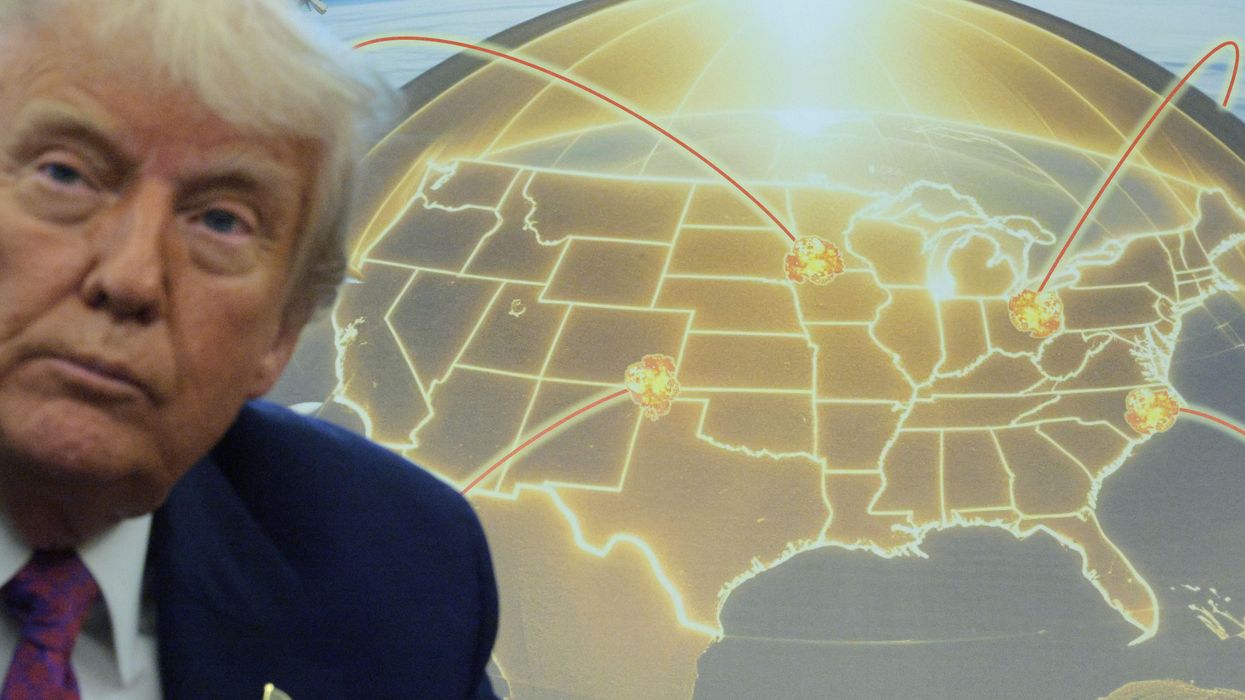
In an era of illegal wars and dangerous domestic military operations, Trump’s budget plan would hand trillions of additional dollars to defense contractors and militarize our country in ways not seen since World War II.
Congress expects to receive the Trump administration’s official budget request for fiscal year 2027 sometime next week. If it is consistent with President Donald Trump’s “announcement” on Truth Social on January 8 that his administration would request a defense budget of $1.5 trillion—$600 billion more than this year—that would be a whopping 66% increase in military spending.
If passed and sustained, analysis shows the plan will add almost $6 trillion to the national debt in the next decade. In an era of illegal wars and dangerous domestic military operations, Trump’s plan would hand trillions of additional dollars to defense contractors and militarize our country in ways not seen since World War II—what we might call a “Bloody New Deal.”
The original New Deal took place over six years in the 1930s and infused the US economy with government spending to end the Great Depression. It cost $41.7 billion at the time, translating to around $1 trillion in today’s dollars. Given the comparatively small size of the US economy in the 1930s, the New Deal remains one of the largest economic stimulus packages in US history (if not the largest).
Among modern spending packages, the Bloody New Deal would stand alone in scope. If enacted and sustained over the next 10 years, it will cost roughly six times as much as President Joe Biden’s Inflation Reduction Act (although many of its provisions have been rolled back by the Trump administration since this cost estimate), four times as much as President Barack Obama’s Affordable Care Act, and twice as much as President Trump’s One Big Beautiful Bill Act. Even though Trump has claimed he will use tariff revenue to pay for his spending increase—now in question due to the recent Supreme Court decision striking down most of his tariffs—the Bloody New Deal will add at least $5.8 trillion dollars to the national debt over the next decade, which will harm our financial security and long-term warfighting ability. And that figure is based on a rosy outlook for tariff revenue and a conservative outlook of defense spending growth.
Pouring funds into a defense sector that has repeatedly failed basic tests of accountability will not miraculously produce innovation.
By comparing this massive spending plan to other options, the potential scope of President Trump’s announcement becomes even clearer. For $6 trillion over 10 years, the US government could simultaneously fund all the following:
While the president was, as usual, frustratingly vague when announcing the largest single increase in US defense spending, congressional Republicans have recently provided more clues about what they would fund and how long this increase would last. The chair of the House Armed Services Committee has indicated the funding will be used to grow the “defense industrial base” and Trump’s pet projects, the missile defense scheme “Golden Dome” and the Navy modernization project “Golden Fleet.”
Growing the industrial base for our military has been a long-term bipartisan priority in Congress. Almost all new military acquisition projects this century have struggled with brittle supply chains and out-of-date procurement practices that could be helped by a stronger industrial base. But this goal either means a one-time increase would be a fool’s errand, unable to solve the problem, or an admission that the spending increase would be made permanent, as some House Republicans have already called for. On a very basic and intuitive level, long-term capacity cannot be created without long-term funding commitments to the defense industry.
Setting aside all the wasted money on infeasible fantasy projects like Golden Dome and Golden Fleet, the Bloody New Deal, even if sustained, won’t fix the problems it sets out to solve. A host of structural issues, not a lack of funding, have caused a failure in output from our defense industrial base.
One of these issues, monopolization, provides an example of something that cannot be fixed with more funds. Both former President Biden’s and President Trump’s defense appointees have pointed out that the shrinking number of contractors has kneecapped our ability to produce military equipment due to a lack of competition, anti-competitive behavior, and contractor influence in Congress. In the 1990s, there were 51 major defense contractors. Today, there are only five.
The Bloody New Deal would likely cause a temporary feeding frenzy for new entrants into the defense sector in its first year like that seen in the massive Golden Dome bidding process currently underway. But history has shown the market will likely reward existing firms when all is said and done. After 9/11, rapid-procurement authorities and emergency funding briefly pulled hundreds of non-traditional firms into defense contracting before mergers and closures quickly narrowed the field again.
In the end, it is likely the Bloody New Deal will only grow the power of incumbent contractors. Even the Pentagon has signaled it wouldn’t know how to deal with this amount of money if it was passed. In 10 years, the largest increase in discretionary spending in modern US history could very well be regarded as the largest corporate welfare plan for defense contractors and arms salesmen, not remembered for making anyone more secure.
For a spending plan of potentially unparalleled scope, the lack of attention it has received is shocking. If this Bloody New Deal actually passes, it could give unparalleled increases in financial power to defense contractors and support for the political work they already do to influence Congress. The Trump administration may also try to get a rumored $200 billion supplemental defense spending package through Congress to support its ongoing war against Iran. Although this is a different way of increasing the defense budget, the outcome would be much the same.
Sane voices need to act now, building opposition to this unprecedented plan. Especially in the context of attacks decrying President Biden’s Inflation Reduction Act as too expensive or unrealistic, and all of the work the current administration has done to undermine that bill, this infeasible proposal becomes all the more ludicrous. Progressives should be unflinching in defining this proposal as a blank check for the same contractors who cannot deliver ships on time, munitions at scale, or clean audits. Pouring funds into a defense sector that has repeatedly failed basic tests of accountability will not miraculously produce innovation.
As the Trump administration makes clear its unchecked willingness to attack other countries regardless of legality, the stakes of dumping unprecedented funds into the US military-industrial complex have never been higher.