5
#000000
#FFFFFF
To donate by check, phone, or other method, see our More Ways to Give page.
Daily news & progressive opinion—funded by the people, not the corporations—delivered straight to your inbox.

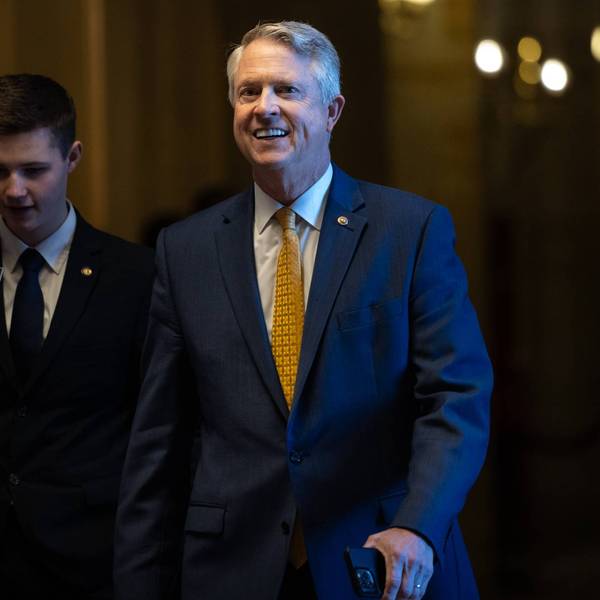
Democratic candidate for US Senate in Michigan Abdul El-Sayed speaks during a rally at The Congregation on August 3, 2026 in Detroit, Michigan.
Democrats should embrace three foreign policy commitments that are morally overdue and broadly popular nationwide: ending the Iran war, cutting the Pentagon budget and abolishing ICE, and ending support for Israel and other governments that violate humans rights.
The idea that US voters don’t care about foreign policy is over. From Michigan to Florida to Colorado, Democratic Party primary candidates’ positions on war, military spending, and support for Israel have propelled victories alongside progressive policies on healthcare and the economy.
The message of “Babies, Not Bombs”—a promise to spend taxpayer money to nurture lives instead of ending them—has become a rallying cry well beyond the New York campaign where it originated.
To win the midterms and offer real leadership beyond 2026, Democrats must pay attention to this momentum and the foreign policy concerns of voters across the political spectrum. Donald Trump secured the presidency in 2024 partly by winning over voters, including independents and Democrats, with his promise to “stop wars” not start them.
Democrats don’t need to invent a new coalition to win in November. They need to represent the one that already exists.
While Trump has shattered this promise by waging a disastrous, illegal war in Iran and attacking or threatening more than 10 other countries, Democrats must learn from their mistakes—and the president’s.
To win in November and deliver the change people want, Democrats should embrace three foreign policy commitments that are morally overdue and broadly popular nationwide.
The first commitment is ending the war on Iran and the endless wars that have defined US foreign policy since 2001.
Trump’s war on Iran is among the most unpopular in US history. Polling shows nearly 60% of adults oppose it, including 90% of Democrats, 63% of independents, and 22% of Republicans.
Voters have watched the conflict drive up gas and grocery prices while killing, injuring, and displacing people on a staggering scale, and risking greater global economic devastation. The war has added to the trillions of dollars wasted by the post-September 11, 2001 wars, which could have funded urgent domestic needs.
The second commitment is cutting the Pentagon budget and abolishing Immigration and Customs Enforcement (ICE). President Trump has requested a $1.57 trillion military budget for the 2027 fiscal year, including money for the Iran war. This would be the largest in US history, and around a 50% increase over already bloated spending.
Opposition to Trump’s budget request is profound: 65% overall and 87% among Democrats.
There’s similar outrage over Trump’s militarization of US streets as people see ICE’s brutal effects on immigrant neighbors. “Abolish ICE” has become a clarion call nationwide because of the agency’s responsibility for multiple deaths, mass raids, and documented abuses in detention centers.
Nearly three-quarters of Democrats, half of independents, and a quarter of Republicans support abolishing ICE. The Democratic National Committee, in August, passed a resolution calling for abolishing ICE.
Democrats should listen to voters and oppose warmongering abroad and a hyper-militarized immigration crackdown at home as two faces of the same problem.
The third commitment is ending support for Israel and other governments responsible for serious human rights violations. While stopping military backing for Israel was once a radical position, it’s increasingly the Democratic—and national—mainstream given the dramatic decline in support for Israel amid a live-streamed genocide propelled by US arms and tax dollars.
Across the political spectrum, the death toll of more than 73,000 Palestinians, including more than 20,000 children, has transformed public opinion.
The country’s existing “Leahy Laws” bar US funding for foreign military forces that commit human rights abuses. Another Democratic National Committee resolution calls for full enforcement of the Leahy Laws, giving Democrats a legally grounded position: Apply the standard consistently—to Israel, the United Arab Emirates, Saudi Arabia, or any other government implicated in human rights violations.
None of these are fringe positions. They are where a majority of the country and an overwhelming majority of the Democratic base already stand.
What’s missing is a party willing to campaign on these stances plainly and courageously, rather than treating foreign policy as a black box best left to the whims of an unelected, out-of-touch Washington, DC elite.
Democrats don’t need to invent a new coalition to win in November. They need to represent the one that already exists: People across the political spectrum exhausted by endless war, appalled by a bloated military budget squeezing out domestic needs, and angry about seeing their taxes underwrite human rights abuses at home and abroad.
A foreign policy platform built on these three commitments isn’t just good policy. It’s a winning one.
Dear Common Dreams reader, It’s been nearly 30 years since I co-founded Common Dreams with my late wife, Lina Newhouser. We had the radical notion that journalism should serve the public good, not corporate profits. It was clear to us from the outset what it would take to build such a project. No paid advertisements. No corporate sponsors. No millionaire publisher telling us what to think or do. Many people said we wouldn't last a year, but we proved those doubters wrong. Together with a tremendous team of journalists and dedicated staff, we built an independent media outlet free from the constraints of profits and corporate control. Our mission has always been simple: To inform. To inspire. To ignite change for the common good. Building Common Dreams was not easy. Our survival was never guaranteed. When you take on the most powerful forces—Wall Street greed, fossil fuel industry destruction, Big Tech lobbyists, and uber-rich oligarchs who have spent billions upon billions rigging the economy and democracy in their favor—the only bulwark you have is supporters who believe in your work. But here’s the urgent message from me today. It's never been this bad out there. And it's never been this hard to keep us going. At the very moment Common Dreams is most needed, the threats we face are intensifying. We need your support now more than ever. We don't accept corporate advertising and never will. We don't have a paywall because we don't think people should be blocked from critical news based on their ability to pay. Everything we do is funded by the donations of readers like you. When everyone does the little they can afford, we are strong. But if that support retreats or dries up, so do we. Will you donate now to make sure Common Dreams not only survives but thrives? —Craig Brown, Co-founder |
The idea that US voters don’t care about foreign policy is over. From Michigan to Florida to Colorado, Democratic Party primary candidates’ positions on war, military spending, and support for Israel have propelled victories alongside progressive policies on healthcare and the economy.
The message of “Babies, Not Bombs”—a promise to spend taxpayer money to nurture lives instead of ending them—has become a rallying cry well beyond the New York campaign where it originated.
To win the midterms and offer real leadership beyond 2026, Democrats must pay attention to this momentum and the foreign policy concerns of voters across the political spectrum. Donald Trump secured the presidency in 2024 partly by winning over voters, including independents and Democrats, with his promise to “stop wars” not start them.
Democrats don’t need to invent a new coalition to win in November. They need to represent the one that already exists.
While Trump has shattered this promise by waging a disastrous, illegal war in Iran and attacking or threatening more than 10 other countries, Democrats must learn from their mistakes—and the president’s.
To win in November and deliver the change people want, Democrats should embrace three foreign policy commitments that are morally overdue and broadly popular nationwide.
The first commitment is ending the war on Iran and the endless wars that have defined US foreign policy since 2001.
Trump’s war on Iran is among the most unpopular in US history. Polling shows nearly 60% of adults oppose it, including 90% of Democrats, 63% of independents, and 22% of Republicans.
Voters have watched the conflict drive up gas and grocery prices while killing, injuring, and displacing people on a staggering scale, and risking greater global economic devastation. The war has added to the trillions of dollars wasted by the post-September 11, 2001 wars, which could have funded urgent domestic needs.
The second commitment is cutting the Pentagon budget and abolishing Immigration and Customs Enforcement (ICE). President Trump has requested a $1.57 trillion military budget for the 2027 fiscal year, including money for the Iran war. This would be the largest in US history, and around a 50% increase over already bloated spending.
Opposition to Trump’s budget request is profound: 65% overall and 87% among Democrats.
There’s similar outrage over Trump’s militarization of US streets as people see ICE’s brutal effects on immigrant neighbors. “Abolish ICE” has become a clarion call nationwide because of the agency’s responsibility for multiple deaths, mass raids, and documented abuses in detention centers.
Nearly three-quarters of Democrats, half of independents, and a quarter of Republicans support abolishing ICE. The Democratic National Committee, in August, passed a resolution calling for abolishing ICE.
Democrats should listen to voters and oppose warmongering abroad and a hyper-militarized immigration crackdown at home as two faces of the same problem.
The third commitment is ending support for Israel and other governments responsible for serious human rights violations. While stopping military backing for Israel was once a radical position, it’s increasingly the Democratic—and national—mainstream given the dramatic decline in support for Israel amid a live-streamed genocide propelled by US arms and tax dollars.
Across the political spectrum, the death toll of more than 73,000 Palestinians, including more than 20,000 children, has transformed public opinion.
The country’s existing “Leahy Laws” bar US funding for foreign military forces that commit human rights abuses. Another Democratic National Committee resolution calls for full enforcement of the Leahy Laws, giving Democrats a legally grounded position: Apply the standard consistently—to Israel, the United Arab Emirates, Saudi Arabia, or any other government implicated in human rights violations.
None of these are fringe positions. They are where a majority of the country and an overwhelming majority of the Democratic base already stand.
What’s missing is a party willing to campaign on these stances plainly and courageously, rather than treating foreign policy as a black box best left to the whims of an unelected, out-of-touch Washington, DC elite.
Democrats don’t need to invent a new coalition to win in November. They need to represent the one that already exists: People across the political spectrum exhausted by endless war, appalled by a bloated military budget squeezing out domestic needs, and angry about seeing their taxes underwrite human rights abuses at home and abroad.
A foreign policy platform built on these three commitments isn’t just good policy. It’s a winning one.
The idea that US voters don’t care about foreign policy is over. From Michigan to Florida to Colorado, Democratic Party primary candidates’ positions on war, military spending, and support for Israel have propelled victories alongside progressive policies on healthcare and the economy.
The message of “Babies, Not Bombs”—a promise to spend taxpayer money to nurture lives instead of ending them—has become a rallying cry well beyond the New York campaign where it originated.
To win the midterms and offer real leadership beyond 2026, Democrats must pay attention to this momentum and the foreign policy concerns of voters across the political spectrum. Donald Trump secured the presidency in 2024 partly by winning over voters, including independents and Democrats, with his promise to “stop wars” not start them.
Democrats don’t need to invent a new coalition to win in November. They need to represent the one that already exists.
While Trump has shattered this promise by waging a disastrous, illegal war in Iran and attacking or threatening more than 10 other countries, Democrats must learn from their mistakes—and the president’s.
To win in November and deliver the change people want, Democrats should embrace three foreign policy commitments that are morally overdue and broadly popular nationwide.
The first commitment is ending the war on Iran and the endless wars that have defined US foreign policy since 2001.
Trump’s war on Iran is among the most unpopular in US history. Polling shows nearly 60% of adults oppose it, including 90% of Democrats, 63% of independents, and 22% of Republicans.
Voters have watched the conflict drive up gas and grocery prices while killing, injuring, and displacing people on a staggering scale, and risking greater global economic devastation. The war has added to the trillions of dollars wasted by the post-September 11, 2001 wars, which could have funded urgent domestic needs.
The second commitment is cutting the Pentagon budget and abolishing Immigration and Customs Enforcement (ICE). President Trump has requested a $1.57 trillion military budget for the 2027 fiscal year, including money for the Iran war. This would be the largest in US history, and around a 50% increase over already bloated spending.
Opposition to Trump’s budget request is profound: 65% overall and 87% among Democrats.
There’s similar outrage over Trump’s militarization of US streets as people see ICE’s brutal effects on immigrant neighbors. “Abolish ICE” has become a clarion call nationwide because of the agency’s responsibility for multiple deaths, mass raids, and documented abuses in detention centers.
Nearly three-quarters of Democrats, half of independents, and a quarter of Republicans support abolishing ICE. The Democratic National Committee, in August, passed a resolution calling for abolishing ICE.
Democrats should listen to voters and oppose warmongering abroad and a hyper-militarized immigration crackdown at home as two faces of the same problem.
The third commitment is ending support for Israel and other governments responsible for serious human rights violations. While stopping military backing for Israel was once a radical position, it’s increasingly the Democratic—and national—mainstream given the dramatic decline in support for Israel amid a live-streamed genocide propelled by US arms and tax dollars.
Across the political spectrum, the death toll of more than 73,000 Palestinians, including more than 20,000 children, has transformed public opinion.
The country’s existing “Leahy Laws” bar US funding for foreign military forces that commit human rights abuses. Another Democratic National Committee resolution calls for full enforcement of the Leahy Laws, giving Democrats a legally grounded position: Apply the standard consistently—to Israel, the United Arab Emirates, Saudi Arabia, or any other government implicated in human rights violations.
None of these are fringe positions. They are where a majority of the country and an overwhelming majority of the Democratic base already stand.
What’s missing is a party willing to campaign on these stances plainly and courageously, rather than treating foreign policy as a black box best left to the whims of an unelected, out-of-touch Washington, DC elite.
Democrats don’t need to invent a new coalition to win in November. They need to represent the one that already exists: People across the political spectrum exhausted by endless war, appalled by a bloated military budget squeezing out domestic needs, and angry about seeing their taxes underwrite human rights abuses at home and abroad.
A foreign policy platform built on these three commitments isn’t just good policy. It’s a winning one.