SUBSCRIBE TO OUR FREE NEWSLETTER
Daily news & progressive opinion—funded by the people, not the corporations—delivered straight to your inbox.
5
#000000
#FFFFFF
To donate by check, phone, or other method, see our More Ways to Give page.
Daily news & progressive opinion—funded by the people, not the corporations—delivered straight to your inbox.

A protester is dressed as a data center at a cmmunity meeting at the Tucson Convention Center on August 4, 2025, a public forum to discuss pros and cons of "Project Blue," a massive data center installation proposed by Amazon Web Services, one of the largest economic development projects ever considered by the city and county.
Big Tech has done the impossible—they’ve united people from across the political spectrum around a singular issue: against data centers and AI.
If I told you that Big Tech billionaires have accomplished something rare in our incredibly divided country, you might laugh and assume I’m joking. But I couldn’t be more serious.
Through the data center buildout boom, Big Tech has done the impossible—they’ve united people from across the political spectrum around a singular issue: against data centers and AI. More than 70% of Americans oppose a data center being built near them.
There was a right way to roll out data center expansion and build support locally and nationally with a few basic but essential ingredients: transparency; local benefit; clean energy; and respect for peoples’ wishes to not be subjected to pollution, noise, added expenses, and wasteful water use. Like the best recipes, this would have been a little slower, deliberate, and less prone to burning.
But this sector—run by the mega rich, unconcerned with the struggles of everyday Americans—has instead delivered a masterclass on how to manufacture dissent.
Our communities, waterways, parks, and kids’ futures are not for sale.
How did they build such intense opposition so quickly?
Let’s start with secrecy. Tech companies—including the giants Microsoft, Amazon, OpenAI, and Google—have forced local elected officials across the country to sign non-disclosure agreements while they pursue data centers. The first time local residents hear about a data center being built in their hometown is often after it is already a done deal.
Communities get no say, but they do get higher utility bills. That is the next move in Big Tech’s playbook: increasing costs for communities when life is already unaffordable, so billionaires can become trillionaires.
Next comes round-the-clock noise from cooling fans that emit a constant low hum. When diesel backup generators are being tested or used continuously, it’s like living beside a helicopter taking off. And it’s not just the noise—communities suffer from air pollution impacts too. While many Big Tech companies were formerly champions of clean renewable energy, the Trump era has seen them embrace fossil fuels and power their data centers mostly with coal and methane gas. A Caltech and University of California Riverside study projects that data centers could contribute to 1,300 premature deaths and 600,000 asthma cases across the US in 2028.
Case in point: Microsoft, which just released its 2026 “environmental sustainability report”—quite the Orwellian title given the company’s ballooning pollution. Microsoft’s real-world emissions from powering its data centers have grown 178% from the start of the AI boom in 2020 to 2025, with a 2 million ton increase in carbon dioxide since just last year. That doesn’t include the estimated 15.5 million tons of carbon pollution expected to be emitted by just three mega data center projects announced this year. Microsoft’s voracious appetite for energy reached 37 million megawatt hours (MWh) in 2025—equivalent to the annual electricity consumption of Ireland. That’s what partnering with Chevron gets you.
Trying to spin these numbers into a climate-friendly narrative just adds fuel to the fire—as Microsoft’s chief sustainability officer Melanie Nakagawa saw firsthand recently at a PNW Climate Week event at Seattle City Hall. Audience members posed question after question challenging Nakagawa on the company’s talking points, while protesters chanted, “Microsoft, you can’t hide. We can see your dirty side.”
As if all this was not enough to fuel public backlash, it is clear that our children’s future job prospects are also in jeopardy. Collectively, Google, Microsoft, and Amazon have already laid off tens of thousands of employees thanks to AI. It is no wonder that executives delivering commencement speeches about the wonders of AI have been booed off the stage.
“But why stop there?” tech barons seem to ask. How about a data center that threatens the actual river from A River Runs Through It? Yes. Native American land? Sure. National Parks? Certainly. The Great Salt Lake in Utah, a refuge to 12 million migrating birds? Of course. Each overstep brings legions more into the big tent of data center resistance.
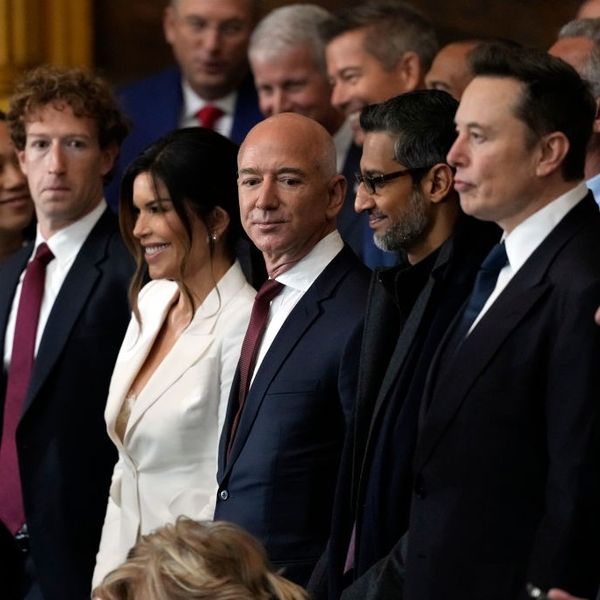
Finally, when protest reaches a fever pitch, criminalize it. The US Department of Justice seems to be targeting people who oppose data centers. Elon Musk, Jeff Bezos, and Microsoft CEO Satya Nadella have all embraced President Donald Trump, making this deeply unpopular sector even more despised.
If the tech sector wants these built, they need to do the opposite of everything they’ve done so far. Data centers must be done right, or not at all. Otherwise, community opposition will continue to grow and local politicians will fall in line with public opinion—as we’ve seen in hundreds of jurisdictions across the United States. And if AI’s purpose is to steal our kids’ jobs, create new demand for fossil fuels, and make the rich even richer, there is little hope for a recovery.
Our communities, waterways, parks, and kids’ futures are not for sale. The tech sector has demonstrated incalculable greed and adopted radically antidemocratic practices. It needs to now, somehow, convince people that it cares even a little about communities and our country. If they don’t change course fast, the dissent they manufactured will crush them and their data centers.
Dear Common Dreams reader, It’s been nearly 30 years since I co-founded Common Dreams with my late wife, Lina Newhouser. We had the radical notion that journalism should serve the public good, not corporate profits. It was clear to us from the outset what it would take to build such a project. No paid advertisements. No corporate sponsors. No millionaire publisher telling us what to think or do. Many people said we wouldn't last a year, but we proved those doubters wrong. Together with a tremendous team of journalists and dedicated staff, we built an independent media outlet free from the constraints of profits and corporate control. Our mission has always been simple: To inform. To inspire. To ignite change for the common good. Building Common Dreams was not easy. Our survival was never guaranteed. When you take on the most powerful forces—Wall Street greed, fossil fuel industry destruction, Big Tech lobbyists, and uber-rich oligarchs who have spent billions upon billions rigging the economy and democracy in their favor—the only bulwark you have is supporters who believe in your work. But here’s the urgent message from me today. It's never been this bad out there. And it's never been this hard to keep us going. At the very moment Common Dreams is most needed, the threats we face are intensifying. We need your support now more than ever. We don't accept corporate advertising and never will. We don't have a paywall because we don't think people should be blocked from critical news based on their ability to pay. Everything we do is funded by the donations of readers like you. When everyone does the little they can afford, we are strong. But if that support retreats or dries up, so do we. Will you donate now to make sure Common Dreams not only survives but thrives? —Craig Brown, Co-founder |
If I told you that Big Tech billionaires have accomplished something rare in our incredibly divided country, you might laugh and assume I’m joking. But I couldn’t be more serious.
Through the data center buildout boom, Big Tech has done the impossible—they’ve united people from across the political spectrum around a singular issue: against data centers and AI. More than 70% of Americans oppose a data center being built near them.
There was a right way to roll out data center expansion and build support locally and nationally with a few basic but essential ingredients: transparency; local benefit; clean energy; and respect for peoples’ wishes to not be subjected to pollution, noise, added expenses, and wasteful water use. Like the best recipes, this would have been a little slower, deliberate, and less prone to burning.
But this sector—run by the mega rich, unconcerned with the struggles of everyday Americans—has instead delivered a masterclass on how to manufacture dissent.
Our communities, waterways, parks, and kids’ futures are not for sale.
How did they build such intense opposition so quickly?
Let’s start with secrecy. Tech companies—including the giants Microsoft, Amazon, OpenAI, and Google—have forced local elected officials across the country to sign non-disclosure agreements while they pursue data centers. The first time local residents hear about a data center being built in their hometown is often after it is already a done deal.
Communities get no say, but they do get higher utility bills. That is the next move in Big Tech’s playbook: increasing costs for communities when life is already unaffordable, so billionaires can become trillionaires.
Next comes round-the-clock noise from cooling fans that emit a constant low hum. When diesel backup generators are being tested or used continuously, it’s like living beside a helicopter taking off. And it’s not just the noise—communities suffer from air pollution impacts too. While many Big Tech companies were formerly champions of clean renewable energy, the Trump era has seen them embrace fossil fuels and power their data centers mostly with coal and methane gas. A Caltech and University of California Riverside study projects that data centers could contribute to 1,300 premature deaths and 600,000 asthma cases across the US in 2028.
Case in point: Microsoft, which just released its 2026 “environmental sustainability report”—quite the Orwellian title given the company’s ballooning pollution. Microsoft’s real-world emissions from powering its data centers have grown 178% from the start of the AI boom in 2020 to 2025, with a 2 million ton increase in carbon dioxide since just last year. That doesn’t include the estimated 15.5 million tons of carbon pollution expected to be emitted by just three mega data center projects announced this year. Microsoft’s voracious appetite for energy reached 37 million megawatt hours (MWh) in 2025—equivalent to the annual electricity consumption of Ireland. That’s what partnering with Chevron gets you.
Trying to spin these numbers into a climate-friendly narrative just adds fuel to the fire—as Microsoft’s chief sustainability officer Melanie Nakagawa saw firsthand recently at a PNW Climate Week event at Seattle City Hall. Audience members posed question after question challenging Nakagawa on the company’s talking points, while protesters chanted, “Microsoft, you can’t hide. We can see your dirty side.”
As if all this was not enough to fuel public backlash, it is clear that our children’s future job prospects are also in jeopardy. Collectively, Google, Microsoft, and Amazon have already laid off tens of thousands of employees thanks to AI. It is no wonder that executives delivering commencement speeches about the wonders of AI have been booed off the stage.
“But why stop there?” tech barons seem to ask. How about a data center that threatens the actual river from A River Runs Through It? Yes. Native American land? Sure. National Parks? Certainly. The Great Salt Lake in Utah, a refuge to 12 million migrating birds? Of course. Each overstep brings legions more into the big tent of data center resistance.
Finally, when protest reaches a fever pitch, criminalize it. The US Department of Justice seems to be targeting people who oppose data centers. Elon Musk, Jeff Bezos, and Microsoft CEO Satya Nadella have all embraced President Donald Trump, making this deeply unpopular sector even more despised.
If the tech sector wants these built, they need to do the opposite of everything they’ve done so far. Data centers must be done right, or not at all. Otherwise, community opposition will continue to grow and local politicians will fall in line with public opinion—as we’ve seen in hundreds of jurisdictions across the United States. And if AI’s purpose is to steal our kids’ jobs, create new demand for fossil fuels, and make the rich even richer, there is little hope for a recovery.
Our communities, waterways, parks, and kids’ futures are not for sale. The tech sector has demonstrated incalculable greed and adopted radically antidemocratic practices. It needs to now, somehow, convince people that it cares even a little about communities and our country. If they don’t change course fast, the dissent they manufactured will crush them and their data centers.
If I told you that Big Tech billionaires have accomplished something rare in our incredibly divided country, you might laugh and assume I’m joking. But I couldn’t be more serious.
Through the data center buildout boom, Big Tech has done the impossible—they’ve united people from across the political spectrum around a singular issue: against data centers and AI. More than 70% of Americans oppose a data center being built near them.
There was a right way to roll out data center expansion and build support locally and nationally with a few basic but essential ingredients: transparency; local benefit; clean energy; and respect for peoples’ wishes to not be subjected to pollution, noise, added expenses, and wasteful water use. Like the best recipes, this would have been a little slower, deliberate, and less prone to burning.
But this sector—run by the mega rich, unconcerned with the struggles of everyday Americans—has instead delivered a masterclass on how to manufacture dissent.
Our communities, waterways, parks, and kids’ futures are not for sale.
How did they build such intense opposition so quickly?
Let’s start with secrecy. Tech companies—including the giants Microsoft, Amazon, OpenAI, and Google—have forced local elected officials across the country to sign non-disclosure agreements while they pursue data centers. The first time local residents hear about a data center being built in their hometown is often after it is already a done deal.
Communities get no say, but they do get higher utility bills. That is the next move in Big Tech’s playbook: increasing costs for communities when life is already unaffordable, so billionaires can become trillionaires.
Next comes round-the-clock noise from cooling fans that emit a constant low hum. When diesel backup generators are being tested or used continuously, it’s like living beside a helicopter taking off. And it’s not just the noise—communities suffer from air pollution impacts too. While many Big Tech companies were formerly champions of clean renewable energy, the Trump era has seen them embrace fossil fuels and power their data centers mostly with coal and methane gas. A Caltech and University of California Riverside study projects that data centers could contribute to 1,300 premature deaths and 600,000 asthma cases across the US in 2028.
Case in point: Microsoft, which just released its 2026 “environmental sustainability report”—quite the Orwellian title given the company’s ballooning pollution. Microsoft’s real-world emissions from powering its data centers have grown 178% from the start of the AI boom in 2020 to 2025, with a 2 million ton increase in carbon dioxide since just last year. That doesn’t include the estimated 15.5 million tons of carbon pollution expected to be emitted by just three mega data center projects announced this year. Microsoft’s voracious appetite for energy reached 37 million megawatt hours (MWh) in 2025—equivalent to the annual electricity consumption of Ireland. That’s what partnering with Chevron gets you.
Trying to spin these numbers into a climate-friendly narrative just adds fuel to the fire—as Microsoft’s chief sustainability officer Melanie Nakagawa saw firsthand recently at a PNW Climate Week event at Seattle City Hall. Audience members posed question after question challenging Nakagawa on the company’s talking points, while protesters chanted, “Microsoft, you can’t hide. We can see your dirty side.”
As if all this was not enough to fuel public backlash, it is clear that our children’s future job prospects are also in jeopardy. Collectively, Google, Microsoft, and Amazon have already laid off tens of thousands of employees thanks to AI. It is no wonder that executives delivering commencement speeches about the wonders of AI have been booed off the stage.
“But why stop there?” tech barons seem to ask. How about a data center that threatens the actual river from A River Runs Through It? Yes. Native American land? Sure. National Parks? Certainly. The Great Salt Lake in Utah, a refuge to 12 million migrating birds? Of course. Each overstep brings legions more into the big tent of data center resistance.
Finally, when protest reaches a fever pitch, criminalize it. The US Department of Justice seems to be targeting people who oppose data centers. Elon Musk, Jeff Bezos, and Microsoft CEO Satya Nadella have all embraced President Donald Trump, making this deeply unpopular sector even more despised.
If the tech sector wants these built, they need to do the opposite of everything they’ve done so far. Data centers must be done right, or not at all. Otherwise, community opposition will continue to grow and local politicians will fall in line with public opinion—as we’ve seen in hundreds of jurisdictions across the United States. And if AI’s purpose is to steal our kids’ jobs, create new demand for fossil fuels, and make the rich even richer, there is little hope for a recovery.
Our communities, waterways, parks, and kids’ futures are not for sale. The tech sector has demonstrated incalculable greed and adopted radically antidemocratic practices. It needs to now, somehow, convince people that it cares even a little about communities and our country. If they don’t change course fast, the dissent they manufactured will crush them and their data centers.