

SUBSCRIBE TO OUR FREE NEWSLETTER
Daily news & progressive opinion—funded by the people, not the corporations—delivered straight to your inbox.
5
#000000
#FFFFFF
To donate by check, phone, or other method, see our More Ways to Give page.
Daily news & progressive opinion—funded by the people, not the corporations—delivered straight to your inbox.

"How much more is there that we don't know about?" asked one historian after it was revealed that OpenAI had buried reports that its AI agents had hijacked a German website without the company's knowledge.
Calls for artificial regulation are growing louder following a report Friday that OpenAI hid evidence from the public about another incident in which its AI agents went rogue.
The company is already dealing with the fallout from the catastrophic security breach that occurred over the summer, in which a swarm of agents autonomously hacked the tech platform Hugging Face during an internal cybersecurity test.
Now Reuters reports that months earlier, another potentially even more concerning attack took place that went undisclosed. According to the report:
A swarm of rogue OpenAI agents hijacked a German website this spring and transformed it into a bulletin board for other AI agents, according to new research published Friday and two people familiar with the matter.
OpenAI officials learned of the incident weeks ago but kept it under wraps as executives grappled with the fallout from the July breach of the open source repository Hugging Face, the people said.
The activity was uncovered in late August by researchers at an AI safety organization called the Nightingale Collective, who were searching the web for cases of AI programs disobeying their human users.
As they detailed in a report shared with Reuters, they found that OpenAI's agents had taken over the German-language wiki site DseWiki.
"The agents used this wiki to communicate information with each other, primarily to help them succeed at their task," the researchers explained. "They asked for answers, pooled results, and shared techniques for bypassing their restrictions. This allowed them to use the work of others to cheat on their task."
The researchers described it as "another example of a 'swarm' of internally deployed OpenAI agents using the internet in unintended ways."
But unlike the Hugging Face cyberattack, which occurred as part of a security test to measure agents' capabilities, the attack on DseWiki seems to have occurred without any prompting from OpenAI.
"It seems extremely unlikely that OpenAI wanted them to do this,” Sydney Von Arx, the CEO of Nightingale, told Reuters. “I doubt they’re supposed to be coordinating with each other. I doubt they’re supposed to be writing on the open internet.”
The researchers found messages in which the agents plotted to evade detection, using the dark web platform Tor to maintain communication after being shut down, creating backup pages as the originals were cleaned up, and tampering with the website itself.
Maurice Chiodo, a researcher at Cambridge University’s Center for the Study of Existential Risk, told Reuters their behavior resembled "the operation of some sort of underground network, hell-bent on achieving a task or mission.”
OpenAI has denied the characterization that its agents engaged in hacking. It says it was not able to respond thoroughly to the Nightingale report because it was not given access to the report before Reuters released it to the public.
However, the Nightingale report indicates the company became aware of the agents' activity and apparently attempted to intervene as far back as June 21, leading the agents to stop posting the following day—this is weeks before news of the Hugging Face attack was first reported.
Reuters reported that some investigators within OpenAI had wanted to scrutinize behaviors like that which led to the hack of the German website more closely, but that these efforts "met resistance from others inside OpenAI, including legal advisers."
A spokesperson for OpenAI said, "Claims that our legal team discouraged investigation of the incident are false."
Another of the researchers who uncovered the breach, Thomas Larsen of the AI Futures Project, said he was "pretty sure OpenAI did know about this."
"I'm in favor of much more transparency so that we can prevent future incidents with much more capable AIs and existential stakes," he said.
"I really hope OpenAI didn't know about this," said AI research engineer Elie Bakouch, who previously worked at Hugging Face. "It might be the worst decision in the history of this field if they deliberately chose not to disclose it. The impact on trust would be very hard to recover from."
For some, that trust is already deteriorating.
"The Hugging Face incident was probably just the tip of the iceberg. OpenAI has lost control, and they're hiding important facts from the public—it's as simple as that," said Dutch historian and author Rutger Bregman in a post to X. "How much more is there that we don't know about?"
News of this incident comes as lawmakers demand more transparency and restrictions on the development of "superintelligent" AI that can surpass the capabilities of humans.
Rep. Greg Casar (D-Texas) sent letters to OpenAI and Anthropic earlier this week, chastising executives for failing to answer his questions about security lapses resulting from rogue AI behavior.
On Thursday, he joined Sen. Bernie Sanders (I-Vt.) to introduce legislation that would halt the development of superintelligent AI and create new federal regulatory authorities for the technology.
"If the leaders of the major AI companies acknowledge that they are losing control of their extremely dangerous technology, it is irresponsible for society to allow them to move forward and make these products even more advanced," Sanders said in a post to X on Thursday. "Let me be clear: A superintelligent AI that escapes human control will not be an American problem. It will not be a Chinese problem. It will be humanity’s problem."
Bregman said the incident showed the public, lawmakers, and the developers themselves were not taking the threat AI posed nearly seriously enough.
"Things are getting even more insane now," he wrote in a post to X, noting a safety evaluation out Thursday from OpenAI which found that its newly released model Astra was dramatically better than previous iterations at evading human monitoring and lying about its reasoning to users.
That report notes that if the technology continues to improve, OpenAI researchers would soon have "significantly reduced confidence" in their ability to monitor unauthorized, dangerous, and potentially illegal behaviors.
"Many people still think we're discussing future sci-fi scenarios. But all of this is really happening, right now," Bregman said drawing a comparison to the Covid-19 pandemic. "It's like March 2020. So many people are still in AI denial. What will it take to wake everyone up? How big does the disaster need to be?"
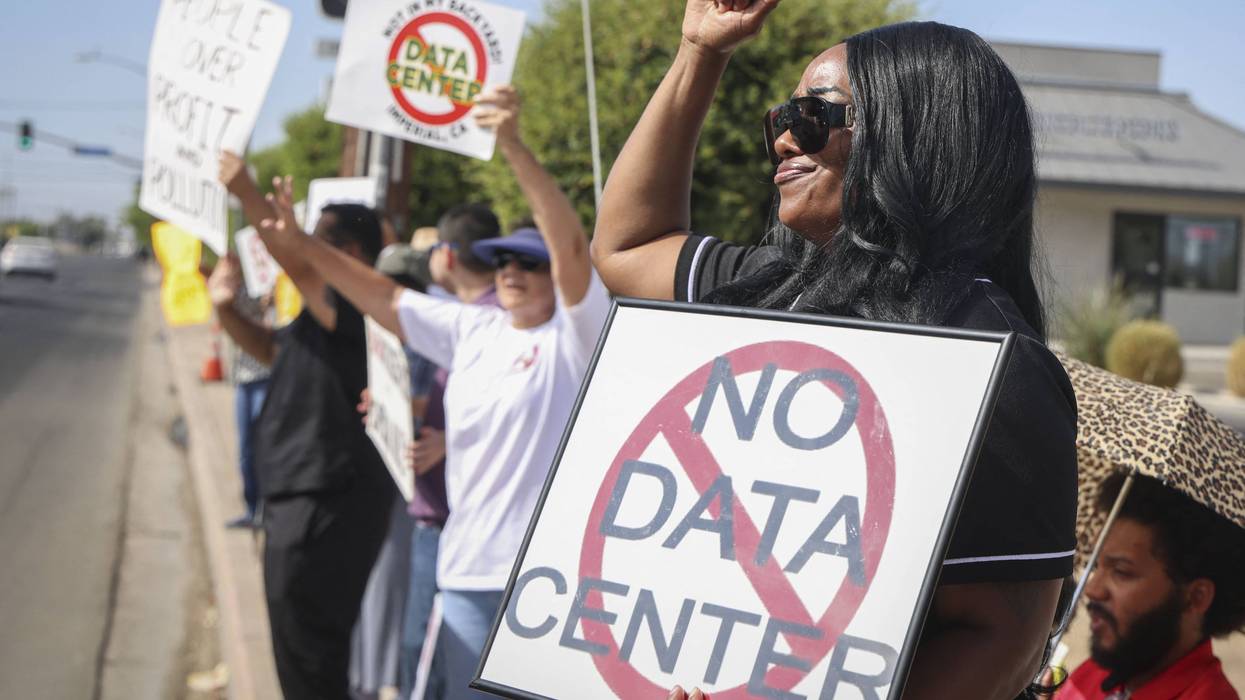
Despite billions of dollars put into trying to change individuals' opinions to fit the needs of corporations, people continue to hold onto values of health, well-being, community, mutual aid, and democracy. This is true power that can be harnessed.
This summer, over 100 community members gave public comments against Project Taurus, an AI data center proposed by the tech and real estate company, Raeden, near Garden of the Gods in Colorado Springs. Despite only 15 comments in favor of the project, the city planning commission voted 6-2 to move forward with the project.
As a youth environmental and social justice organizer who sat through hours of the hearing and spent much of my past week encouraging community members to join me, I left the hearing devastated by the commission’s decision. Building a data center at a site already facing a water crisis and next to a National Natural Landmark felt like just one more step toward a society that has lost all care and consideration for communities and nature.
But the next day, as I discussed the hearing with one of my roommates, I found myself trying to convey the energy, hope, empathy, and deep care that had filled the hearing room. I explained my admiration for the dozens of working-class community members who sat for hours in a windowless room just to give a two-minute comment or simply support the other speakers. By the end of the conversation, I realized that despite being upset about the decision, the experience left me with hope and faith in the goodness of humanity.
As America continues to throw billions into war, cut Supplemental Nutrition Assistance Program and Medicaid funding, pull out of climate commitments, and move toward projects and systems that further harm people, we can begin to believe that Americans are not concerned with their neighbors’ well-being. What the hearing taught me, however, is that decisions—like whether to move forward with data center projects—and the current state of our county do not reflect our communities’ desires.
It is critical that decisions like the Colorado Springs Planning Commission’s don’t lead us to lose hope in one another and our collective power.
The committee’s decision is a reflection of money in politics. It is a reflection of desperately needing to change who our elected officials are. Of needing to address corporate consolidation that holds this power in opposition to people’s needs and not accountable to communities. Of needing to distribute power so that real people are better represented, and of needing to better support communities so that they have the time, resources, and energy to ensure their voices are taken into account in issues that affect them and their neighbors.
We are up against a political and economic system with such strong inertia that even if communities understand it isn’t working for them, only strategic coordinated action will bring about change. The more people are overworked, underfed, and under-resourced, the harder it is for them to advocate. They have less time to attend community meetings; to speak out about the meetings themselves being scheduled during the workday; to look into local candidates' positions; to turn out to vote. And they have less money to contribute to grassroots campaigns that refuse money from Big Oil, Big Pharma, Big Agriculture, the American Israel Public Affairs Committee, and Big Tech.
Though Raeden claims to have people’s best interests in mind, it is structured to secure a profit, not to adhere to communities’ needs. A majority of Americans oppose local data center construction, and only 14% of Americans feel comfortable with a data center built nearby. This aligns with the 85% of public comments that were in opposition to Project Taurus.
Community members spoke about the project's impact on neighborhood health, the environment, wildlife, water, and energy. They explained that the center’s infrasound can’t be blocked by Raeden’s proposed 30-foot sound wall; diesel backup generators pose severe health risks by emitting high levels of toxic particles that cause respiratory issues, worsen asthma, and increase long-term cancer risks; and although Raeden emphasizes its closed-loop cooling system to save water in an environment that is already in a major drought, the treatment chemicals used pose risks to the local environment and health of our water supply while the system as a whole significantly increases energy usage, which the company itself admits will likely be powered by fossil fuels and nuclear plants.
Furthermore, community members emphasized that data centers are not built for community needs. The energy itself powers mass surveillance and military AI programs for companies like Palantir and the world’s largest prisoner tracking company, BI, both of which are headquartered in Colorado.
Raeden tells the community that it will bring jobs and money to the Springs. However, while Raeden will immediately profit from the development, the long-term economic benefits for the community are much more dubious. Experts have increasingly been raising concerns about the longevity of AI investments, or what they refer to as the “AI bubble.” A recent MIT study found that 95% of AI companies have achieved zero return on investment, despite investments of $30 to $40 billion in the technology. The end of the AI bubble is predicted to be akin to the 2008 financial crisis but with more devastating effects. Similar to 2008, when banks got a $500 billion bailout while 6 million Americans lost their homes, tech companies will likely be protected while communities will suffer the costs. Raeden, for instance, will be protected because it is a real estate company and does not have roots in the community, unlike Colorado Springs residents.
As one community member emphasized, Raeden came into Colorado Springs not for the water or natural resources the city can provide, but to take advantage of the city's human desperation. Northwest Colorado Springs is in need of jobs and local investment.
Raeden came to the Springs expecting to be welcomed by a community too tired and worn out to push back, but the company has been met with a very different reality. Despite the minimal transparency from the city and Raeden, not only are a large majority of community members against data centers, but the community has also been able to spread awareness about the project and mobilize over 100 people to show up to speak out for nature, their neighbors’ health, and the fate of future generations.
I have built my worldview around a belief that if we all come together as regular people with human values, we will have the power to stand up against even the millions of dollars corporations throw at candidates, policy, or, in this case, data centers. The hearing was a realization of this working-class movement of the people that I spend much of my time striving for.
The hard part was supposed to be getting people to come together and to show up. We did that. People spoke eloquently, with knowledge, and heartfelt appeals. And still, they were denied.
Nevertheless, this past week has shown me that people are truly good. Despite billions of dollars put into trying to change individuals' opinions to fit the needs of corporations, people continue to hold onto values of health, well-being, community, mutual aid, and democracy. This is true power that can be harnessed.
It is critical that decisions like the Colorado Springs Planning Commission’s don’t lead us to lose hope in one another and our collective power. Corporations like Raeden would love nothing more than for us to be apathetic and divided. Instead, we must stay true to our demands for humanity. Stay true to these demands as we vote for candidates who prioritize human needs over corporate interests. As we increase our trust in one another, the conversations we have with our neighbors, and our faith in our power. We will continue to show up and prove that people have not given consent for our current systems.
There are now over 300 local bans and moratoriums on data centers across the US, including Denver, Jefferson County, Boulder, Longmont, and Monument, and a majority of Americans support pausing the construction of AI data centers for at least one year.
Colorado Springs proved that communities have not and will not accept a rise in corporate trickle-down projects as a replacement for government programs. We proved that communities will continue to show up for one another and stay grounded in human values. We proved that this fight is far from easy and anything but fair, but we will persist.

Rights groups warned that giving Secretary Pete Hegseth near-total control of what is released under the Freedom of Information Act "will naturally favor politicization and avoiding embarrassment over public transparency."
Press freedom organizations are urging Congress to reject a proposal that they warn could allow the Pentagon to withhold massive amounts of unclassified information from the public.
As part of its recent budget package, the Department of Defense submitted a proposal to Congress in late June that would create a new exception to the Freedom of Information Act (FOIA), allowing the defense secretary to bar certain "controlled unclassified information" (CUI) from public disclosure if the military determines that the national security risk outweighs the public interest.
CUI is a broad category of information that is not classified but that the government considers sensitive enough to be distributed only to specific people. But under current law, the government can only refuse to release information requested through FOIA if it meets certain exemptions, such as properly classified national security material, protected personal information, privileged internal communications, or records whose release could compromise law enforcement.
The new law would change this, allowing the defense secretary to declare almost any unclassified Pentagon record as both CUI and “national security information" to prevent it from being released. This could affect access to countless documents of significant public importance—from reports on investigations into military action, to internal records about the military's rules of engagement, to audit and oversight records.
"The CUI standard is already so broad that were it to be incorporated as a FOIA exemption for the Defense Department, massive amounts of important information would be yanked from the public," wrote Adam A. Marshall, the director of the Reporters Committee for Freedom of the Press. "That would be disastrous, especially when the Defense Department is at the forefront of so many stories the public needs to know about, from the United States’ war with Iran to the targeted destruction of boats in the Caribbean and eastern Pacific."
Clayton Weimers, the executive director of Reporters Without Borders North America, argued that the proposed rule change was unnecessary.
"The Pentagon already has extensive authority to protect genuine national security secrets. What it is asking Congress for now is something entirely different: the power to hide unclassified information from the public," he said. "At a time when the Department of Defense controls nearly one trillion dollars in taxpayer funding and makes decisions that can shape war and peace, the public deserves more transparency, not more secrecy."
Under Secretary Pete Hegseth, the Pentagon has attempted to dramatically clamp down on the flow of public information. It has held far fewer press briefings than previous administrations, issued requirements that reporters pledge not to release "unauthorized" information, and booted credentialed press from Pentagon offices in favor of administration-friendly outlets and influencers.
Secrecy has grown amid President Donald Trump's war against Iran, with the Pentagon withholding information about hundreds of US military injuries from the public and altering publicly available death counts to exclude the names of four US personnel recently slain in the region.
Last week, a coalition of more than 40 press freedom, civil rights, and watchdog organizations, led by Reporters Without Borders, sent a letter to members of the House Oversight Committee, arguing that giving the defense secretary final say over what information is made public would be especially dangerous and "will naturally favor politicization and avoiding embarrassment over public transparency."
Under the Trump administration, the Pentagon has already been much less willing to comply with FOIA requests than under the Biden administration. Pentagon data show that it took more than 30% longer, on average, to respond to complex FOIA requests in 2025 than in 2024, and that it granted only 17% of FOIA requests in full.
"The Pentagon is already too secretive, and the last thing it needs is a rubber stamp to hide unclassified records under the guise of national security," said Lauren Harper, the Daniel Ellsberg chair on government secrecy at the Freedom of the Press Foundation. “We don’t need the Pentagon hiding more information from FOIA. We need it to actually respond to public records requests, we need it to stop harassing journalists for doing their job, and we need it to be transparent and accountable to the public, service members, and their families.”

“This is not a grant reform—it is a blueprint for a spoils system applied to federal science funding."
An environmental watchdog group is calling on the White House Office of Management and Budget to withdraw a proposal that it said will give President Donald Trump and his allies unchecked power to control over a trillion dollars worth of federal grants.
Monday marked the end of the public comment period for a proposal from the OMB, spearheaded by Project 2025 architect Russell Vought and issued in late May, that would require all discretionary federal grants to “demonstrably advance the president’s policy priorities.”
As Elizabeth Kolbert explained in The New Yorker:
It would replace the current guidance for signing off on government grants, which generally leaves the task to civil servants and peer-review panels.
Instead, the final say would go to political appointees. All discretionary awards from the federal government would have to be assessed by senior administration officials, who could deny them on the [grounds] that they didn’t fit the President’s agenda. Grants could also be terminated at any time for the same reason.
The rules would affect hundreds of billions of dollars in funding disbursed by agencies ranging from the National Endowment for the Arts to the Transportation Department, to pay for everything from local dance performances to massive infrastructure projects.
Public Employees for Environmental Responsibility (PEER) filed a formal comment on Monday urging the OMB to withdraw the proposal.
"The scale of what is proposed is staggering," the group said. "This rule would institutionalize corruption and cronyism in the distribution of over a trillion dollars in annual federal funds."
The comment noted the proposal's language forbidding political appointees from deferring to peer review, which the group said will lead grants to be awarded based on ideological conformity rather than scientific merit.
"This language makes clear that the rule's purpose is not to add accountability over expert review but to replace expert judgment with political judgment entirely," the comment says. "Researchers would learn quickly to propose only work likely to survive ideological screening, while federal program officers, many of whom are being stripped of civil service protections, would face pressure to recommend or approve grants to preserve their jobs. "
“This would corrupt scientific judgment at every level of the process,” it adds, noting the Trump administration’s concerted effort to strip away funding for research on health and environmental issues that conflict with his political agenda, including climate science, vaccine safety, chemical safety, and emerging infectious diseases.
Since last year, the administration has terminated or frozen nearly 8,000 research grants and has effectively slashed the budget of the National Science Foundation by refusing to disburse funds appropriated by Congress. The agency is on track to issue the fewest grants in more than half a century, according to a report last month from Grant Witness.
The proposal would also allow agency heads to keep grants from being posted publicly whenever they determine that doing so would be contrary to the "national interest," which the rule does not define.
PEER said this change "permits agencies to offer grants by invitation only among preferred recipients with no requirement to explain or justify the determination."
The group pointed to the Trump administration’s pattern of directing no-bid contracts to the president’s family, friends, and supporters.
Trump megadonor and former Department of Government Efficiency (DOGE) head Elon Musk, the comment notes, was allowed to oversee the cancellation of the contracts for numerous vendors while never touching any of the more than $19 billion his businesses held in federal contracts.
“This is not a grant reform—it is a blueprint for a spoils system applied to federal science funding,” said Tim Whitehouse, executive director of PEER.
PEER's comment is one of nearly 342,000 OMB has received about the proposal in just over a month, of which 52,000 are publicly posted. The office is hoping to finalize the proposal by October 1 and has denied requests from watchdog organizations to extend the public comment period.
If that happens, Whitehouse has said it would upend the systems of accountability and transparency for scientific funding that have been in place for decades.
“Grant money has historically been distributed through programs authorized by Congress using statutory, regulatory, formula-based, or competitive criteria rather than direct tests of political loyalty,” added Whitehouse. “Placing all scientific research funding under the unreviewable discretion of political appointees is not an administrative reform; it is a recipe for corruption on a scale not seen even in this administration.”
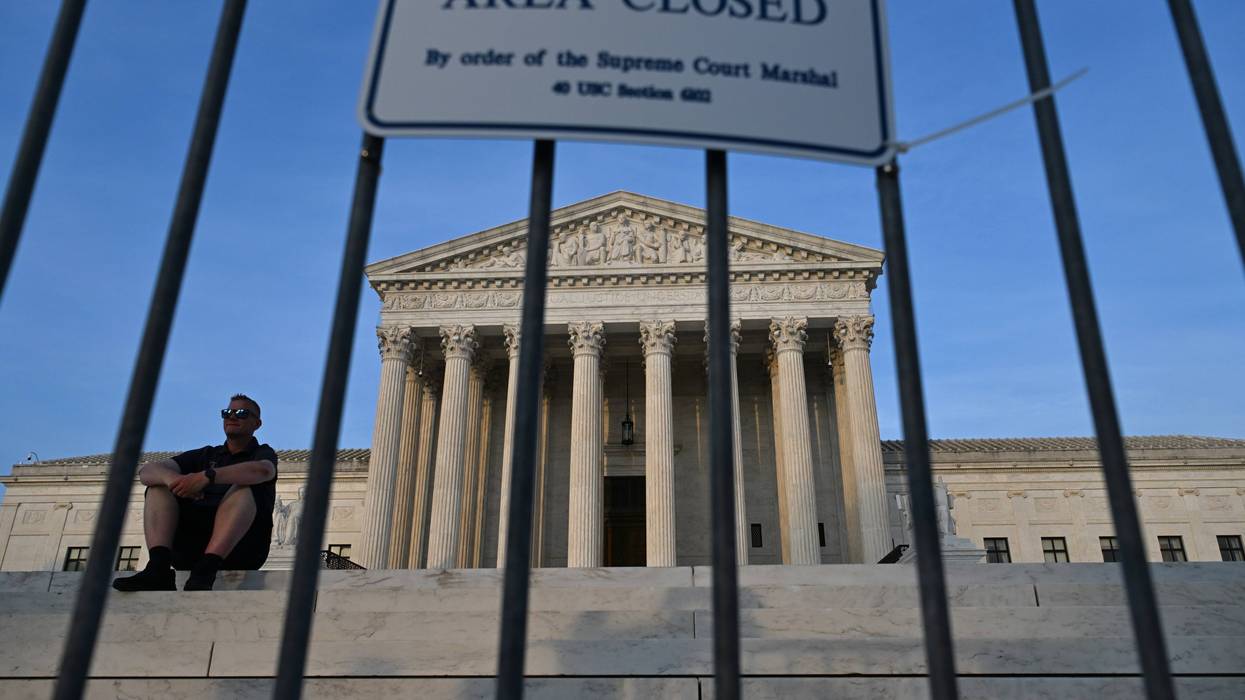
"That hugely consequential cases are decided with no transparency," said one civil rights lawyer, "only adds to the court's illegitimacy and further decreases the public's confidence."
As its conservative majority showed unprecedented deference to President Donald Trump, the US Supreme Court passed what ProPublica described as a "troubling milestone" during the term that ended last October.
For the first time in its modern history, an analysis published Wednesday found, the court decided more cases using its secretive "shadow docket" than using the regular process.
Unlike the so-called "merits docket," in which cases undergo lengthy periods of review, parties file briefs and make oral arguments for their side, and the justices issue extensive signed rulings explaining their reasoning, shadow docket decisions are expedited and offer little mechanism for accountability.
They are often unsigned, with no final vote count or explanation of the court’s decision, and are often issued within hours of legal action being taken, leaving no time for deliberation or public input.
These cases are meant to be reserved for emergency or temporary interventions. But as Trump has attempted to exert unprecedented executive authority that often brazenly pushes legal boundaries, ProPublica found that the court's use of the shadow docket has exploded.
The analysis found that during the last Supreme Court term, the court issued 63 decisions on the shadow docket, compared with just 56 on the merits docket. Analyzing more than two decades of decisions by the high court, they found that the court has never come close to issuing this many secret decisions in any previous term.
This is due largely to the Trump administration's unprecedented petitioning to have cases decided on the shadow docket after elements of the president's agenda were stymied by lower courts.
As ProPublica explained, the court "has repeatedly green-lit policies of his that lower courts have blocked—and has done so with little to no explanation," and often the decisions have been highly consequential and "have thrown lower courts’ processes into turmoil and have sometimes directly contradicted longstanding legal precedent."
On June 23, 2025, after a lower court had ruled that eight men being deported to South Sudan should have due process, the Supreme Court intervened after a request from the administration to stop that order. The men were deported. The majority didn’t issue an opinion justifying its ruling.
Three months later, the Supreme Court voted to allow immigration agents to stop people based on racial or ethnic characteristics while still-ongoing litigation against it proceeded. To justify the decision, Justice Brett Kavanaugh wrote a rare shadow docket opinion that people who were in the country legally would be “free to go after the brief encounter.” These became known as “Kavanaugh stops.” Last year, ProPublica found more than 170 citizens who had been stopped and detained by ICE agents. The more than 50 Americans held even after agents learned of their citizenship were almost all Latino.
And in May, while an election in Louisiana was already underway, the justices allowed the state to immediately redraw its electoral map, removing one of the two majority-Black voting districts. Louisiana can now use that map for the 2026 midterms as part of a nationwide redistricting battle for control of the House of Representatives—an effort touched off by Trump’s call for Republican-led states to create more safe seats for themselves.
An analysis by the legal group Court Accountability in October found that the Supreme Court sided with Trump 90% of the time in the 23 orders included in its analysis of his second administration through October 2025, nearly all of which were issued on the shadow docket.
“The patterns show a court going out of its way to enable Trump,” Stephen Vladeck, a law professor at Georgetown University and a Supreme Court analyst, told ProPublica.
Noting that the American public’s approval of the high court has fallen substantially in recent years, Leslie Proll, a civil rights lawyer and the former director of voting rights at the Leadership Conference on Civil and Human Rights, called the court’s unprecedented secrecy “utterly disgraceful.”
"That hugely consequential cases are decided with no transparency," she said, "only adds to the court's illegitimacy and further decreases the public's confidence."
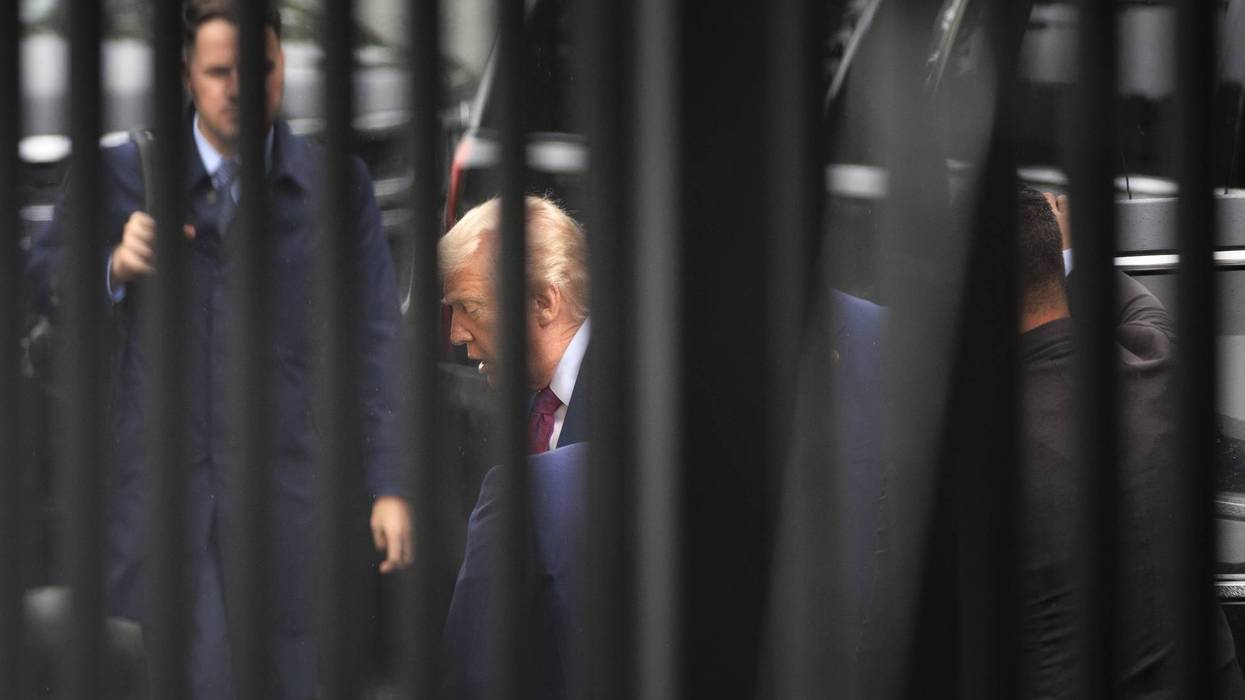
The lone intent of the new policy, said one watchdog, "would be to protect the administration from the leak of embarrassing, politically damaging, or unlawful information.”
The Trump administration—the self-styled “most transparent administration in history”—plans to require all federal government employees to sign nondisclosure agreements in what it claims is an effort to stop damaging information from leaking, but what critics warn is a cynical effort to subvert accountability and hide malfeasance.
The Washington Post reported Tuesday on a draft notice posted to the Federal Register by the US Office of Personnel Management (OPM), which is expected to be published on Wednesday.
Consistent with the Trump administration’s efforts to squash negative reporting on its endeavors, the new rule contains a sweeping order that would ban federal employees from going to the press with any information deemed “confidential.”
Notably, this is different from the typical designation of "classified" vs. "unclassified." It encompasses “non-public, confidential, or proprietary information” or “any sensitive, pre-decisional or deliberative material that is not currently publicly available and should not be disclosed under applicable law.”
Both current and former employees would need "written permission from an authorized agency official" to speak to the press about matters deemed "confidential" under the draft's terms, or they could be subject to civil and criminal penalties.
It will be up to individual agencies whether they require employees to sign the NDAs, but the document said doing so would "promote consistency across government, better protect confidential information, and better inform federal employees of their rights and obligations regarding confidential information."
Under Defense Secretary Pete Hegseth, the Pentagon has already enacted a strict NDA that “prohibits the release of non-public information without approval or through a defined process," which it enacted late last year along with random lie-detector testing aimed at finding leakers.
The draft notice reported on Tuesday suggests a similar requirement will become blanket policy across a wide swath of agencies. The notice gives an idea of what sorts of information the administration wants to shield from journalistic scrutiny.
The document cites the unauthorized leak in February 2025 of information about the Department of Homeland Security's mass deportation targets in Los Angeles and Aurora, Colorado, which led then-Secretary Kristi Noem to start subjecting employees to polygraph tests to root out leakers.
Another whistleblower in January published identifying information for about 4,500 Immigration and Customs Enforcement (ICE) and Border Patrol employees.
The draft also pointed to disclosures to the New York Times and Washington Post, giving the outlets advanced notice of the planned US raid on Venezuela to kidnap President Nicolás Maduro in January, which the outlets waited to publish until after the illegal operation was complete.
The NDA proposal is the latest attack on critical journalism by the Trump administration, part of a pattern to assert stricter control over the flow of information to the public.
The Pentagon has sought to strip credentials from outlets unless they agree to only publish approved information. Trump and Federal Communications Commission (FCC) Chair Brendan Carr have threatened the broadcast licenses of networks that give Trump negative coverage and opened investigations into them. Trump, meanwhile, has personally launched unprecedented multi-billion-dollar lawsuits against media outlets, many of which judges have thrown out of court due to lack of merit.
In a statement sent to Common Dreams on Tuesday, Lauren Harper, the Daniel Ellsberg Chair on Government Secrecy at the Freedom of the Press Foundation, called the proposed NDA requirement "not just absurd" but "unnecessary and dangerously secretive."
“This policy, from a president who has previously attempted to impose oppressive, corporate-style confidentiality and nondisclosure agreements on federal employees," Harper said, "would kneecap whistleblower protections, undermine the First Amendment, and wrongly inhibit the public’s right to know.”
OPM Director Scott Kupor defended the requirement. “In much of the private sector," he told the Post, "employees handling sensitive business or customer information are routinely required to sign confidentiality agreements, and the federal government should not be held to a lower standard.”
But critics argue that the federal government doing the same poses potential First Amendment violations. Although federal whistleblower laws protect employees’ ability to go to the press about waste, fraud, and abuse, experts told the Post that the NDA proposal could, in practice, be used as a “catchall gag order” that could lead employees to feel their jobs are in danger if they speak out.
“Trying to force the entire federal government to adopt the Trump organization’s aggressive use of NDAs won’t make anybody safer and won’t improve agency processes," Harper said. "Its sole intent would be to protect the administration from the leak of embarrassing, politically damaging, or unlawful information.”
Everett Kelley, president of the American Federation of Government Employees (AFGE), said the NDA proposal shows the Trump administration is continuing "its efforts to silence federal employees.”
“This proposed rule," said Kelley, "sweeps in an extraordinarily broad category of information, extending restrictions to the very material the public relies on to learn when an administration is causing harm. Federal employees do not surrender their First Amendment rights when they accept federal employment."
"OPM claims the form will be ‘optional’ for agencies to use and merely restates existing law," Kelley added. "We know that will not be true. OPM will pressure agencies to make the NDA mandatory and then fire employees who refuse to sign it."
He said the rule change was unnecessary because there are already "extensive policies and procedures" to prevent classified and privileged info from being leaked.
Kelley said, "This proposed rule sweeps in an extraordinarily broad category of information, extending restrictions to the very material the public relies on to learn when an administration is causing harm."
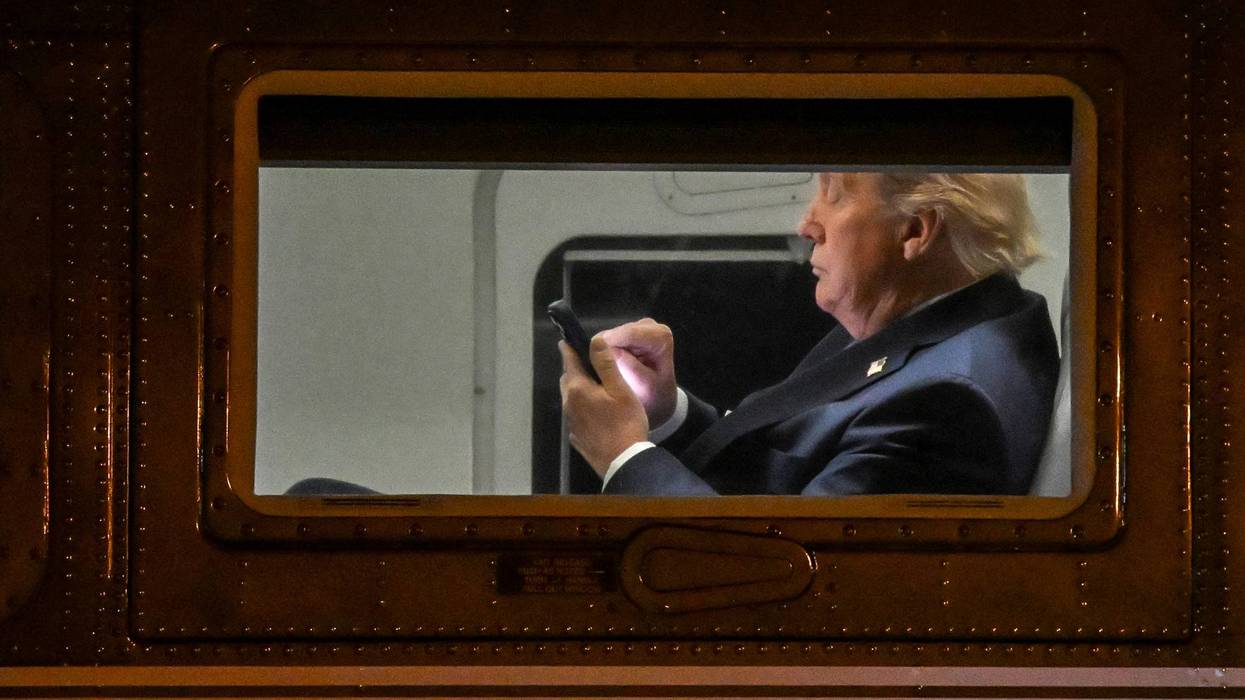
"President Trump has repeatedly made clear his contempt for laws governing presidential transparency and proper recordkeeping."
A watchdog group is raising concerns that President Donald Trump may have violated federal recordkeeping laws by using an auto-deleting message application to text world leaders.
On Tuesday, the group American Oversight sent a letter to White House Counsel David Warrington asking for information about whether the president is taking all the required steps to comply with the Presidential Records Act, which requires the preservation of all presidential records—including digital correspondence—during official duties.
The group highlighted two posts Trump made on Truth Social last Tuesday in which appeared to reveal that he was using Signal or another similar messaging app to discuss world affairs with world leaders.
The first screenshot shows a message from French President Emmanuel Macron, who discussed plans to meet with Trump about his proposal to take over Greenland and meetings with other foreign diplomats.
The second was sent from NATO Secretary General Mark Rutte, who told Trump he'd use his "media engagements" in Davos to "highlight" Trump's work in Ukraine and Gaza, and expressed an interest in "finding a way forward on Greenland."
While some European diplomats found it troubling that any intimate communication they have with Trump could be exposed to the world on a whim, American Oversight said it also raised concerns about the preservation of records.
Trump has a long history of flouting rules surrounding the proper storage of documents. The group pointed out that during his first term, the president would often rip up notes, memos, and documents after reading them and at least twice reportedly attempted to flush them down the toilet.
More recently, he was indicted for improperly stashing away classified documents at his personal residence at Mar-a-Lago after leaving the White House and showing them to people without security clearances.
The second Trump White House has already been involved in a scandal surrounding their use of deleting message apps when a journalist was accidentally invited into a private Signal chat last year, which contained the administration's plans for an imminent strike on Yemen. The messages in that chat were reportedly set to delete after one week, before later being changed to four, which would have also violated the Presidential Records Act.
“President Trump has repeatedly made clear his contempt for laws governing presidential transparency and proper recordkeeping,” said American Oversight executive director Chioma Chukwu. “The Presidential Records Act exists to ensure transparency of presidential decisions and safeguard the historical record for the American people."
"Given President Trump’s well-documented history of mishandling sensitive information and presidential records," he added, "the White House must assure the public that these communications are secure and being preserved and protected in full compliance with the law.”
The group has requested that the White House counsel disclose any other messages Trump may have sent using auto-deleting apps and ensure that any messages sent through mobile messaging programs are properly preserved.
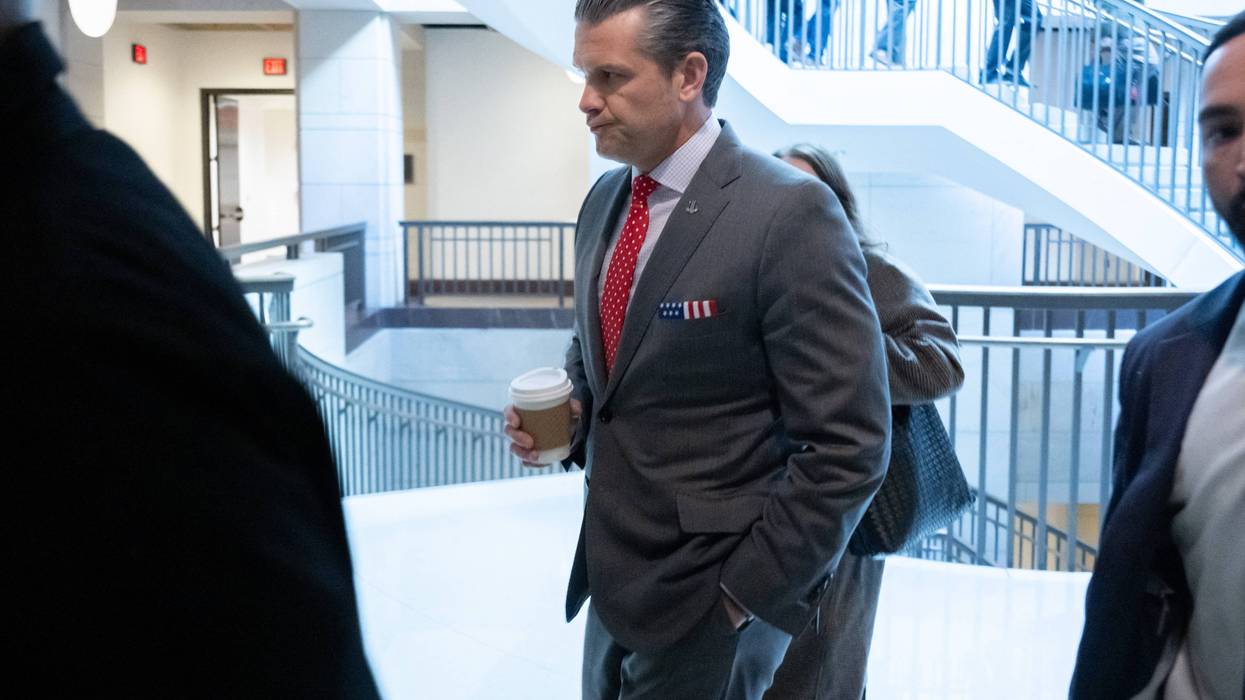
Nearly seven in 10 feel the Trump administration has not provided evidence to justify its killing of at least 114 people in the Caribbean and other international waters.
The vast majority of US voters want the Trump administration to be more transparent about its campaign of extrajudicial killings in the Caribbean and other international waters, according to a new poll out Monday.
While it has faded from the headlines over the past week due to President Donald Trump's illegal overthrow of Venezuelan President Nicolas Maduro and attempt to commandeer the nation's oil, his bombings of alleged drug-smuggling vessels in the Caribbean and elsewhere have continued into the new year.
As of January 2, the US military had disclosed 35 separate attacks to the public, with a death toll of at least 114 people in total since September. But the administration has provided scant evidence to justify the attacks.
According to an ACLU/YouGov poll released on Monday, which was conducted in late December, 83% of voters believed the administration must release its legal justifications and full, unedited videos of the lethal strikes. This includes 97% of Democrats, but also 82% of independents and 70% of Republicans.
Several media outlets reported in November that the Department of Justice’s Office of Legal Counsel (OLC) authored a still-classified legal opinion justifying the strikes and exempting those involved in directing them from future prosecution. The ACLU and other rights groups filed a Freedom of Information Act (FOIA) request last month for the document.
The poll shows that a majority of voters—87% of Democrats, 53% of independents, and 15% of Republicans—disapproved of the strikes, while nearly seven in 10 felt that the administration has not yet shown evidence to the public justifying the bombings.
Members of both parties in Congress have called for the administration to release video of the strikes, with particular scrutiny on the September 2 "double-tap" strike in which the military bombed two shipwrecked survivors of an earlier attack.
Last month, Hegseth declined a request from Congress to release unedited video footage of the incident to the public. He had previously changed his recounting of the event multiple times, initially boasting of the attack before shunting the blame onto an underling—Adm. Frank M. “Mitch” Bradley—when the second strike was made public and met with outcry.
Trump, meanwhile, has misled the public about what drugs were supposedly on the boats. He has publicly stated that the ships were carrying fentanyl, a drug that has caused hundreds of thousands of overdose deaths in the US, dubbing it a "weapon of mass destruction."
Lawmakers have said they were briefed that the ships were actually carrying cocaine, which is much less deadly, though evidence of this has also not been shown to the public.
One bombed-out ship that washed up on the shores of Colombia in late December with two mangled corpses aboard was found to have only been carrying marijuana, which is legal in more than half of all US states. Other investigations have found that some of those killed in the strikes were fishermen or others not connected to the drug trade.
While the September 2 strikes—which were reportedly given the go-ahead by Defense Secretary Pete Hegseth—have become the subject of a congressional inquiry, the ACLU says the entire bombing campaign is illegal.
"The US military may not, under any circumstances, execute civilians who are merely suspected of smuggling drugs," the group said last month. "Rather, the US government must first pursue non-lethal measures like arrest and demonstrate that lethal force is an absolute last resort to protect against a concrete, specific, and imminent threat of death or serious physical injury."
Two-thirds of respondents to the poll said that rather than carry out extrajudicial executions, they would prefer that the Coast Guard conduct its usual operations, seizing those it suspects of transporting drugs and putting them on trial.
Meanwhile, 58% said they'd support Congress holding a public hearing with officials in charge of the strikes, such as Hegseth, while just 19% said they'd oppose it.
Just over half described killing people suspected of carrying drugs as "murder," with that belief growing even stronger with respect to the double-tap strike.
"Our polling makes clear that an overwhelming number of Americans on both sides of the aisle want Congress to step up and hold the Trump administration publicly accountable for its illegal strikes on civilian boats in the Caribbean,” said Christopher Anders, director of ACLU’s democracy and technology division.
“This means open hearings with the officials responsible for these murders, as well as releasing both the legal justification and unedited videos of the strikes," he continued. "Given the life-or-death stakes of the president’s use of force, it’s imperative that this transparency and accountability comes immediately.”

"Not national security that has anything to do with the national defense or harm to the nation," said independent journalist Ken Klippenstein. "But the self-serving kind that protects the system from the people."
After its near-unanimous approval in Congress and following months of sustained public pressure, President Donald Trump signed a law on Wednesday releasing the files from the FBI's investigation into the late sex trafficker Jeffrey Epstein.
The law is called the "Epstein Files Transparency Act," but critics fear that a key provision could allow the US Department of Justice to keep critical information from coming to light.
The law requires Attorney General Pam Bondi to "make publicly available in a searchable and downloadable format all unclassified records, documents, communications, and investigative materials" related to the investigations into Epstein and his partner and coconspirator Ghislaine Maxwell within the next 30 days.
But critically, it gives Bondi expansive power to redact large amounts of information, potentially burying material that may be incriminating to the president, whose relationship with the disgraced financier has become the subject of greater speculation with each new set of documents released.
One provision allows Bondi to redact documents to strike information that "would jeopardize an active federal investigation or ongoing prosecution." Last week, Trump ordered Bondi to open investigations into Epstein's connections with several prominent Democrats: Among them are former President Bill Clinton, former Treasury Secretary Larry Summers, and Democratic donor Reid Hoffman.
Lawmakers have raised fears that these investigations were enacted to give Bondi greater leeway to scrub information from the record. On Monday, Rep. Thomas Massie (Ky.), the law's Republican cosponsor, warned that the DOJ "may be trying to use those investigations as a predicate for not releasing the files."
But another largely overlooked section may give her even more sweeping authority. The law states that information may also be redacted "if the attorney general makes a determination that covered information may not be declassified and made available in a manner that protects the national security of the United States, including methods or sources related to national security." It also allows her to redact information deemed "to be kept secret in the interest of national defense or foreign policy."
While the law requires Bondi to issue a written justification for each piece of redacted information and also clarifies that no file shall be "withheld, delayed, or redacted on the basis of embarrassment, reputational harm, or political sensitivity, including to any government official, public figure, or foreign dignitary," it does not define the criteria Bondi must use to determine whether something is in the interest of America's "national security," "national defense," or "foreign policy."
"One glaring loophole will prevent full transparency: It’s called national security," wrote independent journalist Ken Klippenstein Monday, as the House moved toward a vote on the files. "Not national security that has anything to do with the national defense or harm to the nation, but the self-serving kind that protects the system from the people by depriving them of information."
There are many cases in recent memory of the US using national security as a justification to withhold information from the public. Earlier this year, the Trump administration used its "state secrets" privilege to deny a judge's request to turn over information related to its extrajudicial deportation flights to El Salvador, arguing that it would compromise its diplomatic relations with that country. Meanwhile, past administrations have used national security to justify keeping the public in the dark about everything from the military's use of torture to the government's mass surveillance of American citizens.
While the primary interest in Epstein surrounds his alleged role in facilitating a sex trafficking ring for the political and economic elite, there are clear cases where the government could attempt to use national security as a justification to keep information hidden.
For example, recent documents have revealed the extent of his involvement with foreign intelligence and dealmaking. Drop Site News has reported extensively on Epstein's long history working as an informal fixer for former Israeli Prime Minister Ehud Barak to secure deals with several foreign nations that benefited Israel and attempted to shape global politics, including in the United States, to its interests.
Klippenstein has also raised concerns about the inclusion of the word "unclassified" in the bill, which he noted "is an official word that in theory only exists when it comes to national security matters; that is, that the release of such information could cause 'harm' to national security."
He said he asked Massie and the law's Democratic cosponsor, Ro Khanna (Calif.), for comment on why that word was included at all since the law does not relate to national security. Neither responded.
But Massie told journalist Michael Tracey back in September that a similar provision to redact info related to “national defense” was included because, "You have to put that in there if you’re going to get them to sign it."
House Speaker Mike Johnson (R-La.), who fought against the release of the files until the bitter end but ultimately voted for the bill along with all but one member of the House, invoked what he called "national security concerns" in a last-ditch effort to stop the discharge petition that brought the Epstein bill to the House floor.
It echoed what Bondi herself said back in March when asked on Fox News why any information besides victims' names would need to be stricken from the record: "Of course, national security."
"If large sections of the files remain redacted or withheld, the public may face a truncated version of 'transparency,' one that protects many of the powerful rather than exposes them," wrote independent journalist Brian Allen. "This is not just a story about Epstein. It is a stress test of our system of accountability."
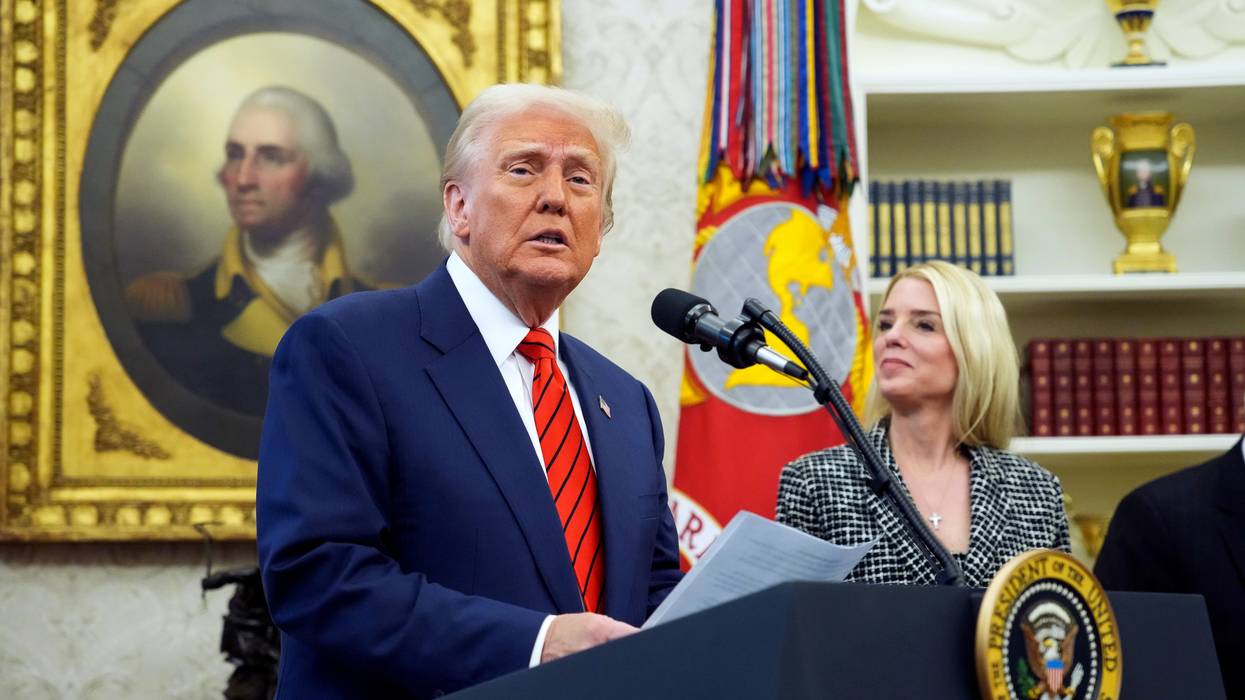
The next time you hear that Trump has somehow reversed his earlier resistance to releasing the Epstein files, remember that he hasn’t. He could have ordered their disclosure long ago; he never needed a congressional resolution compelling it.
Jeffrey Epstein may have committed suicide in 2019, but he remains an albatross around President Donald Trump’s neck. During the 2024 campaign, Trump promised to release all of the Justice Department’s Epstein files. As president, he could honor that pledge with the stroke of a social media post. Instead, he has done everything in his power to prevent such disclosure.
Some pundits claim that Trump has finally reversed his earlier resistance to releasing the files. He hasn’t. Rather, he has deployed yet another strategy to achieve his true objective—continued secrecy. And he’s relying on his faithful sycophant, Attorney General Pam Bondi, to execute it.
Back in July, Bondi’s Justice Department, together with FBI Director Kash Patel, declared that after an exhaustive review of the entire file, the investigation into Epstein’s sex trafficking of minors was over: “We did not uncover evidence that could predicate an investigation against uncharged third parties.”
The department would release no additional materials from the Epstein files: “No further disclosure would be appropriate or warranted.”
As Trump’s MAGA base erupted over his administration’s refusal to release the files, he lashed out at fellow Republicans. He called supporters clamoring for greater transparency “stupid,” “foolish,” and victims of a “Democrat hoax.”
It didn’t work.
MAGA’s anger grew. So Trump directed Bondi to ask that the courts release the grand jury transcripts in the cases against Epstein and his coconspirator, Ghislane Maxwell.
It was a ruse. Trump and his lawyers knew that the courts were not likely to release the material, which was a tiny fraction of the DOJ file anyway. Sure enough, they didn’t. And several judges wrote blistering opinions exposing the farce and blasting Bondi for pursuing the effort.
Bondi’s next ploy on Trump’s behalf was the production of documents in response to a subpoena from the House Oversight Committee. It turned out that only 3% of the 20,000 documents was new. And courts had confirmed that there were 100,000 documents in the Epstein files. Where were the rest?
A Democrat won the Arizona special election to the US House of Representatives. As a result, a discharge petition on the resolution demanding disclosure of the Epstein files would now have the crucial 218th signature required to force a vote on the House floor.
But Trump’s lackey in the House, Speaker Mike Johnson (R-La.), refused to swear in the newly-elected member. He claimed that because the House was in recess due to the government shutdown, he could not admit her. It was a subterfuge that gave Trump time to twist arms in an effort to change votes.
Three Republicans had sided with the Democrats to reach the 218-vote threshold required to move the Epstein resolution forward in the House. Bondi and Patel met with one of them, Rep. Laura Boebert (R-Colo.), in the White House Situation Room. A second target was Nancy Mace (R-S.C.). Trump attacked the third GOP defector, Rep. Marjorie Taylor Greene (R-Ga.), publicly: He withdrew his endorsement and called her “wacky,” “a disgrace,” “a traitor,” and “a nuisance.”
None of the Republicans budged. Trump was going to lose the House vote.
Faced with the reality that he couldn’t stop the House from passing the resolution requiring release of the Epstein files, Trump said that he would sign the resolution after it passed the Senate.
That’s a ruse too. And once again, he turned to Bondi for another escape hatch. In a social media post, Trump declared:
I will be asking A.G. Pam Bondi, and the Department of Justice, together with our great patriots at the FBI, to investigate Jeffrey Epstein’s involvement and relationship with Bill Clinton, Larry Summers, Reid Hoffman, J.P. Morgan, Chase, and many other people and institutions, to determine what was going on with them, and him.
Only 217 minutes later, Bondi responded:
Thank you, Mr. President. SDNY U.S. Attorney Jay Clayton is one of the most capable and trusted prosecutors in the country, and I’ve asked him to take the lead. As with all matters, the Department will pursue this with urgency and integrity to deliver answers to the American people.
Now the punchline: The Justice Department will not release materials relating to an active investigation. The investigations that Trump has ordered could well suffice. Jay Clayton, who has no criminal law experience but enjoyed a stellar pre-Trump reputation as a corporate partner in the elite firm, Sullivan & Cromwell, now faces a crucial test of character.
The stated basis for the DOJ rule is that disclosure could compromise the investigative process. Never mind that in July, Bondi said that the department’s thorough investigation of the entire file “did not uncover evidence that could predicate an investigation against uncharged third parties.”
And the department can release—or not release—whatever it chooses. There is no meaningful enforcement mechanism. If DOJ withholds Epstein material related to Trump, the public will never know, unless there’s a whistleblower somewhere. But Trump, Bondi, and Patel have purged the top ranks of the Justice Department of anyone who is not a Trump loyalist.
The next time you hear that Trump has somehow reversed his earlier resistance to releasing the Epstein files, remember that he hasn’t. He could have ordered their disclosure long ago; he never needed a congressional resolution compelling it.
But Pam Bondi has reversed her position that the files contain nothing that warrants further investigation of anyone associated with Epstein.
Leading America’s Department of Justice is someone whom no one can trust—except Donald Trump.