SUBSCRIBE TO OUR FREE NEWSLETTER
Daily news & progressive opinion—funded by the people, not the corporations—delivered straight to your inbox.
5
#000000
#FFFFFF
To donate by check, phone, or other method, see our More Ways to Give page.
Daily news & progressive opinion—funded by the people, not the corporations—delivered straight to your inbox.
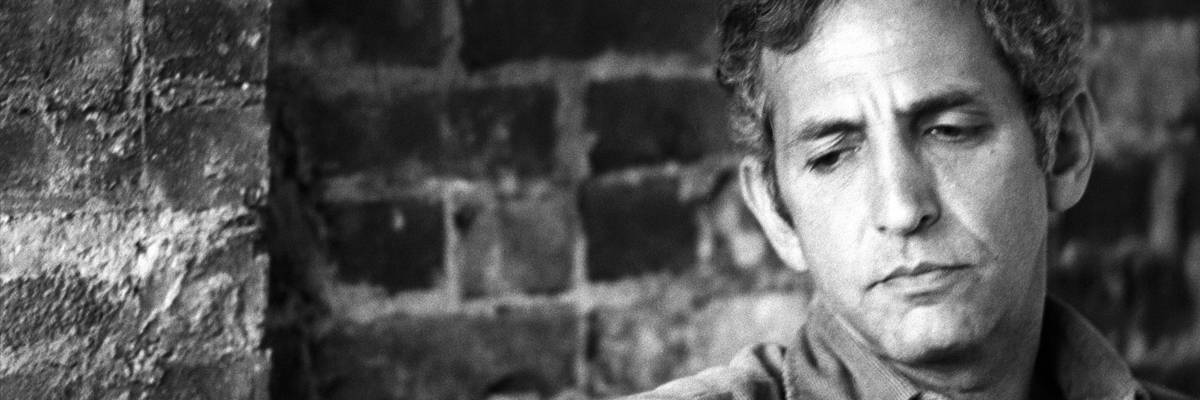
“There is a time when silence is a lie, when silence is complicity, and when silence betrays our troops, our country, and ourselves. We owe it to our troops, as well as to other potential victims of this war, to speak the truth."
When Daniel Ellsberg died in 2023, the world lost a unique voice of sanity. Five decades earlier, as a “national security” insider, he had released the top-secret Pentagon Papers to expose the official lies behind the ongoing Vietnam War. From then on, he never stopped writing, speaking and protesting for peace, while explaining how the madness of nuclear weapons could destroy us all.
Now, Ellsberg’s voice is back via a compelling new book. “Truth and Consequence,” being published this week, provides readers with his innermost thoughts, scrawled and typed over a 50-year period. The result is access to intimate candor and visionary wisdom from a truly great whistleblower.
“My father is dead now,” Michael Ellsberg writes in the book’s introduction, but “I for one care a great deal that he consented to allow us to compile this eclectic corpus of his important thoughts and musings.” Michael worked with his father’s longtime assistant Jan R. Thomas to sift through and curate the huge quantity of private writing.
The book’s subtitle—offering reflections on “catastrophe, civil resistance, and hope”—could hardly be more timely.
Now, the barbaric war on Iran is enabled by remaining silent and just following orders.
At the center of “Truth and Consequence” are the tensions between conscience and deference to authority.
“Don’t delegate conscience,” Daniel Ellsberg wrote.
“Most people conform and accept,” he noted. “A minority protest, withdraw. A tiny minority resist, take risks.”
“The temptation is strong to obey powerful men passively and unquestioningly,” Ellsberg observed in 1971, the year he turned himself in for giving the Pentagon Papers to the press and faced the prospect of spending the rest of his life in prison.
He instantly became a pariah among colleagues who’d been his friends at the RAND Corporation, a think tank serving the US war machine. He’d been working there as a strategic analyst before and after a stint at the Defense Department.
“After I released the papers,” he vividly remembered, “some people were afraid to write to me . . . to shake hands with me . . . to receive a phone call from me.” Three years later, his takeaway was: “Accept the risks of freedom and commitment, instead of the risks of obedience and conformity.”
Ellsberg came to see grim downsides of society’s upper crust. He had graduated from Harvard and went on to get his PhD there. But in 1976 he wrote: “The function of an education at an elite university is to learn inattention and passivity, to learn to disconnect your daily work from the moral values of your family upbringing—sharing, love, trust, mutual dependence—and be part of maintaining a system of inequality, privilege, unnecessary suffering, war, and risk of extinction.”
The next year he wrote: “I have fallen out of love with the State and its Establishment, and I have regained a hopeful affection in the democratic ideal, process, and people who are untouched by power—those outside the base of the existing pyramid of obstruction, power, and privilege.”
And: “Most human-caused destruction, suffering, death, and enslavement (i.e., ‘evil’) is performed by men, at the direction of men. These are typically ‘normal,’ competent, personally agreeable and compassionate men who perform their acts in obedience to lawful orders—or, less often, in obedience to unlawful orders.”
1982: “Massacre is made doable by a chain of command that continually invokes habit, obedience, and career, as well as by leaders’ geographical and bureaucratic distance from the killing.”
Ellsberg had extensive firsthand experience in helping to fine-tune preparations for inflicting radioactive Armageddon, especially during the Kennedy presidency. Later, it was a role that haunted him.
“In this era of the potentially imminent extinction of most of life on Earth, there is now a moral dimension to every aspect of how one spends one’s life,” he wrote in 1977. “The foundation of all morality is that we must now live with awareness of the mortality of our species and the vulnerability of the Earth and all life.”
1985: “The future is not some place we are going to. The future is what we are creating every day. If we continue to prepare and plan for thermonuclear war, that is what we are going to get.”
By the time Ellsberg suddenly found himself vilified and beloved for releasing the Pentagon Papers in 1971, he was a devotee of civil disobedience. “Use of a radical, novel, powerful, and possibly illegal tactic of nonviolence,” he wrote that year, “is a form of useful work that is perfectly suited to illustrate the evil being combated.”
And he added: “I have never before shrunk from violence—from imagining it, planning it, preparing for it. I have wanted, and I have gained, the respect of violent men. Now I want the respect of gentle women, gentle men, and children.”
1984: “Nonviolent resistance has a special power to raise the question ‘What can I do to change this situation?’ I have felt that power in my own life.”
1985: “One way of calling attention to a danger or an illegal practice is to take an action of obstruction, or symbolic obstruction, that will lead to your being in court. Once there, in the context of your defense you can raise issues of illegality, criminality, constitutionality, and danger.”
1986: “Nonviolent civil disobedience does not eliminate moral dilemmas, costs, consequences, and lesser evils. However, it does inspire a search for new ways of behaving, seeing, feeling, and being.”
1990: “Ask yourself, ‘Where is the environment where I can be showing moral courage now? My work? My family? My community?’ Find the strength and the moral courage to do what is right, without knowing what the effects may be.”
Ellsberg’s activism took him to jail many more times after he summed up his protest activities this way in 2006: “I have been arrested in non-violent civil disobedience actions close to 70 times, probably 50 focused on nuclear weapons: e.g. at the Rocky Flats Nuclear Weapons Production facility, the Nevada Test Site, Livermore Nuclear Weapons Design Facility, and the vicinity of ground zero at both the Nevada Test Site and the Vandenberg Missile Test Site. Other arrests have been for protests against U.S. interventions.”
Thirty-five years ago, at the time of the Gulf War, Daniel Ellsberg wrote in his journal: “There is a time when silence is a lie, when silence is complicity, and when silence betrays our troops, our country, and ourselves. We owe it to our troops, as well as to other potential victims of this war, to speak the truth about ourselves: what we believe, what we reject, and what we want.”
Dear Common Dreams reader, It’s been nearly 30 years since I co-founded Common Dreams with my late wife, Lina Newhouser. We had the radical notion that journalism should serve the public good, not corporate profits. It was clear to us from the outset what it would take to build such a project. No paid advertisements. No corporate sponsors. No millionaire publisher telling us what to think or do. Many people said we wouldn't last a year, but we proved those doubters wrong. Together with a tremendous team of journalists and dedicated staff, we built an independent media outlet free from the constraints of profits and corporate control. Our mission has always been simple: To inform. To inspire. To ignite change for the common good. Building Common Dreams was not easy. Our survival was never guaranteed. When you take on the most powerful forces—Wall Street greed, fossil fuel industry destruction, Big Tech lobbyists, and uber-rich oligarchs who have spent billions upon billions rigging the economy and democracy in their favor—the only bulwark you have is supporters who believe in your work. But here’s the urgent message from me today. It's never been this bad out there. And it's never been this hard to keep us going. At the very moment Common Dreams is most needed, the threats we face are intensifying. We need your support now more than ever. We don't accept corporate advertising and never will. We don't have a paywall because we don't think people should be blocked from critical news based on their ability to pay. Everything we do is funded by the donations of readers like you. When everyone does the little they can afford, we are strong. But if that support retreats or dries up, so do we. Will you donate now to make sure Common Dreams not only survives but thrives? —Craig Brown, Co-founder |
Norman Solomon is the national director of RootsAction.org and executive director of the Institute for Public Accuracy. The paperback edition of his latest book, War Made Invisible: How America Hides the Human Toll of Its Military Machine, includes an afterword about the Gaza war.
When Daniel Ellsberg died in 2023, the world lost a unique voice of sanity. Five decades earlier, as a “national security” insider, he had released the top-secret Pentagon Papers to expose the official lies behind the ongoing Vietnam War. From then on, he never stopped writing, speaking and protesting for peace, while explaining how the madness of nuclear weapons could destroy us all.
Now, Ellsberg’s voice is back via a compelling new book. “Truth and Consequence,” being published this week, provides readers with his innermost thoughts, scrawled and typed over a 50-year period. The result is access to intimate candor and visionary wisdom from a truly great whistleblower.
“My father is dead now,” Michael Ellsberg writes in the book’s introduction, but “I for one care a great deal that he consented to allow us to compile this eclectic corpus of his important thoughts and musings.” Michael worked with his father’s longtime assistant Jan R. Thomas to sift through and curate the huge quantity of private writing.
The book’s subtitle—offering reflections on “catastrophe, civil resistance, and hope”—could hardly be more timely.
Now, the barbaric war on Iran is enabled by remaining silent and just following orders.
At the center of “Truth and Consequence” are the tensions between conscience and deference to authority.
“Don’t delegate conscience,” Daniel Ellsberg wrote.
“Most people conform and accept,” he noted. “A minority protest, withdraw. A tiny minority resist, take risks.”
“The temptation is strong to obey powerful men passively and unquestioningly,” Ellsberg observed in 1971, the year he turned himself in for giving the Pentagon Papers to the press and faced the prospect of spending the rest of his life in prison.
He instantly became a pariah among colleagues who’d been his friends at the RAND Corporation, a think tank serving the US war machine. He’d been working there as a strategic analyst before and after a stint at the Defense Department.
“After I released the papers,” he vividly remembered, “some people were afraid to write to me . . . to shake hands with me . . . to receive a phone call from me.” Three years later, his takeaway was: “Accept the risks of freedom and commitment, instead of the risks of obedience and conformity.”
Ellsberg came to see grim downsides of society’s upper crust. He had graduated from Harvard and went on to get his PhD there. But in 1976 he wrote: “The function of an education at an elite university is to learn inattention and passivity, to learn to disconnect your daily work from the moral values of your family upbringing—sharing, love, trust, mutual dependence—and be part of maintaining a system of inequality, privilege, unnecessary suffering, war, and risk of extinction.”
The next year he wrote: “I have fallen out of love with the State and its Establishment, and I have regained a hopeful affection in the democratic ideal, process, and people who are untouched by power—those outside the base of the existing pyramid of obstruction, power, and privilege.”
And: “Most human-caused destruction, suffering, death, and enslavement (i.e., ‘evil’) is performed by men, at the direction of men. These are typically ‘normal,’ competent, personally agreeable and compassionate men who perform their acts in obedience to lawful orders—or, less often, in obedience to unlawful orders.”
1982: “Massacre is made doable by a chain of command that continually invokes habit, obedience, and career, as well as by leaders’ geographical and bureaucratic distance from the killing.”
Ellsberg had extensive firsthand experience in helping to fine-tune preparations for inflicting radioactive Armageddon, especially during the Kennedy presidency. Later, it was a role that haunted him.
“In this era of the potentially imminent extinction of most of life on Earth, there is now a moral dimension to every aspect of how one spends one’s life,” he wrote in 1977. “The foundation of all morality is that we must now live with awareness of the mortality of our species and the vulnerability of the Earth and all life.”
1985: “The future is not some place we are going to. The future is what we are creating every day. If we continue to prepare and plan for thermonuclear war, that is what we are going to get.”
By the time Ellsberg suddenly found himself vilified and beloved for releasing the Pentagon Papers in 1971, he was a devotee of civil disobedience. “Use of a radical, novel, powerful, and possibly illegal tactic of nonviolence,” he wrote that year, “is a form of useful work that is perfectly suited to illustrate the evil being combated.”
And he added: “I have never before shrunk from violence—from imagining it, planning it, preparing for it. I have wanted, and I have gained, the respect of violent men. Now I want the respect of gentle women, gentle men, and children.”
1984: “Nonviolent resistance has a special power to raise the question ‘What can I do to change this situation?’ I have felt that power in my own life.”
1985: “One way of calling attention to a danger or an illegal practice is to take an action of obstruction, or symbolic obstruction, that will lead to your being in court. Once there, in the context of your defense you can raise issues of illegality, criminality, constitutionality, and danger.”
1986: “Nonviolent civil disobedience does not eliminate moral dilemmas, costs, consequences, and lesser evils. However, it does inspire a search for new ways of behaving, seeing, feeling, and being.”
1990: “Ask yourself, ‘Where is the environment where I can be showing moral courage now? My work? My family? My community?’ Find the strength and the moral courage to do what is right, without knowing what the effects may be.”
Ellsberg’s activism took him to jail many more times after he summed up his protest activities this way in 2006: “I have been arrested in non-violent civil disobedience actions close to 70 times, probably 50 focused on nuclear weapons: e.g. at the Rocky Flats Nuclear Weapons Production facility, the Nevada Test Site, Livermore Nuclear Weapons Design Facility, and the vicinity of ground zero at both the Nevada Test Site and the Vandenberg Missile Test Site. Other arrests have been for protests against U.S. interventions.”
Thirty-five years ago, at the time of the Gulf War, Daniel Ellsberg wrote in his journal: “There is a time when silence is a lie, when silence is complicity, and when silence betrays our troops, our country, and ourselves. We owe it to our troops, as well as to other potential victims of this war, to speak the truth about ourselves: what we believe, what we reject, and what we want.”
Norman Solomon is the national director of RootsAction.org and executive director of the Institute for Public Accuracy. The paperback edition of his latest book, War Made Invisible: How America Hides the Human Toll of Its Military Machine, includes an afterword about the Gaza war.
When Daniel Ellsberg died in 2023, the world lost a unique voice of sanity. Five decades earlier, as a “national security” insider, he had released the top-secret Pentagon Papers to expose the official lies behind the ongoing Vietnam War. From then on, he never stopped writing, speaking and protesting for peace, while explaining how the madness of nuclear weapons could destroy us all.
Now, Ellsberg’s voice is back via a compelling new book. “Truth and Consequence,” being published this week, provides readers with his innermost thoughts, scrawled and typed over a 50-year period. The result is access to intimate candor and visionary wisdom from a truly great whistleblower.
“My father is dead now,” Michael Ellsberg writes in the book’s introduction, but “I for one care a great deal that he consented to allow us to compile this eclectic corpus of his important thoughts and musings.” Michael worked with his father’s longtime assistant Jan R. Thomas to sift through and curate the huge quantity of private writing.
The book’s subtitle—offering reflections on “catastrophe, civil resistance, and hope”—could hardly be more timely.
Now, the barbaric war on Iran is enabled by remaining silent and just following orders.
At the center of “Truth and Consequence” are the tensions between conscience and deference to authority.
“Don’t delegate conscience,” Daniel Ellsberg wrote.
“Most people conform and accept,” he noted. “A minority protest, withdraw. A tiny minority resist, take risks.”
“The temptation is strong to obey powerful men passively and unquestioningly,” Ellsberg observed in 1971, the year he turned himself in for giving the Pentagon Papers to the press and faced the prospect of spending the rest of his life in prison.
He instantly became a pariah among colleagues who’d been his friends at the RAND Corporation, a think tank serving the US war machine. He’d been working there as a strategic analyst before and after a stint at the Defense Department.
“After I released the papers,” he vividly remembered, “some people were afraid to write to me . . . to shake hands with me . . . to receive a phone call from me.” Three years later, his takeaway was: “Accept the risks of freedom and commitment, instead of the risks of obedience and conformity.”
Ellsberg came to see grim downsides of society’s upper crust. He had graduated from Harvard and went on to get his PhD there. But in 1976 he wrote: “The function of an education at an elite university is to learn inattention and passivity, to learn to disconnect your daily work from the moral values of your family upbringing—sharing, love, trust, mutual dependence—and be part of maintaining a system of inequality, privilege, unnecessary suffering, war, and risk of extinction.”
The next year he wrote: “I have fallen out of love with the State and its Establishment, and I have regained a hopeful affection in the democratic ideal, process, and people who are untouched by power—those outside the base of the existing pyramid of obstruction, power, and privilege.”
And: “Most human-caused destruction, suffering, death, and enslavement (i.e., ‘evil’) is performed by men, at the direction of men. These are typically ‘normal,’ competent, personally agreeable and compassionate men who perform their acts in obedience to lawful orders—or, less often, in obedience to unlawful orders.”
1982: “Massacre is made doable by a chain of command that continually invokes habit, obedience, and career, as well as by leaders’ geographical and bureaucratic distance from the killing.”
Ellsberg had extensive firsthand experience in helping to fine-tune preparations for inflicting radioactive Armageddon, especially during the Kennedy presidency. Later, it was a role that haunted him.
“In this era of the potentially imminent extinction of most of life on Earth, there is now a moral dimension to every aspect of how one spends one’s life,” he wrote in 1977. “The foundation of all morality is that we must now live with awareness of the mortality of our species and the vulnerability of the Earth and all life.”
1985: “The future is not some place we are going to. The future is what we are creating every day. If we continue to prepare and plan for thermonuclear war, that is what we are going to get.”
By the time Ellsberg suddenly found himself vilified and beloved for releasing the Pentagon Papers in 1971, he was a devotee of civil disobedience. “Use of a radical, novel, powerful, and possibly illegal tactic of nonviolence,” he wrote that year, “is a form of useful work that is perfectly suited to illustrate the evil being combated.”
And he added: “I have never before shrunk from violence—from imagining it, planning it, preparing for it. I have wanted, and I have gained, the respect of violent men. Now I want the respect of gentle women, gentle men, and children.”
1984: “Nonviolent resistance has a special power to raise the question ‘What can I do to change this situation?’ I have felt that power in my own life.”
1985: “One way of calling attention to a danger or an illegal practice is to take an action of obstruction, or symbolic obstruction, that will lead to your being in court. Once there, in the context of your defense you can raise issues of illegality, criminality, constitutionality, and danger.”
1986: “Nonviolent civil disobedience does not eliminate moral dilemmas, costs, consequences, and lesser evils. However, it does inspire a search for new ways of behaving, seeing, feeling, and being.”
1990: “Ask yourself, ‘Where is the environment where I can be showing moral courage now? My work? My family? My community?’ Find the strength and the moral courage to do what is right, without knowing what the effects may be.”
Ellsberg’s activism took him to jail many more times after he summed up his protest activities this way in 2006: “I have been arrested in non-violent civil disobedience actions close to 70 times, probably 50 focused on nuclear weapons: e.g. at the Rocky Flats Nuclear Weapons Production facility, the Nevada Test Site, Livermore Nuclear Weapons Design Facility, and the vicinity of ground zero at both the Nevada Test Site and the Vandenberg Missile Test Site. Other arrests have been for protests against U.S. interventions.”
Thirty-five years ago, at the time of the Gulf War, Daniel Ellsberg wrote in his journal: “There is a time when silence is a lie, when silence is complicity, and when silence betrays our troops, our country, and ourselves. We owe it to our troops, as well as to other potential victims of this war, to speak the truth about ourselves: what we believe, what we reject, and what we want.”