SUBSCRIBE TO OUR FREE NEWSLETTER
Daily news & progressive opinion—funded by the people, not the corporations—delivered straight to your inbox.
5
#000000
#FFFFFF
To donate by check, phone, or other method, see our More Ways to Give page.
Daily news & progressive opinion—funded by the people, not the corporations—delivered straight to your inbox.
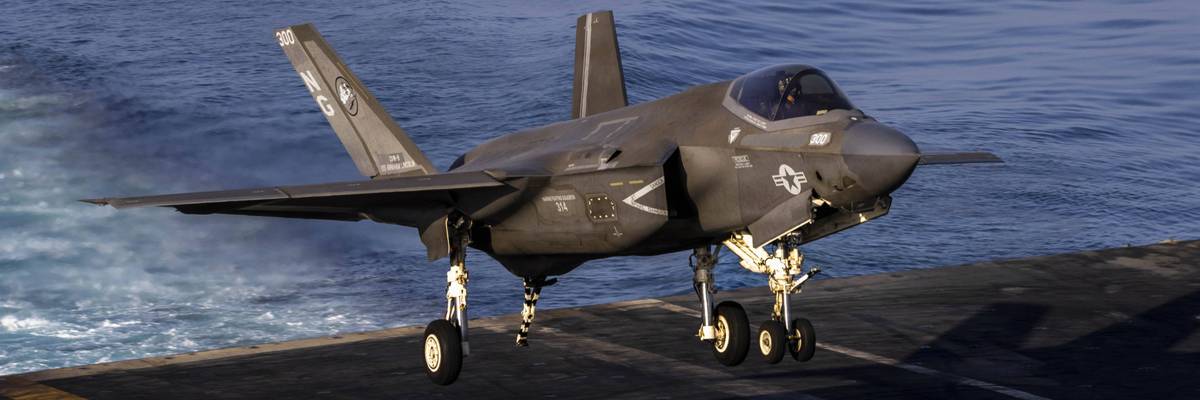
In this US Navy released handout, the Nimitz-class aircraft carrier USS Abraham Lincoln (CVN 72) conducts flight operations in support of Operation Epic Fury on March 1, 2026 at sea.
The parallels between Vietnam and the Iran conflict aren’t just echoes—they’re a playbook. And every institution meant to stop it from repeating has failed.
The Army got 20 years of my father’s life including two tours in Vietnam. In return, it gave him nightmares he never named and cancers connected to his service. He wouldn’t talk about what happened over there—not even when I asked.
He came home and spent decades fighting a war nobody could see. The PTSD was severe and completely untreated. In those years, nobody used the term. They just called men like my father “difficult” or “distant.” My mother raised five daughters alongside him, absorbing the weight of his trauma so we all carried pieces of it with us.
He finally found some peace later in life. Then a prostate cancer diagnosis—a disease appearing on the US Department of Veteran Affair’s official list of conditions presumed to be caused by Agent Orange. He won the fight. Then leukemia reared its ugly head, and, at 66, the war finally finished what it started decades earlier.
My mother and my four sisters endured his suffering as our own for his entire life while the country sending him to war simply moved on.
The question before this country is whether it is willing to do this again—to commit another generation to a war with no defined objectives, no exit strategy, and no congressional authorization.
I have spent 25 years as an educator, teaching young people to recognize patterns and think critically about the world around them. I am watching a pattern unfold right now, and I am compelled to speak about it.
On February 28, the United States and Israel launched a massive military campaign against Iran—Operation Epic Fury. In six days, the conflict has killed at least 1,230 people in Iran—including over 150 schoolgirls killed in a single strike on an elementary school—and six American service members. The defense Secretary declared “America is winning” and said the operation was in its early days, promising more to come.
The scale is staggering. Iran has launched more than 500 ballistic missiles and 2,000 drones in retaliation. Israeli and American strikes have hit residential neighborhoods, hospitals, and a UNESCO World Heritage site in Tehran. The World Health Organization has documented 13 attacks on Iranian health infrastructure. Iran’s internet has been blacked out for over 100 hours, cutting 88 million people off from the outside world.
And the conflict is metastasizing daily. A US submarine sank an Iranian warship off Sri Lanka—the first torpedo fired at an enemy vessel since World War II. NATO forces shot down an Iranian missile heading toward Turkey—the first time in this conflict a missile has threatened a NATO member. Drones struck Azerbaijan. Qatar is evacuating residents near the US Embassy. An Iranian drone strike shut down Qatar’s liquefied natural gas exports, triggering a potential energy crisis from India to Italy. The Strait of Hormuz is effectively closed.
The same week, American forces began combat operations in Ecuador—the latest step in a hemisphere-wide military expansion including the capture of Venezuela’s president and strikes on alleged drug boats killing over 150 people.
None of it was authorized by Congress.
The parallels to Vietnam are not abstract. They are specific and structural.
Vietnam began with the Gulf of Tonkin incident—an alleged attack later investigation revealed never happened, built on intelligence deliberately distorted. The justification for the Iran campaign has followed a strikingly similar pattern. The administration pointed to nuclear weapons and ballistic missile threats, but US intelligence assessments contradicted those claims, projecting Iran could not develop such capabilities before 2035. The United Nation’s nuclear watchdog confirmed Iran was not days or weeks from having atomic weapons. Within days, the official rationale cycled through nuclear concerns, protest crackdowns, “imminent threats,” and finally open regime change.
Vietnam escalated through incremental steps, each framed as a necessary response to the last. What began with 900 military advisers in 1960 had swelled to more than 500,000 ground troops by 1968. The Iran trajectory mirrors this arc—economic sanctions gave way to Houthi strikes, then a targeted air campaign in 2025, and now a war spanning multiple continents and drawing in NATO for the first time. Senior officials have left the door open to ground forces.
Vietnam had the Gulf of Tonkin Resolution—passed with only two dissenting votes—handing the president unchecked authority. Iran has something arguably worse: no authorization at all. The War Powers Resolution, the very law Congress created in 1973 because of Vietnam, was voted down in the Senate on March 4 by a margin of 47 to 53. The eighth time Congress has refused to assert its constitutional war authority since June. The tool exists. The will to use it does not.
And perhaps the most damning parallel: Just 72 hours before the strikes began, Iran’s top diplomat declared a deal to avert war was within grasp. Oman’s foreign minister confirmed Iran had agreed to never stockpile enriched uranium and accept full international verification. Talks were still happening in Geneva when the first missiles hit. Diplomacy didn’t fail. It was abandoned.
There is one more parallel Americans must reckon with. Iran is not a country poised to collapse under bombardment and accept a government designed in Washington. It is a nation of 88 million people with a civilization stretching back millennia. It survived the Mongol Empire, the British Empire, a US-backed coup in 1953, and an eight-year war with Iraq in which the world armed its enemy. Modern history does not contain a single instance of Western military force successfully transforming a Middle Eastern nation into a stable democracy. Iraq took 20 years and failed. Afghanistan took 20 years and failed. Libya collapsed into chaos. What reason is there to believe Iran will be different?
My father was sent to fight a war lasting two decades, killing 58,000 Americans and over 2 million Vietnamese, achieving nothing it promised. The dying didn’t stop when the war ended—veterans kept falling for decades to Agent Orange cancers and untreated trauma. Their families carried the cost in silence. My family carried it in silence.
The question before this country is whether it is willing to do this again—to commit another generation to a war with no defined objectives, no exit strategy, and no congressional authorization. The institutions supposed to prevent this—Congress, the War Powers Resolution, the constitutional separation of powers—have each failed in turn.
My father’s stories are gone. He took them with him. But the political machinery sending him to Vietnam is running again, and it is not too late to shut it down. It requires only the people who swore to uphold the Constitution actually doing so—and the rest of us demanding it.
Dear Common Dreams reader, It’s been nearly 30 years since I co-founded Common Dreams with my late wife, Lina Newhouser. We had the radical notion that journalism should serve the public good, not corporate profits. It was clear to us from the outset what it would take to build such a project. No paid advertisements. No corporate sponsors. No millionaire publisher telling us what to think or do. Many people said we wouldn't last a year, but we proved those doubters wrong. Together with a tremendous team of journalists and dedicated staff, we built an independent media outlet free from the constraints of profits and corporate control. Our mission has always been simple: To inform. To inspire. To ignite change for the common good. Building Common Dreams was not easy. Our survival was never guaranteed. When you take on the most powerful forces—Wall Street greed, fossil fuel industry destruction, Big Tech lobbyists, and uber-rich oligarchs who have spent billions upon billions rigging the economy and democracy in their favor—the only bulwark you have is supporters who believe in your work. But here’s the urgent message from me today. It's never been this bad out there. And it's never been this hard to keep us going. At the very moment Common Dreams is most needed, the threats we face are intensifying. We need your support now more than ever. We don't accept corporate advertising and never will. We don't have a paywall because we don't think people should be blocked from critical news based on their ability to pay. Everything we do is funded by the donations of readers like you. When everyone does the little they can afford, we are strong. But if that support retreats or dries up, so do we. Will you donate now to make sure Common Dreams not only survives but thrives? —Craig Brown, Co-founder |
The Army got 20 years of my father’s life including two tours in Vietnam. In return, it gave him nightmares he never named and cancers connected to his service. He wouldn’t talk about what happened over there—not even when I asked.
He came home and spent decades fighting a war nobody could see. The PTSD was severe and completely untreated. In those years, nobody used the term. They just called men like my father “difficult” or “distant.” My mother raised five daughters alongside him, absorbing the weight of his trauma so we all carried pieces of it with us.
He finally found some peace later in life. Then a prostate cancer diagnosis—a disease appearing on the US Department of Veteran Affair’s official list of conditions presumed to be caused by Agent Orange. He won the fight. Then leukemia reared its ugly head, and, at 66, the war finally finished what it started decades earlier.
My mother and my four sisters endured his suffering as our own for his entire life while the country sending him to war simply moved on.
The question before this country is whether it is willing to do this again—to commit another generation to a war with no defined objectives, no exit strategy, and no congressional authorization.
I have spent 25 years as an educator, teaching young people to recognize patterns and think critically about the world around them. I am watching a pattern unfold right now, and I am compelled to speak about it.
On February 28, the United States and Israel launched a massive military campaign against Iran—Operation Epic Fury. In six days, the conflict has killed at least 1,230 people in Iran—including over 150 schoolgirls killed in a single strike on an elementary school—and six American service members. The defense Secretary declared “America is winning” and said the operation was in its early days, promising more to come.
The scale is staggering. Iran has launched more than 500 ballistic missiles and 2,000 drones in retaliation. Israeli and American strikes have hit residential neighborhoods, hospitals, and a UNESCO World Heritage site in Tehran. The World Health Organization has documented 13 attacks on Iranian health infrastructure. Iran’s internet has been blacked out for over 100 hours, cutting 88 million people off from the outside world.
And the conflict is metastasizing daily. A US submarine sank an Iranian warship off Sri Lanka—the first torpedo fired at an enemy vessel since World War II. NATO forces shot down an Iranian missile heading toward Turkey—the first time in this conflict a missile has threatened a NATO member. Drones struck Azerbaijan. Qatar is evacuating residents near the US Embassy. An Iranian drone strike shut down Qatar’s liquefied natural gas exports, triggering a potential energy crisis from India to Italy. The Strait of Hormuz is effectively closed.
The same week, American forces began combat operations in Ecuador—the latest step in a hemisphere-wide military expansion including the capture of Venezuela’s president and strikes on alleged drug boats killing over 150 people.
None of it was authorized by Congress.
The parallels to Vietnam are not abstract. They are specific and structural.
Vietnam began with the Gulf of Tonkin incident—an alleged attack later investigation revealed never happened, built on intelligence deliberately distorted. The justification for the Iran campaign has followed a strikingly similar pattern. The administration pointed to nuclear weapons and ballistic missile threats, but US intelligence assessments contradicted those claims, projecting Iran could not develop such capabilities before 2035. The United Nation’s nuclear watchdog confirmed Iran was not days or weeks from having atomic weapons. Within days, the official rationale cycled through nuclear concerns, protest crackdowns, “imminent threats,” and finally open regime change.
Vietnam escalated through incremental steps, each framed as a necessary response to the last. What began with 900 military advisers in 1960 had swelled to more than 500,000 ground troops by 1968. The Iran trajectory mirrors this arc—economic sanctions gave way to Houthi strikes, then a targeted air campaign in 2025, and now a war spanning multiple continents and drawing in NATO for the first time. Senior officials have left the door open to ground forces.
Vietnam had the Gulf of Tonkin Resolution—passed with only two dissenting votes—handing the president unchecked authority. Iran has something arguably worse: no authorization at all. The War Powers Resolution, the very law Congress created in 1973 because of Vietnam, was voted down in the Senate on March 4 by a margin of 47 to 53. The eighth time Congress has refused to assert its constitutional war authority since June. The tool exists. The will to use it does not.
And perhaps the most damning parallel: Just 72 hours before the strikes began, Iran’s top diplomat declared a deal to avert war was within grasp. Oman’s foreign minister confirmed Iran had agreed to never stockpile enriched uranium and accept full international verification. Talks were still happening in Geneva when the first missiles hit. Diplomacy didn’t fail. It was abandoned.
There is one more parallel Americans must reckon with. Iran is not a country poised to collapse under bombardment and accept a government designed in Washington. It is a nation of 88 million people with a civilization stretching back millennia. It survived the Mongol Empire, the British Empire, a US-backed coup in 1953, and an eight-year war with Iraq in which the world armed its enemy. Modern history does not contain a single instance of Western military force successfully transforming a Middle Eastern nation into a stable democracy. Iraq took 20 years and failed. Afghanistan took 20 years and failed. Libya collapsed into chaos. What reason is there to believe Iran will be different?
My father was sent to fight a war lasting two decades, killing 58,000 Americans and over 2 million Vietnamese, achieving nothing it promised. The dying didn’t stop when the war ended—veterans kept falling for decades to Agent Orange cancers and untreated trauma. Their families carried the cost in silence. My family carried it in silence.
The question before this country is whether it is willing to do this again—to commit another generation to a war with no defined objectives, no exit strategy, and no congressional authorization. The institutions supposed to prevent this—Congress, the War Powers Resolution, the constitutional separation of powers—have each failed in turn.
My father’s stories are gone. He took them with him. But the political machinery sending him to Vietnam is running again, and it is not too late to shut it down. It requires only the people who swore to uphold the Constitution actually doing so—and the rest of us demanding it.
The Army got 20 years of my father’s life including two tours in Vietnam. In return, it gave him nightmares he never named and cancers connected to his service. He wouldn’t talk about what happened over there—not even when I asked.
He came home and spent decades fighting a war nobody could see. The PTSD was severe and completely untreated. In those years, nobody used the term. They just called men like my father “difficult” or “distant.” My mother raised five daughters alongside him, absorbing the weight of his trauma so we all carried pieces of it with us.
He finally found some peace later in life. Then a prostate cancer diagnosis—a disease appearing on the US Department of Veteran Affair’s official list of conditions presumed to be caused by Agent Orange. He won the fight. Then leukemia reared its ugly head, and, at 66, the war finally finished what it started decades earlier.
My mother and my four sisters endured his suffering as our own for his entire life while the country sending him to war simply moved on.
The question before this country is whether it is willing to do this again—to commit another generation to a war with no defined objectives, no exit strategy, and no congressional authorization.
I have spent 25 years as an educator, teaching young people to recognize patterns and think critically about the world around them. I am watching a pattern unfold right now, and I am compelled to speak about it.
On February 28, the United States and Israel launched a massive military campaign against Iran—Operation Epic Fury. In six days, the conflict has killed at least 1,230 people in Iran—including over 150 schoolgirls killed in a single strike on an elementary school—and six American service members. The defense Secretary declared “America is winning” and said the operation was in its early days, promising more to come.
The scale is staggering. Iran has launched more than 500 ballistic missiles and 2,000 drones in retaliation. Israeli and American strikes have hit residential neighborhoods, hospitals, and a UNESCO World Heritage site in Tehran. The World Health Organization has documented 13 attacks on Iranian health infrastructure. Iran’s internet has been blacked out for over 100 hours, cutting 88 million people off from the outside world.
And the conflict is metastasizing daily. A US submarine sank an Iranian warship off Sri Lanka—the first torpedo fired at an enemy vessel since World War II. NATO forces shot down an Iranian missile heading toward Turkey—the first time in this conflict a missile has threatened a NATO member. Drones struck Azerbaijan. Qatar is evacuating residents near the US Embassy. An Iranian drone strike shut down Qatar’s liquefied natural gas exports, triggering a potential energy crisis from India to Italy. The Strait of Hormuz is effectively closed.
The same week, American forces began combat operations in Ecuador—the latest step in a hemisphere-wide military expansion including the capture of Venezuela’s president and strikes on alleged drug boats killing over 150 people.
None of it was authorized by Congress.
The parallels to Vietnam are not abstract. They are specific and structural.
Vietnam began with the Gulf of Tonkin incident—an alleged attack later investigation revealed never happened, built on intelligence deliberately distorted. The justification for the Iran campaign has followed a strikingly similar pattern. The administration pointed to nuclear weapons and ballistic missile threats, but US intelligence assessments contradicted those claims, projecting Iran could not develop such capabilities before 2035. The United Nation’s nuclear watchdog confirmed Iran was not days or weeks from having atomic weapons. Within days, the official rationale cycled through nuclear concerns, protest crackdowns, “imminent threats,” and finally open regime change.
Vietnam escalated through incremental steps, each framed as a necessary response to the last. What began with 900 military advisers in 1960 had swelled to more than 500,000 ground troops by 1968. The Iran trajectory mirrors this arc—economic sanctions gave way to Houthi strikes, then a targeted air campaign in 2025, and now a war spanning multiple continents and drawing in NATO for the first time. Senior officials have left the door open to ground forces.
Vietnam had the Gulf of Tonkin Resolution—passed with only two dissenting votes—handing the president unchecked authority. Iran has something arguably worse: no authorization at all. The War Powers Resolution, the very law Congress created in 1973 because of Vietnam, was voted down in the Senate on March 4 by a margin of 47 to 53. The eighth time Congress has refused to assert its constitutional war authority since June. The tool exists. The will to use it does not.
And perhaps the most damning parallel: Just 72 hours before the strikes began, Iran’s top diplomat declared a deal to avert war was within grasp. Oman’s foreign minister confirmed Iran had agreed to never stockpile enriched uranium and accept full international verification. Talks were still happening in Geneva when the first missiles hit. Diplomacy didn’t fail. It was abandoned.
There is one more parallel Americans must reckon with. Iran is not a country poised to collapse under bombardment and accept a government designed in Washington. It is a nation of 88 million people with a civilization stretching back millennia. It survived the Mongol Empire, the British Empire, a US-backed coup in 1953, and an eight-year war with Iraq in which the world armed its enemy. Modern history does not contain a single instance of Western military force successfully transforming a Middle Eastern nation into a stable democracy. Iraq took 20 years and failed. Afghanistan took 20 years and failed. Libya collapsed into chaos. What reason is there to believe Iran will be different?
My father was sent to fight a war lasting two decades, killing 58,000 Americans and over 2 million Vietnamese, achieving nothing it promised. The dying didn’t stop when the war ended—veterans kept falling for decades to Agent Orange cancers and untreated trauma. Their families carried the cost in silence. My family carried it in silence.
The question before this country is whether it is willing to do this again—to commit another generation to a war with no defined objectives, no exit strategy, and no congressional authorization. The institutions supposed to prevent this—Congress, the War Powers Resolution, the constitutional separation of powers—have each failed in turn.
My father’s stories are gone. He took them with him. But the political machinery sending him to Vietnam is running again, and it is not too late to shut it down. It requires only the people who swore to uphold the Constitution actually doing so—and the rest of us demanding it.