SUBSCRIBE TO OUR FREE NEWSLETTER
Daily news & progressive opinion—funded by the people, not the corporations—delivered straight to your inbox.
5
#000000
#FFFFFF
To donate by check, phone, or other method, see our More Ways to Give page.
Daily news & progressive opinion—funded by the people, not the corporations—delivered straight to your inbox.
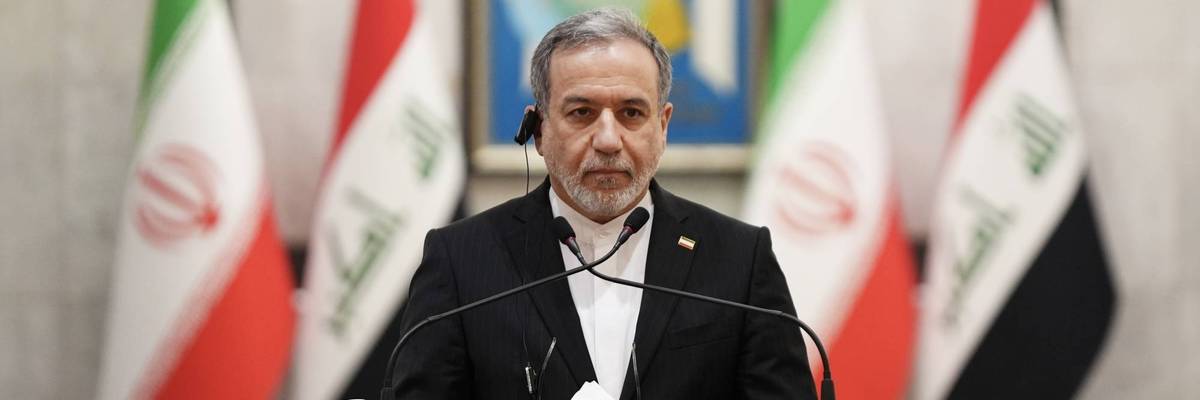
Iranian Foreign Minister Abbas Araghchi speaks at a press conference in Baghdad, Iraq, on June 28, 2026.
Iran's Foreign Ministry accused the Trump administration of "rendering futile all efforts made over the past several months to reduce tensions and restore stability."
The Iranian Foreign Ministry on Sunday condemned the United States' latest round of airstrikes as a "flagrant violation" of international law that threatens to permanently derail efforts to achieve a peaceful resolution to the war, which US President Donald Trump launched earlier this year in coordination with the Israeli government.
This past weekend, said Iran's Foreign Ministry, the US carried out "brutal attacks" and "acts of aggression" that pose "a serious threat to international peace and security, rendering futile all efforts made over the past several months to reduce tensions and restore stability in the West Asia region."
On Saturday and Sunday, the US military bombed dozens of targets across Iran, which retaliated with strikes on American military installations in Kuwait, Bahrain, and other Middle East nations. Iran's Foreign Ministry accused those nations of illegally serving as launch pads for US strikes.
In response to the new wave of bombings, Iran announced the closure of the Strait of Hormuz, blaming the US for causing "insecurity" in the critical waterway. Trump claimed in an interview on Sunday morning that the strait is "open" after the US "bombed the hell out of" Iran the previous night.
"The US ruling establishment continues its campaign of disinformation and the dissemination of fake news in an attempt to distort the facts and justify its unlawful actions," said the Iranian Foreign Ministry, accusing the Trump administration of undermining talks between Iran and Oman regarding commercial traffic through the Strait of Hormuz.
The Iranian statement also voiced "regret" over what it described as the head of the United Nations' "unconstructive approach" to the Trump administration's "blatant lawlessness and bullying."
"The Ministry of Foreign Affairs underscores the responsibility of the UN secretary-general and the Security Council to address violations of international peace and security," the statement reads. "It calls for the aggressor parties to be held accountable and for those who ordered and carried out the crimes committed against the Iranian nation to be brought to justice and punished."
Earlier Sunday, Stéphane Dujarric, a spokesperson for UN Secretary-General António Guterres, voiced concern over the "serious escalation and renewed military confrontations in the Gulf, including the Iranian attacks on ships in the Strait of Hormuz, the attacks by the United States on Iran, and the attacks by Iran on targets in the neighboring countries."
"These attacks must all stop," said Dujarric. "The secretary-general reiterates that a return to full-scale hostilities would have catastrophic consequences—for the peoples of the region, for international peace and security, and for the global economy. He further reaffirms the need for the restoration of full freedom of navigation in the Strait of Hormuz."
The military exchanges came less than a month after the US and Iran signed a memorandum of understanding aimed at facilitating a permanent end to the war. Last week, Trump declared the agreement "over" and said negotiations were "a waste of time," even as the US and Iran agreed to continue talks.
The National Iranian American Council (NIAC) noted Sunday that "Iran and the United States have once again entered a cycle of direct military confrontation," adding that "what was presented as an end to the war now appears to have been little more than a temporary pause."
"The continued evisceration of diplomatic agreements will make any attempt to restore peace extremely difficult," NIAC argued. "Iran, fresh off new US attacks amid the late supreme leader’s funeral ceremonies, will view any US pivot back to diplomacy with even deeper distrust. US hawks will likewise paint Iran’s actions as the predictable irrationality of radicals, even if US actions have helped trigger Iranian retaliation every step of the way."
Dear Common Dreams reader, It’s been nearly 30 years since I co-founded Common Dreams with my late wife, Lina Newhouser. We had the radical notion that journalism should serve the public good, not corporate profits. It was clear to us from the outset what it would take to build such a project. No paid advertisements. No corporate sponsors. No millionaire publisher telling us what to think or do. Many people said we wouldn't last a year, but we proved those doubters wrong. Together with a tremendous team of journalists and dedicated staff, we built an independent media outlet free from the constraints of profits and corporate control. Our mission has always been simple: To inform. To inspire. To ignite change for the common good. Building Common Dreams was not easy. Our survival was never guaranteed. When you take on the most powerful forces—Wall Street greed, fossil fuel industry destruction, Big Tech lobbyists, and uber-rich oligarchs who have spent billions upon billions rigging the economy and democracy in their favor—the only bulwark you have is supporters who believe in your work. But here’s the urgent message from me today. It's never been this bad out there. And it's never been this hard to keep us going. At the very moment Common Dreams is most needed, the threats we face are intensifying. We need your support now more than ever. We don't accept corporate advertising and never will. We don't have a paywall because we don't think people should be blocked from critical news based on their ability to pay. Everything we do is funded by the donations of readers like you. When everyone does the little they can afford, we are strong. But if that support retreats or dries up, so do we. Will you donate now to make sure Common Dreams not only survives but thrives? —Craig Brown, Co-founder |
The Iranian Foreign Ministry on Sunday condemned the United States' latest round of airstrikes as a "flagrant violation" of international law that threatens to permanently derail efforts to achieve a peaceful resolution to the war, which US President Donald Trump launched earlier this year in coordination with the Israeli government.
This past weekend, said Iran's Foreign Ministry, the US carried out "brutal attacks" and "acts of aggression" that pose "a serious threat to international peace and security, rendering futile all efforts made over the past several months to reduce tensions and restore stability in the West Asia region."
On Saturday and Sunday, the US military bombed dozens of targets across Iran, which retaliated with strikes on American military installations in Kuwait, Bahrain, and other Middle East nations. Iran's Foreign Ministry accused those nations of illegally serving as launch pads for US strikes.
In response to the new wave of bombings, Iran announced the closure of the Strait of Hormuz, blaming the US for causing "insecurity" in the critical waterway. Trump claimed in an interview on Sunday morning that the strait is "open" after the US "bombed the hell out of" Iran the previous night.
"The US ruling establishment continues its campaign of disinformation and the dissemination of fake news in an attempt to distort the facts and justify its unlawful actions," said the Iranian Foreign Ministry, accusing the Trump administration of undermining talks between Iran and Oman regarding commercial traffic through the Strait of Hormuz.
The Iranian statement also voiced "regret" over what it described as the head of the United Nations' "unconstructive approach" to the Trump administration's "blatant lawlessness and bullying."
"The Ministry of Foreign Affairs underscores the responsibility of the UN secretary-general and the Security Council to address violations of international peace and security," the statement reads. "It calls for the aggressor parties to be held accountable and for those who ordered and carried out the crimes committed against the Iranian nation to be brought to justice and punished."
Earlier Sunday, Stéphane Dujarric, a spokesperson for UN Secretary-General António Guterres, voiced concern over the "serious escalation and renewed military confrontations in the Gulf, including the Iranian attacks on ships in the Strait of Hormuz, the attacks by the United States on Iran, and the attacks by Iran on targets in the neighboring countries."
"These attacks must all stop," said Dujarric. "The secretary-general reiterates that a return to full-scale hostilities would have catastrophic consequences—for the peoples of the region, for international peace and security, and for the global economy. He further reaffirms the need for the restoration of full freedom of navigation in the Strait of Hormuz."
The military exchanges came less than a month after the US and Iran signed a memorandum of understanding aimed at facilitating a permanent end to the war. Last week, Trump declared the agreement "over" and said negotiations were "a waste of time," even as the US and Iran agreed to continue talks.
The National Iranian American Council (NIAC) noted Sunday that "Iran and the United States have once again entered a cycle of direct military confrontation," adding that "what was presented as an end to the war now appears to have been little more than a temporary pause."
"The continued evisceration of diplomatic agreements will make any attempt to restore peace extremely difficult," NIAC argued. "Iran, fresh off new US attacks amid the late supreme leader’s funeral ceremonies, will view any US pivot back to diplomacy with even deeper distrust. US hawks will likewise paint Iran’s actions as the predictable irrationality of radicals, even if US actions have helped trigger Iranian retaliation every step of the way."
The Iranian Foreign Ministry on Sunday condemned the United States' latest round of airstrikes as a "flagrant violation" of international law that threatens to permanently derail efforts to achieve a peaceful resolution to the war, which US President Donald Trump launched earlier this year in coordination with the Israeli government.
This past weekend, said Iran's Foreign Ministry, the US carried out "brutal attacks" and "acts of aggression" that pose "a serious threat to international peace and security, rendering futile all efforts made over the past several months to reduce tensions and restore stability in the West Asia region."
On Saturday and Sunday, the US military bombed dozens of targets across Iran, which retaliated with strikes on American military installations in Kuwait, Bahrain, and other Middle East nations. Iran's Foreign Ministry accused those nations of illegally serving as launch pads for US strikes.
In response to the new wave of bombings, Iran announced the closure of the Strait of Hormuz, blaming the US for causing "insecurity" in the critical waterway. Trump claimed in an interview on Sunday morning that the strait is "open" after the US "bombed the hell out of" Iran the previous night.
"The US ruling establishment continues its campaign of disinformation and the dissemination of fake news in an attempt to distort the facts and justify its unlawful actions," said the Iranian Foreign Ministry, accusing the Trump administration of undermining talks between Iran and Oman regarding commercial traffic through the Strait of Hormuz.
The Iranian statement also voiced "regret" over what it described as the head of the United Nations' "unconstructive approach" to the Trump administration's "blatant lawlessness and bullying."
"The Ministry of Foreign Affairs underscores the responsibility of the UN secretary-general and the Security Council to address violations of international peace and security," the statement reads. "It calls for the aggressor parties to be held accountable and for those who ordered and carried out the crimes committed against the Iranian nation to be brought to justice and punished."
Earlier Sunday, Stéphane Dujarric, a spokesperson for UN Secretary-General António Guterres, voiced concern over the "serious escalation and renewed military confrontations in the Gulf, including the Iranian attacks on ships in the Strait of Hormuz, the attacks by the United States on Iran, and the attacks by Iran on targets in the neighboring countries."
"These attacks must all stop," said Dujarric. "The secretary-general reiterates that a return to full-scale hostilities would have catastrophic consequences—for the peoples of the region, for international peace and security, and for the global economy. He further reaffirms the need for the restoration of full freedom of navigation in the Strait of Hormuz."
The military exchanges came less than a month after the US and Iran signed a memorandum of understanding aimed at facilitating a permanent end to the war. Last week, Trump declared the agreement "over" and said negotiations were "a waste of time," even as the US and Iran agreed to continue talks.
The National Iranian American Council (NIAC) noted Sunday that "Iran and the United States have once again entered a cycle of direct military confrontation," adding that "what was presented as an end to the war now appears to have been little more than a temporary pause."
"The continued evisceration of diplomatic agreements will make any attempt to restore peace extremely difficult," NIAC argued. "Iran, fresh off new US attacks amid the late supreme leader’s funeral ceremonies, will view any US pivot back to diplomacy with even deeper distrust. US hawks will likewise paint Iran’s actions as the predictable irrationality of radicals, even if US actions have helped trigger Iranian retaliation every step of the way."