SUBSCRIBE TO OUR FREE NEWSLETTER
Daily news & progressive opinion—funded by the people, not the corporations—delivered straight to your inbox.
5
#000000
#FFFFFF
To donate by check, phone, or other method, see our More Ways to Give page.


Daily news & progressive opinion—funded by the people, not the corporations—delivered straight to your inbox.

Russian LGBT Community in Dire Need of International Support
Russia’s Supreme Court ruled today that the “international LGBT movement” is an “extremist organization,” jeopardizing all forms of LGBT rights activism in the country, Human Rights Watch said today.
In a closed hearing, the Supreme Court ruled in favor of the Justice Ministry’s lawsuit accusing the “LGBT movement” of inciting social and religious discord. Russian authorities should immediately end this perverse persecution of LGBT people and concerned countries should support LGBT people and their advocates facing extreme risks and persecution in Russia.
“The authorities’ move apparently serves a dual purpose,” said Tanya Lokshina, associate Europe and Central Asia director at Human Rights Watch. “It is meant to increase the scapegoating of LGBT people to appeal to the Kremlin’s conservative supporters before the March 2024 presidential vote and to paralyze the work of rights groups countering discrimination and supporting LGBT people.”
Under Russian criminal law, participating in or financing an extremist organization is punishable by up to 12 years in prison. A person found guilty of displaying such groups’ symbols faces up to 15 days in detention for the first offense and up to four years in prison for a repeat offense. The authorities may include individuals suspected of involvement with an extremist organization in the countrywide “list of extremists” and freeze their bank accounts. People deemed to be involved with an extremist organization are barred from running for public office.
In a November 28 submission to the Supreme Court, seven prominent Russian rights groups said that a decision to support the Justice Ministry’s lawsuit would be discriminatory and violate a wide range of rights. Since the organization the government sought to outlaw, the “International LGBT Movement,” does not exist, human rights defenders fear that the ruling will allow the authorities to arbitrarily prosecute anyone for any activities related to LGBT rights.
Russian authorities have long misused Russia’s broad and vague anti-extremism legislation to prosecute peaceful critics. In 2021, the Moscow City Court banned three groups affiliated with leading opposition figure Alexey Navalny as extremist. The authorities then brought new charges against the already imprisoned politician, accusing him of organizing an “extremist community” and inciting extremist activities, which resulted in an additional 19-year sentence.
At least four Navalny supporters were sentenced to prison on a range of extremism charges. Dozens of his supporters across the country were fined and arrested over old social media posts mentioning his anti-corruption work and other projects.
Additionally, for over a decade, Russian authorities have exploited Russia’s pernicious “gay propaganda” law to target LGBT people and activists. In December 2022, the parliament toughened the 2013 “gay propaganda” ban by extending it to cover all public information or activities supporting LGBT rights or displaying non-heterosexual orientation.
The legislation does not provide any exclusion for art, scientific studies, or education and perpetuates a false and damaging messaging that tries to link LGBT people with pedophiles, repeatedly referring to “propaganda of nontraditional sexual relations and/or preferences, pedophilia, and sex change.”
On November 13, during the fourth Universal Periodic Review of Russia’s human rights record at the United Nations Human Rights Council, Andrey Loginov, Russia’s deputy justice minister, claimed that there is no discrimination based on sexual orientation or gender identity in Russia because the prohibition of discrimination is enshrined in the constitution. At the same time, he described “gay propaganda” as “alien to spiritual and moral values of our multiethnic and the polyconfessional Russian society.”
Since 2021, after lawmakers included a ban on same-sex marriage in Russia’s constitution, authorities have designated 17 LGBT organizations as “foreign agents,” a term that in Russian has connotations of spying and engaging in sabotage. This designation subjects the groups to a range of stifling and stigmatizing requirements.
Earlier in 2023, Russia’s parliament adopted legislation that violates a wide range of transgender people’s rights. It bans health care needed by trans people, changing gender markers in official documents, and dissolving marriages of trans people. It also prevents trans people from adopting or taking guardianship over children.
With Russian LGBT rights organizations and activists already in jeopardy and the risk of prosecution exacerbated by the Supreme Court’s “extremism” ruling, countries around the world should provide safe haven to those forced to flee Russia in the face of criminal prosecution or other grave threats, Human Rights Watch said.
Other countries, and the European Union member states in particular, given their geographic proximity, should also enable activists who continue LGBT rights work in Russia to obtain long-term visas in case of emergency or to attend international events and meetings with colleagues, along with providing other support to Russian LGBT rights activists working inside Russia or from abroad.
“The assault on LGBT rights has become a symbol of Russia’s rejection of universal human rights, as the government positions Russia as the defender of so-called traditional values in opposition to ‘the collective West,’” Lokshina said. “Russian LGBT people need support now more than ever.”

Human Rights Watch is one of the world's leading independent organizations dedicated to defending and protecting human rights. By focusing international attention where human rights are violated, we give voice to the oppressed and hold oppressors accountable for their crimes. Our rigorous, objective investigations and strategic, targeted advocacy build intense pressure for action and raise the cost of human rights abuse. For 30 years, Human Rights Watch has worked tenaciously to lay the legal and moral groundwork for deep-rooted change and has fought to bring greater justice and security to people around the world.
"President Trump betrayed workers," said the head of the AFL-CIO. "Working people delivered a rare bipartisan majority to stop the administration's unprecedented attacks on our freedoms."
US labor leaders on Thursday celebrated the House of Representatives' bipartisan vote in favor of a bill that would reverse President Donald Trump's attack on the collective bargaining rights of 1 million federal workers.
Trump's sweeping assault on federal workers has included March and August executive orders targeting their rights under the guise of protecting national security. In response, Congressmen Jared Golden (D-Maine) and Brian Fitzpatrick (R-Pa.) spearheaded the fight for the Protect America’s Workforce Act. They recently collected enough signatures to force the 231-195 vote, in which 20 Republicans joined all Democrats present to send the bill to the Senate.
"The right to be heard in one's workplace may appear basic, but it carries great weight—it ensures that the people who serve our nation have a seat at the table when decisions shape their work and their mission," Fitzpatrick said after the vote.
"This bill moves us closer to restoring that fundamental protection for nearly 1 million federal employees, many of them veterans," he added. "I will always fight for our workers, and I call on the Senate to help ensure these protections are fully reinstated."
American Federation of Labor and Congress of Industrial Organizations (AFL-CIO) president Liz Shuler joined union leaders in applauding the lower chamber on Thursday and calling on the Senate to follow suit. She said in a statement that "President Trump betrayed workers when he tried to rip away our collective bargaining rights. In these increasingly polarized times, working people delivered a rare bipartisan majority to stop the administration's unprecedented attacks on our freedoms."
"We commend the Republicans and Democrats who stood with workers and voted to reverse the single-largest act of union busting in American history," she continued. "Americans trust unions more than either political party. As we turn to the Senate—where the bill already has bipartisan support—working people are calling on the politicians we elected to stand with us, even if it means standing up to the union-busting boss in the White House."
Everett Kelley, national president of the American Federation of Government Employees, the largest federal workers union, similarly praised the members of Congress who "demonstrated their support for the nonpartisan civil service, for the dedicated employees who serve our country with honor and distinction, and for the critical role that collective bargaining has in fostering a safe, protective, and collaborative workplace."
"This vote marks an historic achievement for the House's bipartisan pro-labor majority, courageously led by Reps. Jared Golden of Maine and Brian Fitzpatrick of Pennsylvania," he said. "We need to build on this seismic victory in the House and get immediate action in the Senate—and also ensure that any future budget bills similarly protect collective bargaining rights for the largely unseen civil servants who keep our government running."
American Federation of State, County, and Municipal Employees president Lee Saunders also applauded the House's passage of "a bill that strengthens federal workers' freedoms on the job so they can continue to keep our nation safe, healthy, and strong."
"This bill not only provides workers' critical protections from an administration that has spent the past year relentlessly attacking them," he noted, "but it also ensures that our communities are served by the most qualified public service workers—not just those with the best political connections."
Randy Erwin, the head of the National Federation of Federal Employees, declared that "this is an incredible testament to the strength of federal employees and the longstanding support for their fundamental right to organize and join a union."
"The president cannot unilaterally strip working people of their constitutional freedom of association. In bipartisan fashion, Congress has asserted their authority to hold the president accountable for the biggest attack on workers that this country has ever seen," he added, thanking the House supporters and pledging to work with "senators from both parties to ensure this bill is signed into law."
"For someone who claims to care about hostages, going to bat for a leader who sacrificed them for his own political survival... is the height of cynicism," said one Israeli critic.
US Sen. John Fetterman recently asked Israel's president to pardon Israeli Prime Minister Benjamin Netanyahu—who is on trial in his country for alleged bribery, fraud, and breach of trust—Talking Points Memo revealed on Thursday.
In a previously unreported December 2 letter sent to Israeli President Isaac Herzog and obtained by TPM, Fetterman (D-Pa.) asserted, “In a world this dangerous, I question whether any democracy can afford to have its head of government spending valuable hours, day after day, in a courtroom rather than the situation room."
“I believe there is a strong case to be made for a pardon—not to erase the past, but to secure the future," Fetterman added.
Netanyahu and US President Donald Trump have also asked Herzog to pardon the beleaguered Israeli prime minister, who in addition to facing domestic criminal charges is also a fugitive from the International Criminal Court, which last year issued a warrant for his arrest for alleged crimes against humanity and war crimes in Gaza.
Scoop, w the incomparable @kateriga.bsky.social: John Fetterman asked Israel's President to pardon Netanyahu in a previously unreported letter talkingpointsmemo.com/news/fetterm...
[image or embed]
— Josh Kovensky (@joshkovensky.bsky.social) December 11, 2025 at 10:03 AM
Fetterman has taken more than $370,000 in campaign contributions from the pro-Israel lobby, including the American Israel Public Affairs Committee, according to AIPAC Tracker. He has been an ardent supporter of Israel's US-backed genocidal war on Gaza, which has left more than 250,000 Palestinians dead, wounded, or missing and 2 million others forcibly displaced, starved, or sickened.
In addition to repeatedly opposing calls by progressive members of his own party for an arms embargo on Israel, Fetterman has amplified Israeli claims regarding the war, and even giddily accepted a silver-plated beeper gifted by Netanyahu following the September 2024 pager bombings that killed at least 20 people in Lebanon, including children.
Asked Thursday about his letter to Herzog, Fetterman said, "I fully support it" and called the TPM's reporting "a pointless distraction."
“I know you guys use things like leaks, but I don’t know who did that," he told TPM reporters Kate Riga and Josh Kovensky, who broke news of the letter.
Responding to theTPM article, Israeli journalist Etan Nechin said on social media that "for someone who claims to care about hostages, going to bat for a leader who sacrificed them for his own political survival... is the height of cynicism"—a reference to allegations that Netanyahu prolonged the war, and thus the release of the more than 250 Israelis and others abducted by Hamas during the October 7, 2023 attack, in order to delay his corruption trial.
"The pattern is clear—malnourished mothers, giving birth to underweight or premature babies, who die in Gaza's neonatal intensive care units or survive, only to face malnutrition themselves," said a UNICEF spokesperson.
Over two years into Israel's genocidal assault on and blockade of the Gaza Strip, the death toll continued to rise on Thursday, with local health officials and relatives confirming that 8-month-old Rahaf Abu Jazar died of exposure after floodwaters hit her family's tent in Khan Younis.
Her death came as the United Nations Children's Fund (UNICEF) and the UN Human Rights Office in the occupied Palestinian territory continued to sound the alarm about conditions for mothers and children, including infants like Abu Jazar.
As CNN reported Thursday:
Weeping and caressing the lifeless Rahaf in her arms, the baby's mother, Hejar Abu Jazar, kept ululating in despair. She said she had fed her daughter the previous night.
"She was completely fine. I breastfed her last night. Then all of a sudden, I found her freezing and shivering. She was healthy, my sweetheart," she cried.
"When we woke up, we found the rain over her and the wind on her, and the girl died of cold suddenly," the mother told Reuters. "There was nothing wrong with her. Oh, the fire in my heart, the fire in my heart, oh my life."
Citing municipal and civil defense officials, the news agency also noted that the storm flooded most tent encampments across Gaza, leading to thousands of calls for help that largely went unanswered due to fuel shortages and damage to equipment such as bulldozers tied to Israel's blockade and bombardment of the exclave since the Hamas-led October 7, 2023 attack.
After more than two years of war, Hamas and Israel struck a ceasefire deal this past October, though hundreds of alleged Israeli violations have resulted in at least 383 Palestinian deaths and 1,002 injuries. As of Thursday, the Gaza Ministry of Health put the totals at 70,373 dead and 171,079 injured, though with thousands missing, those are likely undercounts.
In addition to killing over 70,000 Palestinians, Israel "has also damaged or destroyed 94% of Gaza's hospitals, largely denying women access to essential healthcare, including reproductive healthcare," the UN Human Rights Office noted in a Thursday statement. "The Israeli blockade has also prevented the entry of objects indispensable to the survival of civilians, including medical supplies and nutrients required to sustain pregnancies and ensure safe childbirth."
"As a result, women were three times more likely to die from childbirth and three times more likely to miscarry in Gaza by October 2024 compared to before October 7, 2023," the office said. "Newborn deaths have increased, including at least 21 babies who died on their first day of life as of June 30, 2025. And births have dropped by a staggering 41% in the first half of 2025 compared to the same period in 2022."
Dr. Ambereen Sleemi, an American gynecologist, told the UN office about her experience volunteering in July at Nasser Hospital in Khan Younis, the largest medical facility in southern Gaza.
"As we did our rounds, bombs were going off in the background. One time, a nurse was shot in the head through the window in Nasser," she said. "Sometimes quadcopters would come in and try to shoot nurses or literally chase them through the hospital corridors."
"I cared for pregnant women who had been shot in various locations, including the abdomen," the doctor continued. "Many women were simply too injured to survive. If their injuries did not claim their lives, then sepsis often did, as there were not enough medical supplies or antibiotics to treat the preventable infections that followed."
"Almost every pregnant woman I treated who had other children said she had already lost a child in the war," Sleemi added. "The collective pain and sorrow were overwhelming and ever-present."
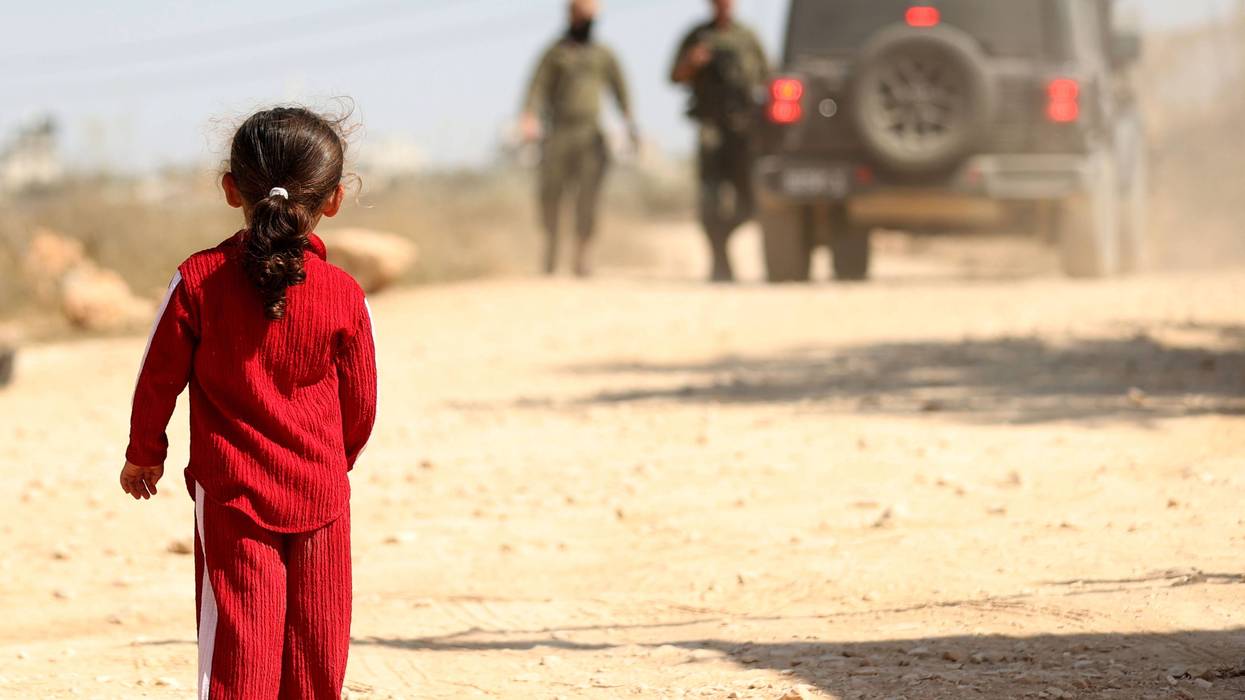
Some of them have died of hunger. While speaking with reporters at UN headquarters in Geneva earlier this week, Tess Ingram, UNICEF communication manager, highlighted how the hunger crisis in Gaza is impacting mothers and young kids.
"At least 165 children are reported to have died painful, preventable deaths related to malnutrition during the war," Ingram said. "But far less reported has been the scale of malnutrition among pregnant and breastfeeding women, and the devastating domino effect that has had on thousands of newborns."
"The pattern is clear—malnourished mothers, giving birth to underweight or premature babies, who die in Gaza's neonatal intensive care units or survive, only to face malnutrition themselves or potential lifelong medical complications," she continued, recalling some of the newborns she saw in the strip's hospitals, "their tiny chests heaving with the effort of staying alive."
Ingram stressed that "low birth weight infants are about 20 times more likely to die than infants of normal weight. They need special care, which many of the hospitals in Gaza have struggled to provide due to the destruction of the health system, the death and displacement of staff, and impediments by Israeli authorities that prevented some essential medical supplies from entering the strip."
She also shared the story of meeting a mother at a neonatal intensive care unit in Gaza City two weeks ago. The woman, Fatma, was there to see her baby, Mohammed, who was born premature and weighed only 3.3 pounds.
According to Ingram:
Fatma told me that unlike her first pregnancy, when she had access to antenatal checkups, vitamins, and nutritious food, "this pregnancy has been full of displacement, lack of food, malnutrition, war, and fear." She said she was malnourished for three months of the pregnancy, displaced three times, and her young daughter and husband were killed, two months apart, by airstrikes.
I have spent many months in Gaza over the past two years, and I see and hear the generational impacts of the conflict on mothers and their infants almost every day; in hospitals, nutrition clinics, and family tents. It is less visible than blood or injury, but it is ubiquitous. It is everywhere.
I have lost count of the number of parents like Fatma who have sobbed while telling me what happened to them, wrecked by how powerless they are to protect their children in the face of indiscriminate destruction and deprivation. Generations of families, including those born into the ceasefire, have been forever altered by what was inflicted upon them.
"And the fear must end," she declared. "This ceasefire should offer families safety, not more loss. More than 70 children have been killed in the eight weeks since the ceasefire began. The ongoing attacks and the killing of children must stop immediately."