

SUBSCRIBE TO OUR FREE NEWSLETTER
Daily news & progressive opinion—funded by the people, not the corporations—delivered straight to your inbox.
5
#000000
#FFFFFF
To donate by check, phone, or other method, see our More Ways to Give page.
Daily news & progressive opinion—funded by the people, not the corporations—delivered straight to your inbox.
Morgan McLeod, mmcleod@sentencingproject.org
Today, 200 experts in the medical and public health community sent a letter to President-elect Biden and the Transition COVID-19 Advisory Board recommending substantial reductions in federal, state, and local incarceration levels to limit the spread of the virus.
"Since the pandemic, decarceration has been too modest....Meaningful and effective decarceration amidst the pandemic can limit the number of people exposed to the virus in leading coronavirus clusters while also protecting the broader communities to which these individuals return," said the letter signed by a cadre of researchers and practitioners in leading research universities and medical centers.
Research has found that many incarcerated people, including those who have served long sentences, do not pose an unreasonable public safety risk. The letter calls on the Board to recommend policies to the new administration that encourage the Centers for Disease Control and Prevention to explicitly call for decarceration in its guidance and to support COVID-19 relief funding for state, local, and tribal carceral systems to incentivize a significant reduction of incarcerated populations.
Signers of the letter offered these comments:
Gregg Gonsalves, PhD, Yale School of Public Health
"In the context of COVID-19 occupancy limits are being enforced for restaurants, bars, and other indoor settings around the country. Detention and correctional facilities are crowded, often unsanitary spaces and should be subject to occupancy limits as well to stem the spread of SARS-CoV2. We need to decarcerate to keep people in these places and in the surrounding communities safe."
Dr. Carlos Franco-Paredes, University of Colorado, Denver
"Health equity is a critical component of social justice and wellbeing and therefore addressing the longstanding history of social injustices leading to the unfair distribution of health and disease constitutes a critical priority of the practice of modern medicine. As physicians we must strive to reduce social inequities through advocacy efforts and policy change to remove racial residential segregation, food and housing insecurity, poor educational opportunities, discrimination and other structural vulnerabilities including mass incarceration and the death penalty. Health equity is not only about medical interventions during a clinical encounter; it involves community-activism to improve life opportunities and the redistribution of social capital and resources among marginalized communities to promote healthier lives and social wellness. The COVID-19 pandemic has been responsible for as many deaths among incarcerated individuals in the US over a nine-month period as the total number of individuals executed by the death penalty over a 44-year period (1449 deaths by COVID-19 and 1526 executions since 1976)."
The letter's signatories urge the Biden team to take immediate action to expedite the depopulation of carceral facilities during the pandemic.

"The Supreme Court’s attacks on voting rights are about rigging elections for Republicans," said Rep. Greg Casar, the chair of the Congressional Progressive Caucus.
US President Donald Trump on Sunday attacked a pro-democracy resolution recently introduced by key House caucus leaders, warning that the measure's adoption would strike a fatal blow to the Republican Party.
"They do this, and the Republican Party is DEAD!" Trump wrote in a social media post, citing a Politico story on the resolution. The proposal, unveiled last month by the heads of the Congressional Progressive Caucus (CPC), Congressional Black Caucus, Congressional Hispanic Caucus, and Congressional Asian Pacific American Caucus, calls for the restoration and strengthening of voter protections gutted by the US Supreme Court as well as court reforms—including possible expansion of the number of justices and term limits.
Rep. Greg Casar (D-Texas), chair of the CPC, wrote Sunday that Trump's post amounted to an acknowledgment that "the Supreme Court’s attacks on voting rights are about rigging elections for Republicans."
"At least he admits it," the progressive leader wrote on social media.
This is what Trump says about my resolution with @RepYvetteClarke, @RepEspaillat, and @RepGraceMeng to restore voting rights, end the filibuster, and reform the Supreme Court.
At least he admits it: the Supreme Court’s attacks on voting rights are about rigging elections for Rs. pic.twitter.com/GgQzhlwo4Q
— Congressman Greg Casar (@RepCasar) July 5, 2026
Politico reported that while the resolution "stands virtually no chance of adoption" in the current GOP-controlled Congress, "it is the latest indicator of how the Congressional Black Caucus and other key Democrats want to respond to the April decision that cleared the way for Republican states to redraw their congressional maps and eliminate majority-minority districts"—a reference to the Supreme Court's 6-3 ruling in Louisiana v. Callais.
Trump seized on the ruling to push state-level Republicans to aggressively gerrymander their maps ahead of the critical 2026 midterm elections. The president is also pressuring congressional Republicans to force through legislation known as the SAVE America Act, which would impose strict voter ID and documentation requirements nationwide, potentially blocking millions of American citizens from casting ballots under the pretext of cracking down on noncitizen voting—something that is already illegal and rare.
Trump is currently holding a bipartisan housing affordability bill hostage in a bid to get the stalled SAVE America Act through Congress.
House Speaker Mike Johnson (R-La.) affirmed on Sunday that Republicans intend to attach the assault on voting rights to a filibuster-proof budget reconciliation package in a last-ditch effort to get the measure through the Senate, where it has not received enough support to clear the upper chamber's 60-vote threshold. Trump has called for elimination of the filibuster to pass the SAVE America Act, but Senate Republicans have thus far declined to remove the barrier.
The progressive resolution that Trump attacked on Sunday also proposes "the elimination of the 60-vote threshold in the Senate"—but it specifies that the action should only be taken "under the next pro-democracy governing moment."
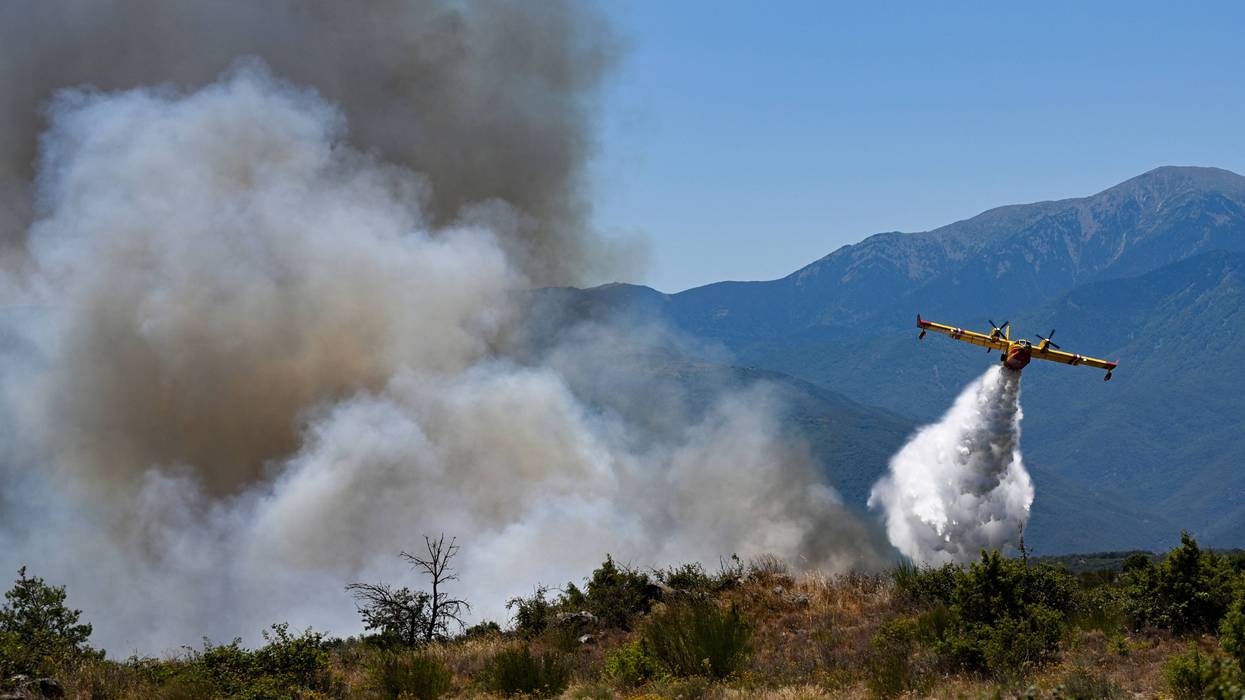
Blazes mobilized hundreds of firefighters over the weekend and scorched a total of 42,000 acres in Spain, France, and Portugal alone—an area two times the size of Manhattan.
On the heels of a deadly European heatwave, fierce fires erupted in Greece, Spain, Portugal, and France over the weekend, raising fears for a summer of extremes as the effects of the climate emergency become ever more apparent.
The blazes mobilized hundreds of firefighters and scorched a total of 42,000 acres as of Sunday in Spain, France, and Portugal alone—an area two times the size of Manhattan.
" Climate change is here, we are living the consequences and it is only the start of July," French fire service Colonel Eric Belgioino told the public, as Agence France-Presse reported.
Multiplication des #wildfire🔥(feux de forêt) ce dimanche en France.
Quatre foyers, dont trois hors de contrôle, sont désormais visibles simultanément depuis les satellites. À eux seuls, ils ont déjà parcouru l'équivalent d'environ 3.500 terrains de football. @zoom_earth pic.twitter.com/qpdrct7AmA
— Guillaume Jauseau (@GJauseau) July 5, 2026
One of the fires raging in the South of France forced organizers of the Tour de France to close the third stage of the race to the public on Monday, as Reuters reported.
The fire has consumed 6.18 square miles in Southern France and put two people in critical condition.
"An exceptional fire calls for exceptional measures for the tour," race director Christian Prudhomme said, according to Reuters.
As of Sunday, seven departments in France faced "very high risk” for fires, as temperatures were expected to reach highs of 100-104°F across the south, as Anadolu Agency reported.
🇪🇸 🔥 Firefighters tackle wildfires menacing Spanish tourist hotspot
Wildfires in Catalonia have burned over 2000 hectares of forest, prompting regional authorities to ask residents of 10 municipalities to stay at home, including in popular tourist hotspots such as the Platja… pic.twitter.com/Dal7mlAJlu
— AFP News Agency (@AFP) July 5, 2026
Across the border in Spain, a fire in Costa Brava burned through over 5,400 acres in a 48-hour period, according to AFP. The flames led to shelter-in-place or evacuation orders for nearly 50,000 people.
The Catalunya fire service said on Sunday that firefighters "worked tirelessly throughout the night to consolidate the perimeter of the La Bisbal d'Empordà forest fire, which is now stabilized."
A large wildfire near Vouzela in central Portugal spread overnight across three municipalities, burning over 2,400 hectares, injuring six people and forcing village evacuations, with nearly 1,000 firefighters and eight aircraft deployed to tackle the blaze https://t.co/GzfxgDSGiq pic.twitter.com/v5KgKj9IPt
— Reuters (@Reuters) July 3, 2026
Another blaze ignited in Portugal's central Vouzela area on Thursday.
It burned through 30,000 acres and required the work of 1,200 firefighters before it was partially contained as of Sunday.
🇬🇷🔥 Not only are Europeans dealing with deadly heat, there is also a fire threat.
Check out this video from an overnight fire in the Oreokastro area of northern Greece.
So far, 2 factories have been destroyed, and evacuations have been ordered near Thessaloniki.
Writer:…
— Mario Nawfal (@MarioNawfal) July 5, 2026
In Greece, two fires erupted on Saturday and Sunday.
The first, in the Oraiokastro suburb of the country's second-largest city of Thessaloniki, compelled evacuations and shelter-in-place orders when it overtook a recycling plant and released dangerous smoke into the air, The Associated Press reported.
“The smoke contains volatile organic compounds that irritate the eyes and throat, as well as carcinogenic substances such as benzene, dioxins, and furans,” Dimosthenis Sarigiannis, professor of environmental engineering at the Aristotle University of Thessaloniki, told ekathimerini.com.
The inferno also damaged multiple homes and businesses, Oraiokastro Mayor Pandelis Tsakiris told the country's state broadcaster.
The second blaze ignited on Sunday west of Athens, according to AP, and 210 firefighters worked hard to control it before the sun set and firefighting planes would be grounded.
The European fires follow a heatwave that scientists said would have been "virtually impossible" without climate change caused by the burning of fossil fuels, and spark concerns that the continent could see a devastating summer for fires.
French Interior Minister Laurent Nunez noted that the fire season had started one month early, according to AFP.
As fire Colonel Belgioino said: "The season is going to be long for the soldiers fighting fires. You have to help us."
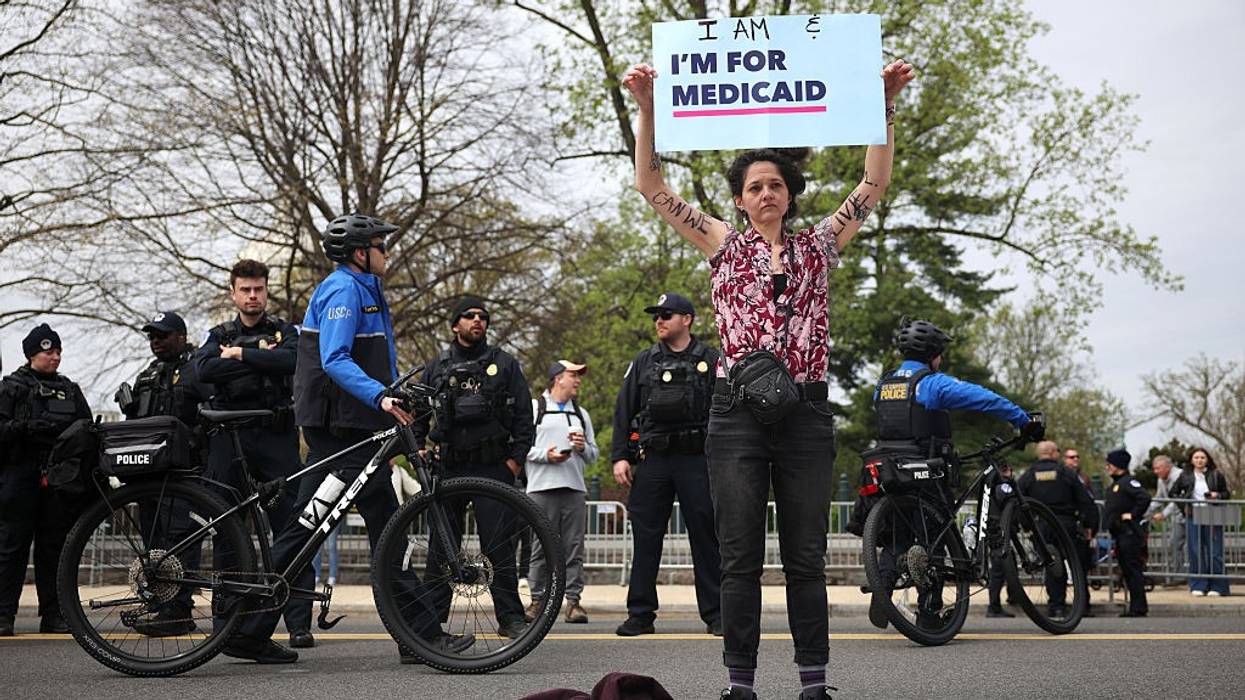
Reproductive healthcare advocates vowed to keep up the fight as conservative activists pressure Congress to make the funding ban permanent.
Planned Parenthood and other reproductive health clinics regained access to Medicaid funding on Saturday after a provision in the One Big Beautiful Bill Act defunding the organizations expired.
The provision depriving Planned Parenthood was touted as a major victory for the anti-abortion movement when the bill was signed on July 4, 2025, but, due to Senate rules, the defunding only lasted for one year, and Congress failed to renew it before their summer recess.
While this means that Planned Parenthood, Health Imperatives in Massachusetts, and Maine Family Planning can once again bill Medicaid for non-abortion related healthcare, it doesn't reverse the damage caused by a year-long lack of access to funds totaling more than $800 million per year for Planned Parenthood alone.
“Tens of thousands of patients have been denied access to services like cancer screenings and birth control and STI testing and treatment. These are things that just can’t be undone,” Nora Walsh-DeVries, vice president of political and legislative affairs at Planned Parenthood Action Fund, told The Hill.
"Patients have totally borne the cost of this politically motivated attack on care."
In a report published July 1, Planned Parenthood and Planned Parenthood Action Fund said that the defunding had led to the closure of almost 30 health centers, two-thirds of which were in rural areas, or locations that had a shortage of medical services or healthcare professionals. In addition, all of the closed centers were in "contraceptive deserts." Overall, the number of Medicaid visits to the organization decreased by 25% compared with the year before.
“By deliberately targeting Planned Parenthood, President [Donald] Trump and his allies in Congress worsened a public health crisis, making it harder for people to get the essential and lifesaving care they needed at their trusted provider," Alexis McGill Johnson, president and CEO of Planned Parenthood Federation of America and Planned Parenthood Action Fund, said in a statement.
Olivia Pennington, a spokesperson for Maine Family Planning, told NPR, "It's been devastating to see this defund and to see the impacts that it's had across the nation."
As Walsh-DeVries further told The Hill, “I think it’s just really clear that patients have totally borne the cost of this politically motivated attack on care."
Despite the restoration of funding, uncertainty lingers. Walsh-DeVries said that it wasn't clear how clinics could obtain the restored funds, and states can now block Medicaid funds to Planned Parenthood on their own, thanks to a Supreme Court ruling last year. To date, 13 states have blocked or tried to block funds.
What's more, conservative and anti-abortion advocates have expressed outrage at Congress' failure to extend the funding ban, and are determined to pressure it do so via a reconciliation bill.
"This failure must be corrected immediately. President Trump and Congress must act as fast as possible to restore and extend the defunding of Planned Parenthood and every organization that commits abortion," Lila Rose, founder and president of anti-abortion group Live Action, said in a statement.
However, 65% of Americans oppose congressional efforts to defund Planned Parenthood, according to polling by the organization, and it is unclear if Republicans as a whole have the political will to renew the ban ahead of the midterm elections. Planned Parenthood Action Fund is currently mobilizing to unseat House republicans who voted for the ban last year.
“We have to really continue to do the work that we’re doing to make this as politically toxic as possible,” Walsh-DeVries told Politico.
McGill Johnson affirmed: "Anti-abortion lawmakers are trying to make ‘defund’ permanent because Planned Parenthood health centers provide abortion care where it’s legal. They are willing to sacrifice the lives and health of people across the country if it gets them closer to their goal of banning abortion everywhere and shutting down Planned Parenthood."
She continued: "We’re in a fight for survival—not just for Planned Parenthood health centers, but for everyone to get high-quality, affordable healthcare from their trusted provider. And know this: Planned Parenthood will never stop fighting to ensure everyone can get the care they need.”