SUBSCRIBE TO OUR FREE NEWSLETTER
Daily news & progressive opinion—funded by the people, not the corporations—delivered straight to your inbox.
5
#000000
#FFFFFF
To donate by check, phone, or other method, see our More Ways to Give page.


Daily news & progressive opinion—funded by the people, not the corporations—delivered straight to your inbox.
As the nation awaits confirmation from the Pentagon of the 5,000th
death of a U.S. service member in the wars in Iraq and Afghanistan,
members of Military Families Speak Out are mourning the dead and
calling on President Obama to honor the sacrifices of these service
members and their families and honor all of those who serve by acting
swiftly to end both wars.
Warren Henthorn of Choctaw, OK, the father of Army Spc. Jeffrey Henthorn who died in Iraq on Feb 8, 2005, says:
"Way too many have died on all sides of these wars. If I remember correctly, President Obama won the Democratic nomination based on the promise to end the war in Iraq. But,
between Iraq and Afghanistan, at the end of this year we will actually
have more troops in harm's way then we did at the height of the 'surge.' That's just as bad as we had it under President Bush. These wars now belong to President Obama. The blood is on his hands."
Henthorn is a member of
Gold Star Families Speak Out, a national chapter of Military Families
Speak Out whose loved ones died a result of the wars in Iraq and
Afghanistan.
Jane
Bright of West Hills, CA, the mother of Sgt. Evan Aschraft who was
killed at the perimeter of an oil refinery in Iraq on July 24, 2003, is
also a member of Gold Star Families Speak Out. She says:
"My
son was the 249th U.S. service member killed in Iraq - it's hard to
believe that 5,000 of our troops have already died in Iraq and
Afghanistan. How many more? We need to bring all our troops home from these wars and we need to take care of our veterans when they return home, giving them the medical and psychological care and treatment they need and deserve."
Maggie
Pondolfino, a member of Military Families Speak Out from Portland, OR
has been nervously watching the death toll in the wars in Iraq and
Afghanistan rise as her son awaits a deployment to Afghanistan with the
U.S. Army:
"It's
been over a year since my only son returned from a 14 month deployment
to Iraq. Over a year since I was immobilized with dread at every
unexpected knock on my door and every unfamiliar van parked in front of
my house. Daily, I obsessively checked the Department of Defense
casualty list. Too many times the names were close to home...someone
from our state, or even someone from his platoon," says Pondolfino. "I imagined the other mothers' grief and wondered would I be able to endure it? Then
I had a year of relative calm. I even celebrated a new administration
and momentarily experienced the hope that seemed to engulf the country.
"Now
as the nation braces for the news of the confirmation of the 5,000th
death of a U.S. service member in the wars in Iraq and Afghanistan, the
administration that briefly gave me new hope prepares to send my son to
another war with no clear mission and no exit strategy. And how do I prepare? How do I prepare for another year of going through the motions of living, while wondering if he will come home? If he does will he have to fight a war within himself? If
he does not come home, my darling boy with his loving heart and keen
intellect will have died for nothing. I know that no good will come
from continuing the occupations of Afghanistan and Iraq, just more
heartbreak, sorrow, and tragedy. When will we ever learn?"
Members of Military Families Speak Out and Gold Star Families Speak Out are available for interview.
Military Families Speak Out (MFSO) is an organization of people opposed to the war in Iraq who have relatives or loved ones who are currently in the military or who have served in the military since the buildup to the Iraq war in the fall of 2002. Formed by two families in November of 2002, we have contacts with military families throughout the United States, and in other countries around the world. Our membership currently includes over 3,400 military families, with new families joining daily.
"This is not peace for children in Gaza," said one humanitarian leader. "The ceasefire agreement has not translated into meaningful protection for children or created conditions for recovery."
Five leading humanitarian organizations that have spent two-and-a-half years advocating for Palestinians suffering under Israel's US-backed onslaught in Gaza released an analysis Thursday of the conditions on the ground six months into a so-called "ceasefire," and their message was clear: the Trump administration's 20-point peace plan is "failing" to end the devastation of the exclave.
The Danish Refugee Council, Norwegian Refugee Council, Oxfam, Refugees International, and Save the Children led the assessment that's detailed in the groups' "Humanitarian Scorecard," released exactly six months after the truce was called.
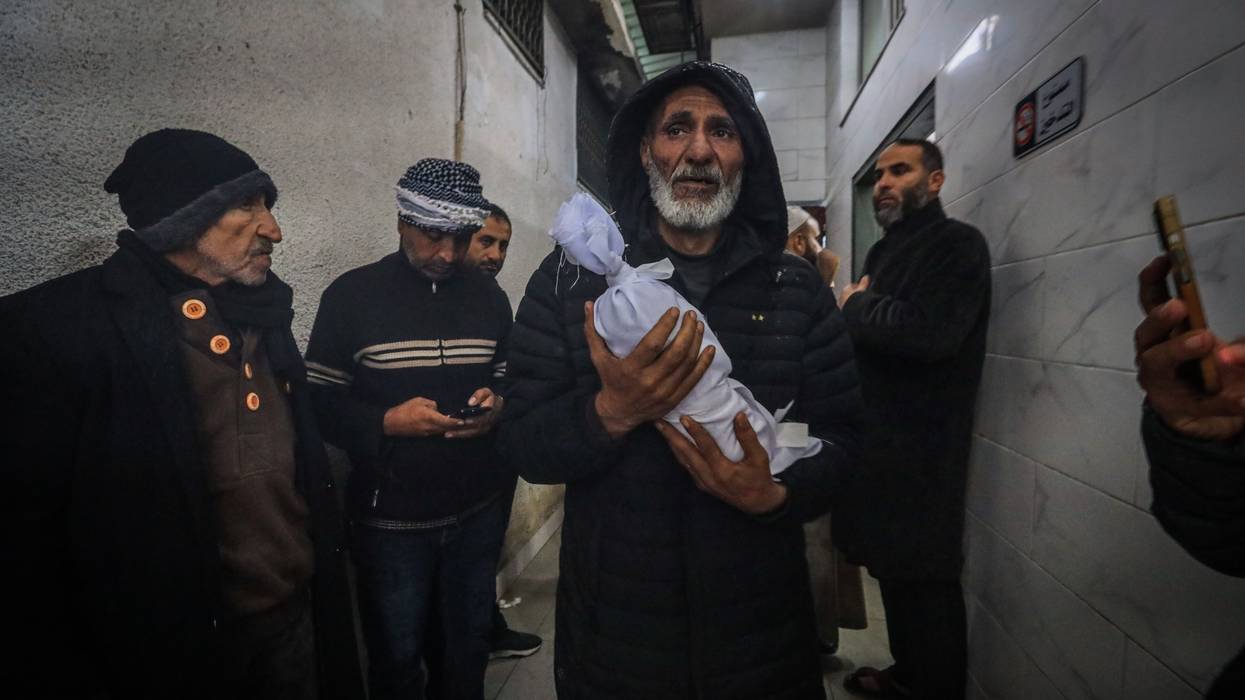
As Common Dreams has reported, Israeli strikes in Gaza did not halt after the ceasefire agreement was reached in October, and at least 700 Palestinians have been killed in the past six months, including more than 180 children.
“At least two children a day have been killed or injured in the six months since the ceasefire for Gaza was agreed,” said Save the Children International CEO Inger Ashing. "This is not peace for children in Gaza. The ceasefire agreement has not translated into meaningful protection for children or created conditions for recovery."
Alarmingly, despite the continuation of Israeli attacks, the groups found that the category of "ceasefire and civilian protection" was the area in which the truce agreement has been closest to success. The scorecard rated civilian protection two points out of four and said it is currently in a "fragile" but not "failing" state. While attacks have continued, the groups said, "sustained bombardment" has halted.
The other three areas the scorecard rated—humanitarian aid access, reconstruction and economic development, and freedom of movement of return—are all "failing" to be implemented under the ceasefire deal that President Donald Trump said would begin a "new day" in Gaza.
Israel and the "Board of Peace" Trump established have especially failed to ensure access to humanitarian aid, with the scorecard rating that category zero out of 10 points.
There are still fewer than 100 aid trucks delivering aid each day to a population that was almost entirely cut off from relief for two years, causing more than 360 people, including at least 130 children, to starve to death before the ceasefire deal was reached. The 20-point peace plan had indicated there should be at least 600 aid trucks entering Gaza daily and that border crossings would be reopened, but the Rafah and Jordan crossings are still "effectively closed," and only a Kerem Shalom crossing is open for aid.
"Even [the ceasefire's] humanitarian provisions—the most straightforward to implement—remain obstructed," said Ashing. "We are ready to scale up and support the people of Gaza, but we must be allowed to do our jobs.”
Israel is still restricting deliveries of what it calls "dual-use" materials that the Israeli government claims could be used as weapons; the list of banned items has included scissors in medical kits, anesthetics, shelter supplies, cancer medicines, and maternity kits. Fuel is also still "severely restricted," the scorecard reads.
“Six months into the so-called ceasefire in Gaza, we are seeing a continuation of the designed deprivation that we saw throughout the hostilities,” said Refugees International president Jeremy Konyndyk. “Palestinians are experiencing severe malnutrition and preventable deaths every day because many cannot reliably access basic food or services. Both the terms of the ceasefire deal and the core tenets of international humanitarian law require that humanitarian goods enter Gaza, and that humanitarians can do their jobs to save lives. The deal signed last year rightly committed to this—it is time to deliver on those commitments.”
With Israel allowing "only a handful of traders to import supplies and goods" and requiring "exorbitant 'coordination fees' for every truck," families in Gaza are also facing "exceedingly high prices on vital goods and supplies," the scorecard reads. Food items are anywhere from 3% to 233% more expensive than they were before Israel began attacking Gaza in retaliation for a Hamas-led attack.
The 20-point plan also pledged to redevelop Gaza "for the benefit of the people of Gaza, who have suffered more than enough," with "a Trump economic development plan to rebuild and energize Gaza" being created by a panel of experts "who have helped birth some of the thriving modern miracle cities in the Middle East.” A special economic zone (SEZ) with preferred tariff and access rates would also be established.
Six months later, the SEZ has yet to be created, and no formal development plan has been convened, the humanitarian groups found.
The World Bank created a new Financial Intermediary Fund (FIF) called the Gaza Reconstruction and Development (GRAD) fund in coordination with the Board of Peace, but its role is only as a limited trustee, with no responsibility for how funds are spent," reads the scorecard.
The category of freedom of movement was rated one out of six points, with credit given for the fact that some Palestinians have been able to reenter Gaza with the limited reopening of the Rafah crossing in recent weeks.
Other than that, "most of the population" is still displaced after 90% of Gaza residents were forced to flee their homes, and most are unable to leave or return to Gaza. Returns are not permitted at all beyond the Yellow Line marking the Israeli "buffer zone" established by the ceasefire, and there is also a "major backlog of people" awaiting medical evacuations, with some people dying while they wait for care.
“Six months into the ceasefire, Palestinians in Gaza are still facing a daily struggle to survive. President Trump promised to lead an extraordinary recovery and declared a ‘new day’ for Gaza. Instead, his plan for peace is stalling and his attention has turned away from the crisis,” said Oxfam America president and CEO Abby Maxman.
"Palestinians are still experiencing more of the same: going to bed hungry in flooded tents, facing long lines for clean water, and succumbing to diseases and injuries without a healthcare system or basic medical supplies," said Maxman. "All while the government of Israel drops bombs and cuts off vital, lifesaving assistance with US support. We cannot look away—Palestinians in Gaza need our support and pressure on our leaders to deliver on the promise of peace now more than ever.”
"Passover, our festival of liberation, compels us to ensure that our city’s funds do not underwrite the Israeli government carrying out genocide," said an activist with Jewish Voice for Peace.
More than 500 New Yorkers gathered for an "emergency Passover Seder" outside the office of New York City comptroller Mark Levine on Wednesday, where they called for him to divest the city's pension fund from bonds tied to Israel.
The city's former comptroller, Brad Lander, chose not to renew the nearly $40 million worth of investments in 2023. But in January, Levine reversed course, announcing plans to resume investment in the bonds, describing them as sound assets.
After Israel helped pressure the US to launch a war against Iran and began a new invasion of Lebanon—campaigns that have collectively killed more than 3,000 people—the city's chief fiscal officer is facing renewed pressure to stop what Jewish Voice for Peace (JVP) described as a "plan to fund Israeli bombs with city pensions."i
Protesters with the group stood outside the comptroller's office holding signs reading "Apartheid is chametz" and "Genocide is a bad investment."
"Passover, our festival of liberation, compels us to ensure that our city’s funds do not underwrite the Israeli government carrying out genocide in Gaza, enabling rampant settler violence in the West Bank, bombing Iran, and destroying entire villages in Southern Lebanon," said Jay Saper, an activist with JVP who works as a children's teacher and Yiddish translator. "Comptroller Levine’s plan goes against the will of New Yorkers who do not want our city's money to be used to fund genocide and war."
Levine took office in January after Lander left the post to challenge Democratic Rep. Dan Goldman for his seat representing New York's 10th congressional district.
Mayor Zohran Mamdani has been a vocal opponent of using any city funds to support Israel. But while he has publicly pushed back against the decision to resume purchasing Israeli bonds, he lacks the power, as mayor, to personally overrule it.
"I don’t think we should purchase Israel bonds,” Mamdani said in January. “We don’t purchase bonds for any other sovereign nation’s debt, and the comptroller has also made his position clear, and I continue to stand by mine.”
Though Levine has expressed strong support for Israel, saying he has "very deep personal ties" to the country, the attendees at Wednesday's Seder said the money spent on Israeli bonds could be better used to help New Yorkers.
"New Yorkers deserve to have their city funds in bonds that prioritize financial stability, accountability, and the long-term security for city workers," said New York City Public Advocate Jumaane Williams. "They should invest in life and the livelihoods of our communities, not the complete opposite. We cannot go backward to something financially unstable and, more importantly, morally bankrupt."
Last year's JVP Seder was held to call for the release of Columbia student Mahmoud Khalil, who was imprisoned by immigration agents and threatened with deportation by the Trump administration for activism on campus against Israel's genocide in Gaza. More than 100 JVP activists were arrested after occupying Trump Tower in Manhattan to demand his freedom last spring.
This year, Khalil—released from detention after a judge's order last June—was in attendance at the Seder.
“Just as you prayed for my freedom last year, today let us all pray together that by next Seder the Israeli genocide will have ended,” said Khalil.
(Video by Jewish Voice for Peace)
The Seder comes amid a public reckoning for Israel, including among many American Jews. A Pew Research poll released on Tuesday found that an unprecedented 60% of American adults view Israel negatively, compared to just 37% who view it positively.
A majority of American Jews have expressed disapproval of the war launched by President Donald Trump and Benjamin Netanyahu in Iran. Meanwhile, a poll last year found that around 4 in 10 American Jews believed Israel's actions in Gaza constituted genocide.
Rabbi Abby Stein of the Jewish Voice for Peace Rabbinic Council said the hundreds of Jewish people in attendance on Wednesday were “reclaiming our beautiful, ancient liberation holiday from those who would weaponize it, and Judaism itself, as tools of colonialism and supremacy—ideas that have been historically, and are, the opposite of what Judaism is and should be."
"We cannot live this way," wrote one journalist in response to President Donald Trump's ominous threat to start another new war.
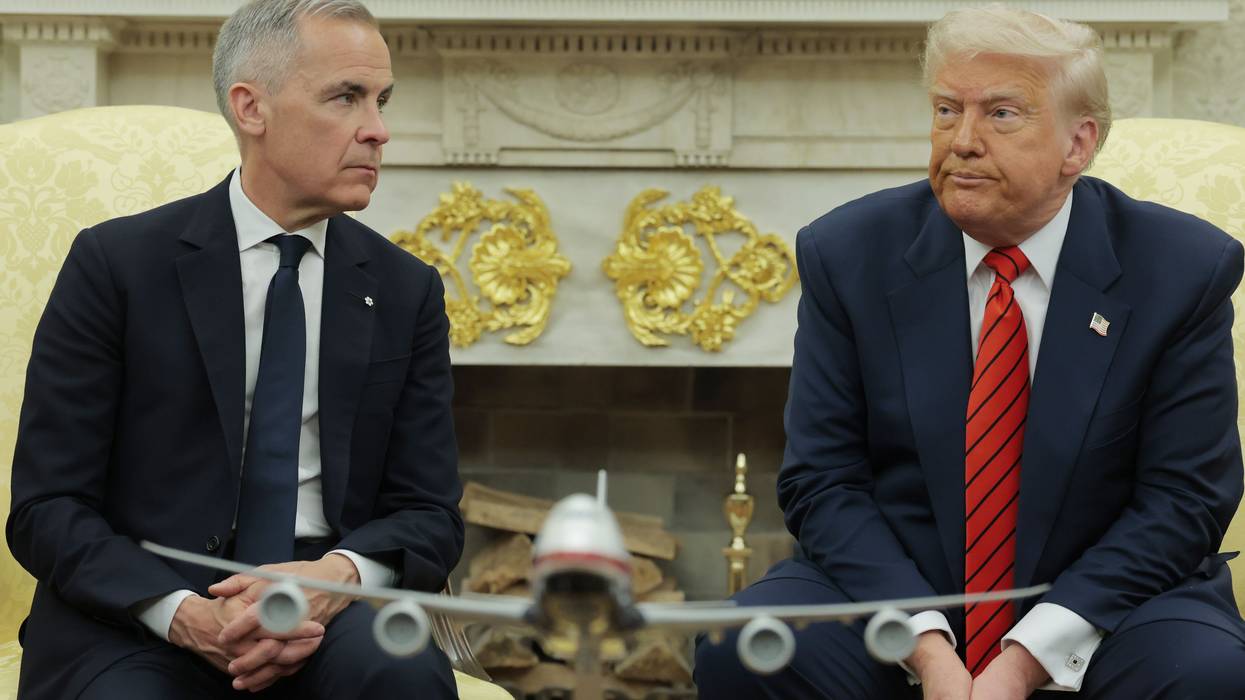
US President Donald Trump said late Wednesday that the American military is already looking ahead to its "next conquest" as the Middle East remains embroiled in a deadly military conflict that Trump and his ally, Israeli Prime Minister Benjamin Netanyahu, unleashed six weeks ago.
In a late-night post on his Truth Social platform, Trump said US forces will remain "in place" and "around" Iran until a "real agreement" is reached to end the war, as the two-week ceasefire the president and Iranian leaders announced late Tuesday hangs by a thread due to Israel's massive bombardment of Lebanon.
After threatening a "bigger, and better, and stronger" assault on Iran if peace talks collapse, Trump said the US military is "Loading Up and Resting, looking forward, actually, to its next Conquest"—even as senior administration officials expressed concerns that the president's declarations of victory in Iran were premature.
Branislav Slantchev, an international relations expert who teaches political science at the University of California San Diego, wrote in response to Trump's post that "this depraved idiot is out of control."
"We cannot live this way," added journalist Marisa Kabas.
Trump, who has bombed more countries than any other president in modern US history despite campaigning on "no new wars," did not name any potential targets of the American military's "next conquest" in his Wednesday night post. But the president has lobbed threats against Cuba and Greenland repeatedly in recent months, threatening to seize both island nations by force. Last week, Trump asked Congress to approve a $1.5 trillion military budget for the coming fiscal year—a request that included tens of billions for new battleships and fighter jets.
During a speech at a Saudi-backed investment summit in Miami last month, Trump touted the US military's illegal attacks on Venezuela and Iran before declaring, "Cuba is next."
"Pretend I didn't say that," the president added.
In a separate Truth Social post Wednesday night, Trump hit out at NATO and characterized Greenland, in all-caps, as a "BIG, POORLY RUN, PIECE OF ICE."
Brian Finucane, senior adviser to the US Program at the International Crisis Group, argued that Trump is "lashing out because his war on a whim did not result in the hoped-for ‘Venezuela’ in Iran but a historic debacle instead."
The Intercept's Nick Turse reported last month that amid the Iran war, a top Pentagon official "revealed that US wars in the Western Hemisphere are also expanding, unveiling an effort dubbed 'Operation Total Extermination.'"
Joseph Humire, the Pentagon's acting assistant secretary for homeland defense and Americas security affairs, told lawmakers that the US military "supported 'bilateral kinetic actions against cartel targets along the Colombia-Ecuador border'" in early March, according to Turse.
"The US–Ecuadorian campaign has already strayed into Colombia after a farm was bombed or hit by 'ricochet effect' on March 3, leaving an unexploded 500-pound bomb lying in Colombia’s border region," Turse reported. "In addition to his wars in the Western hemisphere, Trump has also launched attacks on Iran, Iraq, Nigeria, Somalia, Syria, and Yemen during his second term—most of them sites of US conflicts during the war on terror."