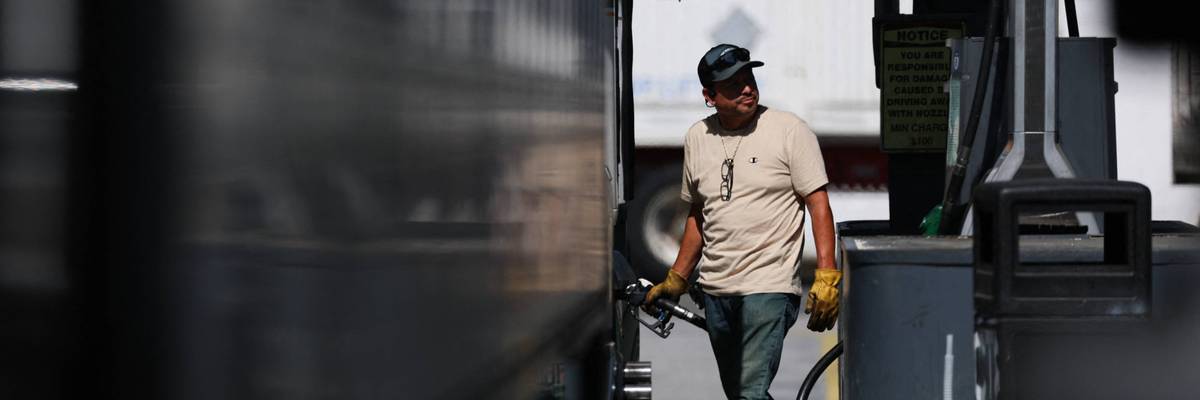
A truck is refueled with diesel at a truck stop in Commerce, California on August 26, 2026.
Inflation Could Soon ‘Get a Lot More Painful’ as Trump’s Iran War Drives Diesel Over $6 a Gallon
"Diesel touches almost everything Americans buy," said one expert.
The price of diesel fuel hit another record high on Friday, thanks in large part to President Donald Trump's illegal war with Iran.
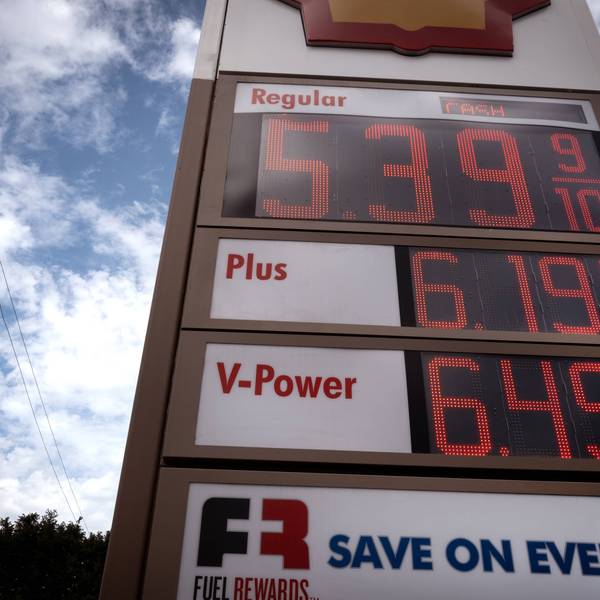
New data released by the American Automobile Association showed the average price of diesel in the US increasing to $6.06, a 14% increase over the average price one month ago and a 64% increase from the average price one year ago.
In a Friday social media post, petroleum industry analyst Patrick De Haan reported that the price of diesel "is not slowing down," hitting an average of $6.07 as of 10:34 am ET.
De Haan also projected that Americans will collectively spend $711 million more on gasoline and diesel on Friday than they did a year ago, and warned "this number will continue to grow and could soon be $1 billion per day."
Rising diesel prices often portend higher inflation because it is the fuel used by trucks to ship goods across the country.
In an interview with The Associated Press published Friday, David Ortega, professor of food economics and policy at Michigan State University, warned that US consumers are likely in for another painful round of cost increases if the price of diesel stays at record highs.
“Early on, much of the cost increase gets absorbed along the supply chain through existing freight contracts and retailer margins,” said Ortega. “But as contracts reprice and fuel surcharges take hold, more of that cost makes its way to the grocery store.”
Ortega's analysis was echoed by Mark Tepper, CEO of Strategic Wealth Partners, who wrote in a social media post that "inflation could be about to get a lot more painful" if the price of diesel doesn't come down soon.
"Diesel touches almost everything Americans buy," Tepper explained. "Coming out of the pandemic, rising diesel prices were a leading indicator for the inflation that followed."
Diane Swonk, chief economist at audit services firm KPMG, said rising diesel costs, combined with the latest Consumer Price Index report from the Bureau of Labor Statistics showing continued elevated inflation, made it likely that the US Federal Reserve will hike interest rates.
"The Fed will begin hiking in September, removing what it gave us in rate cuts in late 2025," Swonk predicted. "We now expect three rate hikes by early 2026. The probability that the vote will be unanimous just rose."
The record diesel prices, and their subsequent impact on inflation, come less than two months before the midterm elections.
The social media account for Democrats in the US House of Representatives pounced on news of higher diesel prices, which they said would mean "higher delivery prices, more expensive groceries, and surging electric bills."
"Trump's war with Iran did this," the House Democrats added.
Alex Jacquez, senior vice president of policy, advocacy, and research at Groundwork Collaborative, also took a shot at the president's policies, noting that in recent weeks he has "imposed further tariffs on one of our closest trading partners and continues escalation in Iran."
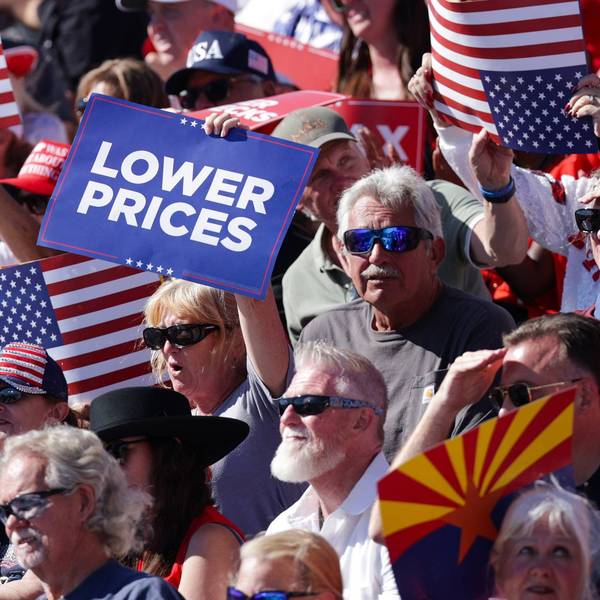
"Trump promised to lower costs and improve daily life for Americans," Jacquez added. "He’s not only failed to deliver on that promise, he’s driven our economy over a cliff."
Willamette University historian Seth Cotlar argued that the spike in diesel fuel could have significant impact on the US Senate race in Maine, where Republican incumbent Sen. Susan Collins is vying for a sixth term in office.
"Home heating oil season is about to start up," Cotlar observed. "In Maine, about 50% of homes use heating oil which is almost identical to diesel. How’s that GOP affordability agenda coming Senator Collins?"
We are at a crossroads
This country and this world are at a monumental crossroads. In a few short weeks, US voters will have an opportunity to beat back the forces of fascism and confront the billionaires who are rigging the economy, our media system, and our democracy, making it increasingly impossible for ordinary people to get by. We’re not just talking about the election. We’re talking about what must be done once these fascist elements are vanquished from power. We need a bolder set of solutions than what either major party has so far been willing to offer and a working-class movement ready to fight like hell for it. Trump didn't emerge from nowhere. The conditions that fueled MAGA authoritarianism were created by decades of radical neoliberal economic policies and a corrupt political system dominated by corporate interests. They slashed taxes on the super-rich, promising that the benefits would trickle down. They said giveaways to the corporate titans would make life more affordable for the rest of us. It was all bullshit. And when a bitter, betrayed populace searches for someone to blame, right-wing demagogues have little trouble finding scapegoats. People know when they're being lied to, but you won't hear any of this from the corporate media. Only independent journalism—powered and funded by people who believe in building a better world—can deliver truly trustworthy daily news. Our Fall Campaign is underway, and we need your help. To power our newsroom through the rest of the year, we need to raise $125,000 by midnight on October 31. So if you share our vision, please contribute whatever you can to sustain our work. |
The price of diesel fuel hit another record high on Friday, thanks in large part to President Donald Trump's illegal war with Iran.
New data released by the American Automobile Association showed the average price of diesel in the US increasing to $6.06, a 14% increase over the average price one month ago and a 64% increase from the average price one year ago.
In a Friday social media post, petroleum industry analyst Patrick De Haan reported that the price of diesel "is not slowing down," hitting an average of $6.07 as of 10:34 am ET.
De Haan also projected that Americans will collectively spend $711 million more on gasoline and diesel on Friday than they did a year ago, and warned "this number will continue to grow and could soon be $1 billion per day."
Rising diesel prices often portend higher inflation because it is the fuel used by trucks to ship goods across the country.
In an interview with The Associated Press published Friday, David Ortega, professor of food economics and policy at Michigan State University, warned that US consumers are likely in for another painful round of cost increases if the price of diesel stays at record highs.
“Early on, much of the cost increase gets absorbed along the supply chain through existing freight contracts and retailer margins,” said Ortega. “But as contracts reprice and fuel surcharges take hold, more of that cost makes its way to the grocery store.”
Ortega's analysis was echoed by Mark Tepper, CEO of Strategic Wealth Partners, who wrote in a social media post that "inflation could be about to get a lot more painful" if the price of diesel doesn't come down soon.
"Diesel touches almost everything Americans buy," Tepper explained. "Coming out of the pandemic, rising diesel prices were a leading indicator for the inflation that followed."
Diane Swonk, chief economist at audit services firm KPMG, said rising diesel costs, combined with the latest Consumer Price Index report from the Bureau of Labor Statistics showing continued elevated inflation, made it likely that the US Federal Reserve will hike interest rates.
"The Fed will begin hiking in September, removing what it gave us in rate cuts in late 2025," Swonk predicted. "We now expect three rate hikes by early 2026. The probability that the vote will be unanimous just rose."
The record diesel prices, and their subsequent impact on inflation, come less than two months before the midterm elections.
The social media account for Democrats in the US House of Representatives pounced on news of higher diesel prices, which they said would mean "higher delivery prices, more expensive groceries, and surging electric bills."
"Trump's war with Iran did this," the House Democrats added.
Alex Jacquez, senior vice president of policy, advocacy, and research at Groundwork Collaborative, also took a shot at the president's policies, noting that in recent weeks he has "imposed further tariffs on one of our closest trading partners and continues escalation in Iran."
"Trump promised to lower costs and improve daily life for Americans," Jacquez added. "He’s not only failed to deliver on that promise, he’s driven our economy over a cliff."
Willamette University historian Seth Cotlar argued that the spike in diesel fuel could have significant impact on the US Senate race in Maine, where Republican incumbent Sen. Susan Collins is vying for a sixth term in office.
"Home heating oil season is about to start up," Cotlar observed. "In Maine, about 50% of homes use heating oil which is almost identical to diesel. How’s that GOP affordability agenda coming Senator Collins?"
- Diesel Hits $5 Per Gallon in US, 33% Higher Than Before Trump Launched War Against Iran ›
- 'Absolutely Massive' Price Shocks Coming as Trump's Iran War Drives Up Gas, Diesel Prices ›
- 'Trump Did It!': At $5.85 a Gallon, Diesel Price Hits All-Time High in US Thanks to War on Iran ›
- 'Working Families Foot Trump's Bill Twice' as Fed Hikes Rates Amid Worsening Affordability Crisis | Common Dreams ›
- 'Matter of Life and Death': Senators Demand Trump Administration Boost Heating Aid as Iran War Hikes Costs | Common Dreams ›
- Trump Strikes 'Deal With the Devil' for Russian Diesel as High Prices Hinder GOP in Midterms | Common Dreams ›
The price of diesel fuel hit another record high on Friday, thanks in large part to President Donald Trump's illegal war with Iran.
New data released by the American Automobile Association showed the average price of diesel in the US increasing to $6.06, a 14% increase over the average price one month ago and a 64% increase from the average price one year ago.
In a Friday social media post, petroleum industry analyst Patrick De Haan reported that the price of diesel "is not slowing down," hitting an average of $6.07 as of 10:34 am ET.
De Haan also projected that Americans will collectively spend $711 million more on gasoline and diesel on Friday than they did a year ago, and warned "this number will continue to grow and could soon be $1 billion per day."
Rising diesel prices often portend higher inflation because it is the fuel used by trucks to ship goods across the country.
In an interview with The Associated Press published Friday, David Ortega, professor of food economics and policy at Michigan State University, warned that US consumers are likely in for another painful round of cost increases if the price of diesel stays at record highs.
“Early on, much of the cost increase gets absorbed along the supply chain through existing freight contracts and retailer margins,” said Ortega. “But as contracts reprice and fuel surcharges take hold, more of that cost makes its way to the grocery store.”
Ortega's analysis was echoed by Mark Tepper, CEO of Strategic Wealth Partners, who wrote in a social media post that "inflation could be about to get a lot more painful" if the price of diesel doesn't come down soon.
"Diesel touches almost everything Americans buy," Tepper explained. "Coming out of the pandemic, rising diesel prices were a leading indicator for the inflation that followed."
Diane Swonk, chief economist at audit services firm KPMG, said rising diesel costs, combined with the latest Consumer Price Index report from the Bureau of Labor Statistics showing continued elevated inflation, made it likely that the US Federal Reserve will hike interest rates.
"The Fed will begin hiking in September, removing what it gave us in rate cuts in late 2025," Swonk predicted. "We now expect three rate hikes by early 2026. The probability that the vote will be unanimous just rose."
The record diesel prices, and their subsequent impact on inflation, come less than two months before the midterm elections.
The social media account for Democrats in the US House of Representatives pounced on news of higher diesel prices, which they said would mean "higher delivery prices, more expensive groceries, and surging electric bills."
"Trump's war with Iran did this," the House Democrats added.
Alex Jacquez, senior vice president of policy, advocacy, and research at Groundwork Collaborative, also took a shot at the president's policies, noting that in recent weeks he has "imposed further tariffs on one of our closest trading partners and continues escalation in Iran."
"Trump promised to lower costs and improve daily life for Americans," Jacquez added. "He’s not only failed to deliver on that promise, he’s driven our economy over a cliff."
Willamette University historian Seth Cotlar argued that the spike in diesel fuel could have significant impact on the US Senate race in Maine, where Republican incumbent Sen. Susan Collins is vying for a sixth term in office.
"Home heating oil season is about to start up," Cotlar observed. "In Maine, about 50% of homes use heating oil which is almost identical to diesel. How’s that GOP affordability agenda coming Senator Collins?"
- Diesel Hits $5 Per Gallon in US, 33% Higher Than Before Trump Launched War Against Iran ›
- 'Absolutely Massive' Price Shocks Coming as Trump's Iran War Drives Up Gas, Diesel Prices ›
- 'Trump Did It!': At $5.85 a Gallon, Diesel Price Hits All-Time High in US Thanks to War on Iran ›
- 'Working Families Foot Trump's Bill Twice' as Fed Hikes Rates Amid Worsening Affordability Crisis | Common Dreams ›
- 'Matter of Life and Death': Senators Demand Trump Administration Boost Heating Aid as Iran War Hikes Costs | Common Dreams ›
- Trump Strikes 'Deal With the Devil' for Russian Diesel as High Prices Hinder GOP in Midterms | Common Dreams ›