SUBSCRIBE TO OUR FREE NEWSLETTER
Daily news & progressive opinion—funded by the people, not the corporations—delivered straight to your inbox.
5
#000000
#FFFFFF
To donate by check, phone, or other method, see our More Ways to Give page.
Daily news & progressive opinion—funded by the people, not the corporations—delivered straight to your inbox.

Surveillance footage shows a boat bombed by US Southern Command in the eastern Pacific Ocean on June 18, 2026.
The Trump administration has killed at least 211 people by bombing boats in the Caribbean Sea and Pacific Ocean since last September.
As US senators pushed the Department of Defense to release unedited footage of the boat bombings the Trump administration has carried out in the Caribbean Sea and Pacific Ocean since last September, US Southern Command on Thursday announced that it had killed three more people in the operation that some international law experts have said amounts to mass murder and an extrajudicial killing spree.
As with the other announcements of boat bombings, at least 65 of which the US has now carried out, Southern Command released no evidence Thursday night of its claim that the vessel it bombed was “operated by Designated Terrorist Organizations,” “engaged in narco-trafficking operations," or that the three people killed were “narco-terrorists.”
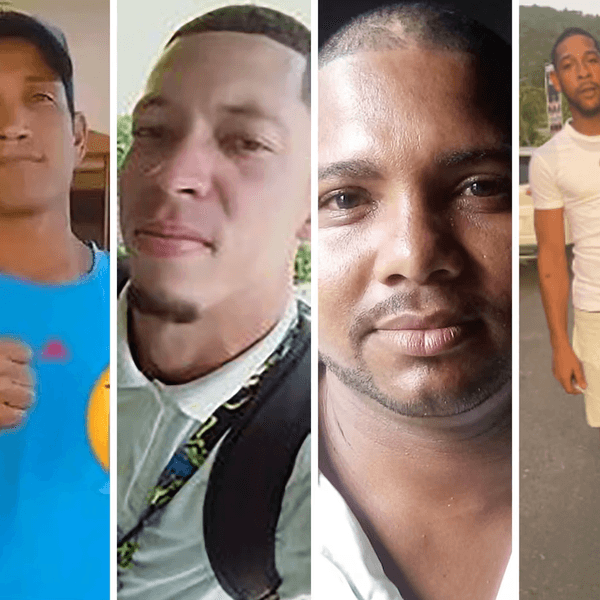
Victims of the previous boat bombings have included fishermen and other people who had no involvement with drug trafficking, according to legal complaints filed by families.
Ben Saul, the United Nations special rapporteur on human rights and counterterrorism, called on international governments to "break their silence and jointly condemn these murders," noting that the death toll of the administration's operation is now at least 211 people.
Some international officials, including French Foreign Minister Jean-Noël Barrot and Colombian President Gustavo Petro, have strongly denounced the boat bombings and accused Trump of breaking international law. Some countries have ended or dialed back intelligence sharing with the US. But human rights groups have called on the international community to take a unified stance against the boat strikes.
"Sick of hearing, 'I didn't know those boat strikes are still happening. Silence leaves the impression that this is somehow OK," said Adam Isacson of the Washington Office on Latin America on Thursday, adding that the US Coast Guard had called off its search for two survivors of an earlier boat bombing this week, potentially bringing the total death toll to 213.
President Donald Trump has claimed the US is engaged in an "armed conflict" with cartels in Latin America and has said the boat bombing campaign is aimed at stopping illegal drugs like fentanyl from flowing into the US. According to the US State Department's 2025 report on international narcotics control, Mexico is the "only significant source of illicit fentanyl and fentanyl analogues significantly affecting the United States," with the drug mainly entering the US via the southern border.
In an analysis of Customs and Border Protection data in April, Isacson emphasized that the lethal boat strikes have not stopped drugs from entering the US.
Even if the administration were targeting drug traffickers as it claims, bombing vessels involved in the drug trade is a violation of international laws protecting civilians from military force. Since the US is not officially engaged in an armed conflict with drug cartels, the accused "narco-terrorists" the Trump administration has killed have all been civilians.
Legal experts also say that US Southern Command's killing of survivors of initial strikes by bombing them again, would also be war crimes in an armed conflict.
Earlier this week, after another boat bombing that killed at least one person, Saul called for "those who ordered and carried out these crimes to be investigated, prosecuted, and punished, in line with international law."
On June 24, the ACLU and the Center for Constitutional Rights are set to argue before the US District Court for the Southern District of New York for the immediate release of a secret legal memo authored by the Justice Department's Office of Legal Counsel, which the Trump administration has repeatedly claimed gives the president and Defense Secretary Pete Hegseth the authority to kill people at sea.
Dear Common Dreams reader, It’s been nearly 30 years since I co-founded Common Dreams with my late wife, Lina Newhouser. We had the radical notion that journalism should serve the public good, not corporate profits. It was clear to us from the outset what it would take to build such a project. No paid advertisements. No corporate sponsors. No millionaire publisher telling us what to think or do. Many people said we wouldn't last a year, but we proved those doubters wrong. Together with a tremendous team of journalists and dedicated staff, we built an independent media outlet free from the constraints of profits and corporate control. Our mission has always been simple: To inform. To inspire. To ignite change for the common good. Building Common Dreams was not easy. Our survival was never guaranteed. When you take on the most powerful forces—Wall Street greed, fossil fuel industry destruction, Big Tech lobbyists, and uber-rich oligarchs who have spent billions upon billions rigging the economy and democracy in their favor—the only bulwark you have is supporters who believe in your work. But here’s the urgent message from me today. It's never been this bad out there. And it's never been this hard to keep us going. At the very moment Common Dreams is most needed, the threats we face are intensifying. We need your support now more than ever. We don't accept corporate advertising and never will. We don't have a paywall because we don't think people should be blocked from critical news based on their ability to pay. Everything we do is funded by the donations of readers like you. When everyone does the little they can afford, we are strong. But if that support retreats or dries up, so do we. Will you donate now to make sure Common Dreams not only survives but thrives? —Craig Brown, Co-founder |
As US senators pushed the Department of Defense to release unedited footage of the boat bombings the Trump administration has carried out in the Caribbean Sea and Pacific Ocean since last September, US Southern Command on Thursday announced that it had killed three more people in the operation that some international law experts have said amounts to mass murder and an extrajudicial killing spree.
As with the other announcements of boat bombings, at least 65 of which the US has now carried out, Southern Command released no evidence Thursday night of its claim that the vessel it bombed was “operated by Designated Terrorist Organizations,” “engaged in narco-trafficking operations," or that the three people killed were “narco-terrorists.”
Victims of the previous boat bombings have included fishermen and other people who had no involvement with drug trafficking, according to legal complaints filed by families.
Ben Saul, the United Nations special rapporteur on human rights and counterterrorism, called on international governments to "break their silence and jointly condemn these murders," noting that the death toll of the administration's operation is now at least 211 people.
Some international officials, including French Foreign Minister Jean-Noël Barrot and Colombian President Gustavo Petro, have strongly denounced the boat bombings and accused Trump of breaking international law. Some countries have ended or dialed back intelligence sharing with the US. But human rights groups have called on the international community to take a unified stance against the boat strikes.
"Sick of hearing, 'I didn't know those boat strikes are still happening. Silence leaves the impression that this is somehow OK," said Adam Isacson of the Washington Office on Latin America on Thursday, adding that the US Coast Guard had called off its search for two survivors of an earlier boat bombing this week, potentially bringing the total death toll to 213.
President Donald Trump has claimed the US is engaged in an "armed conflict" with cartels in Latin America and has said the boat bombing campaign is aimed at stopping illegal drugs like fentanyl from flowing into the US. According to the US State Department's 2025 report on international narcotics control, Mexico is the "only significant source of illicit fentanyl and fentanyl analogues significantly affecting the United States," with the drug mainly entering the US via the southern border.
In an analysis of Customs and Border Protection data in April, Isacson emphasized that the lethal boat strikes have not stopped drugs from entering the US.
Even if the administration were targeting drug traffickers as it claims, bombing vessels involved in the drug trade is a violation of international laws protecting civilians from military force. Since the US is not officially engaged in an armed conflict with drug cartels, the accused "narco-terrorists" the Trump administration has killed have all been civilians.
Legal experts also say that US Southern Command's killing of survivors of initial strikes by bombing them again, would also be war crimes in an armed conflict.
Earlier this week, after another boat bombing that killed at least one person, Saul called for "those who ordered and carried out these crimes to be investigated, prosecuted, and punished, in line with international law."
On June 24, the ACLU and the Center for Constitutional Rights are set to argue before the US District Court for the Southern District of New York for the immediate release of a secret legal memo authored by the Justice Department's Office of Legal Counsel, which the Trump administration has repeatedly claimed gives the president and Defense Secretary Pete Hegseth the authority to kill people at sea.
As US senators pushed the Department of Defense to release unedited footage of the boat bombings the Trump administration has carried out in the Caribbean Sea and Pacific Ocean since last September, US Southern Command on Thursday announced that it had killed three more people in the operation that some international law experts have said amounts to mass murder and an extrajudicial killing spree.
As with the other announcements of boat bombings, at least 65 of which the US has now carried out, Southern Command released no evidence Thursday night of its claim that the vessel it bombed was “operated by Designated Terrorist Organizations,” “engaged in narco-trafficking operations," or that the three people killed were “narco-terrorists.”
Victims of the previous boat bombings have included fishermen and other people who had no involvement with drug trafficking, according to legal complaints filed by families.
Ben Saul, the United Nations special rapporteur on human rights and counterterrorism, called on international governments to "break their silence and jointly condemn these murders," noting that the death toll of the administration's operation is now at least 211 people.
Some international officials, including French Foreign Minister Jean-Noël Barrot and Colombian President Gustavo Petro, have strongly denounced the boat bombings and accused Trump of breaking international law. Some countries have ended or dialed back intelligence sharing with the US. But human rights groups have called on the international community to take a unified stance against the boat strikes.
"Sick of hearing, 'I didn't know those boat strikes are still happening. Silence leaves the impression that this is somehow OK," said Adam Isacson of the Washington Office on Latin America on Thursday, adding that the US Coast Guard had called off its search for two survivors of an earlier boat bombing this week, potentially bringing the total death toll to 213.
President Donald Trump has claimed the US is engaged in an "armed conflict" with cartels in Latin America and has said the boat bombing campaign is aimed at stopping illegal drugs like fentanyl from flowing into the US. According to the US State Department's 2025 report on international narcotics control, Mexico is the "only significant source of illicit fentanyl and fentanyl analogues significantly affecting the United States," with the drug mainly entering the US via the southern border.
In an analysis of Customs and Border Protection data in April, Isacson emphasized that the lethal boat strikes have not stopped drugs from entering the US.
Even if the administration were targeting drug traffickers as it claims, bombing vessels involved in the drug trade is a violation of international laws protecting civilians from military force. Since the US is not officially engaged in an armed conflict with drug cartels, the accused "narco-terrorists" the Trump administration has killed have all been civilians.
Legal experts also say that US Southern Command's killing of survivors of initial strikes by bombing them again, would also be war crimes in an armed conflict.
Earlier this week, after another boat bombing that killed at least one person, Saul called for "those who ordered and carried out these crimes to be investigated, prosecuted, and punished, in line with international law."
On June 24, the ACLU and the Center for Constitutional Rights are set to argue before the US District Court for the Southern District of New York for the immediate release of a secret legal memo authored by the Justice Department's Office of Legal Counsel, which the Trump administration has repeatedly claimed gives the president and Defense Secretary Pete Hegseth the authority to kill people at sea.