SUBSCRIBE TO OUR FREE NEWSLETTER
Daily news & progressive opinion—funded by the people, not the corporations—delivered straight to your inbox.
5
#000000
#FFFFFF
To donate by check, phone, or other method, see our More Ways to Give page.
Daily news & progressive opinion—funded by the people, not the corporations—delivered straight to your inbox.
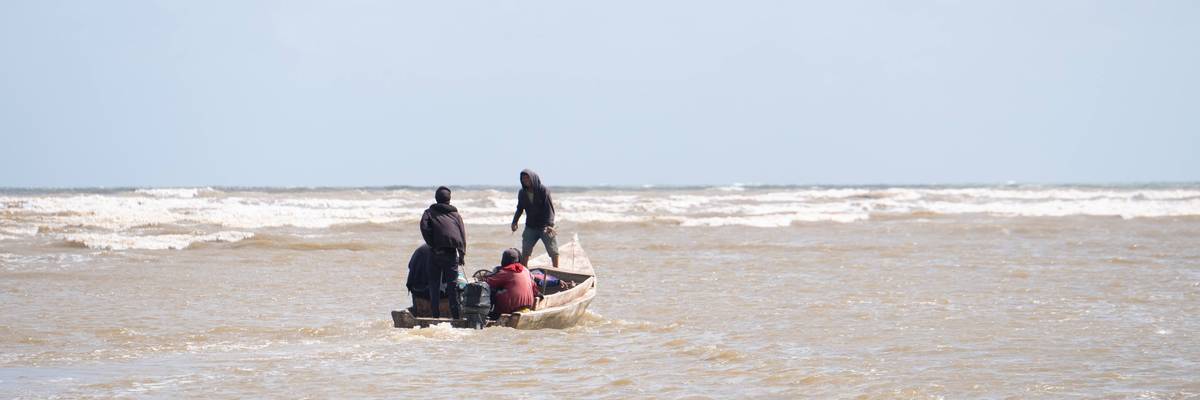
Wayuu fishermen in the coastal community of Cano Sagua, Venezuela on December 20, 2025 continue their daily work amid growing anxiety over the Trump administration's deadly attacks on boats in the region.
As the death toll rises, governments "cannot plausibly claim ignorance of the risks" of supporting the US military in the Caribbean and Pacific, said a coalition.
With the death toll in the Trump administration's bombings of boats in the Caribbean Sea and eastern Pacific Ocean hitting at least 180, a global coalition of rights and policy organizations is warning governments that they "cannot plausibly claim ignorance of the risks" of continuing to support the United States' deadly policy in the region, and demanding that countries "stop facilitating extrajudicial killings" carried out by the US military.
The Center for Civilians in Conflict (CIVIC) spearheaded the statement now co-signed by at least 125 human rights groups, drug policy organizations, and veterans' groups, warning that just as US military officials and personnel have risked potential criminal liability by taking part in at least 52 boat bombings since September, third countries that are aiding the US in the attacks may be taking similar risks.
"Third states can incur legal responsibility for aiding or assisting another state in their commission of internationally wrongful acts, including extrajudicial killings and crimes against humanity," reads the statement, whose signatories include Amnesty International, Oxfam America, and the Friends Committee on National Legislation. "Forms of cooperation such as intelligence sharing, access to military bases, and the provision of logistical support may meet the threshold for aiding and assisting where they facilitate the identification, tracking, and targeting of vessels."
As El País reported Thursday, a number of countries have confirmed they are cooperating with President Donald Trump's targeting of boats in the Caribbean and Pacific, which the administration has claimed is aimed at stopping drug trafficking in the region.
The US military has not publicly released evidence that the people it's killed were actually "narco-terrorists" as it's repeatedly claimed; the family members of some of the victims have filed legal complaints, saying their loved ones were not involved in the drug trade.
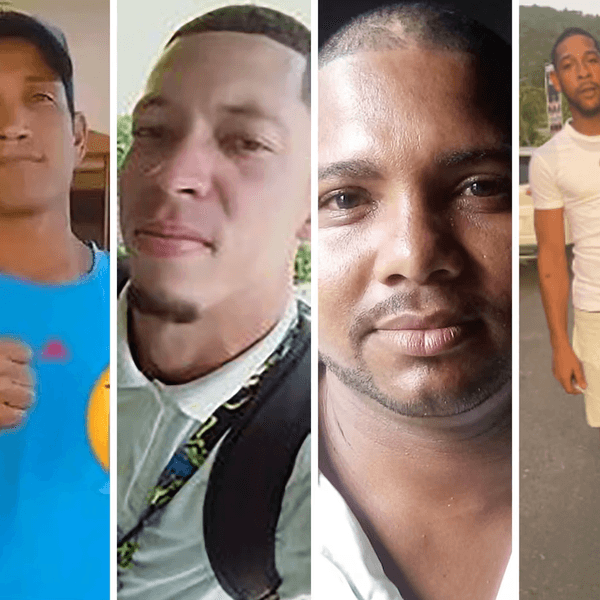
A small number of victims were identified last year by The Associated Press, which found some were struggling fishermen or other workers who took low-level jobs helping drug traffickers to navigate the Caribbean. Adam Isacson of the Washington Office on Latin America has compared the killings, if they have targeted the drug trade at all, to "straight-up massacring 16-year-old drug dealers on US street corners.”
Despite the lack of evidence to back up the administration's claims about the operation, the Dominican Republic has allowed the US to refuel military planes and transport equipment at one of its air bases and its Las Américas International Airport, and the prime minister of Trinidad and Tobago expressed support for the boat bombings when they began in September. The island nation has reportedly allowed the transit of military aircraft and the installation of a US radar system for surveillance.
Colombian President Gustavo Petro said in November that his government would no longer share intelligence on drug trafficking with the US, but he later walked back the threat, saying intelligence would be shared provided it "will be used for seizures without undermining human rights."
Trump also convened a "Shield of the Americas" summit last month to announce the creation of a coalition of 17 countries in the region, including Argentina, Costa Rica, and Paraguay, which will focus on "bilateral and multilateral operations against cartels and terrorist organizations.”
Legal experts have warned that although Trump informed the US Congress last October that the administration views the US as being in an "armed conflict" with Latin American drug cartels, the military has clearly violated international law by targeting defenseless survivors of its boat bombings.
"The United States is not in an armed conflict with anyone in Latin America. That means the people on these boats are civilians. Civilians, including those suspected of smuggling drugs, are not lawful targets," said the ACLU last month.
Experts have said the bombings meet the definition of extrajudicial killings—or simply murder—and one top US military lawyer warned before the operation began that US service members could face legal repercussions for carrying out the attacks at the direction of Trump and Defense Secretary Pete Hegseth.
Despite the alarm raised by legal experts, "we are witnessing a continuation and a truly worrying normalization of these attacks against vessels," Annie Shiel, US director of CIVIC, told El País on Thursday. “The United States is committing extrajudicial killings or murders, plain and simple.”
The group and its fellow signatories warned states like the Dominican Republic and Trinidad and Tobago could also be held legally responsible if they provide aid or assistance to the US when it is committing acts that violate international law.
"All states must immediately cease or refrain from providing any assistance that could contribute to these unlawful killings," reads the statement. "Failure to do so facilitates the continuation of this lawless campaign, undermines the rule of law, and risks incurring legal responsibility under international law."
The groups emphasized that in addition to putting countries at risk for legal liability, governments that facilitate the boat killings are exacerbating harm to their own communities.
"Families awaiting the return of their loved ones may never know what happened to them and have no access to recourse," they said. "Coastal communities have witnessed human remains washing up on shore and fear for their lives when they trade and fish, sowing psychological trauma and undermining livelihoods."
Dear Common Dreams reader, It’s been nearly 30 years since I co-founded Common Dreams with my late wife, Lina Newhouser. We had the radical notion that journalism should serve the public good, not corporate profits. It was clear to us from the outset what it would take to build such a project. No paid advertisements. No corporate sponsors. No millionaire publisher telling us what to think or do. Many people said we wouldn't last a year, but we proved those doubters wrong. Together with a tremendous team of journalists and dedicated staff, we built an independent media outlet free from the constraints of profits and corporate control. Our mission has always been simple: To inform. To inspire. To ignite change for the common good. Building Common Dreams was not easy. Our survival was never guaranteed. When you take on the most powerful forces—Wall Street greed, fossil fuel industry destruction, Big Tech lobbyists, and uber-rich oligarchs who have spent billions upon billions rigging the economy and democracy in their favor—the only bulwark you have is supporters who believe in your work. But here’s the urgent message from me today. It's never been this bad out there. And it's never been this hard to keep us going. At the very moment Common Dreams is most needed, the threats we face are intensifying. We need your support now more than ever. We don't accept corporate advertising and never will. We don't have a paywall because we don't think people should be blocked from critical news based on their ability to pay. Everything we do is funded by the donations of readers like you. When everyone does the little they can afford, we are strong. But if that support retreats or dries up, so do we. Will you donate now to make sure Common Dreams not only survives but thrives? —Craig Brown, Co-founder |
With the death toll in the Trump administration's bombings of boats in the Caribbean Sea and eastern Pacific Ocean hitting at least 180, a global coalition of rights and policy organizations is warning governments that they "cannot plausibly claim ignorance of the risks" of continuing to support the United States' deadly policy in the region, and demanding that countries "stop facilitating extrajudicial killings" carried out by the US military.
The Center for Civilians in Conflict (CIVIC) spearheaded the statement now co-signed by at least 125 human rights groups, drug policy organizations, and veterans' groups, warning that just as US military officials and personnel have risked potential criminal liability by taking part in at least 52 boat bombings since September, third countries that are aiding the US in the attacks may be taking similar risks.
"Third states can incur legal responsibility for aiding or assisting another state in their commission of internationally wrongful acts, including extrajudicial killings and crimes against humanity," reads the statement, whose signatories include Amnesty International, Oxfam America, and the Friends Committee on National Legislation. "Forms of cooperation such as intelligence sharing, access to military bases, and the provision of logistical support may meet the threshold for aiding and assisting where they facilitate the identification, tracking, and targeting of vessels."
As El País reported Thursday, a number of countries have confirmed they are cooperating with President Donald Trump's targeting of boats in the Caribbean and Pacific, which the administration has claimed is aimed at stopping drug trafficking in the region.
The US military has not publicly released evidence that the people it's killed were actually "narco-terrorists" as it's repeatedly claimed; the family members of some of the victims have filed legal complaints, saying their loved ones were not involved in the drug trade.
A small number of victims were identified last year by The Associated Press, which found some were struggling fishermen or other workers who took low-level jobs helping drug traffickers to navigate the Caribbean. Adam Isacson of the Washington Office on Latin America has compared the killings, if they have targeted the drug trade at all, to "straight-up massacring 16-year-old drug dealers on US street corners.”
Despite the lack of evidence to back up the administration's claims about the operation, the Dominican Republic has allowed the US to refuel military planes and transport equipment at one of its air bases and its Las Américas International Airport, and the prime minister of Trinidad and Tobago expressed support for the boat bombings when they began in September. The island nation has reportedly allowed the transit of military aircraft and the installation of a US radar system for surveillance.
Colombian President Gustavo Petro said in November that his government would no longer share intelligence on drug trafficking with the US, but he later walked back the threat, saying intelligence would be shared provided it "will be used for seizures without undermining human rights."
Trump also convened a "Shield of the Americas" summit last month to announce the creation of a coalition of 17 countries in the region, including Argentina, Costa Rica, and Paraguay, which will focus on "bilateral and multilateral operations against cartels and terrorist organizations.”
Legal experts have warned that although Trump informed the US Congress last October that the administration views the US as being in an "armed conflict" with Latin American drug cartels, the military has clearly violated international law by targeting defenseless survivors of its boat bombings.
"The United States is not in an armed conflict with anyone in Latin America. That means the people on these boats are civilians. Civilians, including those suspected of smuggling drugs, are not lawful targets," said the ACLU last month.
Experts have said the bombings meet the definition of extrajudicial killings—or simply murder—and one top US military lawyer warned before the operation began that US service members could face legal repercussions for carrying out the attacks at the direction of Trump and Defense Secretary Pete Hegseth.
Despite the alarm raised by legal experts, "we are witnessing a continuation and a truly worrying normalization of these attacks against vessels," Annie Shiel, US director of CIVIC, told El País on Thursday. “The United States is committing extrajudicial killings or murders, plain and simple.”
The group and its fellow signatories warned states like the Dominican Republic and Trinidad and Tobago could also be held legally responsible if they provide aid or assistance to the US when it is committing acts that violate international law.
"All states must immediately cease or refrain from providing any assistance that could contribute to these unlawful killings," reads the statement. "Failure to do so facilitates the continuation of this lawless campaign, undermines the rule of law, and risks incurring legal responsibility under international law."
The groups emphasized that in addition to putting countries at risk for legal liability, governments that facilitate the boat killings are exacerbating harm to their own communities.
"Families awaiting the return of their loved ones may never know what happened to them and have no access to recourse," they said. "Coastal communities have witnessed human remains washing up on shore and fear for their lives when they trade and fish, sowing psychological trauma and undermining livelihoods."
With the death toll in the Trump administration's bombings of boats in the Caribbean Sea and eastern Pacific Ocean hitting at least 180, a global coalition of rights and policy organizations is warning governments that they "cannot plausibly claim ignorance of the risks" of continuing to support the United States' deadly policy in the region, and demanding that countries "stop facilitating extrajudicial killings" carried out by the US military.
The Center for Civilians in Conflict (CIVIC) spearheaded the statement now co-signed by at least 125 human rights groups, drug policy organizations, and veterans' groups, warning that just as US military officials and personnel have risked potential criminal liability by taking part in at least 52 boat bombings since September, third countries that are aiding the US in the attacks may be taking similar risks.
"Third states can incur legal responsibility for aiding or assisting another state in their commission of internationally wrongful acts, including extrajudicial killings and crimes against humanity," reads the statement, whose signatories include Amnesty International, Oxfam America, and the Friends Committee on National Legislation. "Forms of cooperation such as intelligence sharing, access to military bases, and the provision of logistical support may meet the threshold for aiding and assisting where they facilitate the identification, tracking, and targeting of vessels."
As El País reported Thursday, a number of countries have confirmed they are cooperating with President Donald Trump's targeting of boats in the Caribbean and Pacific, which the administration has claimed is aimed at stopping drug trafficking in the region.
The US military has not publicly released evidence that the people it's killed were actually "narco-terrorists" as it's repeatedly claimed; the family members of some of the victims have filed legal complaints, saying their loved ones were not involved in the drug trade.
A small number of victims were identified last year by The Associated Press, which found some were struggling fishermen or other workers who took low-level jobs helping drug traffickers to navigate the Caribbean. Adam Isacson of the Washington Office on Latin America has compared the killings, if they have targeted the drug trade at all, to "straight-up massacring 16-year-old drug dealers on US street corners.”
Despite the lack of evidence to back up the administration's claims about the operation, the Dominican Republic has allowed the US to refuel military planes and transport equipment at one of its air bases and its Las Américas International Airport, and the prime minister of Trinidad and Tobago expressed support for the boat bombings when they began in September. The island nation has reportedly allowed the transit of military aircraft and the installation of a US radar system for surveillance.
Colombian President Gustavo Petro said in November that his government would no longer share intelligence on drug trafficking with the US, but he later walked back the threat, saying intelligence would be shared provided it "will be used for seizures without undermining human rights."
Trump also convened a "Shield of the Americas" summit last month to announce the creation of a coalition of 17 countries in the region, including Argentina, Costa Rica, and Paraguay, which will focus on "bilateral and multilateral operations against cartels and terrorist organizations.”
Legal experts have warned that although Trump informed the US Congress last October that the administration views the US as being in an "armed conflict" with Latin American drug cartels, the military has clearly violated international law by targeting defenseless survivors of its boat bombings.
"The United States is not in an armed conflict with anyone in Latin America. That means the people on these boats are civilians. Civilians, including those suspected of smuggling drugs, are not lawful targets," said the ACLU last month.
Experts have said the bombings meet the definition of extrajudicial killings—or simply murder—and one top US military lawyer warned before the operation began that US service members could face legal repercussions for carrying out the attacks at the direction of Trump and Defense Secretary Pete Hegseth.
Despite the alarm raised by legal experts, "we are witnessing a continuation and a truly worrying normalization of these attacks against vessels," Annie Shiel, US director of CIVIC, told El País on Thursday. “The United States is committing extrajudicial killings or murders, plain and simple.”
The group and its fellow signatories warned states like the Dominican Republic and Trinidad and Tobago could also be held legally responsible if they provide aid or assistance to the US when it is committing acts that violate international law.
"All states must immediately cease or refrain from providing any assistance that could contribute to these unlawful killings," reads the statement. "Failure to do so facilitates the continuation of this lawless campaign, undermines the rule of law, and risks incurring legal responsibility under international law."
The groups emphasized that in addition to putting countries at risk for legal liability, governments that facilitate the boat killings are exacerbating harm to their own communities.
"Families awaiting the return of their loved ones may never know what happened to them and have no access to recourse," they said. "Coastal communities have witnessed human remains washing up on shore and fear for their lives when they trade and fish, sowing psychological trauma and undermining livelihoods."