SUBSCRIBE TO OUR FREE NEWSLETTER
Daily news & progressive opinion—funded by the people, not the corporations—delivered straight to your inbox.
5
#000000
#FFFFFF
To donate by check, phone, or other method, see our More Ways to Give page.
Daily news & progressive opinion—funded by the people, not the corporations—delivered straight to your inbox.
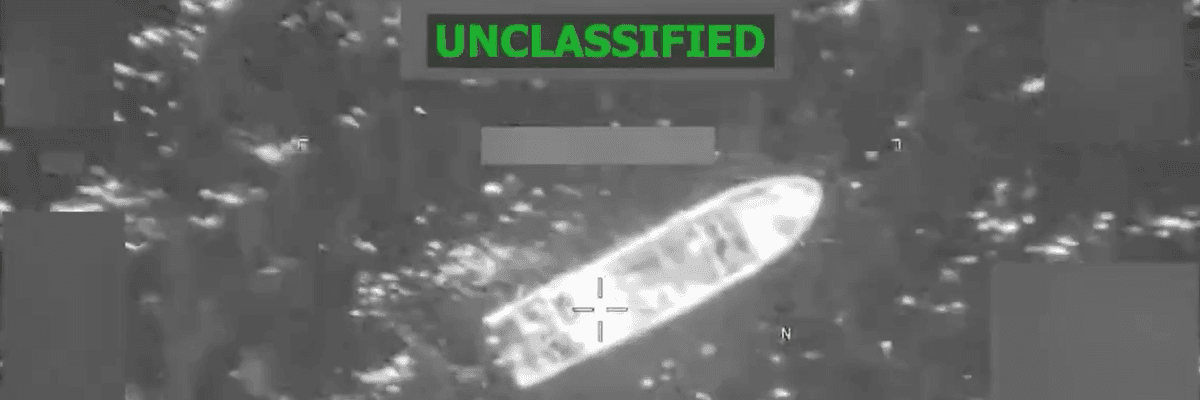
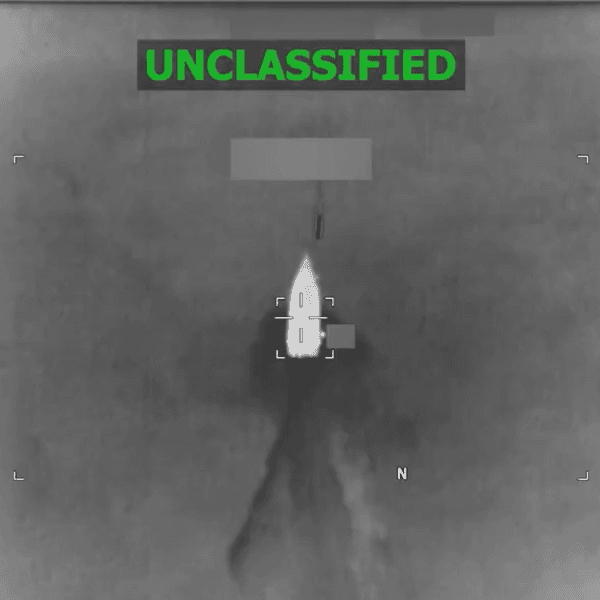
US Southern Command shared on social media a 16-second clip of a strike on a boat in the Pacific Ocean that killed three people on February 20, 2026.
"Washington's extrajudicial murders of alleged drug smugglers: not just grossly immoral and flagrantly illegal, but a ridiculous failure on their own terms."
US President Donald Trump has bombed dozens of boats in the Caribbean Sea and Pacific Ocean over the past 13 months, killing more than 230 people, but "record supplies of cocaine still arrive in the US, Europe, and as far away as Australia every day, cheaper and purer than they've been in decades," The Wall Street Journal reported late Tuesday.
After speaking with scholars of the cocaine trade and law enforcement officials across four continents, the Journal's Juan Forero detailed how "Colombian navy divers are detecting greater use of 'parasites'—metal modules packed with cocaine that traffickers bolt onto the hulls of freighters preparing to steam out of this country's largest Pacific port."
"Deep in the Amazon, smugglers have shifted shipments east, hiding drugs on boats moving through the rainforest's vast river network," he noted. "And on Colombia's long coast, crews evade US military airstrikes by hugging the shoreline in the exact same speedboats the Americans are targeting."
"In Europe, the influx is overwhelming authorities. The drugs arrive on container vessels, smaller boats from way stations in Africa, and semi-submersible vessels that cross the Atlantic to rendezvous with ships near Portugal or Spain," the journalist added, pointing out that cocaine prices have dropped in both the United States and Europe.
Since Trump began bombing the alleged drug boats last year, his administration has argued his deadly campaign is both necessary to stem the flow of illicit drugs and lawful because the US is purportedly at war with cartels. Critics, including Democrats in Congress, legal experts, and human rights groups, have condemned the strikes as murders.
The Journal's reporting isn't the first to highlight the initiative's apparent failure. It follows a July article from The Washington Post about a Drug Enforcement Administration analysis concluding the campaign "had failed to affect the supply or price of cocaine in the United States, and had led traffickers to diversify beyond go-fast boats and to avoid international waters, opting instead for larger boats and hemming close to coastlines, where US forces are less likely to open fire."
Sharing the latest article on social media Wednesday, writer Jesse Walker wrote, "Washington's extrajudicial murders of alleged drug smugglers: not just grossly immoral and flagrantly illegal, but a ridiculous failure on their own terms."
Journalist Glenn Greenwald similarly said: "As was completely predictable (and predicted), Trump's policy of bombing speed boats near Venezuela and Colombia has killed hundreds of people while having no success in impeding the flow of cocaine into the US. In fact, reports the WSJ, cocaine is more plentiful, purer, and cheaper in the US than ever, in part because of these bombings. At some point, will people realize that the justifications they're given for US bombings and wars are almost always—always—lies?"
Dear Common Dreams reader, It’s been nearly 30 years since I co-founded Common Dreams with my late wife, Lina Newhouser. We had the radical notion that journalism should serve the public good, not corporate profits. It was clear to us from the outset what it would take to build such a project. No paid advertisements. No corporate sponsors. No millionaire publisher telling us what to think or do. Many people said we wouldn't last a year, but we proved those doubters wrong. Together with a tremendous team of journalists and dedicated staff, we built an independent media outlet free from the constraints of profits and corporate control. Our mission has always been simple: To inform. To inspire. To ignite change for the common good. Building Common Dreams was not easy. Our survival was never guaranteed. When you take on the most powerful forces—Wall Street greed, fossil fuel industry destruction, Big Tech lobbyists, and uber-rich oligarchs who have spent billions upon billions rigging the economy and democracy in their favor—the only bulwark you have is supporters who believe in your work. But here’s the urgent message from me today. It's never been this bad out there. And it's never been this hard to keep us going. At the very moment Common Dreams is most needed, the threats we face are intensifying. We need your support now more than ever. We don't accept corporate advertising and never will. We don't have a paywall because we don't think people should be blocked from critical news based on their ability to pay. Everything we do is funded by the donations of readers like you. When everyone does the little they can afford, we are strong. But if that support retreats or dries up, so do we. Will you donate now to make sure Common Dreams not only survives but thrives? —Craig Brown, Co-founder |
US President Donald Trump has bombed dozens of boats in the Caribbean Sea and Pacific Ocean over the past 13 months, killing more than 230 people, but "record supplies of cocaine still arrive in the US, Europe, and as far away as Australia every day, cheaper and purer than they've been in decades," The Wall Street Journal reported late Tuesday.
After speaking with scholars of the cocaine trade and law enforcement officials across four continents, the Journal's Juan Forero detailed how "Colombian navy divers are detecting greater use of 'parasites'—metal modules packed with cocaine that traffickers bolt onto the hulls of freighters preparing to steam out of this country's largest Pacific port."
"Deep in the Amazon, smugglers have shifted shipments east, hiding drugs on boats moving through the rainforest's vast river network," he noted. "And on Colombia's long coast, crews evade US military airstrikes by hugging the shoreline in the exact same speedboats the Americans are targeting."
"In Europe, the influx is overwhelming authorities. The drugs arrive on container vessels, smaller boats from way stations in Africa, and semi-submersible vessels that cross the Atlantic to rendezvous with ships near Portugal or Spain," the journalist added, pointing out that cocaine prices have dropped in both the United States and Europe.
Since Trump began bombing the alleged drug boats last year, his administration has argued his deadly campaign is both necessary to stem the flow of illicit drugs and lawful because the US is purportedly at war with cartels. Critics, including Democrats in Congress, legal experts, and human rights groups, have condemned the strikes as murders.
The Journal's reporting isn't the first to highlight the initiative's apparent failure. It follows a July article from The Washington Post about a Drug Enforcement Administration analysis concluding the campaign "had failed to affect the supply or price of cocaine in the United States, and had led traffickers to diversify beyond go-fast boats and to avoid international waters, opting instead for larger boats and hemming close to coastlines, where US forces are less likely to open fire."
Sharing the latest article on social media Wednesday, writer Jesse Walker wrote, "Washington's extrajudicial murders of alleged drug smugglers: not just grossly immoral and flagrantly illegal, but a ridiculous failure on their own terms."
Journalist Glenn Greenwald similarly said: "As was completely predictable (and predicted), Trump's policy of bombing speed boats near Venezuela and Colombia has killed hundreds of people while having no success in impeding the flow of cocaine into the US. In fact, reports the WSJ, cocaine is more plentiful, purer, and cheaper in the US than ever, in part because of these bombings. At some point, will people realize that the justifications they're given for US bombings and wars are almost always—always—lies?"
US President Donald Trump has bombed dozens of boats in the Caribbean Sea and Pacific Ocean over the past 13 months, killing more than 230 people, but "record supplies of cocaine still arrive in the US, Europe, and as far away as Australia every day, cheaper and purer than they've been in decades," The Wall Street Journal reported late Tuesday.
After speaking with scholars of the cocaine trade and law enforcement officials across four continents, the Journal's Juan Forero detailed how "Colombian navy divers are detecting greater use of 'parasites'—metal modules packed with cocaine that traffickers bolt onto the hulls of freighters preparing to steam out of this country's largest Pacific port."
"Deep in the Amazon, smugglers have shifted shipments east, hiding drugs on boats moving through the rainforest's vast river network," he noted. "And on Colombia's long coast, crews evade US military airstrikes by hugging the shoreline in the exact same speedboats the Americans are targeting."
"In Europe, the influx is overwhelming authorities. The drugs arrive on container vessels, smaller boats from way stations in Africa, and semi-submersible vessels that cross the Atlantic to rendezvous with ships near Portugal or Spain," the journalist added, pointing out that cocaine prices have dropped in both the United States and Europe.
Since Trump began bombing the alleged drug boats last year, his administration has argued his deadly campaign is both necessary to stem the flow of illicit drugs and lawful because the US is purportedly at war with cartels. Critics, including Democrats in Congress, legal experts, and human rights groups, have condemned the strikes as murders.
The Journal's reporting isn't the first to highlight the initiative's apparent failure. It follows a July article from The Washington Post about a Drug Enforcement Administration analysis concluding the campaign "had failed to affect the supply or price of cocaine in the United States, and had led traffickers to diversify beyond go-fast boats and to avoid international waters, opting instead for larger boats and hemming close to coastlines, where US forces are less likely to open fire."
Sharing the latest article on social media Wednesday, writer Jesse Walker wrote, "Washington's extrajudicial murders of alleged drug smugglers: not just grossly immoral and flagrantly illegal, but a ridiculous failure on their own terms."
Journalist Glenn Greenwald similarly said: "As was completely predictable (and predicted), Trump's policy of bombing speed boats near Venezuela and Colombia has killed hundreds of people while having no success in impeding the flow of cocaine into the US. In fact, reports the WSJ, cocaine is more plentiful, purer, and cheaper in the US than ever, in part because of these bombings. At some point, will people realize that the justifications they're given for US bombings and wars are almost always—always—lies?"