

5
#000000
#FFFFFF
To donate by check, phone, or other method, see our More Ways to Give page.
Daily news & progressive opinion—funded by the people, not the corporations—delivered straight to your inbox.
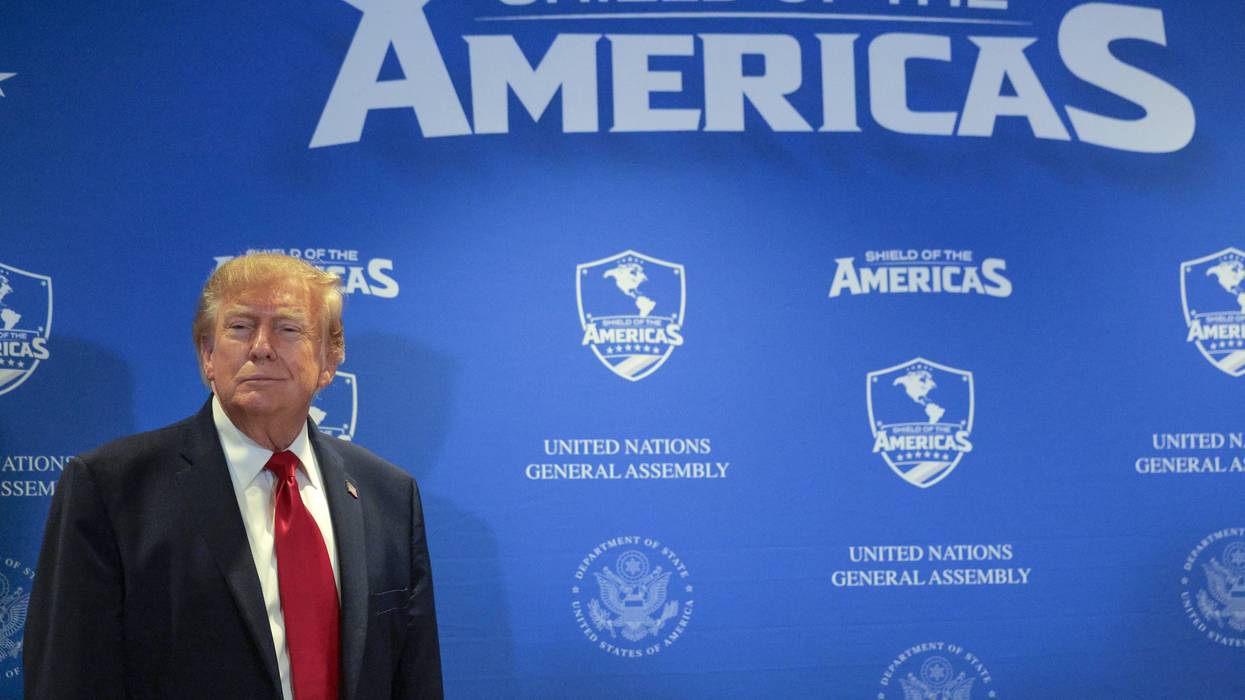
Critics have described Trump's boat strikes as extrajudicial killings that violate due process. At a meeting during this week's gathering of the UN General Assembly, he seemed to agree.
Critics have often described President Donald Trump's campaign of boat strikes in the Caribbean and Pacific—which have taken the lives of at least 234 mostly unknown people—as extrajudicial killings that flout the very basics of due process.
On Tuesday, Trump essentially described them that way too, seeming to suggest that killing people outside the law is the whole point.
"For years, administrations just played games, and they'd bring them to a court in Miami or something, and the judge would release them immediately, and they'd go back to selling drugs," Trump said. "But now, we don't waste our time doing it."
He was speaking at a meeting of the Washington-led "Shield of the Americas" coalition, an alliance of leaders and foreign ministers ostensibly dedicated to stamping out drug cartels and other criminal organizations across the Americas.
The boat strike campaign—known first by the Defense Department as “Operation Southern Spear” before it was rebranded last month as Joint Task Force Western Hemisphere—is part of this effort. The administration says the more than 70 vessels it has targeted with lethal strikes since last September were engaged in “narco-trafficking,” and that killing their operators is a justifiable form of self-defense.
The principal illicit cargo on the maritime routes targeted by Southern Spear is cocaine. But the White House rarely provides any evidence publicly to substantiate that the boats it targets are involved with drug trafficking, and members of Congress have complained that even classified briefings lacked hard evidence. Some of those killed in the strikes have later been identified as ordinary fishermen and other civilians with no known ties to the drug trade.
An investigation from the Washington Office on Latin America found in July that the military has relied on extraordinarily broad criteria to launch the strikes against anyone deemed to be "affiliated" with a secret list of designated terrorist groups. They do not require the commanders launching them to know the identities of those aboard a vessel or have any evidence that it is carrying drugs at all.
Even if the boats were engaged in drug trafficking as the administration claims, wrote Ben Saul, the United Nations special rapporteur on human rights and counterterrorism, in a report released earlier this week, there are no “international legal rights to unilaterally use military force” to counter drug cartels or other organized crime groups that have not mounted any “armed attack” against the US.
The strikes, Saul added, were not a “last resort” or “necessary or proportionate” since the US had not tried to use non-lethal means like intercepting or boarding them before resorting to bombings.
Concurring with several other UN experts, he said that the strikes were "contrary to international law, violate the human right to life, and plausibly constitute crimes against humanity," including "murder."
Trump's comments on Tuesday seemed to underscore what Saul and others critical of the boat bombings have emphasized: that rather than using lethal force as a last resort to repel an immediate threat, his administration was simply killing suspects as an alternative to avoid a cumbersome legal process.
Norman Ornstein, a political scientist and scholar at the conservative American Enterprise Institute, said in a post on social media that Trump's comments were "worthy of the International Criminal Court."
Defense Secretary Pete Hegseth has suggested the administration’s calls to “dismantle” the ICC are in part out of concern that the court, which prosecutes war crimes and other international criminality, could be used to prosecute members of the Trump administration over the boat strikes.
Trump described the ICC as “anti-American” and “evil" during a speech at the UN General Assembly earlier on Tuesday, in which he also threatened to "annihilate" Iran and celebrated that he was claiming the "spoils" of war from Venezuela.
During that same speech, he also boasted that his administration “has carried out dozens of strikes on cartel drug boats, destroying 97% of the drugs coming into the ocean and sea," a claim that his administration has not provided evidence to substantiate.
An internal analysis by the US Drug Enforcement Agency (DEA), reported on in July by the Washington Post, found the opposite, in fact, stating that the strikes “failed to affect the supply or price of cocaine in the United States.”
As Trump heralded the boat strike campaign before the eyes of the world on Tuesday, a coalition of more than 70 lawmakers across the Americas called for the US to end what it said were "hundreds of extrajudicial killings of civilians."
The statement was signed by 15 Democratic members of the US Congress, including Reps. Jesús “Chuy” García (D-Ill.), Greg Casar (D-Texas), Alexandria Ocasio-Cortez (D-NY), Ilhan Omar (D-Minn.), Rashida Tlaib (D-Mich.) and Pramila Jayapal (D-Wash.). It was also signed by lawmakers from Puerto Rico as well as 12 other countries across the Americas—Argentina, Brazil, Canada, Chile, Colombia, Ecuador, Guatemala, Honduras, Mexico, Paraguay, Peru, and Uruguay.
"The identities of nearly all the victims remain publicly unknown, and many families lack effective or safe avenues to obtain information or redress. Coastal and fishing communities face fear and uncertainty as these attacks put lives and livelihoods at risk," the lawmakers wrote.
"The rights to life, due process, and protections against the arbitrary use of force are core principles of democratic rule of law that our countries have committed to uphold," they added. "Allegations of drug trafficking, however serious, do not circumvent or override these protections, nor do they justify lethal force against people who pose no imminent threat."
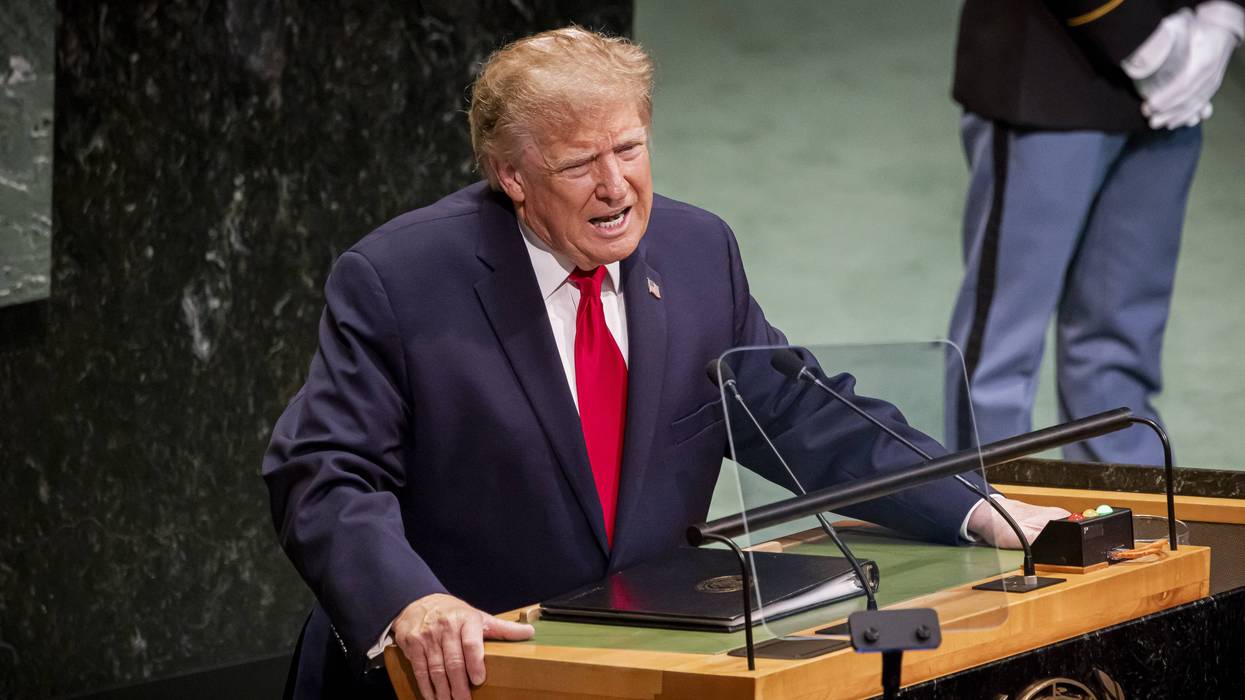
"We must stop this madman," said US Sen. Ed Markey.
President Donald Trump is facing global condemnation for his threat to "annihilate" Iran during a Tuesday speech at the United Nations General Assembly.
Dr. Tara Drozdenko, director of the Global Security Program at the Union of Concerned Scientists (UCS), said on Tuesday that the president's speech "clearly constitutes an implied threat to use overwhelming nuclear force against Iran and the Iranian people broadly."
"This would be a nuclear genocide," Drozdenko emphasized. "Any threat to use nuclear weapons is unacceptable, and his decision to do so should be strongly condemned by government, military, and civil society leaders."
Drozdenko acknowledged that Trump's long history of unhinged rhetoric might make his statements easy to dismiss, but warned even empty threats involving nuclear weapons can have serious real-world ramifications.
"President Trump’s nuclear threats against Iran reinforce a counterproductive lesson also imparted by President Vladimir Putin’s nuclear threats against Ukraine," she said. "Specifically, these threats encourage other countries to conclude that protecting and securing themselves from authoritarians with nuclear weapons requires obtaining their own nuclear arsenal."
Sen. Ed Markey (D-Mass.) also said that Trump's menacing rhetoric toward Iran must be taken seriously.
"Trump threatened to 'annihilate' Iran," Markey wrote in a social media post. "His 'October surprise' must not be a mushroom cloud from a nuclear attack. With these threats and assistance to Saudi Arabia, Trump is inferring mass slaughter and escalating an arms race in the Middle East. We must stop this madman."
Robert Tait, US correspondent for The Guardian, wrote an analysis on Tuesday arguing that Trump's threat against Iran was "stunning, even for him."
Tait noted that it has been decades since the UN General Assembly has "witnessed such a display of bellicosity from a superpower leader," especially since it was delivered in a "forum created in the aftermath of the Second World War, with the explicit aim of preventing future conflicts."
"Whether or not the latest threat should be taken literally," Tait added, "little of what he said about Iran seemed reassuring."
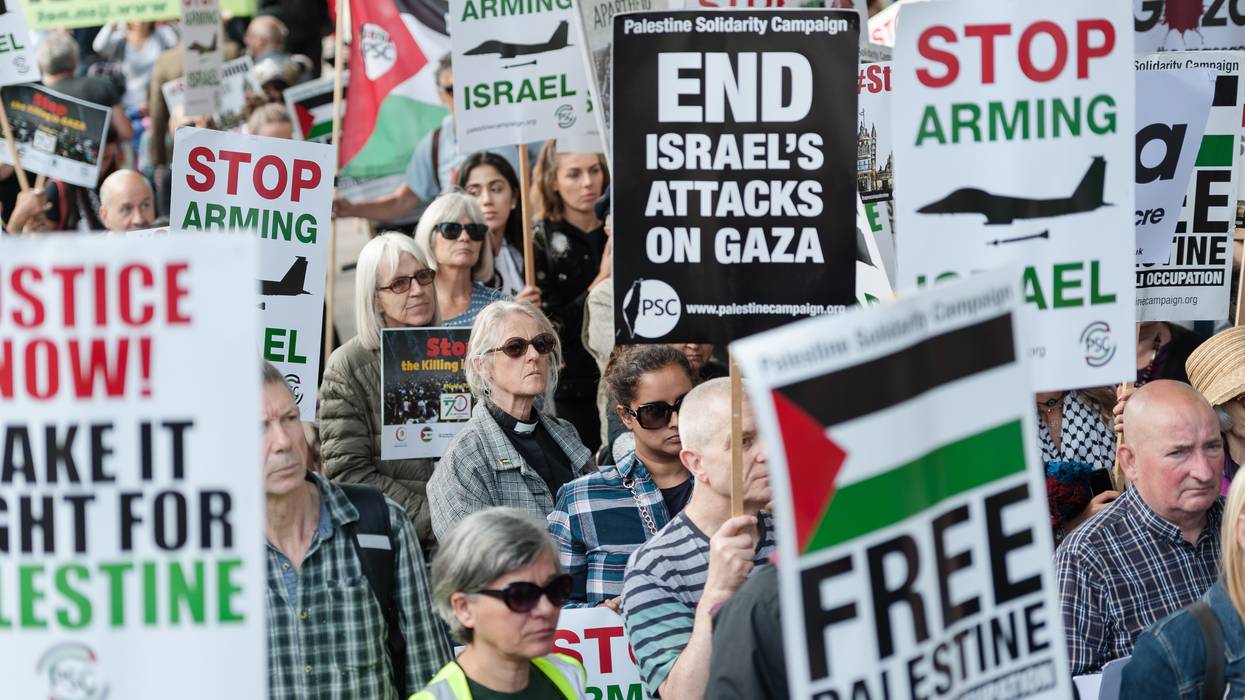
"The beautiful game should bring people together, not rubber-stamp apartheid."
Human rights group Amnesty International on Tuesday slammed the Union of European Football Associations for allowing the Israel men's team to participate in upcoming Nations League matches despite the Israeli government's continued systemic human rights abuses against Palestinians.
Steve Cockburn, Amnesty International’s regional director for Europe, called Israel's participation in the UEFA games "unconscionable," citing "clear evidence that Israel’s football association continues to support illegal settlements."
Cockburn said that UEFA should have long ago suspended the Israel Football Association (IFA) over its "refusal to exclude clubs based in illegal settlements" in the occupied Palestinian territories.
"As the money keeps flowing from FIFA and UEFA to the IFA," Cockburn said, "they risk contributing to the sustainability of illegal settlements and of Israel’s unlawful occupation... and therefore Israel’s violations of Palestinians’ human rights."
"Sport should never be used as a public relations spectacle for states committing atrocities," Cockburn added. "As the Israel team travels to Europe, Palestinian families are being displaced and dispossessed, their land stolen, their olive trees uprooted, and their histories erased by settlers with the support of the Israeli military. The beautiful game should bring people together, not rubber-stamp apartheid."
As explained in a Tuesday report from BBC, Israeli's inclusion in the Nations League has been a source of controversy for months.
Delegates for the Football Association of Ireland (FAI), which faced signifiant public pressure to boycott matches between Ireland and Israel, recently voted in favor of playing the matches, although roughly 30% of delegates voted in favor of a boycott.
Regardless, more than 160 Irish athletes on Monday signed an open letter organized by Irish Sport for Palestine urging FAI to reconsider its vote in favor of the matches.
Heimer Hallgrimsson, manager of the Irish men's team, tried to justify the matches by arguing that Ireland was playing against Israel, which meant it was really playing "against genocide."
The IFA shot back at Hallgrimsson, accusing him of "ignorance, hypocrisy, and stupidity."
The BBC also noted that the two scheduled matches between Israel and Ireland will be played on neutral cites in Hungary and Serbia "against a backdrop of ongoing and increasingly volatile disagreement between the two countries about Israel's military offensive in Gaza."
Cockburn praised efforts by sports fans to keep pressure on the UEFA to "demand accountability, justice and, fair play."
"When rules are broken, when occupation, apartheid, and genocide are ongoing," he emphasized, "we cannot look the other way.”

The vast majority of Democratic voters believe Israel has committed a genocide in Gaza and want its supporters in both parties to face consequences.
The majority of Democratic voters believe Israel has committed genocide in Gaza for the past three years. And they want the American politicians in both parties who supported it to pay.
In a poll released on Monday by the Center for Strategic Politics and commissioned by the magazine Liberal Currents, 683 Democratic voters were asked whether the next Democratic administration should "pursue criminal prosecution of members of the Trump and Biden administrations for actions taken related to Israel’s genocide in Gaza."
More than half, 57%, of the Democrats surveyed answered "yes," while only 22% answered "no" and another 22% said they "don't know."
Self-described "socialists" and "progressives" were most bullish on Gaza-focused prosecutions. But so were 52% of "liberals" and even 48% of Democrats who called themselves "moderate" or "conservative."
It is one of several questions in the poll about a hypothetical Democratic administration prosecuting its predecessors over policies considered deadly and destructive.
About two-thirds, 66%, said they wanted to see Trump administration officials prosecuted for actions taken during its aggressive war with Iran, which has led to the deaths of more than 1,700 civilians and wrought economic turmoil.
Nearly three-quarters, 72%, believed Trump officials should face similar accountability for their campaign of extrajudicial strikes on boats in the Caribbean and Pacific, which have killed more than 234 people in what a top United Nations official recently said may constitute "crimes against humanity."
And more than three-quarters said they wanted to see Trump officials face legal penalties for actions committed by US Immigration and Customs Enforcement (ICE) and Customs and Border Protection (CBP), which have waged a violent mass deportation campaign that has entailed numerous documented due process violations, instances of racial profiling, and several shootings of immigrants and US citizens without clear justification.
The question about Gaza is the only one in the survey in which Democrats were asked about the prospect of prosecuting members of their own party as well as Republicans. And while fewer Democrats ultimately answered yes, it indicates that their ire toward the American politicians supporting the genocide transcends party loyalty.
The poll results come as some activists pursue accountability for the Biden administration in other ways. Last week, organizers launched a campaign to pressure universities and other prominent institutions to cut ties with what they called the "Genocide 20."
These are officials like former Secretary of State Tony Blinken and former National Security Adviser Jake Sullivan who crafted and defended the administration's policy of unrestricted military aid for Israel despite mounting evidence that it was killing scores of civilians and enacting a campaign of starvation against the people of Gaza.
The United States provided Israel with at least $17.9 billion in military assistance between October 7, 2023, and the end of former President Joe Biden's term in January 2025, according to Brown University’s Costs of War project. During that period, more than 47,000 Palestinians were confirmed killed, according to the Gaza Ministry of Health.
Since President Donald Trump returned to office, the US has continued to provide Israel with billions of dollars in military assistance, including $3.8 billion in regular annual military aid, while the Trump administration has approved billions more in arms sales and expedited weapons deliveries. The death toll has risen to nearly 74,000, according to official figures, but independent experts have suggested this may be a significant undercount.
According to Monday's poll, more than 4 in 5 Democrats said that “foreign policy (including Israel and Iran)” is important to them in deciding which candidates to support, compared with just 4% who said it is not.
Foreign policy has been a critical dividing line in several recent Democratic primaries, in which voters have revolted against candidates backed by the American Israel Public Affairs Committee (AIPAC).
This includes Democratic Michigan Congresswoman Haley Stevens, who was defeated by Abdul El-Sayed in a contest for the US Senate despite her more than $30 million in backing from AIPAC, which helped to turn it into the most expensive Democratic primary ever.
AIPAC-backed House candidates have similarly suffered high-profile defeats at the hands of progressives calling to cut off US funding for Israel. Some of the victors include Chris Rabb in Pennsylvania, Brad Lander and Darializa Avila Chevalier in New York, and Aisha Wahab, who won a special election in California.
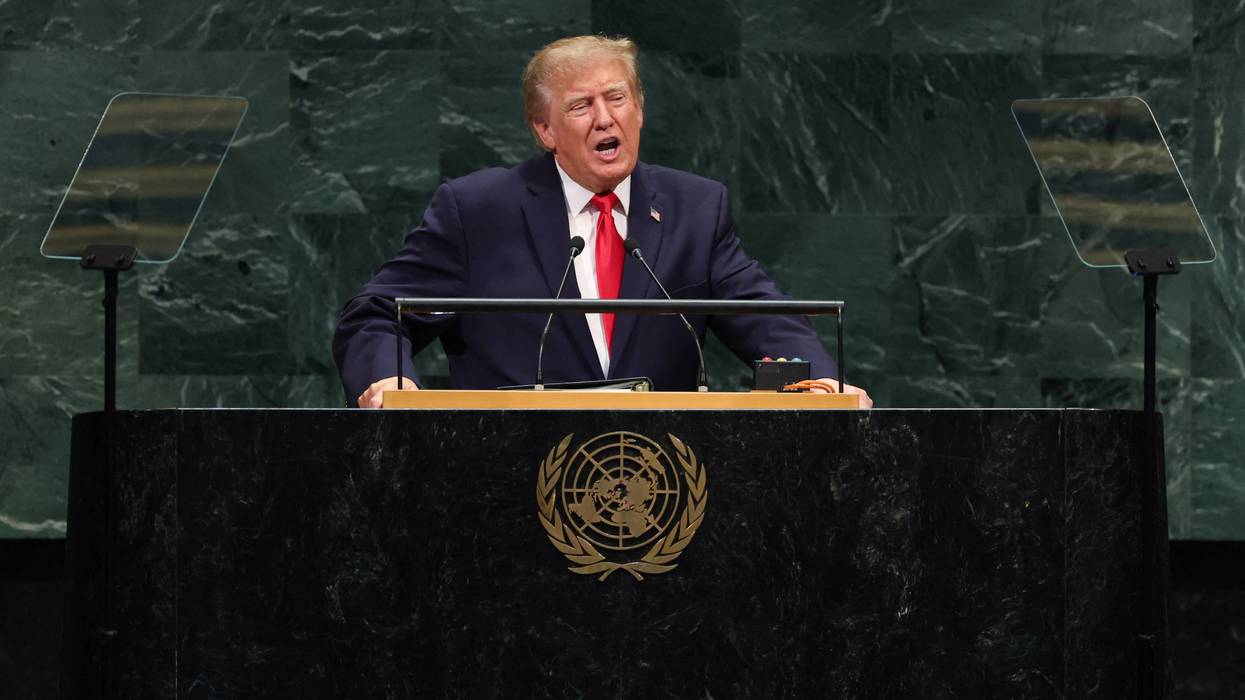
"Trump doesn’t know how to end the war he started with Iran," said one critic. "He’s so desperate that he’s threatening war crimes in front of the entire United Nations."
In a rambling, lie-laden speech Tuesday to world leaders gathered at the United Nations General Assembly in New York, US President Donald Trump again threatened to "annihilate" Iran if its leaders don't agree to a deal to end the illegal war of choice he started nearly seven months ago in the Middle Eastern country.
"I have a big decision to make," Trump said. "Will a deal be made with Iran that lets them rebuild and create a far greater country than it ever was before, maybe one of the greatest in the Middle East or even the world? Or do I annihilate the Islamic Republic and do it quickly, never giving them a chance to kill and destroy people and countries again?"
"Do I drive them into hell with no chance of survival and no hope of future greatness or generations?" the president continued. "But I believe we'll make a deal right after the election because it doesn't make sense for them not to. They're waiting to see how I do in the midterm election. What they don't realize is that I'm not running. I did that already and won in a landslide."
President Trump says Iran deal will be made after the midterm elections, and says he has decision between a deal with Iran or destroying them: "Or do I annihilate the Islamic Republic and do it quickly, never giving them a chance to kill and destroy people and countries again?" pic.twitter.com/Y5K6v4B326
— CSPAN (@cspan) September 22, 2026
Trump has repeatedly threatened to destroy Iran—a country of over 90 million people—since his first term. However, his latest menacing remarks raised eyebrows for their brazeness on the world stage.
"It’s one thing to make genocidal threats against a nation on social media. It’s another thing to do it from the podium of the UN," University of Colorado Law School associate professor Maryam Jamshidi said on X. "That's what Donald Trump just did. He used his speech at the UN to threaten Iran with annihilation."
While Jamshidi urged UN Secretary-General António Guterres and member states to condemn Trump's threat, independent journalist Taylor Noakes said of Trump that "what’s particularly sad about this (aside from the fact he’ll likely never be prosecuted for war crimes) is how so many leaders of other liberal democracies have stood by and done nothing while the Americans make a mockery of the UN as an instrument for global order."
The Democratic veterans group VoteVets accused Trump of "casually contemplating war crimes in front of the entire UN [General] Assembly," calling his threat "deranged and dangerous."
Bonus for whoever wrote this chyron
[image or embed]
— Brandy Zadrozny (@brandyzadrozny.bsky.social) September 22, 2026 at 7:54 AM
Journalist Mehdi Hasan said: "For shame. The president of the United States goes to the United Nations and threatens genocide against a UN member state in front of the world. This is where we’re at."
Matt Duss, executive vice president at the Center for International Policy and a former adviser to Sen. Bernie Sanders (I-Vt.), called Trump's comments "dangerously unhinged."
"Such rhetoric is not merely reckless, it is a criminal threat of genocide against an entire nation," he added. "US lawmakers and US partners around the world should condemn Trump’s remarks and take all due steps to bring an end to the war on Iran.”
Trump didn't just openly mull committing war crimes, he groundlessly boasted in his speech that the US "has carried out dozens of strikes on cartel drug boats, destroying 97% of the drugs coming into the ocean and sea."
Citing data from US Southern Command and Trump administration officials, The New York Times says that at least 234 people have been killed in a minimum of 70 strikes on boats allegedly smuggling drugs in the Caribbean Sea and Pacific Ocean. The administration has provided no solid evidence to support its trafficking allegations. Regional leaders and relatives of victims contend that at least some people killed in the strikes were fishers with no narcotrafficking ties. Legal experts assert that the attacks violate international law regardless of whether or not the targeted vessels were engaged in drug trafficking.
Trump's speech was laced with demonstrably false or unfounded statements, including an accusation that the Iranian government killed 72,000 people this year, that his invasion of Venezuela and abduction of President Nicolás Maduro left the US with "more than 60% of the oil in the world," that his administration "ended the war in Gaza," and that he settled eight wars.
"Donald Trump’s maniacal rant before the UN General Assembly today, complete with ridiculous braggadocio, narcissistic puffery, an almost unbroken line of absurd, demonstrable lies, open criminality, and deranged, murderous threats, should awaken even the most cowardly and complicit among world leaders that their attempts at appeasement of Trump and the tyrannical axis that he leads can only result in further aggression, economic terrorism, murder, and genocide," said Craig Mokhiber, a former senior UN official who resigned in protest of what he described as the world body's failure to stop Israel's genocidal war on Gaza.
"The world must unite to counter the threat and to defend peace, human rights, and the rule of law," he added, "which are, after all, declared purposes of the UN."
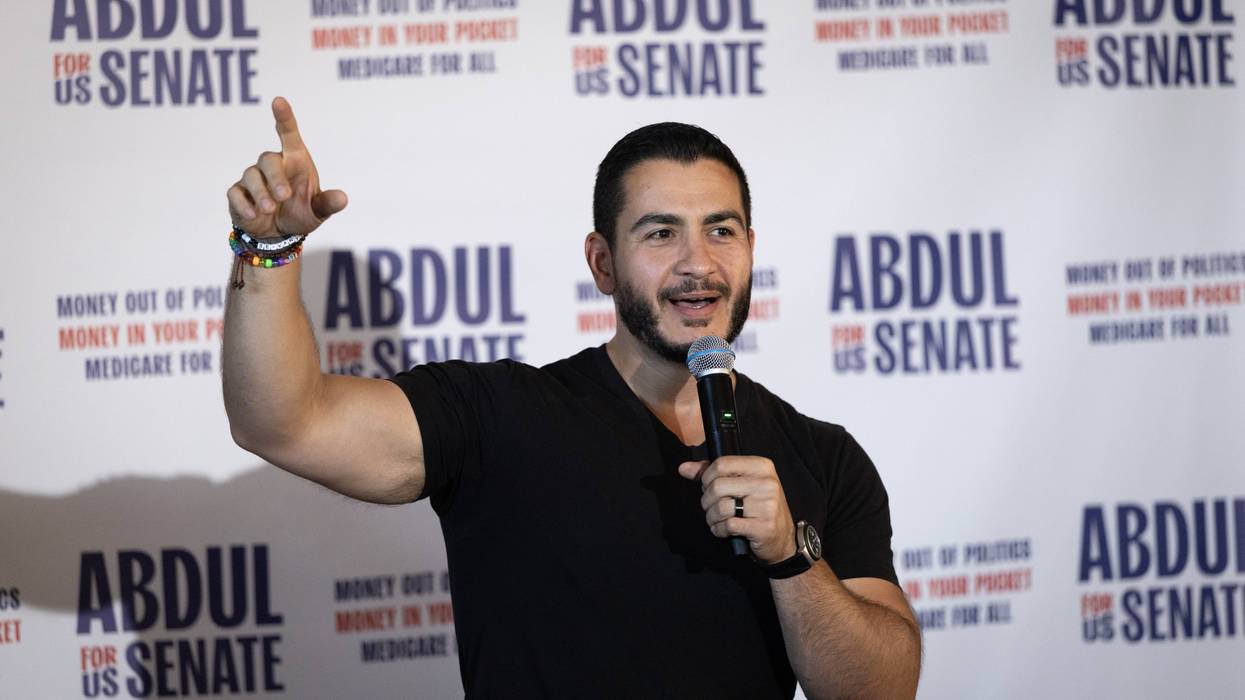
"Honestly, this goes further than a lot of poll data to show you that GOPs are cooked," one journalist said of the Republican candidates claiming to oppose the president's unpopular conflict before the midterms.
With US President Donald Trump's approval rating tanking—largely due to his illegal war on Iran and the resulting economic fallout—Michigan's Republican US Senate candidate, Mike Rogers, on Monday afternoon called for an end to the conflict, and his Democratic opponent, Abdul El-Sayed, wasted no time turning to the receipts.
Rogers posted a 75-second video on social media: He's in a grocery store, noting the need to bring down food prices. He also says that "the war with Iran needs to end," and in the meantime, the United States should impose a temporary embargo on exports of diesel—which has hit a record high of $6.51 per gallon.
El-Sayed responded with a pair of clips from the Republican's previous interviews and wrote: "You've spent your entire campaign supporting the war in Iran. Liar, coward, fraud."
The Democratic super political action committee Senate Majority PAC also called out Rogers, writing in response to his ad: "No one’s buying this. You supported the war in Iran every step of the way. Rogers six months ago: 'How anyone says [the war] is a bad idea, I don't know what is.'"
Michigan Democratic Party spokesperson Joey Hannum similarly stressed that "Mike Rogers has been all-in on Trump's Iran War from day one, repeatedly dismissed Michiganders' pain as gas prices skyrocketed, and has vowed to hand Trump a blank check to keep this war going indefinitely."
"Every time a Michigander fills up their gas tank, they're paying the price for the Rogers-Trump war in Iran," Hannum continued, as the average cost of gasoline stood at $4.48 a gallon. "Price Hike Mike promised he would give Trump the authority to keep his cost-raising war going, and Michiganders won't forget it."
Track AIPAC, which documents political spending by the American Israel Public Affairs Committee and related groups, responded to Rogers' post with another clip of his previous comments on the war, which has dragged on for nearly seven months—with no end in sight—and killed thousands of people.
Mike Rogers pledges to support unconditional military aid to the country that dragged us into this war: pic.twitter.com/GluXUGKk3X
— AIPAC Tracker (@TrackAIPAC) September 21, 2026
Journalists and pollsters highlighted that Rogers isn't the only Republican running in the November midterms who is now calling for an end to the war, which polling has shown is deeply unpopular with the US public.
Republican Iowa Congresswoman Ashley Hinson—who has repeatedly voted against war powers resolutions intended to end the conflict in Iran—wrote on social media Monday morning that "Iowans are being squeezed and shouldn't have to foot the bill at the pump or the checkout line for the war in Iran. We need to use every option at our disposal to provide some relief from high prices."
"That includes suspending the gas tax, pausing diesel exports, unleashing E-15 everywhere we can, reinstating the $1/gallon biodiesel tax credit, and creating a diesel relief program to help our farmers and truckers being crushed by the high costs," Hinson continued, adding that "the war needs to be brought to a successful and immediate end."
In response, her Democratic opponent, Josh Turek, said that "it's easy to send a tweet, but when you had the chance to vote to end this war, you chose not to. You voted seven times to continue it, including just last week. It's time to actually end the forever wars and put Iowa and Iowans first. Glad you're finally following my lead after waffling on the proposals I put forward last week to address the rising costs of the war in Iran."
Ryan Costello, policy director at the National Iranian American Council, wrote to Hinson: "It's good you're calling for the Iran War to end, though you've also voted against six war powers resolutions directing an end to the war, including just six days ago. Will you vote for the next one, and commit to cut off funding for the backfiring war?"
Sen. Chris Murphy (D-Conn.) asked: "How dumb does she think voters are? If Hinson wins, then Republicans control the Senate. And they've pledged to Trump to kill any legislative effort to end the war as long as they keep power."
Noting that "first Hinson, now Rogers" is claiming to want an end to the war, Punchbowl News senior congressional reporter Andrew Desiderio said that it "will be fascinating to see which way vulnerable R incumbents," such as Sens. Jon Husted (Ohio) and Dan Sullivan (Alaska), "vote on the Iran war powers resolution expected to come up this week."
Following Rogers' post, longtime Capitol Hill journalist Jamie Dupree wrote: "Wow. The war in Iran + high gas/diesel costs must be killing Republicans in their internal polling."
Zenith Research founding partner Adam Carlson posited: "The Republican strategy memo must have gone out this weekend. And the numbers must have been dire, particularly in the already tariff-battered Midwest."
Talking Points Memo founder Josh Marshal suggested, "Honestly, this goes further than a lot of poll data to show you that GOPs are cooked."
Republicans are trying to hang on to their slim majorities in both chambers of Congress for the latter half of Trump's second term, and with the midterms less than two months away, The Cook Political Report currently ranks seven Senate seats as a "toss-up." In addition to the contests in Iowa and Michigan, there is Sullivan's race against former Democratic Congresswoman Mary Peltola in Alaska and Husted versus former Democratic Sen. Sherrod Brown in Ohio.
There's also former Democratic Maine Senate President Troy Jackson's challenge to Republican Sen. Susan Collins, the race between Democratic New Hampshire Congressman Chris Pappas and former Republican Sen. John Sununu, and Texas' contest between Democratic state Rep. James Talarico and Trump-backed state Attorney General Ken Paxton.
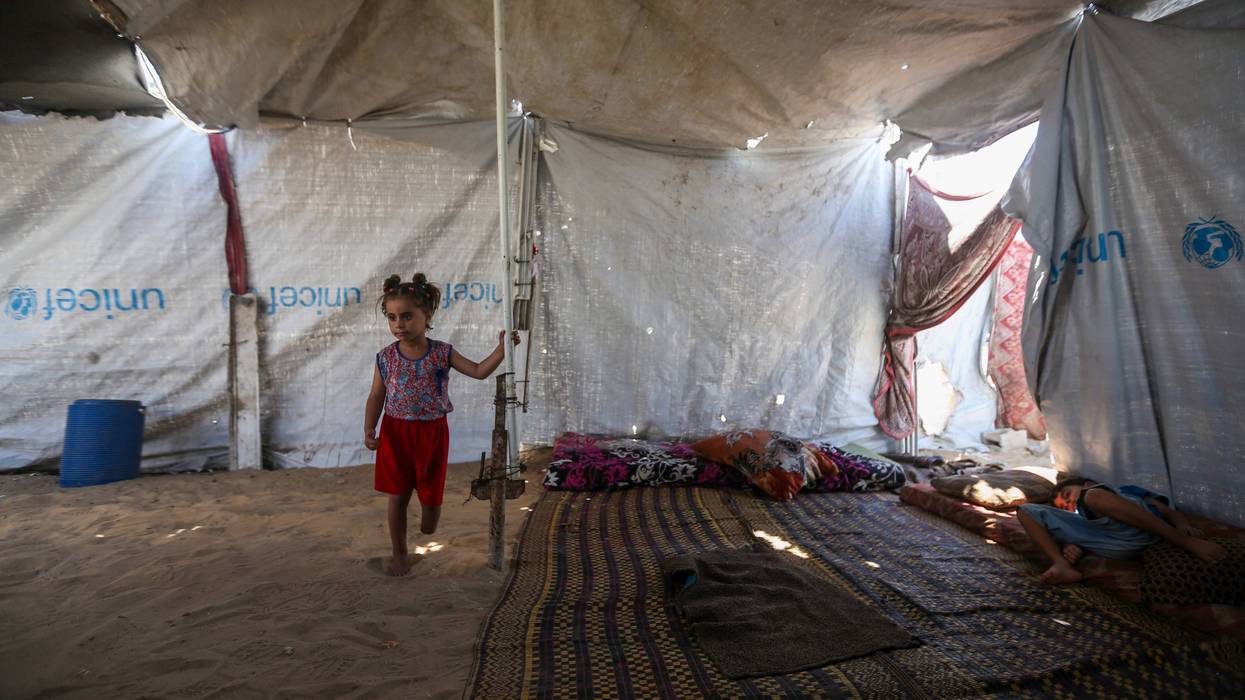
More than 11,000 children have severe life-changing injuries, including thousands who have had limbs amputated as a result of Israel's assault on Gaza.
Gaza has the world's largest concentration of child amputees thanks to Israel's genocidal war. Now, as Australian charities seek to deliver hundreds of wheelchairs to the children injured in the onslaught, Israel has reportedly been blocking them for more than a year and a half.
The Australian Broadcasting Corporation (ABC) reported last week that:
More than 900 wheelchairs, donated by two Australian charities to help injured children in Gaza, are stuck in warehouses in Jordan due to Israeli restrictions on aid deliveries into the war-ravaged strip.
Two shipments from New South Wales-based charity Kids on Wheels Alliance arrived in Jordan in February 2025, while a third, from Wheelchairs for Kids based in Western Australia, arrived in October 2025.
But instead of being delivered to children with severe mobility issues inside Gaza, they remain sitting in storage facilities managed by the Jordan Hashemite Charity Organization (JHCO).
According to the report, JHCO submitted an application in February 2025 for the wheelchairs to be included in an aid convoy headed to Gaza, where more than 11,000 kids have been left with "severe, life-changing injuries, including permanent disabilities that require long-term care and rehabilitation," according to the United Nations Children's Fund (UNICEF).
That application was denied by the Coordinator of Government Activities in the Territories (COGAT), the Israeli agency responsible for aid coordination, because "medical equipment and medicines were not approved for inclusion in that convoy." The application has been marked as "pending" for the last 19 months, meaning that a new request cannot be sent.
An Israeli government source told ABC that Israel had not blocked the delivery of the wheelchairs. But COGAT did not answer specific questions from the network about what had happened to the shipment.
The agency said it had allowed the entry of thousands of wheelchairs "without any quantitative restrictions," as well as "approximately 22,000 tons of medical equipment and medicines" since the beginning of the ceasefire in October 2025.
One source told the outlet that the wheelchairs may have been held up under Israel's rules blocking possible "dual-use" items that authorities believe could serve a military purpose.
The wheelchairs have specialized features: they are adapted for rough terrain to help users navigate the rubble-strewn streets of Gaza and are adjustable to grow with the children who use them.
But as Dr. Abdullah Al-Balawi, a physician with the Palestinian Australian New Zealand Medical Association who has watched the boxes pile up undelivered, explained, "they do not pose any threat."
The stalled wheelchairs are hardly the first medical or disability equipment to be blocked as a result of Israel's strict restrictions on humanitarian supplies entering Gaza. Human rights groups have previously documented the use of dual-use restrictions to block wheelchair batteries, X-ray equipment, and materials used to manufacture prosthetic limbs.
It's not just medical supplies. Portable toilets have also been blocked, as have sleeping bags and tarps. These items are in high demand as around 90% of Palestinians living in Gaza remain displaced, with Israel's attacks having destroyed most of the buildings. According to a report from humanitarian organizations in April, bandages, diapers, shampoo, and tent poles have also been blocked.
Human Rights Watch has argued that the dual-use restrictions are unnecessarily broad and arbitrary, allowing certain items some days and rejecting them on others. The organization has called on Israel to remove the dual-use label on "medical-related supplies, assistive aids, and accessible technology like eyeglasses, wheelchairs, walkers, canes [and] hearing aids."
Amnesty International has described Israel's blocking of lifesaving medical and other forms of humanitarian assistance—including food, water and sanitation supplies, fuel, and shelter materials and equipment—as part of a pattern that amounts to genocide.
"The humanitarian aid must not stop," Al-Balawi said. "This is part of the stubbornness of the other side by not letting in this aid; the wheelchairs are only a part of it."
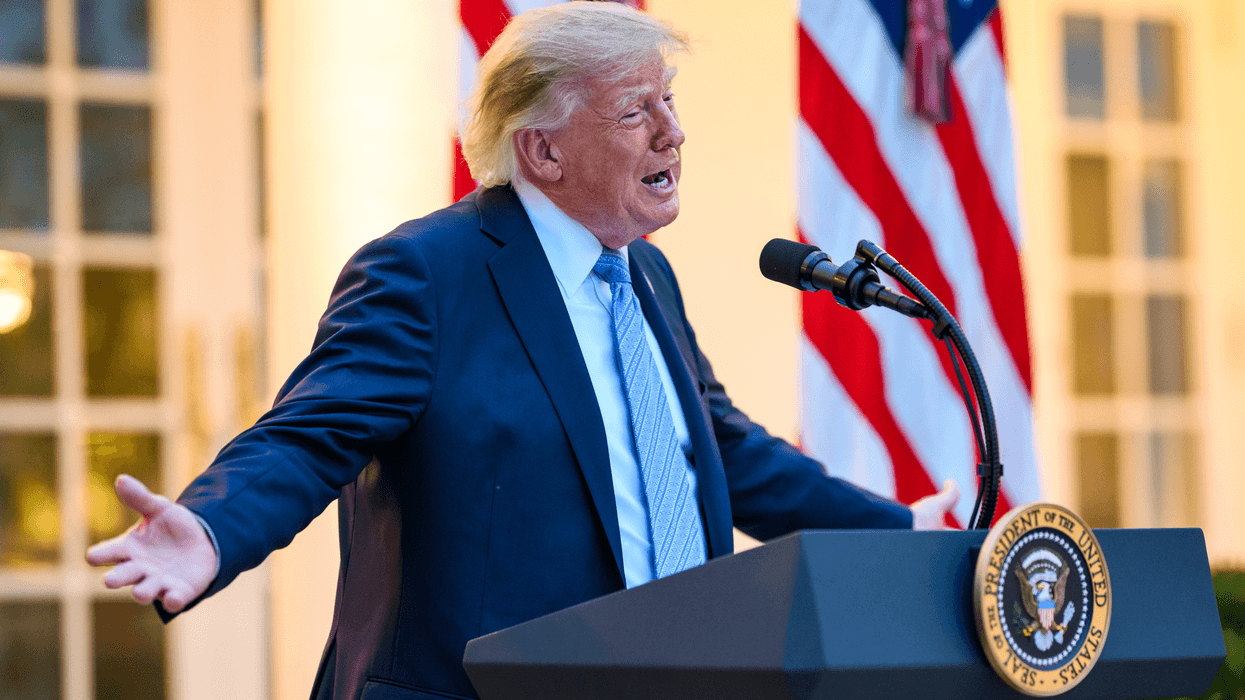
A senior Iranian official said that “our conditions are an end to the war on all fronts, the release of our frozen funds, and an end to the naval blockade."
Three days after saying that he's weighing whether or not to “annihilate” Iran in a bid to end his increasingly unpopular and protracted war against the Middle Eastern nation, US President Donald Trump on Sunday again said that he is deciding if he should destroy the entire country of over 90 million people.
Fox News chief foreign correspondent Trey Yingst reported he "just spoke with President Trump about the situation with Iran" and that the US leader said he's "in a deciding mode and that very big things are going to be happening in the not-so-distant future."
Trump said he is considering three strategies for ending the 204-day war: "wiping Iran out, letting them rot economically, or making a deal."
"My question is, if and when do I blow the entire nation up, they better behave," Trump added, according to Yingst.
Fox correspondent: "The president said the US is in constant communication with the Houthis, and that they've agreed not to fight the United States. But the big headline here is the president said he's in a deciding mode as it relates to Iran, adding that the Iranians better… pic.twitter.com/nCTMRlEvWY
— Aaron Rupar (@atrupar) September 20, 2026
On Saturday, Mohsen Rezaei, the secretary of Iran's Supreme National Security Council, told Al Jazeera that Tehran has conveyed its conditions for ending the war to Qatari mediators and is "awaiting President Trump's response."
“Our conditions are an end to the war on all fronts, the release of our frozen funds, and an end to the naval blockade,” Rezaei added. “It is in Washington’s interest to accept these conditions. Trump’s threats will not achieve any results. We are prepared for a decisive war.”
Iran's military responded to Trump's latest threat by warning US allies Sunday that they will be considered "complicit" if American strikes resume, vowing "painful attacks" in retaliation.
Trump—who has been threatening to destroy Iran since at least 2019—is facing pressure on multiple fronts to end his highly unpopular and illegal war of choice, in which at least 23 US troops have died and tens of thousands of Iranians have been killed or wounded.
Americans are feeling the pain of higher consumer prices, especially for gasoline and diesel fuel, for a war that many say is making the country less safe. Six in 10 US voters queried in a new Fox News poll said Trump was wrong to wage war on Iran, while 7 in 10 respondents believe that his administration has no clear strategy for ending the conflict.
Republican lawmakers are also increasingly expressing dissatisfaction with the war and distancing themselves from the conflict ahead of November's midterm elections, with some going as far as helping to pass a war powers resolution directing Trump to withdraw US forces from hostilities with Iran, and one—outgoing Rep. Thomas Massie of Kentucky—supporting the impeachment of Defense Secretary Pete Hegseth.

"Trump did an incredible job negotiating for things we already had in Greenland," said one US critic.
Danish and international commentators dismissed President Donald Trump's claim that the deal he announced Friday gives the United States "permanent control" over Greenland's security as what one journalist called a "repackaging" of long-standing agreements spun as a foreign policy win.
Trump—who has repeatedly threatened to gain control of the autonomous Danish territory, including by military force—said on his Truth Social network: "I am pleased to announce that the United States of America has entered into an Agreement with The Kingdom of Denmark, and Greenland, that gives the United States permanent control over security, and all other needs, in Greenland, completely addressing ALL of our many US concerns. There will be NO COST to the United States!"
"Additionally, from now on, no US adversary can EVER have a base in Greenland, have a military presence in Greenland, or make sensitive investments in Greenland, without our express written approval," the president continued. "This is an 'Infinite Life' Agreement, there is no end!"
"We look forward to working with the wonderful people of Denmark and Greenland toward a magnificent future with respect to this large, and highly strategic, parcel of land," Trump added. "We will be very protective of it! This is a dream come true for the United States of America, one that is very important, historic, and special."
US Secretary of State Marco Rubio hailed what he called a "historic deal" and "a huge win for the United States and the American people."
A joint statement released by the office of Danish Prime Minister Mette Frederiksen and Jens-Frederik Nielsen, who chairs the Naalakkersuisut—Greenland's governing body—confirmed that "Greenland, Denmark, and the United States are expected to sign an agreement on strengthened security in the Arctic and the North Atlantic area next week" at the United Nations General Assembly in New York.
Frederiksen stressed that the agreement "recognizes the sovereignty and territorial integrity of the Kingdom [of Denmark] and the Greenlandic people’s right to self-determination," while Nielsen said the pact "is to the benefit of us all."
While the official text of the deal is not yet public, observers said it is unclear how it differs from the terms of a Cold War-era agreement that already gives the US broad military access to Greenland.
“In terms of rights, they were already allowed quite a lot under the original agreement,” Mikkel Runge Olesen, a researcher at the Danish Institute for International Studies in Copenhagen, said of the United States in a Saturday interview with The New York Times. “Is there anything here that one could not have achieved without this crisis?”
Trump did an incredible job negotiating for things we already had in Greenland.
— Ron Filipkowski (@ronfilipkowski.bsky.social) September 18, 2026 at 6:10 PM
University of Maryland government and politics professor David Karol said on Bluesky that "this seems to be largely a rebranding of the status quo to claim a win."
Karol likened the Greenland deal to the United States-Mexico-Canada Agreement that replaced the Clinton-era North American Free Trade Agreement—which Trump called the "worst trade deal ever made"—during the president's first term. Critics noted that differences between the two pacts were "mostly cosmetic," as one expert put it.
As the illegal US-Israeli war of choice against Iran dragged on with no end in sight, the US president also pursued a deal to end the conflict that observers noted was broadly similar, and even more favorable to Tehran, to the Joint Comprehensive Plan of Action—better known as the Iran nuclear deal—signed during the Obama administration and unilaterally abandoned by Trump during his first term, despite Iranian compliance.
Sofie Pultz, an international policy research fellow at the progressive UK think tank Institute for Public Policy Research, told LBC on Saturday that "it does sound like the Americans have accepted a repackaging of all deals and agreements, maybe with Denmark footing some of the defense bill. But overall, there's not a lot of new stuff in here."
Some Danish commentators were more blunt in their assessment of the deal. Henrik Højgaard Sejerkilde wrote for Jyllands-Posten that “everything suggests that Donald Trump’s agreement on the military presence in Greenland is a flea market find, found in diplomatic recycling.”
Other Danish observers expressed relief that what many viewed as an utterly unnecessary clash between two NATO allies has seemingly been defused.
"One can hope that the crisis of Greenland ends here—but one can never be sure," Jacob Heinel Jensen of the Danish daily newspaper Berlingske said. “There is reason to be cautiously optimistic that this nonsense of taking over Greenland is now over. But with Trump, you can never be sure."

"When the government hides the true cost of its war, it misleads the country and dishonors the fallen," said one veterans' group.
The Trump administration—which calls itself the "most transparent administration in history"—is once again under fire for its lack of transparency after The Washington Post on Friday published a report in which US officials said more American troops have died during the Iran War than the Pentagon has disclosed.
Five officials familiar with the Pentagon's internal casualty accounting told the Post under condition of anonymity that at least 22 US service members have died since Trump launched the Iran War on February 28—four more than the 18 fatalities currently listed in the Pentagon's public Defense Casualty Analysis System, or DCAS. A sixth official put the number at 23.
The officials said that not all of the additional deaths were necessarily caused directly by Iranian attacks, but rather involved US personnel stationed in the Middle East.
The report raises questions regarding transparency, as well as the military's line-of-duty investigations following service member deaths that can affect survivors' benefits.
Retired US Army Brig. Gen. Steve Anderson asked some of those questions in a Friday Substack post directed at Hegseth and calling the reported obfuscation an "unforgivable sin":
Responding on social media to the Post report, US Defense Secretary Pete Hegseth wrote, "This is DISGUSTING and FAKE. A complete LIE."
"Shame on The Washington Post—they’re worse than Iranian state media," Hegseth added.
Hegseth's denial follows earlier controversies over the Pentagon's casualty reporting.
In July, the department's public database briefly excluded four US service members killed during renewed fighting, even though the Pentagon had separately announced the deaths. Officials subsequently blamed the discrepancy on technical problems.
Also in July The New York Times revealed that the Pentagon hid dozens of US military injuries from Iranian strikes on bases in Jordan.
Sen. Tammy Duckworth (D-Ill.), a disabled Iraq War veteran, wrote on Bluesky in response to the Post report that "22 of our service members have been killed in Trump's illegal war. Not 18 like we were told."
"The Pentagon hid four more heroes' deaths from us for months," she added. "Congress cannot let them get away with this."
To that end, Duckworth and other Democratic lawmakers in both the House and Senate have introduced legislation aimed at preventing the Pentagon from manipulating troop casualty data.
Last month, Duckworth led 17 upper chamber colleagues in introducing the Honoring the Sacrifices of Our Troops in War Act, which her office said came partly in response to the Trump administration's "shameless attempt to downplay the damage done and evade accountability to the American people."
Outgoing Congressman Thomas Massie (R-Ky.) on Thursday separately moved to force a House vote on impeaching Hegseth, accusing the defense secretary of violating provisions of the War Powers Resolution by continuing hostilities without congressional authorization.
After several failed attempts, both houses of Congress in June passed a war powers resolution directing Trump to withdraw US forces from hostilities with Iran. Trump did not comply.
The number of US troops killed and wounded in the Iran War pales in comparison to Iranian casualty figures. Thousands of Iranians—including more than 3,500 civilians, more than 380 of them children—have been killed and tens of thousands more wounded by US and Israeli attacks since February 28, according to Iranian and international officials.
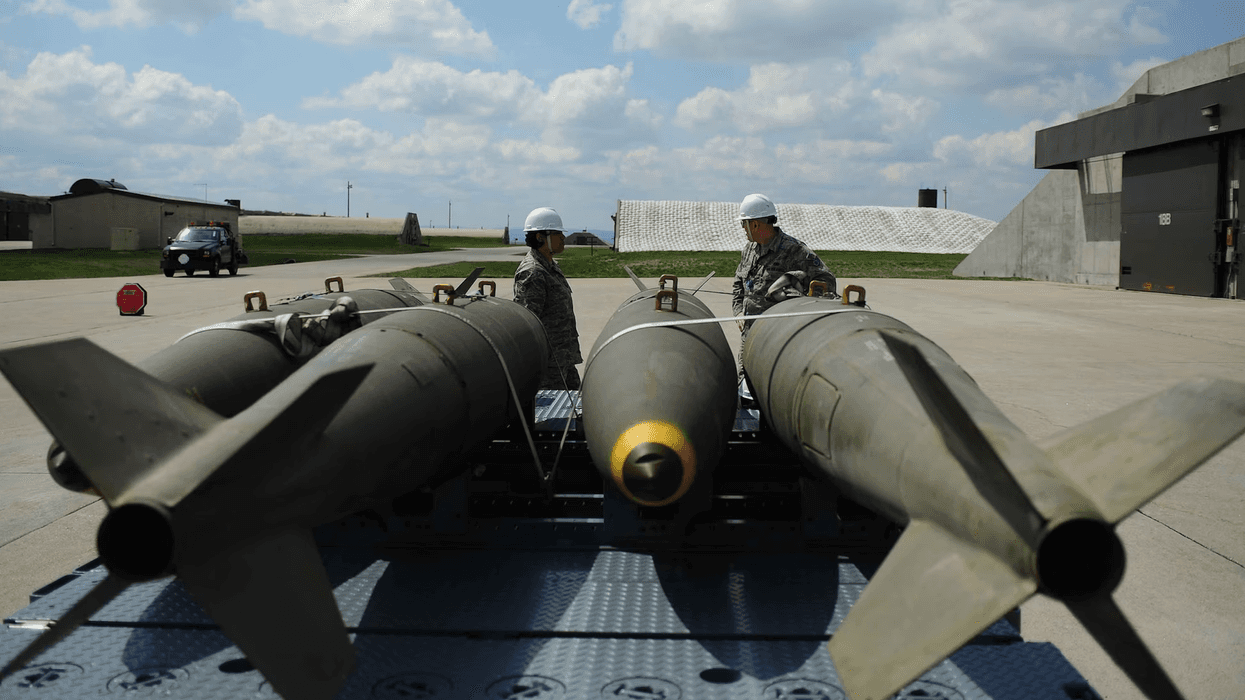
"A vote to let this sale proceed is a decision to help Israel commit more war crimes."
A human rights organization on Friday called on members of Congress to block the Trump administration's proposed $2.8 billion transfer of 40,000 2,000-pound bombs to Israel, warning that approving the massive weapons package could violate US law and expose lawmakers to potential liability for complicity in war crimes.
In a letter to congressional lawmakers, Democracy for the Arab World Now (DAWN) urged legislators to introduce joint resolutions of disapproval under the Arms Export Control Act (AECA) once the administration formally notifies Congress of the sale.
"Forty thousand of the bombs that flattened Gaza is not a defense package, it is a down payment on the next round of atrocities," DAWN executive director Omar Shakir said in a statement. "Every member of Congress now has the law and the evidence in front of them. A vote to let this sale proceed is a decision to help Israel commit more war crimes."
1/ Members of Congress should introduce and pass joint resolutions of disapproval under the Arms Export Control Act to block the Trump administration's proposed $2.8 billion transfer of 40,000 2,000-pound bombs to Israel, DAWN said today in a letter to every member of the Senate and House.
[image or embed]
— DAWN (@dawnmenaorg.bsky.social) September 18, 2026 at 9:39 AM
The proposed package includes 20,000 MK-84 general-purpose bombs and 20,000 BLU-117s, along with 20,000 I-2000 penetrator warheads, according to reporting by The Washington Post. The weapons would be purchased largely through Foreign Military Financing, meaning US taxpayers would pay for Israel's acquisition of the munitions.
The MK-84 is among the largest conventional bombs in the US arsenal. The Post reported that its blast can propel metal fragments thousands of feet, penetrate thick concrete and metal, and create large craters.
"Munitions experts [said] that US forces almost never drop bombs of this size in populated areas," DAWN wrote in its letter. "Israel has used them hundreds of times in Gaza and Lebanon. The Biden administration paused a shipment of these bombs in May 2024 precisely because of the risk of mass casualties in Rafah; President [Donald] Trump released it within days of taking office."
Loosened rules of engagement implemented by the Israel Defense Forces following the Hamas-led attack of October 2023, combined with the IDF's use of artificial intelligence technology to select targets far more rapidly than humans, resulted in a staggering loss of civilian life in Gaza when 2,000- and 1,000-pound bombs were dropped.
"Israel's assault has killed more than 73,000 Palestinians in Gaza, including more than 21,000 children, and the killing has not stopped," DAWN said on Friday, adding that the United Nations Children's Fund "said last month that at least 300 children had reportedly been killed since the October 2025 ceasefire, an average of one child every day."
DAWN argued that the proposed transfer would violate multiple US laws, including provisions of the AECA and Foreign Assistance Act governing how American weapons may be provided and prohibiting assistance to governments engaged in consistent patterns of gross human rights violations. The organization also invoked the Leahy Laws, which prohibit certain assistance to foreign military units credibly implicated in gross human rights abuses.
The group further warned that knowingly providing weapons that are subsequently used to commit war crimes could also be "illegal" under the Rome Statute governing the International Criminal Court (ICC). Although Israel and the US are not signatories to the Rome Statute, the treaty stipulates that people from nonsignatory nations who commit crimes in states that are party to the treaty—as Palestine is—can be held criminally accountable for their acts.
The ICC has issued warrants for the arrest of Israeli Prime Minister Benjamin Netanyahu and former Defense Minister Yoav Gallant for alleged war crimes and crimes against humanity in Gaza, including murder and forced starvation. The Hague-based court also ordered the arrest of three senior Hamas leaders; all three were extrajudicially assassinated by Israel.
The proposed sale has already encountered some congressional resistance. Rep. Gregory Meeks (D-NY), the ranking member of the House Foreign Affairs Committee, announced Wednesday that he would not clear the transfer, citing the absence of sufficient assurances that the weapons would be used consistently with US and international law and concerns about civilian protection in Gaza and Lebanon. Sen. Chris Van Hollen (D-Md.) has also vowed to block the sale in the upper chamber.
However, DAWN cautioned that a congressional hold is not necessarily sufficient to stop the transfer. The organization noted that the Trump administration has previously invoked emergency authorities to bypass congressional review of arms sales to Israel.
Under the AECA, Congress can attempt to block a major arms transfer through a joint resolution of disapproval. DAWN is urging lawmakers to bring such resolutions to recorded votes in both chambers and to hold public hearings examining the administration's use of emergency authorities to circumvent congressional oversight.
"The administration is betting that Congress will do what it always does: complain, then look away," DAWN advocacy director Raed Jarrar said on Friday. "Congress should show the administration that it's no longer the rubber stamp it long has been on arms to Israel and block this sale."