SUBSCRIBE TO OUR FREE NEWSLETTER
Daily news & progressive opinion—funded by the people, not the corporations—delivered straight to your inbox.
5
#000000
#FFFFFF
To donate by check, phone, or other method, see our More Ways to Give page.


Daily news & progressive opinion—funded by the people, not the corporations—delivered straight to your inbox.
Kennedy has "made a habit of throwing good money after bad" by promoting "junk science and fringe beliefs."
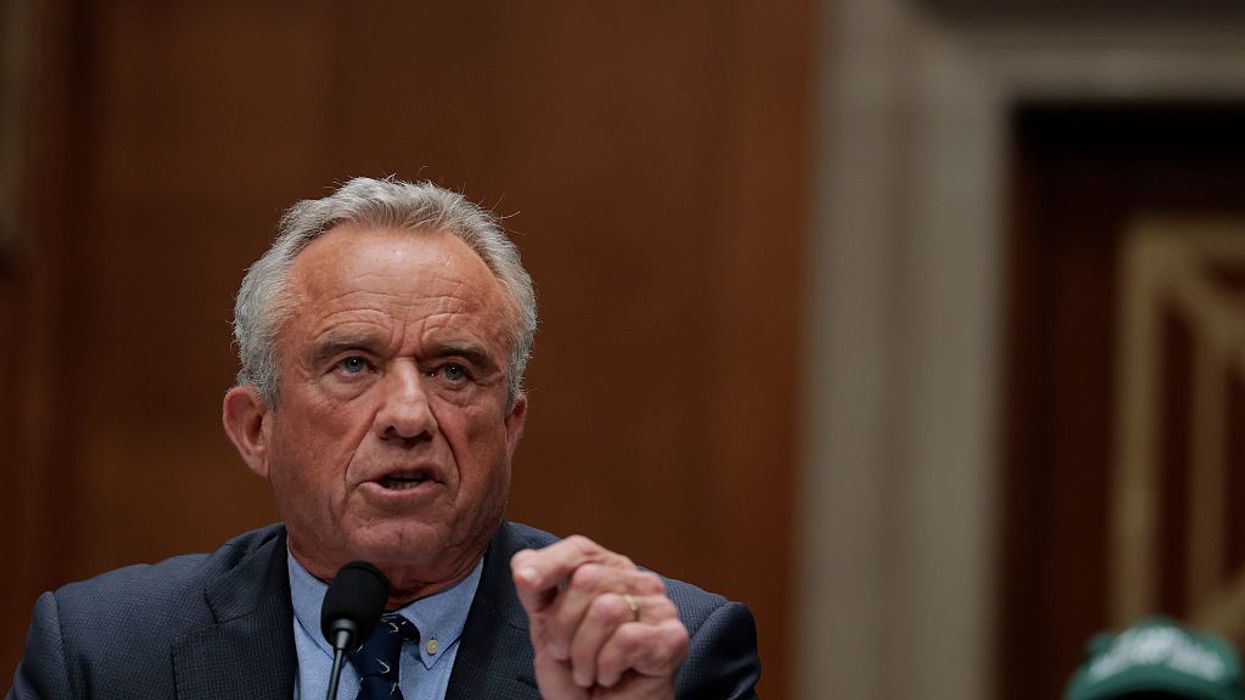
A scathing editorial published Friday in one of the world's most prestigious medical journals took US Health and Human Services Secretary Robert F. Kennedy Jr. to task for what it described as "one year of failure."
In its editorial, the Lancet began by listing off several of the broken promises Kennedy made during his first speech after being confirmed to lead the US Health and Human Services Department (HHS), such as his vow to have "open and honest engagement with everyone willing to work towards making the USA healthy again" and usher in "a new era of unbiased science without hidden conflicts of interest, secrecy, or profiteering."
In fact, the Lancet found that it took Kennedy less than two weeks to break a key promise.
"Ten days after his speech about trust and openness," the journal noted, "HHS rescinded a 54-year-old policy of soliciting public comments for new rules and regulations, silencing the voices of many of the stakeholders he pledged to serve."
Things have only gotten worse since then, the editorial continued, as Kennedy has shelved research into mRNA vaccines and "made a habit of throwing good money after bad" by promoting "junk science and fringe beliefs."
The editorial concluded by warning "the destruction that Kennedy has wrought in one year might take generations to repair, and there is little hope for US health and science while he remains at the helm." The journal urged the US Congress to "hold Kennedy accountable for his record, or else accept responsibility for endorsing President Trump's decision to let him 'run wild on health.'"
The Lancet editorial drew a range of reactions from medical experts and academics.
Scott Forbes, an ecologist at the University of Winnipeg, explained the significance of a journal such as the Lancet publishing such an overtly political editorial.
"For context, the Lancet is one of the two most important medical journals on the planet," he wrote in a social media post. "When they put this on their front cover, it is only because there is something seriously wrong. That something is RFK Jr. He is a notorious crank and charlatan. But that's par for the course in the Trump regime."
Forbes' point was echoed by Krutika Kuppalli, associate professor at UT Southwestern Medical Center's Department of Internal Medicine.
"When a leading medical journal uses language like this, it’s not rhetoric," she wrote. "It’s a warning the world should take seriously."
Pediatrician Vincent Iannelli took the Lancet to task for publishing a since-retracted study in 1998 that falsely linked vaccination with the development of autism, which subsequently helped the anti-vaccination movement gain currency.
"Let's not forget that Wakefield's fraudulent paper that was published in the Lancet helped get us on this road," Iannelli said. "RFK Jr. was influenced by mothers who blamed vaccines for their child's autism."
The peer-reviewed findings, according to the study's authors, "contradict claims" that Gaza health officials have "inflated the death toll from the war in the Gaza Strip."
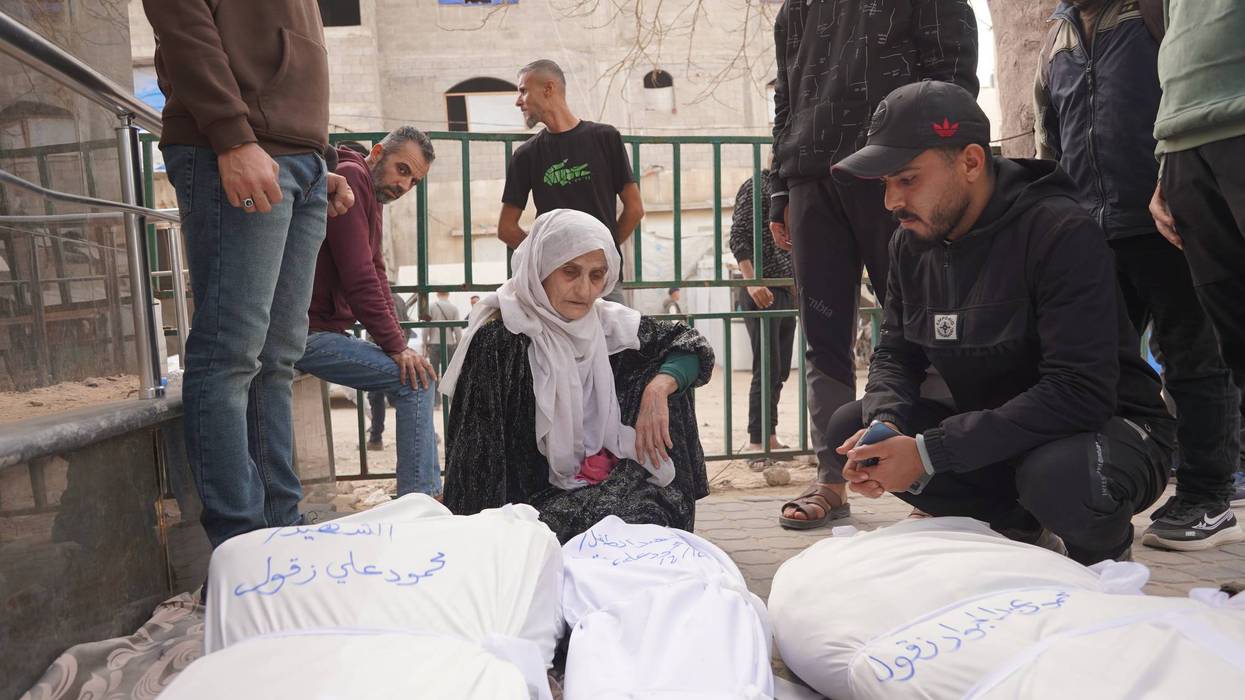
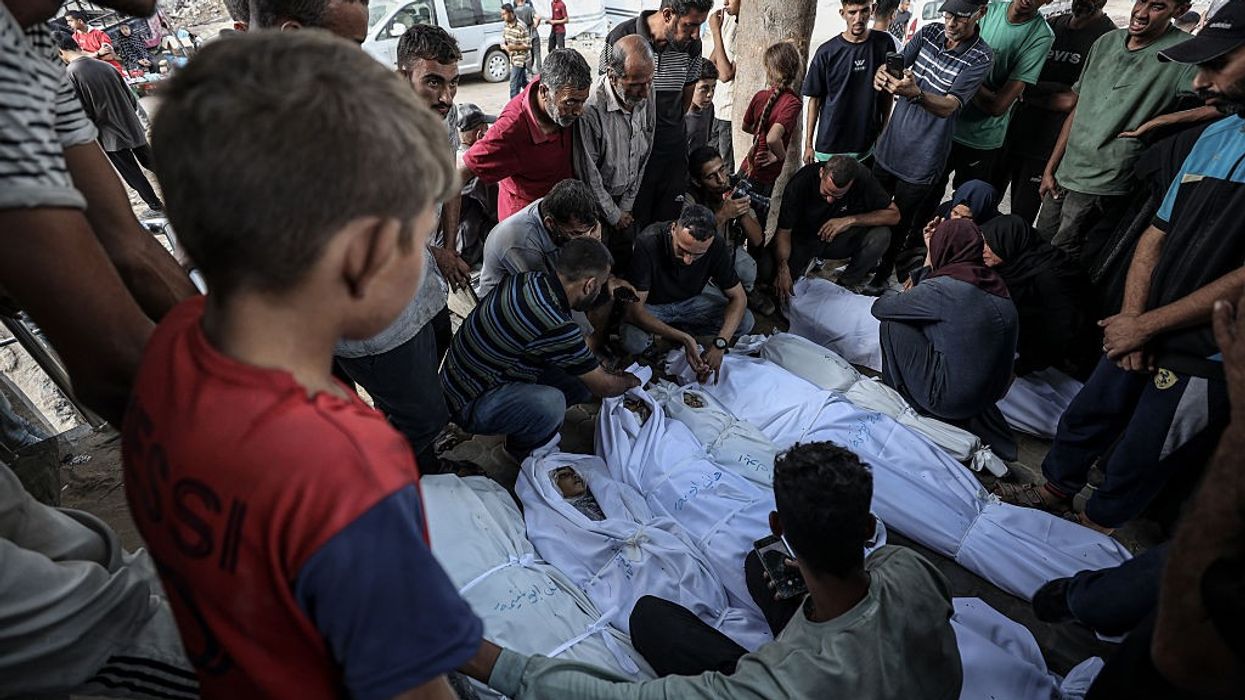
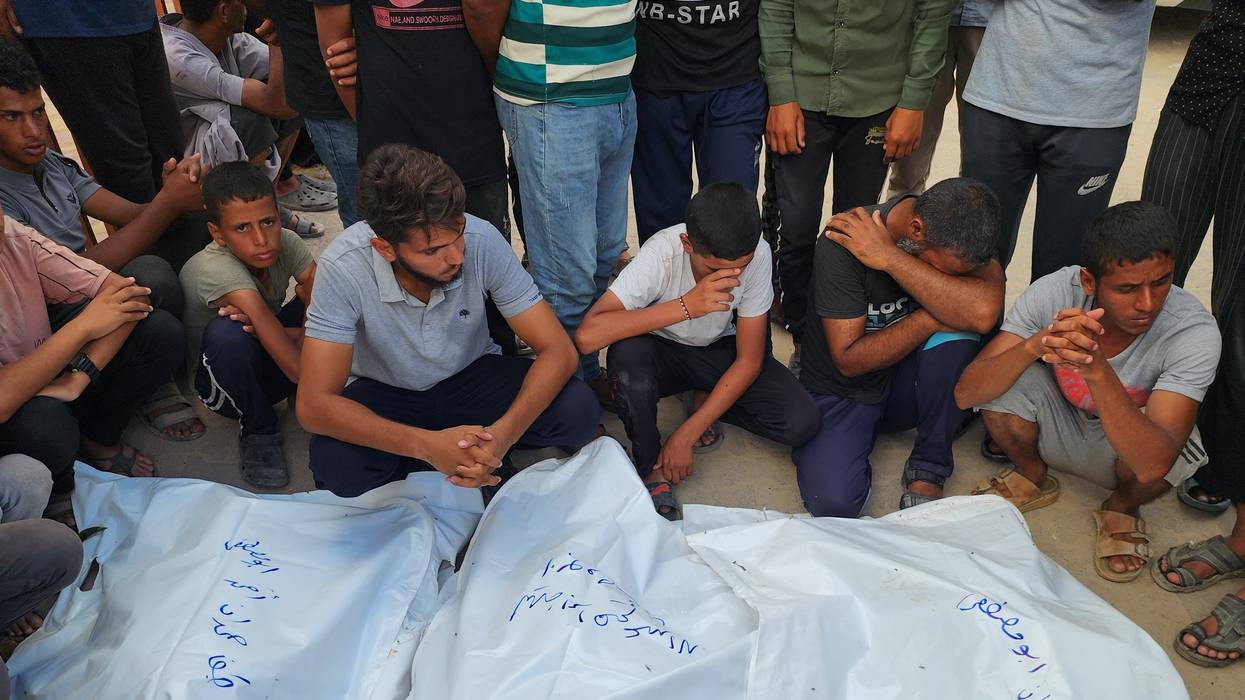
A peer-reviewed study published Wednesday in The Lancet Global Health estimates that more than 75,000 people in Gaza were killed during the first 16 months of Israel's genocidal assault—a figure that far exceeds the death toll reported at the time by the strip's health authorities.
The study's authors found that there were 75,200 "violent deaths" in Gaza between October 7, 2023 and January 5, 2025, with women, children, and elderly Palestinians making up around 56% of the toll. The researchers estimated an additional 16,300 nonviolent deaths—from disease, accidents, or other causes not directly related to Israel's military onslaught—during that period.
The Lancet study's estimated Gaza death toll through early January 2025 is at least 25,000 deaths higher than the figure reported at the time by Gaza's Ministry of Health (MoH).
Gaza health officials put the current death toll from Israel's assault at more than 72,000—a figure that Israeli authorities only recently acknowledged is accurate after more than two years of denial.
"The combined evidence suggests that, as of January 5, 2025, 3-4% of the population of the Gaza Strip had been killed violently and there have been a substantial number of nonviolent deaths caused indirectly by the conflict," the Lancet study states. "Our findings contradict claims that the MoH has inflated the death toll from the war in the Gaza Strip. Instead, the MoH appears to provide conservative, reliable figures while working under extraordinary constraints."
The study's lead author is Michael Spagat, a professor of economics at Royal Holloway, University of London and a board member of Action on Armed Violence. The London-based watchdog organization noted in its coverage of the study that "Spagat is internationally recognized for his work on war mortality estimation, including studies of Kosovo, Iraq, and other conflict zones."
The new study, described as "the first independent population survey of mortality in the Gaza Strip," is the latest peer-reviewed research showing that the officially reported death tolls from the Israeli military's invasion and destruction of the territory are likely significant undercounts.
A study published in The Lancet in January 2025 indicated that the death toll reported by Gaza health officials over roughly the first year and a half of Israel's assault was likely a 41% undercount.
"It will be a long time before we get to a full accounting of all the people killed in Gaza, if we ever get there," Spagat told The Guardian on Thursday.
It makes a difference in driving the greater intensity of political, diplomatic, and civic pressures to have a count of 600,000 rather than 67,000 or 200,000 children rather than 20,000 children murdered.
Ben Hubbard, the long-time Middle East correspondent for the New York Times, is known for his high standards. So too is Karen DeYoung, the long-time reporter and foreign affairs editor for the Washington Post.
Yet they, and their editors, share a common, recurring failure by misleading their readers about the serious undercount of Palestinian deaths during the Israeli regime’s genocidal destruction of Gaza.
How so? By repeating in article after article the Hamas claim of 67,000 deaths since October 2023. The real death toll estimate is probably around 600,000. Unlike Israeli and American cultures, which do not underestimate their fatalities in conflicts, Hamas sees the awful death toll as a reflection of their not protecting their people and a measure of Israeli military might against Hamas’ limited small arms and weapons. Both Hubbard and DeYoung, of course, know better. They know the daily bombardment of tiny Gaza, the geographical size of Philadelphia, with 2.3 million humans, is without precedent in Israel’s targeting of civilians and civilian infrastructure. The blockade of “food, water, medicine, fuel, and electricity,” along with the concentrated destruction of healthcare facilities, have been condemned by human rights groups in Israel and International humanitarian organizations.
Reporters and editors are quite aware of more accurate casualty estimates appearing in The Lancet, the prestigious British medical journal, and estimates provided by other academic and prominent international relief organizations like Doctors Without Borders, Save the Children, the United Nations World Food Programme, and others experienced in assessing the human toll of military devastations.
The editorial management of reporters and the editorials fail to hold Netanyahu and his terroristic mass-slaughtering cabinet accountable.
Journalists know the estimate last April by Professor Emeritus Paul Rogers of the University of Bradford in the UK, an expert in the power of aerial bombs and missiles, who wrote that the TNT equivalent of six Hiroshima atomic bombs has been delivered to these totally defenseless Palestinians, almost all of whom are without housing or air raid shelters.
Israeli Prime Minister Benjamin Netanyahu’s American-made missiles and bombs continue to produce deadly bloodshed. The waves of death from starvation, untreated, weaponry-caused infectious diseases, the cutoff of medicines treating cancer, respiratory ailments, and diabetes are still mounting.
What readers do not know is how much of the use of Hamas’ undercount is mandated by news editors, and why. Because intense Netanyahu propaganda has declared the estimates of Hamas, based on real names (excluding many thousands under the rubble and the collateral damage to civilians that in such conflicts exceed direct fatalities from the bombing by 3 to 13-fold), are an exaggeration, the mainstream media is wary of being accused of even worse fabrications than those of Hamas.
Speaking to many reporters and editors about this huge undercount phenomenon, not prevalent in other violent arenas of war, they all agree that the real count is much higher, but they do not have a number to use that is deemed credible. But they do have casualty experts who can be interviewed, such as the chair of the Global Health Department at Edinburgh University or a foremost missile technology specialist, MIT Professor Emeritus Theodore Postol, who said on our radio-podcast recently, “I would say that 200, 300, or 400,000 people [Palestinian] are dead easily.”
The least the journalists could do is say, “The real count may be much higher.” The other alternative is to do their own investigation, piecing together the empirical and clinical evidence (See, Gaza Healthcare Letter to President Trump, October 1, 2025) and citing prominent Israelis who have said that the Israel Defense Forces has always targeted Palestinian civilians from 1948 on. (See my column March 28, 2025—The Vast Gaza Death Undercount—Undermines Civic, Diplomatic, and Political Pressures.)
The other alternative is to do a “news analysis,” which allows for evaluations, short of editorializing. For instance, a “news analysis” could point out that conveying the impression that the Hamas figures are the true count means that 97 out of 100 Palestinians in Gaza are still living. This is not remotely credible. Yet that is essentially what Ben Hubbard’s October 7 Times article stated, “with more than 67,000 killed, or one in every 34 Gazans, according to local health officials.” It is more like 1 in every 4 Gazans killed.
Nor is it true that the “local health officials” are confirming this, because on further inquiry, they admit their definition of the fatality toll excludes those under the rubble and those who die from the massive collateral casualty toll. This reality is well-known to scores of American physicians back from Gaza who say that a majority of those killed are children and women and that the survivors are almost all injured, sick, or dying.
There are esteemed reporters like Gideon Levy of the Israeli newspaper Haaretz, who claim that the Hamas figures are horrible enough that they meet the test of genocide, implying that a higher count would not make any more of a moral or political difference.
I disagree. “Horror” does not have finite limits. It makes a difference in driving the greater intensity of political, diplomatic, and civic pressures to have a count of 600,000 rather than 67,000 or 200,000 children rather than 20,000 children murdered. Do we need to refer to other genocides in the 20th century to show how much a difference it would have made if the official count were one-tenth of the real count?
The editors of the Post, especially, and of the Times are not keeping up with the reporting of DeYoung and Hubbard et al., about the scenes of death, dying, and horrendous agony in Gaza. The editorial management of reporters and the editorials fail to hold Netanyahu and his terroristic mass-slaughtering cabinet accountable. They allow the publication of realistic reports, features, and sometimes even give voice to Palestinians, as the Times did with several pages and pictures recently. But the long-time omnipresent shadow of AIPAC et al. darkens the editorial and opinion pages more than do the illuminations of their own reporters.