
SUBSCRIBE TO OUR FREE NEWSLETTER
Daily news & progressive opinion—funded by the people, not the corporations—delivered straight to your inbox.
5
#000000
#FFFFFF
To donate by check, phone, or other method, see our More Ways to Give page.


Daily news & progressive opinion—funded by the people, not the corporations—delivered straight to your inbox.
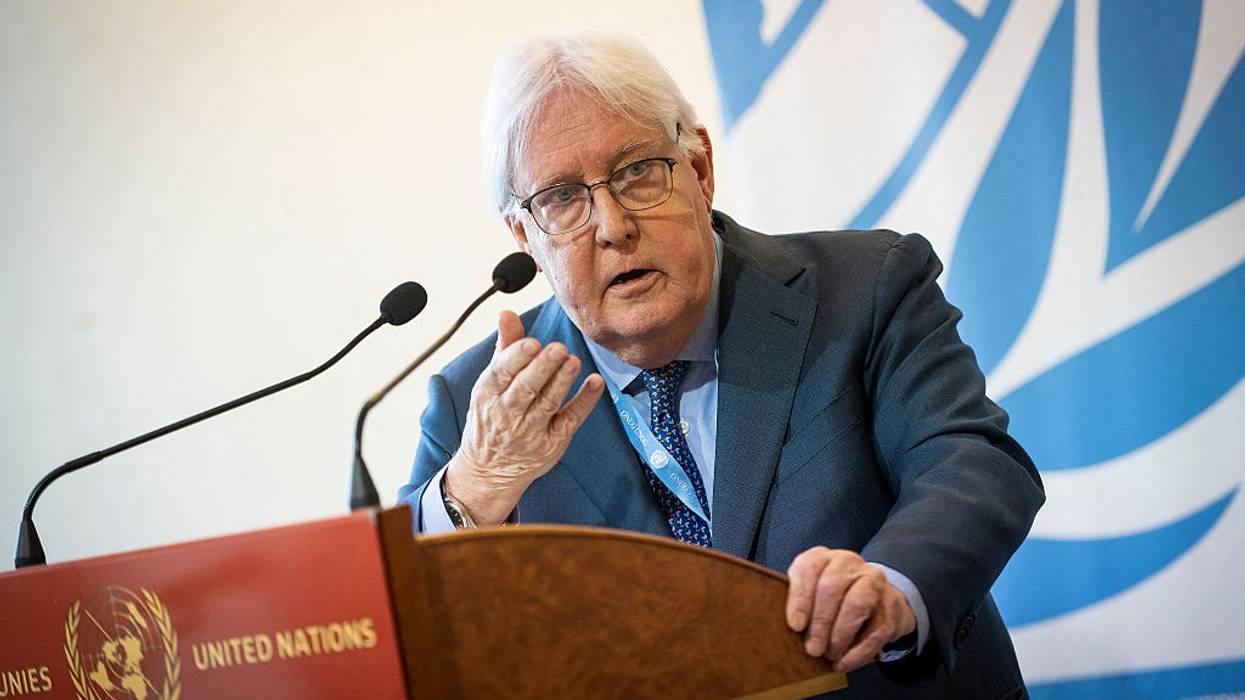
"I am absolutely convinced that what's going on in Gaza is a genocide, because the thing speaks for itself," said Martin Griffiths.
Former United Nations aid chief Martin Griffiths on Tuesday accused Israel of committing the century's worst genocide in an interview published amid increasingly deadly forced starvation in Gaza and a vow by an Israeli Cabinet minister to ethnically cleanse Palestinians from the strip to make way for Jewish resettlement.
"I am absolutely convinced that what's going on in Gaza is a genocide, because the thing speaks for itself," Griffiths, who served as the U.N. undersecretary-general for humanitarian affairs and emergency relief coordinator from 2021 to 2024, said in an interview with Middle East Eye.
"My grandchildren will be learning in school about who did what in the worst crime of the 21st century," he predicted.
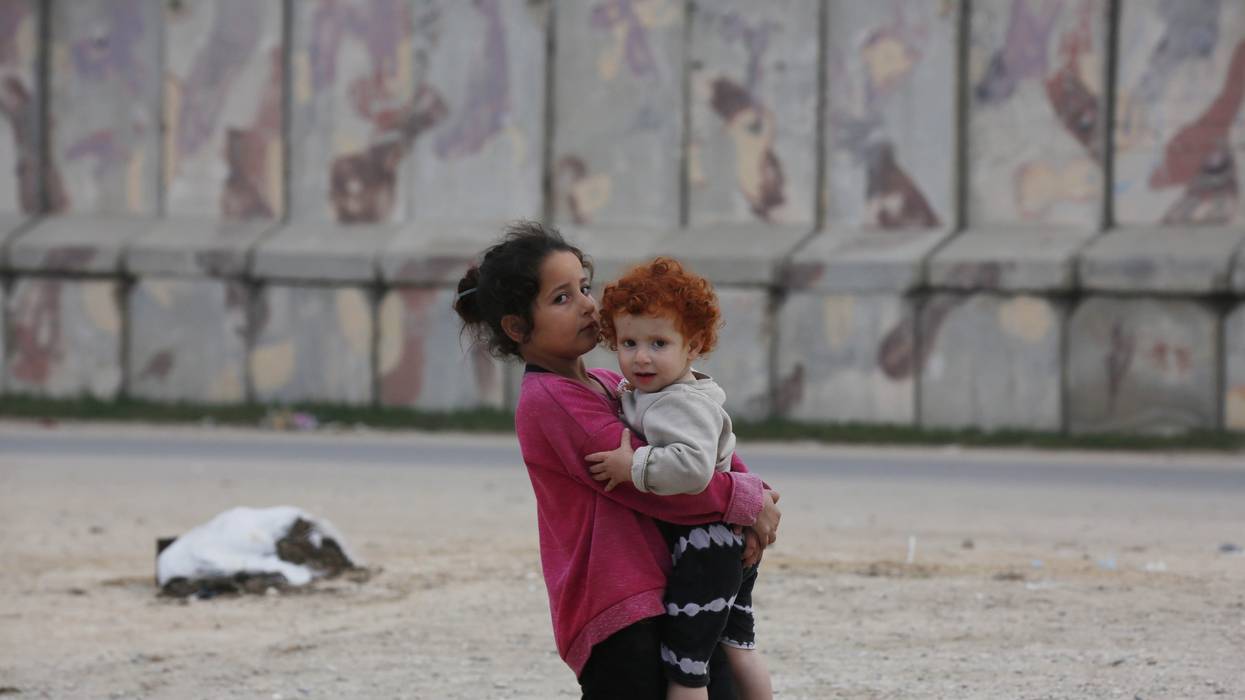
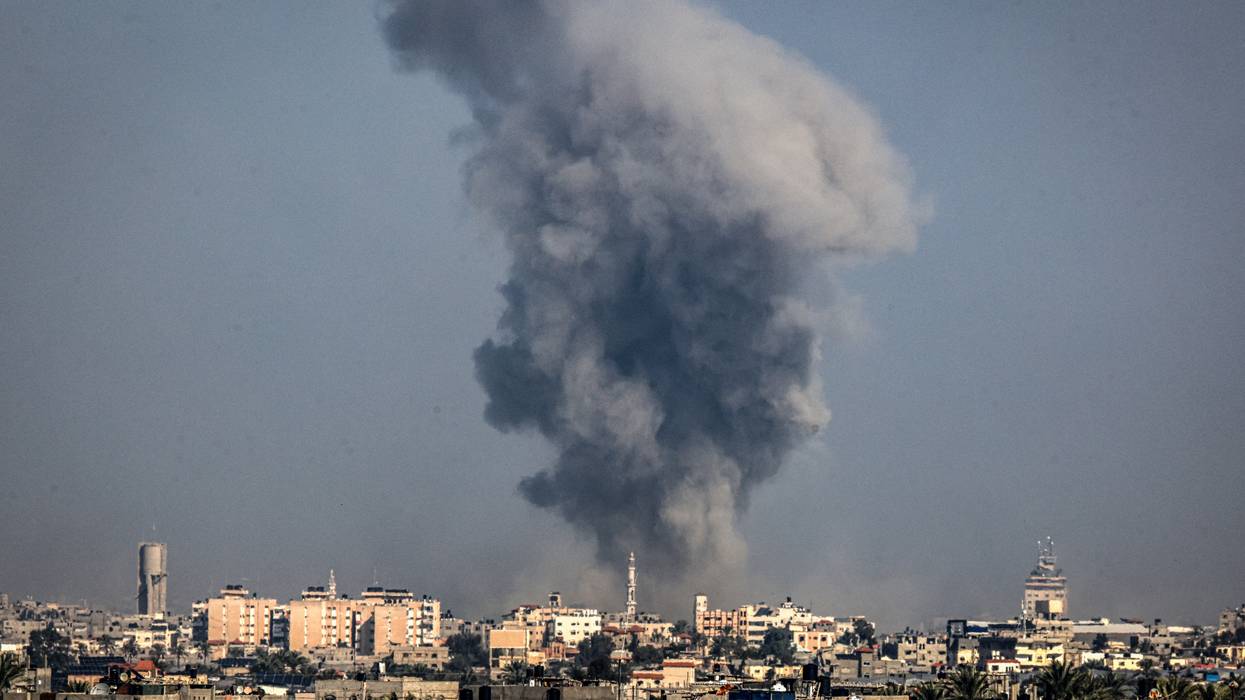
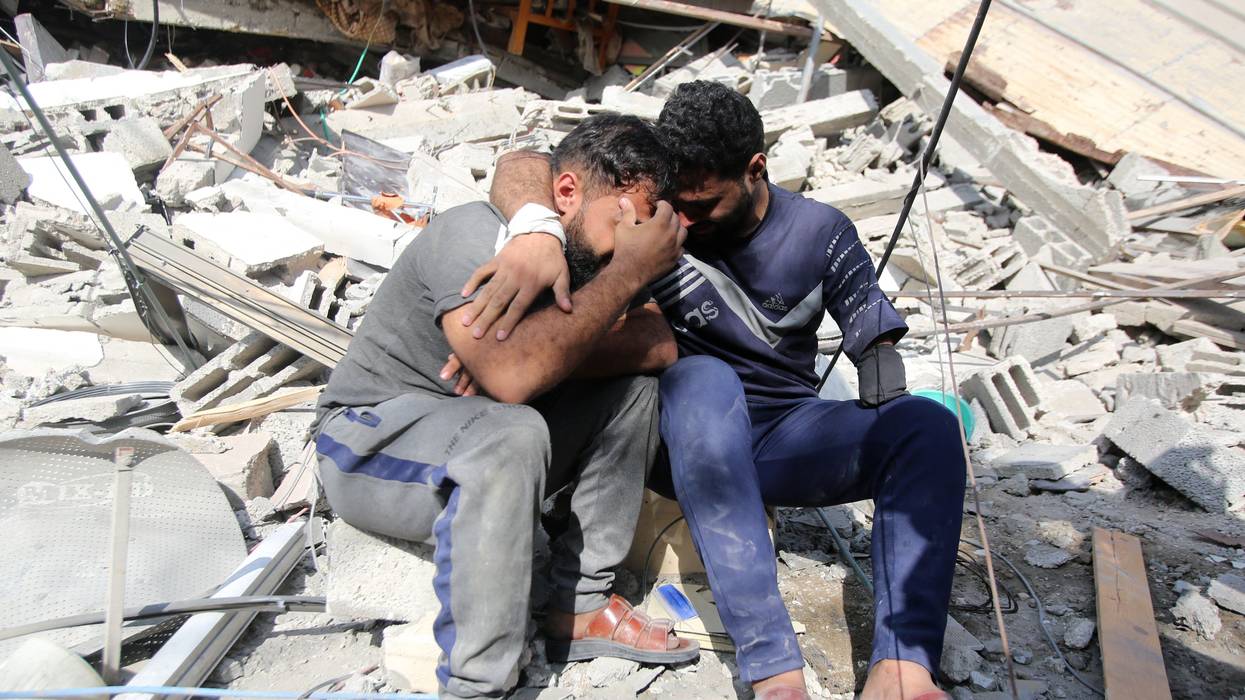
Griffiths' remarks came amid worsening mass starvation in Gaza fueled by Israel's blockade of the besieged strip. Gaza officials said Thursday that at least 115 Palestinians, including more than 80 children, have died of malnutrition since October 2023. Overall, at least 59,106 Palestinians have been killed and more than 142,500 others have been wounded by Israeli forces during 656 days of assault and siege. Over 14,000 Gazans are also missing and presumed dead and buried beneath rubble.
"There can frankly be very little doubt that we are seeing starvation and hunger as an instrument of the war," Griffiths asserted. "There is no prior experience in my five decades of humanitarian experience that can come close to comparison to the horror we are all seeing in Gaza."
"The U.N. announcement, based on serious hospital data, that people are fainting in the street from hunger and malnutrition, tells us all we need to know," he added. "It is a historic fact that children die first in these circumstances. Our humanity cannot believe our eyes."
Numerous human rights groups and U.N. experts have accused Israel of weaponizing starvation. Israeli Prime Minister Benjamin Netanyahu and former Defense Minister Yoav Gallant are wanted by the International Criminal Court for alleged crimes against humanity and war crimes in Gaza including forced starvation and murder.
In March 2024 the International Court of Justice—which is currently weighing a genocide case brought by South Africa—ordered Israel to allow desperately needed humanitarian aid into the embattled enclave and reiterated an earlier directive to prevent genocidal acts. Critics allege that Israel has ignored these orders.
Griffiths slammed the U.S.-backed Gaza Humanitarian Foundation, whose aid distribution points have been the site of numerous massacres in which more than 1,000 Palestinians have been killed. Israeli officers and soldiers have said they received orders to shoot and shell desperate aid-seekers.
"This isn't humanitarian," Griffiths said. "It's a lure for displacement."
Israeli officials have openly declared their intent to conquer, indefinitely occupy, and ethnically cleanse Gaza of Palestinians so that a plan proposed by U.S. President Donald Trump to turn the coastal enclave into "the Riviera of the Middle East" can be implemented.
On Thursday, Israeli Heritage Minister Amichai Eliyahu said that Israel's far-right government "is racing ahead for Gaza to be wiped out."
"All of Gaza will be Jewish," Eliyahu vowed.
Griffiths also decried the "massive impunity" enjoyed by Israeli officials and their enablers, and warned of the dangerous precedent this sets.
"What happens in Gaza doesn't stay in Gaza," he said.
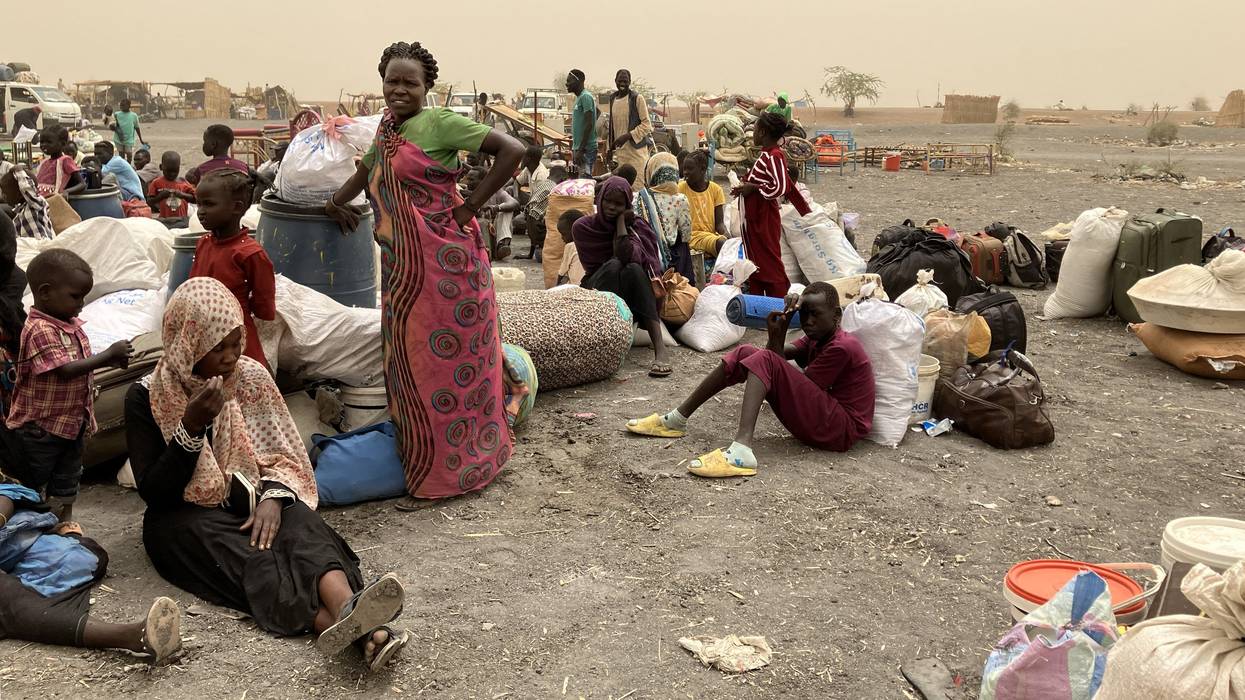
Warring factions in North Darfur state must "avoid locating military installations within or near densely populated areas, including towns and camps for internally displaced people," said one U.N. official.
The United Nations' top humanitarian affairs officials on Friday called for an immediate deescalation of hostilities in Sudan, where rival factions in the military government have been fighting for a year and where an attack on the city of El Fasher is reportedly imminent.
About 800,000 people in the city, the capital of North Darfur state, are in "extreme and immediate danger," U.N. aid operations director, Edem Wosornu, told the U.N. Security Council earlier this week, as she reported that clashes between the Rapid Support Forces (RSF), a paramilitary group, and the Sudanese Armed Forces (SAF) are nearing El Fasher.
Fighting between the two groups has intensified in recent weeks, forcibly displacing an estimated 40,000 people.
The U.N. Office for the Coordination of Humanitarian Affairs said Friday that the security situation in North Darfur has left more than a dozen aid trucks with relief supplies for 122,000 people stranded in neighboring Northern state, unable to proceed into the only capital city in Darfur that is not controlled by RSF.
"A patchwork of armed actors, including the Darfur Joint Protection Forces, the SAF, and the RSF control different parts of the El Fasher area," Human Rights Watch reported this week. "Tense calm alternating with episodic fighting has prevailed for months."
Since April 14, when RSF began to push into El Fasher, at least 43 people—including women and children—have been killed due to fighting between the SAF and RSF.
"Civilians are trapped in the city, afraid of being killed should they attempt to flee," said Seif Magango, spokesperson for the U.N. high commissioner for human rights, Volker Türk. "This dire situation is compounded by a severe shortage of essential supplies as deliveries of commercial goods and humanitarian aid have been heavily constrained by the fighting, and delivery trucks are unable to freely transit through RSF-controlled territory."
The lack of humanitarian aid in North Darfur has pushed the state toward a famine, with one child dying of starvation every two hours, according to a February report by Doctors Without Borders.
In December, the U.S. State Department announced an $85 million sale of radar and other military equipment to the United Arab Emirates (UAE), which The New York Times reported last year has been covertly supporting the RSF.
U.S. Rep. Ilhan Omar (D-Minn.) proposed a joint resolution to block arms sales to the UAE in January, in light of its support for the paramilitary group.
Omar was among several lawmakers who wrote to President Joe Biden and Secretary of State Antony Blinken earlier this week, urging them to "deliver urgently-needed humanitarian assistance" and to help end the hostilities.
Sudanese-Australian writer Yassmin Abdel-Magied urged Americans on Friday to pressure lawmakers and the White House to take more action.
"There is a tiny window of opportunity for us to find a way to get the UAE... to make the RSF to stop in their tracks," said Abdel-Magied. "Maybe there's a way that we can avoid this massacre."
OCHA called on the warring parties to "take constant care to spare civilians and civilian objects in the conduct of military operations."
"They must, to the extent possible, avoid locating military installations within or near densely populated areas, including towns and camps for internally displaced people," said the office. "It is also imperative that the parties allow safe passage for civilians to leave El Fasher for safer areas."
"More than half of Gaza’s population—well over 1 million people—are crammed in Rafah, staring death in the face," said the United Nations' emergency relief coordinator.
President Joe Biden and other leading American officials have publicly urged Israel not to invade the overcrowded Gaza city of Rafah without ensuring the protection of civilians, but the administration reportedly has no plan to impose consequences if the Netanyahu government launches the ground assault without heeding U.S. warnings.
Three unnamed U.S. officials told Politico's "National Security Daily" newsletter on Tuesday that "no reprimand plans are in the works, meaning Israeli forces could enter the city and harm civilians without facing American consequences."
Trita Parsi, executive vice president of the Quincy Institute for Responsible Statecraft, wrote in response to Politico's reporting that "Biden can stop this but chooses not to."
"Instead, he only resorts to calling Netanyahu an 'asshole' behind his back," Parsi added. "This is leadership?"
Around 1.4 million people, most of them displaced from other parts of the Gaza Strip, are currently in Rafah, which is roughly a quarter the size of the U.S. city of Baltimore.
Some are
desperately trying to flee ahead of an Israeli invasion, gathering their few remaining belongings and leaving the city without any clear direction or assurance of safe passage.
"They need to be protected," Biden said of Rafah's civilians following a White House meeting with the king of Jordan on Monday.
But that same day, White House National Security Council spokesman John Kirby said during a press briefing that "we are going to continue to support Israel" after a reporter asked whether Biden has "ever threatened to strip military assistance from Israel if they move ahead with a Rafah operation" that doesn't protect civilians.
"They have a right to defend themselves against Hamas. And we're going to continue to make sure they have the tools and the capabilities to do that," Kirby said, sidestepping growing evidence that U.S. weapons are fueling the Israeli military's war crimes in Gaza.
REPORTER: "Has the President ever threatened to strip military assistance from Israel if they move ahead with a Rafah operation that does not take into consequence what happens with civilians?"
WHITE HOUSE: "We’re going to continue to support Israel."
"They have a right to… pic.twitter.com/tMCVUQ2IZc
— Ken Klippenstein (@kenklippenstein) February 13, 2024
Israel's military has ramped up attacks on Rafah in recent days, killing dozens of Palestinians—including an entire family—in a wave of airstrikes on the besieged city earlier this week. The strikes leveled buildings, wiped out makeshift tents that displaced people have been using for shelter, and killed at least 27 children.
Israeli Prime Minister Benjamin Netanyahu has made clear that a ground invasion of Rafah will go ahead despite the Biden administration's pleading and growing protests from the international community. On Tuesday, the South African government implored the International Court of Justice to intervene to prevent an invasion of Rafah, arguing such an assault would violate the legally binding orders the court issued in its interim decision last month.
"We're going to do it," Netanyahu said in an interview that aired over the weekend. "We're going to get the remaining Hamas terrorist battalions in Rafah, which is the last bastion."
Meanwhile, the White House is actively pressuring the U.S. House of Representatives to approve a $95 billion aid package that includes more than $10 billion in offensive military assistance for Israel. The bill passed the Senate Tuesday morning with just three no votes from members of the Democratic caucus, but progressive opposition is likely to be stronger in the House.
"This is not the time for vague generalities about doing more to protect civilian life. We must demand of Netanyahu—STOP," Rep. Ro Khanna (D-Calif.) wrote on social media Tuesday, noting that a majority of House Democrats voted against a standalone $17.6 billion aid package for Israel last week.
"The bombing in Rafah that is killing children refugees must end today," Khanna added.
Martin Griffiths, the United Nations' emergency relief coordinator, echoed that message in a statement on Tuesday, warning that "the scenario we have long dreaded is unraveling at alarming speed."
"More than half of Gaza’s population—well over 1 million people—are crammed in Rafah, staring death in the face: They have little to eat, hardly any access to medical care, nowhere to sleep, nowhere safe to go," said Griffiths. "Military operations in Rafah could lead to a slaughter in Gaza. They could also leave an already fragile humanitarian operation at death's door."
"We lack the safety guarantees, the aid supplies, and the staff capacity to keep this operation afloat," he continued. "The international community has been warning against the dangerous consequences of any ground invasion in Rafah. The government of Israel cannot continue to ignore these calls. History will not be kind. This war must end."
"If the funding remains suspended, we will most likely be forced to shut down our operations by end of February not only in Gaza but also across the region," warned the agency chief.
A United Nations humanitarian agency warned Thursday that over a dozen countries that have suspended their financial contributions are risking the "sheer survival" of most people in the Gaza Strip amid Israel's war on the besieged Palestinian enclave.
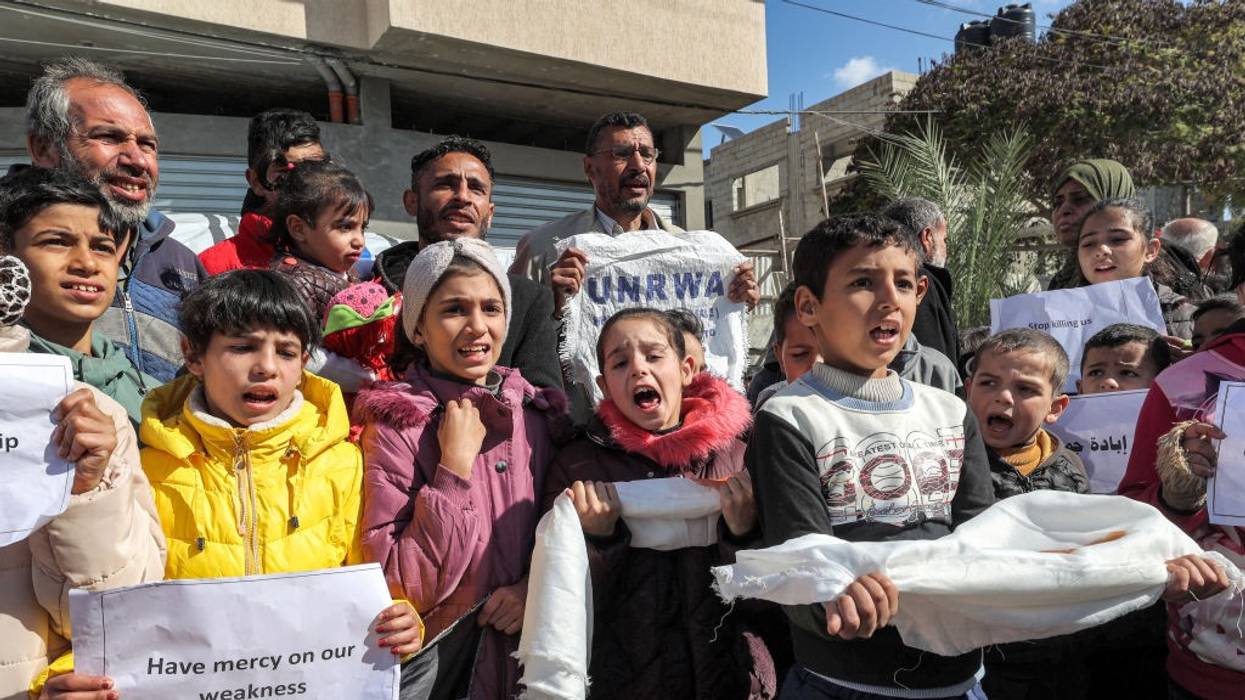
The United Nations Relief and Works Agency for Palestinian Refugees in the Near East (UNRWA) said in a statement that "the colossal humanitarian needs of over 2 million people in Gaza now face the risk of deepening" due to recent donor suspensions over Israeli allegations that a handful of agency staff members participated in the Hamas-led attacks on October 7.
The number of countries cutting off funding—including the United States—has grown over the past week even though the 30,000-employee agency swiftly fired nine workers and launched an investigation into the the Israeli government's claims.
"The agency remains the largest aid organization in one of the most severe and complex humanitarian crises in the world."
While cease-fire talks are ongoing, Israel's nearly four-month assault on Gaza—condemned as genocide in a South African-led case at the International Court of Justice—continues, with the death toll topping 27,000 on Thursday and thousands more injured or missing in the bombed and burned homes, hospitals, schools, mosques, shelters, and refugee camps.
In response to Israeli orders early in the U.S.-backed war, many Palestinians have fled northern Gaza. Thomas White, director of UNRWA affairs in Gaza and U.N. deputy humanitarian coordinator for the occupied Palestinian territory, explained Thursday that the agency has had limited access to the people who remain in the north.
"UNRWA received reports that people in the area are grinding bird feed to make flour. We continue to coordinate with the Israeli army to be able to go to the north, but this has been largely denied," he said. "When our convoys are finally permitted to go to the area, people rush to the trucks to get food and often eat it on the spot."
Meanwhile, in southern Gaza, "Rafah has become a sea of people fleeing bombardments," White added.
According to the UNRWA's tally, donor nations have suspended at least $440 million in funding. Philippe Lazzarini, the agency's commissioner-general, declared Thursday that "as the war in Gaza is being pursued unabated, and at the time the International Court of Justice calls for more humanitarian assistance, it is the time to reinforce and not to weaken UNRWA."
"The agency remains the largest aid organization in one of the most severe and complex humanitarian crises in the world," he said. "I echo the call of the U.N. Secretary-General António Guterres to resume funding to UNRWA. If the funding remains suspended, we will most likely be forced to shut down our operations by end of February not only in Gaza but also across the region."
White warned that "it's difficult to imagine that Gazans will survive this crisis without UNRWA."
The comments from UNRWA leaders echoed remarks from other U.N. officials, humanitarians, global advocacy groups, and even some progressive U.S. politicians over the past week.
"UNRWA's lifesaving services to over three-quarters of Gaza's residents should not be jeopardized by the alleged actions of a few individuals," Martin Griffiths, United Nations under-secretary-general for humanitarian affairs and emergency relief coordinator, told the U.N. Security Council on Wednesday.
"To put very simply and bluntly: Our humanitarian response for the occupied Palestinian territory is completely dependent on UNRWA being adequately funded and operational," he added. "Decisions to withhold funds from UNRWA must be revoked."
Griffiths and 14 other U.N. leaders and humanitarian partners who argued in a Tuesday statement that while the allegations against UNRWA staff "are horrifying" and "any U.N. employee involved in acts of terror will be held accountable," global donors must not prevent the agency from helping the "hundreds of thousands of people homeless and on the brink of famine."
"Withdrawing funds from UNRWA is perilous and would result in the collapse of the humanitarian system in Gaza, with far-reaching humanitarian and human rights consequences in the occupied Palestinian territory and across the region," the coalition said. "The world cannot abandon the people of Gaza."
"This war should never have started. But it's long past time for it to end," said United Nations emergency relief coordinator Martin Griffiths.
The United Nations' emergency relief coordinator warned Friday that the threat of a broader conflict in the Middle East is growing rapidly as Israel's assault continues in Gaza, which the U.N. official said has been rendered "uninhabitable" by near-constant airstrikes and a suffocating blockade.
"The specter of further regional spillover of the war is looming dangerously close," Martin Griffiths, the U.N.'s under-secretary-general for humanitarian affairs, said in a statement, pointing to the humanitarian catastrophe in Gaza, mounting Israeli attacks in the West Bank, and rocket attacks on Israel. "Hope has never been more elusive."
Griffiths, a longtime diplomat who has described the situation in Gaza as the worst humanitarian crisis he's ever witnessed, issued his unsparing statement at the tail end of a week that saw Israel and the United States launch deadly strikes in Lebanon and Iraq, killing a senior Hamas official and the leader of an Iran-aligned militia.
On Saturday, Hezbollah responded to Israel's drone strike on an office building in the Lebanese capital of Beirut by firing rockets at a military base in northern Israel, heightening fears of an escalatory spiral.
While the Biden administration insists it wants to avert a regional war, it continues to provide Israel with lethal military aid and oppose international efforts to enact a permanent cease-fire that analysts say is necessary to stop the conflict from spreading. The U.S. is also reportedly drafting plans to bomb Yemen in response to Houthi attacks on vessels in the Red Sea.
The Houthis have said the attacks will stop once Israel ends its catastrophic assault on the Gaza Strip.
Griffiths said Friday that the situation in Gaza is shockingly dire, with displaced families "sleeping in the open as temperatures plummet" and the territory's remaining medical facilities "under relentless attack."
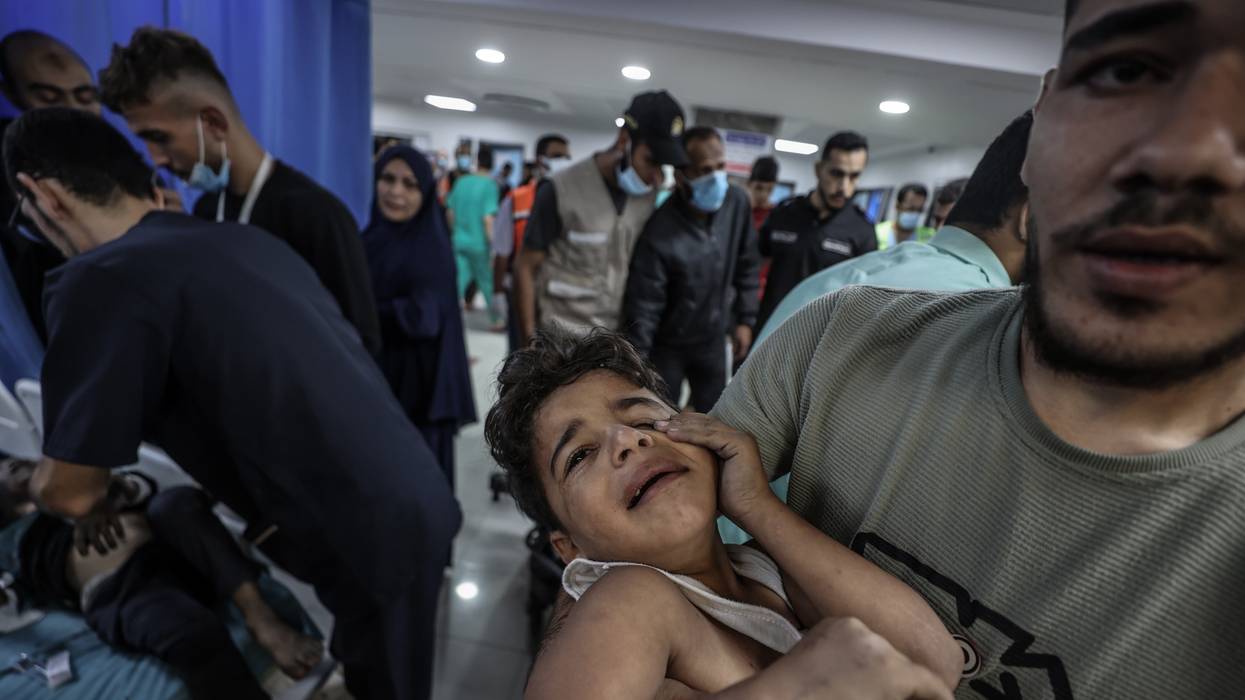
"The few hospitals that are partially functional are overwhelmed with trauma cases, critically short of all supplies, and inundated by desperate people seeking safety," said Griffiths. "Infectious diseases are spreading in overcrowded shelters as sewers spill over. Some 180 Palestinian women are giving birth daily amidst this chaos. People are facing the highest levels of food insecurity ever recorded. Famine is around the corner."
"For children in particular," Griffiths added, "the past 12 weeks have been traumatic: No food. No water. No school. Nothing but the terrifying sounds of war, day in and day out."
Much of Gaza has been decimated by Israeli bombs, many of which were supplied by the United States. The Euro-Mediterranean Human Rights Monitor said Friday that around 68,000 housing units in Gaza have been completely destroyed by Israeli airstrikes.
Roughly 4% of Gaza's population—more than 90,000 people—has been killed, wounded, or left missing by Israeli attacks since October 7, the group estimated.
"It is time for the parties to meet all their obligations under international law, including to protect civilians and meet their essential needs, and to release all hostages immediately," Griffiths said. "It is time for the international community to use all its influence to make this happen. This war should never have started. But it's long past time for it to end."
"The protection of newborns, patients, medical staff, and all civilians must override all other concerns," said Martin Griffiths, the United Nations' emergency relief coordinator.
The head of the United Nations' emergency relief operations said Wednesday that he was "appalled" by news of the Israeli military's raid of Gaza's largest hospital, where hundreds of patients and healthcare workers and thousands of displaced people are sheltering.
"The protection of newborns, patients, medical staff, and all civilians must override all other concerns," Martin Griffiths, the U.N. under-secretary-general for humanitarian affairs, wrote on social media. "Hospitals are not battlegrounds."
Israeli forces' raid of al-Shifa Hospital early Wednesday came days after they encircled the facility and began bombarding it, accusing Hamas of using the hospital and tunnels beneath it for military operations.
The U.S. backed Israel's assertion on Tuesday, with National Security Council spokesman John Kirby telling reporters that "we have information that Hamas and the Palestinian Islamic Jihad used some hospitals in the Gaza Strip, including al-Shifa, and tunnels underneath them, to conceal and support their military operations and to hold hostages."
Asked to provide specific evidence, Kirby cited "a variety of intelligence sources" but declined to publicize "a whole lot of granular detail on that."
Hospitals are protected from military attack under international law and can only lose their protected status if they are shown to have been used for "an act harmful to the enemy." Human Rights Watch argued in a report released ahead of Wednesday's raid that the Israeli government has not provided sufficient evidence to justify its attacks on al-Shifa and other northern Gaza hospitals, most of which have ceased functioning due to a lack of fuel and other supplies.
An emergency room employee at al-Shifa told Al Jazeera that during their raid, Israeli soldiers "detained and brutally assaulted some of the men who were taking refuge at the hospital."
"Israeli forces took the detained men naked and blindfolded," the worker added. "[They] did not bring any aid or supplies, they only brought terror and death."
On Tuesday, according to Gaza officials, around 170 bodies were buried in a mass grave in the courtyard of al-Shifa, as there was no other way to safely bury them outside the hospital compound because of Israeli attacks and firefights with Hamas. A surgeon at the hospital told Reuters that, due to lack of refrigeration, the bodies "were generating an unbearable stench and posing a risk of infection."
"The Health Ministry said 40 patients, including three babies, have died since Shifa's emergency generator ran out of fuel Saturday," The Associated Press reported Wednesday. "Another 36 babies are at risk of dying because there is no power for incubators, according to the ministry."
Israel's bombing campaign, ground invasion, and siege have killed more than 11,000 people across the Gaza Strip, but the recent attacks on the enclave's hospitals have made it impossible for Gaza health officials to reach the facilities to count the dead and wounded. Thousands more are believed to have been killed since the death toll was updated last week.
Tedros Adhanom Ghebreyesus, director-general of the World Health Organization, said early Wednesday that "we've lost touch again with health personnel" at al-Shifa amid Israel's raid.
"We're extremely worried for their and their patients' safety," he added.
Facing growing accusations of war crimes, the Israel Defense Forces (IDF) called its raid on al-Shifa a "precise and targeted operation against Hamas." In the wake of the deadly Hamas-led attack on Israel last month, the IDF has claimed repeatedly that it is targeting militants even as it has decimated Gaza's civilian infrastructure, bombing homes, medical facilities, schools, bakeries, and the strip's largest refugee camp.
A confidential memo from the Dutch Embassy in Tel Aviv states that Israel is "deliberately causing massive destruction to the infrastructure and civilian centers" of Gaza in an effort to "showcase credible military force" to "Iran and its proxies," according to Politico.
Israel's strategy, the memo states, violates "international treaties and laws of war."
"An entire population is besieged and under attack, denied access to the essentials for survival, bombed in their homes, shelters, hospitals, and places of worship. This is unacceptable."
The United Nations' emergency relief coordinator, the president of Save the Children, the head of the World Health Organization, and other global aid leaders issued a joint statement Sunday calling for an immediate cease-fire in Gaza as the death toll and humanitarian crisis continue to worsen.
The statement points with alarm to the Israeli military's "horrific killings" of Gaza civilians, attacks on healthcare facilities and homes, and the siege that has cut off Gazans' access to water, electricity, food, and fuel. Roughly 70% of Gaza's population has been internally displaced since the Israeli bombing began on October 7.
"An entire population is besieged and under attack, denied access to the essentials for survival, bombed in their homes, shelters, hospitals, and places of worship. This is unacceptable," the aid officials said. "We need an immediate humanitarian cease-fire. It's been 30 days. Enough is enough. This must stop now."
Hours after the statement's release, the Gaza Health Ministry said the death toll in the occupied territory has surpassed 10,000 after just a month of Israeli bombing. Children make up roughly 40% of the death toll.
The statement from the Inter-Agency Standing Committee is part of a growing international push for a cease-fire that has been joined by major human rights organizations, the head of the U.N., Arab leaders, Jewish peace advocates, and a growing number of U.S. lawmakers. Two-thirds of U.S. voters support a cease-fire, according to recent polling.
Late last week, U.S. Rep. Maxine Waters (D-Calif.) became the latest member of Congress to demand a cease-fire between Israel and Gaza.
"The people of Gaza desperately need water, food, medicine, and fuel NOW," said Waters. "There must be negotiations for the release of all hostages, NOW. Hamas must cease all attacks on Israel, and Israel must cease all attacks on Gaza. The killing of civilians must stop, and the U.S. must provide leadership in seeking and working for peaceful solutions to this devastating time in the history of our world."
Despite growing domestic pressure, the Biden administration has thus far dismissed calls for a cease-fire, opting instead to urge Israel to allow "humanitarian pauses" aimed at letting aid freely flow into Gaza.
After meeting with U.S. Secretary of State Antony Blinken on Friday, far-right Israeli Prime Minister Benjamin Netanyahupledged to continue attacking Gaza "with full force" and said his country won't consider a cease-fire until all hostages are released.
The Associated Press reported Monday that Israeli forces have "severed northern Gaza from the rest of the besieged territory and pounded it with intense airstrikes overnight... setting the stage for an expected push into the dense confines of Gaza City and an even bloodier phase of the month-old war."
"Israeli bombardments have continued across the territory, and strikes in central and southern Gaza—the purported safe zone—killed dozens of people on Sunday," AP added.
Israeli settler violence is also mounting in the illegally occupied West Bank. A spokesperson for the U.N. High Commissioner for Human Rights said in a statement last week that "in repeated incidents, armed settlers have given Palestinian communities ultimatums to leave their homes or be killed."
"In one chilling example of the intimidation communities are facing, pamphlets were reportedly left by settlers on Palestinian vehicles with threatening messages telling them to leave now or face 'elimination,'" the official said.
In their joint statement on Sunday, the global aid leaders reiterated their "plea for the parties to respect all their obligations under international humanitarian and human rights law."
"We renew our call for the immediate and unconditional release of all civilians held hostage. Civilians and the infrastructure they rely on—including hospitals, shelters, and schools—must be protected," they added. "More aid—food, water, medicine, and of course fuel—must enter Gaza safely, swiftly, and at the scale needed, and must reach people in need, especially women and children, wherever they are."
Israeli bombs reportedly hit Gaza's largest refugee camp and residential buildings.
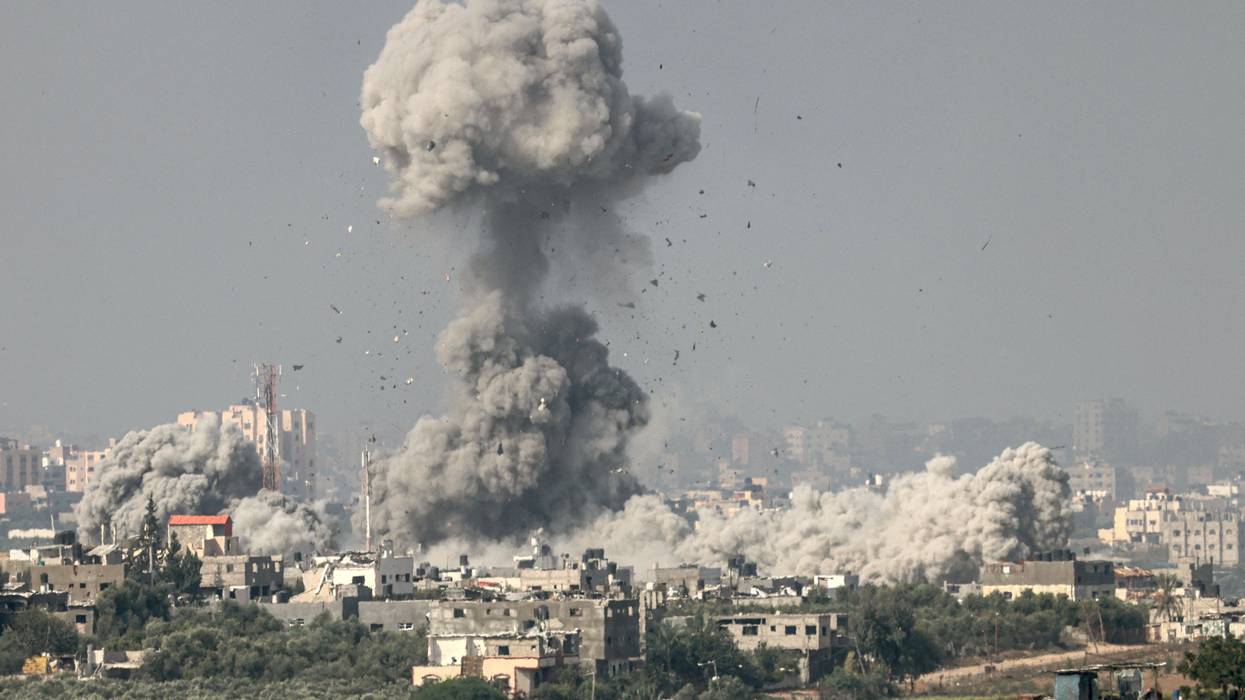
The Israeli military has launched one of its most violent attacks on the Gaza Strip since its latest bombing campaign began two weeks ago, further devastating the occupied territory as its overwhelmed healthcare system and humanitarian services teeter on the brink of collapse.
Over just the past 24 hours, Israeli airstrikes have killed more than 400 people in Gaza, bringing the enclave's total death toll since October 7 to more than 4,500. Israeli bombs reportedly hit Gaza's largest refugee camp on Sunday, killing dozens.
Gaza's Interior Ministry said Israel also struck "residential apartments in the town of Khan Younis and the Nuseirat refugee camp, both of which are south of the evacuation line," The Associated Press reported.
The Israeli military said Monday that it had bombed more than 320 targets in Gaza in the past 24 hours.
The intense bombardment came as Israel prepared for what's expected to be a large-scale ground invasion of the Gaza Strip. In recent days, the Israeli military has been conducting ground raids in Gaza but has thus far held off on fully invading, as the U.S. advises the Israeli government to delay the operation.
But according to The New York Times, the Biden administration is "not making a demand of Israel and still supports the ground invasion."
On Sunday, U.S. President Joe Biden joined the leaders of Canada, France, Germany, Italy, and the United Kingdom in issuing a joint statement reiterating their "support for Israel and its right to defend itself" and calling for "adherence to international humanitarian law," which Israel has been accused of violating repeatedly with its indiscriminate airstrikes and blockade.
The Western leaders' joint statement said they are "committed to continue close diplomatic coordination, including with key partners in the region, to prevent the conflict from spreading, preserve stability in the Middle East, and work toward a political solution and durable peace," but they did not call for a cease-fire.
Aid convoys were finally allowed to enter Gaza through the Egyptian border over the weekend, a development that United Nations emergency relief coordinator Martin Griffiths called a "small glimmer of hope for the millions of people in dire need of humanitarian aid."
"But they need more, much more," Griffiths added. "I'm particularly grateful to the aid workers on the Palestinian side who immediately sprang to action to offload the goods—despite the risks. True heroes. They, too, need protection."
The aid convoys carried food, drinking water, and key medical supplies, but not fuel that hospitals desperately need to continue operating after Israel cut off Gaza's electricity supply. Middle East Eye reported Monday that more than half of Gaza's hospitals have been forced to shut down. The ones that are still running are dangerously low on anesthesia and other supplies.
The Guardian noted that doctors in Gaza have been forced to perform surgeries "using sewing needles, resorting to vinegar as disinfectant and operating without anesthesia."
Israel has ordered 20 hospitals in northern Gaza to evacuate, part of a broader evacuation directive that human rights groups and legal experts have called a violation of international law.
The Euro-Mediterranean Human Rights Monitor said in a report last week that the Israeli military has already destroyed a quarter of northern Gaza as part of what the group called "the largest campaign of destruction of buildings and residential houses in the Gaza Strip in modern history."
The group concluded that Israel is "committing complex war crimes" in Gaza and stressed that "these crimes represent serious violations of international humanitarian law and may amount to war crimes under the Fourth Geneva Convention for the Protection of Civilians."
More than a million Gazans have been displaced since October 7, when Israel started bombing the strip following a deadly Hamas attack. According to the U.N. Office for the Coordination of Humanitarian Affairs, more than 1,000 people in Gaza "have been reported missing and are presumed to be trapped or dead under the rubble."
"Wars have rules," said the United Nations agency for Palestinian refugees. "Civilians, hospitals, schools, clinics, and UN premises cannot be a target."
The emergency relief coordinator for the United Nations on Saturday said that "humanity is failing" as officials in the United States and other powerful Western countries refused to hear the calls of a growing number of humanitarian groups, progressive lawmakers, and governments for a cease-fire in Gaza—allowing Israel to forge ahead with what will likely be an imminent ground assault on the blockaded enclave.
"The past week has been a test for humanity," said Martin Griffiths one week after Hamas unleashed a brutal surprise attack on Israel, killing at least 1,300 people and taking scores of people hostage. As Israel's response has targeted Gaza—home to two million people, about half of whom are children—repeated airstrikes have bombarded "homes, schools, shelters, health centers, and places of worship," Griffith said, leaving at least 2,215 Palestinians dead, including more than 600 children.
"Entire residential neighborhoods have been razed to the ground," added Griffiths, who serves as under secretary-general for humanitarian affairs at the United Nations. "Aid workers have been killed. The humanitarian situation in Gaza, already critical, is fast becoming untenable."
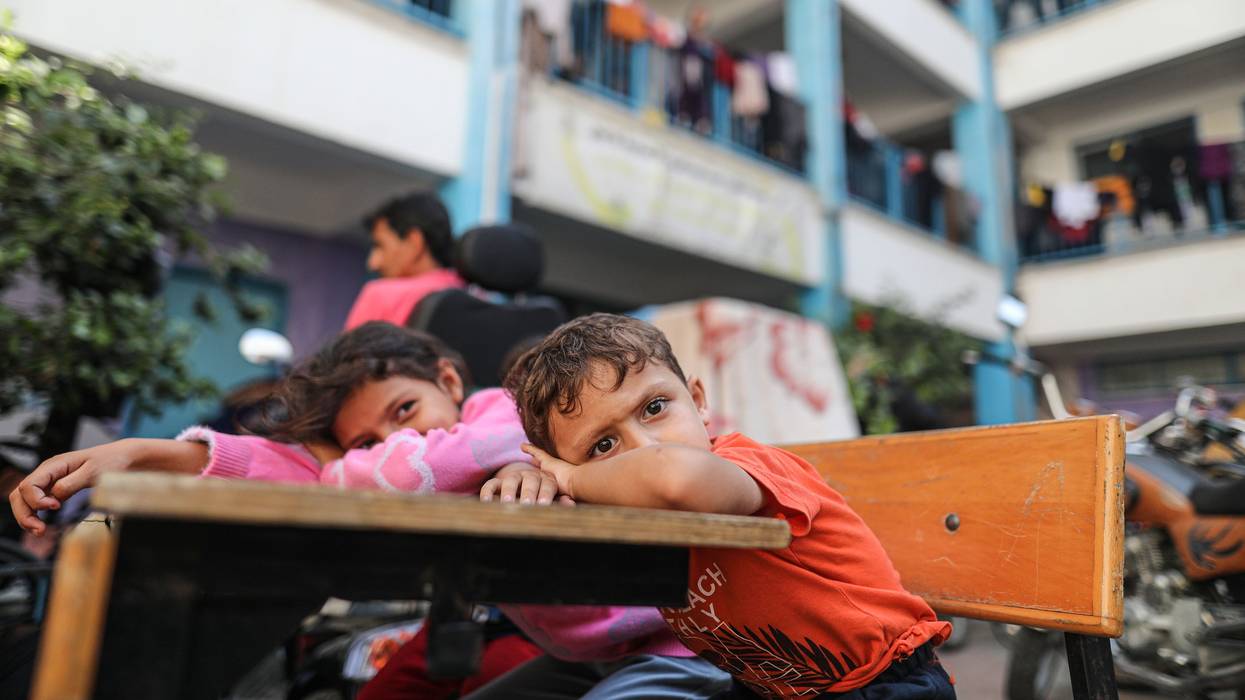
Griffith's comments came as the U.N. Relief and Works Agency for Palestine Refugees (UNRWA) reported that the indiscriminate bombing campaign has placed its own shelters in "unprecedented" danger, making it impossible for workers to ensure the safety of some 270,000 people who have been displaced and sought shelter at 102 schools run by the agency.
"Wars have rules. Civilians, hospitals, schools, clinics, and UN premises cannot be a target," said the UNWRA said in a statement. "We are sparing no effort to advocate with parties to the conflicts to meet their obligations under international law to protect civilians including those seeking refuge in UNRWA shelters."
Al Jazeera reported Saturday that correspondents have observed an increased presence of tanks near Sderot, Israel, close to northern Gaza, suggesting the ground invasion that has been threatened in recent days could be imminent.
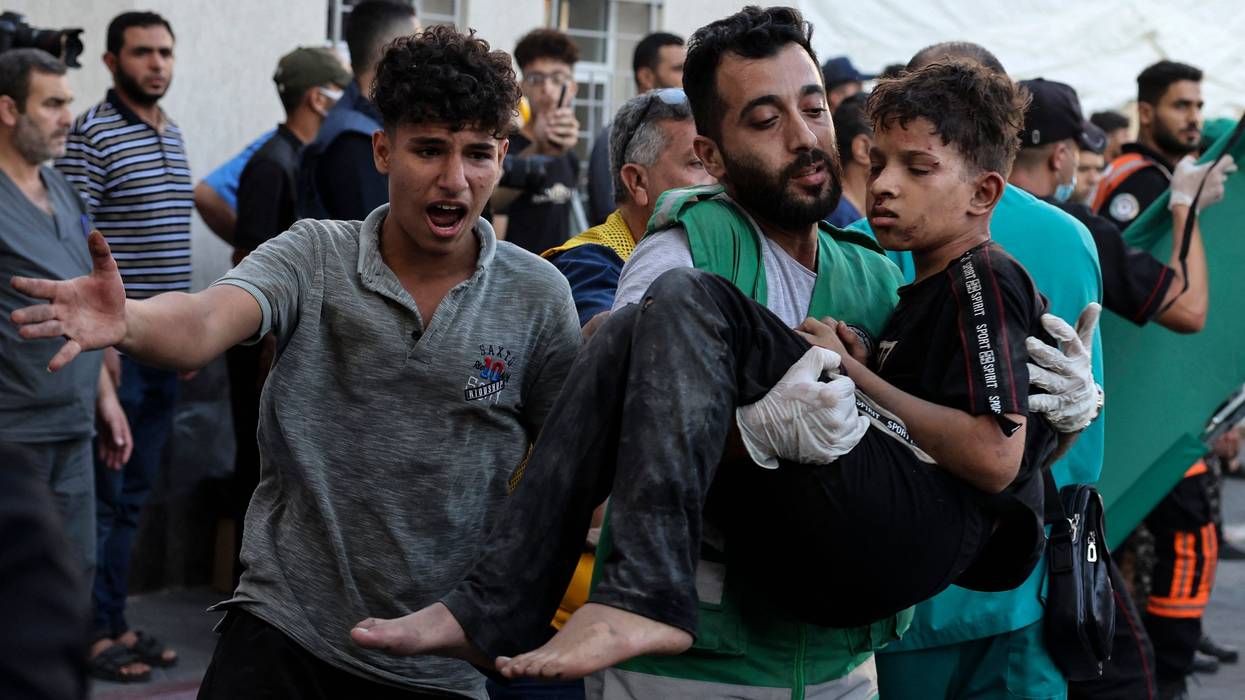
The continuous bombardment of Gaza has already led to overcrowding in hospitals including Gaza's largest healthcare facility, with one surgeon telling Al Jazeera the overwhelming demand could lead to an infectious disease outbreak—compounding the catastrophe already underway as Israel has refused to open an humanitarian corridor to allow medical and other types of aid into Gaza.
Margaret Harris, a spokesperson for the World Health Organization, told the outlet it is "absolutely critical" for humanitarian aid to be delivered.
"Hospitals are overwhelmed, people cannot get treatment, kids with burns have no pain relief," she said. "The will to open that border is the thing that's missing."
Egyptian President Abdel-Fattah el-Sisi agreed to open a corridor on Thursday, but Israel has yet to allow delivery.
"We are particularly concerned about the devastating impact on the 50,000 pregnant women in Gaza right now and newborn babies, who are all left without essential medical care," said Riham Jafari, coordinator of advocacy and communication in Palestine for ActionAid, in a statement.
As the violence escalated, protests broke out across the globe—from the Philippines, to countries across the Middle East, to Finland, England, and Ireland on Friday and Saturday, with the Palestine Solidarity Campaign reporting that 150,000 people marched through London to demand Conservative Prime Minister Rishi Sunak end his support for Israel's bombardment.
"I'm here because I'm human," one marcher told Al Jazeera Arabic, calling the Israeli onslaught "a collective punishment, a war crime."
Griffiths called on "all countries with influence" to exert their power to "ensure respect for the rules of war," instead of publicly stating that Israel has the right "to defend itself" without demanding the IDF take steps to preserve civilian lives.
"It's been a dreadful week," said Griffiths. "Humanity must prevail."
"The violence must stop," said Martin Griffiths, the United Nations' under-secretary-general for humanitarian affairs.
The United Nations' emergency relief coordinator warned Tuesday that devastating violence in Israel and Gaza has pushed the entire region to a "tipping point" and demanded an immediate cessation of all attacks as the civilian death toll continues to climb.
"Hundreds of Israelis have been killed and thousands have been injured. Scores are being held captive, facing appalling threats to their lives. Thousands of indiscriminate rockets have been launched into Israel," Martin Griffiths, the U.N.'s under-secretary-general for humanitarian affairs, said in a statement amid growing global calls for a cease-fire.
"In densely populated Gaza, hundreds of Palestinians have been killed and thousands have been injured in intense bombing. Homes, health centers, and schools sheltering displaced families have been hit," Griffiths continued, noting that the occupied enclave is now under a total blockade imposed by the Israeli government.
"My message to all sides is unequivocal: The laws of war must be upheld," said Griffiths, who called the scale and speed of the ongoing violence "bone-chilling."
Roughly 1,200 people in Israel have been killed in Hamas attacks that began on Saturday, when gunmen breached the Israeli border structure at dozens of points and overran several towns, massacring civilians. Israel responded with a large-scale bombing campaign in Gaza that has killed at least 950 people, including hundreds of children and entire families. The nation is also preparing a massive, potentially monthslong ground invasion, with the support of U.S. weaponry.
International human rights groups have expressed horror over the deadly violence and accused Hamas and Israeli forces of war crimes for deliberately targeting civilians. Officials in Israel—pursuing what the Israeli human rights group B'Tselem described as a "criminal policy of revenge"—have openly stated that the ongoing bombing campaign in Gaza is designed to inflict widespread damage, not to precisely hit Hamas installations.
One unnamed security official told an Israeli media outlet on Tuesday that "Gaza will eventually turn into a city of tents" and "there will be no buildings."
Griffiths said Tuesday that "the violence must stop" and "hostages must be released without delay." But as long as the violence persists, "civilians and civilian infrastructure must be protected" and "civilians must be allowed to leave for safer areas."
"And humanitarian relief and vital services and supplies to Gaza must not be blocked," he added. "The whole region is at a tipping point."
The World Health Organization and aid groups warned Tuesday that Gaza hospitals are already overwhelmed and running low on critical supplies, a crisis that's likely to worsen amid continued bombing and Israeli's decision to cut off the flow of electricity, food, and fuel to the besieged enclave. The World Food Program is calling for humanitarian corridors to allow food and other aid to reach Gazans.
"The situation in Gaza is catastrophic," Léo Cans, head of mission for Palestine at Médecins Sans Frontières (MSF), said in a statement Tuesday. "The number of wounded is extremely high—there is a constant influx into all the hospitals in the Gaza Strip. The medical teams are exhausted, working around the clock to treat the wounded."
"Yesterday morning, we received a 13-year-old boy whose body was almost completely burned after a bomb fell right next to his house, starting a fire," said Cans. "The intensity of the violence and bombardments is shocking, as is the death toll. The declaration of war must not, under any circumstances, lead to collective punishment of the population of Gaza. Cutting off water, electricity, and fuel supplies is unacceptable, as it punishes the entire population and deprives them of their basic needs."