

SUBSCRIBE TO OUR FREE NEWSLETTER
Daily news & progressive opinion—funded by the people, not the corporations—delivered straight to your inbox.
5
#000000
#FFFFFF
To donate by check, phone, or other method, see our More Ways to Give page.
Daily news & progressive opinion—funded by the people, not the corporations—delivered straight to your inbox.
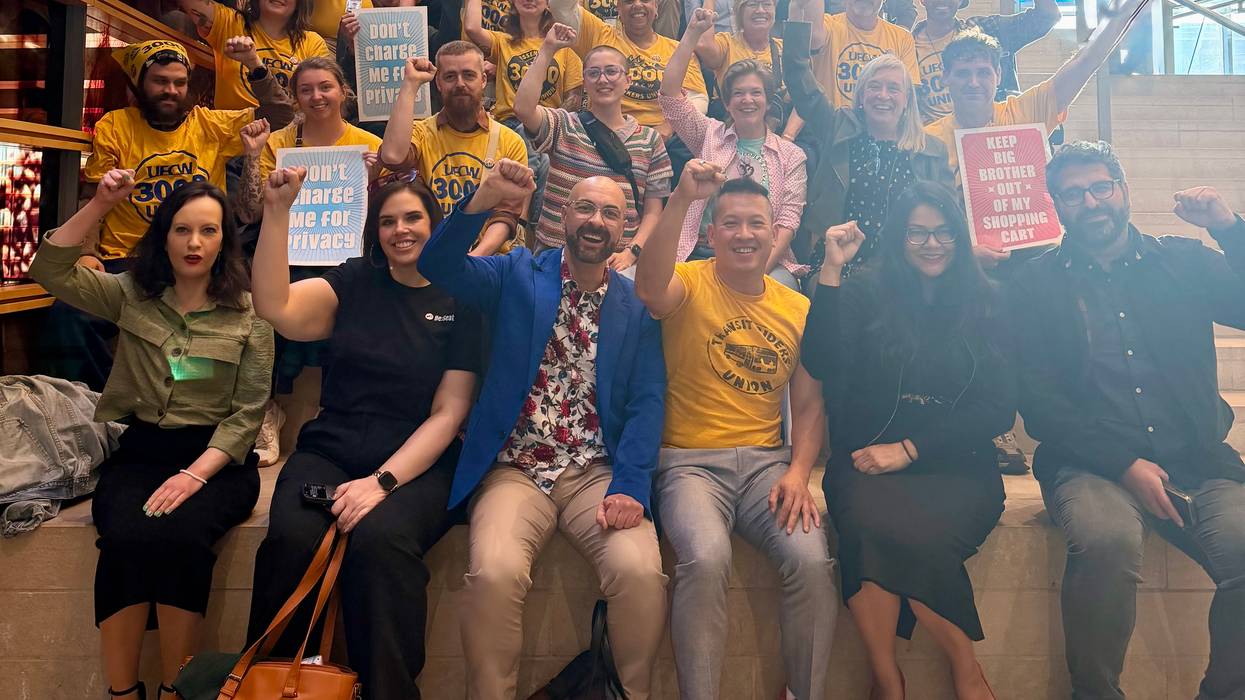
"The price you see shouldn’t be different based on who you are. Mayor Wilson and the City Council have made Seattle a leader on protecting shoppers from unfair grocery pricing tactics," one advocate said.
Seattle became the first city in the country to ban surveillance pricing on Tuesday afternoon after the City Council voted 7-2 to approve a measure co-sponsored and championed by progressive Mayor Katie Wilson.
The Fair Pricing and Transparency policy bans big retail outlets—both online and brick-and-mortar—from using customer data such as race, gender, employment status, internet or social media history, and conversations with chatbots to charge different shoppers different prices for the same products.
“Food is an essential good that’s getting more expensive all the time,” Wilson said in a statement celebrating the win. “People have been clear: They don’t want their data fed into algorithms that decide how much they pay at the grocery store. Everyone deserves transparent pricing and equal treatment, not hidden systems that charge some shoppers more than others.”
“I don’t think we could do that without the kind of mayor that was elected and the moment that we’re in."
Surveillance pricing is the practice of feeding shopper data to artificial intelligence, which then sets distinct prices for different customers based on what the AI thinks they can afford. A 2025 investigation from Consumer Reports, Groundwork Collaborative, and More Perfect Union found that the practice could add $1,200 a year to the average Seattle family’s grocery bill.
“This is a huge win for consumers against companies that abuse their personal data to rip them off,” former Labor Secretary Robert Reich said on social media in response to the news.
Seattle just became the first city in America to ban grocery stores from engaging in surveillance pricing.
This is a huge win for consumers against companies that abuse their personal data to rip them off.
Watch former FTC Chair Lina Khan explain. pic.twitter.com/TxAJGFy7H2
— Robert Reich (@RBReich) September 23, 2026
Grace Gedye, a senior policy analyst at Consumer Reports, said in a statement: “Nobody should pay more for basic necessities because a data broker is quietly collecting information about what they’re searching for online, what they hover over, what their income is, or where they go. The price you see shouldn’t be different based on who you are. Mayor Wilson and the City Council have made Seattle a leader on protecting shoppers from unfair grocery pricing tactics with this bill. We commend this work.”
The Seattle ordinance comes amid an ongoing affordability crisis as grocery prices spike while President Donald Trump and the Republican-controlled Congress have slashed the budget of crucial federal programs such as the Supplemental Nutrition Assistance Program (SNAP). At the same time, there is a growing national backlash against AI and Big Tech, with 78% of Americans favoring mandatory regulation of the technology. The ban on surveillance pricing follows a data center moratorium passed by the Seattle City Council in June.
Maya Morales, the founder of WA People’s Privacy and one of the organizers mobilizing grassroots support for the measure, told Common Dreams that harder day-to-day living conditions were leading to a "national shift” in awareness of how Big Tech and Big Retail make life even more difficult, likely enabling a major tech city like Seattle to take a stand against surveillance pricing.
“People are feeling the heat very intensely all over the nation, so in many ways it doesn't surprise me that this would be the moment that we could get this done, because the harms are so obvious,” she said.
Progressive City Councilmember Alexis Mercedes Rinck, another co-sponsor of and key advocate for the bill, also emphasized the importance of food security.
“Groceries are getting more expensive for everyday Seattleites, while the buying, selling, and leveraging our private information to manipulate prices is making big national grocery corporations millions in profit,” Rinck said in a statement. “This legislation is intended to put some guardrails on what big businesses can do with our personal information. At a time when SNAP reductions have rocked our community and people have less to spend on food, this is an important step we can take to prevent AI-assisted price gouging and ensure fair discounts for everyone.”
The measure was also co-sponsored by Councilmembers Dionne Foster and Rob Saka and backed by labor and community groups including WA People’s Privacy, Washington Working Families Party, Transit Riders Union, Lavender Rights Project, Queer Power Alliance, Washington Fair Trade Coalition, The Nexus of Privacy, MLK Labor, Consumer Reports, and United Food and Commercial Workers (UFCW) 3000.
Grocery workers supported the measure in part because they would be likely to take the brunt of customer complaints if a shopper sees that they are being charged differently than the person next to them at the self checkout. They were also concerned about their own food bills remaining affordable.
“Passing the strongest ban on AI-powered price gouging on groceries feels historic,” Seattle grocery store worker Kristen Wilder said in a statement. “My coworkers and the customers we serve proudly stood together to stop the grocery industry from imposing this scheme here in Seattle. Today that worked paid off for families who just want to know they’re paying a fair price and for workers who want to focus on customer service instead of defending some algorithm making decisions in a black box.”
In addition to fighting food insecurity, Morales emphasized that the measure “takes a little bit of a crack” at the privacy violations enabled by AI and embraced at the federal level as a way of targeting people of color, immigrants, sex workers, low-income and LGBTQ+ people, and other vulnerable groups.
“AI harms are generally privacy and surveillance harms,” Morales said, because “AI needs data in order to work. Mass commercial data surveillance is the reason we have AI and vice versa, and that is an infinite loop.”
However, from a privacy standpoint Morales said there was one disappointing aspect of the bill: an amendment passed to specify that nothing in the law prohibited “technology used solely for security, loss prevention, safety, fraud prevention, fraud detection, or compliance with law.” Morales said this provision was unnecessary because the bill’s language had been very clear that it was focused on pricing. She was also concerned it could open up loopholes, as it is difficult to prove a given technology is only being used for one purpose, and a grocery store might then be able to introduce an invasive surveillance technology—such as shopping baskets that track customers—under the guise of fighting shoplifting.
Because of that amendment, Morales told Common Dreams, “we managed to get a privacy win on pricing but not a privacy win at the grocery store.”
That said, five other corporate “bill-gutting” amendments were voted down, which Morales called a “spectacular win,” and the overall bill was itself an important victory.
Both Morales, and Jon of The Nexus of Privacy, credited the bill’s strength and ability to resist watering down in part to Wilson, who worked with stakeholders including smaller grocery outlets, labor, and community groups to build a coalition and write a strong ordinance from the get-go. Morales noted that Wilson came to office from an organizing background, and that she and Rinck did a good job of bringing grassroots organizations into the process to secure a victory, allowing Seattle policymakers to counter powerful local technology and retail interests.
“I don’t think we could do that without the kind of mayor that was elected and the moment that we’re in,” Morales said.
There is now hope that the bill would have statewide and even national implications. A surveillance pricing ban was introduced into the Washington Legislature in 2026 but failed to advance.
Morales said a legislative win at the local level can show state lawmakers: "This can be done. You don’t have to cave to the Big Retail and Tech lobby, and you can protect people.”
On a national level, Jon of The Nexus of Privacy wrote:
This huge win will help organizers in other cities and states... across the country. Industry had killed a surveillance pricing bill in California just a couple of weeks ago, and they've stalled New York's surveillance pricing bill for months... but guess what, they're not invincible! And as well as the strong legislation providing... a model of what's possible, the Seattle coalition's very successful tactics can hopefully be adapted by organizers elsewhere to reflect the dynamics wherever they are.
As Morales told Common Dreams, “I hope every city will pass something like this.”
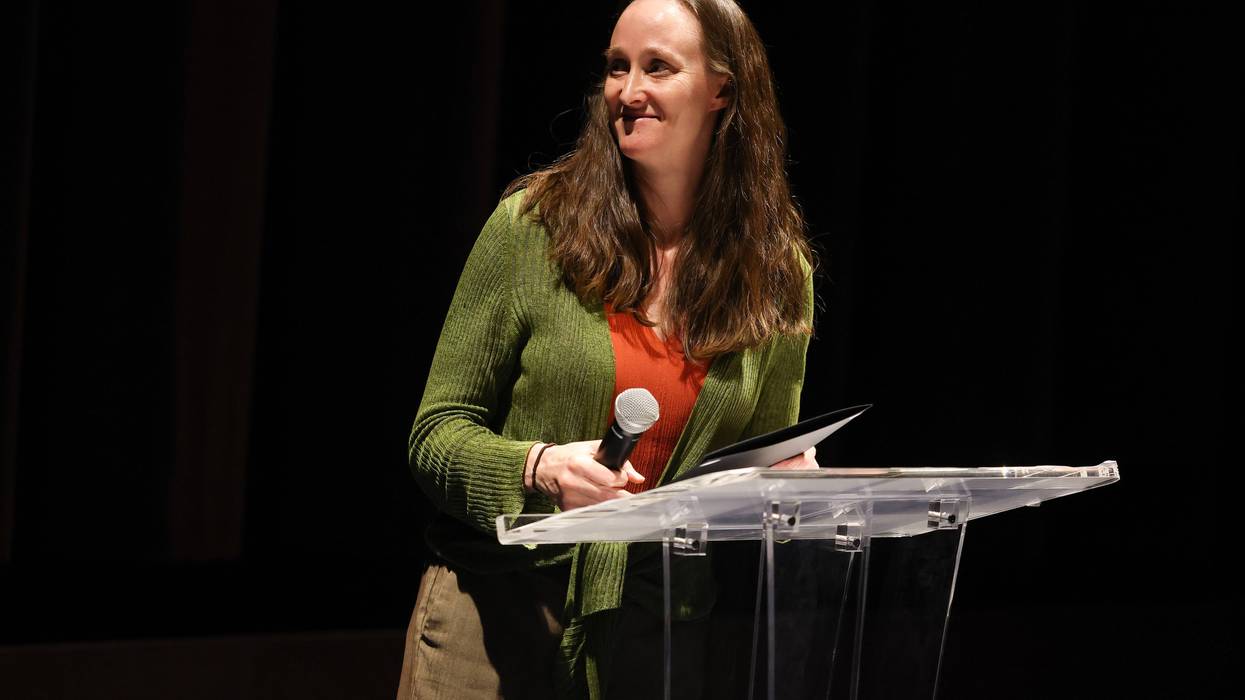
Seattle's City Council used a budget surplus to enact Wilson's proposal to provide free breakfast and lunch to 49,000 public school students.
Seattle's public school students will be eating for free this year after the City Council approved $3.6 million in funding for school breakfast and lunch this week.
It was the realization of a proposal made in April by Seattle's democratic socialist mayor, Katie Wilson, to expand the city's targeted school lunch program to cover all students.
The council had rejected the proposal earlier this summer in favor of an approach that delayed the school lunch program by a year and narrowly focused on expanding access for only the lowest-income students, which opponents argued still left many hungry kids with nothing.
That plan was met with immediate backlash, and the council swiftly changed course. On Tuesday, it voted unanimously to reallocate surplus funds from an affordable housing redevelopment project to fund a universal school meal program.
In addition to providing free breakfast and lunch to Seattle's roughly 49,000 public school students beginning next month, the new program will also provide more support to low-income students during weekends and school vacations.
The program is expected to extend well into the future, with funding in 2027-28 coming from an education levy voters approved in November. After that, Washington's new "high-earners" tax is expected to kick in, and students across the entire state will enjoy free meals, though that tax still faces legal challenges.
Wilson called the plan "a tremendous victory for families across our city that will make Seattle more affordable."
The plan fulfills a key campaign promise for Wilson, who came into office in November on the same wave of progressive enthusiasm as New York City's democratic socialist mayor, Zohran Mamdani.
Also on Tuesday, the City Council approved Wilson's legislation banning rental junk fees—including administrative service fees, pet rent, and package fees.
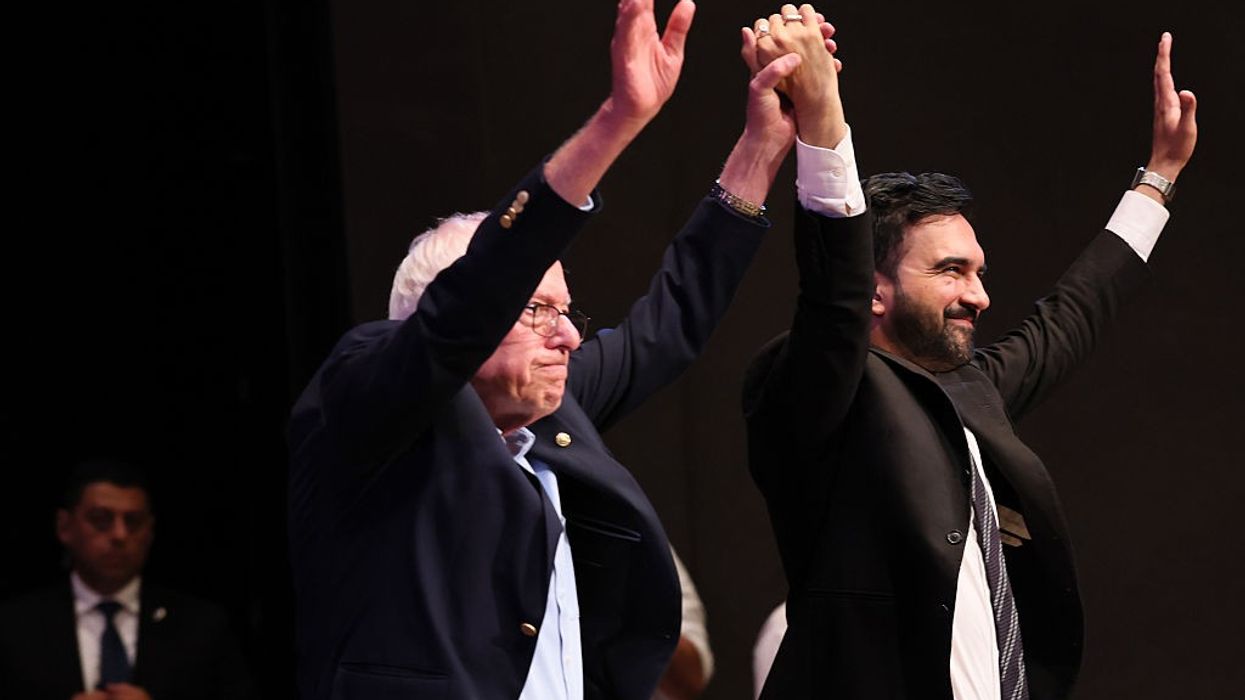
Our job is to recognize the problems are real and to put the finger on the real cause of the problem, which is the greed of the oligarchs in this country.
Independent Vermont Sen. Bernie Sanders delivered these remarks at the How We Win conference over the weekend of December 5 in New Orleans. They were originally transcribed and published by Jacobin. The conference was organized by the Democratic Socialists of America Fund, Jacobin, the Nation, and others for democratic socialist elected officials and their staff.
Thank you for inviting me to say a few words. Let me begin by thanking all of you for having the guts to run for public office. It’s a lot harder to go out and knock on doors to represent constituents with the problems they face seven days a week, so I want to thank you very much for that. Despite the horror in the White House right now, they’re out there all across this country. We’re seeing strong progressive growth. It is not just Zohran Mamdani in New York or Katie Wilson in Seattle. From coast to coast, you are seeing progressive democratic socialists standing up, taking on the establishment, and winning elections.
And one of the great secrets of the corporate media is that right now in the House of Representatives, the Congressional Progressive Caucus has about 100 members, including dozens and dozens of very strong progressives. That is the result of the hard work all of us have done over the last number of years.
I’ve been asked to give you some advice. What I’m gonna tell you is probably what you already know. No. 1, here is a radical idea: Do your job that you were elected to do. Now, I’ll tell you a story. I was elected to be mayor of Burlington, Vermont, and won it by 10 votes way back in 1981. We had a strong foreign policy. We had exchange programs. We dealt with national issues. But I’ll never forget, there was an article in the local newspaper, and the report asked some guy, “But what does it mean? What do you think about having a socialist as your mayor?” And the guy said, “Well, I don’t know much about socialism, but I do know they’re getting the snow off of the streets a lot faster than they used to.”
The struggle is going to be between the Trumpists of the world—right-wing extremism—and a democratic socialist alternative, which recognizes the problems that we face and provides concrete and real and bold solutions for working families.
You gotta do your job. If you’re on the city council, the school board, the state legislature, you gotta do it. And if you do your job well, people will give you the latitude to talk about many, many other issues. But don’t lose focus regarding the job that you are elected to do.
Second of all, establishment Democrats have the brilliant idea that the only people they can talk to are establishment Democrats. They literally have lists of people: “Don’t knock on this door; don’t knock on that door. Only on these.” I strongly disagree with that suggestion. Knock on every door in your district. And what you’ll find when you do that is you’ll have the right-wing people slam the door in your face. You’ll have some unpleasantness. But by and large, what you’ll find is that there is a lot more commonality of interest than you might have appreciated. In my view, the reason Donald Trump is president of the United States today is not because people voted for a trillion dollars in tax breaks for the 1% or massive cuts in healthcare. He is the president of the United States because of Democratic establishment candidates’ failure to provide a real analysis and agenda that meets the crises that we face today.
Establishment Democrats believe that you can tinker around the edges, you can tell the world how terrible Donald Trump is, and that’s fine. But right now, what the American people understand is that übercapitalism—an oligarchic form of society, which is what we have today—is a disaster for the working class of this country. We don’t have to tinker around the edges. We have to create a very new form of society.
So for just your average person out there, you are in many cases going nowhere in a hurry. You understand that with real inflation accounted for, wages are basically the same as they were 50 years ago, despite a huge increase in worker productivity as a result of all of the expansion of technology. And almost all of the gains of that new technology have gone to the 1%. And ordinary workers know that there’s something wrong with 60% of our people living paycheck to paycheck while Elon Musk owns more wealth himself than about the bottom 52% of American society. They know that.
They know that there’s something wrong when we have a campaign finance system that is totally corrupt and allows billionaires in both political parties to buy elections. That’s a broken system. I say these things because you’re gonna have Republicans who understand this as well. They understand if you look at the basic necessities of life—just think for a moment: You’re living in the richest country in the history of the world, and it cannot even provide the basic necessities of life for working people.
Just take a look at the healthcare in your community. Talk about healthcare. Everybody will tell you that despite spending twice as much per capita on healthcare as any other nation, the healthcare system is totally broken. Everybody knows that. The educational system is largely broken, and the childcare system is a disaster. Kids can’t afford to go to college, or they’re leaving school deeply in debt. Public schools are under enormous pressure. Teachers are underpaid. They’re dealing with all kinds of disciplinary issues, kids who come from troubled families or are acting out in school. We are dealing with a situation where our food system, just nutrition... we are the most obese and unhealthy nation on Earth because you have a food industry that makes huge profit by selling our kids crap, and the price of groceries is soaring.
People understand that. I flew in from the National Airport in Washington; there was a four-hour delay because they couldn’t figure out how to deice the plane. All over the country, you are looking at basic problems people are struggling with. The system is failing. Our job is not to run away from that reality but to offer a real alternative. Because in my view, what the future is gonna be about isn’t establishment Democrats. All over Europe, for example, the establishment parties are fading away. The struggle is going to be between the Trumpists of the world—right-wing extremism—and a democratic socialist alternative, which recognizes the problems that we face and provides concrete and real and bold solutions for working families.
So what Donald Trump does is go, “Yeah, we got a lot of problems. And the problem is undocumented people, the problem is the trans community, the problem is that we have Somalians who are ‘garbage.’” That’s what demagogues do. They take the problems that we face—often that they cause—and then they blame a powerless minority. Our job is to recognize the problems are real and to put the finger on the real cause of the problem, which is the greed of the oligarchs in this country. So that’s where we’re at now. And it ain’t gonna be easy. Especially with Trump in the White House.
To summarize, the American people know the system is broken. They are hurting. They can’t afford groceries. They can’t afford health care. They can’t afford education. They can’t afford a lot of things. And at the same time, the billionaire class has never had it so good. The establishment Democrats cannot talk about these things because, very often, they’re getting funded by the billionaire class. So what we have gotta do right now is get out into the streets. We gotta talk to our people—all people, not just people within our zone of comfort. And we’re gonna be providing real solutions to the crises that we face. So once again, what you have done is extraordinary. I thank you so much and congratulate you for getting out on the streets, for winning elections, and for standing up for working people.
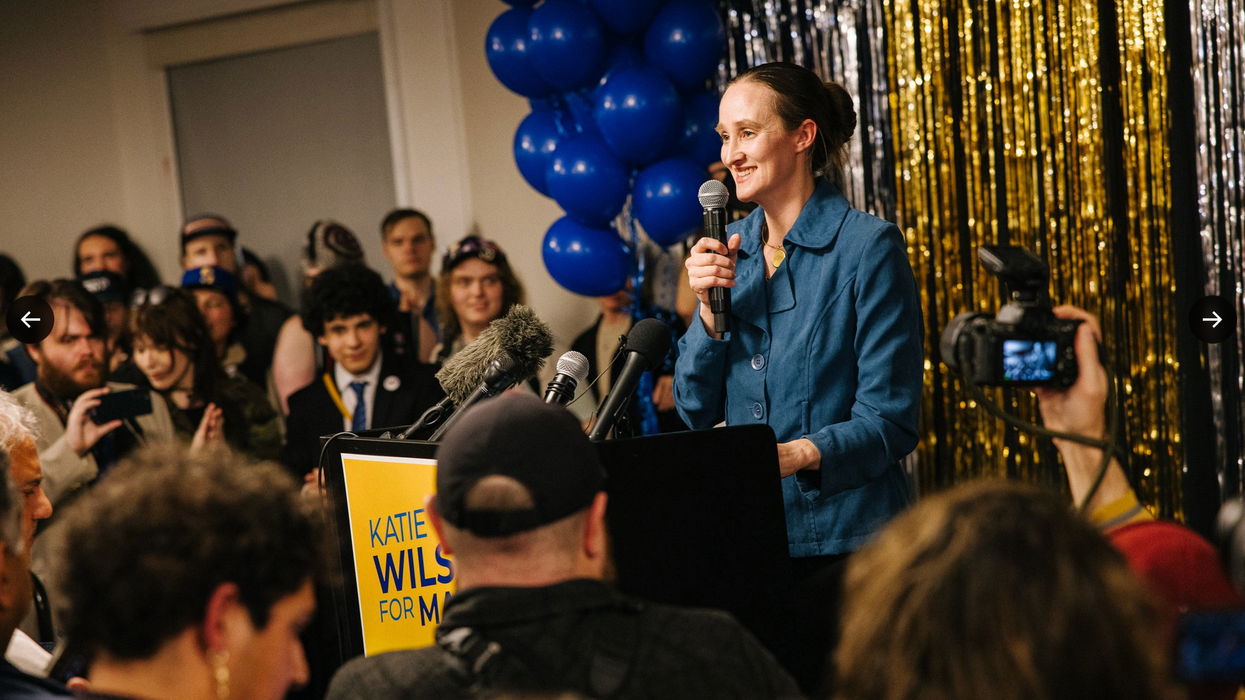
These editorial boards are not afraid that Katie Wilson and Zohran Mamdani’s policies will fail—they fear that they will work, thus making a “tax the rich” agenda more popular nationwide.
New York City isn’t the only city to have elected a democratic socialist as mayor. Seattle voters ousted incumbent Mayor Bruce Harrell for community organizer Katie Wilson, who had the endorsements of unions, Democratic clubs, and the Stranger (7/2/25), the city’s alt-weekly.
She credited her win to a “volunteer-driven campaign among voters concerned about affordability and public safety in a city where the cost of living has soared as Amazon and other tech companies proliferated,” AP (11/13/25) reported. The wire service noted that “universal childcare, better mass transit, better public safety, and stable, affordable housing are among her priorities”—similar to those of New York City Mayor-elect Zohran Mamdani.
Corporate media are not happy about her victory, priorities or rhetoric. The Seattle Times editorial board (11/17/25) said upon her victory that she “painted her opposition as big businesses content with keeping people down,” and countered that residents will “fear that no one will come when they call 911, that parks will be unusable, that small businesses will shutter because of crime and revenues that don’t keep up with expenses.”
The reliably right-wing Wall Street Journal editorial board (11/13/25) called Wilson “Mamdani West,” and described her as “soft on crime but tough on businesses.” The paper scoffed, “Maybe Ms. Wilson will moderate her views once she is confronted with the responsibilities of office, but the campaign had little evidence of that.” The board ended, sarcastically, “Good luck.”
In a smaller editorial, the Journal (11/17/25) mocked the “Woke Republic of Seattle,” quoting Wilson saying:
I will appoint a cabinet of exceptional leaders whose lived experiences reflect the diversity of Seattle’s Black, Indigenous, Asian and Pacific Islander, Latinx/Hispanic, and people of color communities, as well as that of women, immigrants and refugees, 2SLGBTQIA+ communities, people with disabilities, people of all faith traditions, and residents from every socioeconomic background.
The editorial board continued:
Now, that is some coalition. But what’s a 2SLGBTQIA+ community? We looked it up. It’s apparently an acronym for Two-Spirit, Lesbian, Gay, Bisexual, Transgender, Queer or Questioning, Intersex, Asexual, with the + covering anybody who feels left out.
With all of these groups to satisfy, we’re not sure there are enough jobs to go around. But may the Two-Spirit be with the mayor.
The New York Times (11/13/25) gave Wilson’s win tepid coverage, offering an unexciting news piece that failed to put her victory into context or contemplate the gravity of ousting a powerful incumbent. It also, bizarrely, quoted that defeated incumbent—and never quoted the actual winner of the race.
But it was the Washington Post editorial (11/16/25) about Wilson’s win that takes the cake here. And that makes sense: Socialist and left-wing activists in the Puget Sound point fingers at Amazon and other corporate giants as the main drivers of inequality.
The Post is owned by Amazon’s founder Jeff Bezos, one of the richest people on the planet. Since Donald Trump’s inauguration this year as president, the Post has vowed to become more right wing on the editorial page (NPR, 2/26/25). This fall the opinion page took a “massive stride in its turn to the right by hiring three new conservative writers after losing high-profile liberal columnists,” as the Daily Beast (10/2/25) noted.
First, the Post belittled Wilson’s proletarian life and went on to degrade her political priorities for being tied to her economic position. It said:
Who is Wilson? She does not own a car. She lives in a rented 600-square-foot apartment with her husband and 2-year-old daughter. By her own account, she depends on checks from her parents back East to cover expenses. To let them off the hook, she seeks to force residents of Seattle to pay for “free” childcare and other goodies.
“Goodies” in this case mean services that make life affordable for a working parent who doesn’t own much, like Wilson. This is in a town with feudal levels of inequality: “While one-third of residents are classified as low-income, 1 out of every 14 is a millionaire” (KCPQ, 6/12/24). Seattle’s housing rental costs are “among the highest in the nation, ranking 16th among the country’s 100 largest cities,” while the city’s “median rent is now also 47.4% higher than the US average of $1,375, placing it on par with prices in Los Angeles and Oakland” (KCPQ, 3/7/25). An op-ed in the Seattle Times (3/18/25) noted that in the state generally “hunger is on the rise” while “Food banks and meal programs are on the front lines of an unprecedented hunger crisis.”
This is truly a “let them eat cake” moment for the Bezos Post. The Post went on:
The mayor-elect’s plans will simultaneously accelerate the exodus of businesses while making the city more of a magnet for vagrants and criminals. For example, Wilson criticized Harrell’s sweeps of homeless encampments. She backed off previous support for defunding the police, but many officers remain nervous.
Like the mayor-elect in New York, Wilson wants to open government-run grocery stores, despite their record of failure. She suggested during a September event that she won’t allow private supermarkets to close locations that aren’t profitable. Instead, she wants to require them to give more notice and pay generous severance packages to their employees. “Access to affordable, healthy food is a basic right,” Wilson said.
It’s bad enough that a paper owned by a Bond villain is mad that the next mayor of an expensive city has too much compassion for the homeless. But the dismissal of the grocery store idea isn’t based in fact, as Civil Eats (8/20/25) noted that “publicly owned grocery stores already exist, serving over a million Americans every day, with prices 25 to 30% lower than conventional retail.” Civil Eats said that “every branch of the military operates its own grocery system, a network known as the Defense Commissary Agency (DeCA),” with more than 200 stores around the world generating $5 billion in annual revenue. The outlet added, “If it were a private corporation, it would rank among the top 50 chains in the nation.”
The editorial was an echo of the Post’s earlier pearl-clutching (11/8/25) in response to Mamdani’s victory speech:
Across 23 angry minutes laced with identity politics and seething with resentment, Mamdani abandoned his cool disposition and made clear that his view of politics isn’t about unity. It isn’t about letting people build better lives for themselves. It is about identifying class enemies—from landlords who take advantage of tenants to “the bosses” who exploit workers—and then crushing them. His goal is not to increase wealth but to dole it out to favored groups. The word “growth” didn’t appear in the speech, but President Donald Trump garnered eight mentions.
Bezos, as part of the billionaire class, finds himself as the target of this year’s leftward electoral swing. “Affordability” was Mamdani’s buzzword, an offense to the Bezos board, who wanted to hear “growth,” a catchphrase for the financial elite. Bezos’ position makes sense from his rarefied position, but that is precisely why billionaire-owned media, whether it’s the Ellison family’s consolidation of TikTok and CBS or the Murdoch empire of Fox News and the New York Post, are bad for democracy. These are media that are materially situated to side with landlords and bosses over tenants and workers, but there are no outlets in major media with editorial boards that consistently lean in the other direction.
Once again, these editorial boards are not afraid that Wilson and Mamdani’s policies will fail—they fear that they will work, thus making a “tax the rich” agenda more popular nationwide.
These media don’t grapple with why voters aren’t scared of socialism and want the rich to pay more for services. It is up to them to make a case that voters should choose a political platform of consolidating political power with the billionaire class.
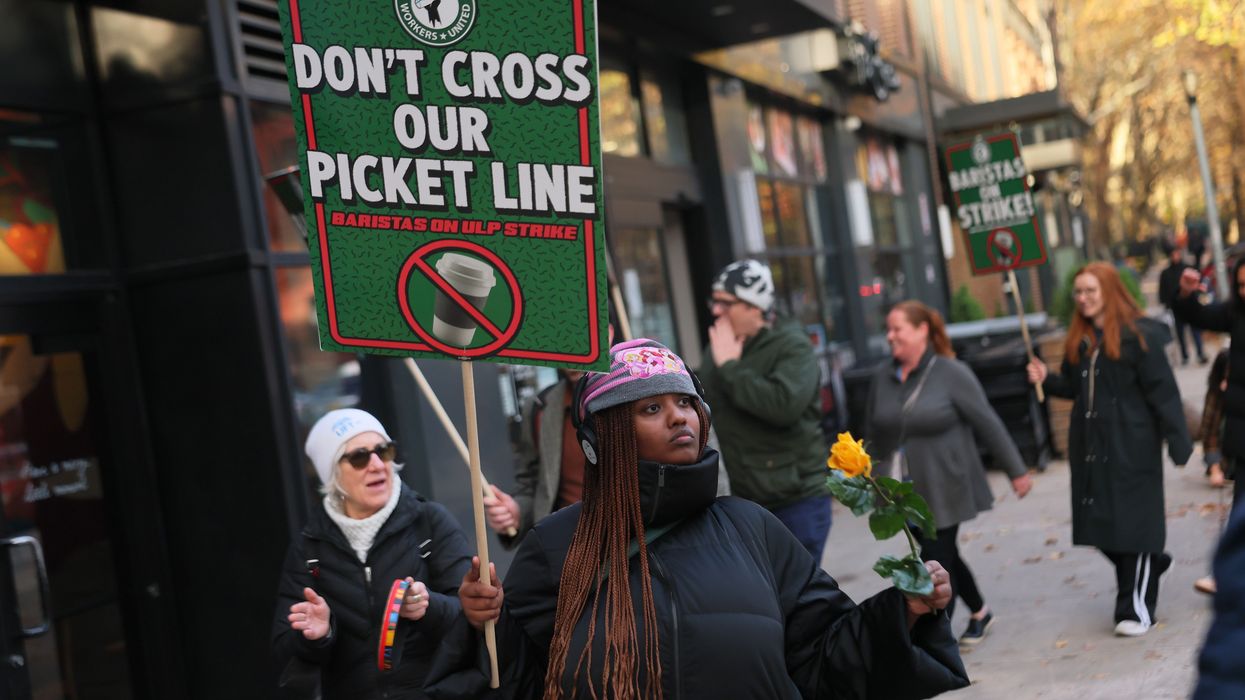
"I am not buying Starbucks and you should not either."
The mayors-elect in both Seattle and New York City are backing the nationwide strike by Starbucks baristas launched this week, calling on the people of their respective cities to honor the consumer boycott of the coffee giant running parallel to the strike so that workers can win their fight for better working conditions.
“Together, we can send a powerful message: No contract, no coffee,” Zohran Mamdani, the democratic socialist who will take control of the New York City's mayor office on January 1, declared in a social media post to his more than 1 million followers.
In Seattle, mayor-elect Katie Wilson, who on Thursday was declared the winner of the race in Seattle, where Starbucks was founded and where its corporate headquarters remains, joined the picket line with striking workers in her city on the very same day to show them her support.
"I am not buying Starbucks and you should not either,” Wilson told the crowd.
She also delivered a message directly to the corporate leadership of Starbucks. "This is your hometown and mine," she said. "Seattle's making some changes right now, and I urge you to do the right thing. Because in Seattle, when workers' rights are under attack, what do we do?" To which the crowd responded in a chant-style response: "Stand up! Fight back!"
Socialist Seattle Mayor-elect Katie Wilson's first move after winning the election was to boycott Starbucks, a hometown company. pic.twitter.com/zPoNULxfuk
— Ari Hoffman 🎗 (@thehoffather) November 14, 2025
In his post, Mamdani said, "Starbucks workers across the country are on an Unfair Labor Practices strike, fighting for a fair contract," as he called for people everywhere to honor the picket line by not buying from the company.
At a rally with New York City workers outside a Starbucks location on Thursday, Mamdani referenced the massive disparity between profits and executive pay at the company compared to what the average barista makes.
Zohran Mamdani says that New York City stands with Starbucks employees!He points out their CEO made 96 billion last year. That’s 6,666 times the median Starbucks worker salary. Boycott Starbucks. Support the workers. Demand they receive a living wage.
[image or embed]
— Kelly (@broadwaybabyto.bsky.social) November 12, 2025 at 10:45 PM
The striking workers, said Mamdani, "are asking for a salary they can actually live off of. They are asking for hours they can actually build their life around. They are asking for the violations of labor law to finally be resolved. And they deserve a city that has their back and I am here to say that is what New York City will be."
"The Zohran moment extends beyond NYC," said one organizer.
With the help of an "army of grassroots volunteers" and the support of Seattle's working-class neighborhoods, progressive candidate Katie Wilson was named the winner of the city's mayoral election on Wednesday night, beating corporate-backed Democratic Mayor Bruce Harrell after a campaign that focused heavily on how unaffordable Seattle is for many families—including Wilson's.
Wilson, who rents a one-bedroom apartment with her husband and young child and spoke on the campaign trail about how her parents have helped her pay for childcare, was elected after taking a 1,976-vote lead over Harrell, with just 1,320 ballots remaining.
The Seattle Times called the race for Wilson and reported that it was unclear whether the close race would go to a recount, and Harrell said he would address voters on Thursday.
"Ahead by almost 2,000 votes, we now believe that we're in an insurmountable position," said Wilson in a social media post on Wednesday night. "We're so grateful to all the volunteers who have powered this grassroots campaign to victory. We look forward to hearing the mayor's address to the city tomorrow."
The mayoral election results were mirrored by other municipal elections in Seattle, with the Times reporting a "progressive sweep" of City Hall as voters elected left-leaning nonprofit leader Dionne Foster as City Council president and progressive challenger Erika Evans as city attorney.
Wilson's victory also proved wrong the commentators who had dismissed New York Mayor-elect Zohran Mamdani's victory over corporate-backed former Gov. Andrew Cuomo as an aberration that would not be replicated outside of the solidly Democratic city.
Wilson has never held public office and is the co-founder of the Transit Riders Union, where she has directed "successful campaigns for better transit, higher wages, stronger renter protections, and more affordable housing."
The New York Times reported that she was driven to run for mayor earlier this year, after voters overwhelmingly backed a ballot measure to fund a new public housing agency with an “excess compensation” tax, targeting employers that pay more than $1 million to any employee. Harrell had opposed the measure, urging the City Council to use existing budgets to pay for the agency.
Like democratic socialist Mamdani, Wilson focused her mayoral campaign heavily on the need to make Seattle more affordable for working families. She easily beat Harrell in the Democratic primary after winning the support of working-class neighborhoods across the city, while Harrell won votes in "expensive waterfront neighborhoods," as labor-focused media organization More Perfect Union said in a video about the race.
BREKAING: Katie Wilson has been elected Seattle’s next mayor. The progressive challenger has taken an insurmountable lead in the vote count, and defeated the establishment candidate. pic.twitter.com/15Qypd6Oyz
— More Perfect Union (@MorePerfectUS) November 13, 2025
The race was "a referendum on inequality and affordability in Seattle, where the richest 5th rake in $345,000 per household and the poorest 5th bring in just under $19,000," said More Perfect Union. "Ordinary working people in Seattle are struggling to keep up with consumer prices, which are 13% higher than the national average, and housing prices, which are 50% higher than the national average."
Wilson has called to expand the city's social housing program by using union labor to build thousands more mixed-income units that would serve as a public option for housing. She has also pledged to strengthen renter protections and end algorithmic price-fixing by corporate landlords.
Like Mamdani, she has called for the establishment of city-owned grocery stores that would help keep costs down.
As the votes continued to be counted earlier this week, housing justice organizer Daniel Denvir said a victory for Wilson would show "the Zohran moment extends beyond NYC."
Daniel Nichanian of Bolts added that Wilson's victory "is a West Coast companion to Mamdani’s as a statement municipal victory for the left."