

SUBSCRIBE TO OUR FREE NEWSLETTER
Daily news & progressive opinion—funded by the people, not the corporations—delivered straight to your inbox.
5
#000000
#FFFFFF
To donate by check, phone, or other method, see our More Ways to Give page.
Daily news & progressive opinion—funded by the people, not the corporations—delivered straight to your inbox.
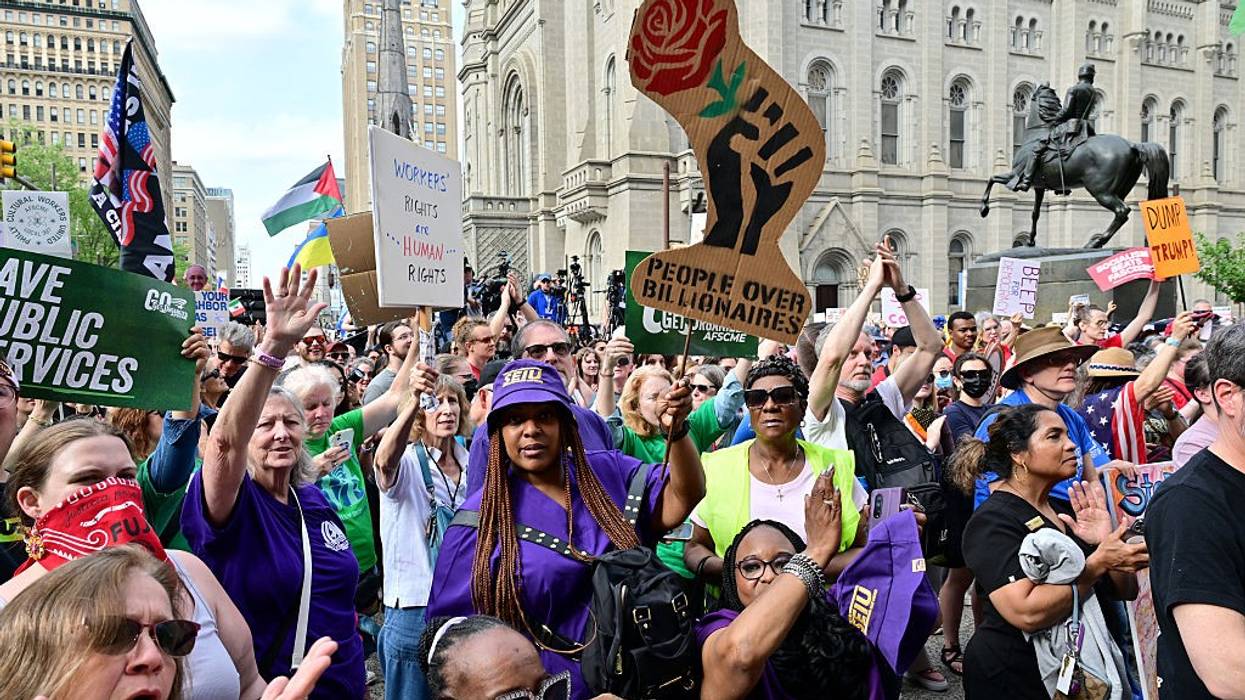
“Amid attacks on our health and safety, our civil rights, and our very freedom to organize, we are standing up for a worker-centered vision of America," said one union leader.
Labor groups, students, and families are among those preparing for nationwide rallies and marches set for Friday as part of this year's May Day Strong protests "to demand a nation that puts workers over billionaires" amid worsening US wealth inequality under President Donald Trump and Republican rule.
"We are building a day of power," May Day Strong organizers said on the event website. "Because when the billionaires break every rule, it’s going to take more than a rally to stop them."
As Common Dreams reported, May Day Strong—a coalition of 500 labor and community organizations—has planned over 3,000 events across the nation to demand higher taxes on the wealthiest Americans, abolition of US Immigration and Customs Enforcement (ICE) amid Trump's deadly crackdown on immigrants and their supporters, an end to the illegal US-Israeli war of choice on Iran, and expanding democracy over corporate rule.
For more information about Workers Over Billionaires, or to find the nearest action to you, go to maydaystrong.org.
— 50501: The People’s Movement ❌👑 (@50501movement.bsky.social) April 30, 2026 at 10:52 AM
"Following the examples of the historic 2006 day without immigrants that reshaped May Day and the Black-led corporate campaigns that have unseated CEOs, to Minnesota’s resistance to occupation, together we will flex our collective power in a tremendous day of action—rallying, marching, and taking action to demand a country that puts workers over billionaires, with many refusing business as usual," the coalition added. "No Work. No School. No Shopping."
As Neidi Dominguez, executive director of Organized Power in Numbers—one of the coalition's leaders—said, "We want our tax dollars going to good jobs, schools, and housing, not to sending federal agents into our cities to attack our neighbors."
"We want a government that puts more into community benefits and less into billionaire bank accounts," Dominguez added. "We are for one job being enough to pay the bills, for housing people can afford, and for public schools and healthcare that work for working families, not piggy banks for the ultrarich to steal from."
Labor author & historian, @kimkelly.bsky.social talks about the importance of channeling momentum into action, and how May Day Strong can help do that.#mayday #workersoverbillionaires #kimkelly
[image or embed]
— Organized Power in Numbers (@opinorg.bsky.social) April 28, 2026 at 5:27 PM
Liz Shuler, president of the AFL-CIO—which represents nearly 15 million workers and 65 affiliated unions—said Wednesday that “for the labor movement, Workers Memorial Day and May Day aren’t just days of reflection—they are days of demand."
“Amid attacks on our health and safety, our civil rights, and our very freedom to organize, we are standing up for a worker-centered vision of America," Schuler continued. "From now through November, the AFL-CIO, our state and local labor movements, and allies across the country will be in the streets and at worksites to peacefully engage our co-workers and neighbors on the issues at stake in the next election so we can ensure that everyone can vote and every vote is counted and unify working people around our economic demands."
"This week and for the months to come, we will continue to fight for our vision of a worker-centered America," she added.
American Federation of Teachers president Randi Weingarten said in a statement that “May Day has its roots in the fight for fair wages, safe workplaces, and a better life—and a reminder that real change happens when working people act together."
“That includes attacks on immigrant workers who are an essential part of our workplaces and communities," she added. "That’s why May Day isn’t just about showing up in the streets. It’s about using our power in every way it counts.”
Tomorrow, a wave of young people is taking action for May Day. We need a Green New Deal — not more wars for oil profit — and we're building the muscle to shut down the billionaire status quo until our demands are met.Read more on our substack. vist.ly/42h52
[image or embed]
— Sunrise Movement (@sunrisemvmt.bsky.social) April 30, 2026 at 12:02 PM
Hundreds of thousands of people rallied from coast to coast last May 1 to mark International Workers’ Day with spirited demonstrations supporting labor rights and protesting Trump’s “billionaire agenda” and attacks on the rule of law, unions, immigrants, Palestine defenders, transgender people, and others.
Since then, US wealth inequality has widened as the pro-plutocrat provisions of Republicans' so-called One Big Beautiful Bill Act (OBBBA) have taken effect—especially the permanent extension of Trump's 2017 tax cuts, which “delivered big benefits to the rich and corporations but nearly none for working families," according to a pair of progressive economic groups.
Federal Reserve data published earlier this year showed the top 1% of Americans held nearly one-third of all US wealth—the highest share since the Fed began tracking such statistics in the late 1980s—while the bottom half held just 2.5%.
Experts say the situation will worsen as some of the worst parts of the OBBBA—including the biggest cuts to Medicaid and food assistance in those programs' histories—take effect in the near future.
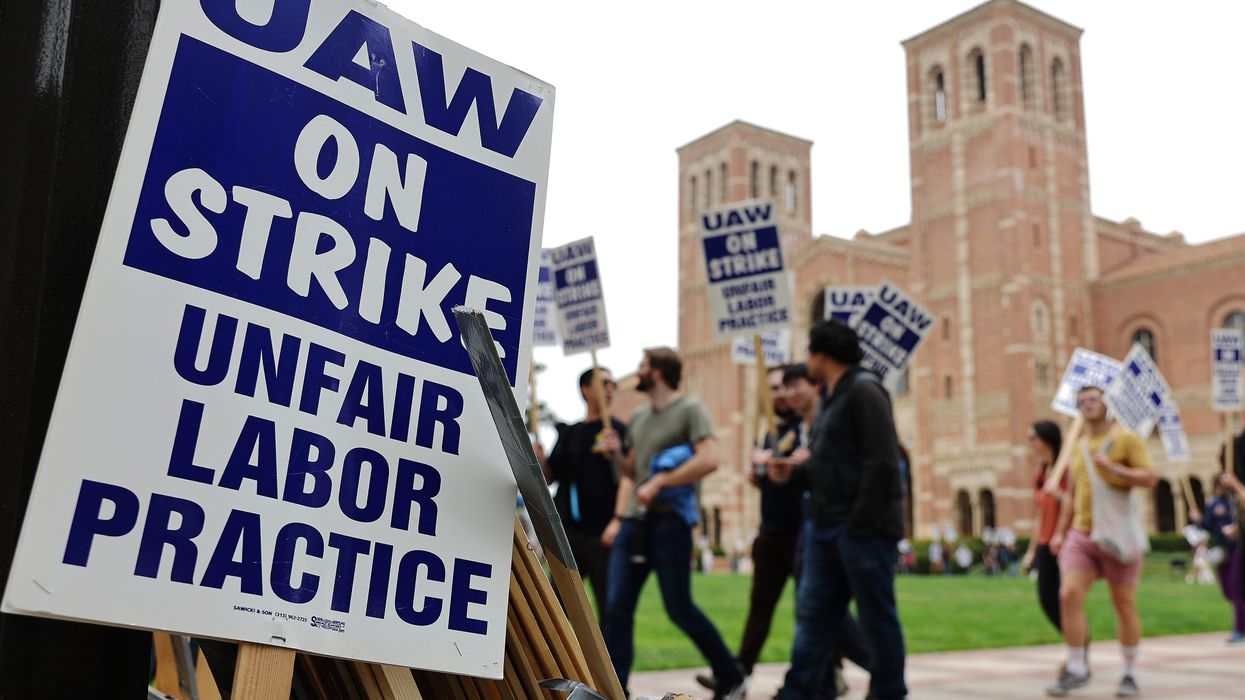
"Lockheed is a textbook example of corporate greed and I'm proud to stand shoulder-to-shoulder with our members as they fight for their fair share," said one regional director with the United Auto Workers.
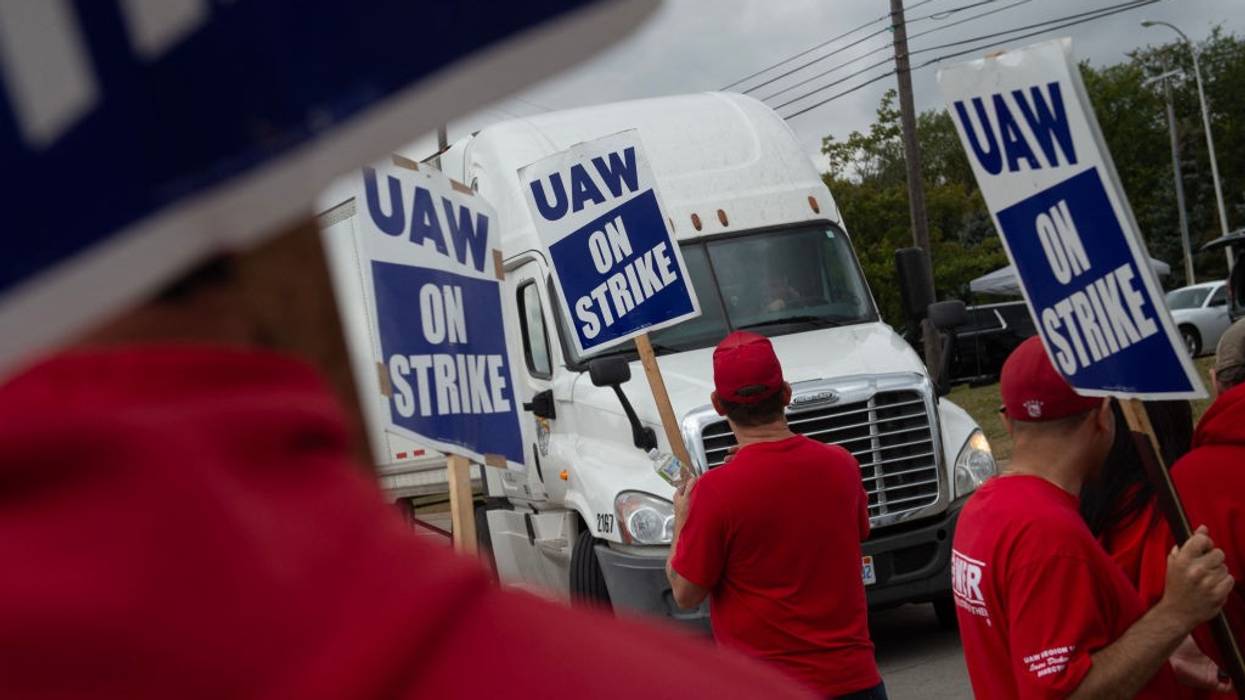
As an estimated tens of thousands mobilized for actions planned to honor May Day, also known as International Workers' Day, the United Auto Workers announced Thursday that over 900 UAW members who work for Lockheed Martin, the world's largest defense company, have gone on strike.
Those striking include members of UAW Local 788 in Orlando and Local 766 in Denver, according to the union, which alleges that the company has committed "multiple unfair labor practices and refused to present a fair economic proposal that meets the membership's needs."
The two locals are covered by the same bargaining agreement, according to The Denver Post, and workers in both locations walked off the job after voting down an offer from Lockheed Martin on Saturday. The company has "refused to present a fair economic proposal that meets the membership's needs," per the union.
The outlet Orlando Weekly reported that the union says Lockheed Martin has offered "meaningful" pay raises for union members during contract discussions, but other issues have remained unresolved. They include holiday schedules, cost of living allowance, healthcare and prescription drug coverage, among others, according to UAW.
"It would be nice for the future generations and everybody else coming in not to have to wait 18 years to provide for their family like I have," Michael Mahoney, who has worked at Lockheed Martin for 21 years and and is a military veteran, told Orlando Weekly.
"They say they support the military, they want to use the veteran status, but when it comes to really showing us—a veteran, you know—the appreciation that we deserve, it don't feel like we get appreciated at all around here," said Mahoney.
The defense giant brought in $5.3 billion in net earnings in 2024, and has secured $1.7 billion in profits in the first quarter of 2025.
Union workers rallied outside of the Lockheed Martin Waterton Campus in Denver on Thursday, according to the local outlet 9NEWS."Lockheed's workers have to wait years and even decades before seeing a comfortable standard of living, while its executives are swimming in taxpayer dollars," said UAW Region 4 director Brandon Campbell in a statement on Thursday. "Lockheed is a textbook example of corporate greed and I'm proud to stand shoulder-to-shoulder with our members as they fight for their fair share."
According to 9NEWS, Lockheed Martin issued the following statement regarding the strike: "We value our employees and their expertise and look forward to reaching a fair labor agreement for both sides. Our employees perform important work for our customers and the nation through their work supporting programs critical to our national security."
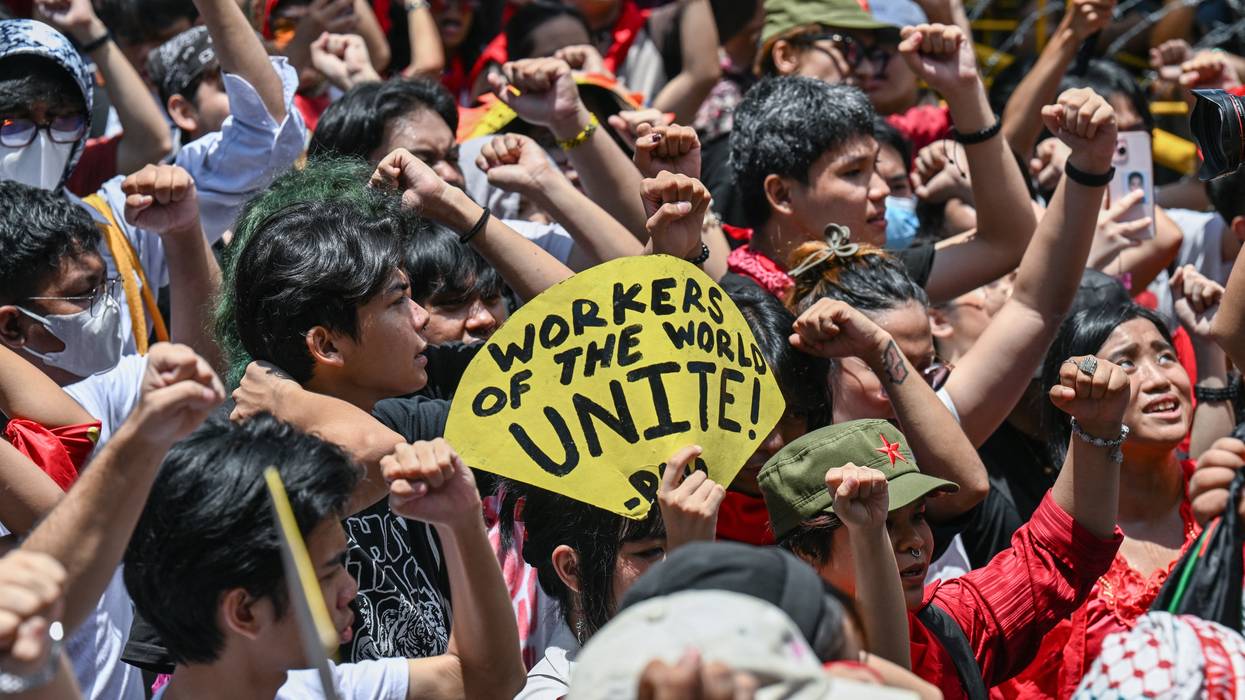
"This is a war on working people—and we will not stand down."
With right-wing, pro-corporate political parties across the world aggressively pushing anti-immigration policies and sentiment as they worsen inequality and attack crucial services, working people across the world gathered on Thursday to mark May Day—the holiday memorializing the struggles and victories of the global labor movement—and to let those in power know they aren't fooled by xenophobic scapegoating.
"They tell people that migrants are to blame for failing hospitals, job insecurity, and rising rents," said Esther Lynch, general secretary of the European Trade Union Conference in Paris. "This is a lie—a dangerous lie. The true cause is austerity, it is underfunding, privatization, and a refusal to invest in people. It's price gauging, it's union busting, it's pay injustice."
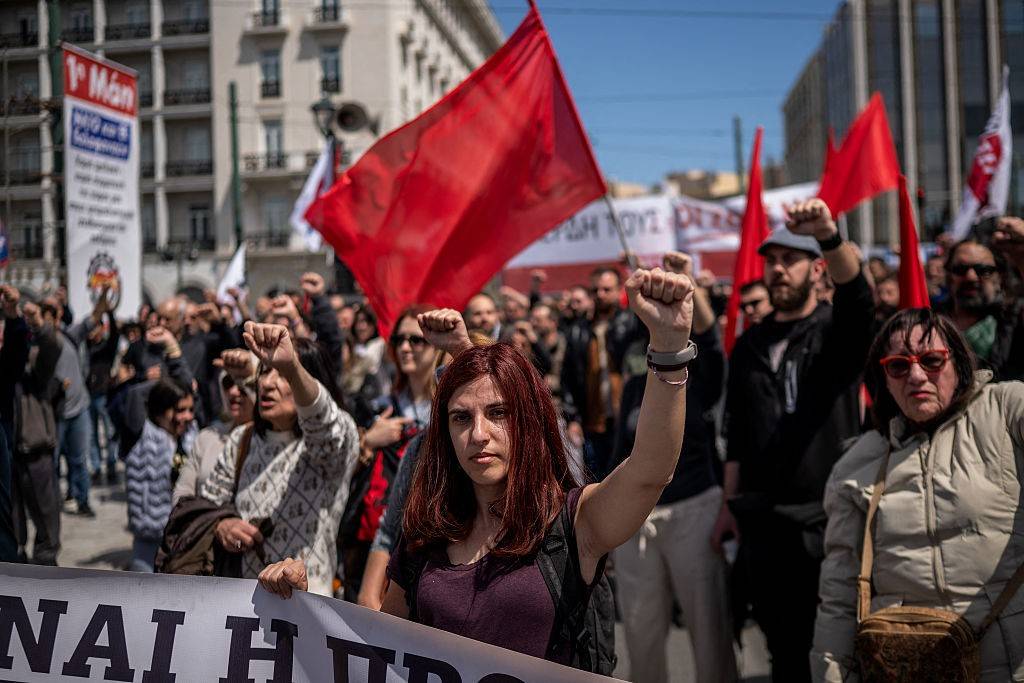
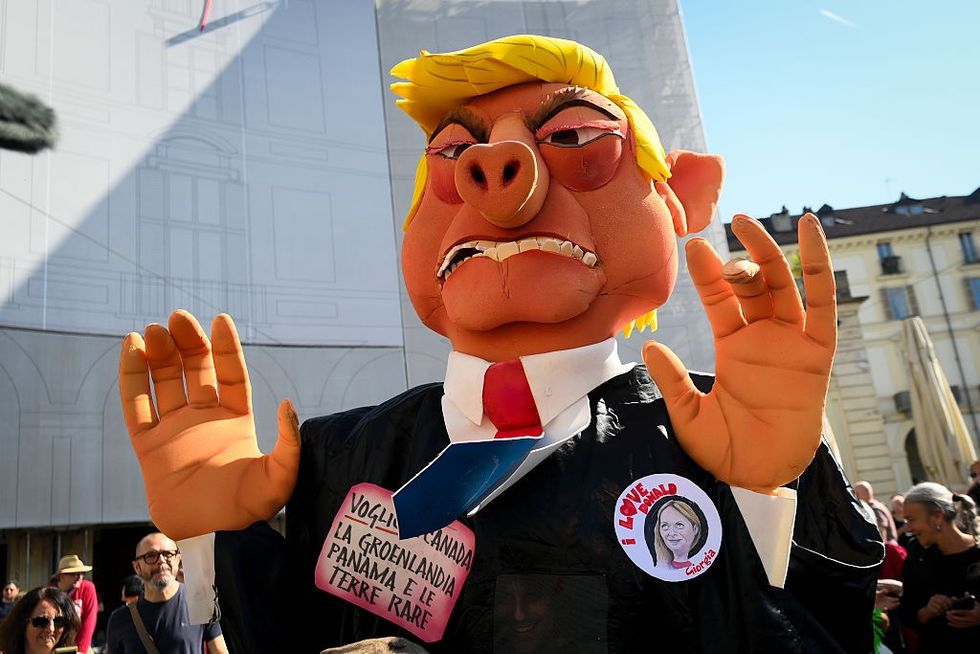
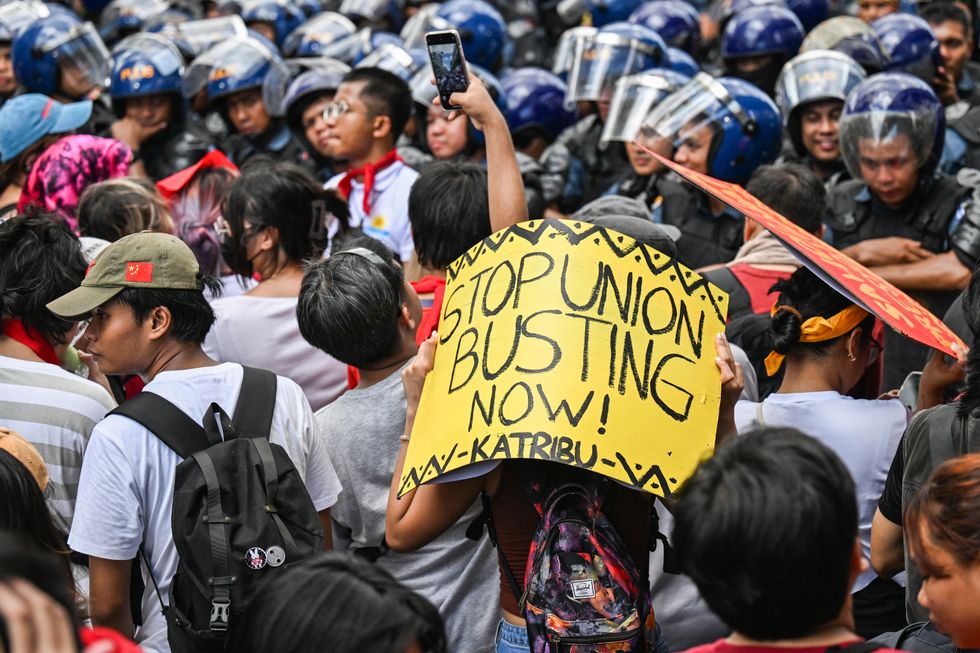
Here are photos from demonstrations and marches worldwide:
Protesters with red flags raise their fists as they march during a May Day (Labour Day) rally, marking International Workers' Day, outside the Greek Parliament in Athens, on May 1, 2025. (Photo: Angelos Tzortzinis/AFP via Getty Images)
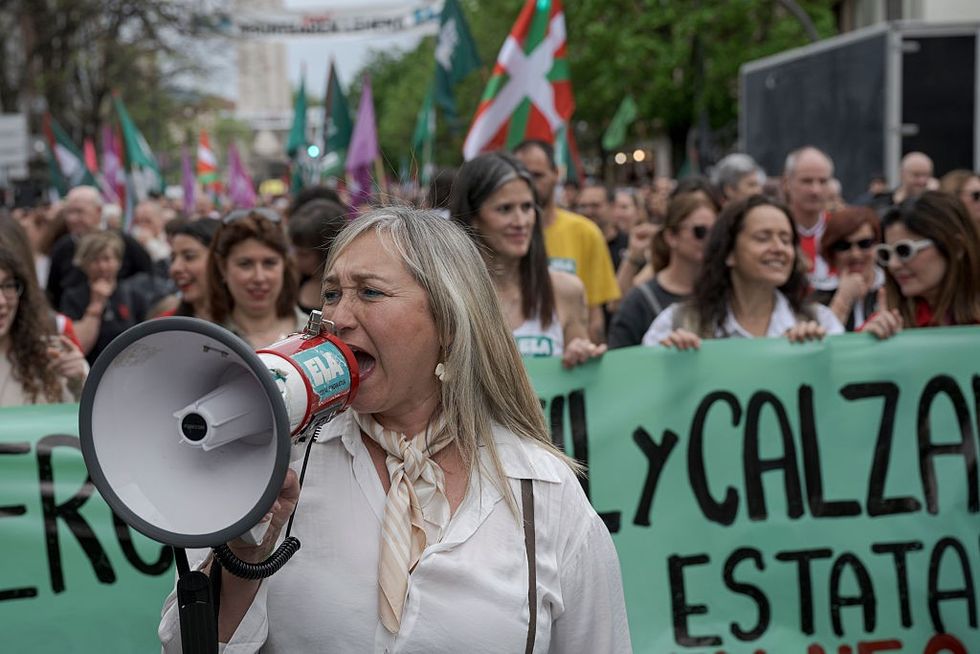
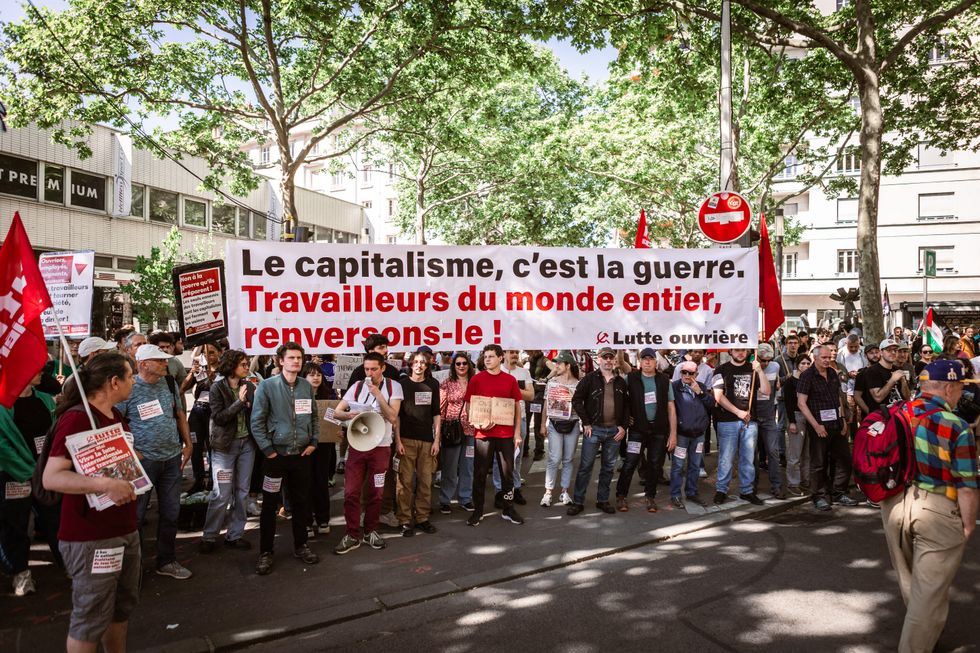
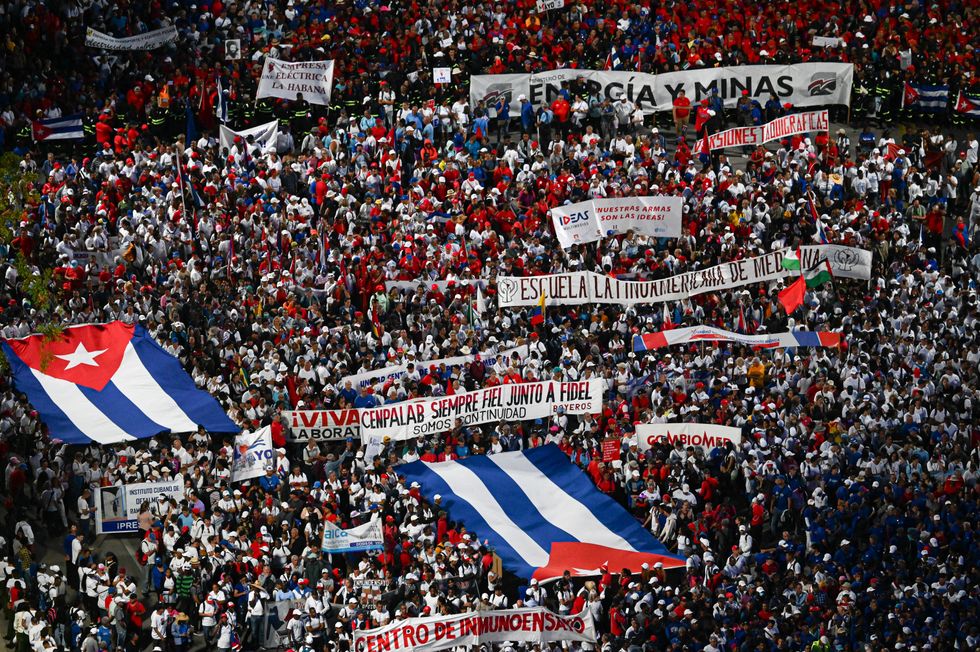
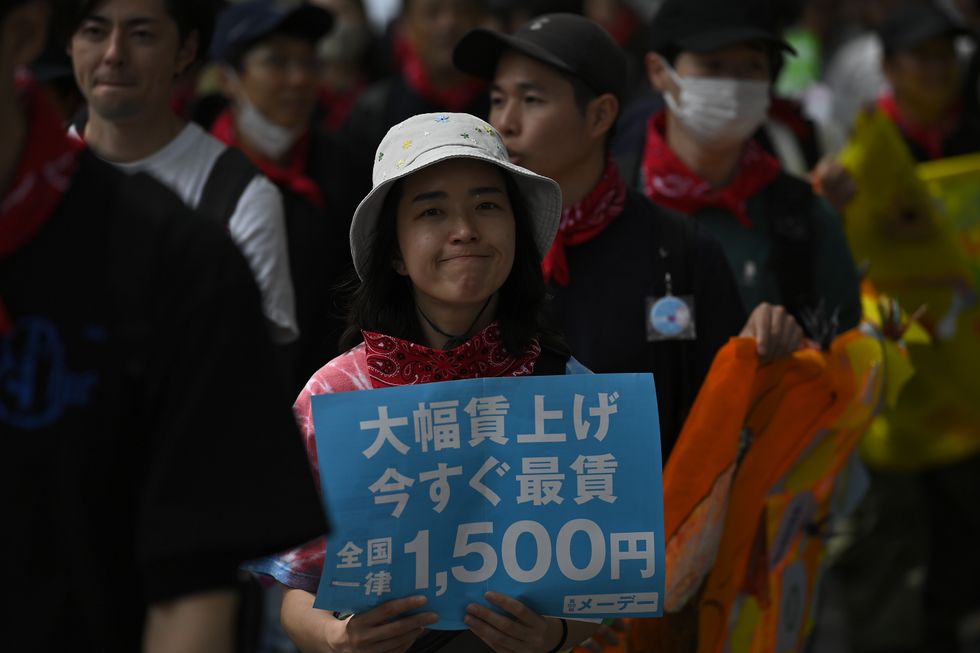
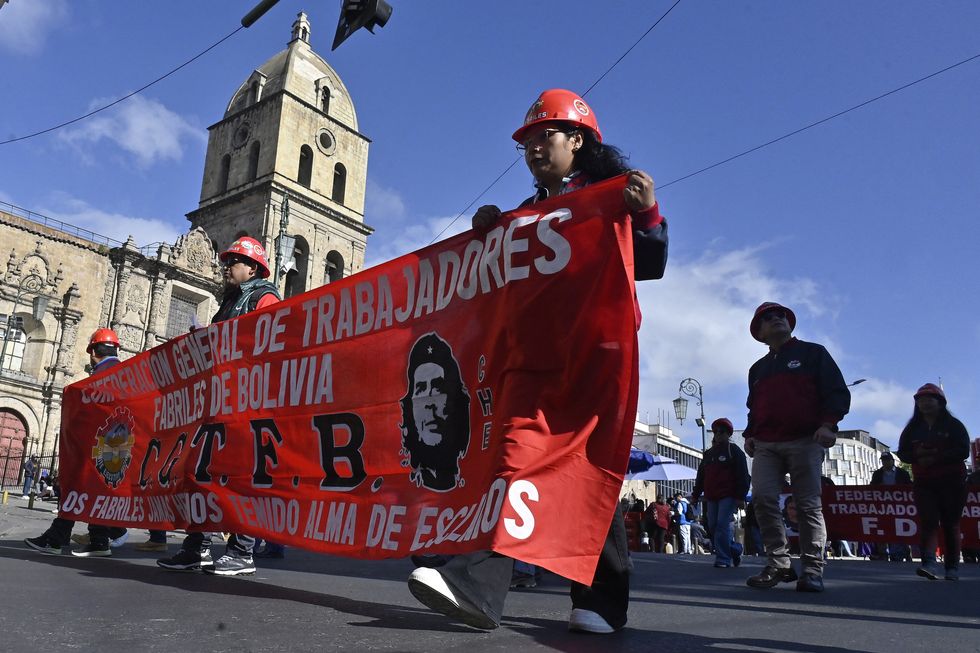
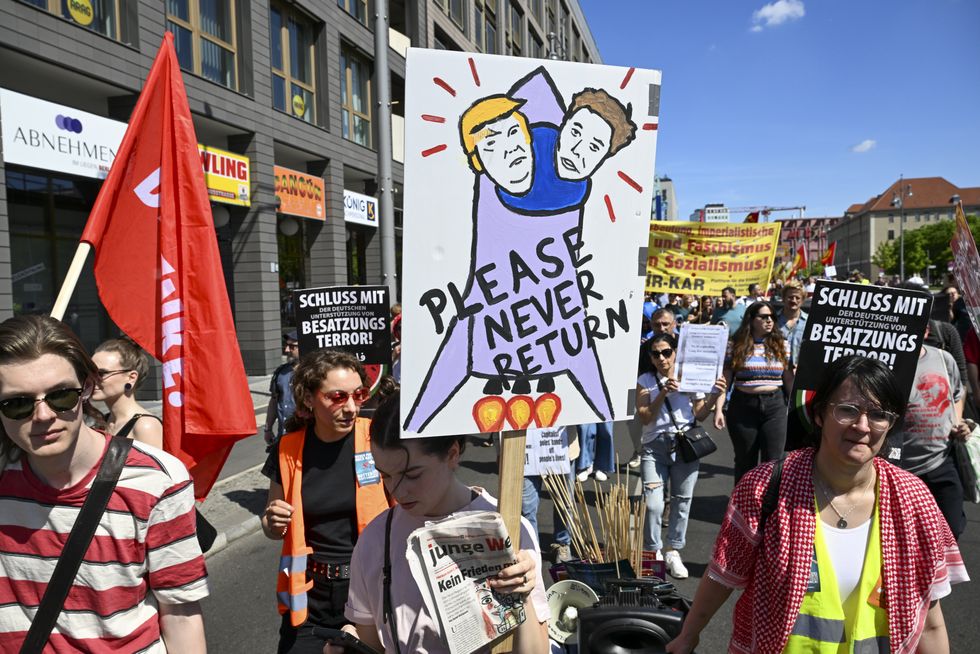
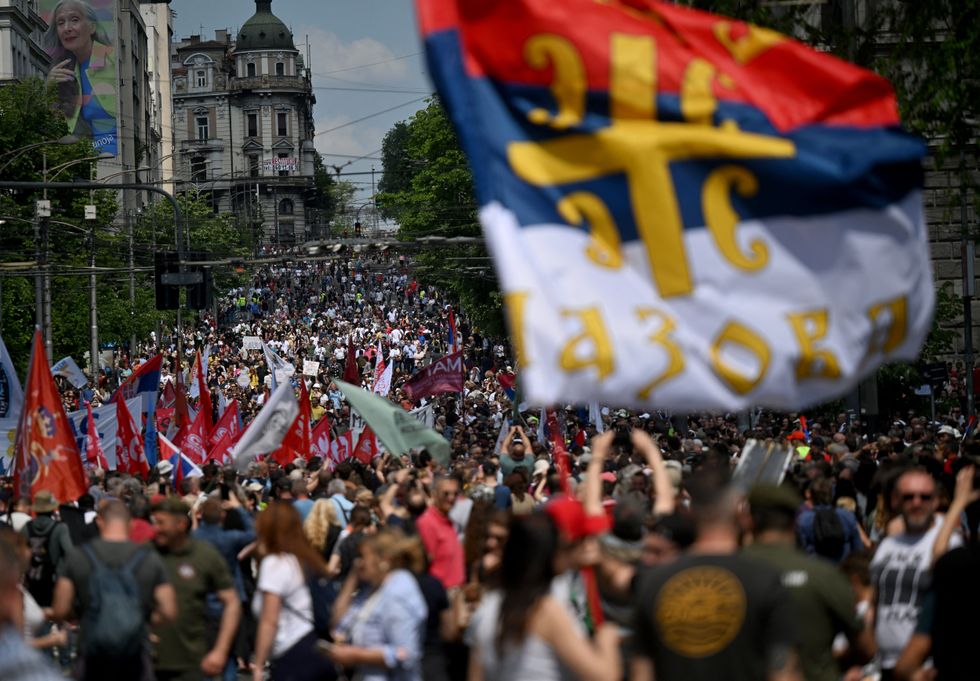
Paris was the site of France's main May Day rally, but an estimated 260 protests kicked off throughout the country, hosted by the General Confederation of France (CGT).
In the United States, protests were expected in nearly 1,000 cities, with many participants tying the fight against union-busting, the high cost of living, privatization, and corporate greed to President Donald Trump's administration—which has spent the past three months working to secure $4.5 trillion in tax cuts for the wealthy while pushing a mass deportation campaign and blaming working families' struggles on a so-called "invasion" by immigrants.
"This is a war on working people—and we will not stand down," a website for the U.S. May Day protests reads. "They're defunding our schools, privatizing public services, attacking unions, and targeting immigrant families with fear and violence. Working people built this nation and we know how to take care of each other. We won't back down—we will never stop fighting for our families and the rights and freedoms that propel opportunity and a better life for all Americans. Their time is up."
French union leaders also used the occasion to decry the "Trumpization" of global politics, and Italian protesters in Turin paraded a puppet of the U.S. president.
The global movement sent the message that "there is an alternative to the billionaire vision of the world," said the International Trade Union Confederation (ITUC).
Other May Day marches and rallies were held in countries including Germany, the United Kingdom, Spain, Greece, the Philippines, Turkey, and Japan.
"Around the world, workers are being denied the basics of life like well-funded hospitals and schools, living wages, and freedom to move, while billionaires pocket record profits and unimaginable power," said Luc Triangle, general secretary of the ITUC. "A system built for the 0.0001% is rigged against the rest of us—but workers around the world are standing up and organizing to take back democracy."
"Workers are demanding a New Social Contract that works for them—not the billionaires undermining democracy," said Triangle. "Fair taxation, strong public services, living wages, and a just transition are not radical demands—they are the foundation of a just society."
On May 8, the ITUC plans to issue an open letter to heads of state and global institutions demanding a new social contract, including collective bargaining rights for all workers; minimum living wages; and governments that ensure universal healthcare, education, and other public services.
"Let us be clear: austerity is a political choice, not an economic necessity. And it is a choice that has caused and is causing enormous damage," said Lynch. "When governments slash spending under the guise of fiscal responsibility, the real result is increased hardship, unemployment, and insecurity—especially for working people."
"Jobs in the public and private sector are being lost across the E.U. due to austerity policies," she added. "Vital public services are being slashed, wages are being frozen, pensions cut and entire communities are being abandoned. In this vacuum, the far right grows stronger—not by offering solutions, but by spreading fear."
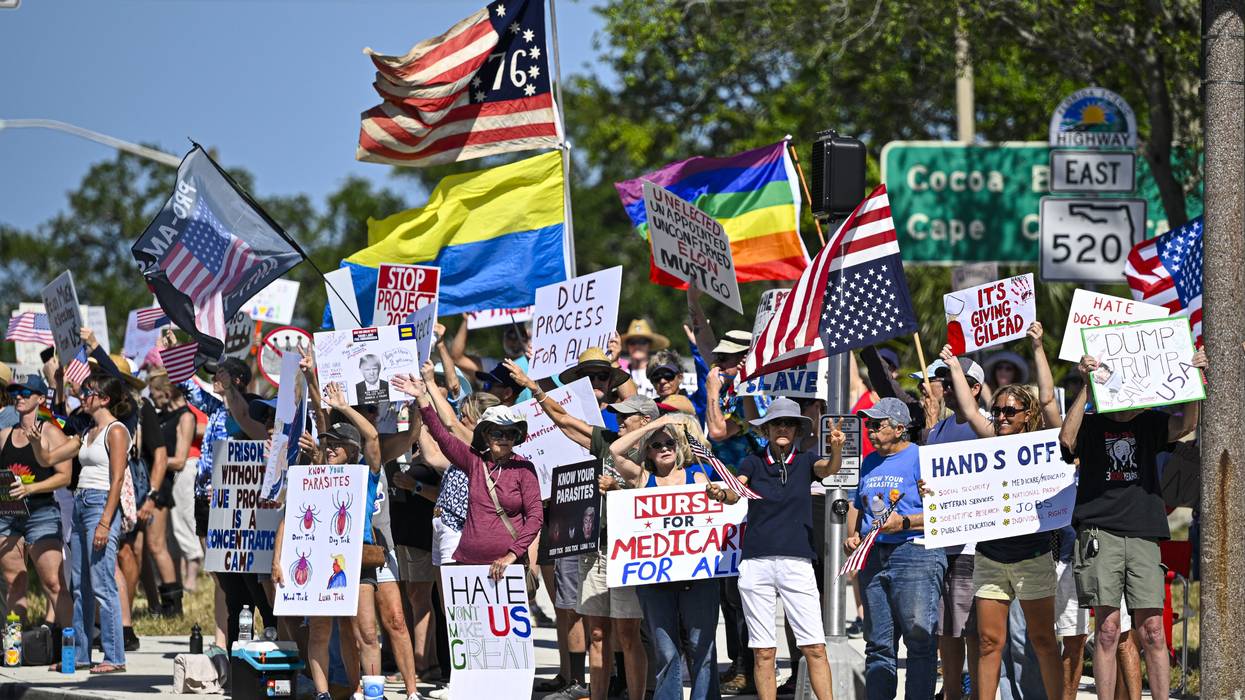
"We are demanding a country that puts our families over their fortunes—public schools over private profits, healthcare over hedge funds, prosperity over free market politics," organizers said.
Organizers expect tens of thousands of Americans to turn out on Thursday for rallies aimed at resisting U.S. President Donald Trump and "his billionaire profiteers" as part of a May Day national day of action, on the heels of mass mobilizations for nationwide "Hands Off!" protests just weeks ago.
"This May Day we are standing united. We are demanding a country that puts our families over their fortunes—public schools over private profits, healthcare over hedge funds, prosperity over free market politics," according to organizing materials from a national coalition of groups. "Stop the billionaire takeover. We are the many. They are the few."
May Day, also known as International Workers' Day, comes as the American people increasingly see and feel the effects of the Trump administration's various policies—from his crackdown on immigration, to targeting of foreign born students who exercise pro-Palestine speech, to the administration's dismissal of tens of thousands of federal employees, to sweeping tariffs.
On Thursday, one of more than 1,100 May Day rallies will be held at Philadelphia City Hall, where Sen. Bernie Sanders (I-Vt.) will join the city's AFL-CIO chapter under the banner, "For the Workers, Not the Billionaires."
Rallies are planned in New York, the District of Columbia, Chicago, and Atlanta, among other cities.
Nearly 200 groups are listed as coalition partners supporting the national May Day actions. They include unions, climate groups, grassroots organizations, and more. Among them is "50501"—a movement that began on Reddit and brought together organizers and regular Americans for a rally to resist the Trump administration back in February. Local and state-level 50501 groups are also listed as partners for the May Day actions.
In addition to mobilization through 50501, protests on Thursday will follow "Hands Off!" actions on April 5, when an estimated one million people turned out nationwide, according to Democracy Now!
50501 spearheaded yet another round of rallies on April 19.
The events are taking place more than two months into Sanders' Fighting Oligarchy tour, during which he and Rep. Alexandria Ocasio-Cortez (D-N.Y.) have drawn crowds of thousands in Republican districts in Nebraska, Iowa, Idaho, and other states.
In addition to the May Day national day of action, the group Free Speech for People, which has launched a campaign to drum up support for impeachment proceedings against Trump, will also hold a day of action on Thursday.
Free Speech for People has partnered with Citizens' Impeachment and the two groups will devote tomorrow to "generating calls and emails to Congress members, urging them to impeach Trump for his grave abuses of power."
"We cannot allow Trump and his allies to destroy our republic," wrote Free Speech for People in a post on X.
Progressive economic ideas have been on the whole an anathema to the U.S. political establishment and violence against labor militancy has always been the norm for almost all of the country’s political history. Nonetheless, the U.S. labor movement has not yet been defeated.
May 1st is International Workers’ Day and was established as such in celebration of the struggle for the introduction of the eight-hour workday and in memory of Chicago’s Haymarket Affair, which took place in 1886. May 1st is celebrated in over 160 countries with large-scale marches and protests as workers across the globe continue to fight for better working conditions, fair wages, and other labor rights. International Workers’ Day, however, is not celebrated in the U.S. and has in fact been practically erased from historical memory. But this shouldn’t be surprising since U.S. capitalism operates on the basis of a brutal economy where maximization of profit takes priority over everything else, including the environment and even human lives.
Indeed, the U.S. has a notorious record when it comes to worker rights. The country has the most violent and bloody history of labor relations in the advanced industrialized world, according to labor historians. Subsequently, unionization has always faced an uphill battle as corporations are allowed to engage in widespread union-busting practices through manipulation or violation of federal labor law. The recent activities of Amazon and Starbucks speak volumes of the anti-union mentality that pervades most U.S. corporations. Accordingly, unionization in the U.S. has been on decline for decades even though the majority of Americans see this development as a bad thing.
The backlash against unionization and worker rights in general in the U.S. also takes place against the backdrop of an insidious ideological framework in which it has been regarded as a self-evident truth that individuals are responsible for their own fate and that government should not interfere with the free market out of concern for social and economic inequalities.
While May Day may have been formally obliterated by the powers that be from U.S. public awareness, the labor movement is still alive and kicking.
Social Darwinism first appeared in U.S. political and social thought in the mid-1860s, as historian Richard Hofstadter showed in his brilliant work Social Darwinism in American Thought, 1860-1915, but it would be a gross mistake to think that it ever went away. The conservative counterrevolution launched by Ronald Reagan in the early 1980s and refined by Bill Clinton in the early 1990s aimed at bringing back the loathsome idea that the government should not interfere in the “survival of the fittest” by helping the weak and the poor. Progressive economic ideas have been on the whole an anathema to the U.S. political establishment and violence against labor militancy has always been the norm for almost all of the country’s political history.
Long before the movement for an eight-hour workday in the U.S., which can be largely attributed to the influx of European immigrants mainly from Italy and Germany, radicalism had set foot across a number of post-colonial states. Rhode Island, often referred to as the Rogue Island, had one of the most radical economic policies on revolutionary debt, which was wildly popular with farmers and common folks in general, and experimented with the idea of radical democracy. At approximately the same time, Shays’ rebellion in Massachusetts was also about money, debts, poverty, and democracy. Naturally, the elite in both states pulled out all stops to put an end to radicalism, and the pattern of suppressing popular demands has somehow survived in U.S. politics across time.
The pattern of suppressing social and political movements from below continued well into modern times. The Red Scare, climaxed in the late 1910s on account of the Russian revolution and the rise of labor strikes and then renewed with the anti-communist campaign of the 1940s, played a crucial role in the establishment’s fervent dedication to crushing radicalism in the U.S. and putting an end to challenges against capitalism.
In light of this, it is nothing short of a shame that May Day has been all but forgotten in U.S. political culture even though the day traces its origins to the fight of American laborers for a shorter workday.
Last year, after marching on May Day with thousands of other people in the streets of Dublin, one of the questions that was posed to me was how could it be that International Workers’ Day is not celebrated in the U.S. I am still struggling to come up with a convincing explanation, as may be evident from this essay, but Gore Vidal was not off the mark when he said, “we are the United States of Amnesia.”
Nonetheless, the U.S. labor movement has not yet been defeated and is surely not dead. In spite of the bloody suppression and the constant intimidation over many decades, the U.S. labor movement has made its presence felt on numerous historic occasions, from the Battle of Cripple Creek in 1894 and the 1892 Homestead Strike in Pennsylvania to being behind the historic 1963 march on Washington for Jobs and Freedom, and continues doing so down to this day. Scores of victories for the working class were achieved last year—and all against prevailing odds. Moreover, in 2023, labor strikes in the U.S. jumped to a 23-year high and some of the largest labor disputes in the history of the U.S. were also recorded last year.
So, while May Day may have been formally obliterated by the powers that be from U.S. public awareness, the labor movement is still alive and kicking. Even a small victory is still a victory, though time will tell of the historic significance of each step forward. Indeed, it is highly unlikely that the unionists, socialists, and anarchists that made Chicago in 1886 the center of the national movement for the eight-hour workday had foreseen what the impact of their actions would be in the struggle of the international labor movement for democracy, better wages, safer working conditions, and freedom of speech. All these social rights have been amplified over time, though much remains to be accomplished and the struggle continues.
But this is all the more reason why we must not forget—and indeed celebrate every year with marches and protests—May 1st.
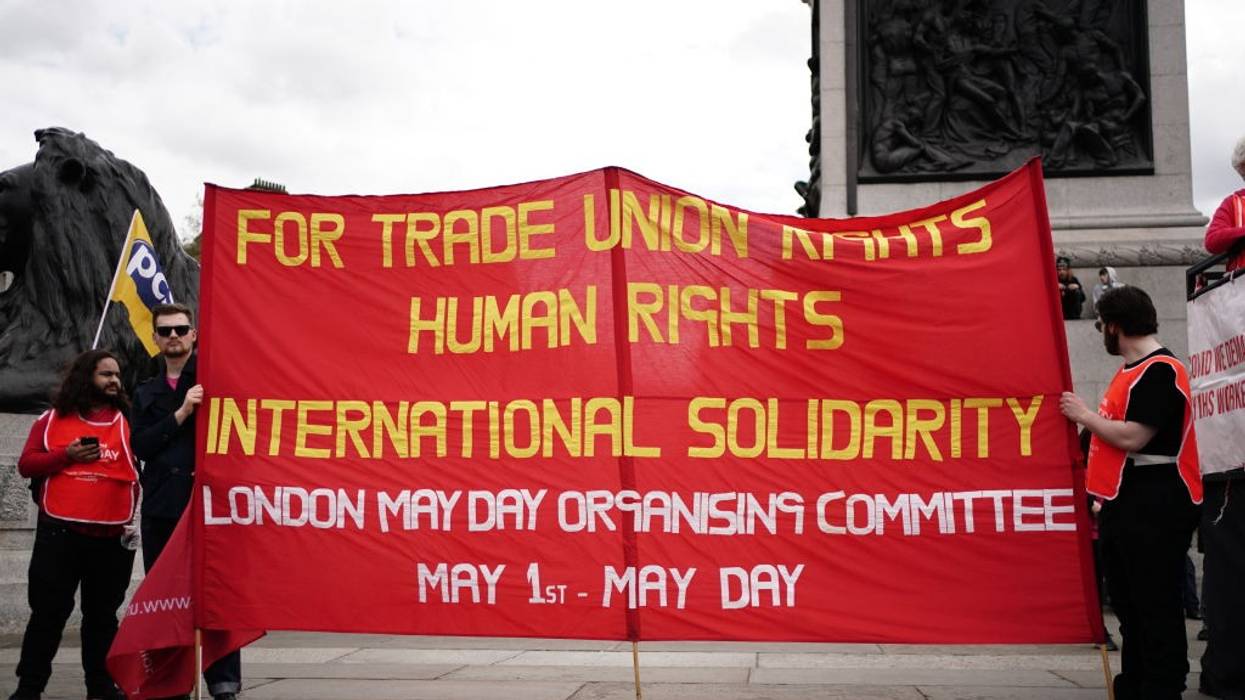
European workers face Austerity 2.0, but unions are fighting back and winning.
May Day is an occasion for both celebration and dissent.
On May Day, we celebrate the victories of the trade union movement, such as our successful campaign for the eight-hour day which gave birth to International Workers’ Day. And we follow in the footsteps of our movement’s founders by demanding concrete improvements in the lives of working people, now and in the future.
This year in particular the European labour movement has every reason to be on the march. We have a cost-of-living crisis caused by corporations cynically super-charging their prices and profits under the cover of supply problems arising from the pandemic and the war in Ukraine. At the same time, workers are struggling to buy food and pay rent as a result of the biggest cut in real wages since the start of this century.
This year in particular the European labour movement has every reason to be on the march.
Despite that, only a handful of European countries have imposed windfall taxes on excess profits, to deal with the profit-price spiral driving inflation—or, as I prefer to call it, “greedflation.” Instead, many political leaders are again determined to make ordinary people pay for yet another crisis they played no part in creating.
Austerity 2.0 is under way. We can see this in various policy-makers’ demands for wage restraint and the devastating interest-rate hikes causing real harm to workers. It is evident too in Emmanuel Macron’s undemocratic pension reform in France and the Danish government’s elimination of a public holiday.
But, as we shall see on the streets of Europe today, the fightback in also in train: A dozen days of nationwide stoppages in France, the biggest wave of walkouts in Britain since the 1980s, and Germany’s “mega strike” of industrial action. Nurses in Latvia, tyre-factory workers in Czechia, and transport workers in the Netherlands are among the many groups who have won in pay disputes in recent months.
Unions are also battling, and beating, union-busting tactics to organise new workplaces, with Amazon workers in Germany and Britain taking strike action for the first time. All over Europe, workers are organising and winning through their trade unions.
So there is much for our movement to take pride in this May Day. The challenge though is to transform this “union spring” into lasting change.
That is why trade union renewal will be the priority at the European Trade Union Confederation (ETUC) congress in Berlin later this month. A thousand delegates and other participants, representing over 45 million workers, will debate and agree a programme of action for the crucial next four years.
It is still the case that too few workers enjoy the benefits of union membership and collective-bargaining agreements.
It is still the case that too few workers enjoy the benefits of union membership and collective-bargaining agreements. In half of European Union member states, half the workforce or fewer are covered by collective bargaining—and those with the lowest coverage have the lowest wages. That must change.
The ETUC and its affiliates have secured an EU directive on adequate minimum wages, which obliges all member states to work with unions and commit by law to increase collective-bargaining coverage. They are required to promote collective bargaining and combat union-busting, and where coverage is below 80% to adopt a plan of action to elevate it. Unions at national level must work to ensure that this important change in direction for the EU—which a decade ago was arguing that collective bargaining was incompatible with economic growth—is implemented in domestic law.
But that is only the start. The EU is being left behind on labour policy by the United States, where Joe Biden’s administration has made funding under its $4 billion Inflation Reduction Act dependent on companies paying union wages, supporting a just transition, and curbing corporate excess.
It is good that the EU’s Green Deal matches the US scheme on subsidies to industry. Now it must match it on workers’ rights and social conditions attached. We can no longer tolerate vast sums of public money being handed to companies which act against the public interest by paying poverty wages and leaving our underfunded social systems to pick up the bill—companies such as Amazon, which received more than €1 billion in public contracts over just three years.
That is why one of the main demands in the ETUC’s Berlin manifesto will be a ban on public money being handed to union-busting, tax-dodging, environment-destroying bosses. Failure to reign in the rampant inequality and corporate greed which have caused the current crisis would be a gift to the far right.
Europe needs a new economic and social model that puts people and the planet before profit at any cost. That is the future European trade union members will be demonstrating for today. And that will be the objective of our discussions and decisions at the ETUC congress this month.
The history of May Day tells us that real change is possible—when working people join together to demand better.
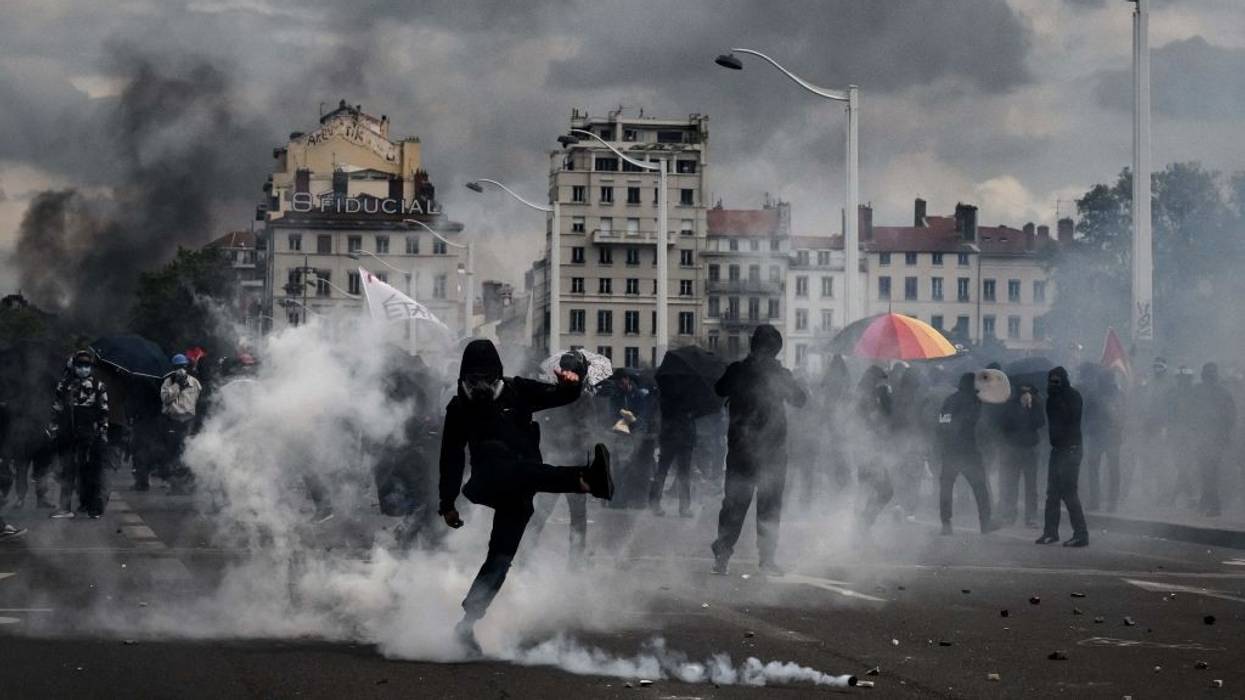
Marches from South Korea to Italy called for higher wages and targeted anti-worker policies.
Workers from Japan to France took to the street on Monday for the largest May Day demonstrations since Covid-19 restrictions pushed people inside three years ago.
Marchers expressed frustration with both their nations' policies—such as French President Emmanuel Macron's raising of the retirement age in March—and global issues like the rising cost of living and the climate crisis.
"The price of everything has increased except for our wages. Increase our minimum wages!" one activist speaking in Seoul told the crowd, as The Associated Press reported. "Reduce our working hours!"
"The price of everything has increased except for our wages."
South Korea's protests were the largest in the nation since the pandemic, with organizers predicting 30,000 people each would attend the two biggest rallies planned for the nation's capital alone, Al Jazeera reported.
Activists there criticized right-wing President Yoon Suk Yeol, who has targeted some unions under the guise of reforming what he claims are irregularities. His government had also considered a plan to extend a cap on working hours to 69 a week, before backlash from younger Koreans forced it to reconsider in March, as CNN explained at the time. Already, scores of people die of overworking every year, so much so that there's a special word for it: "gwarosa." Some marchers called for the president to resign, Dr. Simone Chun tweeted.
In Tokyo, meanwhile, thousands demonstrated against Japanese Prime Minister Fumio Kishida's plan to double the defense budget, money they argue should go toward meeting people's basic needs, the AP reported.
Demonstrations also took place in the Philippines, where marchers demanded a higher minimum wage; Taiwan, where they wanted improved labor policies; and Indonesia, where they demanded the government repeal a job creation law they said favored business interests over environmental protections or workers' rights.
"Job Creation Law must be repealed," protester Sri Ajeng said, as the AP reported. "It's only oriented to benefit employers, not workers."
In Sri Lanka, protesters pushed back on plans to privatize state- or partially government-run businesses amidst the country's worst ever economic crisis. In Pakistan, demonstrations were prohibited in some cities due to security concerns, leading unions to hold indoor rallies in Peshawar, though an outdoor gathering in Lahore still drew large crowds.
Domestic migrant workers in Lebanon played a large role in Beirut's march, while around a dozen demonstrators in Turkey were detained by police while attempting to access Istanbul's Taksim Square, which President Recep Tayyip Erdoğan had closed to protests.
Marches also took place across Europe, with more than 70 in Spain alone, where unions called for higher wages and supported the push for a four-day work week. In Italy, protests came as Prime Minister Giorgia Meloni—the leader of the nation's most right-wing government since World War II—announced a plan to reduce anti-poverty funds and make it easier for businesses to offer short-term contracts to workers, as Al Jazeera reported further.
According to Reuters, Meloni said that "I am proud of the government choosing to celebrate May 1 [International Workers' Day] with facts instead of words."
However, leader of Italy's principal CGIL union Maurizio Landini criticized Meloni's plan and said that wages were too low in the country because of high taxes and an elevated "level of job insecurity."
In the Netherlands, it was the nation's largest union itself that faced protests from its employees, who said they would go on strike Tuesday for higher wages amidst rising inflation, which rose 10% in 2022 and is expected to rise 3% in 2023 and 2024 each. Employees of the union—FNV—want that entire jump to be covered, but the union has only offered raises of 3% to 7% this year, 5% next year, and a maximum of 5% each year after from 2025.
"FNV staff also has the right to an honest wage deal that is appropriate for these times."
"It is painful that we have to go on strike," FNV employee representative Judith Westhoek told Reuters. "But FNV staff also has the right to an honest wage deal that is appropriate for these times."
May Day in Germany began the night before with a "Take Back the Night" march to protest violence against women and LGBTQ+ people, which drew thousands, the AP reported.
Finally, in France, marches channeled lingering rage over Macron's decision to raise the retirement age from 62 to 64. Unions hoped it would be the nation's largest May Day in years. And this seemed possible, since all of the major unions were working together for just the third time since 1945, The Washington Post noted. The last time this happened—in 2009—crowds reached 1.2 million.
"I think we'll see hundreds of thousands of demonstrators, perhaps 1 million or 1.5 million," Laurent Berger, who leads the nation's largest and more moderate union CFDT, said Sunday, as France 24 reported.
Some protesters broke windows in stores and banks in Paris, the AP reported. Meanwhile, police sprayed tear gas in the capital and other French cities, while at least two journalists were caught in the crossfire, according to France 24. Videos shared on social media showed that one journalist's helmet was broken, and another was forced to the ground by tear gas.
A French court allowed police to deploy drones to monitor crowds, which NGOs and lawyers' unions said violated marchers' rights.
Anger wasn't limited to Macron. Climate activists with Extinction Rebellion Paris targeted the Louis Vuitton museum—which they argued was a "tax tool" for the company to reduce what they paid to the state—with spray paint.
They pointed to an Oxfam France report finding that the companies in the nation's CAC 40 stock index would put the world on track for 3.5°C of warming by 2100.
"This is why we ask large companies to take their responsibility and act in the fight against global warming," the group tweeted.
Support for the May Day protests also came from the world's Indigenous peoples.
"The International Indigenous Peoples Movement for Self-Determination and Liberation greets the working peoples of the world, especially our fellow Indigenous peoples, in their valiant struggle for just wages, better working conditions, and human rights," the group said in a statement. "The struggle for self-determination and liberation is not possible without linkage between Indigenous Peoples and the working class in tearing down systems of oppression and exploitation."
Update: This piece has been updated with a statement from the International Indigenous Peoples Movement for Self-Determination and Liberation.
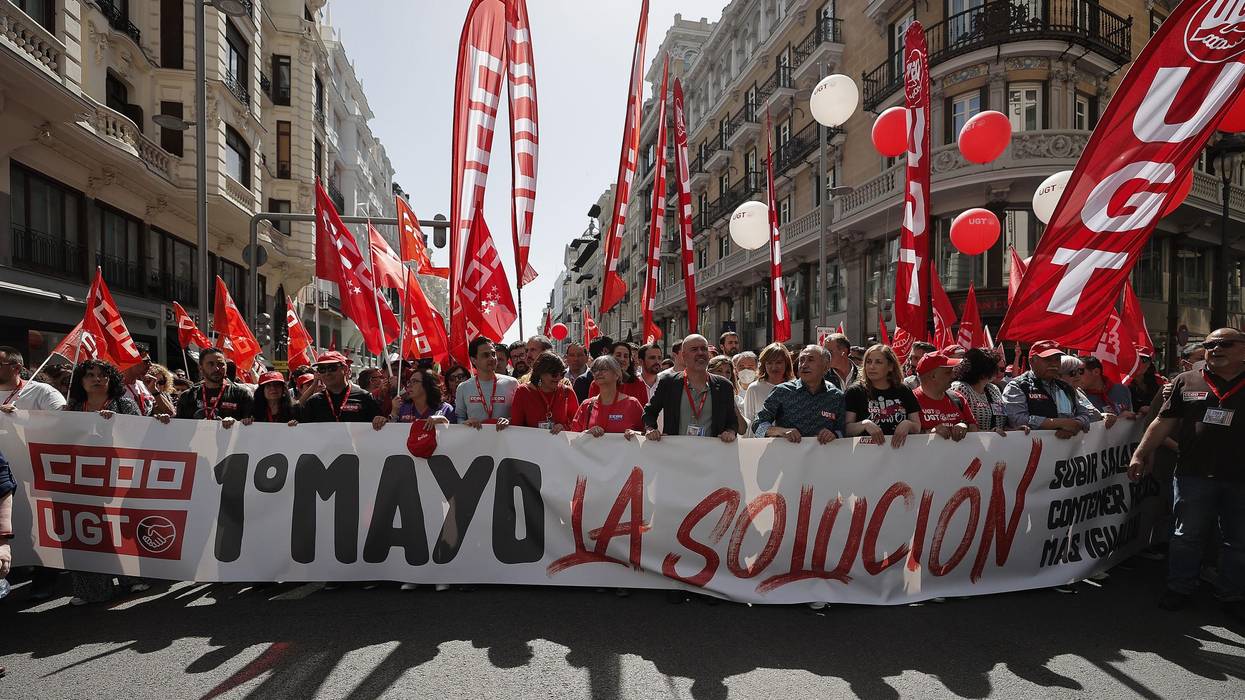
Workers and labor rights advocates across the globe came together Sunday for demonstrations marking International Workers' Day, or May Day.
Organizers held about 250 actions across France, many pressuring newly reelected French President Emmanuel Macron to ditch his plan to raise the retirement age from 62 to 65. Reuters reported that "marchers carried banners reading 'Retirement Before Arthritis,' 'Retirement at 60, Freeze Prices,' and 'Macron, Get Out.'"
The news agency noted that "most rallies were peaceful but in Paris police intervened after black-clad 'Black Bloc' anarchists tried to erect a barricade in a street near La Republique Square."
A Sunday march in Paris was "dominated" by leftist leader Jean-Luc Melenchon, who finished third in the recent presidential race, according to the Associated Press. Melenchon said that "May Day is the time to rally for a reduction in working time. That reduction signifies one key thing--that workers should be getting a larger share of the wealth."
Italians planned an outdoor concert in Rome as well as events across the capital and country. The nation's three main labor unions acknowledged Russia's war on Ukraine in their actions, organizing under the slogan "Working for peace."
"It's a May Day of social and civil commitment for peace and labor," said the head of Italy's CISL union, Daniela Fumarola, the AP reported.
Demonstrators in Germany also expressed solidarity with Ukraine and called for an end to the Russia assault.
Euro Weekly News shared developments from Spain:
Thousands took to the streets, along with members of the communist CCOO and the 1888-founded UGT, across Spain.
The march in Madrid began at midday and was attended, by union leaders Pepe Alvarez (UGT) and Unai Sordo, and by the vice president and minister for labour, Yolanda Diaz, and the spokesperson of the executive, Isabel Rodriguez.
Diaz announced shortly before the start of one of "the most important demonstrations in the world" that the government will set up a commission of experts to address the "great reform of Spanish law, the statute of labour of the XXI century," and that in a few weeks they will work with social partners to develop a law of institutional participation.
Noting rallies held in Cambodia, Cyprus, Greece, India, Pakistan, Serbia, Sri Lanka, South Korea, and Turkey, Al Jazeera reported that "Turkish riot police arrested dozens of protesters trying to reach Istanbul's main Taksim Square for May Day demonstrations against economic hardship caused by raging inflation."
Meanwhile, in the United States, community-based organizations, rights groups, and unions met in Washington Square Park for a New York City March to tell Congress that immigrants "deserve stronger worker protections and a pathway to citizenship!"
Organizers of the NYC emphasized that the Covid-19 pandemic, which began over two years ago, has "disproportionately impacted Black and Brown communities" who have been "pushed to the frontlines as essential workers to provide for their families and our communities."
Demonstrators also directed those messages to decision-makers in Washington, D.C.--specifically urging President Joe Biden to protect immigrant workers with #DignityNotDetention.
Progressives in Congress marked May Day with calls to send the Protect the Right to Organize (PRO) Act to Biden's desk.
"I stand with the working people of America who are coming together, organizing new unions all over the place, and making their voices heard," tweeted Sen. Elizabeth Warren (D-Mass.) "Now let's pass the #PROAct already to roll out the welcome mat for even more organizing."
This year's demonstrations come on the heels of major organizing wins by Amazon and Starbucks employees, which Sen. Bernie Sanders (I-Vt.) highlighted Sunday.
"From baristas to warehouse workers to teachers, there is a commonality--a working-class ground down decade after decade," he said. "Across the country, working people refuse to be cogs in the machine of the billionaire class. This #MayDay, let's remember the power of our solidarity."
May Day is celebrated in more than 90 countries around the world as International Workers' Day, with large-scale marches and protests, in honor of the struggles of the working class. But not in the country where it began, the United States of Amnesia.
The history of May Day has its origins in the summer of 1884 when the Federation of Organized Trades and Labor Unions decided to launch a nationwide movement to secure an eight-hour workday and called for May 1, 1886 to be the beginning of this campaign.
On May 1, 1886, hundreds of thousands of American workers staged a nationwide march demanding the creation of the eight-hour workday. Chicago was the epicenter of the protests as they were scheduled to go on for days.
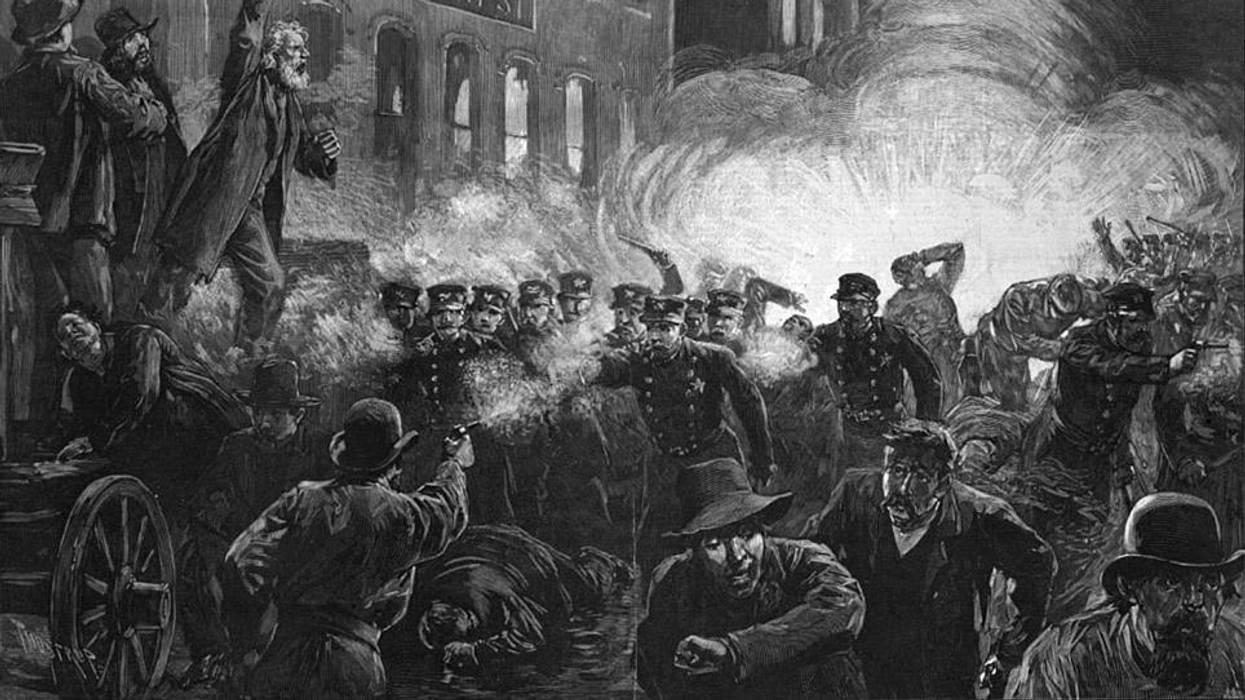
Eventually, the protests turned violent when the police attacked picketing workers on May 3, killing one person and injuring several, at the McCormick Harvesting Machine Company, an event which led the next day to a bloodier confrontation between police and demonstrators in Haymarket Square.
What happened at Haymarket Square is an event of immense historical significance in its own right.
More than 170 policemen carrying rifles attacked those that had gathered at Haymarket Square to protest police brutality, even though the city's mayor, Carter Harrison, had given permission for the meeting.
Ironically enough, most of the people had already left the protest meeting when the police attacked in an attempt to disperse the crowd. But during the confrontation, someone threw a dynamite bomb. The police panicked and opened fire in return. After the explosion and the subsequent gun fire, four workers and seven policemen were dead and dozens injured.
The next day, martial law was declared in Chicago and other parts of the country. Immediately thereafter, scores of labor leaders were rounded up, and eight men, most of them German-born, were eventually found guilty of murder and sentenced to death in a highly controversial trial in which no solid evidence was presented linking them to the bombing of May 4 at Haymarket Square.
The Haymarket Affair also led to an explosion in xenophobia and started the first "Red Scare" in the United States, courtesy of big business and the government.
Additionally, it led to a much more reformist labor movement with the birth to the American Federation of Labor whose first and longest-serving president, Samuel Gompers, was a core capitalist and had no interest in uniting the working class.
In the years following the dramatic events of 1886, the labor movement in the US would experience a series of ups and downs, all while American capitalism continued to operate on the basis of a brutal economy, down to this very day.
The "Red Scare" resurfaced in the late 1910s, with industrialists branding union members as "anti-American radicals," all while anti-union violence became a widespread practice until well into the mid-20th century.
In celebrating May Day in 2021, we must keep alive the memory of the early struggles of the working-class movement for a better future. We must draw strength and inspiration from the accomplishments of the labor movement through time in order to challenge more effectively the brutality of today's capitalist socioeconomic order.
Indeed, the struggle against neoliberal capitalism requires a well-organized working-class movement that hasn't succumbed to the form of historical amnesia imposed by the powers that be. For as Milan Kundera once put it, "the struggle of man against power is the struggle of memory against forgetting."
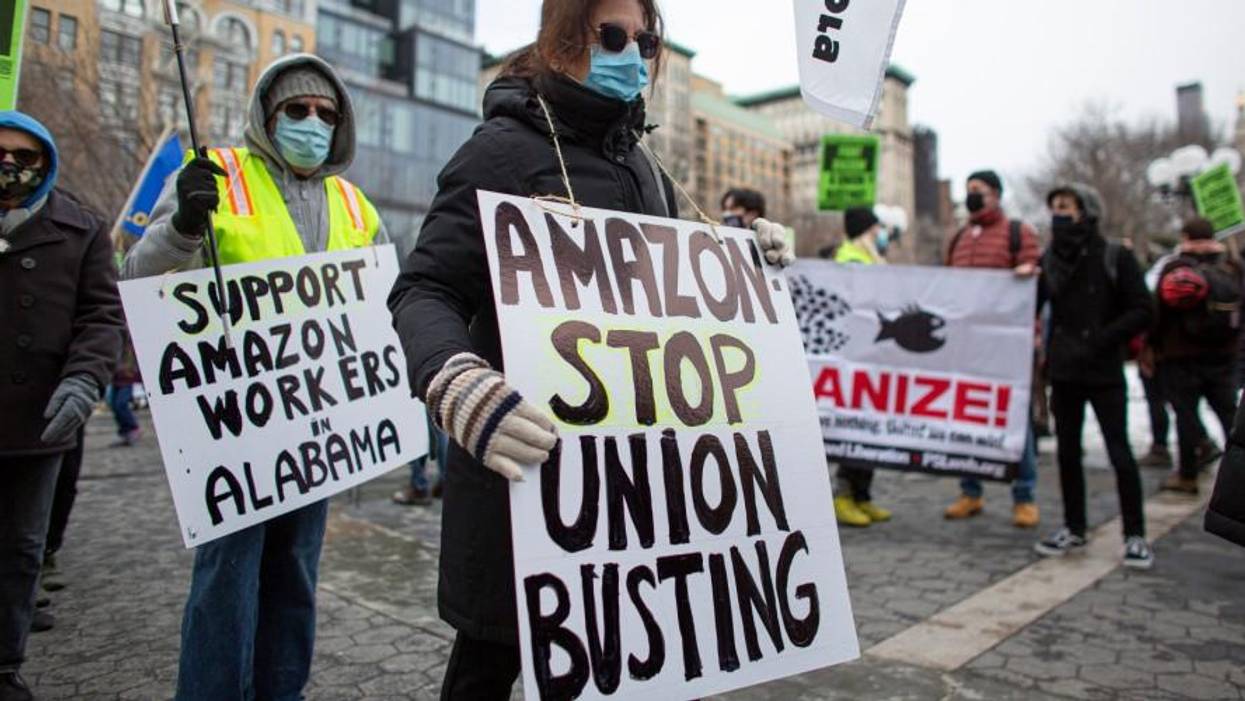
A coalition of over 40 progressive organizations on Saturday rallied online and in person to support the PRO Act--legislation that would strengthen workers' right to organize among other pro-worker provisions.
Groups behind the May Day actions include MoveOn, Indivisible, Democratic Socialists of America, and the Working Families Party.
The Protecting the Right to Organize (PRO) Act passed the House in March but has not yet faced a vote in the upper chamber, where it confronts the 60-vote legislative filibuster and no support from three Democrats--Sens. Kyrsten Sinema (Ariz.), Mark Kelly (Ariz.), and Mark Warner (Va.).
The event description for an online rally Saturday calls the PRO Act "a sweeping overhaul of the rules of our economy that would empower workers and require real accountability when corporations try to take advantage of employees." Speakers at the event included Democratic Reps. Kati Porter (Calif) and Jamal Bowman (N.Y.) and Thea Riofrancos, an organizer for Democratic Socialists of America's (DSA) Green New Deal Campaign Committee.
Bowman framed the PRO Act as "a fight for a future of dignity for all workers--where workers have a say in what happens in the workplace; where they are treated as people, not as machines; and where their humanity takes precedence over at-all-costs productivity."
"It is a way to fight back against the plantation capitalist system that is oppressing us all," Bowman continued. "But it cannot be passed unless we fight. We were given a mandate to fight, consistently and relentlessly, for legislation just like this--so we need to be steadfast in our fight for the PRO Act, for the abolition of the filibuster, and for the values that can bring about a better tomorrow for ourselves, our kids, and our grandchildren."
DSA is also boosting its call for the legislation, declaring in a video: "Workers made the world, now we will save it."
The group has already pushed for the legislation with over 750,000 phone calls to voters and legislators in the states with holdout senators, DSA said in a statement Saturday. That effort has been worth it, the group said, attributing previous calls to Sens. Angus King (I- Maine) and Joe Manchin (D-W.Va.) to having flipped their PRO Act opposition to support.
The trio of holdout senators were targeted of some of the in-person rallies Saturday:
The White House-backed (pdf) legislation has drawn support from a diverse range of groups and economists like those at the Economic Policy Institute (EPI).
In a fact sheet released in February, EPI summarized the proposal's benefits:
The Protecting the Right to Organize (PRO) Act addresses many of the major shortcomings with our current law. Passing the PRO Act would help restore workers' ability to organize with their co-workers and negotiate for better pay, benefits, and fairness on the job. Passing the PRO Act would also promote greater racial economic justice because unions and collective bargaining help shrink the Black-white wage gap and bring greater fairness to the workplace.
EPI also joined Human Rights Watch, Amnesty International, the AFL-CIO, and the National Employment Law Project this week in releasing a document that "examines the challenges of unionizing in the U.S. and explains how the PRO Act would be a corrective."
Arvind Ganesan, business and human rights director at Human Rights Watch, put the legislation in the context of the coronavirus crisis.
"The Covid-19 pandemic cruelly exposed how severe inequality is in the United States, where many low-wage workers face hunger, suffer from inadequate healthcare, or risk losing their homes, while the affluent have recovered far more quickly and even thrived," Ganesan said in a statement.
"Passing the PRO Act would be a major step toward tackling inequality by protecting workers' rights," he said, "a key element in a just and human rights-based recovery."