

SUBSCRIBE TO OUR FREE NEWSLETTER
Daily news & progressive opinion—funded by the people, not the corporations—delivered straight to your inbox.
5
#000000
#FFFFFF
To donate by check, phone, or other method, see our More Ways to Give page.
Daily news & progressive opinion—funded by the people, not the corporations—delivered straight to your inbox.

"They don't care about the deficit," said Democratic Rep. Ilhan Omar.
Rep. Ilhan Omar argued Thursday that the House GOP's newly passed debt ceiling legislation further demonstrates Republican lawmakers' unwavering "commitment to transferring wealth from the working class to their billionaire friends."
"They don't care about the deficit," Omar (D-Minn.) wrote on Twitter, citing the massive cost of tax cuts for the rich approved by congressional Republicans under former Presidents Donald Trump and George W. Bush. One recent analysis estimated that the Trump and Bush tax cuts have "added $10 trillion to the debt since their enactment and are responsible for 57% of the increase in the debt ratio since 2001."
Omar, who has warned that the Republican bill would eliminate childcare access for thousands of kids in her state, also pointed to the measure's steep proposed cuts to Medicaid, federal food assistance, and Internal Revenue Service (IRS) funding aimed at cracking down on rich tax dodgers.
According to the Congressional Budget Office, the Republican bill's cuts to IRS funding would add $114 billion to the deficit by undermining tax enforcement—largely offsetting the "savings" Republicans are attempting to achieve by imposing punitive work requirements on recipients of Medicaid and nutrition assistance.
Progressive economists and analysts have offered similar critiques of the House GOP bill, which is opposed by the Biden White House and dead on arrival in the Democratic-controlled Senate—though Republicans are hoping to squeeze some of their provisions into final debt ceiling legislation by using the threat of a disastrous default as leverage.
In a blog post earlier this week, Josh Bivens and Samantha Sanders of the Economic Policy Institute dismissed as "laughable" House Speaker Kevin McCarthy's (R-Calif.) claim that the Republican proposal "would put the United States on a path to 'fiscal responsibility' and lower inflation.
"The biggest driver of deficits for the last 20 years has been a steady trend toward ever-larger tax cuts for corporations and the richest U.S. households," Bivens and Sanders wrote. "No one who actually wants to reduce the federal deficit should be looking to do that on the backs of the poorest and most vulnerable Americans."
"This is the next milestone in House Republicans' attempt to play a game of dangerous political brinkmanship with the U.S. economy, trying to force through harmful and deeply unpopular federal spending cuts in exchange for increasing the debt limit," they added. "This approach recklessly flirts with bringing on the economic catastrophe of a government default in the short term."
Sharon Parrott, president of the Center on Budget and Policy Priorities, said in a statement that the bill "represents failed trickle-down economics at its worst."
"The bill would make severe cuts—$3.6 trillion over the next decade—to the part of the budget that funds childcare and preschool, schools, college aid, housing, medical research, transportation, and many other national priorities," Parrott noted. "Even as the bill makes these drastic, damaging cuts, it protects the wealthy from paying what they owe in taxes by repealing IRS funding enacted in the Inflation Reduction Act."
Speaking to HuffPost on Thursday, Omar said President Joe Biden is right to oppose any legislation that connects sweeping spending cuts to a necessary debt limit increase.
"What the Republicans are doing is they're taking our economy and the global economy hostage," said Omar. "I think that there is time to have budget negotiations and have those conversations but they should not be tied to raising the debt ceiling."
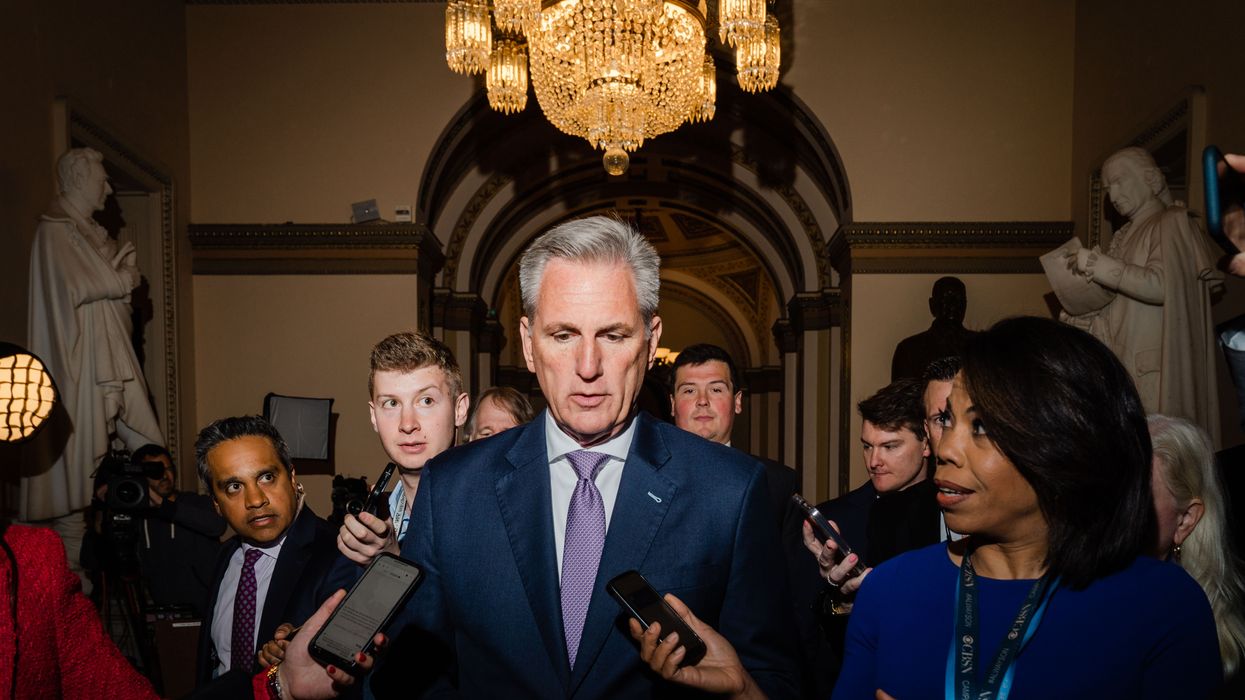
"This agenda would narrow opportunity, deepen inequality, and increase hardship," said the Center on Budget and Policy Priorities.
The House GOP leadership's newly released debt ceiling legislation would have potentially devastating impacts on Medicaid recipients across the United States, putting more than 10 million low-income people at risk of losing health coverage under the program.
That's according to a detailed analysis of the bill published Monday by the Center on Budget and Policy Priorities (CBPP), which noted that the Republican legislation "would take Medicaid health coverage away from adults aged 19-55 who do not have children in their household and who aren't able to document that they are working or to secure an exemption."
"This builds on a failed policy that Arkansas temporarily applied, which resulted in large numbers of people losing coverage and no impact [on] employment outcomes," CBPP warned. "Like the Arkansas policy, the McCarthy proposal would require monthly verification of employment and require many people to navigate a complicated system and provide proof that may be difficult to get to secure an exemption."
"More than 10 million people in Medicaid expansion states would be at significant risk of having their health coverage taken away because they would be subject to the new requirements and could not be excluded automatically based on existing data readily available to states," the think tank continued. "When people lose Medicaid, they lose access to preventive and acute care as well as medications and other therapies for managing chronic conditions, such as diabetes or depression. Losing access to healthcare can lead to serious health consequences and financial strain, making it harder for people to engage in the workforce successfully."
The bill, touted by House Speaker Kevin McCarthy (R-Calif.) in a floor speech last week, would also impose even more strict work requirements on Supplemental Nutrition Assistance Program (SNAP) recipients—the majority of whom already work.
"Under the bill, people unable to document employment could lose both SNAP and Medicaid," CBPP observed.
CBPP has previously estimated that SNAP work requirements floated by Republicans would strip federal food benefits from more than 10 million people, including millions of children.
A fact sheet that the Republican leadership released alongside the new legislation estimates that the proposed work requirements would save the federal government up to $120 billion over the next decade.
But the document doesn't mention that the bill's repeal of Internal Revenue Service (IRS) funding would cost the federal government around $114 billion in revenue over 10 years, almost completely offsetting any potential savings from the punitive work requirements.
The bill would also slash federal spending across the board by reverting it to fiscal year 2022 levels and capping spending growth at 1% per year for the next decade. In exchange, the measure would only lift the debt ceiling through March 31, 2024 at the latest.
"Cutting a broad swath of public services—from schools, childcare, and public health to environmental protection and college aid—and making it harder for people to afford the basics while permitting more tax cheating and cutting taxes for the wealthy is failed trickle-down economics at its worst," CBPP argued. "This agenda would narrow opportunity, deepen inequality, and increase hardship."
Growing warnings about the ramifications of the GOP-backed work requirements come as some far-right House Republicans—led by Rep. Matt Gaetz (R-Fla.)—are complaining that the new rules in the Republican bill aren't strict enough, potentially complicating party leaders' efforts to hold a vote this week.
NBC News reported Monday that Gaetz has "demanded 'more rigor' on work requirements for recipients of Medicaid and other safety net programs before he'll get on board."
"Specifically, he wants recipients to work 30 hours per week, up from 20 hours in the McCarthy plan," the outlet noted.
Congressional Democrats and President Joe Biden have voiced opposition to the Republican bill, characterizing it as an attack on the vulnerable and a gift to rich tax dodgers.
"Most Medicaid recipients already work," Rep. Gwen Moore (D-Wis.) tweeted Sunday. "The GOP's proposed work requirements are unnecessary and cruel, and would take away health insurance from millions of people."
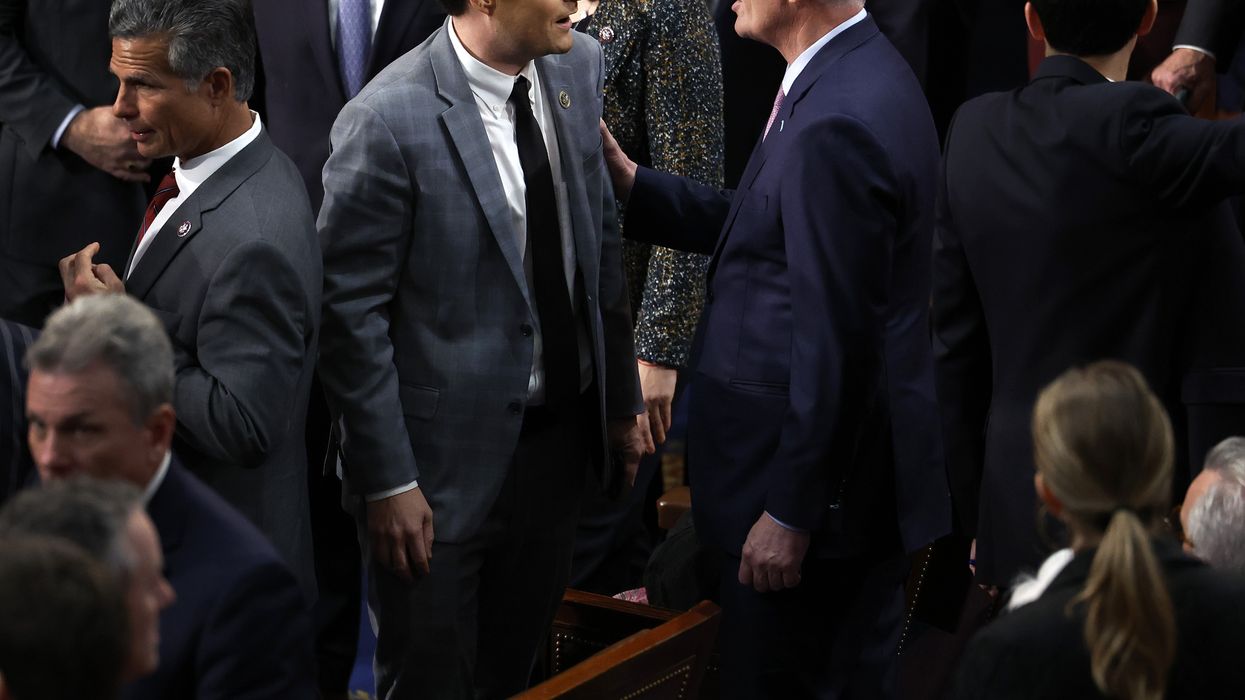
One progressive critic said the GOP bill is "a reflection of just how totally controlled by the fringes of his caucus McCarthy is."
Far-right House Republicans are reportedly "thrilled" with the debt ceiling legislation that Speaker Kevin McCarthy unveiled earlier this week.
That's likely because, according to Rep. Matt Gaetz (R-Fla.), McCarthy (R-Calif.) simply "picked up the House Freedom Caucus plan and helped us convert it into legislative text."
"And it shows," replied the progressive watchdog group Accountable.US.
Gaetz, one of a number of far-right Republicans who led a revolt against McCarthy's speakership bid earlier this year, told reporters Thursday that "if you held this plan and the plan that the House Freedom Caucus laid out some weeks ago and held them up to a lamp, you would see a lot of alignment."
Titled the Limit, Save, Grow Act of 2023, the legislation would revert federal spending back to fiscal year 2022 levels and cap annual spending growth at 1% over the next decade—central demands of the hardline House Freedom Caucus members who threatened to deny McCarthy the speaker's gavel in January.
Last month, the House Freedom Caucus outlined a more detailed proposal that would claw back unspent coronavirus pandemic funds, repeal clean energy tax credits and other elements of the Inflation Reduction Act, block President Joe Biden's stalled effort to cancel up to $20,000 in student loan debt per borrower, and impose new work requirements on recipients of Medicaid and federal food assistance that could kick millions off the lifesaving programs.
The Limit, Save, Grow Act would do all of the above and more, a fact that helps explain the bill's largely positive reception among far-right Republicans—though some, such as former House Freedom Caucus chair Rep. Andy Biggs (R-Ariz.), want the bill to attack aid programs more aggressively.
As Semafor reported, Biggs "expressed openness to voting for the bill" but said he "wanted to see even stricter rules around food stamps."
"That's who is really in charge of the MAGA majority," the progressive advocacy group Indivisible said of the House Freedom Caucus.
Citing Gaetz's comment to reporters, Accountable.US argued the GOP's debt ceiling bill is "a MAGA wishlist, not a serious proposal."
If passed—an unlikely scenario given opposition from congressional Democrats and the Biden White House—the Republican bill would increase the debt limit by $1.5 trillion or suspend the ceiling until next March, setting up another high-stakes standoff in early 2024, a presidential election year.
Congressional Democrats rejected the legislation as a nonstarter, pointing to the massive impact it would have on federal programs related to housing, education, healthcare, climate, and other critical areas.
Last month, the U.S. Department of Housing and Urban Development warned that roughly 640,000 families would lose rental assistance if its budget was reverted to fiscal year 2022 levels. The U.S. Department of Agriculture, meanwhile, estimated that 1.2 million people would lose access to the Special Supplemental Nutrition Program for Women, Infants, and Children (WIC) under the Republican proposal.
"These caps are cuts," Rep. Rosa DeLauro (D-Conn.), the top Democrat on the House Appropriations Committee, said in a statement on Wednesday. "They would ensure that resources for critical programs 10 years from now remain below the levels in effect today. That's 10 years of cuts for less than one year of preventing a default."
Analysts stressed that the cuts to social programs would be even steeper under the GOP plan if it exempts the bloated Pentagon from its austerity spree.
Republicans have two options to make their math work, according to Bobby Kogan, senior director of federal budget policy at the Center for American Progress.
Option one, Kogan noted, is "the entire discretionary budget is cut 28% by 2033 due to McCarthy's caps—including a 28% cut to defense and [Veterans Affairs] Medical Care." The second option is shielding the military budget and inflicting "a 58% cut to all else," leaving "most essential services destroyed."
"This is a ludicrous demand," Kogan argued. "McCarthy's position is that, unless both the president and Congress accede to his very specific and extreme demands, he will force the government to illegally default on its statutory obligations—such as payments to disabled veterans and [Social Security] recipients."
Ezra Levin, co-executive director of Indivisible, said the House GOP leadership's proposal is "a reflection of just how totally controlled by the fringes of his caucus McCarthy is."
"It's just as bad as we expected," said Levin. "Literally take food off the table of millions of families just trying to get by? Help the ultra-wealthy and big corporations get away with cheating on their taxes? Strip away healthcare from children, veterans, and seniors? Saddle millions with crushing student debt? Pull the plug on new clean energy jobs? That's your big pitch to the American people?"
"It'd be funny if it wasn't so serious," Levin added.
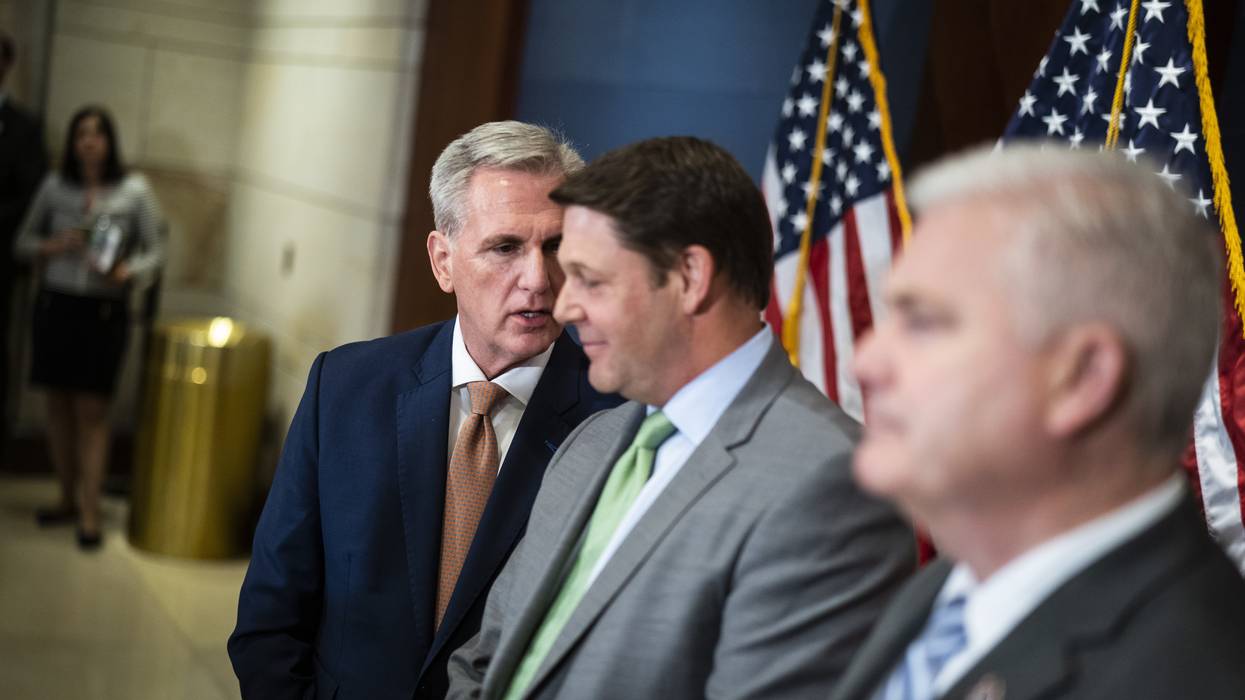
"It's a centerpiece of the ransom Speaker McCarthy has cobbled together as he threatens to trigger a catastrophic default," said Democratic Sen. Ron Wyden.
The Democratic chair of the Senate Finance Committee said Wednesday that the House GOP's newly released debt ceiling legislation shows that the often fractious right-wing caucus is unified around at least one common objective: "Helping rich people cheat on their taxes."
The Limit, Save, Grow Act of 2023, unveiled by the House Republican leadership as the U.S. barrels toward a debt default crisis of the GOP's making, would repeal most of the $80 billion in Internal Revenue Service (IRS) funding that Democratic lawmakers and President Joe Biden approved last year as part of the Inflation Reduction Act.
That funding, which the IRS has credited with improved customer service and speedier tax return processing, has been a frequent target of hysterical and false Republican rhetoric, with GOP lawmakers repeatedly raising the specter of armed IRS agents descending on ordinary Americans' homes and small businesses.
In a Wednesday floor speech outlining the GOP's bill, House Speaker Kevin McCarthy (R-Calif.) said the measure would eliminate "Biden's army of 87,000 IRS agents," citing a highly misleading number that Republicans have used to bash new funding for an agency that Republicans starved of funding for years to the benefit of rich tax dodgers.
Sen. Ron Wyden (D-Ore.), who heads the Senate's finance panel, said in response to the GOP plan that "Democrats passed funding for tax enforcement specifically to crack down on the wealthy cheats and scofflaw corporations who rip off all the Americans who follow the law and pay their taxes."
"Repealing that funding was the first bill House Republicans passed this year," Wyden continued, referring to legislation the House GOP passed in January, "and it's a centerpiece of the ransom Speaker McCarthy has cobbled together as he threatens to trigger a catastrophic default."
Underfunded and short-staffed, the IRS has for years audited lower-income Americans at the same or higher rates than the rich, who often have more complicated returns that the agency says are more expensive to assess.
According to one estimate, tax dodging could cost the federal government more than $7 trillion in revenue over the next decade. A separate 2021 study found that the richest 1% of U.S. households don't report 21% of their income, often making use of "sophisticated evasion" that the weakened IRS has failed to combat.
Repealing the new IRS funding, which is spread out over a decade, would run counter to the stated concerns of Republican deficit hawks. The Congressional Budget Office estimated earlier this year that cutting off the funding would add $114 billion to the deficit over a ten-year period.
"Working people pay their fair share of taxes. It's time the rich and corporations do the same," the progressive advocacy group Americans for Tax Fairness tweeted Wednesday. "Republicans are threatening default because they want the rest of us to keep footing the bill for the wealthiest Americans."
The Republican bill, which also targets key aid programs and climate investments, faces long odds in Congress, with Democrats in the House and Senate expected to unanimously oppose it.
But Punchbowl reported Thursday that Senate Republicans "are sticking by McCarthy's side" in opposing a clean debt limit increase, something that the White House, senior advocacy groups, and labor unions are demanding.
"Republicans manufactured this crisis, and Speaker McCarthy's proposal to get out of it would destroy jobs, worsen healthcare, increase hunger, hurt the climate, and make millions of American families poorer," Wyden said Wednesday. "This hostage-taking cannot continue."