

SUBSCRIBE TO OUR FREE NEWSLETTER
Daily news & progressive opinion—funded by the people, not the corporations—delivered straight to your inbox.
5
#000000
#FFFFFF
To donate by check, phone, or other method, see our More Ways to Give page.
Daily news & progressive opinion—funded by the people, not the corporations—delivered straight to your inbox.
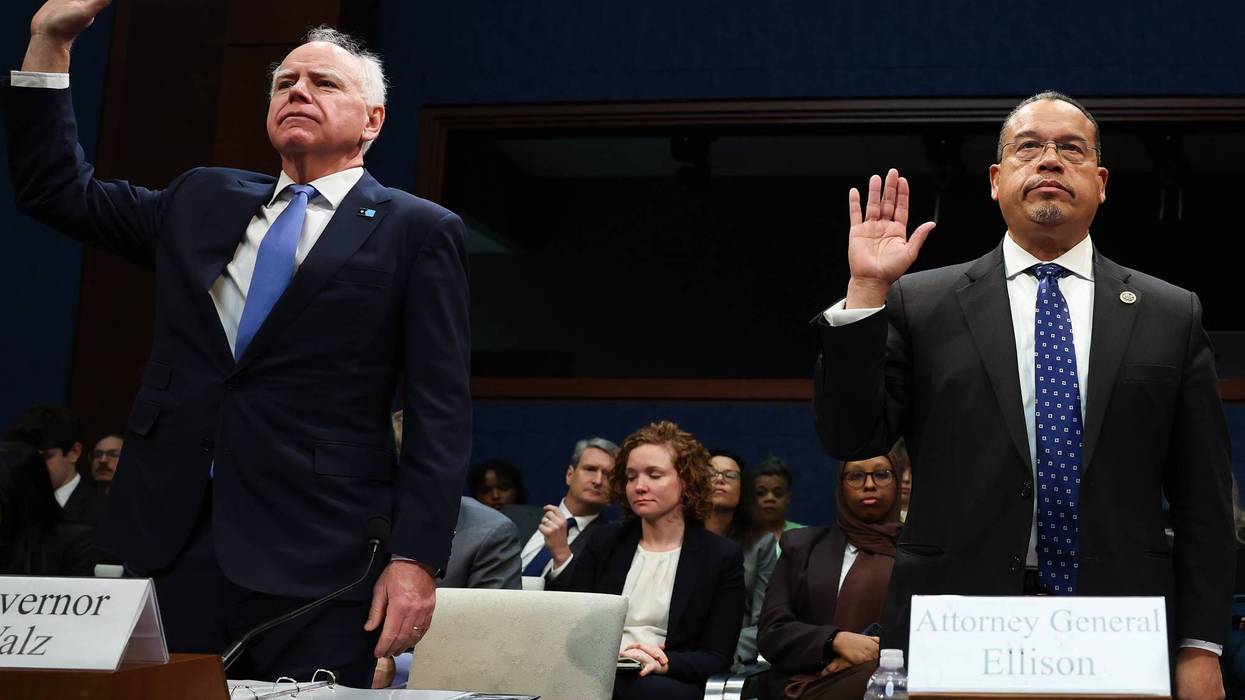
"It is deeply troubling to see official powers and public resources diverted away from serving the people and instead aimed at pursuing political adversaries," said Keith Ellison.
Minnesota Attorney General Keith Ellison forcefully pushed back against Vice President JD Vance's Monday night announcement on Fox News and social media that he had referred the state AG and Democratic Gov. Tim Walz to the US Department of Justice following allegations in a GOP congressional report that the pair was aware of fraud involving federal funds and failed to stop it.
"The allegations in the House Republican report are unfounded, and Vice President Vance's referral is a political stunt from an administration that uses the machinery of government to target its perceived opponents while extending leniency to those aligned with its interests," Ellison told CNN, highlighting how his office has investigated and prosecuted allegations of fraud involving public programs.
"It is deeply troubling to see official powers and public resources diverted away from serving the people and instead aimed at pursuing political adversaries," added Ellison, who is seeking another term in November. "That is not what government is for, and it diminishes public trust in our institutions."
Dozens of people were charged in Minnesota as a result of a federal probe into abuse of taxpayer funds during the Covid-19 pandemic that began under former President Joe Biden and related investigations that have continued since President Donald Trump returned to office last year. Trump has repeatedly used the cases to attack Somali Americans with racist rants, as well as to target Democratic politicians.
The new referral is not the first time the Trump administration has targeted Ellison and Walz, the 2024 Democratic vice presidential candidate who dropped his bid for another term as governor early this year. The DOJ subpoenaed the pair and other top Minnesota officials in January as part of its investigation into an alleged conspiracy to impede Immigration and Customs Enforcement (ICE) officers sent to the Twin Cities by the president—a probe the governor denounced as part of a broader trend of the administration "weaponizing the justice system."
As the White House faced intense national backlash for the deadly operation in Minnesota, Trump appointed Vance as "fraud czar" in February, and the vice president swiftly announced that the administration would pause some Medicaid funding for the state over fraud concerns. Walz said at the time that "this has nothing to do with fraud" and "is a campaign of retribution. Trump is weaponizing the entirety of the federal government to punish blue states like Minnesota."
In March, Walz and Ellison testified before the Republican-led House Committee on Oversight and Government Reform about the fraud cases, clashing with GOP lawmakers. At the time, the panel released an interim version of the report that was published on Monday. The Minnesota Star Tribune noted that the March edition "prompted House Democrats on the Oversight Committee to publish a competing report accusing Republicans of singling out Minnesota for political purposes."
Even before Vance's referral, spokespeople for Walz and Ellison were deeply critical of the final report, which claims that they "were aware of widespread fraud in federally funded social services programs for years, possessed the legal and procedural authority to stop payments and ban fraudulent providers from participating in these programs, but repeatedly failed to act."
As MPR News reported:
"This committee has proven time and time again to be nothing more than a joke. They continue to rehash Covid-era fraud to distract from endless wars, gas prices, ICE, and the president’s insider trading," [said] Teddy Tschann, a spokesperson for Walz. "Gov. Walz is glad to see fraudsters are going to prison. If the committee is concerned about corruption, they should investigate why President Trump continues to let fraudsters out of prison."
Walz’s office noted that several changes have been made over the last few years to address fraud, including new legislation creating an Office of the Inspector General, which will have independent power to investigate fraud.
Brian Evans, a spokesperson for Attorney General Keith Ellison, said, "Republicans in Congress issued a report riddled with inaccuracies and misrepresentations in an effort to politicize the issue of fraud, instead of actually helping Minnesota protect tax dollars and go after fraudsters."
In addition to releasing the updated report, the Oversight Committee's chair, Rep. James Comer (R-Ky.) sent a letter to Vance about it. The vice president then announced his referral on Jesse Watters' show, and posted his letter to the DOJ on social media.
While Oversight Committee Republicans celebrated Vance's post on social media, journalist Marcy Wheeler responded, "This fraud effort has ALWAYS been an attempt to distract from far bigger right-wing crimes, especially by Trump."
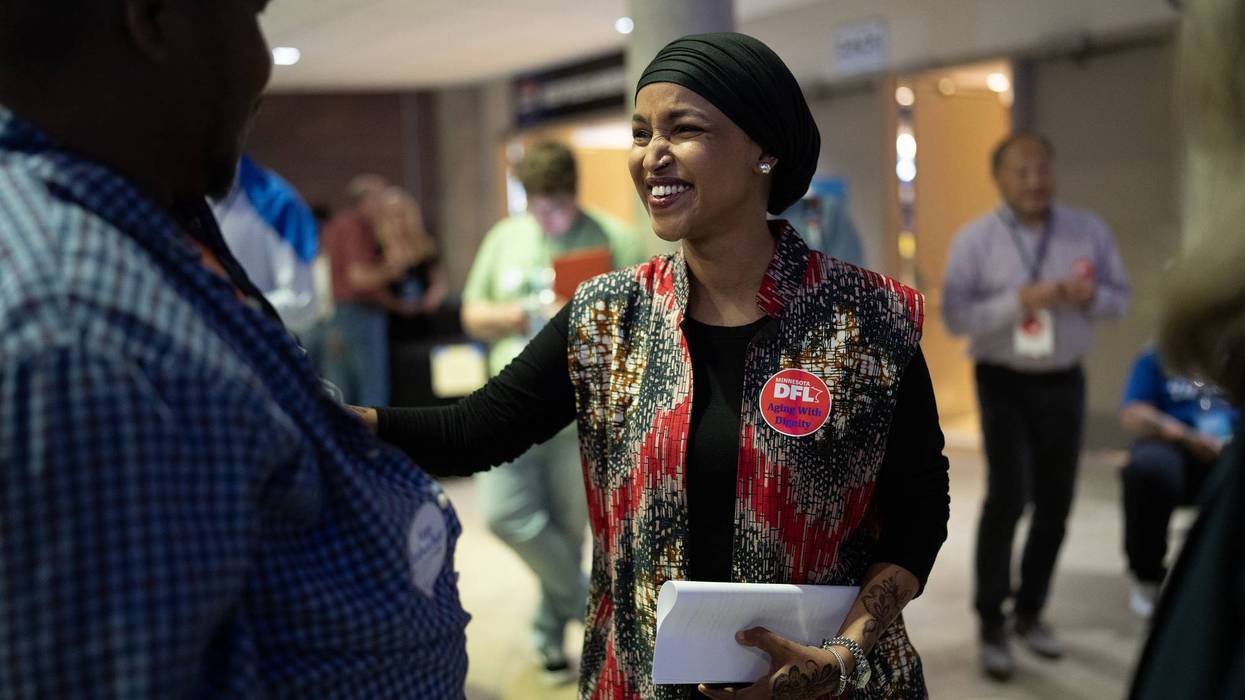
Responding to Trump's slur that Somali Americans are "all crooks," Omar said the president "uses fraud as a political cudgel while protecting his donor base and enriching himself."
US Rep. Ilhan Omar issued a blistering response to President Donald Trump's attacks on Minnesota and its Somali community on Tuesday with a Guardian opinion piece arguing that "there has never been a more brazenly corrupt president."
The Democratic Minneapolis congresswoman has weathered ceaseless personal insults from the president since first ascending to office in 2019 that have grown increasingly racist in his second term—threatening to strip her of her US citizenship and "throw her the hell out" of the country and referring to Somalis collectively as "garbage"and "very low-IQ people," who should all be deported despite mostly being legal US citizens.
"Any keen observer will recognize the pattern of inciting hostility against me and the Somali community whenever his own failures and corruption catches up to him," Omar said. "He routinely reaches for the same tired playbook of lies, racism, and deflection."
Trump called me “crooked as hell” while spreading lies about the fraud in Minnesota.He's not interested in fighting fraud. He's interested in using fraud as a political weapon while enriching himself and his allies.My op-ed in the @theguardian.com ⬇️
[image or embed]
— Ilhan Omar (@ilhanmn.bsky.social) June 2, 2026 at 11:38 AM
During a Cabinet meeting last week, Trump launched into yet another tirade: “The Somalians, what they’ve done to Minnesota, the Somalians, crooked as hell. Ilhan Omar, crooked as hell,” he said. “They’re all crooks, and we got them, we got them. Now we’re putting the clamps on."
Trump was referring to a series of fraud cases in the state, in which organizations—many of which were run by Somali Americans—were found to have diverted hundreds of millions of dollars in federal funds meant for food assistance, disability, and childcare, mostly in investigations that began during the Biden administration.
But as Omar wrote on Tuesday, Trump "uses fraud as a political cudgel while protecting his donor base and enriching himself."
"The truth is, Trump doesn’t care about addressing fraud," she said. "He has repeatedly pardoned and rewarded some of the most brazen financial criminals."
As Omar detailed:
He pardoned Philip Esformes, convicted in what his own Department of Justice described as the “largest healthcare fraud scheme ever charged.”
He granted clemency to Lawrence Duran after a $205 million fraud conviction. He commuted Jason Galanis’ sentence and pardoned Devon Archer, who were both tied to tens of millions in fraud, and also pardoned Joseph Schwartz for a $38 million fraud scheme, and reality stars Todd and Julie Chrisley for multimillion-dollar bank fraud. He’s now defrauding the American people further by creating a $1.8 billion slush fund of taxpayer dollars to compensate people he pardoned for beating cops and ransacking the US Capitol on January 6 after they pleaded guilty or were convicted of such crimes.
After losing a court case and facing bipartisan backlash in Congress, acting Attorney General Todd Blanche confirmed on Tuesday that the administration was backing off the $1.8 billion fund.
Omar acknowledged the fraud cases in Minnesota, such as the Feeding Our Future nonprofit scandal, in which 65 people connected to the scheme have been convicted of stealing money intended to feed children during the Covid-19 pandemic.
"We should all collectively care about the damage that these criminals have done to public faith in programs that save lives and feed children," Omar said. "But instead of addressing the fraud equally and without exception, Trump and his cronies have turned combating fraud into a partisan spectacle defined by a level of racist vitriol that just years ago would have shocked most Republicans, not to mention the American people at large."
"While Minnesota leaders were prosecuting thieves, Trump was letting them out of prison," she added. "He enriches himself, his family profits from crypto deals, and world leaders understand that the presidency is now for sale. His underhanded operation racks up billions for his family and friends while working Americans struggle to afford basic necessities."
The Trump administration has used fraud cases in Minnesota to inflict a sort of collective economic punishment on its poorest residents.
Using outlandish allegations that Somalis were looting tens of billions from Medicaid, the administration has frozen more than $350 million in federal Medicaid reimbursements owed to Minnesota and threatened to withhold more than $2 billion annually, which state officials have warned will destabilize benefits for the 1.2 million Minnesotans who rely on the program.
"The reality is that Trump and Republicans are not interested in combating fraud and corruption or having a real conversation to address it. They are interested in ransacking the public good for their own profit," Omar said. "They are interested in clicks, outrage, and theatrics in order to deflect from their own corruption. The American people deserve better than a president who uses the pretense of accountability to punish his opponents and reward his allies."

"The White House is a 24/7 grift machine and we should not stop being outraged about this," said Sen. Chris Murphy.
Less than a day after a $1.77 billion settlement announced in President Donald Trump's lawsuit against the Internal Revenue Service was denounced as "highway robbery" by one Democratic lawmaker, other members of Congress expressed disgust after it was reported that the taxpayer-funded deal had been updated by a top administration official to ensure the president and his family could potentially get away with defrauding the IRS in perpetuity.
A one-page document was posted on the US Department of Justice (DOJ) website early Tuesday morning, saying that under the settlement, the IRS is "forever barred and precluded" from prosecuting and pursuing any and all claims and other actions against Trump and his family members, regarding unpaid taxes.
The landmark judgement in a civil fraud case against Trump found that his two eldest son's were implicated in an extensive financial and tax fraud scheme along with the president.
The release specifically notes that it also applies to “tax returns filed before the effective date” of the settlement, which was Monday.
"The president is now exempt from our tax laws while everyone else has to obey them," said US Sen. Chris Murphy (D-Conn.). "Got it. It's just mind-blowing that is what's happening in America."
Politico reported on the document a day after 93 US House Democrats joined an amicus brief filed in Trump v. IRS, aiming to block the creation of a so-called "Anti-Weaponization Fund" as part of the deal for the president to drop his lawsuit against the tax agency, which he filed over a leak of his tax returns.
The "slush fund," as Rep. Jamie Raskin (D-Md.) called it, could be used to give monetary rewards to people convicted of felonies in connection with the January 6, 2021 attempted insurrection.
The one-page document that was attached to the settlement Tuesday was signed by acting Attorney General Todd Blanche.
US Rep. Pramila Jayapal (D-Wash.) called the preemptive and permanent blocking of any IRS enforcement against the Trump family "the height of corruption."

"Withholding reimbursements only further hurts patients, strains providers, and drives up costs," said one Democratic congresswoman. "We will fight this with everything we’ve got."
"Political retribution, plain and simple," was how US Sen. Alex Padilla described an announcement by Vice President JD Vance late Wednesday regarding the White House's decision to withhold $1.3 billion in Medicaid reimbursement payments to California.
Vance and Mehmet Oz, administrator of the Centers for Medicare and Medicaid Services, claimed the state's Medicaid records have generated "red flags" and demanded officials clarify $630 million in billing, $500 million that's been spent on home health services, and $200 million in what Oz called "questionable expenditures," which he claimed had been used to provide coverage for undocumented immigrants, who are not eligible for Medicaid.
The announcement came a month after Vance's federal anti-fraud task force suspended the licenses of nearly 450 hospice care facilities and 23 home health agencies in the Los Angeles area, accusing them of fraud.
Vance also warned that all 50 states could soon see federal funding for their Medicaid Fraud Control Units frozen if they fail to "aggressively prosecute Medicaid fraud."
"We can turn off other resources within their state Medicaid programs as well," said the vice president.
California Gov. Gavin Newsom, who has frequently sparred with the Trump administration, said Vance and Oz were "attacking programs that keep seniors and people with disabilities OUT of nursing homes," which are far more expensive to run than home healthcare agencies.
Newsom said the growth of the state's In-Home Supportive Services program has saved taxpayers "$107,000 per person" by reducing reliance on nursing homes.
"MAGA hates in-home support programs—which help people stay out of costly institutional settings like nursing homes and get the care they deserve, typically from loved ones," said Newsom.
Newsom also said the Trump administration had informed state officials that the deadline to review California's Medicaid records "before deciding whether to defer funding" would be later in the month.
Democratic members of Congress warned that their constituents rely heavily on Medicaid, with seven out of 10 of the congressional districts with the highest Medicaid enrollment located in California.
Rep. Sydney Kamlager-Dove (D-Calif.) said that 56% of her constituents rely on "this lifesaving program," and many have already been harmed by the Republican Party's slashing of Medicaid funding in the One Big Beautiful Bill Act last year.
"Withholding reimbursements only further hurts patients, strains providers, and drives up costs," said Kamlager-Dove. "We will fight this with everything we’ve got."
Rep. Jimmy Panetta (D-Calif.) said more than 120,000 people in his district depend on the federal healthcare program for low-income households and people with disabilities.
"This administration needs to stop playing politics with people’s health and lives," said Panetta. "When people commit fraud, they should be punished accordingly. However, this administration continues to punish California for political purposes, including penalizing innocent people by taking their healthcare away."
State Attorney General Rob Bonta noted that California has "not hesitated to challenge unlawful actions by the Trump administration," and suggested the state could file a legal challenge against the withholding of Medicaid funds.
He also accused the administration of targeting the heavily Democratic state "for political reasons."
The anti-fraud task force led by Vance has so far exclusively focused on rooting out alleged fraud in federal programs in blue states. The White House suspended $259 million in federal payments to Minnesota earlier this year after a scandal regarding the state's social services system.
"The Trump administration is attacking California over claims that they can't back up," said Padilla. "Let's be real, this isn't about fraud—it's about punishing a state that didn't vote for" President Donald Trump.
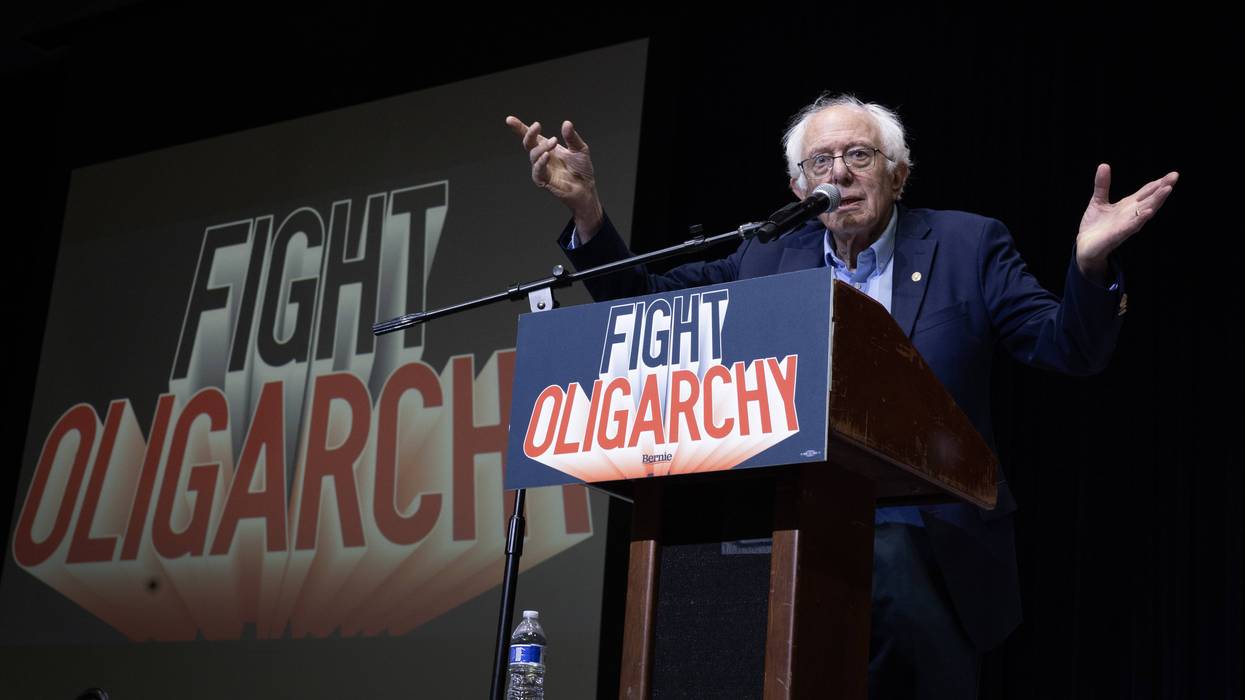
"The Trump family has made $4 billion off the presidency," the senator said.
Amid renewed scrutiny of self-dealing by President Donald Trump and his relatives ahead of this weekend's Mar-a-Lago gala for top investors in the $TRUMP meme coin—whose value has plummeted more than 90% from its high—Sen. Bernie Sanders on Thursday took aim at the First Family's corruption.
"The Trump family has made $4 billion off the presidency," Sanders (I-Vt.) said on X following reporting by New Yorker staff writer David Kirkpatrick and others detailing how Trump and relatives have profited from his position during his second term.
Sanders listed sources of Trump family presidential profiteering, including more than $3 billion from cryptocurrencies like $TRUMP and $MELANIA—the latter whose value has plunged by over 99%—Persian Gulf deals worth over $425 million, $150 million in the form of a luxury jumbo jet gifted by Qatar, and various business ventures and deals the senator slammed as part of an "unprecedented kleptocracy."
In addition to the two meme coins, many of those crypto gains are linked to ventures including American Bitcoin and World Liberty Financial—which has raised eyebrows for being co-founded by Trump’s sons, with disclosures showing 75% of its token sales going to a Trump-linked entity.
Democrats on the US House Oversight Committee have published their own running tally showing nearly $2.5 billion in "Trump family digital grift profits"—including more than $634 million from foreign sources—and $6 billion in "Trump family digital grift wealth."
"While Americans struggle to buy groceries and pay rent, Donald Trump is making his family richer through digital grift schemes—collecting profits through digital wallets and granting pardons to the highest bidders," the House Oversight Democrats said.
Sanders isn't the only US lawmaker to denounce what Sen. Elizabeth Warren (D-Mass.) last year called Trump's "superhighway of crypto corruption."
Also last year, Rep. Jamie Raskin (D-Md.), ranking member of the House Judiciary Committee, released a report detailing how "Trump and his family have transformed the presidency into a personal money-making operation, adding billions of dollars to his net worth through cryptocurrency schemes entangled with foreign governments, corporate allies, and criminal actors."
"President Trump and his family kept lining their pockets while he and his allies in Congress closed down the federal government—refusing to extend tax credits to make healthcare affordable for American families, putting continued food benefits for women and children in doubt, and placing active-duty military personnel in danger of missing their next paycheck," House Judiciary Democrats said.
Trump is the only president to ever be convicted of felony crimes. In 2024, while he was running for a second term, a New York jury found him guilty of 34 felony charges related to the falsification of business records regarding hush money payments to cover up sex scandals during the 2016 presidential election.
Last year, a New York appeals court tossed a $355 million civil fraud judgment—which increased to more than half a billion dollars with interest—against Trump and his two eldest sons in a separate case in which the trio exaggerated the wealth of their business organization. The ruling upheld the fraud finding and banned Trump and his sons from leading businesses in the state for 2-3 years.
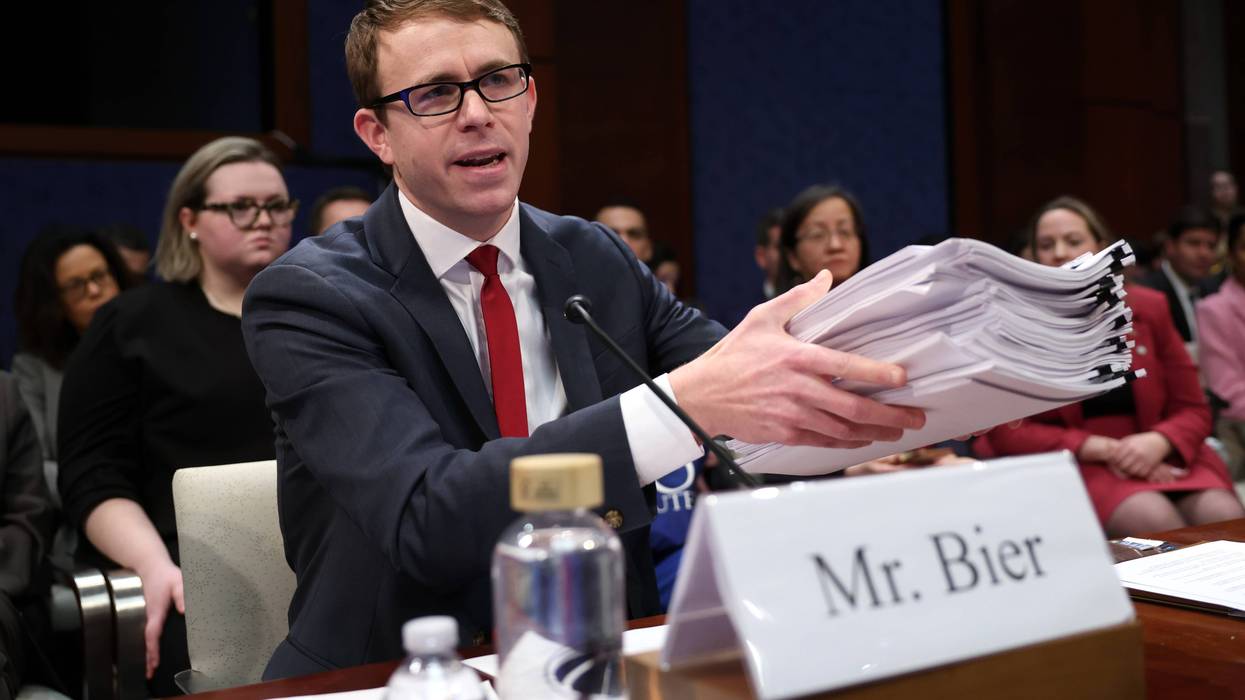
An immigration researcher at the Cato Institute found that the Trump administration is "raking in billions of dollars in immigration fees and not providing the adjudications that applicants are entitled to."
The US State Department under President Donald Trump has been accused of stealing more than a billion dollars from immigrants and sponsors in what experts are calling “the largest fraud in the history of the US immigration system.”
A report published last week by the Cato Institute, written by director of immigration studies David J. Bier, found that the State Department and Department of Homeland Security were receiving millions of applications from immigrants whom Trump has made ineligible for legal status and pocketing the fees without ever processing the requests.
"The US government collected over $1 billion in immigration fees then refused to process the applications," said Austin Kocher, a fellow at Immigration Lab and a professor at Newhouse and Syracuse University in a social media post breaking down the report on Monday. "No denials. No refunds. Just silence."
The report zeroes in on a series of policies signed by Trump and enacted by Secretary of State Marco Rubio and US Citizenship and Immigration Services (USCIS) head Joseph Edlow, which have collectively barred nationals from 92 countries from immigrating to the US.
One proclamation signed by Trump in December bans legal entry and most visas for the nationals of 40 nations—including Cuba, Venezuela, Nigeria, Iran, and Haiti—based on nationality. A memo sent by Edlow extended the freeze to many USCIS immigration-benefit applications for people from targeted countries already living in the US, including work authorization and permanent residency filings
Another State Department policy bans visa applications from immigrants in 75 countries from being processed indefinitely, purportedly based on data showing that residents of those countries use welfare at disproportionately high rates.
These policies block more than 320,000 people abroad from entering the US and potentially as many as 561,000 potential permanent residents when those already living in the US are considered.
Although people from these countries are categorically denied immigrant visas and most other visa types under a series of travel bans signed by Trump, the government is still collecting fees for visas, work permits, and green cards.
The report cited evidence that the department has directed consular officers that they "should not counsel applicants or advise them" that they are subject to the bans when they come in for their interviews, because it "could be seen as pre-adjudication."
Upon revealing this directive last month, immigration attorney Curtis Morrison described it as a way that "embassies scam visa applicants subject to the travel ban out of fees."
As Bier explained:
To immigrate to the United States or to obtain authorization to work or travel internationally, noncitizens must usually pay a fee to have their applications processed. USCIS’s immigration fee revenues were nearly $7 billion, and the Consular Affairs budget was about $6 billion.
The fees stack up. For instance, to sponsor a spouse, a US citizen must pay a $675 fee to USCIS to petition for their spouse to obtain lawful permanent residence. Then, the immigrant must pay $1,440 to adjust status from temporary to permanent residence. That application takes so long that people usually pay $560 for the spouse to receive an employment authorization document, so the total fees can add up to $2,675.
Bier estimated that more than 2 million applications were affected by the bans, with fees coming primarily from work permit filings and permanent residency or immigrant visa applications.
He explained that these fees are difficult to track precisely because the government does not publish detailed statistics on them. He was also forced to rely on out-of-date fee statistics from 2023-24 because the Trump administration "has simply stopped publishing most statistics."
That said, Bier noted that the numbers are most likely to “understate reality” because they include only those who likely had their requests processed in the past year, not those whose processing was delayed by backlogs.
Of the more than $1 billion in fees the Trump administration would have collected for services it never rendered, data from previous years suggested that about $543 million came from Cuban immigrants, who filed about 935,000 applications during the period under review.
The next highest were Venezuelans, who paid an estimated $138 million in fees. Iranians, Haitians, and Afghans were also among the nationalities with the highest numbers of unprocessed applications.
The Trump administration has used high-profile instances of fraud committed by members of immigrant groups, such as Somalis in Minneapolis, to cast aspersions upon entire nationalities and target them for immigration bans and attacks by federal law enforcement.
However, as Bier explained before the Senate Judiciary Committee last month, based on the findings of a Cato report, "immigrants aren't to blame" for most welfare fraud, accounting for just 5% of it, 31% less per capita than native-born US citizens.
He argued that the Department of Homeland Security "isn't anti-fraud" but instead "openly carrying out the largest fraud in the history of the US immigration system... raking in billions of dollars in immigration fees and not providing the adjudications that applicants are entitled to."
"DHS and State can deny anyone who fails to make their case. Instead, this administration is pocketing thousands of dollars from hardworking Americans and their relatives, including spouses and minor children of US citizens, and then not even looking at their applications," he said. "This is a scam. This is fraud."
"Most of the perpetrators are lodged within large corporations run by white executives with excellent and expensive legal representation," wrote one journalist.
US President Donald Trump has used unsubstantiated allegations of large-scale fraud in Minnesota's Somali community as a pretext to surge federal agents into the state—with deadly consequences—and cut off federal childcare funding.
But unlike the Somali community, which Trump has subjected to grotesque attacks that have left many fearing for their safety, Minnesota-based UnitedHealth Group (UHG) has not faced the president's public ire.
One of the nation's largest for-profit health insurance companies, UHG is the leading beneficiary of a long-running Medicare Advantage fraud scheme that could cost US taxpayers $1.2 trillion over the next decade—a sum that dwarfs even the White House's wildest claims about the costs of fraud allegedly committed by Somali-run daycares.
The $1.2 trillion estimate comes from a report published earlier this month by the Medicare Payment Advisory Commission (MedPAC), which found that federal overpayments to privately run, publicly funded Medicare Advantage plans will total around $76 billion this year in part due to a practice known as upcoding, whereby insurers present patients as sicker than they actually are to reap larger payments.
UnitedHealthcare, UHG's insurance division, is the leading Medicare Advantage provider in the United States. Stephen Hemsley, UnitedHealth Group's CEO, received a base salary of $1 million last year and a one-time equity award worth $60 million.
ICE/CBP swarms into Minnesota to crack down on government fraud. Somehow they sidestep the orders-of-magnitude higher government fraud by Minnesota-based UnitedHealth, who leads a Medicare Advantage fraud that government analyst MedPac estimates as costing America $76 billion/yr pic.twitter.com/dECnwgUCRV
— David Dayen (@ddayen) January 27, 2026
A Senate report released on January 12 found that UnitedHealth Group uses "aggressive strategies" to maximize patients' so-called "risk-adjustment scores" in an effort to receive larger Medicare Advantage payments from the federal government.
"UHG has turned risk adjustment into a major profit-centered strategy, which was not the original intent of the program," states the report, which was based on more than 50,000 pages of company documents obtained by the Senate Judiciary Committee.
The Senate report cited a 2024 Wall Street Journal investigation showing that "insurer-driven diagnoses by UnitedHealth for diseases that no doctor treated generated $8.7 billion in 2021 payments to the company... UnitedHealth’s net income that year was about $17 billion."
"A real crackdown on fraud would go after those big fish first."
While the US Justice Department—headed by former corporate lobbyist Pam Bondi—is currently investigating UnitedHealth Group over its Medicare billing practices, the Trump administration has enabled the conglomerate's continued expansion and abuses.
Last August, the DOJ settled a Biden-era legal challenge aimed at preventing UnitedHealth Group from absorbing yet another competitor. According to a tracker run by the American Economic Liberties Project, the corporation is still denying necessary care to patients, overbilling the federal government, and engaging in anticompetitive behavior on the Trump administration's watch.
Journalist Merrill Goozner wrote last week that "there is no doubt greedy operators ripped off Minnesota safety net programs," observing that "several of the nearly 100 people under investigation have already pleaded guilty."
"But if federal officials in Minnesota really want to go after industrial-scale fraud, they ought to step up their slow-motion investigation of UnitedHealth Group," Goozner wrote. "The nation’s tattered social safety net, under assault by the Trump administration and shrinking daily, remains prone to abuse by unscrupulous operators. Medicare and Medicaid are especially juicy targets. Most of the perpetrators are lodged within large corporations run by white executives with excellent and expensive legal representation."
"A real crackdown on fraud," he added, "would go after those big fish first."

"He’s politicizing the issue to defund programs that help Minnesotans," said the Democratic governor.
Minnesota Gov. Tim Walz on Tuesday accused US President Donald Trump and his administration of sensationalizing and exploiting a real problem—fraud in the state's social services system—to advance their broader agenda of gutting the safety net.
"This is Trump’s long game," Walz wrote on social media after the US Department of Health and Human Services announced it was suspending all federal childcare funds to Minnesota, alleging "blatant fraud that appears to be rampant."
Walz added that fraud is "a serious issue—but this has been [Trump's] plan all along."
"He’s politicizing the issue to defund programs that help Minnesotans," the governor wrote.
This is Trump’s long game.
We’ve spent years cracking down on fraudsters. It’s a serious issue - but this has been his plan all along.
He’s politicizing the issue to defund programs that help Minnesotans. https://t.co/7ByWjeXxu0
— Governor Tim Walz (@GovTimWalz) December 31, 2025
The right-wing media ecosystem and Republican politicians have fixated on fraud in Minnesota in recent weeks, using it to launch bigoted attacks on the state's Somali community and call for mass deportations of Somalis.
The issue exploded over the weekend after Nick Shirley, a right-wing influencer and YouTuber, released a video claiming to expose fraud in Minnesota day care centers. The video went viral and was shared by top Trump administration officials, including FBI Director Kash Patel and Vice President JD Vance. Kristi Noem, head of the US Department of Homeland Security, said in the wake of the video's publication that federal agents "are on the ground" in the state and "conducting a massive investigation."
Minnesota Public Radio reported that the state's House speaker, Rep. Lisa Demuth (R-13A), confirmed that her caucus directed Shirley to the day care sites that he visited.
"Those featured in his widely viewed video have been part of a state-administered childcare program using federal money, although some recently had operations or payments suspended," the outlet noted.
The Guardian noted that "despite claims by conservatives on social media that the allegations of fraud were ignored until now, there have been years of fraud investigations that began with the indictments in 2022 of 47 defendants for their alleged roles in a $250 million scheme that exploited a federally funded child nutrition program during the Covid-19 pandemic."
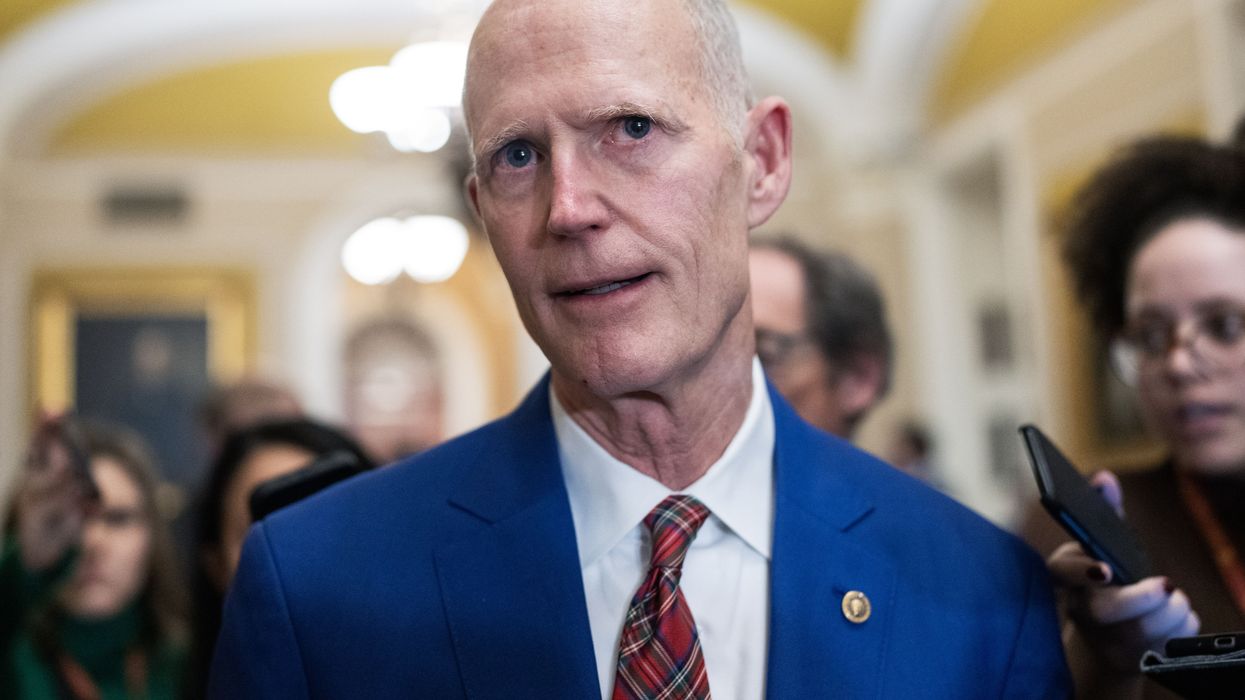
The hospital CEO turned US senator is a fraud superstar at working the system.
When Rick Scott came to town, every one of us who worked at Columbia Hospital Corporation’s Victoria Hospital in Miami, Florida stood at attention. The young, dashing CEO had come to make sure staff bloat was reduced and profits were maximized. After leaving my position in Denver and moving my whole family to Florida just five months prior to being the hospital’s billing manager, I was just learning how to do my job within all the rules and regulations. And Rick Scott in our facility meant I needed to at least be pleasant to the big boss. And, indeed, I was.
As the day of Scott’s visit wore on, staff members who were about to be laid off just six weeks before the holiday season in 1989 were called to the admin offices via the hospital’s public announcement system. The extension named “3200” was the call to ride the elevator up several floors to be dismissed by the hospital CEO and his CFO. The day never left my memory as one during which good, kind, and dedicated colleagues, including the boss who brought me to the position, were riffed. On her way out the door, she reminded me to stay alert and be careful. I didn’t know what to do. I cried a lot that night at home, yet I didn’t know what was still to come in Scott’s new vision of profitability.
Within weeks, I noticed a change in our workflow. I was pushed hard to generate collection letters for all the Medicare patients who had been admitted to Columbia’s Victoria Hospital who had not paid their Medicare deductibles before discharge. But then I was instructed to put those generated collection letters in the patient files but never to mail them to the patients. That, I was told, would create a paper trail for due diligence in collection efforts as required before the hospital could submit to have those unpaid (and now unbilled) deductibles reimbursed by the federal Medicare program.
Filing letters in patient files without sending them out seemed wrong and it seemed fraudulent to me, and since I was new to it all I thought maybe if this was standard practice for the hospital, it could have been some loophole I didn’t know about. I dove into the Medicare rules, and I found this troubling line, “If you knew or should have known,” a certain action was fraud, you are complicit and could be charged with a crime. When I questioned the CFO about it, he snapped at me and said that if I wouldn’t do my job, I might need to rethink working there.
Universal coverage via improved and expanded Medicare for all of us would end Rick Scott’s grift.
In mid-December 1989, with my husband suffering heart problems and desperately in need of insurance coverage, I loaded all my personal items in a box and left the hospital. I quit my job. I wrote a letter to my former US Sen. Tim Wirth of Colorado about the situation, and I never heard directly back about what happened to that letter as I asked him to be cautious about disclosing my name or location. I was already terrified of these people. They collected hundreds of thousands of dollars quarterly from the scheme I was asked to be part of, and Rick Scott’s Columbia Hospital Corporation was building a portfolio that included an awful lot of hospitals. Scott was a rising star, after all, and making the first few hospitals he owned profitable was critical to keep that star on its trajectory.
After the Department of Justice started investigating Columbia’s hospitals in the mid to late 1990s, the hospital industry giant paid a record $1.7 billion settlement around defrauding the US government programs, Medicare, Medicaid, and TriCare. It turns out the schemes to enrich profits were widespread and involved much more than patient collection letters. Yet, even after Rick Scott was forced to resign and take responsibility for the fraud committed, he took a severance package of $10 million and stock options totaling nearly $300 million. Wow, that was a generous, golden, gilded, and glorious send off, eh? Up next for Scott?
To see this man ascend the political ranks to be thought of as an appropriate US Senate architect of a new health industry scheme to replace the Affordable Care Act-Obamacare subsidies is a tragic turn of events. We will not get anything close to a humane system under a Rick Scott plan.
The health industry is likely celebrating a return to laissez-faire, anything-goes-if-it’s-profitable model Rick Scott was an expert at designing and operating for Columbia Hospital Corporation. Patients will be the revenue stream upon which his fortune grows larger, and until we wake up and finally move to a model that puts patient health and well-being at the forefront of the design, we will see the health industry enrich itself beyond its wildest dreams while the architect of Medicare and Medicaid fraud, Sen. Rick Scott, takes yet another victory lap on taxpayer money. He and his health industry allies really love being on the dole, despite any claims to the contrary. They just call it profit.
Universal coverage via improved and expanded Medicare for all of us would end Rick Scott’s grift. Perhaps now the truth becomes even more clear. Ending the stranglehold of hospital corporations like the behemoth HCA Healthcare that also includes all of the hospitals previously owned by Columbia Hospital Corporation. On the corporate website, HCA Healthcare writes, “HCA Healthcare, Inc. owns and operates 186 hospitals and approximately 2,400 ambulatory sites of care, including surgery centers, free standing emergency rooms, urgent care centers, and physician clinics in 20 states and the United Kingdom.”
The profits are dear—not the patients, my friends.

"Why is the Trump administration so hellbent on people going hungry?” asked New York Gov. Kathy Hochul, whose state has nearly 3 million food stamp recipients.
The Trump administration is threatening to strip away funds used to provide food assistance to poor Americans in Democrat-led states beginning next week, unless they provide information identifying who receives benefits.
At a Cabinet meeting on Tuesday, US Secretary of Agriculture Brooke Rollins said states would be denied the ability to access billions of dollars that Congress has appropriated to administer the Supplemental Nutrition Assistance Program (SNAP), unless they provide the federal government with personal information—including names, Social Security numbers, addresses, birth dates, and immigration status—of aid recipients.
SNAP provides Americans with incomes below 130% of the federal poverty line with roughly $6 per day on average to pay for food. Roughly 1 in 8 Americans—over 42 million—rely on the program. Rollins originally ordered states to provide this information to the government in May in what she said was an effort to verify the eligibility of those receiving benefits.
“As of next week, we have begun and will begin to stop moving federal funds into those states until they comply and they tell us and allow us to partner with them to root out this fraud and to protect the American taxpayer,” Rollins said Tuesday.
As of Tuesday, 29 states had provided the information, but many Democratic ones, including New York and California, had not. Rollins claimed that those states were choosing to "protect illegals, criminals, and bad actors over the American taxpayer.”
While the benefits paid to individuals would not be cut, states that don't comply stand to lose millions of dollars that they use to administer the program, which could delay benefits and force them to push some recipients off the program.
In its efforts to enact sweeping cuts to social safety net programs like SNAP, Medicaid, and Affordable Care Act insurance subsidies, the Trump administration has often fallen back on false claims that the services are being abused by ineligible people, including undocumented immigrants.
"Undocumented immigrants are not eligible to receive federal benefits under [SNAP]," explained Melissa Cruz of the American Immigration Council in November. "However, SNAP benefits are provided to households rather than individuals. If, for example, the head of a household is undocumented, they may still apply for SNAP benefits for their U.S. citizen children. But benefits are calculated based on the number of eligible people in the household, so the assistance would only cover the US citizen children—not the entire household.”
Rollins has elsewhere claimed that 186,000 deceased individuals receive benefits, while 500,000 individuals receive duplicate benefits, citing it as evidence of fraud. But as the current US Department of Agriculture website explains, these are the result of administrative efforts—such as states being slow to update eligibility rolls when recipients die or move to a new state. The USDA says that over the past 15 years, it has reduced the prevalence of illegal benefit trafficking in SNAP from 4% to 1%.
The USDA's order comes on the heels of the largest cut to SNAP in the program's history. The One Big Beautiful Bill Act, signed by Trump in July, cut funding to the program by roughly 20%.
Like with other programs, Rollins suggested on Tuesday that the goal of USDA's order was not simply to root out "fraud," but to further slash Americans' benefits: “As [former President] Joe Biden was working to buy an election a year ago, he increased food stamp program funding by 40%, so now... we continue to roll that back,” she said.
Rollins' 40% claim is also an exaggeration; according to an estimate by the Cato Institute last month, the spending increase was actually about 21%.
Like President Donald Trump's previous efforts to deny SNAP benefits to states during this fall's government shutdown, the USDA's order has run into legal hurdles.
After 22 states sued, a federal judge in San Francisco, Maxine Chesney, issued a preliminary injunction in October blocking the administration from demanding the data.
Chesney found that these actions likely violated the SNAP Act, which says that states are only allowed to release data related to administering the program. She also found that states would likely succeed in their argument that the administration might illegally share the data with other agencies, like the Department of Homeland Security, to aid mass deportation efforts.
Gina Plata-Nino, the SNAP director at the nonprofit Food Research and Action Center, told the Washington Post that the USDA's demands for this data were likely illegal.
“The federal law restricts USDA access to this,” Plata-Nino said. “The agency has always relied on anonymized data or small samples to perform oversight… Them saying, ‘We’re going to go ahead and remove this funding,’ it’s just so unprecedented.”
The Democrats on the House Agriculture Committee accused Trump and Rollins of "illegally threatening to withhold federal dollars."
"SNAP has one of the lowest fraud rates of any government program, but Trump continues to weaponize hunger," they said.
New York Gov. Kathy Hochul (D), whose state had nearly 3 million food stamp recipients as of 2024, asked why Trump was again threatening to strip the state of SNAP funding after his previous attack on the program during the shutdown.
"Genuine question: Why is the Trump administration so hellbent on people going hungry?” Hochul asked.
Katie Bergh, a senior policy analyst who focuses on SNAP and other antipoverty programs at the Center on Budget and Policy Priorities, noted that while cutting funds, Trump has also scrapped the nation's most comprehensive food insecurity survey, the Household Food Security Report, which would measure the effects of those cuts on Americans.
“The Trump administration’s approach,” Bergh said, “has been enacting the deepest cuts to food assistance in history, needlessly disrupting SNAP benefits during the government shutdown, and terminating the most reliable measure of food insecurity to hide the consequences of those decisions.”