SUBSCRIBE TO OUR FREE NEWSLETTER
Daily news & progressive opinion—funded by the people, not the corporations—delivered straight to your inbox.
5
#000000
#FFFFFF
To donate by check, phone, or other method, see our More Ways to Give page.
Daily news & progressive opinion—funded by the people, not the corporations—delivered straight to your inbox.
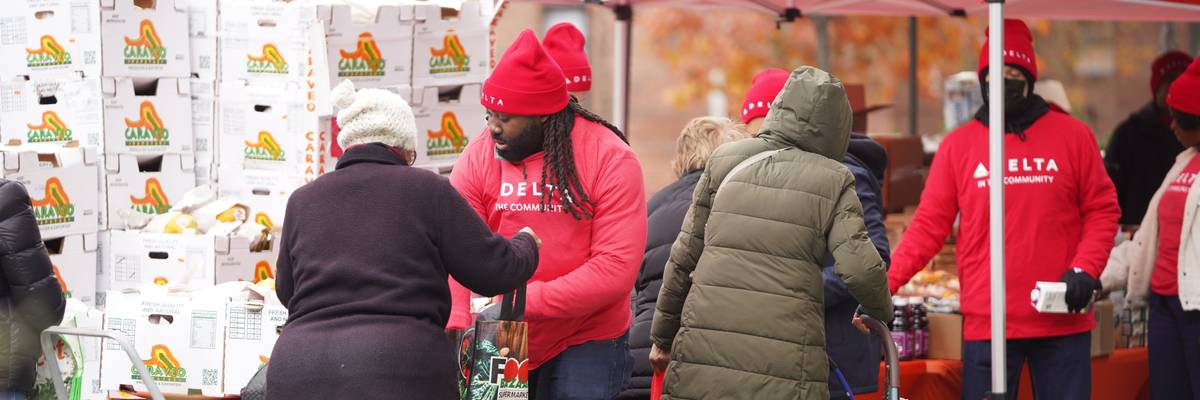
People get free food items at a distribution station in New York City, on November 12, 2025.
"Why is the Trump administration so hellbent on people going hungry?” asked New York Gov. Kathy Hochul, whose state has nearly 3 million food stamp recipients.
The Trump administration is threatening to strip away funds used to provide food assistance to poor Americans in Democrat-led states beginning next week, unless they provide information identifying who receives benefits.
At a Cabinet meeting on Tuesday, US Secretary of Agriculture Brooke Rollins said states would be denied the ability to access billions of dollars that Congress has appropriated to administer the Supplemental Nutrition Assistance Program (SNAP), unless they provide the federal government with personal information—including names, Social Security numbers, addresses, birth dates, and immigration status—of aid recipients.
SNAP provides Americans with incomes below 130% of the federal poverty line with roughly $6 per day on average to pay for food. Roughly 1 in 8 Americans—over 42 million—rely on the program. Rollins originally ordered states to provide this information to the government in May in what she said was an effort to verify the eligibility of those receiving benefits.
“As of next week, we have begun and will begin to stop moving federal funds into those states until they comply and they tell us and allow us to partner with them to root out this fraud and to protect the American taxpayer,” Rollins said Tuesday.
As of Tuesday, 29 states had provided the information, but many Democratic ones, including New York and California, had not. Rollins claimed that those states were choosing to "protect illegals, criminals, and bad actors over the American taxpayer.”
While the benefits paid to individuals would not be cut, states that don't comply stand to lose millions of dollars that they use to administer the program, which could delay benefits and force them to push some recipients off the program.
In its efforts to enact sweeping cuts to social safety net programs like SNAP, Medicaid, and Affordable Care Act insurance subsidies, the Trump administration has often fallen back on false claims that the services are being abused by ineligible people, including undocumented immigrants.
"Undocumented immigrants are not eligible to receive federal benefits under [SNAP]," explained Melissa Cruz of the American Immigration Council in November. "However, SNAP benefits are provided to households rather than individuals. If, for example, the head of a household is undocumented, they may still apply for SNAP benefits for their U.S. citizen children. But benefits are calculated based on the number of eligible people in the household, so the assistance would only cover the US citizen children—not the entire household.”
Rollins has elsewhere claimed that 186,000 deceased individuals receive benefits, while 500,000 individuals receive duplicate benefits, citing it as evidence of fraud. But as the current US Department of Agriculture website explains, these are the result of administrative efforts—such as states being slow to update eligibility rolls when recipients die or move to a new state. The USDA says that over the past 15 years, it has reduced the prevalence of illegal benefit trafficking in SNAP from 4% to 1%.
The USDA's order comes on the heels of the largest cut to SNAP in the program's history. The One Big Beautiful Bill Act, signed by Trump in July, cut funding to the program by roughly 20%.
Like with other programs, Rollins suggested on Tuesday that the goal of USDA's order was not simply to root out "fraud," but to further slash Americans' benefits: “As [former President] Joe Biden was working to buy an election a year ago, he increased food stamp program funding by 40%, so now... we continue to roll that back,” she said.
Rollins' 40% claim is also an exaggeration; according to an estimate by the Cato Institute last month, the spending increase was actually about 21%.
Like President Donald Trump's previous efforts to deny SNAP benefits to states during this fall's government shutdown, the USDA's order has run into legal hurdles.
After 22 states sued, a federal judge in San Francisco, Maxine Chesney, issued a preliminary injunction in October blocking the administration from demanding the data.
Chesney found that these actions likely violated the SNAP Act, which says that states are only allowed to release data related to administering the program. She also found that states would likely succeed in their argument that the administration might illegally share the data with other agencies, like the Department of Homeland Security, to aid mass deportation efforts.
Gina Plata-Nino, the SNAP director at the nonprofit Food Research and Action Center, told the Washington Post that the USDA's demands for this data were likely illegal.
“The federal law restricts USDA access to this,” Plata-Nino said. “The agency has always relied on anonymized data or small samples to perform oversight… Them saying, ‘We’re going to go ahead and remove this funding,’ it’s just so unprecedented.”
The Democrats on the House Agriculture Committee accused Trump and Rollins of "illegally threatening to withhold federal dollars."
"SNAP has one of the lowest fraud rates of any government program, but Trump continues to weaponize hunger," they said.
New York Gov. Kathy Hochul (D), whose state had nearly 3 million food stamp recipients as of 2024, asked why Trump was again threatening to strip the state of SNAP funding after his previous attack on the program during the shutdown.
"Genuine question: Why is the Trump administration so hellbent on people going hungry?” Hochul asked.
Katie Bergh, a senior policy analyst who focuses on SNAP and other antipoverty programs at the Center on Budget and Policy Priorities, noted that while cutting funds, Trump has also scrapped the nation's most comprehensive food insecurity survey, the Household Food Security Report, which would measure the effects of those cuts on Americans.
“The Trump administration’s approach,” Bergh said, “has been enacting the deepest cuts to food assistance in history, needlessly disrupting SNAP benefits during the government shutdown, and terminating the most reliable measure of food insecurity to hide the consequences of those decisions.”
Dear Common Dreams reader, It’s been nearly 30 years since I co-founded Common Dreams with my late wife, Lina Newhouser. We had the radical notion that journalism should serve the public good, not corporate profits. It was clear to us from the outset what it would take to build such a project. No paid advertisements. No corporate sponsors. No millionaire publisher telling us what to think or do. Many people said we wouldn't last a year, but we proved those doubters wrong. Together with a tremendous team of journalists and dedicated staff, we built an independent media outlet free from the constraints of profits and corporate control. Our mission has always been simple: To inform. To inspire. To ignite change for the common good. Building Common Dreams was not easy. Our survival was never guaranteed. When you take on the most powerful forces—Wall Street greed, fossil fuel industry destruction, Big Tech lobbyists, and uber-rich oligarchs who have spent billions upon billions rigging the economy and democracy in their favor—the only bulwark you have is supporters who believe in your work. But here’s the urgent message from me today. It's never been this bad out there. And it's never been this hard to keep us going. At the very moment Common Dreams is most needed, the threats we face are intensifying. We need your support now more than ever. We don't accept corporate advertising and never will. We don't have a paywall because we don't think people should be blocked from critical news based on their ability to pay. Everything we do is funded by the donations of readers like you. When everyone does the little they can afford, we are strong. But if that support retreats or dries up, so do we. Will you donate now to make sure Common Dreams not only survives but thrives? —Craig Brown, Co-founder |
The Trump administration is threatening to strip away funds used to provide food assistance to poor Americans in Democrat-led states beginning next week, unless they provide information identifying who receives benefits.
At a Cabinet meeting on Tuesday, US Secretary of Agriculture Brooke Rollins said states would be denied the ability to access billions of dollars that Congress has appropriated to administer the Supplemental Nutrition Assistance Program (SNAP), unless they provide the federal government with personal information—including names, Social Security numbers, addresses, birth dates, and immigration status—of aid recipients.
SNAP provides Americans with incomes below 130% of the federal poverty line with roughly $6 per day on average to pay for food. Roughly 1 in 8 Americans—over 42 million—rely on the program. Rollins originally ordered states to provide this information to the government in May in what she said was an effort to verify the eligibility of those receiving benefits.
“As of next week, we have begun and will begin to stop moving federal funds into those states until they comply and they tell us and allow us to partner with them to root out this fraud and to protect the American taxpayer,” Rollins said Tuesday.
As of Tuesday, 29 states had provided the information, but many Democratic ones, including New York and California, had not. Rollins claimed that those states were choosing to "protect illegals, criminals, and bad actors over the American taxpayer.”
While the benefits paid to individuals would not be cut, states that don't comply stand to lose millions of dollars that they use to administer the program, which could delay benefits and force them to push some recipients off the program.
In its efforts to enact sweeping cuts to social safety net programs like SNAP, Medicaid, and Affordable Care Act insurance subsidies, the Trump administration has often fallen back on false claims that the services are being abused by ineligible people, including undocumented immigrants.
"Undocumented immigrants are not eligible to receive federal benefits under [SNAP]," explained Melissa Cruz of the American Immigration Council in November. "However, SNAP benefits are provided to households rather than individuals. If, for example, the head of a household is undocumented, they may still apply for SNAP benefits for their U.S. citizen children. But benefits are calculated based on the number of eligible people in the household, so the assistance would only cover the US citizen children—not the entire household.”
Rollins has elsewhere claimed that 186,000 deceased individuals receive benefits, while 500,000 individuals receive duplicate benefits, citing it as evidence of fraud. But as the current US Department of Agriculture website explains, these are the result of administrative efforts—such as states being slow to update eligibility rolls when recipients die or move to a new state. The USDA says that over the past 15 years, it has reduced the prevalence of illegal benefit trafficking in SNAP from 4% to 1%.
The USDA's order comes on the heels of the largest cut to SNAP in the program's history. The One Big Beautiful Bill Act, signed by Trump in July, cut funding to the program by roughly 20%.
Like with other programs, Rollins suggested on Tuesday that the goal of USDA's order was not simply to root out "fraud," but to further slash Americans' benefits: “As [former President] Joe Biden was working to buy an election a year ago, he increased food stamp program funding by 40%, so now... we continue to roll that back,” she said.
Rollins' 40% claim is also an exaggeration; according to an estimate by the Cato Institute last month, the spending increase was actually about 21%.
Like President Donald Trump's previous efforts to deny SNAP benefits to states during this fall's government shutdown, the USDA's order has run into legal hurdles.
After 22 states sued, a federal judge in San Francisco, Maxine Chesney, issued a preliminary injunction in October blocking the administration from demanding the data.
Chesney found that these actions likely violated the SNAP Act, which says that states are only allowed to release data related to administering the program. She also found that states would likely succeed in their argument that the administration might illegally share the data with other agencies, like the Department of Homeland Security, to aid mass deportation efforts.
Gina Plata-Nino, the SNAP director at the nonprofit Food Research and Action Center, told the Washington Post that the USDA's demands for this data were likely illegal.
“The federal law restricts USDA access to this,” Plata-Nino said. “The agency has always relied on anonymized data or small samples to perform oversight… Them saying, ‘We’re going to go ahead and remove this funding,’ it’s just so unprecedented.”
The Democrats on the House Agriculture Committee accused Trump and Rollins of "illegally threatening to withhold federal dollars."
"SNAP has one of the lowest fraud rates of any government program, but Trump continues to weaponize hunger," they said.
New York Gov. Kathy Hochul (D), whose state had nearly 3 million food stamp recipients as of 2024, asked why Trump was again threatening to strip the state of SNAP funding after his previous attack on the program during the shutdown.
"Genuine question: Why is the Trump administration so hellbent on people going hungry?” Hochul asked.
Katie Bergh, a senior policy analyst who focuses on SNAP and other antipoverty programs at the Center on Budget and Policy Priorities, noted that while cutting funds, Trump has also scrapped the nation's most comprehensive food insecurity survey, the Household Food Security Report, which would measure the effects of those cuts on Americans.
“The Trump administration’s approach,” Bergh said, “has been enacting the deepest cuts to food assistance in history, needlessly disrupting SNAP benefits during the government shutdown, and terminating the most reliable measure of food insecurity to hide the consequences of those decisions.”
The Trump administration is threatening to strip away funds used to provide food assistance to poor Americans in Democrat-led states beginning next week, unless they provide information identifying who receives benefits.
At a Cabinet meeting on Tuesday, US Secretary of Agriculture Brooke Rollins said states would be denied the ability to access billions of dollars that Congress has appropriated to administer the Supplemental Nutrition Assistance Program (SNAP), unless they provide the federal government with personal information—including names, Social Security numbers, addresses, birth dates, and immigration status—of aid recipients.
SNAP provides Americans with incomes below 130% of the federal poverty line with roughly $6 per day on average to pay for food. Roughly 1 in 8 Americans—over 42 million—rely on the program. Rollins originally ordered states to provide this information to the government in May in what she said was an effort to verify the eligibility of those receiving benefits.
“As of next week, we have begun and will begin to stop moving federal funds into those states until they comply and they tell us and allow us to partner with them to root out this fraud and to protect the American taxpayer,” Rollins said Tuesday.
As of Tuesday, 29 states had provided the information, but many Democratic ones, including New York and California, had not. Rollins claimed that those states were choosing to "protect illegals, criminals, and bad actors over the American taxpayer.”
While the benefits paid to individuals would not be cut, states that don't comply stand to lose millions of dollars that they use to administer the program, which could delay benefits and force them to push some recipients off the program.
In its efforts to enact sweeping cuts to social safety net programs like SNAP, Medicaid, and Affordable Care Act insurance subsidies, the Trump administration has often fallen back on false claims that the services are being abused by ineligible people, including undocumented immigrants.
"Undocumented immigrants are not eligible to receive federal benefits under [SNAP]," explained Melissa Cruz of the American Immigration Council in November. "However, SNAP benefits are provided to households rather than individuals. If, for example, the head of a household is undocumented, they may still apply for SNAP benefits for their U.S. citizen children. But benefits are calculated based on the number of eligible people in the household, so the assistance would only cover the US citizen children—not the entire household.”
Rollins has elsewhere claimed that 186,000 deceased individuals receive benefits, while 500,000 individuals receive duplicate benefits, citing it as evidence of fraud. But as the current US Department of Agriculture website explains, these are the result of administrative efforts—such as states being slow to update eligibility rolls when recipients die or move to a new state. The USDA says that over the past 15 years, it has reduced the prevalence of illegal benefit trafficking in SNAP from 4% to 1%.
The USDA's order comes on the heels of the largest cut to SNAP in the program's history. The One Big Beautiful Bill Act, signed by Trump in July, cut funding to the program by roughly 20%.
Like with other programs, Rollins suggested on Tuesday that the goal of USDA's order was not simply to root out "fraud," but to further slash Americans' benefits: “As [former President] Joe Biden was working to buy an election a year ago, he increased food stamp program funding by 40%, so now... we continue to roll that back,” she said.
Rollins' 40% claim is also an exaggeration; according to an estimate by the Cato Institute last month, the spending increase was actually about 21%.
Like President Donald Trump's previous efforts to deny SNAP benefits to states during this fall's government shutdown, the USDA's order has run into legal hurdles.
After 22 states sued, a federal judge in San Francisco, Maxine Chesney, issued a preliminary injunction in October blocking the administration from demanding the data.
Chesney found that these actions likely violated the SNAP Act, which says that states are only allowed to release data related to administering the program. She also found that states would likely succeed in their argument that the administration might illegally share the data with other agencies, like the Department of Homeland Security, to aid mass deportation efforts.
Gina Plata-Nino, the SNAP director at the nonprofit Food Research and Action Center, told the Washington Post that the USDA's demands for this data were likely illegal.
“The federal law restricts USDA access to this,” Plata-Nino said. “The agency has always relied on anonymized data or small samples to perform oversight… Them saying, ‘We’re going to go ahead and remove this funding,’ it’s just so unprecedented.”
The Democrats on the House Agriculture Committee accused Trump and Rollins of "illegally threatening to withhold federal dollars."
"SNAP has one of the lowest fraud rates of any government program, but Trump continues to weaponize hunger," they said.
New York Gov. Kathy Hochul (D), whose state had nearly 3 million food stamp recipients as of 2024, asked why Trump was again threatening to strip the state of SNAP funding after his previous attack on the program during the shutdown.
"Genuine question: Why is the Trump administration so hellbent on people going hungry?” Hochul asked.
Katie Bergh, a senior policy analyst who focuses on SNAP and other antipoverty programs at the Center on Budget and Policy Priorities, noted that while cutting funds, Trump has also scrapped the nation's most comprehensive food insecurity survey, the Household Food Security Report, which would measure the effects of those cuts on Americans.
“The Trump administration’s approach,” Bergh said, “has been enacting the deepest cuts to food assistance in history, needlessly disrupting SNAP benefits during the government shutdown, and terminating the most reliable measure of food insecurity to hide the consequences of those decisions.”