

SUBSCRIBE TO OUR FREE NEWSLETTER
Daily news & progressive opinion—funded by the people, not the corporations—delivered straight to your inbox.
5
#000000
#FFFFFF
To donate by check, phone, or other method, see our More Ways to Give page.
Daily news & progressive opinion—funded by the people, not the corporations—delivered straight to your inbox.

"We must continue utilizing Flock technologies so that we can follow and surveil the rebel scum as they move from playground to playground, from playground to pool, from pool to gymnasium."
Residents of San Diego are up in arms about Flock cameras. But for those seeking to keep tabs on "rebel scum," the omnipotent surveillance technology has its uses.
That's according to one Darth Vader, who took the podium during the public comment period at a Public Safety and Livable Neighborhoods Committee Meeting in the California city on Wednesday night to sing, or more accurately, bellow his praises for the company, whose automatic license-plate reading (ALPR) cameras are fast being installed around the nation.
"The emperor is a fan of Flock, and we must continue utilizing Flock technologies so that we can follow and surveil the rebel scum as they move from playground to playground, from playground to pool, from pool to gymnasium," the person dressed as the infamous Star Wars villain said.
"Because we all know that the Flock cameras are not only following the license [plates]; they are following children. They are following children in parks and gymnasiums, and we need this," the sith lord continued. "I need this so I can stalk my ex-girlfriend."
There are more than 550 Flock cameras installed across the city of San Diego, according to a public database by the activist group DeFlock.
And while the person who embodied the dark lord has not yet been identified, the satirical performance gave voice to some of the well-documented ways that the technology has been used to create a nationwide panopticon that enables widespread warrantless spying.
One database published earlier this month by the Institute for Justice, a libertarian nonprofit law firm, found over 100 documented cases of police using the technology for “romantic stalking, wrongful stops and detentions, non-law enforcement use, and other types of misconduct.”
Vader was also not exaggerating about the use of Flock cameras to spy on children. As the Electronic Frontier Foundation (EFF), an internet-focused civil liberties group, found, some school districts have enlisted cops to track families in order to root out "residency fraud" and prove that they live in the district.
"A search of ALPR data will show a lot more than whether a family lives within the right zone," wrote Dave Maass, EFF’s director of investigations, and Rindala Alajaji, a legislative activist with the group. "Every time a plate is searched, it can reveal personal information about a family: when they go to the doctor, when they go to worship, when they go out at night, and where they travel on vacation. None of that is the school district's business, and these searches are a huge invasion of privacy."
“Transforming an exceptionally dangerous mass surveillance system into one that is fully protective of civil rights and civil liberties is a difficult, if not impossible task.”
The ACLU on Thursday largely dismissed new privacy measures announced by surveillance tech company Flock Safety, arguing the changes do little to address mounting concerns about the company’s sprawling automated license plate reader network and abuses of its technology by law enforcement agencies and other malicious actors.
Flock on Thursday unveiled new guardrails for its law enforcement customers, including a reduction in default license plate data retention from 30 days to seven, mandatory auditing tools designed to flag suspicious searches, and requirements that officers associate searches with case numbers.
The ACLU said the changes "seem to be a thinly veiled PR attempt to counter communities’ genuine privacy concerns with its mass surveillance system with largely hollow security promises, rather than an earnest effort to address them."
ACLU senior policy counsel Chad Marlow asserted that “transforming an exceptionally dangerous mass surveillance system into one that is fully protective of civil rights and civil liberties is a difficult, if not impossible task."
"That is even more the case with a company like Flock, whose nearly $1 billion in venture capitalist funding has locked it into an operational model that seeks to trade our privacy for massive profits," he continued. “Given that Flock’s latest announcement still appears more focused on addressing a PR problem than the significant privacy and other harms its products create, we will continue to analyze the company’s proposals fairly and honestly."
Flock Safety's new guardrails come amid growing nationwide backlash against automated license plate readers (ALPRs). As more and more instances of alleged police abuse emerge—including use of Flock cameras to stalk exes, track abortion patients, target undocumented immigrants, and spy on protesters—an increasing number of law enforcement agencies are canceling or not renewing contracts with the company.
"Abuse of Flock technology, at any level, is unacceptable," Flock Safety said in its statement Thursday. "We have strengthened safeguards over the past nine years, from basic audit logs to proactive monitoring. Sixteen weeks ago, we introduced audit assistance, which detects abnormal activity and flags it for administrator review. In recent weeks, those reviews have been associated with arrests of several law enforcement officers who allegedly abused the system."
"We will now require all law enforcement customers to adopt this feature by the end of this year," the company continued. "In addition, we will institute proactive lockout. When a user’s activity meets defined criteria for abnormal behavior, Flock will automatically suspend access pending administrator review. The goal is to intervene before misuse becomes recurring or widespread."
"In July 2025, we introduced an optional case code requirement for searches," Flock noted. "Results from participating agencies have been promising, so we will now require case codes for all law enforcement searches by the end of the year. Agencies may bypass the requirement in emergencies, but every exigent search will be flagged for administrator review."
"We are not perfect," the firm added, "so we will keep listening, improving, and building a better standard for public safety technology together."
However, the ACLU analyzed Flock's announced changes and found that "the devil will be in the details":
For example, an exception to the data retention policy is something called evidence mode, which is “when a search is tied to a case number, that data is preserved instead of aging out after seven days.”... “If ‘evidence mode’ only retains hit result data that police determine may be evidence in an active investigation of a specific case, then the change may be a positive one. But if evidence mode triggers the retention of any ALPR data that is searched, then the new mode could indefinitely retain all the ALPR data Flock collects and shares nationally.”
Another “change” the company is implementing is that local police will be able to decide what types of offenses other Flock customers can search their data for... Flock has attempted this before, and the security measure failed because police were easily able to circumvent the system’s requirement that they input the purpose of their search.
Finally, Flock announced that in response to the reports of police abuse, they will now require reasons for a search, and that they plan to universally roll out its audit assistance tool to detect police misuse. Flock’s announcement fails to note how easily users have circumvented “search reason” security measures in the past or how its new policy improves the quality of the feature.
"Change may still come as Flock faces this ever-growing threat to its corporate viability," the ACLU said, "but we certainly won’t be holding our breath."
Millions of Americans are being watched as the US ramps up mass surveillance with help from AI, data brokers, and partnerships with private tech companies.
Government surveillance isn’t new, but new wide-ranging technologies that can detect our faces and track our movements are making it more ubiquitous. While the tools have changed, the purpose remains the same: to chill independent thought, free speech, and dissent, bringing our country closer to 1984.
Millions of Americans are being watched as the US ramps up mass surveillance with help from AI, data brokers, and partnerships with private tech companies. Immigrants, people seeking reproductive healthcare, and activists are among the most intensely monitored, but tech like Flock cameras has brought the issue into communities across the country.
According to the American Civil Liberties Union, police departments have increasingly deployed automated license plate readers (ALPRs) powered by AI to track drivers “without a warrant, probable cause, or even reasonable suspicion of wrongdoing.” And they’re doing this with little to no oversight or regulation.
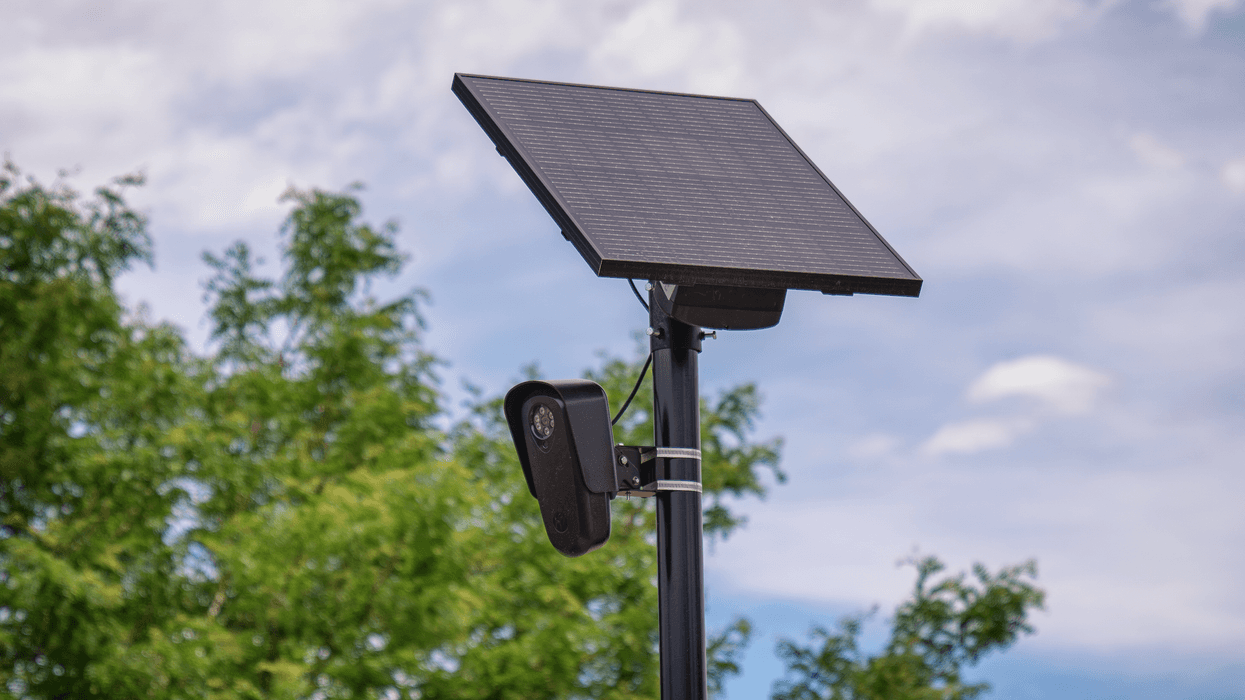
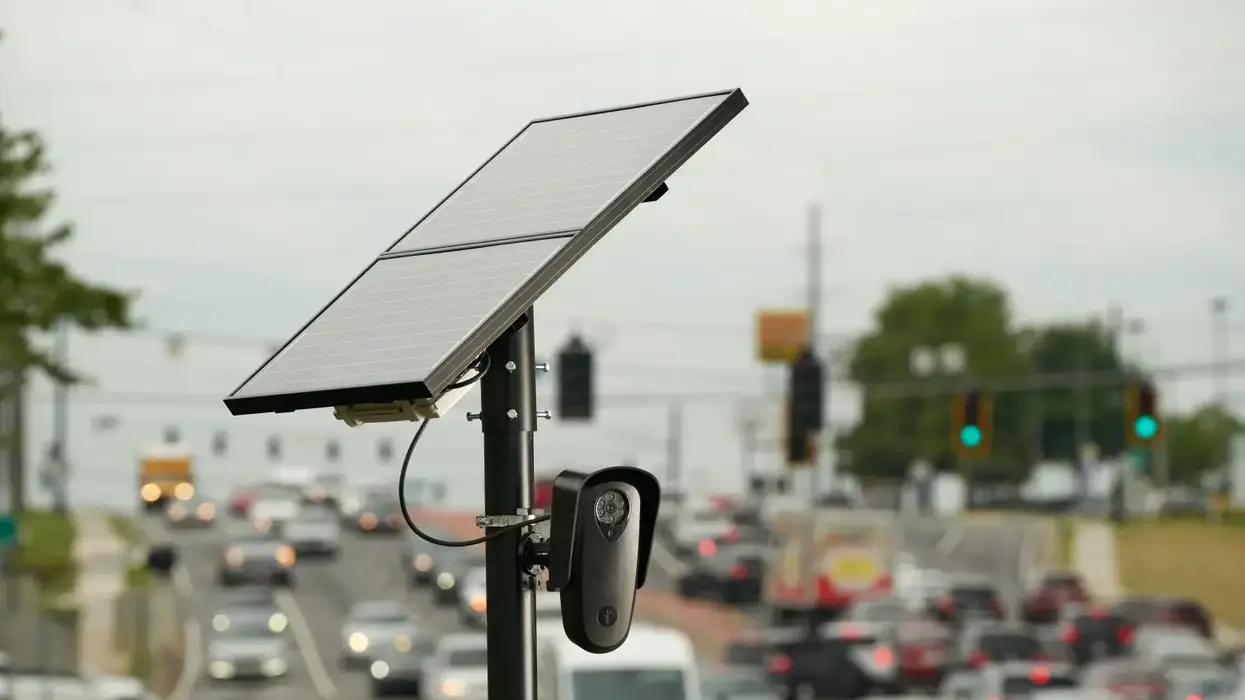
Flock Safety is one of the largest ALPR vendors in the US. Their solar-powered, teardrop-shaped cameras capture images of all passing vehicles, storing the car’s make, model, and other identifying features. Any law enforcement agency with a Flock contract can access the company’s nationwide database without a warrant.
As more communities wake up to the danger, the solution isn’t trading one brand of camera for another.
Flock cameras also track people. Their “FreeForm search” feature has allowed police departments to search the database using phrases like “male with tattoos” and “person on skateboard,” according to data reviewed by 404 Media.
DeFlock, an open-source project that maps license plate readers, has identified over 128,000 ALPRs in the US. Even my small town of around 20,000 people in Southern California has at least 35 ALPRs, most of them Flock cameras.
No independent research has shown that ALPRs can reduce crime. But there’s mounting evidence of the technology’s alarmingly high error rate. An analysis by the Roseville, California police department found that 71% of Flock’s alerts to the Roseville police incorrectly flagged vehicles as stolen or used in a felony.
Far from promoting “public safety,” the tech has led to wrongful arrests, profiling, and countless other abuses.
Flock reportedly has shared license plate data with federal authorities, including Immigration and Customs Enforcement. Among other cities, Los Angeles recently suspended their use of Flock cameras amid mounting privacy concerns over who controls the data and how it’s shared.
Court records obtained by the Electronic Frontier Foundation show that Texas deputies searched 83,000 Flock cameras nationwide to track a Texas woman across state lines because she allegedly “had an abortion.” In Dunwoody, Georgia, a public records request revealed Flock employees accessing cameras in children’s spaces at a community center as part of sales demonstrations.
Other reporting has found cops repeatedly misusing the Flock system to stalk exes.
More communities are organizing and fighting back against this unregulated AI technology. As a result, at least 100 cities have now rejected ALPRs, most of them Flock cameras. But Flock is only one cog in the machine. Cities can easily replace their Flock cameras with those from competitors like Axon, Motorola Solutions, or Genetec, as some have already done.
Mass surveillance remains the fundamental problem. Ever more companies collect our data through cellular networks, facial recognition, surveillance cameras, and ALPRs, among other sources.
The US government, in turn, purchases massive amounts of our data from commercial data brokers without obtaining warrants—bypassing our Fourth Amendment rights against unreasonable searches and seizures. In tandem, multiple federal agencies now have sweeping access to Americans’ sensitive personal data through systems built by Big Tech company Palantir, following President Donald Trump’s 2025 executive order that expanded data sharing across agencies.
This metastasizing mass surveillance state—what George Orwell called “Big Brother” in 1984—is eroding our privacy, freedom, and Constitution.
As more communities wake up to the danger, the solution isn’t trading one brand of camera for another. We need oversight and regulation of the entire surveillance industry, as well as the government agencies that rely on it.
Police have used Flock cameras to stalk their exes, track abortion patients, and spy on protesters—among other abuses.
A new database launched Wednesday that details more than 100 cases of alleged abuse by law enforcement officers using Flock Safety's nationwide camera network is adding fresh urgency to the growing backlash against automated license plate readers.
The database, published by the Institute for Justice (IJ)—a libertarian nonprofit public interest law firm based in Arlington, Virginia—documents "romantic stalking, wrongful stops and detentions, non-law enforcement use, and other types of misconduct."
"Automated license plate readers (ALPRs) were sold to American communities as a targeted tool for catching car thieves and finding missing people," IJ said in an introduction to the database. "What they actually purchased has grown into something far broader and more frightening: an AI-powered network of cameras that photograph and log the movement of every driver who passes, whether or not they are suspected of any crime."
"Companies like Flock Safety have now blanketed thousands of communities with ALPRs, quietly assembling powerful mass surveillance systems that can reconstruct where people have been, when, and how often, all without a warrant," the institute continued. "This dragnet surveillance threatens the freedoms the Fourth Amendment was adopted to protect. These concerns aren’t just abstractions: Every day, innocent people are harmed by officials’ abuse and misuse of these ALPRs."
"When the government can track the everyday movements of ordinary people—to their jobs, their churches, their doctors, their protests—it holds a kind of power over private life that the Constitution does not allow," IJ added.
Among the cases highlighted in the database are those of a Florida sheriff's deputy who allegedly used an ALPR to track and pull over a woman after seeing her at a television shoot, a Texas deputy who reportedly searched tens of thousands of Flock cameras while trying to locate a woman who had allegedly obtained a medication abortion, and a Georgia police chief who reportedly tracked his former girlfriend and her teenage daughter hundreds of times.
The database's authors warn that even those 100-plus cases may represent only a fraction of the actual misconduct. Officers often provide vague explanations when searching ALPR databases, making systematic detection of abuse difficult. In one case in Norfolk, Virginia, for example, IJ found that three generic search terms accounted for nearly one-third of roughly 230,000 searches over two years. One officer repeatedly entered “la la la la” as a justification without apparently attracting scrutiny.
Growing public angst over ALPRs is increasingly transcending partisan lines. As Common Dreams reported last month, the backlash has prompted dozens of communities to cancel or reject Flock contracts. According to Ban Flock Cameras, 82 contracts across 28 states had been terminated between August 2021 and May 2026, including 39 cancellations during the first five months of this year alone.
"It's my professional opinion that Flock is a dystopian violation of our rights," Ohio State University professor Viet Trinh said Monday during a public safety audit in Columbus.
"What I mean by that is that it inverts the very nature of how police are supposed to function," he explained. "So in traditional investigations, a crime is supposed to happen first, and then detectives are supposed to identify a list of plausible suspects, and then those suspects are placed under investigation."
"But under Flock, we are all—everybody in this room, every day, every time we get into our cars—we are all under investigation at all times for all crimes," Trinh continued. "Then, when a crime actually does occur, the police have a list of pre-investigated suspects. That's you, that's me, that's everybody in this room who gets in a car, that's everybody in this city."
"So today in Columbus, our constitutional rights—especially our Fourth Amendment rights—are flagrantly violated every single day as a matter of regular government policy," he asserted.
Trinh contended that Flock "is not a tool for investigating crimes, and that misnomer has apparently bamboozled several people in this room."
"Flock is, at its very foundation, a tool for investigating pre-crimes," he stressed. "Not crimes, but pre-crimes."
"So others in this room have implied that we can reform Flock, we can have Flock and preserve our civil liberties, we can make this technology work for us," Trinh noted, adding that "it is not a technology that can be made righteous."
"On this matter, we cannot and we can never have our cake and eat it too," the professor added. "To believe otherwise is hubris."
Since 2021, 82 Flock contracts have been canceled across 28 US states—39 of them during the first five months of this year alone.
Resistance is mounting across the United States against the increasing use of surveillance tech company Flock Safety's cameras, with a growing number of cities canceling contracts as the artificial intelligence-powered license plate readers are quietly being installed in thousands of locations nationwide.
State and local police departments first used the Atlanta-based company's automated license plate reader (ALPR) systems for standard law enforcement purposes, but they are now being employed for a much broader range of uses, including immigration-related searches and other actions supporting US Immigration and Customs Enforcement (ICE) during the Trump administration's deadly anti-immigrant crackdown.
“We have cameras that are used for everything from illegal dumping to drug houses to hotels that are just big problems,” Flock Safety engineer Kevin Cox told prospective customers during a demonstration of the company's Condor Camera, according to a Thursday report in The Washington Times.
“There are endless, endless uses for what we can do with these things," Cox added.
Those uses include spying on constitutionally protected protest activity and enforcing abortion bans by tracking pregnant people's travel across states—even ones in which the medical procedure is legal.
The ACLU—which recently launched a "Get the Flock Out" campaign to "fight creepy ALPR cameras"—says there are currently between 80,000 and 100,000 Flock devices installed nationwide that conduct more than 20 billion scans per month. More than 5,000 law enforcement agencies use the cameras, and some of them keep their locations a secret.
Automatic license plate readers track our every move and funnel our personal information into enormous databases that police can access to spy on us without a warrant.Surveillance company Flock Safety is the largest provider of these cameras — it's time we get all of them out of our communities.
[image or embed]
— ACLU (@aclu.org) June 28, 2026 at 11:15 AM
"Flock's ALPR cameras aren't like your normal traffic cameras," the ACLU explained. "This surveillance technology records and tracks every car that comes into view, and then an AI algorithm catalogs the make, model, color, license plate number, bumper stickers, and even scratches. This personal information is then uploaded into a nationwide database that any law enforcement agency with a Flock contract can search—with few regulations or oversight on how they use what they find."
The backlash against creeping state surveillance has even transcended the partisan divide.
“I think our country is in a kind of uniquely anti-surveillance environment right now, which is to say that, in a time where it seems there is nothing that is not partisan, opposition to government surveillance is nonpartisan," ACLU privacy and surveillance attorney Chad Marlow told The Washington Times on Thursday.
There is growing action—both legal and otherwise—to end the use of ALPRs across the country.
According to the public information project Ban Flock Cameras, 82 Flock contracts were terminated across 28 states between August 2021 and May 2026, with 39 of those cancellations occurring in the first five months of 2026 alone.
Even Amazon-owned Ring announced earlier this year that it would stop doing business with Flock Safety.
Susie O'Hara, a member of Santa Cruz, California's nominally nonpartisan City Council, told WBUR earlier this year that she grew increasingly concerned about local use of eight Flock cameras last year after learning that police were sharing data gleaned from the cameras with the company's national network without city officials' knowledge, a violation of state laws banning the practice.
O'Hara became increasingly convinced that Santa Cruz should cancel its Flock contract after an ICE agent fatally shot Renee Good, a US citizen, in Minneapolis in January.
"I have goose hbumps on my arms thinking about the absolute chaos that was happening in Minneapolis," she said. "And just the absolute insanity of what we were seeing... It was totally clear to me that we should in no way consciously be in this system at all—just no way."
Less than a week after Good's killing, the Santa Cruz City Council voted to terminate the city's Flock contract, becoming the first municipality in California to do so.
“For us, the threat to our civil liberties was greater than any benefit we could get from the flawed product,” Santa Cruz Mayor Fred Keeley told KQED at the time.
Chad Kemp, who represents District 32 on the nonpartisan Dane County Board of Supervisors in Wisconsin—which in April voted to stop funding two dozen cameras leased from Flock—told The Washington Times that “there’s a public safety issue here, but there is also a privacy issue."
"There are serious concerns about individuals who can be monitored without their knowledge, or if it is even constitutional or ethical to track people without a warrant," he added.
At the national level, US Reps. Robert Garcia (D-Calif.) and Raja Krishnamoorthi (D-Ill.) last year launched an investigation into the use of Flock cameras to track pregnant people across state lines for abortion care and to conduct unauthorized immigration enforcement operations.
Krishnamoorthi and Sen. Ron Wyden (D-Ore.) have also urged the Federal Trade Commission to investigate Flock Safety "for failing to implement cybersecurity protections, allowing Americans’ personal data to be exposed to hackers, criminals, and spies to steal."
Their demand came after the cybersecurity firm Hudson Rock revealed that hackers stole passwords and data from at least 35 Flock customer accounts.
In May, US Reps. Jesús "Chuy" Garcia (D-Ill.) and Scott Perry (R-Pa.) introduced a bipartisan amendment to a bill that would prohibit state and local governments receiving federal highway funds from using ALPRs for purposes other than electronic toll collection.
It's not just Flock. Axon, Vigilant Solutions—a subsidiary of Motorola Solutions—Genetec, PlateSmart, Innova Systems, Rekor, ELSAG, Perceptics, Jenoptik, and other firms market ALPRs to law enforcement agencies, private companies, and others.
"It doesn't matter which company has its creepy cameras in your neighborhood," the ACLU said, "they all have the same problems: a lack of transparency, oversight, and regulation into how they collect, store, and use our data, and how to hold public and private actors accountable if they abuse it."