SUBSCRIBE TO OUR FREE NEWSLETTER
Daily news & progressive opinion—funded by the people, not the corporations—delivered straight to your inbox.
5
#000000
#FFFFFF
To donate by check, phone, or other method, see our More Ways to Give page.
Daily news & progressive opinion—funded by the people, not the corporations—delivered straight to your inbox.
Millions of Americans are being watched as the US ramps up mass surveillance with help from AI, data brokers, and partnerships with private tech companies.
Government surveillance isn’t new, but new wide-ranging technologies that can detect our faces and track our movements are making it more ubiquitous. While the tools have changed, the purpose remains the same: to chill independent thought, free speech, and dissent, bringing our country closer to 1984.
Millions of Americans are being watched as the US ramps up mass surveillance with help from AI, data brokers, and partnerships with private tech companies. Immigrants, people seeking reproductive healthcare, and activists are among the most intensely monitored, but tech like Flock cameras has brought the issue into communities across the country.
According to the American Civil Liberties Union, police departments have increasingly deployed automated license plate readers (ALPRs) powered by AI to track drivers “without a warrant, probable cause, or even reasonable suspicion of wrongdoing.” And they’re doing this with little to no oversight or regulation.
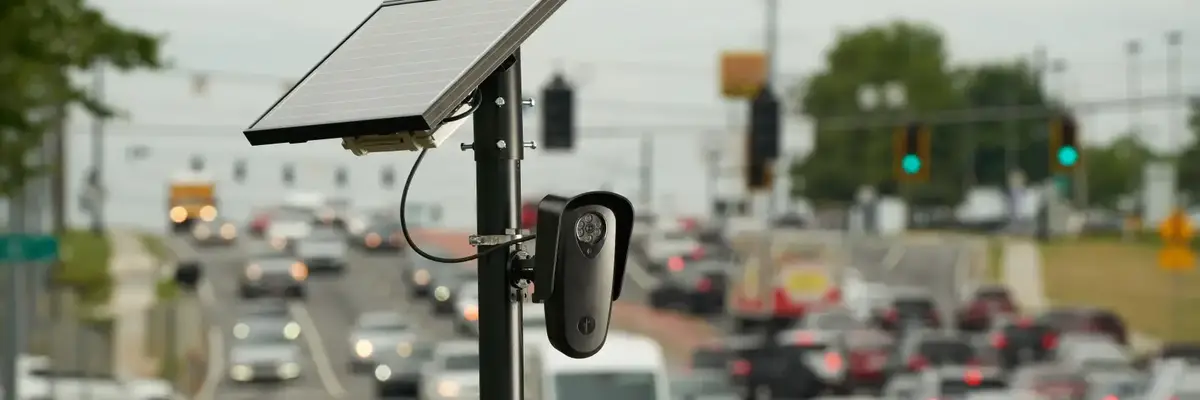
Flock Safety is one of the largest ALPR vendors in the US. Their solar-powered, teardrop-shaped cameras capture images of all passing vehicles, storing the car’s make, model, and other identifying features. Any law enforcement agency with a Flock contract can access the company’s nationwide database without a warrant.
As more communities wake up to the danger, the solution isn’t trading one brand of camera for another.
Flock cameras also track people. Their “FreeForm search” feature has allowed police departments to search the database using phrases like “male with tattoos” and “person on skateboard,” according to data reviewed by 404 Media.
DeFlock, an open-source project that maps license plate readers, has identified over 128,000 ALPRs in the US. Even my small town of around 20,000 people in Southern California has at least 35 ALPRs, most of them Flock cameras.
No independent research has shown that ALPRs can reduce crime. But there’s mounting evidence of the technology’s alarmingly high error rate. An analysis by the Roseville, California police department found that 71% of Flock’s alerts to the Roseville police incorrectly flagged vehicles as stolen or used in a felony.
Far from promoting “public safety,” the tech has led to wrongful arrests, profiling, and countless other abuses.
Flock reportedly has shared license plate data with federal authorities, including Immigration and Customs Enforcement. Among other cities, Los Angeles recently suspended their use of Flock cameras amid mounting privacy concerns over who controls the data and how it’s shared.
Court records obtained by the Electronic Frontier Foundation show that Texas deputies searched 83,000 Flock cameras nationwide to track a Texas woman across state lines because she allegedly “had an abortion.” In Dunwoody, Georgia, a public records request revealed Flock employees accessing cameras in children’s spaces at a community center as part of sales demonstrations.
Other reporting has found cops repeatedly misusing the Flock system to stalk exes.
More communities are organizing and fighting back against this unregulated AI technology. As a result, at least 100 cities have now rejected ALPRs, most of them Flock cameras. But Flock is only one cog in the machine. Cities can easily replace their Flock cameras with those from competitors like Axon, Motorola Solutions, or Genetec, as some have already done.
Mass surveillance remains the fundamental problem. Ever more companies collect our data through cellular networks, facial recognition, surveillance cameras, and ALPRs, among other sources.
The US government, in turn, purchases massive amounts of our data from commercial data brokers without obtaining warrants—bypassing our Fourth Amendment rights against unreasonable searches and seizures. In tandem, multiple federal agencies now have sweeping access to Americans’ sensitive personal data through systems built by Big Tech company Palantir, following President Donald Trump’s 2025 executive order that expanded data sharing across agencies.
This metastasizing mass surveillance state—what George Orwell called “Big Brother” in 1984—is eroding our privacy, freedom, and Constitution.
As more communities wake up to the danger, the solution isn’t trading one brand of camera for another. We need oversight and regulation of the entire surveillance industry, as well as the government agencies that rely on it.
Dear Common Dreams reader, It’s been nearly 30 years since I co-founded Common Dreams with my late wife, Lina Newhouser. We had the radical notion that journalism should serve the public good, not corporate profits. It was clear to us from the outset what it would take to build such a project. No paid advertisements. No corporate sponsors. No millionaire publisher telling us what to think or do. Many people said we wouldn't last a year, but we proved those doubters wrong. Together with a tremendous team of journalists and dedicated staff, we built an independent media outlet free from the constraints of profits and corporate control. Our mission has always been simple: To inform. To inspire. To ignite change for the common good. Building Common Dreams was not easy. Our survival was never guaranteed. When you take on the most powerful forces—Wall Street greed, fossil fuel industry destruction, Big Tech lobbyists, and uber-rich oligarchs who have spent billions upon billions rigging the economy and democracy in their favor—the only bulwark you have is supporters who believe in your work. But here’s the urgent message from me today. It's never been this bad out there. And it's never been this hard to keep us going. At the very moment Common Dreams is most needed, the threats we face are intensifying. We need your support now more than ever. We don't accept corporate advertising and never will. We don't have a paywall because we don't think people should be blocked from critical news based on their ability to pay. Everything we do is funded by the donations of readers like you. When everyone does the little they can afford, we are strong. But if that support retreats or dries up, so do we. Will you donate now to make sure Common Dreams not only survives but thrives? —Craig Brown, Co-founder |
Government surveillance isn’t new, but new wide-ranging technologies that can detect our faces and track our movements are making it more ubiquitous. While the tools have changed, the purpose remains the same: to chill independent thought, free speech, and dissent, bringing our country closer to 1984.
Millions of Americans are being watched as the US ramps up mass surveillance with help from AI, data brokers, and partnerships with private tech companies. Immigrants, people seeking reproductive healthcare, and activists are among the most intensely monitored, but tech like Flock cameras has brought the issue into communities across the country.
According to the American Civil Liberties Union, police departments have increasingly deployed automated license plate readers (ALPRs) powered by AI to track drivers “without a warrant, probable cause, or even reasonable suspicion of wrongdoing.” And they’re doing this with little to no oversight or regulation.
Flock Safety is one of the largest ALPR vendors in the US. Their solar-powered, teardrop-shaped cameras capture images of all passing vehicles, storing the car’s make, model, and other identifying features. Any law enforcement agency with a Flock contract can access the company’s nationwide database without a warrant.
As more communities wake up to the danger, the solution isn’t trading one brand of camera for another.
Flock cameras also track people. Their “FreeForm search” feature has allowed police departments to search the database using phrases like “male with tattoos” and “person on skateboard,” according to data reviewed by 404 Media.
DeFlock, an open-source project that maps license plate readers, has identified over 128,000 ALPRs in the US. Even my small town of around 20,000 people in Southern California has at least 35 ALPRs, most of them Flock cameras.
No independent research has shown that ALPRs can reduce crime. But there’s mounting evidence of the technology’s alarmingly high error rate. An analysis by the Roseville, California police department found that 71% of Flock’s alerts to the Roseville police incorrectly flagged vehicles as stolen or used in a felony.
Far from promoting “public safety,” the tech has led to wrongful arrests, profiling, and countless other abuses.
Flock reportedly has shared license plate data with federal authorities, including Immigration and Customs Enforcement. Among other cities, Los Angeles recently suspended their use of Flock cameras amid mounting privacy concerns over who controls the data and how it’s shared.
Court records obtained by the Electronic Frontier Foundation show that Texas deputies searched 83,000 Flock cameras nationwide to track a Texas woman across state lines because she allegedly “had an abortion.” In Dunwoody, Georgia, a public records request revealed Flock employees accessing cameras in children’s spaces at a community center as part of sales demonstrations.
Other reporting has found cops repeatedly misusing the Flock system to stalk exes.
More communities are organizing and fighting back against this unregulated AI technology. As a result, at least 100 cities have now rejected ALPRs, most of them Flock cameras. But Flock is only one cog in the machine. Cities can easily replace their Flock cameras with those from competitors like Axon, Motorola Solutions, or Genetec, as some have already done.
Mass surveillance remains the fundamental problem. Ever more companies collect our data through cellular networks, facial recognition, surveillance cameras, and ALPRs, among other sources.
The US government, in turn, purchases massive amounts of our data from commercial data brokers without obtaining warrants—bypassing our Fourth Amendment rights against unreasonable searches and seizures. In tandem, multiple federal agencies now have sweeping access to Americans’ sensitive personal data through systems built by Big Tech company Palantir, following President Donald Trump’s 2025 executive order that expanded data sharing across agencies.
This metastasizing mass surveillance state—what George Orwell called “Big Brother” in 1984—is eroding our privacy, freedom, and Constitution.
As more communities wake up to the danger, the solution isn’t trading one brand of camera for another. We need oversight and regulation of the entire surveillance industry, as well as the government agencies that rely on it.
Government surveillance isn’t new, but new wide-ranging technologies that can detect our faces and track our movements are making it more ubiquitous. While the tools have changed, the purpose remains the same: to chill independent thought, free speech, and dissent, bringing our country closer to 1984.
Millions of Americans are being watched as the US ramps up mass surveillance with help from AI, data brokers, and partnerships with private tech companies. Immigrants, people seeking reproductive healthcare, and activists are among the most intensely monitored, but tech like Flock cameras has brought the issue into communities across the country.
According to the American Civil Liberties Union, police departments have increasingly deployed automated license plate readers (ALPRs) powered by AI to track drivers “without a warrant, probable cause, or even reasonable suspicion of wrongdoing.” And they’re doing this with little to no oversight or regulation.
Flock Safety is one of the largest ALPR vendors in the US. Their solar-powered, teardrop-shaped cameras capture images of all passing vehicles, storing the car’s make, model, and other identifying features. Any law enforcement agency with a Flock contract can access the company’s nationwide database without a warrant.
As more communities wake up to the danger, the solution isn’t trading one brand of camera for another.
Flock cameras also track people. Their “FreeForm search” feature has allowed police departments to search the database using phrases like “male with tattoos” and “person on skateboard,” according to data reviewed by 404 Media.
DeFlock, an open-source project that maps license plate readers, has identified over 128,000 ALPRs in the US. Even my small town of around 20,000 people in Southern California has at least 35 ALPRs, most of them Flock cameras.
No independent research has shown that ALPRs can reduce crime. But there’s mounting evidence of the technology’s alarmingly high error rate. An analysis by the Roseville, California police department found that 71% of Flock’s alerts to the Roseville police incorrectly flagged vehicles as stolen or used in a felony.
Far from promoting “public safety,” the tech has led to wrongful arrests, profiling, and countless other abuses.
Flock reportedly has shared license plate data with federal authorities, including Immigration and Customs Enforcement. Among other cities, Los Angeles recently suspended their use of Flock cameras amid mounting privacy concerns over who controls the data and how it’s shared.
Court records obtained by the Electronic Frontier Foundation show that Texas deputies searched 83,000 Flock cameras nationwide to track a Texas woman across state lines because she allegedly “had an abortion.” In Dunwoody, Georgia, a public records request revealed Flock employees accessing cameras in children’s spaces at a community center as part of sales demonstrations.
Other reporting has found cops repeatedly misusing the Flock system to stalk exes.
More communities are organizing and fighting back against this unregulated AI technology. As a result, at least 100 cities have now rejected ALPRs, most of them Flock cameras. But Flock is only one cog in the machine. Cities can easily replace their Flock cameras with those from competitors like Axon, Motorola Solutions, or Genetec, as some have already done.
Mass surveillance remains the fundamental problem. Ever more companies collect our data through cellular networks, facial recognition, surveillance cameras, and ALPRs, among other sources.
The US government, in turn, purchases massive amounts of our data from commercial data brokers without obtaining warrants—bypassing our Fourth Amendment rights against unreasonable searches and seizures. In tandem, multiple federal agencies now have sweeping access to Americans’ sensitive personal data through systems built by Big Tech company Palantir, following President Donald Trump’s 2025 executive order that expanded data sharing across agencies.
This metastasizing mass surveillance state—what George Orwell called “Big Brother” in 1984—is eroding our privacy, freedom, and Constitution.
As more communities wake up to the danger, the solution isn’t trading one brand of camera for another. We need oversight and regulation of the entire surveillance industry, as well as the government agencies that rely on it.