

SUBSCRIBE TO OUR FREE NEWSLETTER
Daily news & progressive opinion—funded by the people, not the corporations—delivered straight to your inbox.
5
#000000
#FFFFFF
To donate by check, phone, or other method, see our More Ways to Give page.
Daily news & progressive opinion—funded by the people, not the corporations—delivered straight to your inbox.
A 20-step blueprint for rebuilding the foundation of US democracy.
Recent voices insist that federal elections are meaningless, corrupted beyond repair, and no longer worth defending. Their evidence is grim: More than $5.5 billion was spent in the 2024 presidential race while Wisconsin’s legislature stayed locked by gerrymander regardless of the statewide vote. A Senate where about 588,000 in Wyoming cancel out 39.4 million in California. An Electoral College that twice in 25 years handed the White House to the loser of the popular vote. Voting restrictions crafted to suppress minorities. Federal courts that see partisan gerrymandering and refuse to act.
On the facts, they are right. On the conclusion, they are dangerously wrong.
To say elections no longer matter is to surrender the battlefield. It is to tell millions that nothing they do will change anything. That is exactly the message authoritarians want Americans to believe. If people stop fighting for elections, those elections will not be stolen. They will be abandoned.
At the signing of the Voting Rights Act, President Lyndon B. Johnson declared, “The vote is the most powerful instrument ever devised by man for breaking down injustice.” Months earlier, on the road from Selma, Martin Luther King Jr. had proclaimed, “Voting is the foundation stone for political action.” One spoke from authority, the other from struggle. Yet they spoke of one shared truth. The vote is the cornerstone of freedom.
Our democracy is under strain. Its foundation unsettled, its cornerstone cracked by distortion and distrust. Yet it stands. It can be repaired.
The failures often described are undeniable. Gerrymandered maps keep parties in power regardless of popular will. The Senate’s imbalance gives a permanent veto to sparsely populated states. The Electoral College warps presidential contests. Voting restrictions disenfranchise millions. Campaign finance turns federal races into billion-dollar spectacles. Even when majorities vote for change, legislatures rewrite the rules after the fact to strip power from those elected.
The result is predictable. Citizens see futility everywhere. Why vote if the outcome is predetermined? Why care if Congress’ approval rating was 15% in 2023, when 95% of incumbents still won reelection the following year? These questions cannot be ignored. They demand an answer that is better than surrender.
History shows what happens when people believe elections are meaningless. They disengage. And when they disengage, minority rule hardens into permanent rule. This is not theory. It is the story of every society where cynicism took the place of resistance.
Americans are not exempt. We too have often waited until crisis forced our hand. As Winston Churchill allegedly observed, you can count on Americans to do the right thing, but only after they have tried everything else. That is a weakness, but also a pattern. Delay does not mean defeat. In the end we have always found a way to repair what was broken.
Concerned citizens are right that federal elections have become distorted. They are wrong to say they cannot be repaired. Consider Poland. In 1989, Solidarity forced elections that dismantled one-party rule. In 2023, Polish voters once again removed an illiberal government at the ballot box. Chile’s 1988 plebiscite ended Augusto Pinochet’s dictatorship. Serbia’s 2000 election, defended in the streets, forced Slobodan Milošević to step down. South Korea’s generals conceded to constitutional change in 1987, opening the door to real elections. These are not anomalies. They are proof that entrenched systems get broken when ballots are defended.
Other democracies once faced problems strikingly similar to our own. Britain, Canada, and Australia abolished partisan gerrymandering through independent commissions. Germany rebuilt its democracy with proportional representation and strict constitutional limits. France capped campaign spending to prevent billion-dollar elections. Most advanced democracies automatically register citizens to vote. Many hold elections on weekends or declare them national holidays to ensure participation. Dozens of countries restrict donations and enforce transparency that makes dark money impossible.
These reforms are not utopian dreams. They are daily realities elsewhere. They show that systemic flaws get corrected when citizens demand reform and refuse to accept a rigged game as permanent.
Democracy cannot be rebuilt with slogans. It requires structure: foundations that carry weight, pillars that resist pressure, walls that shield citizens from abuse.
King warned against waiting for a more convenient season for change. “We are confronted with the fierce urgency of now. This is no time for apathy or complacency. This is a time for vigorous and positive action.”
Now is the time to plan and to lay the foundation for that change. What follows are 20 pillars of reform. Each is a proven step in healthy democracies.
Millions of eligible citizens are kept off the rolls by bureaucratic hurdles. Automatic registration would eliminate these barriers. Congress could update the National Voter Registration Act to require enrollment at age 18 using Department of Motor Vehicles, Social Security, and Internal Revenue Service (IRS) data, with strong privacy protections. Oregon and Colorado already run this system successfully. Registration should be a feature of citizenship, not an obstacle course.
Young voters often begin adulthood unregistered and disengaged. Preregistration ensures that turning 18 means being ready to vote. States can collect data at 16, activate it at 18, and pair the process with high school civics classes that teach how voting works in practice. Hawaii and Colorado already do this. A culture of participation starts in the classroom.
Access to voting differs wildly by state. Some citizens enjoy weeks of early voting, others face closed polls and endless lines. A federal baseline would guarantee two weeks of early voting, secure drop boxes, no-excuse absentee ballots, and Election Day as a paid holiday. Congress has the constitutional authority to set these standards. Democracy should not depend on a ZIP code.
The US Supreme Court’s 2013 Shelby County decision gutted preclearance and unleashed a wave of suppression laws. Without federal oversight, discrimination spreads unchecked. The John Lewis Voting Rights Advancement Act would restore preclearance and force states to prove their laws are not discriminatory before enactment. History shows this works. Thousands of bad laws were blocked under the old system. We need that protection again.
Gerrymandering allows politicians to choose their voters instead of the other way around. Independent commissions dismantle this scheme. States like Arizona, Michigan, and California already use commissions that draw fair maps with transparency and citizen input. Congress could require them nationwide for House districts. Abroad, countries like Canada treat neutral commissions as the democratic norm. We should too.
Plurality elections reward division and spoilers. Ranked-choice voting (RCV) ensures winners have majority support. Voters rank candidates, and if no one wins outright, the lowest is eliminated and votes reallocated until someone secures a majority. Maine, Alaska, and dozens of cities already use it. RCV rewards broad appeal, reduces negative campaigning, and gives voters real choice.
Winner-take-all districts exaggerate partisan dominance and silence millions. Proportional representation matches seats to actual votes. Congress could repeal the 1967 single-member district law and allow multi-member districts using proportional systems. Germany and New Zealand use hybrids that balance local representation with fairness. This reform opens space for independents and new voices while reducing polarization.
The US House has been capped at 435 seats since 1910, while the population has more than tripled. Districts now average about 761,000 people, based on the 2020 Census. Expansion would reduce district size, bring representatives closer to constituents, and reduce Electoral College bias. Congress could adopt formulas like the cube-root rule, which would expand the House to 600-700 seats. In the last hundred years, Canada grew its House by over 50%. Germany by about 60%. Italy by nearly 20%. The US House has not moved at all.
Money tilts politics toward the wealthy. Matching small donations with public funds shifts power back to citizens. A $50 gift could be matched 6 to 1, turning it into $350. New York City’s program has proven this model. Candidates who opt in agree to limits on large contributions. Public financing amplifies everyday voices and reduces dependence on billionaires and PACs.
Secret spending corrodes trust. Voters deserve to know who is paying for influence. Congress could require disclosure of major donors behind election ads, the IRS could tighten rules for nonprofits, and the Securities and Exchange Commission could require corporations to disclose political spending. California already maintains an online ad library. Sunlight is not optional. It is the minimum.
Supreme Court rulings like Citizens United equated money with speech and gave corporations free rein to spend. Without an amendment, reforms remain vulnerable to judicial veto. An amendment authorizing “reasonable limits” would secure lasting change. Amendments are difficult but not impossible. The 26th, lowering the voting age, passed quickly once demand surged. A similar movement would reset the rules of political finance.
Twice in 25 years, the loser of the popular vote won the presidency. This undermines legitimacy. The National Popular Vote Interstate Compact offers a realistic fix. States pledge to award their electors to the national popular-vote winner once the compact reaches 270 votes. The compact total is 209 electoral votes as of April 2024 (NCSL). Once enacted, every vote counts equally, and no state is ignored.
More than 4 million citizens in DC and Puerto Rico live under federal law without full representation. They pay taxes, serve in the military, and yet remain second-class. Congress could fix this with admission bills. For Puerto Rico, a binding referendum would confirm the people’s choice. Statehood is not a partisan gift. It is a recognition of citizenship.
The filibuster allows 41 senators representing as little as 11% of the population to block laws supported by majorities. This is minority rule hiding behind procedure. At the start of a new Congress, the Senate could change its rules by simple majority. Carve outs for democracy and civil-rights laws, or a return to the “talking filibuster,” would restore accountability. Without reform, every other measure in this blueprint remains hostage.
Roughly 4 million Americans could not vote due to felony convictions in 2024, disproportionately African Americans. This is the direct legacy of post-Reconstruction suppression. Congress could restore rights for federal elections upon release from prison, with states following suit. Maine and Vermont already allow incarcerated citizens to vote without disruption. Reenfranchisement strengthens reintegration and affirms that citizenship is not permanently stripped.
As King declared during the Selma march, “So long as I do not firmly and irrevocably possess the right to vote I do not possess myself. I cannot make up my mind, it is made up for me.”
Partisan control of elections erodes trust and invites abuse. States should establish independent boards with balanced membership and fixed terms. Congress could tie federal funds to adoption. Protecting election workers is equally critical, with legal penalties for harassment and security resources for threatened staff. Canada and India already run nonpartisan election commissions that command trust across divides. Administration must be neutral, or democracy will never be trusted.
In an age of hacking and conspiracy, trust depends on evidence. Paper ballots provide a physical record that gets checked. Risk-limiting audits verify results before certification. Colorado already runs statewide audits successfully. Congress could require paper ballots nationwide and tie funds to compliance. This is not bureaucracy. It is proof. Without it, lies about stolen elections thrive.
When local officials refuse to certify results, democracy hangs by a thread. The 2022 reform of the Electoral Count Reform Act helped at the federal level, but state rules remain vulnerable. States should set binding timelines, automatic court enforcement, and criminal penalties for willful refusal. Certification is a ministerial duty, not a political choice. This pillar locks the foundation against sabotage.
The court cannot remain above the law. Without binding ethics rules, recusal standards, and disclosure requirements, legitimacy collapses. Congress could pass a code of ethics and set staggered 18-year terms for justices. Expanding lower courts will reduce manipulation by partisan litigants. Other democracies enforce judicial standards. The United States must do no less. The court should protect democracy, not place it at risk.
Citizens need information. Yet local news is collapsing, leaving hundreds of counties in news deserts where disinformation thrives. States could fund independent civic-information consortia. Congress could provide tax credits for subscriptions and newsroom hiring. Nonprofits and libraries could publish voter guides. Switzerland and New Jersey already invest in public-interest media. Without informed citizens, no electoral system will function.
And yes, there are alternative solutions. Every serious reform agenda will meet resistance. Some critics attack from cynicism, others from realism, and some from outright bad faith. Growth, discourse, and compromise are hallmarks of a strong democracy.
Bring them into the open and address them directly. Put them on the record and meet them with evidence.
No. These reforms are not partisan dreams. They are basic democratic standards already working in red, purple, and blue states. Maine and Alaska use ranked-choice voting. Florida voters overwhelmingly approved rights restoration for people with felony convictions. Arizona voters created an independent redistricting commission. If these reforms were only “liberal,” they would never have passed in conservative states. They are about fairness, not ideology.
Yes, this is the chicken-and-egg problem. The answer is incremental and state-based change. Marriage equality, marijuana legalization, Medicaid expansion: Each began in a handful of states and spread until the national system had to adapt. Reform builds in layers, not in one stroke.
It is true that campaign finance reform was gutted and the Voting Rights Act was weakened. But that is not proof that reform is futile. It is proof that stronger safeguards are needed. Failure is not a reason to give up. It is a reason to come back with better armor.
Courts block progress, but courts are not immune to public legitimacy. When movements gain strength, courts bend rather than risk collapse. That is why judicial reform itself belongs in the blueprint: term limits, ethics codes, and lower-court expansion.
Yes, America is unique. But uniqueness is no excuse for dysfunction. Every advanced democracy has figured out how to prevent minority rule, gerrymandering, and billion-dollar elections. Ours will too.
They often do, when public pressure leaves them no choice. Incumbents in Maine fought ranked-choice voting, and they lost. Florida politicians resisted rights restoration, but 65% of voters demanded it. History is clear: Power yields when people force it to.
Reform is not separate from people’s daily concerns. Gerrymandered legislatures block policies that majorities support, from wages to healthcare to climate action. Electoral reform is not abstract. It is the condition for getting anything else done.
The technical details are complex, but the principles are simple. Majority rule. One person, one vote. Transparency. Fairness. Citizens voted for ranked-choice ballots, independent commissions, and rights restoration because they understood the basic value, not because they mastered the math.
True. Not all at once. But reforms are cumulative. The civil rights movement did not win everything in a single bill. It won through steady pressure and incremental victories that reshaped the landscape. A blueprint is not a one-day project. It is a guide for decades.
Polarization is real, but bad rules intensify it. Gerrymandered districts reward extremism. Winner-take-all systems punish compromise. Fair rules do not erase division, but they blunt its sharpest edges.
False. Independent commissions, voting rights expansions, and redistricting reforms have passed with bipartisan coalitions and often in conservative states. The test is simple: If a party or movement opposes fair elections, it is admitting it cannot win in a fair fight.
Authoritarians want nothing more than for you to believe that. History says otherwise. Franco ruled Spain for nearly four decades before democracy returned. South Korea’s generals held power for decades until protest cracked their hold. It is never too late unless people surrender.
The critics are not wrong about the difficulty. Reform will be hard. Entrenched interests will resist. Courts may obstruct. Cynicism will whisper that it is all impossible. But every democracy that has clawed its way back from authoritarian drift faced the same voices of defeat. And these are different, deadly, critical times that try men’s souls. And the prescription may need to be sweeping and comprehensive and great and radical.
The design flaws are serious. In other countries similar strain has brought unrest and uncertainty. Here it calls for reinforcement, not retreat. The danger is not that elections no longer matter. The danger is believing they cannot. Despair cedes the field to those who want democracy to die quietly. History proves that elections topple dictatorships and open paths to reform. But only when people defend them and demand change.
Local elections matter, yes. They are vital. But abandoning federal reform is not an option. The presidency, the Senate, the House, and the Supreme Court shape the lives of every citizen. If we concede those arenas as theater, we concede the nation itself.
The truth is stark. American democracy is rigged, tilted toward minority rule, and riddled with flaws that delegitimize outcomes. But stark is not hopeless. Other nations have faced crises as severe and rebuilt their democracies from the ground up. So will we.
The fight ahead is not about abandoning federal elections but transforming them. Automatic registration. Independent redistricting. Campaign finance reform. Proportional representation. Expanded access. Professional administration. Ethical courts. Informed citizens. These are not slogans. They are the pillars of a rebuilt democracy.
As Martin Luther King Jr. wrote in “Letter from Birmingham Jail,” “We will have to repent in this generation not merely for the hateful words and actions of the bad people but for the appalling silence of the good people.” Silence is not an option. Nor is delay. King called it “the fierce urgency of now.” He reminded us that “this is no time to engage in the luxury of cooling off or to take the tranquilizing drug of gradualism. Now is the time to make real the promises of democracy.”
That is the choice in front of us. To retreat into despair and let cynicism rot the foundation, or to rise and defend the ballot as the most powerful instrument of justice ever devised.
The question is no longer whether change is possible. The question is whether we will summon the will to fight for it. Whether we will defend the ballot or surrender it. Whether we will prove that democracy can be realized in this generation by acting, organizing, legislating, and refusing to give up.
Voting still matters. But only if we make it matter.
"The election deniers are back at it, laying the groundwork to run the Big Lie playbook once again," warned one swing-state campaigner.
At least 1 in 5 potential battleground state electors for former U.S. President Donald Trump are linked to the Republican nominee's attempt to subvert the 2020 election, according to an analysis published Monday.
Politico reported that "of the 93 Republicans designated as prospective presidential electors for Trump from the seven battleground states, eight are facing felony charges for signing false Electoral College certificates in 2020."
Five additional possible electors signed similar documents in 2020 but were not criminally charged, according to the reporting, while at least half a dozen others "played notable roles in challenging the results of the 2020 election or promoting election conspiracy theories."
"These people continued to peddle and push not misinformation, which is accidental, but disinformation, which is intentional."
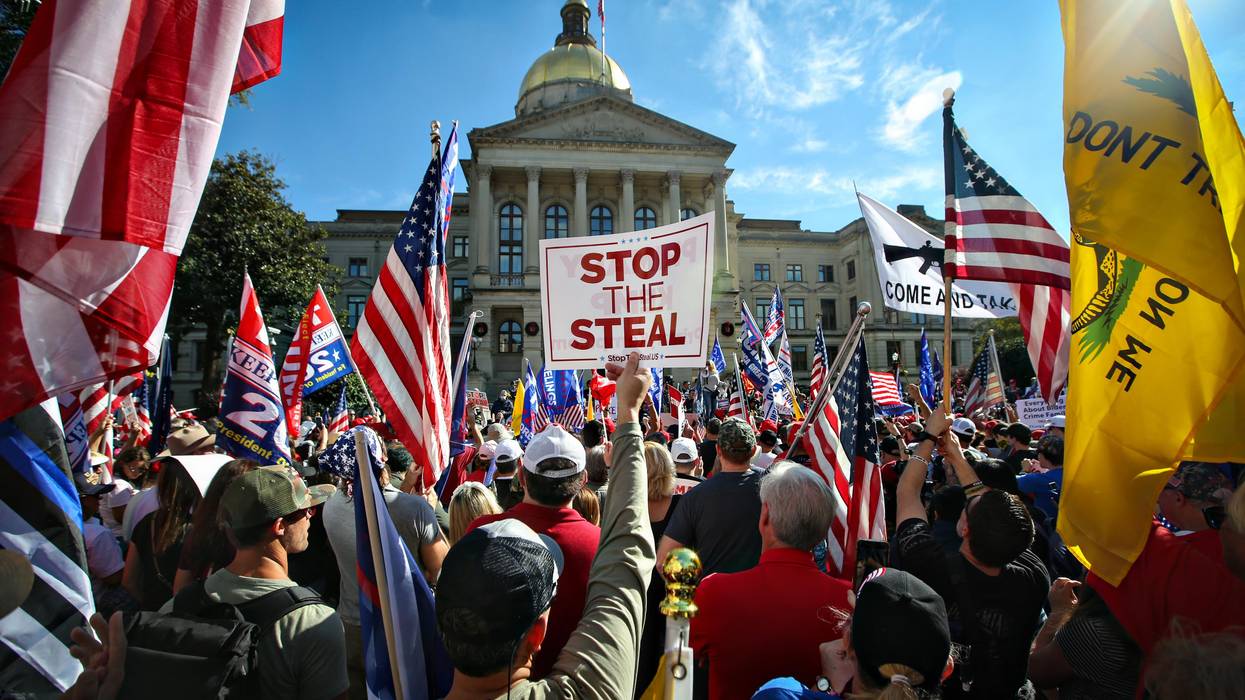
With numerous Trump aides and GOP officials facing criminal charges for their alleged roles in the former president's bogus "Stop the Steal" scheme, experts say it is somewhat less likely that the Republican nominee or his allies would attempt another such plot. However, Trump and his boosters have recycled similar claims of election fraud in what critics say is a bid to spread misinformation and sow doubt about the outcome of Tuesday's contest if the 2020 loser is defeated by Democratic Vice President Kamala Harris.
"It does show a lack of regard for the criminal and ethical problems with doing this," Mary McCord, a Georgetown law professor and executive director of the Institute for Constitutional Advocacy and Protection, told Politico.
As Politico notes:
Six of the returning fake electors hail from Michigan. John Haggard, Hank Choate, Timothy King, Meshawn Maddock, Amy Facchinello, and Marian Sheridan were among the group of Michiganders who signed a document in 2020 purporting to be official electoral certificates claiming the state’s electoral votes went to Donald Trump, despite Biden winning Michigan by more than 150,000 votes. Michigan Attorney General Dana Nessel, a Democrat, brought felony charges against them, including forgery-related crimes punishable by up to 14 years. Those cases are ongoing and all have pleaded not guilty.
In the battleground state of Wisconsin—where President Joe Biden defeated Trump by less than 21,000 votes, or 0.63%, in 2020—"election deniers are back at it, laying the groundwork to run the Big Lie playbook once again through actions designed to attack the electoral process, sow seeds of chaos set to bloom post-election, and further undermine confidence in our democracy," warned Wisconsin Democracy Campaign executive director Nick Ramos in a Sunday opinion piece in the Cap Times.
"That is exactly what their antics wrought after the 2020 election—chaos resulting in the January 6 insurrection and years of baseless conspiracy theories that did not, and will not, succeed in changing a single election result but did succeed in undermining the confidence of millions of Americans in our democracy," he continued.
"The bullies are back again, continuing their strategy to interfere in Wisconsin's elections," Ramos added.
While some observers claim that would-be election subversives are likely to tread gingerly in light of the potential criminal consequences for alleged Big Lie conspirators, McCord said that "it would appear that the party leadership in the states where there are fraudulent electors serving as electors again are not taking seriously things like the criminal charges that have been brought against these fraudulent electors."
Amy Tarkanian, a former chair of the Nevada Republican Party, told Politico that "these people continued to peddle and push not misinformation, which is accidental, but disinformation, which is intentional."
"It's definitely disappointing," she lamented.
In Arizona—where former state GOP chief Kelli Ward and 11 other Republican officials have been criminally charged in connection with the alleged fake electors scheme—current Republican Party Chair Gina Swoboda has been pushing spurious election fraud claims. This, even as Loraine Pellegrino, a past president of a right-wing women's group who falsely attested that Trump won Arizona in 2020, earlier this year became the first person convicted in the state's fake electors case.
Democracy defenders have sounded the alarm on the potential for violence fueled by baseless claims of election fraud.
The Global Project Against Hate and Extremism said last week that it is "seeing the same warning signs of political violence based on election denialism combined with violent language across fringe platforms that we saw in the weeks before the 2020 election and before the January 6, 2021 insurrection at the Capitol."
According to a YouGov poll published Saturday, just over two-thirds of respondents—including more than 80% of surveyed Democrats and 55% of Republicans— believe it is either "somewhat" or "very likely" that Trump will refuse to concede if he loses to Harris.
The pieces are already being put into place, which is giving me a terrible sense of déjà vu.
Sometimes I hate being right.
Donald Trump is campaigning in Blue states right now, including California, Colorado, and New York. It has pundits scratching their heads: is it just all about his ego? Is he crazy? Or crazy like a fox?
I’d argue the latter: that this is part of a strategy to legally seize the White House after he’s lost both the popular vote and the Electoral College vote, much like Republican Rutherford B. Hayes did in the election of 1876.
Eight months before the 2020 election, I wrote a largely-ridiculed article for Alternet.org predicting that Trump would lose the election but would then use multiple phony slates of swing-state electors to try to get the Electoral College count thrown to the House of Representatives where, under the 12th Amendment, the Republican majority would crown him president.
I noted that I’d first heard of the plan that month from a Republican insider I knew from my days living and doing my radio/TV program from Washington, DC.
And, as we all now know, that’s pretty much exactly what happened.
Fortunately, Mike Pence and Nancy Pelosi stopped Trump and his merry band of corrupt lawyers and lawmakers (including Mike Johnson, who led the effort in the House) from executing the plan, but not before five civilians and three police officers lay dead because Trump incited a violent attack on the Capitol in his final, desperate attempt to pull it off.
Now we know, I believe, why Donald Trump thinks it’s so important to call out the military around election day this year. He expects millions of Americans to be in the streets because his plan is for the House, Republicans in the states, and the Supreme Court to hand him the presidency regardless of the election’s outcome.
Last Friday, my SiriusXM colleague Michelangelo Signorile mentioned to me (on his program) that a prominent rightwing hate radio host had claimed Trump is campaigning in Blue states right now so he can help out down-ballot House members in those states. According to that host, it’s all about holding the House so when the time comes for the election to be certified Republicans will be able to deny that still-necessary certification and vote Trump in themselves.
Which is giving me a terrible sense of déjà vu. At the risk of again playing the reluctant role of Cassandra, here are some examples of how Trump and the GOP could try to steal the White House this winter, regardless of how the vote turns out. And how Republicans are today telegraphing this very outcome.
Article II (the Executive Branch), Section I, Clause 2 of the Constitution (and the 12th Amendment, which revises it) gives solely to the legislatures of the states the power to control the electors who will decide the presidential election.
It does not say — and there is no federal law that says — that the people of the states shall vote for their choice of president and then that vote shall be reflected in the states’ electoral votes. It’s entirely up to each state’s legislature (without any input from the governor).
“Each State shall appoint, in such Manner as the Legislature thereof may direct, a Number of Electors…” is how it appears in Article II of the Constitution.
As Chief Justice Rehnquist wrote in the 2000 Bush v Gore decision when the US Supreme Court overturned the Florida Supreme Court’s order for a recount that would have given the election to Al Gore:
“The individual citizen has no federal constitutional right to vote for electors for the President of the United States… [T]he state legislature’s power to select the manner for appointing electors is plenary; it may, if it so chooses, select the electors itself, which indeed was the manner used by state legislatures in several States for many years after the framing of our Constitution.”
Every state’s legislature generally directs all their electors to vote for the candidate who won the majority in the state (Maine and Nebraska are the exception, allowing for split decisions), a system we call “winner takes all,” but, as Rehnquist noted, a state’s legislature (its combined house or assembly and senate) can, by simple majority vote, direct its electors to vote for any candidate they want, even over the objection of their governor.
In the 2000 election, for example, when the Florida Supreme Court ordered a complete recount of the vote for president in that state, Jeb Bush and his Republicans knew that a full, statewide recount would give Al Gore the presidency. (It would have discovered the additional 45,599 votes for Al Gore that Florida Secretary of State Katherine Harris arbitrarily and illegally chose not to count, as The New York Times noted a year later.)
In other words, had the U.S. Supreme Court not intervened to stop the Florida recount, the Republicans in the Florida legislature were fully prepared to hand the entire Florida electoral college vote — and, thus, the White House — to George W. Bush, even if a recount showed that Al Gore actually won the state. It was, after all, their constitutional right, as Rehnquist later noted in Bush v Gore.
As David Barstow and Somini Sengupta wrote for the New York Times on November 28, 2000, just before the Supreme Court intervened:
“The president of Florida’s Senate said today that Gov. Jeb Bush had indicated his willingness to sign special legislation intended to award Florida’s 25 Electoral College votes to his brother Gov. George W. Bush of Texas even as the election results were being contested.”
“But,” some say, “Kamala Harris is the Vice President, so she won’t refuse to accept the Electoral College votes like Trump wanted Pence to do!”
That’s true, but irrelevant.
While the updated Electoral Count Act explicitly redefines the Vice President’s role as purely ceremonial, it does not — and could not without a constitutional amendment —alter the power of individual Republican-controlled swing states to send Trump electors (claiming that the Harris-winning results in their states are the result of voter fraud) to DC.
Regardless of how transparently dishonest such an effort would be, its primary result would be to throw to the Supreme Court the decision over which electors to count.
Multiple Court observers have noted how light the Court’s docket is this fall because, they speculate, Roberts is fully expecting to play a role in the election similar to what five Republicans on the Court did in 2000 when they stopped the Florida recount, handing the White House to George W. Bush.
The Court could then declare the election flawed because of the alleged voter fraud — Republicans across the country, as well as Trump and Vance, are already preparing the ground for this claim — and, citing the 12th Amendment, throw it to the House of Representatives.
Under that scenario, each state’s House delegation has one single vote for president (the Senate is not involved under the 12th Amendment) and right now there are 26 states controlled by Republicans: the 26-24 vote would put Trump and Vance in the White House for the next four years.
That strategy would require one or more individual states to either refuse to certify their vote, delay certifying their vote, or submit multiple slates of electors.
And we’re already hearing from both local elections officials and state legislators’ rumblings that this is exactly what they intend to do.
Another option to produce the same result would be for a majority vote in the House to refuse to certify a Harris win.
Which brings us back to Trump campaigning in Blue states. As Ed Kilgore wrote for The New Yorker:
“As it happens, there are ten highly competitive House races in California and New York, and a Trump appearance nearby could goose GOP turnout and promote party-organizing efforts in ways that could make a difference in those contests.”
This brings us back to the scenario Michelangelo shared with me. The new, 2025-2026 House is sworn in on January 3rd, whereas the presidential vote is certified on January 6th.
If Democrats win the House in November and are sworn in on January 3rd, it’s unlikely that Speaker Hakeem Jeffries would go along with Trump’s scheme on January 6th, and Republicans wouldn’t have the necessary majority in any case.
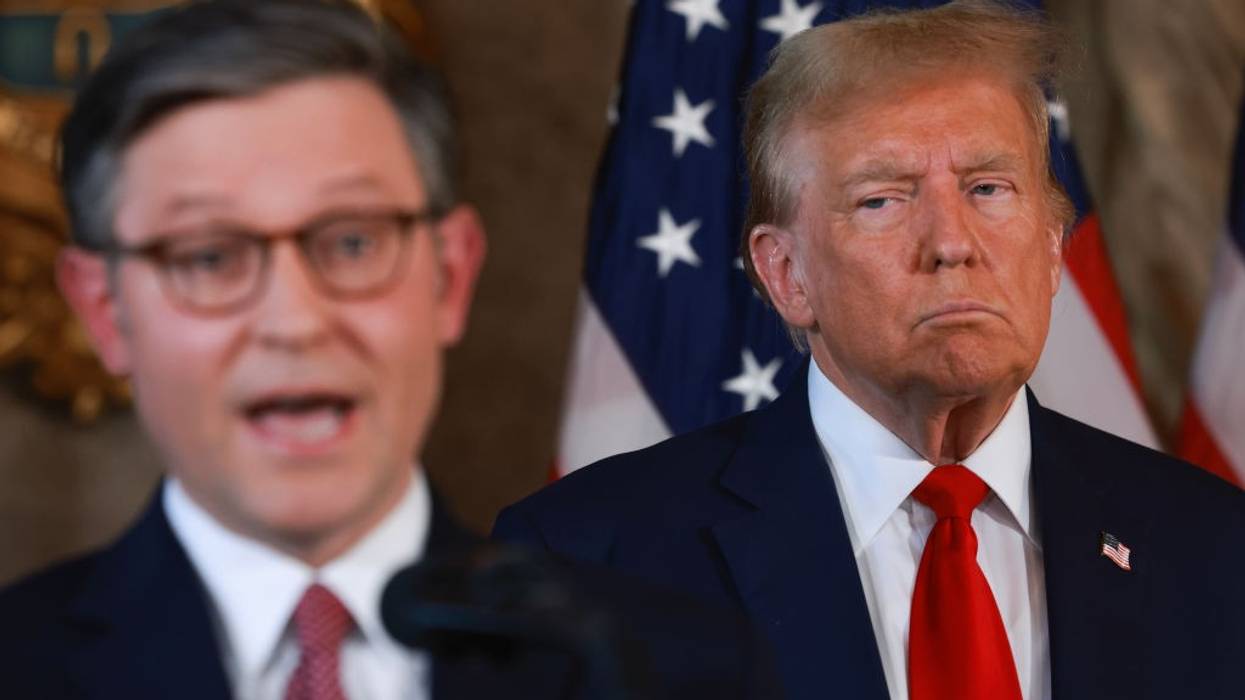
But if Republicans can hold the House, there’s a good chance that Speaker Mike Johnson would happily hold the vote to declare Harris’ win as “fraudulent.” After all, he’s the guy who corralled fully 147 votes against certifying the 2020 election in the House; his being the ringleader of that effort is the main reason he’s the speaker right now.
There are multiple razor-tight House races in California, Colorado, and New York. Trump and his co-conspirators may well believe that his holding rallies in those states represents the best bet for helping Republicans win those races, thus insuring Johnson is in charge of the House so they can refuse certification and throw the case to themselves via the Supreme Court.
Seizing control of the Senate would be the icing on the cake for this scheme, as it’s also sworn in on January 3rd and also votes to certify the Electoral College vote, but a deadlock is only necessary in one of the two legislative bodies, and if the 12th Amendment is invoked by six Republicans on the Supreme Court because of that deadlock only the House votes for president.
Keep in mind, JD Vance is still refusing to say that Trump lost the 2020 election, most recently stonewalling the question five times in a podcast interview with Lulu Garcia-Navarro of The New York Times last week. Donald Trump is also still asserting that he won, and is already signaling that he intends to declare victory in November regardless of the “official” outcome.
And, unlike in 2020, there are no longer Mitt Romneys, Adam Kinzingers, or Liz Cheneys in Congress who could gum up the works. The GOP is today unified in its assertion that voter fraud handed Joe Biden the 2020 presidency: this is the perfect setup for the scenarios I’m describing, and Republicans know it. They created it, in fact.
The most likely scenario, though, would involve local election officials gumming up the works by slow-walking counts, challenging counts, or outright refusing to certify counts at the state level long enough that several individual state votes can’t be certified by January 6th, very much like in the election of 1876.
That would provide an easy excuse for the six Republicans on the Supreme Court to intervene, invoke the 12th Amendment, and throwing the election to the House, guaranteeing Trump’s victory.
As Jim Rutenberg and Nick Corasaniti recently wrote for The New York Times:
“The Republican Party and its conservative allies are engaged in an unprecedented legal campaign targeting the American voting system. Their wide-ranging and methodical effort is laying the groundwork to contest an election that they argue, falsely, is already being rigged against former President Donald J. Trump. …
“Even if the cases fail, Mr. Trump’s allies are building excuses to dispute the results, while trying to empower thousands of local election officials to disrupt the process. Already, election board members in several states have moved to block certification of primary election tallies, including in a major swing county in Nevada last week.”
The updated Electoral Count Act sets a hard date of December 11th for states to certify the vote, but doesn’t detail any consequences or outcomes if states fail to meet that date. Thus, in the case of conflict, confusion, or multiple lawsuits the case would, again, end up before the six Republicans who control the Supreme Court.
As the Times’ Rutenberg and Corasaniti note:
“For his part, Mr. Whatley, the co-chair of the Republican National Committee, was noncommittal when reporters recently asked him if his party would seek to block certification in any states this fall.
“‘We’re not going to cross any of those bridges right now,’ he said.”
Gee, ya think? They couldn’t be telegraphing their plans any more clearly if they were skywriting them.
I wrapped up my March 2020 article predicting the GOP’s upcoming fake elector strategy by imploring Democrats and the media to ring the alarm before they tried to pull it off:
“Get it into the media and repeat it over and over again: The GOP plans to claim Democratic voter fraud in this election to steal the election for themselves, and they’re already getting people primed for it!”
It’s worth repeating today.
Pass it along.
Demented Donald would turn America into His Own Special Hell (HOSH, not MAGA). Harris would not lead us to heaven, but she’d take us to a better place and spare us from any of Trump’s shenanigans.
Eight years ago, Hillary R. Clinton seemed certain to derail Donald J. Trump’s barely begun political career. Instead, a witch’s brew of misogyny, mistakes, and the Electoral College gave us our second minority-vote president of the early 21st century.
Eight years later, here we are in the final weeks of a second presidential matchup with an equally possible stark and dark outcome, Trump versus Kamala Harris.
Demented Donald would turn America into His Own Special Hell (HOSH, not MAGA). Harris would not lead us to heaven, but she’d take us to a better place and spare us from any of Trump’s shenanigans. If she wins, she’d also finally add the United States to the list of nations together enough to elect a woman to the highest office in the land.
America’s Founding Fathers left us so much to be proud of. The Electoral College, on the other hand, is nothing to be proud of.
Now let’s examine some aspects of Election 2024, starting with the one that tops all the others: the almost laughable axiom that character counts in the race to the White House. This year, in the large, character counts for approximately zero.
The Republican candidate is a convicted felon, a sexual predator, a serial liar, a grifter, a racist, a poster boy for moral bankruptcy (and financial bankruptcy as well). None of which matters: Unfathomably, unbelievably, tens of millions of Americans will vote to put him back in the Oval Office for another four years.
Underlining the point—the irrelevance of character in Election 2024—the best comes last. A 449-page book by Vincent L. Sterling, published this June, argues (seriously) that Donald J. Trump has been chosen by God. Of course, of course; how could any character-conscious voter miss the divine clues that Sterling spies?
The Democrats pulled off a surprise by nominating little-known Tim Walz for vice president, and he returned the favor with a surprise of his own. The headline of one news report summed it up: “Tim Walz’s simple takedown of Republicans goes viral.”
Walz’s plain words, stingingly sharply, gave the Harris-Walz ticket an exhilarating liftoff: “These guys are creepy and yes, just weird as hell.”
When was the last time that major members of a political party openly opposed their chosen presidential nominee? Good for you for remembering it was only four years ago, and the candidate they couldn’t and wouldn’t vote for was Donald Trump. Among the non-Trumpers were marquee names by the scores, headed by former president George W. Bush. The nays also included three former secretaries of defense (William H. Cohen, Chuck Hagel and James Mattis) and Colin Powell, the former chairman of the joint chiefs of staff who went on serve as Bush’s secretary of state.
The number of Republicans repelled by Trump is only half the story in 2024, and it’s the other half that’s rocked and shocked both parties. In addition to opposing The Donald, droves of GOPers have also publicly declared they’ll be voting for Harris. Once again there’s a glittering roster of Republican turncoats, topped off this time by one of the most committed right-wingers ever to occupy the ranks of the right. That would be former Vice President Dick Cheney, who finally showed just a touch of the spine of his daughter Liz.
Cheney not only matched his daughter, he outmatched the man he served as vice president. Former President George W. Bush has no plans to endorse anybody in 2024. According to his office, “President Bush retired from presidential politics years ago.” (Note: Bush the retiree personally revealed that his vote in 2020 went not to Trump but to Condoleeza Rice.)
National security officials normally keep their presidential politics to themselves; not so, though, in the abnormal year of 2024.
Hundreds of high-ranking security personnel have not only thrown their support behind Harris, they’ve described Trump as “impulsive and ill-informed.” They see him as lacking in leadership and subject to a “scary authoritarian streak.” There were 741 signers to the letter that lays out their views, including U.S. Navy Rear Admiral Michael Smith, the president of National Security Leaders for America.
Come November 5, none of these ingredients will decide Election 2024; that power lies solely with the Electoral College.
America’s Founding Fathers left us so much to be proud of. The Electoral College, on the other hand, is nothing to be proud of. It’s been with us for our entire history, ever since the country was formed in Philadelphia in 1787. It was a compromise, inserted into the Constitution essentially to appease slaveholders in the colonial South.
Constitutional law expert Wilfred U. Codrington III describes it as a lasting stain: “More than two centuries after it was designed to empower southern white voters, the system continues to do just that.”
Stay tuned for November 5 (or the next day, or the next…)

The election deniers’s movement has spent years getting ready for 2024 with the goal of ensuring that a Republican is elected president.
For the past four years, former U.S. President Donald Trump has been building a cult of election deniers who believe his false claim that the 2020 presidential election was stolen from him.
They don’t care that no one has ever presented a shred of credible evidence to support Trump’s blatantly bogus claim.
Notwithstanding the lack of evidence, 69% of Republicans, including Republican-leaning independents, have said they believe Joe Biden is an illegitimate president, a direct result of Trump’s massive disinformation campaign.
Election deniers are preparing to try to elect Trump at all costs, no matter who the voters choose. An all hands-on-deck legal effort will be required to stop this from happening.
The election deniers’s movement has spent years getting ready for 2024 with the goal of ensuring that a Republican is elected president.
According to a recent study by the Center for Media and Democracy, there are 102 election deniers on election boards in eight battleground states. These election deniers, the study found, have majority power in 15 counties in battleground states, including seven in the critical state of Pennsylvania.
Now they are moving into action, preparing to throw up various roadblocks to help elect Trump.
One of their key lines of attack is to delay and obstruct the certification of the winner in their state. Under the Electoral Count Reform Act—enacted in the aftermath of Trump’s attempted 2020 election coup—the deadline for a state to certify its electors is December 11. Failure to meet that deadline could mean the electoral votes in that state would not be considered in the final tally.
If that happens in one or more states, it could mean that Trump wins the electoral vote majority or alternatively that the race is thrown to the House of Representatives where Republicans are expected to control a majority of state delegations and elect Trump.
(The Constitution provides that if a presidential race ends up in the House, each state delegation gets one vote.)
In 2020, Trump, in his infamous phone call, pressured and threatened Georgia Secretary of State Brad Raffensperger to find 11,780 votes that would give Trump the win in Georgia. Raffensperger, a Republican, rejected Trump’s pressure.
Georgia is once again center stage.
Georgia’s State Board of Elections is controlled today by election deniers and has been adopting new last-minute election rules with no plausible justification other than to tilt the state for Trump.
The Georgia Board recently adopted a rule requiring counties to hand count the ballots cast in the state to determine whether the number of paper ballots matches the voting machine count. While small rural counties may be able to comply with this burdensome last-minute requirement, large urban areas, which favor Democrats, don’t have the capacity to do this kind of paper ballot counting. Nor is it necessary.
The conservative Republican attorney general warned that the rule is likely unlawful. The rule is expected to be challenged in court.
This ballot-counting rule follows another rule by the Georgia Board that requires counties to make “reasonable inquiries” into the balloting before certifying the results, another rule subject to abuse by election deniers seeking to obstruct certification. This rule is being challenged in court.
Meanwhile, in Mississippi, a ridiculous challenge has been made in federal court to a rule—similar to one in place in 20 states—that allows a state to count mailed-in ballots received up to five days after Election Day if the ballot is postmarked by Election Day. This challenge, with national implications, was argued Tuesday before a conservative three-judge panel.
Election deniers are preparing to try to elect Trump at all costs, no matter who the voters choose. An all hands-on-deck legal effort will be required to stop this from happening.
Fortunately, that effort is underway.
That effort is being led by former U.S. Solicitors General Seth Waxman and Donald Verrilli Jr., two of the nation’s premier Supreme Court and appellate advocates. Also leading the effort are Dana Remus, a former White House counsel, with Covington and Burling; Bob Bauer, a former White House counsel; and John Devany, a Partner at Perkins Coie. They and a team of dozens of lawyers are representing Vice President Kamala Harris and the DNC.
Waxman and Verrilli, along with a third former U.S. solicitor general, the late Walter Dellinger, led the successful defense of the 2020 presidential election results, which included overwhelming victories against the dozens of baseless efforts by Trump and his supporters to try to overturn the Biden victory.
We can be confident that the supremely skilled and talented Waxman and Verrilli with their impressive history of major legal successes, and the team of dedicated colleagues, will protect our elections in the courts this election season.
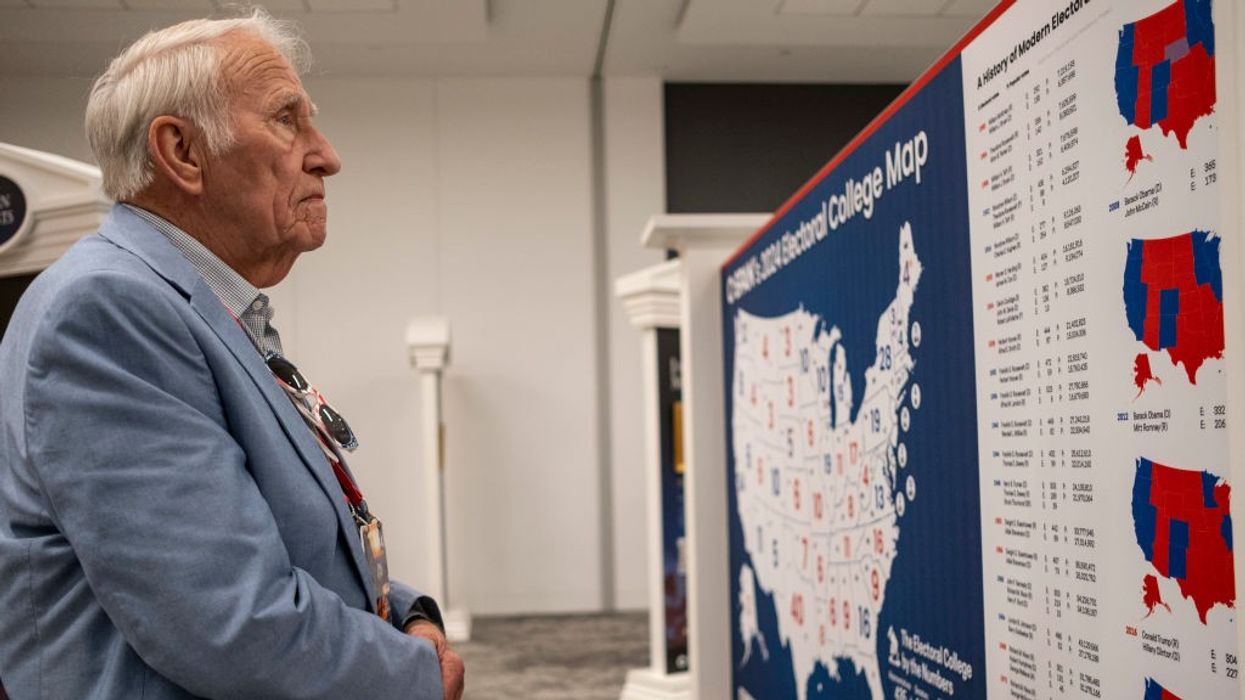
The polling follow a Republican push to change Nebraska rules to boost GOP nominee Donald Trump's chances of winning in November.
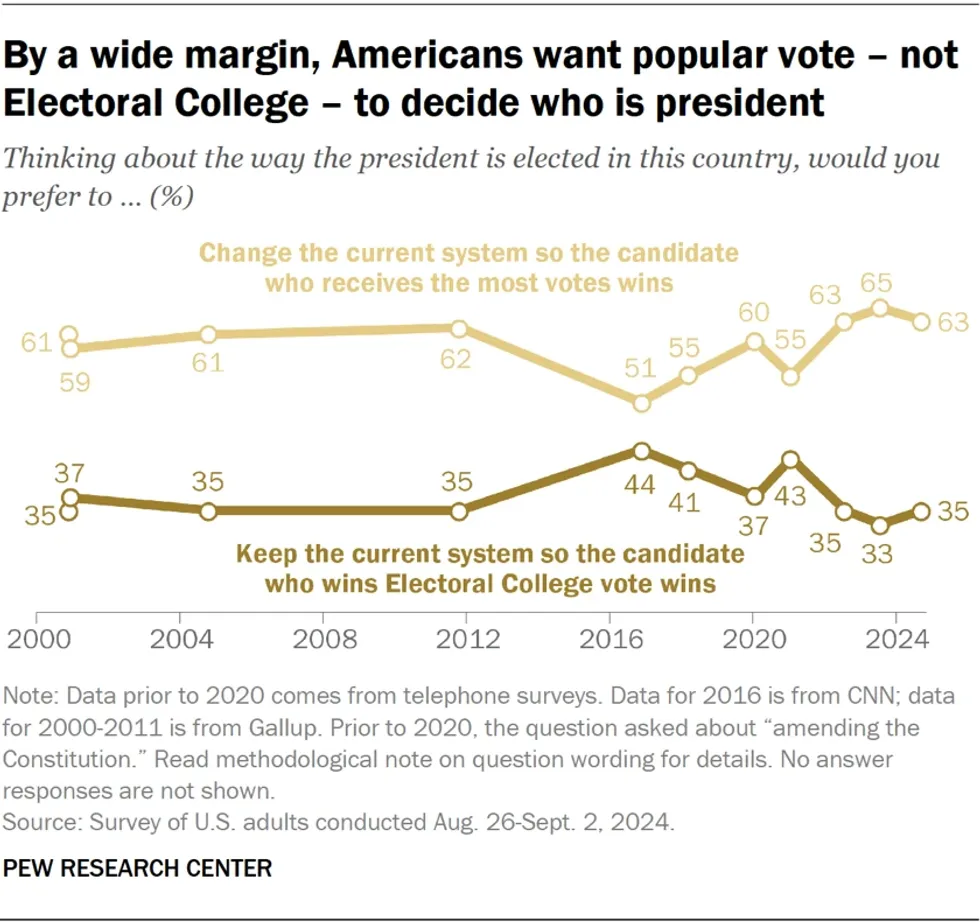
Polling results released Wednesday, less than six weeks away from November's Election Day, show that a majority of Americans want to ditch the Electoral College and "would instead prefer to see the winner of the presidential election be the person who wins the most votes nationally."
Pew Research Center surveyed 9,720 adults across the United States in late August and early September, and found that 63% want to abolish the process outlined in the U.S. Constitution and replace it with a popular vote approach, compared with just 35% who favor keeping the current system.
The Electoral College is made up of electors who are supposed to act on behalf of their state's voters. Each state gets the same number of electors as its members of Congress, and Washington, D.C. gets three electors, bringing the current total to 538. The candidate who secures 270 electoral votes becomes the next president.
D.C. and most states allocate all of their electoral votes to the winner of the popular vote in their state, though Maine and Nebraska give two votes to the statewide winner, and the remaining votes to the most popular candidate in each congressional district.
Pew noted Wednesday that "some Republicans have been pressing to change Nebraska's rules so that the statewide winner gets all five of its electoral votes. This would likely work to former President Donald Trump's advantage, given Nebraska's consistent support of GOP presidential candidates."
Republican Nebraska Gov. Jim Pillen confirmed Tuesday that he has no plans to call a special legislative session to restore a winner-takes-all approach before the November election, in which Trump is set to face Democratic Vice President Kamala Harris.
There have been just five presidential contests in which the Electoral College winner did not also win the nationwide popular vote—1824, 1876, 1888, 2000, and most recently in 2016, when Trump beat Democrat Hillary Clinton by securing key "swing states."
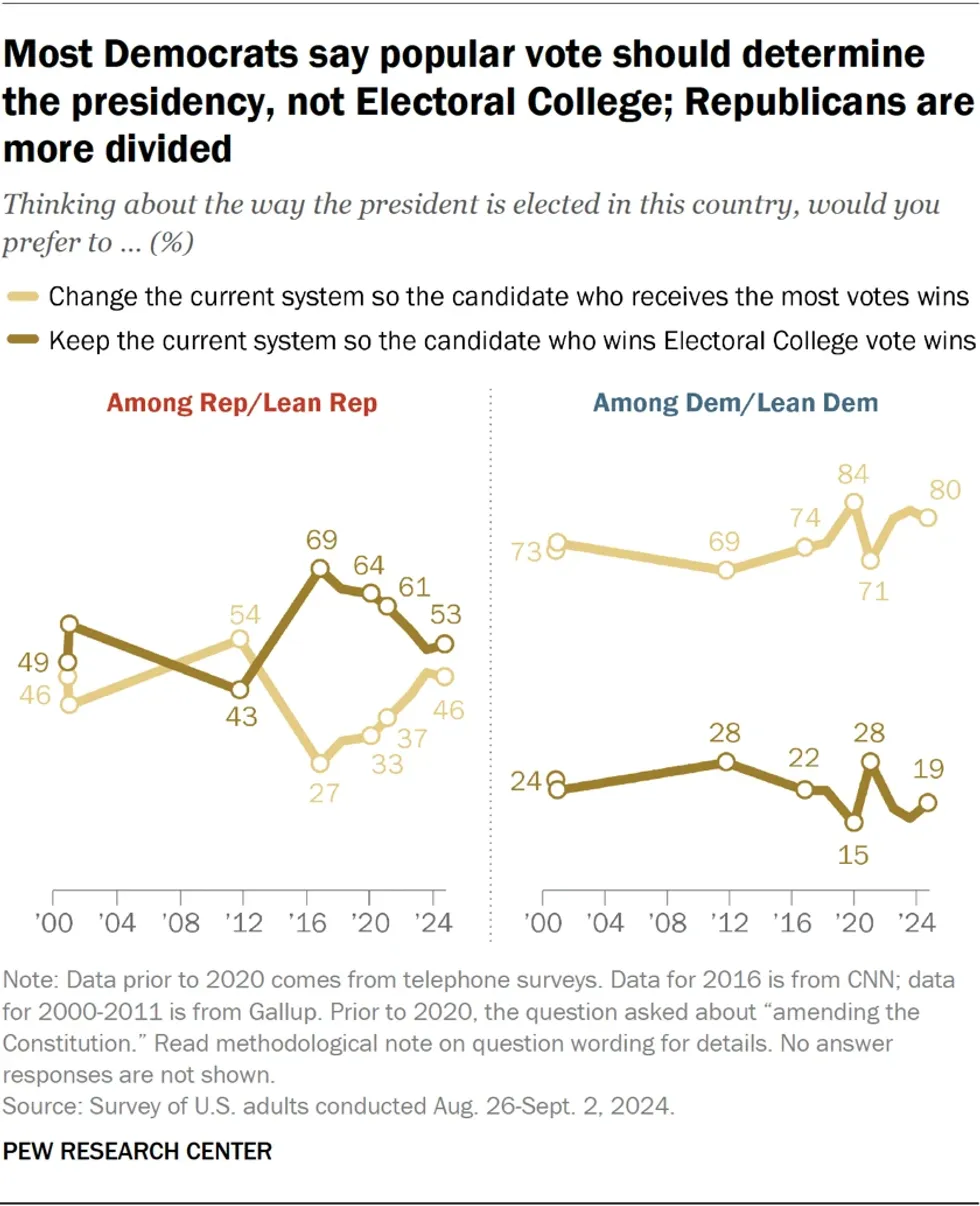
Continuing a trend that's lasted over two decades, 8 in 10 Democrats and Democratic-leaning Independents told Pew that they prefer a popular vote system for the presidential contest, while Republicans and Independents who lean toward the GOP were more divided: 53% want to retain the Electoral College and 46% would like to replace it.
"Reference sources indicate that over the past 200 years more than 700 proposals have been introduced in Congress to reform or eliminate the Electoral College," according to the National Archives. "There have been more proposals for Constitutional amendments on changing the Electoral College than on any other subject."
Among them is a joint resolution that Congressman Steve Cohen (D-Tenn.) introduced just days after Trump incited a violent mob to disrupt the certification of his 2020 loss by storming the U.S. Capitol on January 6, 2021—for which the Republican nominee faces ongoing legal trouble.
"Americans expect and deserve the winner of the popular vote for any office to win and assume that office," Cohen said at the time. "More than a century ago, we amended our Constitution to provide for the direct election of U.S. senators. It is past time to directly elect our president and vice president. The Electoral College is a vestige of the 18th Century when voters didn't know the candidates who now appear daily on their phones and television screens."
"Last week's mayhem at the Capitol shows that attempts to manipulate the Electoral College vote by politicians employing falsehoods are a real danger," he added. "The president should always be elected by the people, not by politicians. Currently, the system allows politicians to make the ultimate decision. It is well past time to do away with this anachronistic institution and guarantee a fair and accurate vote for president."
One of his Majesty's first so-called “official acts" should be to issue an arrest warrant for his insurrectionist predecessor, Donald Trump, for trying to overthrow the U.S. government and the constitution. After that, pack the court with sane justices to restore law and order in the land.
If Joe Biden wants to recuperate his lagging campaign and demonstrate his presidential strength, he should immediately seize upon the opportunity just presented to him by the six wingnuts on the Supreme Court in their ruling in Trump v. United States (the most appropriately named case this term). He should begin by unilaterally (or unitarily as the theory goes) defining what constitute “official acts” of the President. As the power now vested in him by this decision this should be well within his purview and should be conceived as broadly and deeply as possible.
Of course, one of his first such “official” acts should be to issue an arrest warrant for his insurrectionist predecessor for trying to overthrow the U.S. government and the constitution. Under his new authority, he should be able to waive any trial (or associated delays and appeals) and summarily jail the now convicted felon, forthwith. And, it should be crystal clear that he would be able to deal appropriately with any of the MAGA crowd that attempts to rise up in response to this action. National Guard anyone?
Of course, Biden being Biden, he has already snatched defeat from the jaws of victory by declaring that he will “follow the law” no matter what kinds of powerful openings this ruling provides. You can bet that his predecessor and successor will have no such compunction.
He should then turn his attention to making the government and our “democracy” functional. A first task here would be rectifying the stolen U.S. Supreme Court seats by packing the Court with sane justices who will follow the law instead of their cultish “leader.” I recognize the risk here that such a Court might seek to reign in a newly empowered President, but careful vetting and selection could circumvent these possible inconveniences. He might then turn his attention to the electoral system to make sure that one person/one vote is the rule rather than the too rare exception. Get rid of the Electoral College, outlaw partisan gerrymandering, and expand access to the vote and make voting itself easier. Then it’s on to Congressional reform: eliminate the filibuster, greatly expland the power of Presidential signing statements to shape legislation to his liking, declare Presidential vetoes the final word on legislation he dislikes.
Beyond these good government tasks, it is tantalizing to imagine a slate of non-reversible executive orders covering all those vital national needs that an oppositional Congress and the courts have impeded for years: women’s’ bodily autonomy, universal health care, child tax credits, climate legislation and a real green deal, strengthening pro-labor and environmental protection laws, real immigration reform, curbing wealth and income inequality, reshaping tax policy and spiraling corporate greed, addressing homelessness, and on and on.
Of course, Biden being Biden, he has already snatched defeat from the jaws of victory by declaring that he will “follow the law” no matter what kinds of powerful openings this ruling provides. You can bet that his predecessor and successor will have no such compunction.
And further, Biden being Biden, the whole notion of a vivid and vibrant imagination guiding political or policy action is largely inconceivable. But perhaps some of his close advisors (if they can’t persuade him to drop out which would be eminently preferable) will see this as a chance to hone their puppeteering skills during the his final months in office. Could do the country some good.
The biggest challenge to our democracy may lie in the absence of any long-term focus on the need for fundamental structural changes in how our elections are run.
Officials and election experts are now struggling in a big-time way. How, they wonder, can they effectively address mounting threats—of violence, election denialism, foreign influence, and voter discrimination? Do they run the risk of alarming the public to the point of reducing voter turnout? Are there reasons to assuage fears about either election disinformation or possible election interference in 2024? Standing in Pointe du Hoc, France, to mark the anniversary of D-Day, U.S. President Joe Biden told the world that those who fought in that pivotal battle are “asking us to do our job: to protect freedom in our time, to defend democracy.” Election security would be a good place to start.
Perhaps one way to assess the question of election stability and security in 2024 is to ask: How different is this election from earlier tumultuous ones in American history?
What, if any, lessons can we draw from the past? Or are we in genuinely uncharted territory today?
In truth, when it comes to presidential elections, this country has faced some frightening moments in its history, ones that touch on a number of the fears that confront us today. We may never have faced the likes of Donald Trump, but we have experienced disputed vote tallies, Supreme Court interference, threats of violence, voting rights restrictions, and a lack of confidence in the process itself.
Donald Trump has made no bones about it. Should he lose the coming election, he reserves the “right” to refuse to accept the results. In 2020, his denial of the results led to a violent attempt to block Congress from certifying the vote on the following January 6. To date, any accountability for his past actions has been minimal. Found guilty last month of falsifying business records to conceal election law violations in 2016, he has yet to be sentenced and may well appeal all the way up to a sympathetic Supreme Court. Moreover, he hasn’t been tried yet in Georgia and in federal court in Washington, D.C., on significantly more serious criminal charges about ways he and his followers tried to subvert the results of the 2020 election—and he’s unlikely to be before the November elections.
Most Republicans have remained at his side. Indeed, election denialism has become a rallying point rather than a mark of shame. As a result, the former president continues to engage in implied threats to the democratic political process with unwavering partisan support. And were he to disappear from the political scene thanks to a decisive defeat in 2024, others could follow him in exploiting the democratic system for political gain.
While there have been a handful of disputed presidential election results since the country’s founding, two stand out. In the election of 1876, Republican Rutherford B. Hayes lost the popular and electoral vote to Samuel Tilden. The Republicans protested that, in three states, the results were uncertain. To resolve the issue, Congress created a bipartisan panel, including House and Senate representatives and five Supreme Court justices. That panel then granted Hayes all 20 disputed electoral votes, giving him a one-point electoral margin over Tilden, and so making him president. Ultimately, the country found a way forward.
Along with the knowledge that uncertainty can accompany election results, Americans sense as well that violence could indeed loom in as yet unknown ways, thanks to Election 2024.
More than a century later, in the 2000 election between Republican George W. Bush and Democrat Al Gore, the results again lay in dispute. Gore had won the popular vote, but the electoral vote was too close to call. All eyes focused on Florida where the results would determine the outcome. Although the Florida Supreme Court ordered a statewide recount, the Supreme Court stopped it and, in doing so, made Bush president.
In neither post-election resolution did the losing candidate contest the results, though Tilden waited four months before conceding. The day after the Supreme Court’s decision, Gore conceded, saying, “I accept the finality of this outcome”—a stark contrast to Donald Trump who still refuses to concede that the 2020 election result was legitimate.
It’s worth mentioning that both elections had major consequences. Hayes’s win, the result of a brokered deal, also ended the post-Civil War Reconstruction era and led to the withdrawal of U.S. troops from the South. That election would prove an integral part of efforts to undo the biggest push the nation ever had to achieve racial justice.
The Bush administration, in turn, failed to prevent the attacks of September 11, 2001, and then launched a multidecade-long “war on terror” that would destabilize parts of the globe from South Asia to the Middle East and Africa, while, according to the Costs of War Project, leading to the deaths of more than 7,000 American service members and more than 177,000 allied military and police in conflicts ranging from Afghanistan and Pakistan to Iraq and Syria, not to mention the deaths of more than 430,000 civilians.
Along with the knowledge that uncertainty can accompany election results, Americans sense as well that violence could indeed loom in as yet unknown ways, thanks to Election 2024.
It’s not that Americans have never experienced the threat of violence around elections. The Civil War years saw numerous outbreaks of violence. In 1861, a mob of Confederate supporters tried to gather to storm Congress to stop the certification of Abraham Lincoln as president. There was no violence only because General Winfield Scott, a southerner, made sure the Capitol was protected.
So, too, in 1868, in the runup to the first election of the Reconstruction era between Ulysses S. Grant and Horatio Seymour, Ku Klux Klan violence led to thousands of murders in Georgia, Kansas, and Louisiana, and threats of violence kept voters away from the polls in droves. In the 1876 Tilden-Hayes election in which four states submitted multiple slates of electors to Congress, one popular slogan was “Tilden or Blood.” Expecting violence, President Grant secured the Capitol with troops and prepared to deploy them elsewhere as well.
And then (as now), race and violence were a distinct issue. In 1873, white mobs assaulted a courthouse in Colfax, Louisiana, to remove pro-Reconstruction Republican officials. In 1898, a horde of white North Carolinians conducted a coup against the fusionist government of the city of Wilmington to empower reactionary southern Democrats.
The embrace of such anti-democratic sentiment by such a potentially powerful figure and his party at a time when global anti-democratic forces are on the rise has already created an historically rare level of instability in this country.
During the last part of the 19th and early 20th centuries, southern Jim Crow laws imposed in response to Reconstruction produced literacy tests and poll taxes that disenfranchised Black voters. And in the 20th century, racially motivated violence aimed at suppressing the vote became a regular part of election politics.
During “Freedom Summer” in 1964, three civil rights workers—James Chaney, Andrew Goodman, and Mickey Schwerner—were killed by white terrorists for participating in Black voter registration initiatives in Mississippi. When demonstrators were assaulted by police and white mobs on the Edmund Pettus Bridge in Alabama during a nonviolent march on March 7, 1965, in support of voting rights legislation, the nation witnessed just how much brutality then existed when it came to those seeking to fulfill the nation’s democratic promise.
Experts anticipate a surge of violence at the polls in 2024. A Brennan Center survey found that, since 2020, “38% of local election officials experienced threats, harassment, or abuse for doing their jobs.” To counter this, the federal government and individual states have already mounted efforts intended to protect both voters and officials. Since 2020, in fact, the Department of Justice, the Department of Homeland Security, and Congress have ponied up an extra $205 million for election protection. And yet, as the Brennan Center points out, a growing fear of violence and harassment has led to “an exodus from the field” of election work. Not surprisingly, a recent Ipsos/Reuters poll reported that two out of three Americans are concerned about the prospect of election violence in 2024 and fear the possibility of a worse version of the January 6 insurrection at the Capitol.
Violence at the polls has, in fact, plagued elections throughout the nation’s history, as Steven Hahn recounts in his new book, Illiberal America, while the Voting Rights Act of 1965 proved to be fragile indeed, as red states continued to put voting restrictions in place based on false allegations of voter fraud.
Worse yet are the threats already emanating from former president Trump and Republicans close to him. The embrace of such anti-democratic sentiment by such a potentially powerful figure and his party at a time when global anti-democratic forces are on the rise has already created an historically rare level of instability in this country.
Past negative experiences have, in our moment, been twisted into newly dangerous configurations.
And keep in mind that not all the dangers of this moment have a footprint in the American past. There are new challenges that face the nation today. Disinformation is a case in point. While false information has always been a part of politics—smears against alleged communists were, for instance, a staple of the early Cold War years—the Internet has proven a game-changer when it comes to facilitating false narratives that could lead to both voter suppression and a deep mistrust of election results.
The scale and scope of disinformation in the modern age has no precedent. Without editorial control and given the ease of disseminating misinformation, guardrails have crumbled. Experts warn that the massive communications infrastructure that transmits bad information could undermine confidence in election results in ways never before seen. Worse yet, Artificial Intelligence is likely to prove a particularly dangerous mechanism for producing electoral deepfakes.
Additionally, foreign interference seems now to have become a permanent feature of American elections, although to what end remains in question. As the 2019 report issued by Special Counsel Robert Mueller demonstrated, Russia’s attempts to interfere with the 2016 election, including conducting “information warfare” and attacking voter databases, proved “sweeping and systematic.”
When it comes to elections, despite Donald Trump, it’s not been all downhill. In 2021, the Department of Justice launched an Election Threat Task Force aimed at individuals who posed threats to election workers. To date, 17 people have indeed been prosecuted. Significantly, in 2022, Congress passed the Electoral Count Reform Act, an attempt to update the Electoral Count Act of 1887 and improve the process of certifying the vote, ensuring that the transition period between election day and inauguration day goes smoothly. In addition, in 2022, Congress passed legislation to establish a Foreign Malign Influence Center to counter disinformation from overseas generally, not just in elections.
The federal courts have also proven to be barriers against electoral subversion. In the wake of the 2020 election, they repeatedly denied Donald Trump success in his efforts to overturn the results. Yet even this source of democratic protection has been limited, while the present all too conservative Supreme Court, which in 2013 gutted the Voting Rights Act, has continued to weaken voter protections.
The question then remains: What do the lessons of history—and recent reforms—tell us about our current moment? On the one hand, history suggests that election dysfunction has been overcome time and again. Whether we’re talking about contested results, challenges to voter suppression, outbreaks of violence, or presidents elected without national majorities, such situations have been resolved reasonably successfully in the past. Meanwhile, new measures have been put in place for the security of election workers, the certification of the vote, and the deterrence of voter suppression in new ways. In other words, American democracy has continued, despite deeply rooted problems.
Rather than facing a continual nip and tuck of problems as they appear, what we really need is a commission that will offer a full-scale rethinking of election security in the 21st century, while focusing on getting Congress to move toward developing a comprehensive new strategy to deal with it.
And yet, it’s also clear that past negative experiences have, in our moment, been twisted into newly dangerous configurations. In place of contested elections, there is now outright election denialism. In addition to racially motivated violence, there’s growing extremist violence aimed at the institution of voting itself. In place of partisan campaign rhetoric, we’re experiencing the spread of hate speech based on race, ethnicity, gender, or simply opposition to democracy itself. Instead of support for the outlawing of post-election violence, we now live with references to the imprisoned offenders of January 6, 2021, as “hostages.” And just because this country has survived challenging times in the past doesn’t mean it will do so again, particularly as pressure against democratic norms ramps up globally.
Many would blame such election instability on Donald Trump alone and there’s no question that he does have a profound knack for manipulating public discourse and threatening to upend election laws, not to speak of the rules, norms, and processes that underlie election legitimacy. However significant, though, he’s not the only factor that warrants attention in this election year.
The largest threats to our elections now come not from weaponized technology, or a tone-deaf Congress or Supreme Court, or even perhaps from Donald Trump himself (though dangerous he may be). The biggest challenge may lie in the absence of any long-term focus on the need for fundamental structural changes in how our elections are run. For centuries, we as a nation have made incremental changes in response to moments of election-related crisis. But far more is needed if we are to escape a future in which questions about whether the electoral process itself is legitimate and whether the results will be accepted become part of every election season.
Our democratic system seems increasingly frail. To face the future with confidence in the most elemental building block of our democracy, we need a longer-term perspective. The elimination of the Electoral College, greater accountability for violence in and around elections, tools for curbing disinformation and improving election administration, a vast increase in funding for public education about polling sites and candidate platforms, strict accountability for attempted voter suppression, and heightened efforts to secure voting rights for all are badly needed. In other words, rather than facing a continual nip and tuck of problems as they appear, what we really need is a commission that will offer a full-scale rethinking of election security in the 21st century, while focusing on getting Congress to move toward developing a comprehensive new strategy to deal with it. Even if we get through the 2024 election cycle intact and violence-free, the task of election reform remains both essential and, sadly, all too ignored.
Perhaps, however, there could be a silver lining in our unnerving moment if our ongoing election troubles lead us to conclude that the time for keeping our fingers crossed should end and the time for wholesale reform begin.

"As the saying goes, when people show you who they are, believe them," said a Democratic National Committee spokesperson.
Robert F. Kennedy, Jr.'s stated platform in the 2024 presidential race centers on promoting an "honest government," a "clean, healthy environment," and the protection of civil liberties—but his New York State director last week boiled down the Independent campaign's true goal at a meeting with Republican voters: ensuring former President Donald Trump wins the election.
Speaking at a meeting last Thursday, Rita Palma first checked to make sure there were "no Biden voters in the house" before telling her audience that her "No. 1 priority" is to ultimately take electoral votes away from President Joe Biden.
"The Kennedy voter and the Trump voter," said Palma, "our mutual enemy is Biden."
States including New York, California, and "most of the Northeast" are likely to vote for the Democratic president, she continued, but if Kennedy, whom Palma referred to as Bobby, is on the ballot in New York, the campaign could help "get rid of Biden."
video shows RFK Jr’s NY director laying out a clear plan:
“The Kennedy voter & the Trump voter—our mutual enemy is Biden. … if nobody gets to 270, Congress picks the president. So who are they going to pick if it’s a R Congress? They’ll pick Trump.”pic.twitter.com/YQKDcEFUlm
— Edward-Isaac Dovere (@IsaacDovere) April 8, 2024
She urged the assembled GOP voters to give their "vote to Bobby and at least get rid of Biden and give those 28 electoral votes to Bobby rather than to Biden, thereby reducing Biden's 270 [electoral votes]."
"Two hundred seventy wins the election," added Palma, who was hired by Kennedy's campaign after she canvassed for Trump in 2016 and 2020. "If nobody gets to 270 then Congress picks the president, so who are they gonna pick if it's a Republican Congress? They'll pick Trump, so we're rid of Biden either way."
Political observers have noted in recent months that Kennedy has drawn support from right-wing billionaires, but Palma's blunt description of her plan to "block Biden from winning the presidency" left critics stunned as the video of the event circulated on social media on Monday.
"Whole thing is an epic fraud. Kennedy is spouting Russian propaganda, is now openly betraying the country," said political strategist Simon Rosenberg, referring to the candidate's recent comments about Russia's claim that it aims to "de-Nazify" Ukraine.
"RFK Jr.'s campaign is saying the quiet part out loud," Matt Corridoni, spokesperson for the Democratic National Committee, told CNN. "As the saying goes, when people show you who they are, believe them: RFK Jr.'s campaign isn't building a plan or a strategy to get 270 electoral votes, they're building one to help Trump return to the Oval Office."

On Wednesday, Maine’s legislature passed a bill joining a compact to commit all of their electoral votes, regardless of who won in their individual state, to whichever candidate won the national popular vote.
What if the person the majority of Americans voted for became president? It usually happens, but no Republican has been initially elected to the White House by a majority of Americans since 1988.
Just imagine how different America (and the world) would be today if neither George W. Bush nor Donald Trump had ever set foot in the White House because both lost the federal election, the national popular vote.
This week, the State of Maine took America one giant step closer to ending the antidemocratic grip the GOP’s had on our presidential elections. Even though George W. Bush lost the 2000 election by a half-million votes nationally and Donald Trump lost in 2016 by 3 million votes, both ended up in the White House because of the Electoral College.
The Electoral College was a compromise designed to keep the president above political considerations; it was sold to the public as a way to prevent an agent (witting or unwitting) of a foreign power from becoming president. It has failed on both counts.
The problem with getting rid of the Electoral College is that it’s written into the Constitution: Amending that document takes two-thirds of the House and Senate and three-quarters of the states, and that isn’t happening any day soon.
But, because the Constitution also says that individual states can determine on their own how to assign their electoral votes, there’s a way to get around the Electoral College altogether.
Right now, all but two states give 100% of their electoral votes to the presidential candidate who won the most votes in the state (Maine and Nebraska split their states in two but assign all electoral votes to whoever won the most popular votes in each region).
But they don’t have to: A state, under the Constitution, can assign their electoral votes to any candidate they want.
When it looked like Al Gore was going to win Florida in 2000, for example, the speaker of the Florida House prepared legislation authorizing the governor, Jeb Bush, to give the state’s electoral votes—and, thus, the presidency—to his brother George W. Bush, regardless of who the recount determined won the popular vote in that state.
So, some smart political and constitutional minds got together and came up with a system whereby states representing 270 electoral votes (the amount to become president) pledge to commit all of their electoral votes, regardless of who won in their individual state, to whichever candidate won the national popular vote.
To accomplish this, they organized what they call the National Popular Vote Interstate Compact (NPVIC), and states have been signing up for several decades. With Maine, they’re at 209 Electoral College votes, and Michigan (with 16 Electoral College votes) will be the next state to join, as the National Popular Vote legislation is working its way through their legislature now.
By about two-to-one, 65% of Americans favor this change so the person who wins the country also wins the White House. As you can imagine, Republicans hate the idea and are threatening litigation under an ancient and anachronistic law if it passes.
By this system, we would have had President Al Gore and President Hillary Clinton, the Supreme Court would today have a pronounced progressive tilt, a half-million Americans would not have died of Covid-19, and the country wouldn’t have lost two decades in the fight against global warming.
All because that’s what the majority of Americans actually voted for. Democracy, after all!
On Wednesday, Maine’s legislature passed (with votes of both Democrats and Republicans) a bill joining the compact, bringing the total number of electoral votes now held by compact states to 209. With Michigan, we’ll be at 225.
Most Americans are rightly confused by the entire process, and only a small percentage could even accurately describe what the Electoral College is or why it’s in the Constitution.
The history is fascinating.
America’s founders and framers thought they could use the Electoral College to prevent somebody like Donald Trump from ever becoming president. Seriously.
Unfortunately, they were wrong, and now we’re paying the price.
It’s often said that the Electoral College was brought into being to perpetuate or protect the institution of slavery, and, indeed, during the first half-century of America, it gave the slave states several presidents who wouldn’t have been otherwise elected.
This is because there’s one elector in the college for every member of the House and Senate (and three for the District of Columbia). When the three-fifths compromise was in effect (until just after the Civil War), slave states had more members in the House of Representatives than the size of their voting public “deserved.”
(It’s now true of Red States and the Senate, where Republicans represent only 145 million Americans and Democrats represent 186 million Americans, but Republicans hold fully 50% of the vote.)
This explains, in part, why when James Madison proposed the Electoral College, the framers seized on it as a compromise and solution after weeks of drawn-out and often angry debate on how to select a president.
Most amazing, according to the framers of the Constitution themselves, the real reason for the Electoral College was to prevent a foreign power (like Russia) from placing their stooge in the White House.
Today we’re horrified by the idea that Donald Trump may actually be putting first the interests of Russia and China, and that money and other efforts from multiple foreign entities may have helped him get elected.
It’s shocking, something we never even really took seriously when, for example, the movie Manchurian Candidate came out back in the day. What a cute idea for a movie, we thought; that could never happen here.
But this was actually a big deal for the founding generation. One of the first questions about any candidate for president during that era was, “Is he beholden in any way to any other government?”
At the time of the Declaration of Independence, it’s estimated that nearly two-thirds of all citizens of the American colonies favored remaining a British colony (Jimmy Carter’s novel The Hornet’s Nest is a great resource); there were spies and British loyalists everywhere, and Spain had staked out their claim to the region around Florida while the French were colonizing what is now Canada and Louisiana. Foreign powers had us boxed in.
In 1775, the year the Revolutionary War unofficially started, virtually all of the colonists had familial, friendship, or business acquaintances with people whose loyalty was suspect or who were openly opposed to American independence.
It was even rumored that Ben Franklin was working as a spy for British intelligence (and, it turns out, evidence shows he was, only against France when he lived in Paris). Conservative Federalists, in particular, were wary of Franklin’s “internationalist” sentiments.
Thomas Jefferson was living in France when the Constitution was being written, and his political enemies were, even then (it got much louder around the election of 1800), whispering that he had, at best, mixed loyalties. In response, he felt the need to protest to Elbridge Gerry that, “The first object of my heart is my own country. In that is embarked my family, my fortune, and my own existence.”
When John Adams famously defended British soldiers who, during an anti-British riot on March 5, 1770, shot and killed Crispus Attucks and four others, he was widely condemned for being too pro-British, an issue that recurred in 1798 when, as president, Adams pushed the Alien and Sedition laws through Congress over Vice President Thomas Jefferson’s loud objections. British Spy Gilbert Barkley wrote to his spymasters in London that Quakers and many other Americans considered Adams an enemy to his country.
And after the Revolutionary War, the nation was abuzz about one of that war’s most decorated soldiers, Benedict Arnold, once considered a shoo-in for high elected office, selling out to the British in exchange for money and a title.
So, it fell to a fatherless man born in Nevins to explain to Americans that the main purpose of the Electoral College was to make sure that no agent of a foreign government would ever become president.
Back then, America was so spread out it would be difficult for most citizens and voters to get to know a presidential candidate well enough to spot a spy or traitor, Alexander Hamilton explained in Federalist 68. Therefore, the electors—having no other governmental duty, obligation, or responsibility—would be sure to catch one if it was tried.
“The most deadly adversaries” of America, Hamilton wrote, would probably “make their approaches [to seizing control of the USA] from more than one quarter, chiefly from the desire in foreign powers to gain an improper ascendant in our councils.”
Influencing public opinion or owning a senator was nothing compared to having their man in the White House. As Hamilton wrote:
How could they better gratify this, than by raising a creature of their own to the chief magistracy [presidency] of the Union?
But, Hamilton wrote, the framers of the Constitution “have guarded against all danger of this sort, with the most provident and judicious attention.”
The system they set up to protect the White House from being occupied by an agent of a foreign government was straightforward, Hamilton bragged.
The choice of president would not “depend on any preexisting bodies of men, who might be tampered with beforehand to prostitute their votes.”
Instead, the Electoral College would be made up of “persons [selected] for the temporary and sole purpose of making the appointment.”
The electors would be apolitical because it would be illegal for a senator or House member to become one, Hamilton wrote:
And they have excluded from eligibility to this trust, all those who from situation might be suspected of too great devotion to the president in office. No senator, representative, or other person holding a place of trust or profit under the United States, can be of the numbers of the electors.
This, Hamilton was certain, would eliminate “any sinister bias.”
Excluding members of Congress who may be subject to bribery or foreign influences, the electors would select a man for president who was brave of heart and pure of soul:
“The process of election [by the electoral college] affords a moral certainty,” Hamilton wrote, “that the office of President will never fall to the lot of any man who is not in an eminent degree endowed with the requisite qualifications.”
Indeed, while a knave or rogue or traitor may fool enough people to even ascend to the office of mayor of a major city or governor of a state, Hamilton believed the Electoral College would ferret out such a traitor.
He wrote:
“Talents for low intrigue, and the little arts of popularity, may alone suffice to elevate a man to the first honors in a single State; but it will require other talents, and a different kind of merit, to establish him in the esteem and confidence” of the men in the Electoral College who would select him as president “of the whole Union...”
Hamilton’s pride in the system that he himself had helped build was hard for him to suppress. He added in Federalist 68:
It will not be too strong to say, that there will be a constant probability of seeing the station filled by characters preeminent for ability and virtue.
Unfortunately, as Donald Trump proves, things haven’t worked out that way.
Because the three-fifths compromise gave more electors to the slave states than their voting population would indicate, the Electoral College handed the White House to four Virginia slaveholders among our first five presidents. Since that compromise has been eliminated, the Electoral College has continued to wreak mischief in putting George W. Bush and Donald Trump into office.
Hamilton never envisioned a day when a man so entangled in financial affairs with foreign governments as is Donald Trump could even be seriously considered, because, in his mind, the electors would carefully investigate the candidate. That hasn’t happened in over a century, so, by his standards, the electors totally failed in their job in the 2000 and 2016 elections.
The Electoral College was a compromise designed to keep the president above political considerations; it was sold to the public as a way to prevent an agent (witting or unwitting) of a foreign power from becoming president. It has failed on both counts.
Through the arc of time since her founding, America has constantly—albeit in fits and starts—expanded democracy. From expanding the vote to include racial minorities and women, to amending the Constitution to allow for citizens to vote for U.S. senators rather than having them appointed by often-corrupted state legislatures, average citizens of all races and genders have been brought into the decisions around who will lead us.
But in the past two decades, the Electoral College has brought us two presidents who were rejected by a majority of Americans. This is fundamentally undemocratic.
The National Popular Vote Interstate Compact can fix this (if the Supreme Court doesn’t intervene in response to a GOP lawsuit). Check out your state on their website: If Democrats can flip a few more Red states Blue this November (and, with abortion on the ballot that’s a real possibility), we might be able to get this done in time for the 2028 election.