

SUBSCRIBE TO OUR FREE NEWSLETTER
Daily news & progressive opinion—funded by the people, not the corporations—delivered straight to your inbox.
5
#000000
#FFFFFF
To donate by check, phone, or other method, see our More Ways to Give page.
Daily news & progressive opinion—funded by the people, not the corporations—delivered straight to your inbox.

The report comes as Trump considers a "wider war" including a ground invasion that could require hundreds of thousands of US troops.
After months of downplaying the number of American casualties from President Donald Trump's war in Iran, The New York Times revealed that the Pentagon once again hid dozens of US military injuries from Iranian strikes on bases in Jordan last week.
As the Times reported on Monday:
In the week leading up to the Iranian attack on Friday that killed two US soldiers and left one service member missing in Jordan, Iran carried out three other strikes against US forces in the country.
Those attacks injured dozens of US service members and damaged several helicopters, according to several US officials, who spoke on the condition of anonymity to discuss operational matters.
But the Pentagon did not disclose the earlier strikes, nor the casualties and damage they inflicted.
The Pentagon's failure to disclose full information about US casualties is not a new development.
In the early days of the war, Defense Department officials said fewer than a dozen American troops had been injured before abruptly acknowledging that more than 140 had been wounded after Reuters obtained the full figures.
After six American soldiers were killed during the war's opening salvo, Defense Secretary Pete Hegseth derided the press's inquiries about the number of casualties, claiming they were only seeking "to make the president look bad."
The Intercept's Nick Turse found in April that US Central Command (CENTCOM) had repeatedly sent outdated and incomplete casualty figures to journalists in what one defense official referred to as a "casualty cover-up."
As of April 1, Turse reported that more than 520 US troops had been injured, including more than 200 sailors being treated for smoke inhalation, without acknowledgment from the government.
Last week—prior to the deaths of two US soldiers in Jordan—CENTCOM said that a total of 414 service members had been injured since the war began, mostly from traumatic brain injuries. In total, 17 US personnel have now been killed, according to official counts.
CENTCOM spokesperson Maj. Emma Thompson said last week that she had no update on how many troops were seriously wounded, but claimed that "almost all" of those injured had returned to duty. She also did not say how many troops had been wounded enough to be evacuated from the region.
The Times report notes that CENTCOM is not required to disclose information about injured US service members publicly. And one military official argued that doing so would provide Iran with free information that would leave the US vulnerable to further attacks.
However, it does speak to the Trump administration's ever-growing secrecy as it threatens to dramatically expand the unpopular conflict.
As the Times noted, the Pentagon has provided little information about the war in recent months, and the last major press briefing on the war took place in early May.
The administration has blown past its initial promises to end its operation against Iran in a matter of weeks and avoid a "forever war." The conflict is now into its fifth month with no end in sight.
The Washington Post and Wall Street Journal reported this weekend that in an effort to break Iran's control of the Strait of Hormuz—where it began to restrict travel in response to the US-Israeli war—Trump is planning a "wider war" that may include a possible ground invasion of Kharg Island and other Iranian territory along the strait.
Experts have estimated that efforts to capture and occupy Iran's coastline would likely require hundreds of thousands of troops.
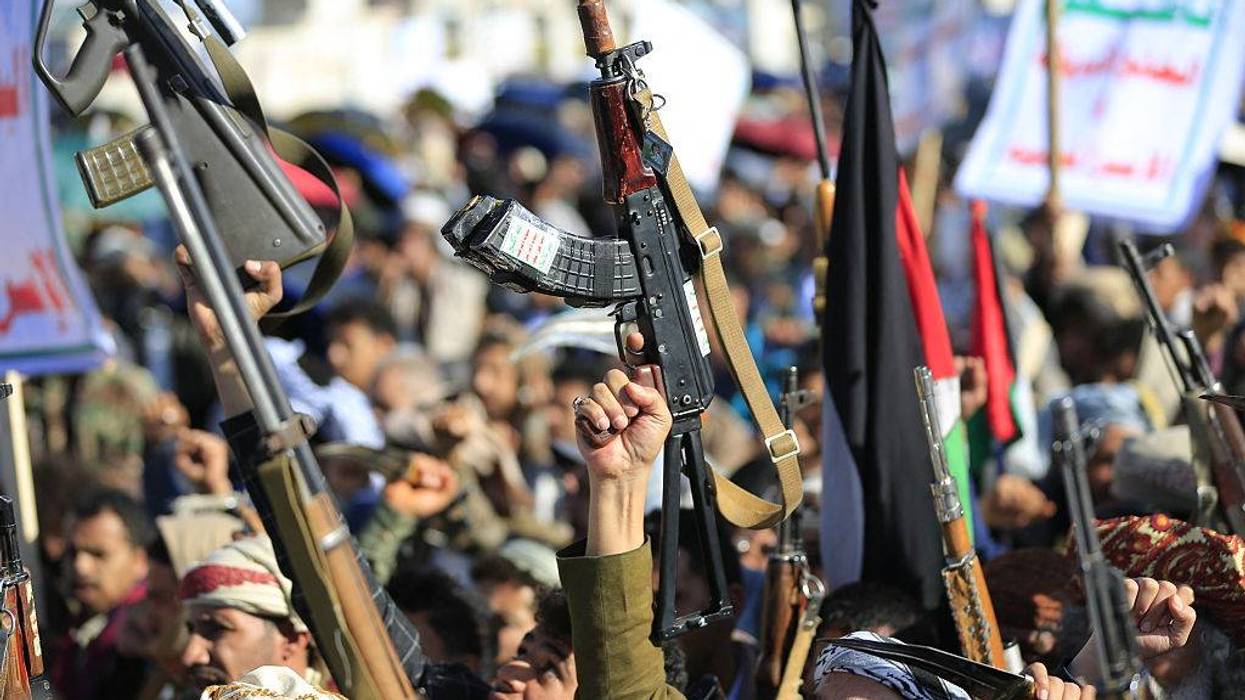
"The Titanic is now hitting the iceberg and there are not enough lifeboats for the world economy," said one observer.
Houthi rebels in Yemen on Monday announced they were imposing a maritime embargo against Saudi Arabia in yet another threat to global petroleum supplies amid the US war on Iran.
Yahya Saree, spokesperson for the Houthis, said in a video announcement that the militia would be enforcing the shipping embargo in retaliation for last week's bombing of Sanaa Airport, which the group blamed on the Saudis.
BREAKING: Yemen's Houthis announce 'sea navigation ban' on Saudi Arabia. pic.twitter.com/HDzghEi9Ct
— Clash Report (@clashreport) July 20, 2026
After Iran shut down the Strait of Hormuz in response to US President Donald Trump's illegal war of choice earlier this year, global oil markets became even more dependent on shipping supplies through the Strait of Bab al-Mandeb, a waterway adjacent to the coast of Yemen.
According to Javier Blas, energy and commodities columnist at Bloomberg, Saudi Arabia has been shipping roughly 4.5 million barrels of oil per day through shipping channels in the Red Sea, with "most of it" traveling through the Strait of Bab al-Mandeb.
The Houthis' announcement of an embargo against the Saudis comes as the US has continued burning through its crude inventories.
Data released by US Energy Information Administration revealed that US crude inventories fell by 1.7 million barrels over the week ending July 10, leaving stocks at their lowest level since 1983.
University of Chicago political scientist Robert Pape warned that the Houthis shutting down another vital global shipping lane could be a disaster for the global economy given that it could mean a "loss of another 4 to 5 million [oil] barrels a day."
"The Titanic is now hitting the iceberg," Pape added, "and there are not enough lifeboats for the world economy."
Nicholas Grossman, professor of international relations at the University of Illinois, noted that there are now multiple factors throttling global energy shipments.
"Iran blocking Strait of Hormuz," Grossman wrote. "US blocking Iranian shipping. Iran bombing energy facilities in Gulf Arab states. US bombing energy facilities in Iran. Ukraine bombing energy facilities in Russia. Houthis disrupting Red Sea shipping. Oil and gas reserves running dry. It's a lot, and adding up."
Juliette Kayyem, senior lecturer at Harvard's Kennedy School and a former Obama administration official, wrote that the potential shutdown of global energy supplies should make US policymakers rethink what they can achieve using American military force.
"A bunch of military and conventional wisdom analysts assured the American public that our air dominance was unparalleled," wrote Kayyem. "The 'never right but always certain' crowd didn’t realize the war was going to be fought on water."
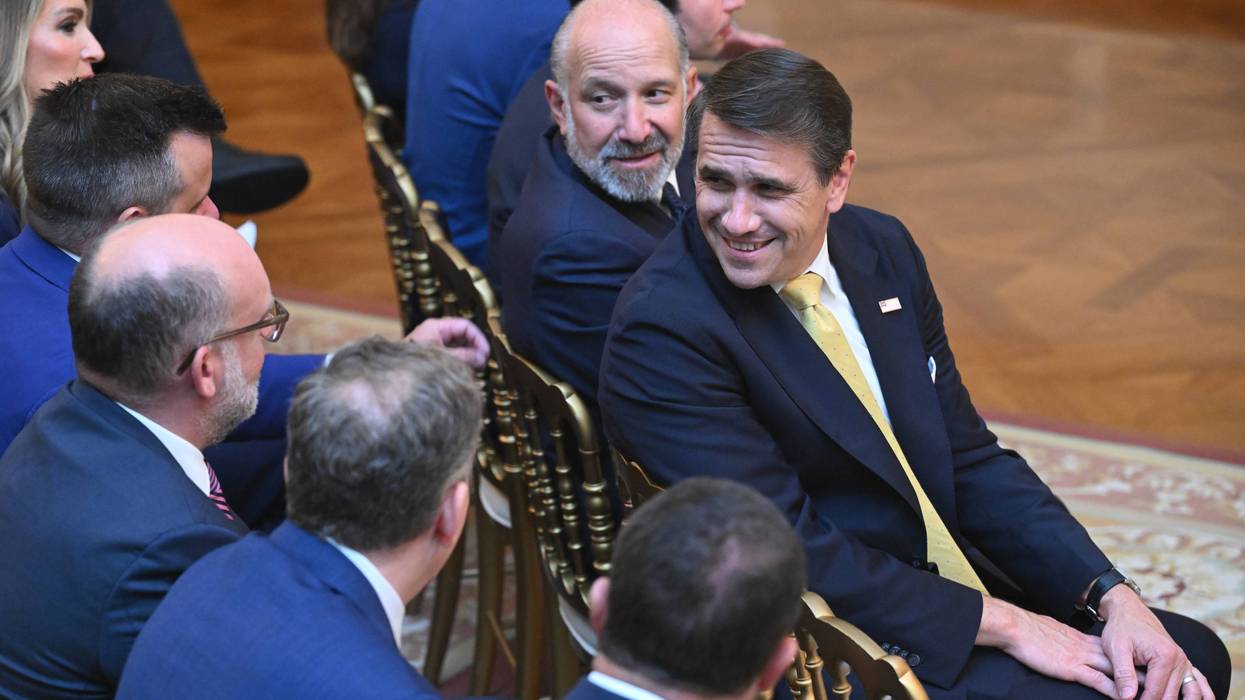
"The Trump DOJ’s grotesque retreat from corporate crime enforcement leaves Americans increasingly vulnerable to tainted food, workplace exploitation, environmental destruction, widespread ripoffs, and all-around illegal corporate predation."
US President Donald Trump's Justice Department is systematically taking a softer approach to corporate crime, letting companies and executives that have admitted to wrongdoing off the hook with no charges.
The Wall Street Journal reported over the weekend that "so far this year, 12 companies have pleaded guilty to federal criminal charges. At least six companies have reached deferred prosecution agreements, including refiner Phillips 66 and medical-waste specialist Stericycle, acquired by Waste Management in 2024." The Journal added that while Acting US Attorney General Todd Blanche and other officials have signaled that the Justice Department is "focusing on prosecuting employees rather than companies, it has also granted leniency or dropped charges against people it accused of wrongdoing."
"The Trump DOJ’s grotesque retreat from corporate crime enforcement leaves Americans increasingly vulnerable to tainted food, workplace exploitation, environmental destruction, widespread ripoffs, and all-around illegal corporate predation," said Rick Claypool, a researcher at the consumer advocacy group Public Citizen who has been tracking the fall of corporate enforcement during Trump's second White House term—which has been rife with corruption and profiteering at the very top.
Claypool called the Trump Justice Department's lenient approach to corporate criminals "an absolute outrage" and that the trend is "going from bad to worse."
The Journal lays out several examples of the Justice Department abandoning enforcement efforts against prominent companies. "In matters involving Alibaba, EagleBank, and Abbott Laboratories, the department declined to charge companies even when prosecutors thought executives or managers were involved in the wrongdoing," the newspaper reported. "In those cases, the department didn’t charge any individuals."
"The Justice Department this year dropped its long-running prosecution of Turkish state-owned lender Halkbank for allegedly evading US sanctions on Iran," the Journal added. "And last year, the Trump administration dropped charges against Boeing. The aerospace giant had been set to plead guilty to misleading air-safety regulators but instead paid a $243 million fine and received a nonprosecution agreement. That is the same form of leniency that prosecutors granted to Alibaba and EagleBank, which requires them to admit wrongdoing but spares them from being charged."
Trump's DOJ has also shown lenience toward corporate executives. "The department in January gave a deferred prosecution agreement to the chief executive of a technology contractor who had been charged with defrauding the Securities and Exchange Commission," the Journal reported.
Bloomberg reported last week that the Justice Department plans to drop charges against "alleged mastermind of a cryptocurrency Ponzi scheme that prosecutors said defrauded investors of $722 million."
According to Public Citizen's tracker, the second Trump administration has canceled or frozen enforcement actions against more than 170 US corporations so far—including dozens of companies that donated to the president's inaugural fund.
“The Trump administration is canceling accountability for corporate predators that cheat consumers, exploit workers, and illegally abuse their power at home and abroad,” Claypool said earlier this year. “The ‘law enforcement’ claims the White House uses as pretext for authoritarian anti-immigrant crackdowns, city occupations, and imperial resource seizures abroad lose all credibility when cast against the lawlessness Trump allows for the pursuit of corporate profits."

"We may be approaching the most significant escalation in the US-Iran confrontation since February," warned one analyst.
US President Donald Trump is reportedly planning to expand his illegal, historically unpopular war in Iran as the prospects of a diplomatic resolution crumble, with the American military bombarding the Middle East nation for the ninth consecutive night on Sunday.
An unnamed US official told The Washington Post on Sunday that the Trump administration is "planning for a wider war" in Iran, though the official warned that US forces likely lack the weapons capacity to "safely sustain operations." The official said they don't believe that "the White House is aware of that."
The anonymous official's comments corroborated reporting last week indicating that Trump, who has not sought or received congressional authorization for the Iran war, is leaning toward expanding the assault, possibly with ground forces.
"Trump hosted a Situation Room meeting Tuesday evening to discuss the potential seizure of Kharg Island and other territory along the Strait of Hormuz using US troops, as well as the potential bombing of a tunnel complex at Pickaxe Mountain, a nuclear-linked site the US has yet to target," The Wall Street Journal reported. "Expanding airstrikes against more targets in Iran, including energy sites, also remains a possibility."
Trump, who claimed in late March that the war was just "two or three weeks" away from being over, has repeatedly declined to rule out deploying American ground forces to Iran. Over the weekend, three US troops were killed in the region—two by an Iranian ballistic missile attack in Jordan, and another during a "controlled detonation of unexploded ordnance" in Iraq.
"We feel very badly," Trump said of the deaths, which brought the total number of US personnel killed during the Iran war to 17. Thousands of Iranians have been killed and millions displaced by the US-led assault.
Pentagon leaders have not publicly briefed the American people or the press on the status of the war in over two months. Earlier this month, Trump declared that a ceasefire deal with Iran which sought to pave the way for a negotiated resolution to the war was "over."
The US Central Command said late Sunday that American forces "targeted Iranian military command centers, air defense and coastal surveillance sites, maritime capabilities, missile and drone launch sites, and communications networks" during its latest wave of airstrikes. The US military has also targeted bridges, power facilities, and other civilian infrastructure during recent attacks, prompting Iranian retaliatory strikes on American installations in the region.
"This dynamic creates the possibility of dangerous strategic miscalculation on all sides," the National Iranian American Council warned on Sunday. "Policymakers in Washington and regional capitals may underestimate Iran’s willingness to absorb sustained losses. Conversely, Iranian leaders may underestimate the willingness of the United States and its partners to sustain a prolonged military campaign if they conclude that Tehran is deliberately regionalizing the conflict."
Hamidreza Azizi, a visiting fellow at the German Institute for International and Security Affairs, argued that recent US attacks along Iran's southern coastline "increasingly suggest a gradual but persistent US movement toward a possible ground operation in southern Iran."
"If such an approach exists, it would go well beyond earlier ideas centered on seizing Kharg Island to cut off Iran’s oil exports or occupying islands overlooking the Strait [of Hormuz] to secure maritime traffic," Azizi wrote. "However, given the length of Iran’s southern coastline—roughly 1,800 kilometers—and the country’s considerable strategic depth, establishing comprehensive control would likely require hundreds of thousands of troops."
"Current indicators suggest that we may be approaching the most significant escalation in the US-Iran confrontation since February," Azizi added.

The reported change would grant "pure impunity for ICE to do horrible things," said one journalist.
New guidance distributed to US Immigration and Customs Enforcement agents across the country in recent days said that the FBI will no longer investigate confrontations that officers have with protesters or people who are subjected to immigration enforcement—leaving the agency to investigate its own violent encounters with the public following at least two recent killings by ICE agents.
The guidance pertained to claims of assault against Department of Homeland Security (DHS) officers, but FBI investigations have gathered evidence that implicated agents themselves after they claimed to have been attacked.
According to the message sent to ICE officers, Homeland Security Investigations, which operates under ICE, would begin examining incidents in which an agent claimed they were assaulted.
HSI does not have jurisdiction to investigate allegations of civil rights allegations, so in cases in which a confrontation escalates to a use of force by an officer, the unit would be unlikely to investigate whether the agent violated the victim's rights, The New York Times reported.
"The fox is guarding the hen house," said American Immigration Council senior fellow Aaron Reichlin-Melnick of the reported change.
Despite the guidance that was circulated to agents, the US Department of Justice, which oversees the FBI, released a joint statement with DHS denying that the change would take place.
“The relationship between DHS and DOJ in investigating assault on federal officer cases has not changed, and FBI will continue to investigate in accordance with agency policy,” the statement said. “This administration has been clear, anyone who assaults law enforcement will be prosecuted to the fullest extent of the law.”
According to a New York Times investigation, the Trump administration filed charges against more than 550 people who it said assaulted federal immigration officers. More than 400 of the cases had been resolved, and in nearly half of them, charges of assault had been thrown out or withdrawn, or the defendants had been acquitted.
As it's filed such charges, the Trump administration has frequently repeated its assertion that federal agents are regularly facing violent attacks from the public—including in cases in which agents have killed US citizens and immigrants, including Renee Good, Alex Pretti, and earlier this month, Lorenzo Salgado Araujo.
The reported change was also made public less than a week after an ICE agent fatally shot Johan Sebastián Guerrero in Biddeford, Maine.
Journalist Sam Stein said the guidance that was given to federal agents could grant "pure impunity for ICE to do horrible things."

A new private jet emissions tracker shows 136 kilotonnes of additional emissions before the final match.
As fans gather for the FIFA World Cup final match, pitting Spain against defending champion Argentina, New York City has been engulfed in a shroud of wildfire smoke.
At the same time, thousands of wealthy fans are arriving in luxury private jets, the most carbon-emissions polluting form of transportation. This seems an appropriate image for what may prove to be the most polluting sports tournament in world history, thanks in part to private jet excess.
The wildfire smoke, from several hundred uncontrolled blazes across Ontario and northern Minnesota, have contributing to air quality emergencies across the northern U.S. On Thursday, the city of Detroit registered a whopping 724 on the Air Quality Index. Index ratings over 300 are considered a health emergency for all living things.
Scientists are often cautious about attributing blame to climate change, but there is little doubt these wildfires are supercharged by global climate change, as forests dry out and atmospheric rain cycles are disrupted.
On Saturday, the air quality in East Rutherford, New Jersey registered 157, an “unhealthy” level. The pollution index is anticipated to improve for the Finals, with weather shifts and a thunderstorm scrubbing the air. This may bring the pollutant index to 100, considered “moderate” but posing risks for sensitive groups including older adults, children, and those with lung or heart disease.
Compounding the injustice, ordinary fans, taxpayers, and the flying public subsidize the pollution spewing activity of the high-flying private jet class. Private jets don’t chip in their fair share of the cost of airspace, let alone their environmental impact. And last year, the U.S. Congress slathered on more tax breaks for private jets and their ultra-wealthy users.
These tax breaks don’t even address the biggest subsidy: the ability of private jets to avoid any responsibility for the health and environmental costs of their pollution impacts.
With an assist from our new IPS Private Jet Emission Tracker, designed to assess the impact of special events, we know that thousands of private jets have already attended the first 102 matches of the FIFA World Cup. Prior to the final match, the private jets attending the tournament have spewed an estimated 136 kt of additional carbon pollution into the atmosphere, the equivalent of driving 31,723 gasoline powered cars for a year. The Tracker looks at private jet activity in match-host cities over five years and documents the spike in activity.
In our assessment, Red Card for Private Jets at the FIFA World Cup, we document the excessive emissions and the costs to everyone else. We call on FIFA to ban private jets at matches and live up to their pledge to be carbon neutral by 2040.
FIFA should also stop designing tournaments that span continents and cater to the ultra-wealthy private jet class and not ordinary fans. The 2030 FIFA World Cup will be played in six different countries, with most matches in Morocco, Portugal, and Spain. But in honor of the 100th anniversary of the World Cup, the opening matches will be played in the South American nations of Uruguay, Argentina and Paraguay.
FIFA is clearly competing to produce the world’s most polluting sport competition. They must do more to protect the players, the fans, and our planet. The World Cup belongs to everyone, not just the private jet class.
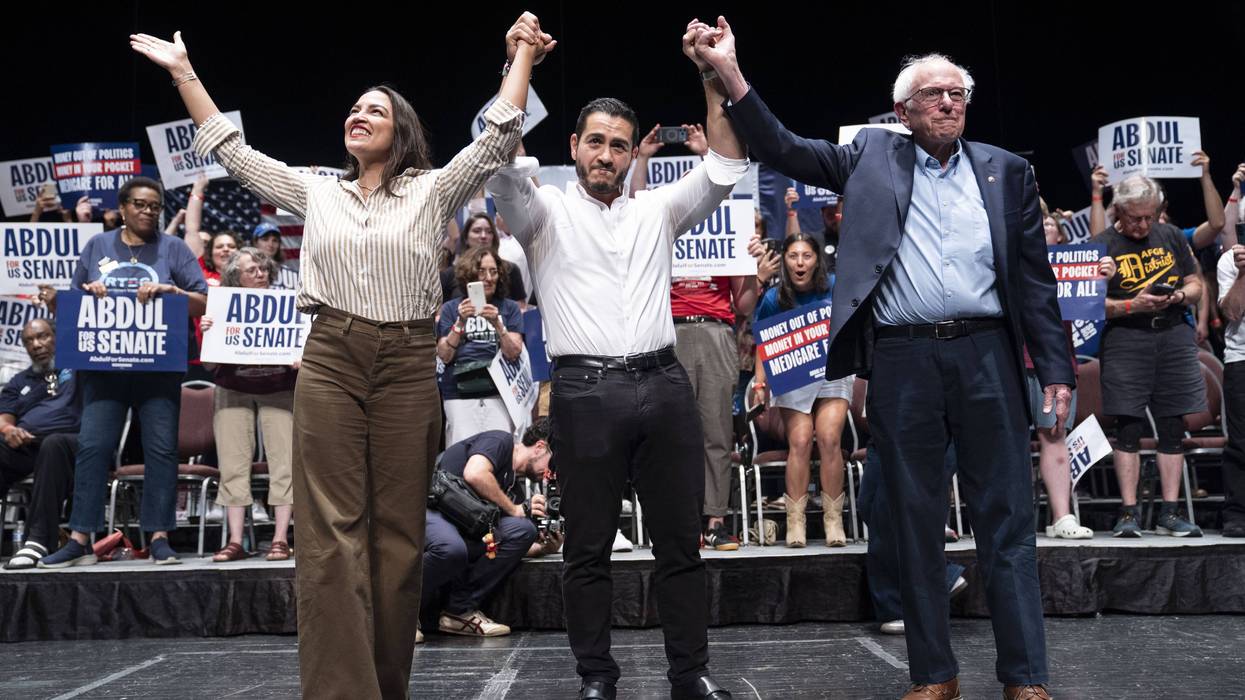
"When the stakes are so high," said Rep. Alexandria Ocasio-Cortez, "is the answer to our problems to turn to the same playbook over and over again?"
Ahead of early voting in Michigan's Democratic US Senate primary, candidate and Medicare for All advocate Abdul El-Sayed was joined in Detroit Saturday evening by progressive leaders, including Sen. Bernie Sanders and Reps. Alexandria Ocasio-Cortez and Rashida Tlaib, for a rally titled: "The People vs. The Powerful."
The senator declared to 1,600 attendees that the choice in the primary is not simply between El-Sayed and his opponent, Rep. Haley Stevens.
"In all due respect to Congresswoman Stevens, everyone knows that this is not an election between her and Abdul El-Sayed," said the Vermont Independent senator. "This is an election between Abdul and the billionaire class."
Sanders: In all due respect to Congresswoman Stevens, everyone knows that this is not an election between her and Abdul El-Sayed. This is an election between Abdul and the billionaire class. That is what this election is about.
A billionaire class which has already—and there are… pic.twitter.com/BPZ9NSar4d
— Acyn (@Acyn) July 18, 2026
The final weeks of the primary, in which Michigan voters will go to the polls on August 4, have been marked by reports of massive outside spending in favor of Stevens and against El-Sayed, who has made the refrain, "Money out of politics, money in your pocket, and Medicare for All" the central message of his campaign.
As Common Dreams reported last week, El-Sayed led the way in fundraising in the second quarter of 2026, bringing in $4.6 million while Stevens raised $2.2 million.
But Federal Election Commission (FEC) campaign finance filings showed that outside spending by people and groups supporting Stevens has soared to an estimated $50 million, according to an analysis by Punchbowl News.
"More than half of the total ($28.4 million) is coming from United Democracy Project (UDP)," said congressional reporter Ally Mutnick, referring to the super political action committee (PAC) affiliated with the American Israel Public Affairs Committee (AIPAC), which has also backed the vehemently pro-Israel Stevens in the past.
UDP acknowledged last week that it had spent nearly $15 million on the Michigan Senate primary race so far, including $9.3 million in support of Stevens and $5.7 million against El-Sayed.
El-Sayed is a strong supporter of Palestinian rights and—like a growing majority of Democratic voters after more than two years of Israel's assault on Gaza—has called for the US to end military aid to Israel.
In recent weeks he has responded to reporters' frequent questions on his views about whether Israel has a "right to exist," by asking whether Palestine has a right to exist and, in a Sunday interview with CNN's Jake Tapper, saying that a more pertinent question for American voters is whether Israel has "a right to our tax dollars."
Does Michigan Senate candidate Abdul El-Sayed think there’s room in the Democratic Party for both supporters and opponents of Israel?
EL-SAYED: “There's always room in the tent for folks. And I'm for human rights. I'm for equal rights to peace, dignity, and self-determination.… pic.twitter.com/Amfvsnmx6J
— State of the Union (@CNNSOTU) July 19, 2026
At the rally on Saturday night, Sanders said that AIPAC's focus on funding Stevens' campaign "has everything to do with the fact that they understand that Abdul and I, and the vast majority of the American people, want a foreign policy that is based on morality and decency."
"This is an election that will show the nation whether AIPAC and other billionaire-funded super PACs can spend tens and tens and tens of millions of dollars to buy a US Senate seat, or whether, within a corrupt campaign finance system, the voices of ordinary Americans—the people of Michigan—can prevail," said Sanders. "That is what this campaign is all about. It is about democracy versus oligarchy, and we are on the side of democracy."
Sanders: Why is the whole country looking at this election? In fact, people all over the world are watching what’s going on here in Michigan.
And the answer is that this is an election that will show the nation whether AIPAC and other billionaire-funded super PACs can spend tens… pic.twitter.com/ALMk10YzJu
— Acyn (@Acyn) July 18, 2026
Ocasio-Cortez noted that the contest between El-Sayed and Stevens comes as Americans are struggling to afford groceries, gas, and other essentials while President Donald Trump continues his war against Iran, dismisses working families' financial struggles, and insists the federal government cannot afford to provide universal public services.
"When the stakes are so high, when more people than ever are living so close to the bone, eventually we have to ask ourselves: Is the answer to our problems to turn to the same playbook over and over again?" said Ocasio-Cortez. "A playbook that says, in order to win, Democrats must rely on the same dark money—$50 million and counting—from the same people who backed 35 election deniers to Congress who voted to overturn the 2020 election?"
"I believe Michiganders—Democrats, Republicans, and independents—believe that good leadership swings for the fences," said the congresswoman, who has been named as a potential presidential or US Senate candidate in 2028. "Good leadership gets big money out of our system. It takes on the corruption that blocks commonsense solutions that lift working people. And, by the way, it helps not to take their money in the first place."
AOC: When the stakes are so high, when more people than ever are living so close to the bone, eventually we have to ask ourselves:
Is the answer to our problems to turn to the same playbook over and over again? A playbook that says, in order to win, Democrats must rely on the… pic.twitter.com/oqIaQzSQfH
— Acyn (@Acyn) July 18, 2026
"We can choose to reward the $50 million in dark money by voting their way—which, by the way Michigan—do you think that $50 million is for free?" continued Ocasio-Cortez. "Do you think it’s an act of charity? We know how this works. There’s $50 million in this race because they’re expecting a return. It’s an investment... So we can choose that or we can choose Dr. Abdul El-Sayed for the United States Senate."
On Sunday, as El-Sayed and his high-profile supporters in Congress prepared to rally more voters in Grand Rapids and Lansing, CNN reported that House Minority Leader Hakeem Jeffries (D-NY) and Rep. Gregory Meeks (D-NY) had confronted Sanders in a phone call, complaining about his "meddling" in primary elections.
"The candidates we are supporting are candidates who are representing working people, and I think it's a long time overdue for the Democratic Party to stop worrying about their wealthy campaign funders and start worrying about the needs of working people," Sanders told CNN.
CNN correspondent Seung Min Kim suggested that Stevens is seen by Democratic leaders as a safer bet to win the general election in Michigan in a crucial election year. But recent polls have shown her views on Israel and her support from AIPAC, as well as her donations from the for-profit health insurance industry and her opposition to Medicare for All, could harm, not help, Stevens.
Along with big spending from the pro-Israel lobby, the primary race has been characterized in recent weeks by El-Sayed's call for social media users to refrain from mocking and making personal attacks against Stevens and to focus instead on the issues at the center of the campaign, as well as recent Islamophobic vitriol against El-Sayed, including from Sen. John Fetterman (D-Penn.).
Fetterman told Fox News Saturday that El-Sayed is "essentially, a pro-Hamas candidate that's been anti-American and deeply anti-Israel," adding that "44% of Muslims, you know, they have positive views of Hamas."
Journalist Prem Thakker of Zeteo News called on Stevens to "condemn this racist and Islamophobic rhetoric coming from your allies," as El-Sayed had earlier called for civility from his own supporters.
El-Sayed pointed to the recent attacks at the rally, saying his opponents "have taken to calling me 'dangerous.'"
"If you're a worker who wants our economy to work for you, I'm not dangerous," said El-Sayed. "If you're someone sitting in medical debt, wondering what your financial future is because you deigned to see a doctor in the richest, most powerful country in the world, if you're that person, I'm not dangerous."
El-Sayed: They’ve taken to calling me dangerous.
If you’re a worker who wants our economy to work for you, I’m not dangerous.
If you’re AIPAC and want to send our money abroad, you damn well better believe I’m dangerous.
If you’re Chuck Schumer and want to keep doling out… pic.twitter.com/S7HhzThsST
— Acyn (@Acyn) July 18, 2026
"But if you're Blue Cross Blue Shield shareholders, yep, I'm dangerous!" he added. "If you’re AIPAC and want to send our money abroad, you damn well better believe I’m dangerous. If you’re Chuck Schumer and want to keep doling out corporate money to elect people who are going to do your bidding, I am so damn dangerous!"
"If you're somebody who wants government to work for you," El-Sayed said, "I aim to be the best friend you ever had."

"We're well on our way to getting the government that we deserve," said Jackson.
As Democratic US Senate candidate Troy Jackson pulled far ahead of his opponents in the race to replace Graham Platner as the party's nominee on Saturday, one commentator credited the former state Senate president's campaign with an "extremely impressive organizational feat"—one that was focused on nominating a working-class champion.
Eight of Maine's 16 counties held in-person and virtual delegate nominating meetings on Saturday, deciding on the first 319 of 500 total delegates who will vote for the Democratic nominee at next weekend's convention, which was rapidly organized after Platner dropped out of the race last week following rape allegations that he denied.
At least 290 of the delegates who were chosen in the first eight counties backed Jackson, the Bangor Daily News reported. The former logger, who previously ran for governor, has deep union ties, and has been endorsed by Sen. Bernie Sanders (I-Vt.), won at least 148 of the 149 delegates in Cumberland County, all 44 delegates in Penobscot, and 22 of 23 in Hancock, dominating in several other counties as well.
The rest of the state's counties will vote on delegates at similar meetings on Sunday, but as one election watcher said, "Troy Jackson will almost certainly be the next Democratic nominee for Maine's 2026 US Senate election."
Jackson appeared confident enough in Saturday's results to announce a celebratory tailgate planned for Sunday in York County as voters there would be selecting delegates. The Maine State Nurses Association also announced its endorsement of the candidate on Sunday morning.
After Saturday's county meetings, Jackson addressed some of his supporters virtually, giving his volunteer network credit for quickly organizing on his behalf after many had previously expected to be campaigning for Platner, who spent nearly a year mobilizing Mainers from across the political spectrum with a platform focused on taxing billionaires, ending US "forever wars" and military aid for Israel, and passing Medicare for All.
"I can't tell you how much I appreciate all the hard, hard work. I've been getting text messages all day about what a great job I did. I didn't do a goddamn thing, all of you just smoked it," said Jackson in a video posted on social media. "It's really, really incredible, so thank you so much. We're well on our way to getting the government that we fucking deserve, and that's what I'm excited about."
Organized volunteers attended some of the county conventions, some wearing "Jackson for Maine" t-shirts leftover from the candidate's gubernatorial run and passing out flyers with the names of the pro-Jackson delegate slate—supporters whom volunteers had spent the past week calling to secure their commitment to the progressive candidate.
The eight remaining counties will select 181 more delegates on Sunday. Another 101 Democratic state committee members have already been chosen to attend the statewide convention on July 25. Together they make up the 601 delegates who will vote for the party's nominee.
The party's nominee will face five-term Republican Sen. Susan Collins, whom Jackson has condemned in recent days for voting to fund US Immigration and Customs Enforcement, which he has called to abolish. An ICE agent fatally shot 25-year-old Johan Sebastián Guerrero in Biddeford, Maine last week.
A poll by Wedgewood earlier this month found Jackson leading Collins in a hypothetical matchup, 48-43, with 9% of voters undecided.
Ahead of Saturday's meetings, Jackson addressed a crowd of about 100 supporters in Portland.
"I'm running for the logger in Allagash who does not think that anyone in Washington knows about them," said Jackson. "I'm running for the nurse that's working another double shift because their hospital is understaffed, and all the while billionaires and massive corporations are making record profits, buying influence in Washington, and telling the rest of us that there is just nothing that we can do."
“I’m asking for your vote, but I’m also asking for more than that,” he added. “I’m asking you to organize... I’m asking you to talk to your neighbors. I’m asking you to show up at your county meetings, make the calls, send the texts, and bring even more people into this movement.”
Writer Cole Sandick suggested that despite the excitement that Platner's campaign had generated, many of his supporters appeared to have quickly pivoted toward Jackson, also a Medicare for All supporter and opponent of military aid for Israel, in an effort to ensure progressive priorities are represented in the Senate.
"Working-class organizing wins," said one Maine-based writer.
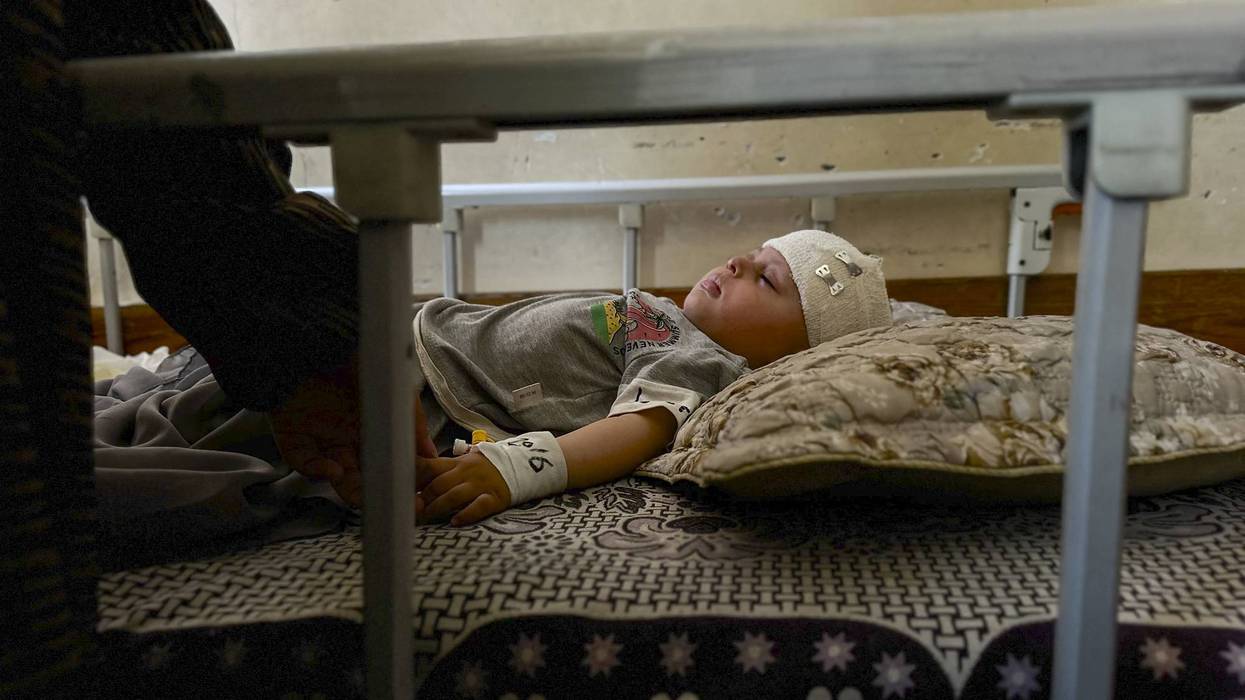
In Gaza, where “the essence of childhood has been destroyed,” even the smallest acts of humanity have become acts punishable by death.
Mohamed al-Wahidi, 57 years old, a husband, father and grandfather, spent his days doing what aid workers do in a place with almost nothing left: clearing rubble, reopening roads, repairing a leaking pipe, filling a community water tank, or building tents for families with nowhere else to go. In his spare time, he carried out a “perilous project” setting up screens and generators across Gaza so people could watch the World Cup. On the eve of Egypt's match against Argentina, Israel killed him along with the 33-year-old taxi driver as well as two young brothers, ages 8 and 10, walking nearby. Israel's military said it was investigating “the incident.”
As it almost always does, Israel commits murder first, then trumps up a pretext after the kill.
Al-Wahidi is one name in Gaza's daily killing rituals under the supposed ceasefire. Israel has murdered more than 1,100 Palestinians in the Strip since October 2025—265 of them children. Not a single Israeli civilian has been killed on the other side. This is the "peace" Trump's board is managing.
Nearly 1 million people remain trapped in tents through a Gaza summer where temperatures reach 35°C. Season after season, they are left exposed to the elements: first a freezing winter, then the merciless heat of summer. Families survive in tent cities or beneath dangling concrete slabs in destroyed buildings. Meanwhile, Israel continues to block shade nets and plastic sheeting at the border, just as it blocked warm blankets during the winter.
This is what the Board of Peace normalizes: an occupying power expanding while a one-sided truce remains in force, a starvation policy rebranded as a stabilization success.
Children bake in tents, while Israel keeps pushing the civilian population into smaller corridors. When the so-called Board of Peace was formed, Israel occupied 53% of Gaza. A month later, 60%. By late May, Prime Minister Benjamin Netanyahu ordered the Israel Defense Forces to seize 70%, squeezing 2.3 million human beings into an ever-shrinking cage away from all the farming areas. Energy Minister Eli Cohen has said the quiet part out loud, telling Israeli radio that Israeli control will keep growing “until we reach 100%.” The next phase envisions corralling Palestinians into fenced “humanitarian shelters” near the ruins of Rafah as part of the ultimate ethnic cleansing program, cynically marketed as a “plan for free movement.”
Concentration camps built on the same mechanisms Nazi Germany used to cage Jews in World War II. A United Nations independent commission of inquiry released this summer found that Israel's killing of children in Gaza is not collateral damage of war but part of a strategy to destroy the biological continuity of Palestinian society. Acts that meet the legal definition for war crimes and the crime against humanity.
Israel has murdered or injured more than 10% of Gaza’s population since October 2023. At least 20,179 children, more than 5,000 under 5 years old, and another 44,143 injured. The number of murdered children is one-third of the total number of dead Palestinians in Gaza. The commission documented children shot by snipers and quadcopter-mounted rifles with a precision that ruled out accidents and cited Israeli soldiers' own testimonies where soldiers celebrate and congratulate each other after murdering civilians. The commission called Gaza the most dangerous place on Earth to be a child.
In June, a father named Bahaa Abu Al-Ajeen watched an Israeli soldier kneel and shoot his 3-year-old son in the head as the boy cried in his arms near Deir al-Balah. In April, 9-year-old Ritaj Rihan was shot through the mouth while standing in a classroom tent waiting for her teacher. These are not outliers under a ceasefire. They are the continuation of an Israeli genocide under the shadow of the ceasefire.
When Israel and the US launched their war against Iran at the end of February, Israel closed every crossing into Gaza outright. Not because there is any connection, but because of Israel’s malevolent nature and because it can get away with it under the fog of war. Weekly truck deliveries collapsed from an average of roughly 4,200 down to just 590. Kerem Shalom and Zikim remain the only crossings still functioning, and even now, roughly half the trucks arriving from Egypt are turned away rather than unloaded.
As of now, aid volumes have never recovered to where they stood before the Iran war, let alone reached the minimum the UN says Gaza needs. Four UN agencies have already warned that the famine the ceasefire was supposed to end could return without sustained access. Sixty-eight percent of Gaza's population is now burning garbage to cook because there isn't enough gas. Not one of Gaza's 37 hospitals is fully operational; only 19 are even partially running. Nearly half of essential medicines are out of stock, and Israel is delaying the surgical equipment needed to treat the more than 43,000 people left with life-changing injuries. More than 40,000 people who will likely become permanently disabled for lack of treatment are another phase of Israel's silent genocide.
The Board of Peace's own six-month progress report claims aid distribution rose 70% and that basic food needs have been “stabilized” for the first time since 2023. In the art of euphemism, 70% of zero is zero, and basic food has “stabilized,” meaning shipments are entering regularly, but not that it is adequate. Conspicuously absent from the report is any mention that aid truck deliveries have never returned to their pre-Iran war levels and remain well below the minimum the UN itself considers necessary.
The board's own biannual report to the Security Council spends its pages blaming the Palestinian resistance, with no mention of an occupying army that has pushed past the ceasefire's demarcated line, nor Israel’s order to aid groups like Doctors Without Borders, the Norwegian Refugee Council, and Oxfam to choose between handing over staff names to a government that targets humanitarian workers, or ceasing operations in Gaza entirely.
Even how to count the murdered journalists is contested. The Committee to Protect Journalists (CPJ) was pressured to redefine who qualifies as a “Palestinian” journalist. The move was intended to give Israel a license to kill Palestinian reporters with impunity. A CPJ board member who objected to considering Israel's request was removed within days of protesting publicly. The board ultimately kept its definition intact, but only after stripping 20 murdered Palestinian journalists from the count.
This is what the Board of Peace normalizes: an occupying power expanding while a one-sided truce remains in force, a starvation policy rebranded as a stabilization success, concentration camps as a housing plan, ethnic cleansing as free movement, and a licensed death toll that keeps climbing with impunity.
A grandfather who wanted nothing more than to give displaced families an hour of joy watching a soccer match instead became another name on the ever-growing list of genocide victims. In Gaza, where “the essence of childhood has been destroyed,” even the smallest acts of humanity have become acts punishable by death.
Peace was never the board’s plan. Genocide management was.
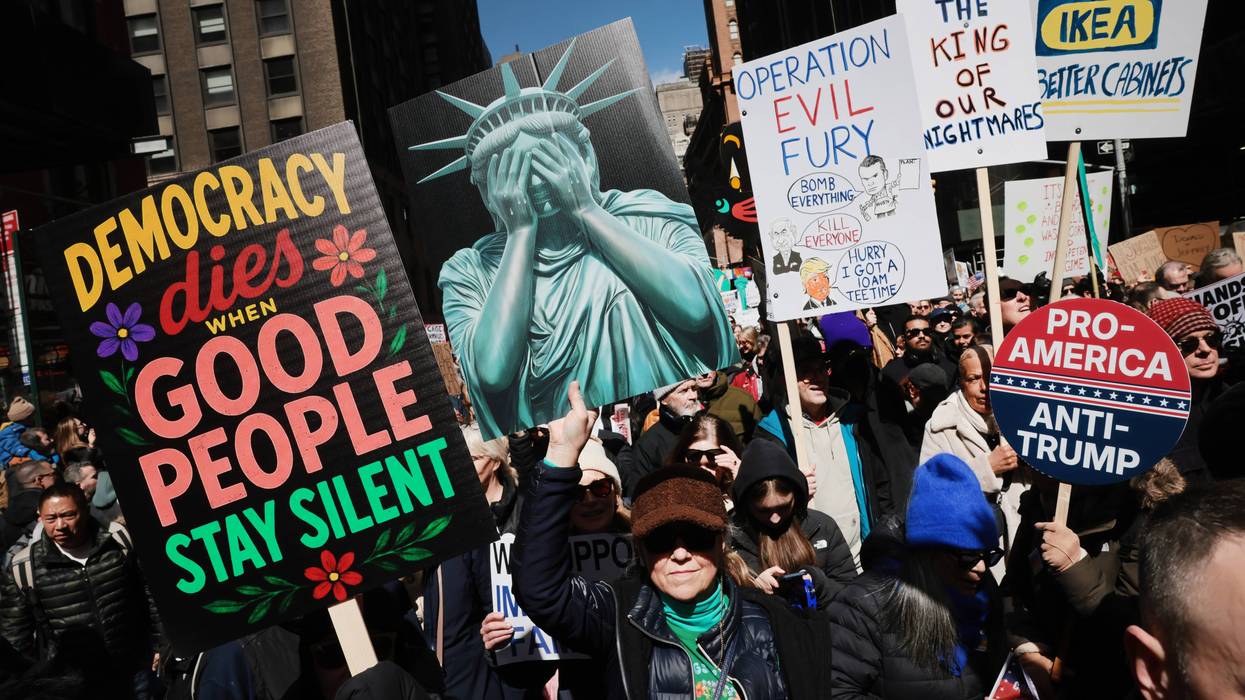
The present leadership in Washington has moved aggressively and efficiently—and with venality and myopia—to lay waste to our noble aspirations and our natural endowments. What can we do about it?
Has mass delusion overtaken America’s collective consciousness and eaten into its soul? Rather than “America the Beautiful," are we becoming “America the Delusional”? The question sprang from speculating that many of my fellow citizens might agree with statements that expertise and evidence have clearly undercut. Would a majority think there was truth in them?
After reading these statements, ask yourself if my concern is warranted.
Having enumerated them, I pondered the toxic effect of such delusions on the soul of our nation. That Washington has mounted a ceaseless campaign of disinformation, on everything from the Iran War to voting integrity to the Reflecting Pool, only adds potency to the poison.
A nation’s soul, writes Gary Kowalski, is its “capacity for valor and visionary change.” Valor springs from confronting fear or pain with firmness and a realistic sense of one’s challenges. Visioning similarly involves the courage and wisdom to chart one’s future course with both creativity and a realistic take on present circumstances.
Nourishing the soul of this nation for 250 years has been its idealistic aspirations and its remarkable natural endowment. Mount Rushmore is a fit representation. All four leaders depicted there exhibited valor and vision on behalf of America’s unique assets, both prior to and during their presidency.
In contrast, the present leadership in Washington has moved aggressively and efficiently—and with venality and myopia—to lay waste to our noble aspirations and our natural endowments.
Our soul is on “life support.” Democratic self-governance and equality of economic opportunity, two pillars of national aspiration, are evaporating month by month. Calculated governmental action—and inaction—are accelerating the arrival of climate-related disasters and diminishing our natural capital.
Despite a grim present, future restoration of the nation’s soul is possible. It begins with each of us accepting in large part the unreality of the contentions listed above and helping leaders and their constituents chart a course within that frame. Whatever form our civic engagement takes, seeing ourselves as unabashed truth seekers is essential. Valorous action and visionary change derive from a firm grasp on what is real, not what is fanciful.
Motivated and supported by allies, we can make a difference. All it would require is each of us focusing on a delusion or two, and through writing, advocacy, or group action, promoting clear-eyed resilience over wishful thinking. Project Soul Restoration begins individually, takes root locally, then spreads regionally and nationally.
Break the mold. Take on the mantle of “influencer” on behalf of the nation’s soul!

After more than a decade of implementation, Fresh Bucks offers evidence that targeted investments in healthy food can improve food security, increase fruit and vegetable consumption, and help reduce nutritional inequality.
Seattle launched Fresh Bucks in 2012. The initiative seeks to “eliminate disparities in healthy food access for communities most burdened by food insecurity, economic hardship, and environmental injustices,” according to the program website. Specifically, according to city data, Black and Hispanic households in Seattle are twice as likely to experience food insecurity—which is defined as “limited or uncertain availability of nutritionally adequate and safe foods, or limited or uncertain ability to acquire acceptable foods in socially acceptable ways” by the US Department of Agriculture (USDA).
Today, Seattle’s Fresh Bucks initiative serves approximately 17,000 income-qualified households each month with benefits dedicated to purchasing fruits and vegetables. Research suggests the investment is paying off. A 2025 study by the University of Washington found that participating households experienced a 31% higher rate of food security than comparable households without the benefit. Additionally, the City of Seattle’s food insecurity dashboard shows aggregate declining insecurity rates since 2018.
The Fresh Bucks program also improves diet quality—not simply by increasing the quantity of food families can buy, but by making nutritious food more affordable. According to the same UW study, Fresh Bucks participants were 37% more likely than households on the program’s waitlist to consume at least three daily servings of fruits and vegetables.
A nationwide Fresh Bucks program would not reverse recent cuts to federal nutrition assistance, but it offers a practical, evidence-based way to reduce hunger while addressing one of inequality’s most basic dimensions: whether families can afford healthy food.
Those gains matter because access to healthy food remains deeply unequal. A 2017 study published in the International Journal of Environmental Research and Public Health found that healthier diets rich in fruits and vegetables often cost significantly more than heavily processed alternatives, which creates a financial barrier that affects lower-income households most. When income determines access to nutritious food, it reinforces broader inequalities in health and well-being.
Community leaders in neighborhoods served by Fresh Bucks say they see those challenges firsthand.
“In White Center and historically underinvested communities across King County, we see every day how rising grocery costs continue to strain working families, seniors, immigrants, and households already navigating increasing housing and living expenses,” Aaron Garcia, executive director of the White Center Community Development Association, said in a press release on new legislation to expand the program. “Access to healthy, culturally relevant food should not be determined by income—it should not be considered a luxury,” Garcia said.
White Center illustrates why programs like Fresh Bucks matter. One of the Seattle area’s most diverse communities, more than 61% of its residents are people of color and 27% were born outside the US. The neighborhood was historically targeted for redlining, which continues to shape poverty rates and income inequality across the Seattle region.
Census data show White Center has below-average household and per capita incomes and a poverty rate higher than the Seattle-Tacoma-Bellevue metropolitan average. Residents of South Seattle, including White Center, face disproportionately limited access to grocery stores offering fresh, nutritious produce. Some advocates describe these neighborhoods not as food deserts, but as examples of “food apartheid”: the racial, geographic, and economic inequities that stratify society and dictate who has access to healthy food and who is relegated to nutritionally deficient diets.
Fresh Bucks was designed to confront those disparities in Seattle by making healthy food more affordable for families who have historically faced the greatest barriers to accessing it.
On the national level, Rep. Pramila Jayapal (D-Wash.), whose congressional district includes Seattle, argued that the city’s local innovation can become a model to address broader food insecurity.
“[…] Seattle is once again leading the way with the Fresh Bucks program, which is successfully keeping people fed with nutritious food and reducing hunger,” Jayapal said. “We must pass this legislation to expand the program nationwide and get families in every corner of the country healthy produce they can afford.”
Jayapal introduced the Fresh Bucks for Fresh Produce Act on July 2. Modeled on Seattle’s program, the legislation would establish a pilot program within the US Department of Agriculture, providing households earning 80% or less of their area’s median income with $60 each month to purchase fresh fruits and vegetables.
The proposal comes as federal food assistance is moving in the opposite direction. Recent analysis from the Center on Budget and Policy Priorities found that participation in the Supplemental Nutrition Assistance Program (SNAP) has fallen by more than 4 million people after Trump’s budget reconciliation bill passed last June—roughly a 10% decline. Meanwhile, the Trump administration recently eliminated roughly $1 billion in food purchases for schools and food banks by ending the Local Food Purchasing Assistance Program.
Other federal policies have also increased food costs. As The New York Times reported in May, executive tariffs on imported steel have driven up the cost of canned fruits and vegetables, because packaging accounts for roughly one-third of wholesale prices. Those increases disproportionately affect households that depend on affordable pantry staples such as canned corn and beans.
Public opinion indicates opposition to these trends. A 2025 Data for Progress survey found broad bipartisan support for SNAP and other efforts to help families afford food. A nationwide Fresh Bucks program would not reverse recent cuts to federal nutrition assistance, but it offers a practical, evidence-based way to reduce hunger while addressing one of inequality’s most basic dimensions: whether families can afford healthy food.
The proposed federal pilot would allow policymakers to test whether Seattle’s results can be replicated elsewhere. After more than a decade of implementation, Fresh Bucks offers evidence that targeted investments in healthy food can improve food security, increase fruit and vegetable consumption, and help reduce nutritional inequality.
That evidence is especially valuable as the USDA has suspended its annual report tracking food insecurity, making it more difficult to measure the full scope of hunger nationwide. Seattle’s experience suggests that local governments can serve as laboratories for policies that address inequality—and that successful municipal innovations may provide models for broader adoption.