

SUBSCRIBE TO OUR FREE NEWSLETTER
Daily news & progressive opinion—funded by the people, not the corporations—delivered straight to your inbox.
5
#000000
#FFFFFF
To donate by check, phone, or other method, see our More Ways to Give page.
Daily news & progressive opinion—funded by the people, not the corporations—delivered straight to your inbox.
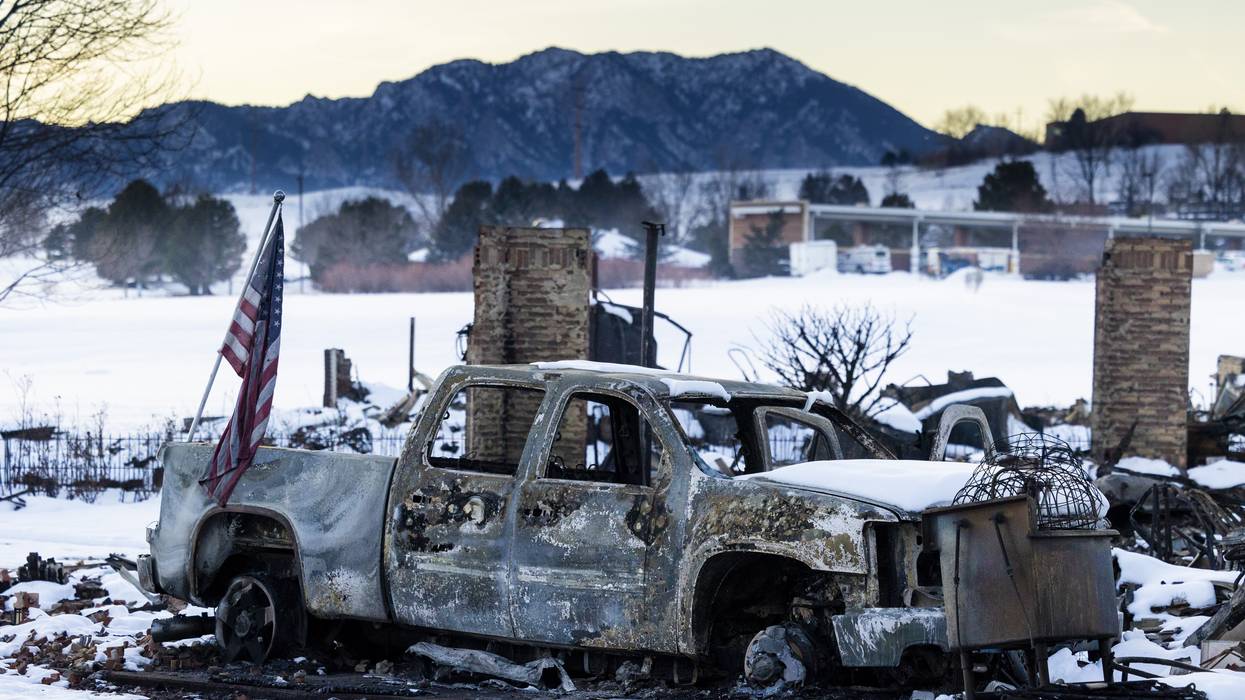
As city leaders from across the US gather this week to discuss our collective priorities, let’s reaffirm our commitment to protect access to the courts for all our communities.
As local leaders from across the country gather in Salt Lake City this week for the annual National League of Cities conference to advocate for the interests of local governments, the challenges of protecting and preparing our communities for the future are clearer than ever. Local governments and their taxpayers are being stretched thin. Between the rising cost of living, increasingly severe weather disasters, escalating maintenance costs, and other expenses, local leaders like us in Colorado, Wisconsin, and beyond are having to make tough decisions about our priorities—and the last thing we need is to have the tools at our disposal taken away from us.
And yet, there is a campaign in Congress right now that aims to do just that.
Goliaths of industry, including pesticide and oil companies, have been lobbying Congress for legal liability shields that would block communities from holding them accountable in court for any of their bad actions. No matter your politics, we should all agree that it’s dangerous and wrong to hand any industry a blanket get-out-of-jail-free card.
Bayer, the maker of Roundup, is asking Congress to put an end to the lawsuits the megacorporation is facing for the health harms its product has caused for years—and some lawmakers are actually pushing legislation that would do so.
Broad legal shields for entire industries would not only threaten local governments’ ability to pursue accountability, but also violate a core value of our justice system.
Similarly, lobbyists for oil and gas companies are lobbying federal lawmakers for a legal shield that could effectively put the fossil fuel industry above the law and block dozens of state and local lawsuits the companies are currently facing for deceiving the public about how their products’ fuel climate change. Municipalities in Colorado, one of our home states, are among the communities demanding that Big Oil companies pay their fair share of the climate costs taxpayers are now facing to adapt to an increasingly severe climate. Like tobacco and opioid companies, fossil fuel companies have long known their products were dangerous, but pushed disinformation to cover up the evidence and protect their profits, while our communities pay the price.
Plainly, our right to access the courts is under attack. Local leaders understand the power that comes from being able to access the courts, which is why the National League of Cities—which represents more than 2,700 cities across the country—has a standing commitment to oppose any federal legal shield that would undermine municipalities’ authority to bring affirmative litigation.
These attacks on our right to access the courts cannot stand. Broad legal shields for entire industries would not only threaten local governments’ ability to pursue accountability, but also violate a core value of our justice system. When bad actors lie to the public and cause harm in our communities, the legal system is supposed to serve as a fair venue—where arguments and evidence are considered—but that system is not possible when you take away our ability to present arguments and evidence at all.
Imagine if Big Tobacco or opioid manufacturers had secured legal immunity from Congress—communities decimated by cancer and addiction would never have been able to fund treatment centers and public health campaigns without first filing accountability lawsuits only made possible through access to the justice system.
As city leaders from across the US gather this week to discuss our collective priorities, let’s reaffirm our commitment to protect access to the courts for all our communities and speak with one voice across party lines to ensure that our congressional representatives do the same.
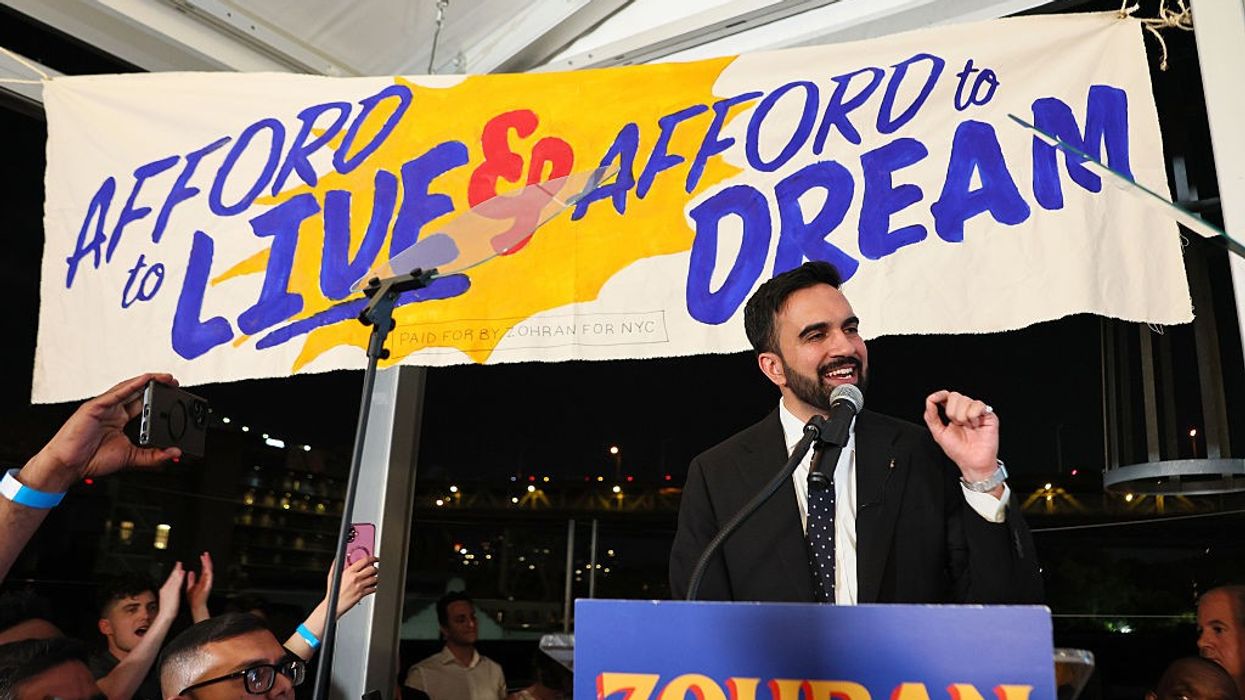
The soaring costs of city life appear to be sending urban voters toward progressive leaders who promise relief, both in the US and globally.
From New York to California and beyond, soaring costs seem to be rewriting city politics, as voters respond to candidates who promise to ease the financial squeeze. Zohran Mamdani’s historic win in NYC underscores a shift that has been emerging in recent years—both in the US and globally—and could extend to other major cities.
For example, in Boston, progressive Democrat Michelle Wu, elected in 2021, ran on making city life more affordable with expanded tenant protections, investments in housing, and childcare support. Her most prominent challenger, Josh Kraft, son of Forbes 400 billionaire Robert Kraft, flamed out even before the election. Out west, Oakland’s progressive Democrat Barbara Lee, elected in 2025, focused on tackling homelessness and making housing and daycare more accessible for families. And in Chicago, democratic socialist Brandon Johnson, who took office in 2023, campaigned on “Green Social Housing” and other programs to lower living costs for working families.
Across these cities, the math is clear: When basic necessities like housing, childcare, and utility costs reach stratospheric levels, voters turn to leaders who offer solutions. These mayoral victories reflect the economic pressures impacting urban life and show why cost-of-living issues are now a defining feature of city politics.
Let’s take a look at how these four cities—New York, Boston, Oakland, and Chicago—stack up in terms of costs.
Across the US, if you’re renting a one‑bedroom apartment, you’re looking at spending about $1,495 a month as of October 2025.
But if you happen to live in one of the country’s pricier cities, that number skyrockets fast. In New York City, a simple one‑bedroom will set you back around $4,026 per month, almost three times the national average. Boston renters face similarly steep costs—one‑bedroom apartments in the city average about $3,455 per month. Over in Oakland, it’s about $2,090 per month, and Chicago clocks in at roughly $1,893 per month.
The point is clear: If you’re renting in America’s major cities, you’re paying beyond what most renters pay across the country, and that housing squeeze helps explain why affordability is a defining issue in urban politics right now.
For parents juggling work and childcare, the national average cost of full-time daycare comes in at roughly $1,039 a month. In major cities where cost of living is high, that number climbs dramatically.
In New York City, center‑based care costs about $26,000 a year on average, which works out to about $2,167 per month. In Boston, families can expect rates around $2,856 per month for about 130 hours of care. In Oakland, the cost for full-day care for children above 36 months is approximately $2,600 per month in many centers. And in Chicago, estimates for full-day daycare center-based care hover in the ballpark of $2,300 per month.
It’s no surprise that voters in these cities are drawn to mayoral candidates who talk seriously about childcare. When daycare alone can eat up a significant portion of a family’s monthly budget, affordability quickly becomes a top political issue.
Nationally, households in the 50 largest metro areas spend about $310 a month on utilities (electricity, gas, heating, water). But in these cities, utility costs blow past the national average, adding another layer of financial pressure for residents.
In New York City, the average monthly utility bill comes in at roughly $571. Meanwhile, in Boston residents pay around $443 a month for utilities. In the Bay Area, the average bill in Oakland comes in at about $342 a month, which is lower than New York and Boston but still higher than in many parts of the country. Chicago households report average monthly utility bills of approximately $352.
Bottom line: If you live in one of those big‑city hubs, utility bills are another piece of the affordability puzzle that voters in these cities are increasingly factoring into who they elect to lead.
Rising prices are taking center stage in urban politics, affecting election outcomes and pointing to a growing trend in city governance. Mamdani’s upset in New York is already sending ripples across the country, giving a boost to candidates with progressive or democratic-socialist platforms.
In Minneapolis, state senator Omar Fateh, a progressive Democrat and longtime advocate for renter protections, ran for mayor on a platform focused on affordable housing and expanded public services. In Seattle, activist Katie Wilson, also aligned with the city’s progressive wing, is challenging incumbent Bruce Harrell, centering her campaign on housing, public transit, and the broader cost-of-living crunch.
And this trend isn’t just an American story:rising urban costs show up in political trends worldwide.
Consider Vienna, Austria. Mayor Michael Ludwig, a Social Democrat, has been at the helm since 2018, reinforcing the city’s storied social-housing tradition (which the New York Times called a “renter’s utopia”). Roughly 60% of residents live in subsidized or publicly-owned apartments, while the city continues to invest heavily in childcare and energy-efficient infrastructure. The result is a model of urban living where the cost of everyday life is more manageable.
Copenhagen, Denmark, under Mayor Sophie Hæstorp Andersen of the Social Democrats from 2021 to 2024, similarly emphasizes public housing, affordable early childhood education, and green-energy initiatives to keep city life manageable. And in Barcelona, Spain, Mayor Ada Colau of the leftist Barcelona en Comú party, led from 2015 to 2023, expanding affordable housing, rent controls, and social services.
The economy of the city is pretty much the politics of the city. Zohranomics is essentially urbanomics: the politics of affordability, writ large across city streets. In expensive urban areas, the numbers aren’t abstract, they’re votes. And as the pressures of urban life mount, politics increasingly follows the bottom line.

Locally and nationally, the City by the Bay is being weaponized like a two-pronged pitchfork aimed simultaneously at erasing local progressive change and mobilizing Republican voters motivated by anti-urban fear.
Despite the apocalyptic stories you may have heard from Fox News, the New York Post, CNN, and other outlets, San Francisco, California, remains an epically beautiful, achingly poetic, richly diverse, and uniquely important American city. This “cool, grey city of love,” as poet George Sterling coined it back in 1892, has long been a haven for progressive ideas, groundbreaking literature and art, and enlightened social justice.
The City by the Bay has been a national leader on living wages, universal healthcare, criminal justice reform (until recently), and LGBTQ+ rights. But the city has a lesser-known conservative streak that is now mightily resurgent, as deep-pocketed reactionary political forces aim to overhaul San Francisco politics by weaponizing homelessness, drug addiction, and crime to fuel election-year fearmongering about urban crisis.
Progressivism is under siege in this historically forward-looking town that has blazed trails for same-sex marriage, tenants’ rights, immigrant protections, and more. A center-right reactionary movement—financed by Republican billionaires, wealthy corporate Democrats, and big business interests—is pushing hard to take over city politics and roll back progressive policies on everything from homelessness to crime and policing, housing, and elections. It’s a remarkable political volte-face that gained national attention with the 2022 recall of progressive district attorney Chesa Boudin.
The city’s famously pretty and increasingly gritty streets—which, like all cities, are tragically sites of chronic homelessness, virally publicized crimes, and fentanyl fatalities—are now a flashpoint for a conservative narrative on rampant homelessness, crime, and punishment.
While moderate and conservative forces have always existed in San Francisco, the current insurgency surfaced during the Covid-19 pandemic. Frustrated by lengthy school closures and the perception of crime run amok (even though most violent crime rates remained lower than most American cities), the center-right coalition funded and fomented a reactionary rebellion, recalling three progressive school board members and then Boudin. Building on these wins, these groups ran hard and spent big to defeat two progressive candidates last year, splurged on campaigns to upend judges, pushed for local legislative districts to favor moderates, and are gunning for more in upcoming elections in March and November. Famously, tech billionaire Elon Musk proclaimed he would chip in $100,000 to defeat Democratic Socialist supervisor Dean Preston; a week later, Musk insisted Preston “should go to prison” for his progressive positions.
This agenda, promoted through ballot initiatives and candidate campaigns as well as advertising and media, includes expanding policing, arresting both drug dealers and users, rolling back criminal justice reforms, building more market-rate housing despite the city’s affordability crisis, and eroding both police accountability and the environmental review of development projects.
The city’s famously pretty and increasingly gritty streets—which, like all cities, are tragically sites of chronic homelessness, virally publicized crimes, and fentanyl fatalities—are now a flashpoint for a conservative narrative on rampant homelessness, crime, and punishment.
Blaming the left for San Francisco’s struggles—which are in fact common to most big cities in America, and to many rural areas as well—is a prime talking point among right-wing and mainstream media, as well as Republican candidates for president. In a Fox News debate last November with California’s Democratic Governor (and former San Francisco mayor) Gavin Newsom, Florida governor and former Republican presidential candidate Ron DeSantis held up a “poop map,” allegedly showing the proliferation of human feces on San Francisco streets. After a 20-minute pit stop in the city, DeSantis featured San Francisco in a lurid and sensational campaign ad blaming “leftist policies” for the strife in the streets. The day after President Joe Biden announced his 2024 candidacy for re-election, the Republican Party spat out a “what if” campaign commercial featuring apocalyptic AI-generated imagery of San Francisco’s streets overrun with crime and drugs.
Locally and nationally, San Francisco is being weaponized like a two-pronged pitchfork aimed simultaneously at erasing local progressive change and mobilizing Republican voters motivated by anti-urban fear. These two prongs, the local centrist and the national right-wing, are at once distinct but mutually reinforcing.
At a public safety forum last December, San Francisco District Attorney Brooke Jenkins told a televised audience that homeless people “have to be made to be uncomfortable.” This stunningly Orwellian moment merits repetition: A high-level elected official in one of America’s allegedly more progressive cities insists that people living on the streets need to be made uncomfortable, as if barely surviving without a home isn’t hard enough.
The GOP’s war on cities isn’t just for votes, it’s also a lunge for political control—even when it means diminishing local control, a longstanding Republican mantra.
Jenkins’ bizarre remarks echoed Mayor London Breed’s oxymoronic declaration a few months earlier, at a chaotic outdoor city supervisors meeting near a block known for intense drug dealing, that “compassion is killing people.” Wait—what? Compassion is what’s killing people, not poverty, trauma, abuse, inequality, and nationwide shortages of affordable housing and treatment facilities? The mayor’s remark crystallizes the reactionary thinking ascendant in San Francisco—a deeply conservative politics that blames “compassionate” policies rather than addressing the region’s and the nation’s epic inequalities and decades of declining public investments in affordable housing and treatment for both mental health and substance addiction.
Now, borrowing from the Republican playbook amid her re-election bid this year, Breed is pushing a ballot measure that would require drug testing for recipients of county general assistance—a basic financial lifeline—despite widespread evidence that the approach doesn’t work and often discourages people from getting this meager assistance that helps sustain the poorest of the poor.
Over the past year, Breed, Newsom, conservatives, and moderates alike have prioritized reviving police “sweeps” to remove homeless people from tent settlements on sidewalks—despite chronic shortages of shelter and drug treatment beds and supportive housing, and despite court rulings against criminalizing homeless people for sleeping on sidewalks when there are no clear alternatives. In August, when the Ninth Circuit Court of Appeals reviewed the ban on sweeps, angry protesters—joined by Breed and some city legislators—came to the courthouse to voice their outrage that police are not allowed to sweep away homeless people from city sidewalks. (Somehow, these rulings didn’t prevent Breed and police from forcibly removing homeless people from downtown areas during the Asia-Pacific Economic Cooperation summit last November.)
In his deeply problematic 2021 book, San Fransicko, author Michael Shellenberger wrote, “Progressives ruin cities,” but there’s one big problem with this view: It is profoundly, empirically wrong. Worse, it is fueling a style of politics based on fearmongering and scapegoating that conveniently distracts from tackling the economic and social chasms propelling these crises.
Fearmongering about urban crises has been standard Republican fare for decades, most famously in Richard Nixon’s 1968 presidential campaign, which established the template for making crime, “law and order,” and images of urban chaos a key strategy for winning white suburban and rural votes.
At a campaign stop in Bakersfield, California, in 2020, Donald Trump railed, “Look what’s happened to San Francisco, so sad what’s happened when you see a slum. It’s worse than a slum, there’s no slum like that.” He lost.
In 2022, Republican Darren Bailey ran a heavily anti-urban campaign for Illinois governor, calling Chicago a “crime-ridden, corrupt, dysfunctional hellhole.” He, too, lost.
Along with San Francisco, New York City is a prime target of this narrative. But as Newsweek found, crime rates in many Republican-led cities, such as Oklahoma City, Oklahoma, and Miami, Florida, are higher than in the Big Apple.
At the Republican state convention in North Carolina in 2021, Trump railed against Democratic-led cities that “defunded” police, echoing police groups’ claims that staffing reductions led to crime spikes. While some violent crimes rose, most cities trimmed police budgets barely, if at all, and crime rose in places that increased police spending as well as those that cut it, according to a report in The Tennessean.
The city’s chronic homelessness and drug addiction in the streets are rooted in astronomic housing prices, and structural regional and national inequality, exacerbated and enabled by public disinvestments in affordable housing and treatment for mental health and substance abuse.
Now, in a particularly cynical move, Republicans are shipping immigrants to Democratic-led big cities. Texas Governor Greg Abbott and Florida’s DeSantis are flying and busing undocumented immigrants to cities such as Chicago, Denver, and New York City, an election-year strategy to rid their states of mostly brown asylum-seekers while adding fiscal and political pressures on Democratic-led urban areas. In response, Democratic mayors have expanded shelters for immigrants and are pressing Biden to bolster federal resources to address people’s needs.
The GOP’s war on cities isn’t just for votes, it’s also a lunge for political control—even when it means diminishing local control, a longstanding Republican mantra. As Mother Jones reported, Republican legislatures and governors “are moving to curb the power of blue municipalities and other institutions that don’t fall in line; erase the voting power of non-Republicans; expel the people those communities elected; and strip them of redress.” This “war on local control” includes challenging the powers of public school systems, district attorneys, and ballot initiatives. Plus, recall efforts are increasing nationwide.
While the Republican “culture wars” don’t resonate in San Francisco, local centrist groups speak a similar GOP-like language on crime, homelessness, and addiction in the streets. The difference is that they articulate it in a locally palatable, seemingly moderate dialect.
As one longtime city resident and observer of San Francisco politics commented on X (formerly Twitter): “The SF Tech-Finance Republican platform that is exactly the same as the ‘moderate Democrat’ one: Criminalize poverty; cops and more cops; deregulate government oversight commissions; deregulate real estate; racist school segregation; deregulation and tax cut[s] for business.”
The financial interests behind San Francisco's reactionary movement were primary funders of the school board and Boudin recalls, and continue to flood the city’s politics with cash. In one example, just two tech industry entrepreneurs spent $350,000 to boost the mayor’s ballot measure to expand policing.
This well-financed octopus of center-right political groups, many with quite similar names (GrowSF, Advance SF, TogetherSF, and Neighbors for a Better SF, among others) features overlapping funders and political ties, local researchers Nate Horrell and Lisa Awbrey have documented.
Shellenberger, who has also written a climate-denial book and espouses troubling transphobic beliefs, is a key figure. His group, Environmental Progress, funds a host of local advocates who promote various planks of the reactionary agenda, from criminalizing drug users and homeless people to expanding policing and incarceration.
Another top funder is Michael Moritz, a knighted Welsh billionaire who got phenomenally rich as a Silicon Valley venture capitalist. Moritz funds both The San Francisco Standard online publication and political groups like Neighbors for a Better SF and TogetherSF. Moritz has plowed a stunning $336 million into San Francisco “social and political causes” over the past three years.
Other players include the conservative Manhattan Institute and one of its leading ideologues, Christopher Rufo, who produced a slick, heart-tugging, yet deeply misleading video about San Francisco’s struggles, titled “Chaos by the Bay,” which has netted nearly 2 million views on YouTube alone.
While progressive policies have clearly not fixed the crises in the streets, they have reduced the harm and suffering.
According to Tim Redmond, editor of the local news outlet 48 Hills, this reactionary movement is “driven by a false media narrative” that “suggests San Francisco is crime-ridden and unsafe, and that the solution is more police and more incarceration.” Redmond, who has covered city politics since 1986, adds, “It’s funded by very, very rich Big Tech and real estate folks who are, frankly, taking advantage of a situation where the voters are unhappy to try to impose a neoliberal agenda.”
The thing is, they’re wrong about San Francisco and the causes of its problems. The city’s chronic homelessness and drug addiction in the streets are rooted in astronomic housing prices, and structural regional and national inequality, exacerbated and enabled by public disinvestments in affordable housing and treatment for mental health and substance abuse. Decades of citywide gentrification—and a seismic economic and political shift propelled by the tech and real estate industries—spawned thousands of evictions, even from subsidized housing; meanwhile, 71% of homeless people in the city were formerly housed here, city officials report. A recent peer-reviewed, multi-university study on homelessness in California found that high rents and housing instability are top drivers of the state’s soaring homelessness.
A key character in this story is the tech industry, which has dominated the local and regional landscape for the past quarter-century. This inequitable economic monocropping has produced the world’s greatest concentration of billionaires, alongside California’s most glaring inequality, with the top 10% raking in more than 12 times what those in the bottom 10% make. This, combined with stratospheric housing prices, has fomented a mass exodus of poor and working-class people from the city.
Combine these local and regional factors with a national affordable housing shortage, and nearly half the nation at poverty's precipice, and you have a volatile recipe for homelessness and desperation. Homelessness jumped by record levels in 2023, due to the dearth of affordable housing and stark drops in post-pandemic public assistance. And now, Republicans are trying to eliminate or cut welfare and food stamps.
The suffering on some San Francisco streets, and those of other American cities and towns, is horrifically real. But as long as these reactionary movements blame false causes, while distracting from these huge structural culprits, the suffering—and those reactionary howls for yet more policing and punishment—will only get worse.
While progressive policies have clearly not fixed the crises in the streets, they have reduced the harm and suffering. A harm-reduction center for drug users that Breed first opened and then shut down saved hundreds of lives by preventing overdose deaths, which have spiked since its closure.
Progressive ballot measures in recent years that tax the rich to expand supportive housing and services for homeless people have housed thousands. Progressive policies preventing tenant evictions have helped keep many residents housed who might otherwise have ended up on the streets.
Other progressive policies have substantially improved San Franciscans’ lives: a living wage ordinance; an anti-wage-theft ordinance; universal local healthcare; free public transit for children; and a tax on the city’s wealthiest property owners to fund rental assistance and more affordable housing.
What San Francisco needs is not more punishment, nor more slashing of public aid, nor a new “just say no” war on drugs. Our best hope is to greatly expand and fund policies known to help: more affordable and supportive housing, combined with more treatment for addiction and mental illness; living wages so people can afford that housing; and a New Deal for homeless and poor people that engages, employs, houses, supports, inspires, and includes these people rather than weaponizing them for political gain.
"You shouldn't be funding the person who is poisoning you," said one former mayor.
More than 1,500 lobbyists in the United States who work on behalf of the fossil fuel industry have also been hired by local governments, universities, and environmental organizations that claim to be addressing the climate emergency, a database published Wednesday by F Minus reveals.
To take just three examples highlighted by The Guardian, which first reported on the searchable database of state-level lobbyists for upstream and midstream oil, gas, and coal interests: "Baltimore, which is suing Big Oil firms for their role in causing climate-related damages, has shared a lobbyist with ExxonMobil, one of the named defendants in the case. Syracuse University, a pioneer in the fossil fuel divestment movement, has a lobbyist with 14 separate oil and gas clients... The Environmental Defense Fund shares lobbyists with ExxonMobil, Calpine, and Duke Energy, all major gas producers."
F Minus, launched this month, says its goal is to demonstrate the extent to which fossil fuel lobbyists "are also representing people, schools, communities, and businesses being harmed by the climate crisis."
“It's incredible that this has gone under the radar for so long, as these lobbyists help the fossil fuel industry wield extraordinary power," James Browning, the group's executive director, told The Guardian. "Many of these cities and counties face severe costs from climate change and yet elected officials are selling their residents out. It's extraordinary."
"The worst thing about hiring these lobbyists is that it legitimizes the fossil fuel industry," Browning said. "They can cloak their radical agenda in respectability when their lobbyists also have clients in the arts, or city government, or with conservation groups. It normalizes something that is very dangerous."
"When you hire these insider lobbyists, you are basically working with double agents. They are guns for hire. The information you share with them is probably going to the opposition."
As the group notes: "The fossil fuel industry is rapidly losing the social license needed to build new projects as the severity of the climate crisis becomes increasingly clear and the public embraces the energy transition. Nevertheless, the fossil fuel industry remains firmly embedded in state capitols because of positive or merely neutral public opinion about its lobbyists."
"Multi-client lobbyists are often described as 'gatekeepers' to state officials because of their personal relationships and broad range of expertise," F Minus explains. "State lobbying laws prohibit these multi-client lobbyists from lobbying on both sides of a particular piece of legislation or other governmental action, but nothing prohibits a fossil fuel lobbyist from also working for a company or an organization that is being negatively impacted by the climate crisis."
"Victims of the crisis and advocates for net-zero and other climate goals routinely hire lobbyists who are promoting further dependence on fossil fuels on behalf of their other clients," the group's research shows. "F Minus is disrupting this dynamic and calling on people to fire their fossil fuel lobbyists."
F Minus found that more than 150 U.S. colleges and universities employed oil and gas industry lobbyists last year. Many of the institutions that have taken steps to divest from fossil fuels in recent years—including Dartmouth and California State—have Big Oil lobbyists on their payrolls.
Additionally, the group identified "several national and dozens of local organizations who work for wildlife conservation, emissions reductions, and other solutions to the climate crisis employ lobbyists who also work for the fossil fuel industry."
"The motives for these conservation groups employing coal, oil, and gas lobbyists may vary," the group observes, "but the impact of this strategy is to help these fossil fuel lobbyists present themselves as environmentalists."
Moreover, "some of the country's most climate-conscious local governments—and communities being hardest-hit by the climate crisis—employ lobbyists who also work for the fossil fuel industry," F Minus laments. California is home to many of the "thousands of towns, cities, and counties whose employment of fossil fuel lobbyists is radically at odds with their own plans to deal with the crisis."
As The Guardian reported:
Meghan Sahli-Wells saw the pressure exerted by fossil fuel lobbying first-hand while she was mayor of Culver City, California, where she spearheaded a move to ban oil drilling near homes and schools. Culver City, part of Los Angeles County, overlaps with the Inglewood oilfield, and the close proximity of oilwells to residences has been blamed for worsening health problems, such as asthma, as well as fueling the climate crisis.
"It takes so much community effort and political lift to pass policies and then these lobbying firms come in and try to undo them overnight," said Sahli-Wells, who ended her second mayoral term in 2020. Oil and gas interests, which spent $34 million across California lobbying lawmakers and state agencies last year, mobilized against the ban, arguing it would be economically harmful and cause gasoline prices to spike.
"There was just a huge push from the fossil fuel industry," Sahli-Wells said. "It's not a good look to be funding lobbyists for fossil fuels, especially with public money."
"I hope that many people just don't know they share lobbyists with fossil fuel companies and that this database will bring transparency and allow leaders to better vet these companies," she added. "You shouldn't be funding the person who is poisoning you."
A study published in May showed that the fossil fuel industry is more likely than other industries to lobby and its spending on "climate policy obstruction" has increased as opposition to its life-threatening business model grows.
Timmons Roberts, an environmental sociologist at Brown University, told The Guardian that "the fossil fuel industry is very good at getting what it wants because they get the lobbyists best at playing the game. They have the best staff, huge legal departments, and the ability to funnel dark money to lobbying and influence channels."
"This database really makes it apparent that when you hire these insider lobbyists, you are basically working with double agents," said Roberts. "They are guns for hire. The information you share with them is probably going to the opposition."
"It would make a big difference if all of these institutions cut all ties with fossil fuel lobbyists, even if they lose some access to insider decisions," he added. "It would be taking one more step to removing the social license from an industry that's making the planet uninhabitable."

"Due to stark socioeconomic inequalities, urban elites are able to overconsume water while excluding less-privileged populations from basic access," new research shows.
Unequal access to clean water in cities around the globe—an injustice poised to grow worse this century as the fossil fuel-driven climate crisis intensifies droughts—can be attributed in large part to "unsustainable consumption" by high-income residents, according to peer-reviewed research published Monday in Nature Sustainability.
"Over the past two decades, more than 80 metropolitan cities across the world have faced severe water shortages due to droughts and unsustainable water use," the study says. "Future projections are even more alarming, since urban water crises are expected to escalate and most heavily affect those who are socially, economically, and politically disadvantaged."
"Social inequalities across different groups or individuals play a major role in the production and manifestation of such crises," the paper continues. "Specifically, due to stark socioeconomic inequalities, urban elites are able to overconsume water while excluding less-privileged populations from basic access."
Through a case study of the deeply unequal metropolitan area of Cape Town, South Africa, the five authors show how "unsustainable water use by the elite can exacerbate urban water crises at least as much as climate change or population growth."
As the authors stress, "Cape Town's urban form and features are not unique to this city but rather are common to many metropolitan areas across the world. Thus, the model is flexible and can be adjusted to analyze urban water dynamics in other cities characterized by socioeconomic inequalities, uneven patterns of water consumption, and varied access to private water sources and public water supply." Moreover, they add, "this model opens up possibilities for more just and sustainable approaches to managing and distributing water in cities."
Using the Socio-Economic Index created by the Western Cape Province, the scholars sorted Cape Town's population into five classes strewn across "a starkly segregated urban space": elite (1.4% of city inhabitants), upper-middle-income (12.3%), lower-middle-income (24.6%), lower income (40.5%), and the residents of informal settlements on the city's edges (21%).
Elite and upper-middle-income households were combined into the broader category of "privileged groups." These people "usually live in spacious houses with gardens and swimming pools and consume unsustainable levels of water," the paper points out, "while informal dwellers do not have taps or toilets inside their premises."
"The only way to preserve available water resources is by altering privileged lifestyles, limiting water use for amenities, and redistributing income and water resources more equally."
The authors' model of class-based water consumption patterns in Cape Town found that elite and upper-middle-income households respectively consume 2,161 liters and 988 liters per day, on average. Meanwhile, lower-income and informal households respectively consume an estimated average of 178 and 41 liters per day.
"In addition, the results show that most of the water consumed by privileged social groups (elite and upper-middle-income) is used for non-basic water needs (amenities) such as the irrigation of residential gardens, swimming pools, and additional water fixtures, both indoor and outdoor," the paper notes. "Conversely, most of the water consumed by other social groups (lower-middle income, lower income, and informal dwellers) is used to satisfy basic water needs such as drinking water, hygiene practices, and basic livelihood."
Despite constituting just 13.7% of Cape Town's overall population, elite and upper-middle-income households together consume over half (51.4%) of the city's water resources. By contrast, lower-income and informal households represent 61.5% of the city's total population but collectively consume only 27.3% of its water.
As the paper explains: "Privileged groups have access to private water sources in addition to the public water supply. Although we use the term 'private' to identify the additional sources used mostly by privileged social groups, these sources become private only after a process of enclosure and dispossession of common water resources (mostly groundwater) for the sole disposal and benefit of privileged users."
Cape Town's grossly unequal water consumption patterns are "rooted in" capitalist social relations, according to the scholars. "While benefiting a privileged minority, this political-economic system is unsustainable because it reduces the availability of natural resources for the less-advantaged population and causes various forms of environmental degradation."
"Domestic water consumption in unequal urban areas such as Cape Town is likely to become unsustainable as a result of excessive consumption among privileged social groups," the paper warns. "Specifically, privileged water consumption is unsustainable because in the short term, it disproportionally uses the water available for the entire urban population. In the long term, privileged consumption constitutes an environmental threat to the status of local surface- and groundwater sources."
The scholars also simulate how Cape Town's socio-spatially uneven patterns of water consumption changed in response to droughts and ensuing water crises.
According to the paper, "The model's results indicate that water management strategies to cope with droughts can seriously affect the water security of poor households by reducing their access to water."
As the authors explain:
The model reproduces the various droughts that occurred between 2008 and 2019 across the metropolitan area of Cape Town. Besides the 2011 drought, the most significant event occurred between 2015 and 2017 and engendered one of the most extreme urban water crises ever recorded. Towards the end of that meteorological drought, the dams of the Cape Town Water Supply System had reached the alarming level of 12.3% of usable water. In response, the municipality imposed severe water restrictions and other measures to avoid 'Day Zero,' the day in which the entire city would have run out of water. The restrictions included water rationing to [350 liters per household per day, or 50 liters per person per day], increased water tariffs, fines for overconsumption or illicit water uses, withdrawal of the free water allocation for households classified as non-indigent, and other measures to enforce the compliance of such restrictions.
The increasing block tariff, designed to charge incrementally higher rates to heavier consumers and cross-subsidize light users, was only partially successful in meeting the needs of the poorest population. Indeed, low-income users could not afford the revised tariff. Very often, these residents live in overcrowded units where more than eight people share the same tap and end up being charged unaffordable water bills and fines.
Ultimately, the authors observe, "low-income residents are significantly more vulnerable to the demand-management measures enforced by the city than are more-affluent inhabitants, who can afford tariff increases and can access and develop alternative water sources."
"Throughout the drought period of January 2015 to July 2017, the lower-income group had to reduce their already limited daily consumption from [197 liters per household per day to 101 liters per household per day], a reduction of 51%," the study notes. "These results indicate that drought-related restrictions can leave lower-income households without enough water to meet their basic water demands for bathing, laundry, cooking, and sustaining their livelihoods. Conversely, the consumption trends of the elite and upper-middle-income groups show that these households have sufficient water for their basic needs even during drought restrictions."
"Current policies aimed at tackling drought and urban water crises focus mostly on building resilient cities through additional as well as more-efficient water infrastructure and technologies, alongside progressive water pricing," the study points out. "Yet such techno-managerial solutions are insufficient to address future water crises because they overlook some of the root causes."
"Urban water crises can be triggered by the unsustainable consumption patterns of privileged social groups," the authors emphasize. "These patterns are generated by distinctive political-economic systems that seek capital accumulation and perpetual growth to the exclusive benefit of a privileged minority."
"The only way to preserve available water resources," they conclude, "is by altering privileged lifestyles, limiting water use for amenities, and redistributing income and water resources more equally."
The feature film, "WALL-E," is a must-see for urban pioneers, environmentalists, teachers and community organizers because it reflects what can happen when citizens take control of their own lives -- and plant gardens.
The film opens with a scene of a lifeless earth devastated not by war or natural disaster but by trash. The piles upon piles of trash are so overwhelming that the people have left earth to live deep in space and wait until life on earth returns. The people, who are so overweight they've forgotten how to walk, spend their days lying on floating couches and sipping liquid food while robots tend to their every need.
Meanwhile, back on earth a lonely, trash compactor, WALL-E, (the acronym for Waste Allocation Load Lifters, Earth-class) is left to clean up the mess left behind.
WALL-E is a very industrious and curious robot. When he finds an interesting item, he takes it "home" and displays it on his shelf. One day he stumbles on a small plant and puts it in an old work boot.
A spaceship lands on earth and Eve, a probe, scans the terrain. She encounters WALL-E, they fall in love and he shows Eve the plant. She immediately takes it and scurries back to her spaceship. As the ship lifts off, WALL-E attaches himself to it in order to follow Eve.
The spaceship docks on the mother ship and Eve reports to the captain that she has found a plant. The captain realizes that the ship can return to earth but he must fight off Otto (short for auto-pilot), who is programmed to keep things running "normally," as he has for the past 700 years.
Once they are back on earth, the people begin their new life by planting gardens. Their work together makes them feel good and they work together happily.
One point of the film is that while consumerism on earth made the people wasteful and negligent, the conveniences of technology in space have made them soft, purposeless and dependent. Growing food turns out to be the key to their transformation.
Over the past 20 years gardens have been sprouting in cities all over the United States as people have decided to take control of their lives and their food system. That this phenomenon should happen in Detroit, the twentieth century industrial miracle of the world where the automobile was king, is particularly significant.
Cities were formed 5,000 years ago when humans learned how to grow and store crops. They no longer had to rely on what food they gathered or hunted. Neither did they have to do everything for themselves since they were organized to perform various functions like growing food, protecting the community, praying to the gods for good harvests and making pottery and cisterns for food and water storage. Cities thrived through agriculture and grew into important centers for commerce, government, religion and culture.
The early nineteenth century changed all that when cities became industrial centers. And although industry created more wealth, it lured people away from their farms, polluted the cities and negatively affected people's health. Factories also separated families and made workers cogs in an economic system whose only purpose was the efficiency and profitability of production.
The availability of cars and cheap fuel in the twentieth century provided people with greater mobility so that by mid-century they began to abandon the cities and pave over their farmlands. Gradually, people became disconnected from nature, the land, their food and each other.
Detroit, which has lost half of its peak population of 1.5 million since 1950, is the symbol of the Rust Belt tragedy where abandoned factories, empty office buildings and gutted neighborhoods dominate the cityscape. However, in 1992 urban gardens began to appear in vacant lots and open spaces as ordinary citizens decided to form communities and friendships through their gardens.
To celebrate this regeneration of the city, every August for the past 10 years, the Detroit Agriculture Network which coordinates several agricultural and gardening programs throughout the city, hosts an annual bus and bicycle tour to illustrate how neighborhood and backyard gardens are impacting the local food system. For example, gardens are producing thousands of pounds of fresh, nutritious produce for Detroit families through organic agriculture techniques, alternative uses of blighted spaces, creative income-generating activities and crop and product diversity. Gardens are also influencing larger social issues like reducing crime, cleaning up trash-strewn lots, connecting people to nature, nurturing leadership in citizens young and old and improving property values.
The first decade of the twenty-first century is making it evident that the era of cheap fuel is over, which definitively affects our agricultural and transportation systems. Meanwhile, as people yearn to re-connect themselves to nature and vibrant communities, they are turning to gardens as the means.
Detroit, the miracle of the industrial era and the epitome of industrial decline-is now a twenty-first century city on the mend through its urban gardens. And like the film, "WALL-E," people are committed to re-building their cities block by block by growing food -- and hope. And they are enjoying it!