

5
#000000
#FFFFFF
To donate by check, phone, or other method, see our More Ways to Give page.
Daily news & progressive opinion—funded by the people, not the corporations—delivered straight to your inbox.
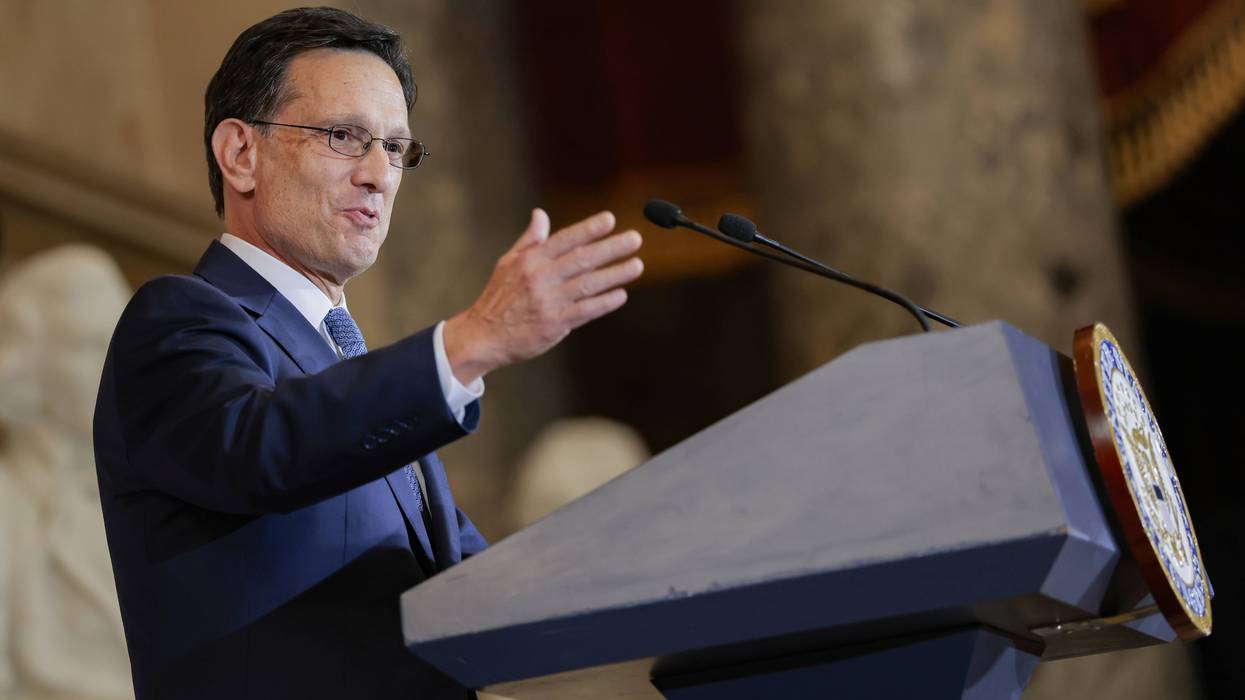
"Cantor, like PhRMA, is an experienced reverse Robin Hood, legislating money away from working families and toward giant corporations."
In what advocates for lower drug prices call "a match made in hell," one of the pharmaceutical industry's most powerful lobbying groups is tapping a former Republican leader in the US House of Representatives to head its political operations.
Pharmaceutical Research and Manufacturers of America (PhRMA) named former Rep. Eric Cantor (R-Va.) as its president and CEO on Tuesday amid what is shaping up to be a major fight over the government's ability to regulate prescription drug prices.
Cantor served in Congress from 2001-14 and was named House majority leader in 2011. He resigned in 2014 after losing his Republican primary in a stunning upset to the Tea Party-backed former Rep. Dave Brat.
According to recent polling from KFF, more than half of US adults say they worry about affording prescription drugs and nearly three-quarters say the government should do more to limit prices.
PhRMA emphasized that Cantor's appointment to replace the outgoing CEO Stephen Ubl comes at "a pivotal moment for America’s biopharmaceutical industry."
It is certainly spending like it. As Politico reported on Tuesday, pressure from voters to address the affordability of prescription drugs has been met with an unprecedented lobbying blitz by PhRMA, which poured a record $38 million into efforts to keep Capitol Hill in line.
PhRMA said Cantor’s “global business acumen coupled with policy and political experience at the highest levels of government make him an ideal person to lead PhRMA during this critical next chapter.”
Peter Maybarduk, the access to medicines director for the consumer watchdog group Public Citizen, agreed that Cantor was a perfect fit for PhRMA, but for very different reasons.
"Cantor, like PhRMA, is an experienced reverse Robin Hood, legislating money away from working families and toward giant corporations," Maybarduk said.
During his tenure in Congress, Cantor received roughly $900,000 from the pharmaceutical and health product industry, putting him 19th among all House candidates between 1999 and 2018, according to a JAMA Internal Medicine study of data from the Center for Responsive Politics.
That spending paid dividends, with Cantor voting against legislation aimed at lowering prescription drugs—including one bill in 2003 that would have allowed Americans to import low-cost prescription drugs from abroad and another in 2007 that would have required the federal government to negotiate drug prices for Medicare recipients.
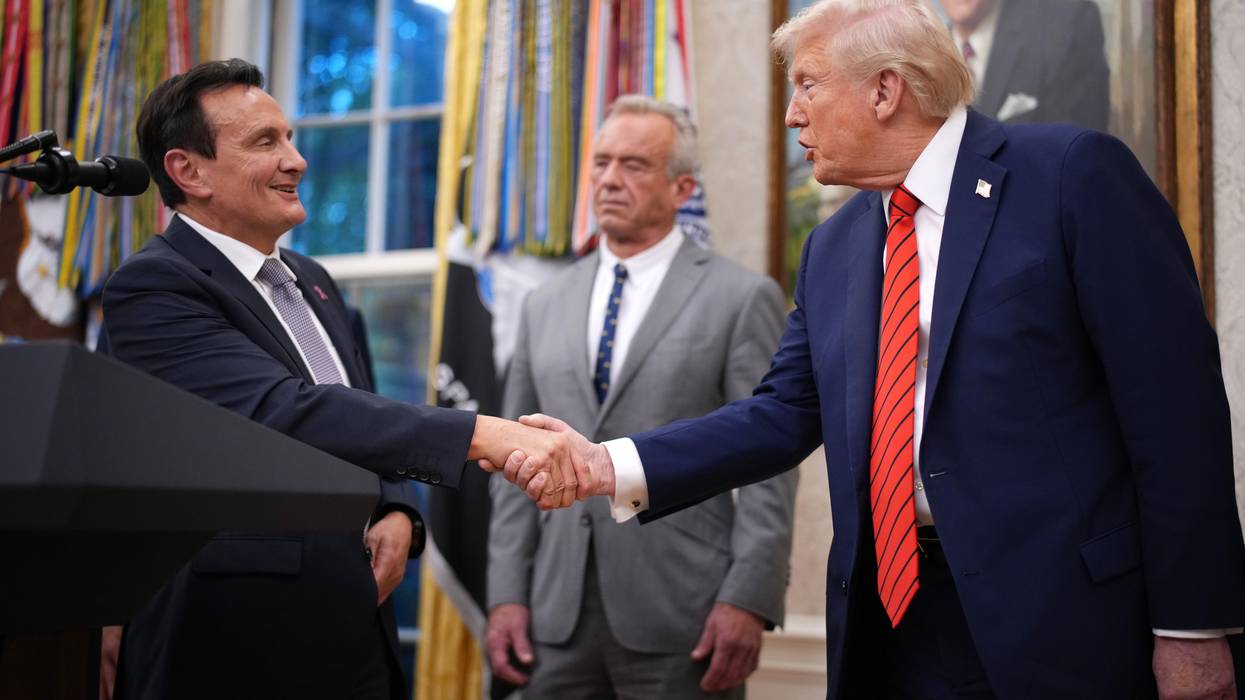
"The Trump team appears to be doing more to protect pharma profits than patients’ pocketbooks,” said Public Citizen.
The Trump administration’s secretive deals with Big Pharma to lower prescription drug prices included benefits for the companies that were not publicly disclosed, according to documents obtained by the consumer advocacy group Public Citizen via a Freedom of Information Act request and published Saturday.
Public Citizen said the deals allow drugmakers to raise prices overseas and limit the scope of promised savings for American patients.
“Trump’s drug pricing deals are a mirage, designed to convince Americans that he’s taken significant action on drug pricing while creating minimal, if any, downside for Big Pharma,” Peter Maybarduk, director of Public Citizen’s Access to Medicines program, said Saturday.
“The texts show Trump handing out favors to Big Pharma, undercutting his own models to lower prices, and throwing the support of the US government behind corporate decisions to deny medicines entirely to other countries,” he added.
Read Public Citizen’s analysis of Trump’s secretive deals with pharma: www.citizen.org/article/publ...
[image or embed]
— Access to Meds | Public Citizen (@pcmedsaccess.bsky.social) September 19, 2026 at 1:19 PM
The disclosures come as President Donald Trump continues to tout his “most-favored nation” (MFN) drug-pricing initiative. On Friday, the administration announced that all 50 states, Washington, DC, and Puerto Rico had applied to participate in a Medicaid program built around MFN pricing, under which participating drugmakers are supposed to offer certain medicines at prices comparable to those charged in other wealthy nations.
However, Public Citizen said the newly disclosed contracts raise questions about how much patients will actually save. The deal with Eli Lilly excludes the company’s blockbuster GLP-1 drugs Mounjaro and Zepbound from the definition of products subject to certain MFN discounts. Public Citizen said a similar carveout for Novo Nordisk could reduce potential Medicaid savings by $1.7 billion.
Eli Lilly’s agreement also permits the company to stop supplying a medicine to another country under certain circumstances, removing that nation’s price from the calculation used to determine the US MFN price.
“That practice threatens patients’ health,” Public Citizen said, adding that such provisions could effectively encourage pharmaceutical companies to make medicines unavailable abroad rather than reduce US prices.
“By agreeing to terms that endorse and facilitate pharma companies discontinuing supplying drugs in other countries, so they can continue to charge US customers more, the Trump team appears to be doing more to protect pharma profits than patients’ pocketbooks,” it said.
Public Citizen also said that the documents do not publicly reveal the full scope of tariff exemptions and other incentives provided to drugmakers, including reported benefits involving expedited US Food and Drug Administration reviews. The Pfizer agreement indicates that the company may share additional revenue generated by higher prices abroad with the US government. But crucial portions are redacted, leaving the public unable to determine how much money is involved, who receives it, or how it would be spent.
“The Trump administration continues to favor secrecy in these limited disclosures under FOIA today,” Maybarduk said, noting that the government has blacked out “the prices, product lists, and information needed to assess whether Trump accomplished anything of substance.”
Public Citizen's disclosures follow months of criticism over Trump's claims that his administration has dramatically reduced drug prices. In August, Sen. Elizabeth Warren (D-Mass.) accused the administration of failing to make the agreements public despite Health and Human Services Secretary Robert F. Kennedy Jr.’s previous commitment to provide them, saying, “still crickets.”
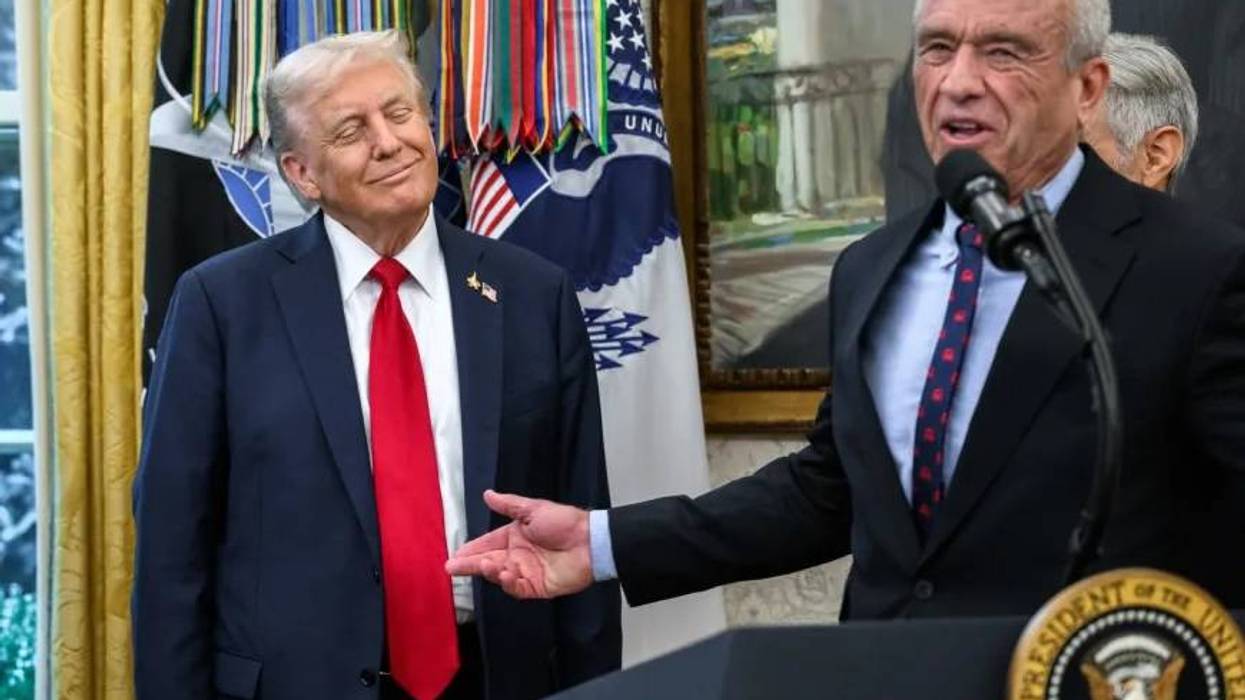
"Lasting relief requires transparent, enforceable measures that lower drug prices and hold big drug companies accountable," said one critic.
US President Donald Trump on Monday announced nine more agreements with pharmaceutical manufacturers intended to lower prescription drug prices nationwide, bringing the total to 26, but patient advocates responded skeptically.
The administration previously struck "most favored nation" (MFN) deals with 17 large drug manufacturers. The new ones with midsized companies—Alcon, Astellas Pharma, BeOne Medicines, BridgeBio, CSL, Kyowa Kirin, Sun Pharma, Teva Pharmaceuticals, and UCB—mean that 89% of the branded drug market is subject to an agreement, according to a White House fact sheet.
"It has been nearly a year since Trump announced his first secret MFN deal with Pfizer, and he has almost nothing to show for it," Peter Maybarduk, Access to Medicines director at the watchdog group Public Citizen, said in a Monday statement. "The new deals are a distraction from the administration's failed plan to lower US drug prices to the levels paid in other wealthy countries."
Earlier this month, Public Citizen released an analysis of Trump's policies to cut drug costs, including MFN deals. Maybarduk said at the time that "Trump has three kinds of drug pricing policy: fake, exaggerated, and not-real-yet, probably-won't-happen."
Following Monday's agreements, the campaigner argued that "a more serious approach would build international reference pricing into Medicare drug price negotiation. Instead, Trump is cozying up to Big Pharma and keeping American drug prices high."
"There still is no evidence that any pharma company has followed through on prior commitments to the Trump administration to launch new drugs at MFN price points," he explained. "Uptake of TrumpRx, which may cause consumers to overpay on medicines, has been lackluster."
TrumpRx is a government-operated website that helps patients find discounted prices and coupons for certain medications—and, as the Public Citizen analysis highlighted, the only part of the president's MFN program that is fully underway.
"The Centers for Medicare and Medicaid Services (CMS) has not announced any state participants in a pilot to test MFN-based prices in Medicaid," Maybarduk noted. "And CMS has failed to issue final rules to test MFN-pricing in Medicare, while simultaneously excluding almost all drug companies from these programs."
Public Citizen said it plans to immediately file a Freedom of Information Act request to obtain the texts of these "farce" deals—a pledge that came just days after US Sen. Elizabeth Warren (D-Mass.) highlighted that Health and Human Services Secretary Robert F. Kennedy Jr. has failed to publicize initial 17 agreements, despite agreeing to do so during an April hearing.
Like Public Citizen, the advocacy group Patients for Affordable Drugs was critical of the new deals, with CEO Merith Basey pointing out that "for decades, drug companies have been charging Americans at least four times more for brand-name medicines than people in other high-income nations."
"Patients need systemic reforms that will lower drug prices, rather than short-term, voluntary agreements whose terms remain secret," she asserted. "The deals announced today focus on Medicaid, where steep discounts already exist, and even then, states can choose whether to participate. Lasting relief requires transparent, enforceable measures that lower drug prices and hold big drug companies accountable."
As the industry trade publication Fierce Pharma reported, the large companies behind the initial deals "made a combination of drug pricing commitments and domestic investment pledges to win temporary immunity from the Trump administration's drug import tariffs," and "individual company press releases Monday, like UCB's, suggest that tariff immunity is still very much part of the MFN equation."
Although Trump's tried taking credit for a recent drop in medication costs, with the White House X account claiming Monday that he's "leveled the playing field, and made prescription drugs more affordable than ever for the American people," as Common Dreams reported earlier this month, experts have cited the Biden administration's policy allowing Medicare to directly negotiate some prices.
As Trump has touted his MFN deals, critics of the United States' for-profit healthcare system have in recent months renewed calls for shifting to Medicare for All—which new research shows would save over 114,000 lives and $1 trillion each year—and other healthcare reforms, including breaking up industry giants, capping drug prices, strengthening antitrust enforcement, and expanding the sector's workforce.
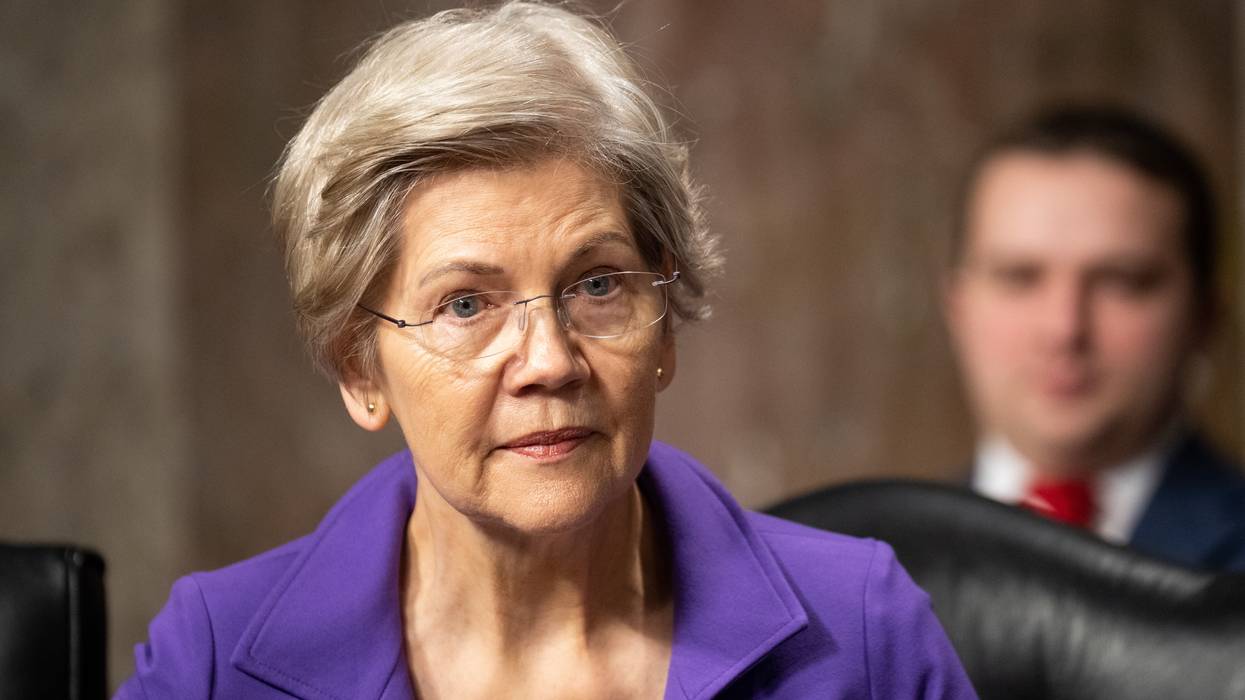
"Why should Americans believe this isn't just another Trump handout to fatten Big Pharma's pockets?"
Nearly two weeks after US Sen. Elizabeth Warren wrote to the Trump administration's top health official in her latest attempt to get answers on "secret pricing deals" with Big Pharma, the Massachusetts Democrat said Wednesday that she is still waiting for the White House to make the terms of the agreements public.
On social media, Warren noted that she asked Health and Human Services Secretary Robert F. Kennedy Jr. to publicize the deals for medicines listed on President Donald Trump's direct-to-consumer website, TrumpRx, at a hearing in April.
"Will you make the deals available to us so we can see them, a little transparency?" the senator had asked.
Kennedy replied that he would be "happy to make the deals available except for proprietary information and trade secrets."
But as the agreements have appeared to do little to reduce drug costs, Kennedy responded to Warren's request in writing without providing "copies of the questionable agreements" or answers to her questions about "unproven claims that the website is saving patients money," the senator noted.
Instead, Kennedy's response raised "fresh questions about whether the Trump administration’s savings estimates are reliable."
Months after her initial request, Warren said Wednesday, "still crickets."
"Why should Americans believe this isn't just another Trump handout to fatten Big Pharma's pockets?" she asked.
As Common Dreams reported last week, experts have pointed to the Biden administration's policy allowing Medicare to directly negotiate the prices of some drugs as the major driver of falling prescription prices, which dropped 3.1% over the past year.
But Trump has claimed that the "most favored nation" deals his administration negotiated with 17 pharmaceutical companies were behind the falling prices, despite the fact that just one aspect of his MFN policy—TrumpRx—has been enacted, and the website has only been found to deliver savings on one out of 54 listed medications.
"While TrumpRx has since added a wider selection of generic drugs and added some information about generic alternatives to select pages, not every brand drug on TrumpRx with an existing generic alternative has that alternative readily available on the site, and a recent analysis finds that the TrumpRx deals represent only around 12% of brand drugs made by participating Big Pharma companies," wrote Warren to Kennedy on August 13. "Thus, consumers still risk overpaying for branded drugs despite the availability of cheaper generics."
She added that the administration recently made the "unfounded claim that TrumpRx has already saved more than $700 million for American patients," while saving the average user of prescription medications only about $5.
"Your response to me raises questions about whether even that estimate was made up out of thin air," wrote Warren, noting that Kennedy had admitted TrumpRx “does not store any patient, health, or prescription information."
She emphasized that drug manufacturers who signed the MFN deals with Trump "have benefited from huge tariff exemptions for branded drugs and received vouchers to fast-track approvals for new products. That is on top of billion-dollar handouts President Trump and Republicans in Congress gave to the pharmaceutical industry last year in their tax law."
"This is a huge win for giant drug companies that will reap billions in additional revenues from higher prices abroad, while doing absolutely nothing to lower drug prices for Americans in need," wrote the senator. "Americans are paying more on everything from school supplies to furniture thanks to Trump’s across-the-board tariffs, and instead of negotiating deals to help workers and American families, he’s using that leverage to go to bat for Big Pharma."
"Americans deserve to know whether the deals the administration is cutting with Big Pharma will lower their prescription drug costs—or just further enrich big drug companies," said Warren. "Despite my request that you make the administration’s MFN deals with giant drug companies public, and your commitment to do so, you have yet to follow through."
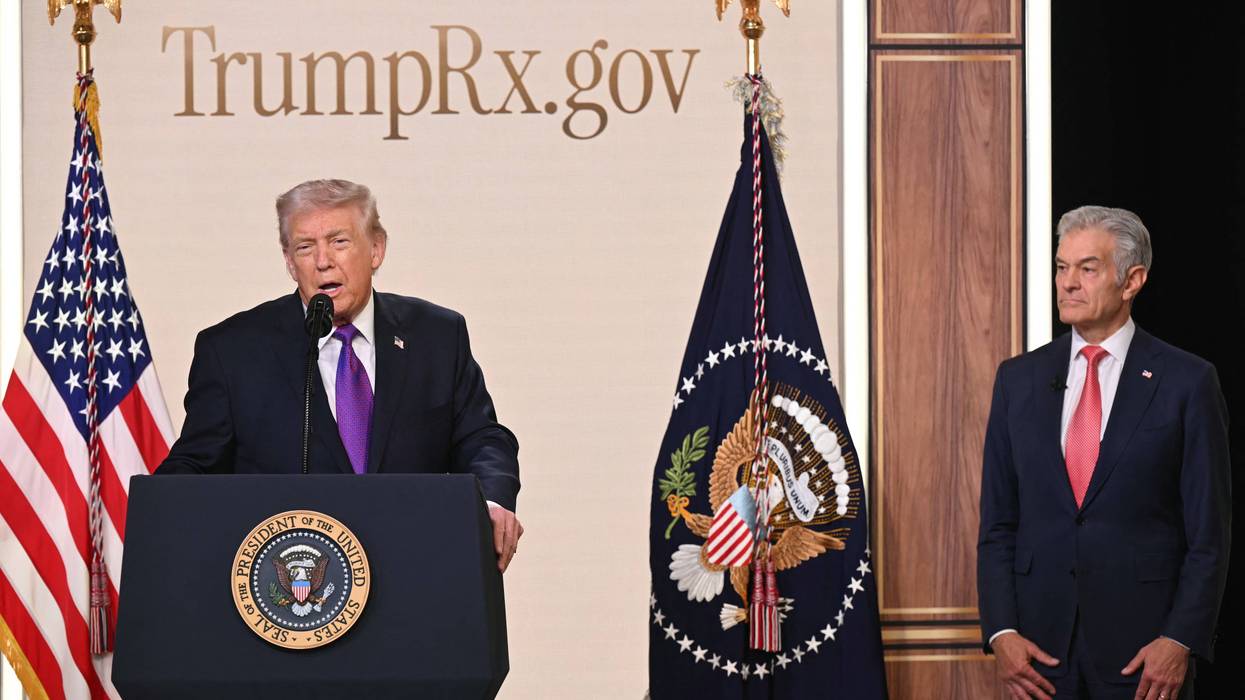
"Trump’s claim to have lowered drug prices amounts to distortion and stealing credit from past administrations whose policies actually made a difference," said one expert.
A new analysis published Thursday argues that President Donald Trump's claims about prescription drug price reductions under his administration fall into one of three categories: "fake," "exaggerated," or "probably won't happen."
The analysis, released by the consumer advocacy group Public Citizen, came after Trump recently—and buffoonishly—tried to take credit for what was described as the largest year-over-year price drop in more than 60 years, even as experts said a Biden-era policy allowing Medicare to directly negotiate the prices of some drugs was likely the most significant driver of those cost reductions. Data from the US Bureau of Labor Statistics indicates that drug prices fell 3.1% last month compared to the previous year, apparently the biggest decline since 1963.
But Public Citizen emphasized that the Trump administration "did not publish the methods they used for their analyses so that their work can be independently verified."
"For example, because the [Consumer Price Index for Prescription Drugs] is indexed to 1982, the administration would have had to recalculate the index in earlier years to make proper comparisons dating back to the 1960s, and we don’t have information on how this was accomplished," the group's analysis notes. "We also don’t know where they started the time cut offs for presidential administrations in their graph comparing Trump’s supposed achievements to other presidents. Team Trump has a history of misleading Americans using CPI-Rx data by for example picking arbitrary baselines that make their achievements look better. Their lofty claims were disproven in the past."
Public Citizen also took issue with the Trump White House's assertion that the president's "most favored nation" (MFN) deals with pharmaceutical companies are responsible for falling drug prices. The group observed that the only element of Trump's MFN agenda that has been fully launched is TrumpRx, which has not exactly delivered blockbuster savings.
"That’s in part because most Americans have health insurance and will do better purchasing drugs through their insurance plans," Public Citizen said. "TrumpRx may also cause consumers to overpay on brand drugs, as many of the medicines on the site have cheaper generic competitors available at lower price points."
The more likely cause of falling drug prices overall, according to Public Citizen, were "the genericization of expensive branded drugs," the Biden-era Medicare price negotiation program that Trump and congressional Republicans have worked to sabotage, and regulatory changes that took effect in 2024, prior to the start of Trump's second White House term.
“Trump has three kinds of drug pricing policy: fake, exaggerated, and not-real-yet, probably-won’t-happen,” Peter Maybarduk, access to medicines director for Public Citizen, said in a statement. “Prescription drug corporations are raising the prices of new medicines every year, and the CPI doesn’t even count that cost. It’s more likely that patent cliffs and Medicare price negotiation, which took effect this year and saved billions, drove changes in the CPI."
"Trump’s claim to have lowered drug prices amounts to distortion and stealing credit from past administrations whose policies actually made a difference," Maybarduk added.
Last weekend, Trump showcased to reporters a printout of a Washington Post story headlined, "Prescription drug prices record sharpest drop in more than 60 years."
"I told you that was going to happen," the president said.
Trump didn't mention that the Post's story highlights experts' view that "a Biden-era policy that requires Medicare to negotiate prices for some popular prescription drugs is more likely to be driving down costs."
Richard Frank, a senior fellow at the Brookings Institution and professor emeritus of health economics at Harvard University, told the newspaper that "if I was a betting guy on what mattered most, it would be probably stuff around the Inflation Reduction Act," Democratic legislation that included the Medicare drug price negotiation changes.
Trump’s policies, Frank added, "wouldn’t be where I’d place my money."
The president's attempt to take credit for falling drug prices came as his administration actively worked to undermine the price negotiation program that's helping drive costs down.
A Public Citizen investigation published earlier this month revealed that "a quiet change in policy interpretation" that the Trump administration wants to make permanent allowed AbbVie’s pancreatic enzyme medication Creon to escape Medicare price negotiations for at least another seven years.
“The Trump administration wants to make permanent a costly Medicare mistake, which creates windfalls for AbbVie and other drug corporations by excluding some expensive biologic drugs from negotiations for years,” said Maybarduk. “Medicare price negotiation already is far too generous to drugmakers, which gouge Americans for many years before negotiated prices kick in.”
"Yet again, Trump has betrayed the American people and put billionaires ahead of working families.”
The world's ten largest pharmaceutical giants reaped around $300 billion in combined global revenue during the first half of 2026 as millions of people in the US—the country with the highest drug prices in the world—stretched, skipped, or rationed doses to afford their medications, despite President Donald Trump's lofty pledges to slash costs.
An analysis released Thursday by the advocacy group Protect Our Care estimates that Johnson & Johnson, Novartis, AbbVie, Merck, Pfizer, and other pharma behemoths collectively reported $298 billion in revenue in the first half of the year—a $24 billion increase compared to 2025—and distributed $63 billion in benefits to shareholders in the form of share repurchases and dividends.
"The numbers speak for themselves," said Vaishu Jawahar, director of policy programs at Protect Our Care. "While big drug companies make record-breaking sales, raking in billions more than they did last year, a growing number of Americans are struggling to afford their prescription drugs. Yet again, Trump has betrayed the American people and put billionaires ahead of working families.”
Throughout his second White House term, Trump has made mathematically impossible claims about his efforts to curb drug costs, asserting repeatedly that he has cut prices by upwards of 1,000%. Critics of the Trump administration's approach have noted that it has relied on voluntary and secretive deals with pharmaceutical companies, which have gone on to raise prices after meeting with the president and showering him with praise.
One high-profile administration initiative, TrumpRX, has been widely denounced as a scam that will do virtually nothing to lower drug costs for most Americans. The president has also worked to weaken the Medicare drug price negotiation program established during the Biden administration.
“Instead of lowering drug prices for seniors, Trump is holding backroom deals with big drug companies and handing them blockbuster giveaways," said Jawahar. "He has created loopholes for industry giants to evade price negotiations and jack up drug prices for seniors."
The advocacy group Patients for Affordable Drugs noted in a March report that during the first week of 2026, pharmaceutical companies "increased prices on 64 oncology drugs, with 73% of hikes exceeding inflation."
Sixty percent of US adults say they are struggling or worried about being able to afford their prescription medications, according to recent polling from the health policy research organization KFF. The group said that number marked the highest level since 2018.
Separate polling released in March by the West Health-Gallup Center on Healthcare in America found that tens of millions of people in the US "said they have made at least one trade-off with daily living expenses to afford healthcare," including skipping a meal, prolonging a current prescription, and cutting back on utilities.
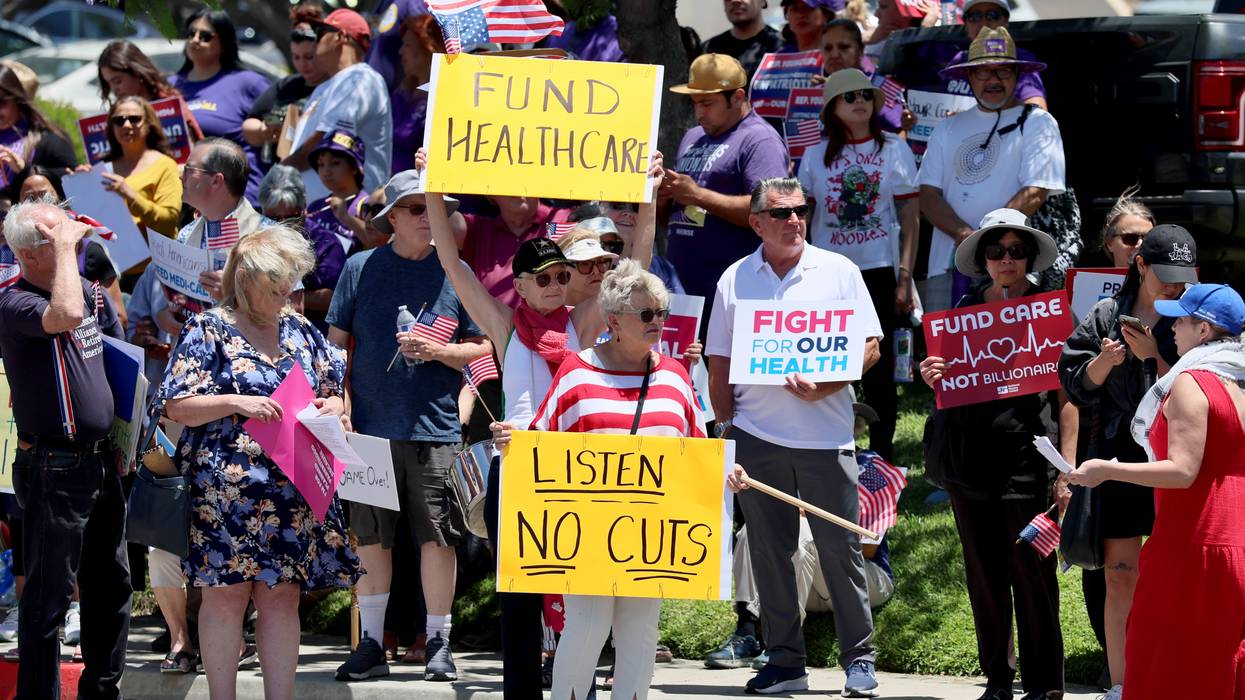
Trump and his allies in Congress have not so much dismantled these programs yet as chipped away at them; if this movement continues unabated, we may be left with the crumbling foundations of programs that were built to last.
There is reason to celebrate Medicare and Medicaid turning 61 years old. Both highly successful programs were signed into law by President Lyndon B. Johnson on July 30, 1965 as a cornerstone of his Great Society agenda. But this year, our celebration is tempered by grave concern over the future of both programs under the Trump regime.
Let’s compare the words of the two presidents:
LBJ:
No longer will older Americans be denied the healing miracle of modern medicine. No longer will illness crush and destroy the savings that they have so carefully put away over a lifetime. No longer will young families see their own incomes, and their own hopes, eaten away simply because they are carrying out their deep moral obligations to their parents.
It’s not possible for us to take care of… Medicaid, Medicare, all these individual things. They can do it on a state basis. You can’t do it on a federal. We have to take care of one thing: military protection. We have to guard the country.
The comparison speaks volumes. One is a leader who understood that the federal government has a crucial role in the protecting the health and well-being of our most vulnerable citizens—including the poor, disabled, and the elderly. The other is a president who claims to support Medicare and then says that the federal government can’t afford it because of his illegal war in Iran. So much for supporting Medicare.
But this goes deeper than Trump’s rhetoric. The Medicare program, like Social Security, is at a pivotal point in its history. The Part A hospital) trust fund must be fortified so that it doesn’t run dry in the 2030s. (There are reasonable solutions that Congress could enact without hurting seniors.) So far, though, we have heard no constructive ideas from Trump.
More urgently, though, the Trump administration is actively undermining the "traditional Medicare" program that LBJ signed into law. The administration has begun a pilot program to use AI bots to determine whether traditional Medicare patients will be covered for procedures their doctors have ordered. This appears to be an attempt to cut costs by erecting obstacles to medically necessary care—with decisions made by bots instead of human beings.
It could be the first step in a scheme to corrupt traditional Medicare and make it more like the privatized Medicare Advantage program run by for-profit insurers, which is a glorified HMO (with frequent denials of care, limited provider networks, and surprise out-of-pocket costs for beneficiaries). Unfortunately, thanks to deceptive but pervasive advertising, Medicare Advantage has now captured more than 51% of the market, leaving traditional Medicare with a shrinking share of enrollees.
The problem is that Medicare Advantage (MA) puts profits over patients. Participating insurance companies have been overbilling the federal government by billions of dollars a year. Ironically, this privatized program was supposed to save taxpayers money. Instead, Medicare Advantage plans cost the government an average of 14% more per patient than traditional Medicare. That translates into an additional $76 billion in federal spending this year alone.
The bottom line: Medicare Advantage puts taxpayers’ money into the hands of large insurance companies while failing to deliver superior or more cost-effective care. It is fair to say that this is not what LBJ had in mind when he created the public Medicare program. (Medicare Advantage arrived—in nascent form—in 1997, after considerable pressure from the insurance industry.)
When we talk about the financial shortfall facing the Medicare program, we must look at Medicare Advantage as an aggravating factor. Reining-in MA would go a long way toward restoring the overall program to fiscal health—along with other commonsense reforms. Unfortunately, the Trump administration has been inconsistent on this issue, initially floating strict curbs on MA overpayments but ultimately rewarding insurance companies with higher payouts.
Traditional Medicare is far from perfect. It should have caps on patients’ out-of-pocket medical costs. It should cover vision, dental, and hearing care. (President Joe Biden attempted to expand coverage in the ill-fated Build Back Better Act.) These are improvements that we have long urged Congress and the White House to enact.
Medicare also faces compound financial challenges—including the overall rise in healthcare costs and soaring prescription drug prices. The Biden administration and Democrats in Congress took a major step in the right direction with the Inflation Reduction Act, which empowered Medicare to negotiate drug prices with Big Pharma. This process is expected to save the government more than $230 billion by 2031.
For the most part, the Trump administration has adhered to the law and continued negotiating with drugmakers—but it also expanded the list of cancer drugs that won’t be eligible for negotiations. The president has largely relied on smoke and mirrors to make it appear that the administration is "tough on Big Pharma," using gimmicks like TrumpRx. Meanwhile, in a move that will make medications less affordable for seniors, the Trump administration has just announced it is ending Biden-era subsidies in the Medicare Part D prescription drug program.
Of course, it’s also Medicaid’s 61st anniversary. The damage that Trump and the Republicans have done to Medicare’s sister program would take up another entire article. Suffice it to say that more than 3 million Americans have already lost health coverage since Trump and the GOP enacted their Big, Ugly Bill, which slashed nearly $1 trillion from Medicaid. (This also hurts older people dually enrolled in both Medicare and Medicaid.) It was correctly labeled the biggest cut in healthcare in US history—to pay for tax cuts largely benefiting the wealthy.
The political right has always been wary of the New Deal and Great Society legacy programs that lifted people out of poverty and provided older and lower-income Americans with basic retirement and health security. Some on the right have outright committed themselves to dismantling these programs, despite their distinguished histories. Trump and his allies in Congress have not so much dismantled these programs yet as chipped away at them under the guise of fighting "fraud and abuse." If this movement continues unabated, we may be left with the crumbling foundations of programs that were built to last, for the good of the American people.
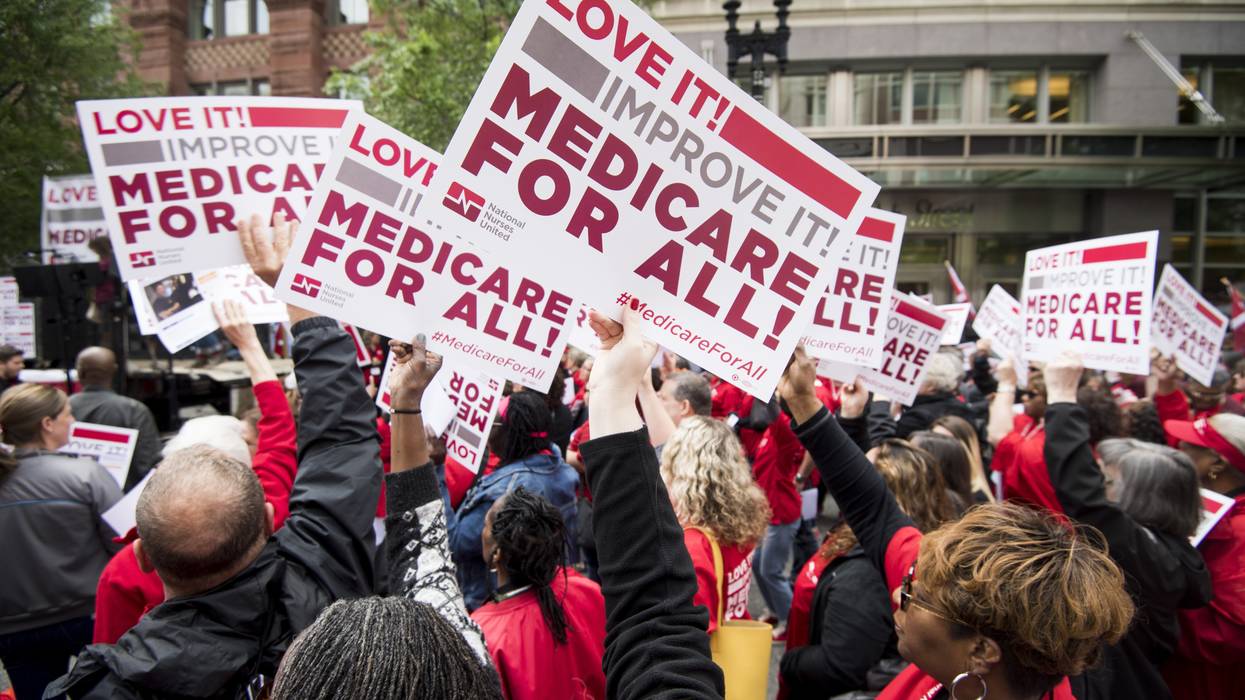
Medicare has become living proof that public, universal health insurance is superior to private insurance in every way.
Sixty one years ago, July 30, 1965, Congress enacted Medicare to provide health insurance for people ages 65 and older and the disabled regardless of income or medical history. At the Harry S. Truman Presidential Library in Independence, Missouri, former President Harry S. Truman and his wife, former First Lady Bess Truman, became the first recipients of the new Medicare health insurance program. President Lyndon Johnson and the US Congress enacted Medicare under Title XVIII of the Social Security Act.
Medicare was a momentous act because it provided new health insurance for people ages 65 and older and the disabled regardless of income or medical history. In the years since, Medicare has become living proof that public, universal health insurance is superior to private insurance in every way. Medicare is more efficient than private health insurance and is administered at a cost of 3-4%, as opposed to private, for-profit health insurance, which has administrative costs above 15%.
Following the successful 1965 grassroots campaign to enact Medicare, many also believed that the dream of a full national, single-payer health insurance system that included all age groups, “Medicare for All,” was right around the corner. Unfortunately decades later, Medicare still has not been expanded. Most of the changes have been contractions with higher out-of-pocket costs for beneficiaries and repeated attempts at privatization by Big Pharma, Big health insurance industry companies-oligarchs-profiteers, and their champions in the White House and Congress.
Big insurance and Big Pharma continue opposing legislation for the new, improved Medicare for All because these resistant, self-serving industries have the most to lose if their huge profits are redirected to direct patient care for all. Individual and corporate predators regard democracy, government, and community as obstacles to their greed and avarice, always placing profits over individual patients, families, and public health. It’s no wonder so many beholden members of Congress want to protect the interests of Big Insurance and Big Pharma, industries that spent $371 million on lobbying in 2017 alone.
The Heritage Foundation’s Project 2025, framed by former Trump administration staffers and secretly endorsed by President Donald Trump himself, proposes changes in Medicare benefits that could destroy Medicare as we know it. Instead, we must fight back and expand Medicare. Although health insurance affordability for the majority of US citizens still remains elusive, President Trump’s health insurance plan still wants to shift many more dollars into private, Wall Street insurance industry hands. The takeover of public health insurance, as with Medicare Advantage plans and others, by private Wall Street entities continues apace as Republicans and Trump propose to increase taxes and give it to the private profit insurance industry—the basic source of our profound administrative waste, along with the costly administrative burdens they place on the delivery system that requires large profits. Profiteering continues unabated as private insurance sells us services we don’t need or want, such as deductibles and other cost sharing and maintenance of narrow networks, requiring prior authorization with increased administrative costs, excessive ongoing paperwork, and documentation requirements, all while avoiding paying for surprise bills and other denied benefits.
No greater disconnect exists between the public good and private interests than in the voracious US system of for-profit Big Insurance and Big Pharma.
Dealing with Covid-19 could have been more lifesaving if Medicare for All had been in place. A New York Times editorial, "Health Care for Some is a Recipe for Disaster," stresses the importance of covering everyone. Even before Covid-19 was known to humans, Northeastern University professor of public health, Wendy Parmet, presciently warned that the push to exclude immigrants from access to healthcare services would be both dangerous and quixotic. “None of us can be self-sufficient in the face of a widespread epidemic,” she wrote in 2018. “That is just as true for noncitizen immigrants as everyone.” In any pandemic, self-sufficiency can be self-deluding; everyone’s health, citizens, immigrants, etc. alike is only as good as our most vulnerable neighbor’s.
Truly a recipe for disaster, vested interests reject the science of public health epidemiology by asserting that only a slow, incremental approach to health insurance reform is possible or acceptable. So, what are we willing to settle for, should we just settle for what we can get? Lower the expectations, turn down the public heat, and keep waiting?. Gradualism, baby steps, extending health insurance coverage to some, but not all, is the mantra of the day; "Medicare for Some," but not "Medicare for All," is fawned over by politicians, profiteers, and advocacy groups alike while reducing communities resources to deal with dangerous epidemics and other health problems.
Virtually all the risky gradual reforms being touted would reinforce a dysfunctional health insurance system with as many standards of insurance as there are dollars to purchase them. It would further lock us into an obsolete private insurance-based model that holds everyone's health hostage to profiteering HMOs and unaccountable big insurance companies for years to come. For these proponents of political expediency, the question remains: Who will be left behind while we wait? Every year many unnecessary deaths are linked to lack of health insurance coverage. Pandemics can quickly increase these numbers.
Big Insurance and Big Pharma dominate our government, and public health takes a back seat to the need for private profit. Many government leaders from both political parties share the same "profits over public health" ideology, even though the Covid-19 pandemic clearly showed how our economic system failed to serve our citizens by allowing these groups to privatize, sabotage, fragment, and cripple our health, public health, and other social services. Many of the changes in traditional Medicare have been contractions with higher out-of-pocket costs for beneficiaries and repeated attempts at privatization by Big Pharma, and Big Health insurance. No greater disconnect exists between the public good and private interests than in the voracious US system of for-profit Big Insurance and Big Pharma and their inherent tendency to invent new needs, disregard all boundaries, and turn everything into an object for sale and big profit.
Medicare for All Act (M4A)-2026 is best solution because it meets eight basic standards:
To continue our 61 years of progress, it’s time to upgrade Medicare by establishing a 21st century improved “Medicare for All” health insurance system that covers all age groups, cradle to grave. Newborns will leave the hospital with their new Medicare card, and drop it off years later at life’s end. Two comprehensive M4A bills now filed in Congress, H.R. 3069 and S.1506, propose to insure or cover all medically necessary services. Patients have their choice of physicians, mental health professionals, other healthcare professionals, hospitals, and clinics.
M4A insured health services include:Because our government, instead of private profit health insurance companies, serves us as the health insurance financing authority, co-pays and deductibles paid at health professionals' offices are ended because payment for health insurance is fully prepaid directly into Medicare, much like Social Security, and covered at first dollar amounts. This means the obsolete 80%-20% payment split between private health insurance companies and Medicare is eliminated, with Medicare for All covering 100%.
The major reason private health insurers are more expensive than government health programs in the US is due to profiteering and administrative costs. Those extra taxpayer funds going to private insurers include costs such as advertising and marketing of their plans, costs of contracting for restrictive provider networks, administering prior authorization requirements, complex systems of processing claims including denial of benefits, simple administrative costs of operating large corporate entities, and distributing generous profits to their executives and passive high profiteering by Wall Street investors.
The Medicare for All Act-2026, now filed in Congress, would much better fill our healthcare financing needs without wasting hundreds of billions of dollars on superfluous administrative costs and end immense profiteering by private insurers and Big Pharma. The USA is a country where health insurance for medical and mental healthcare is a function of socioeconomic status. Everyone knows that this inhumane system should have been corrected long ago.
Please tell your legislators that it’s time to end inadequate and dangerous health insurance programs. Insist on real health insurance reform essential for individuals and families. American history is filled with examples of fundamental, democratic change brought about by successful mass action and public pressure against the counseling of the go-slow, vested-interest crowd. No more waiting! Ask your legislators to fully support Medicare For All 2026 now: H.R. 3069 and S. 1506
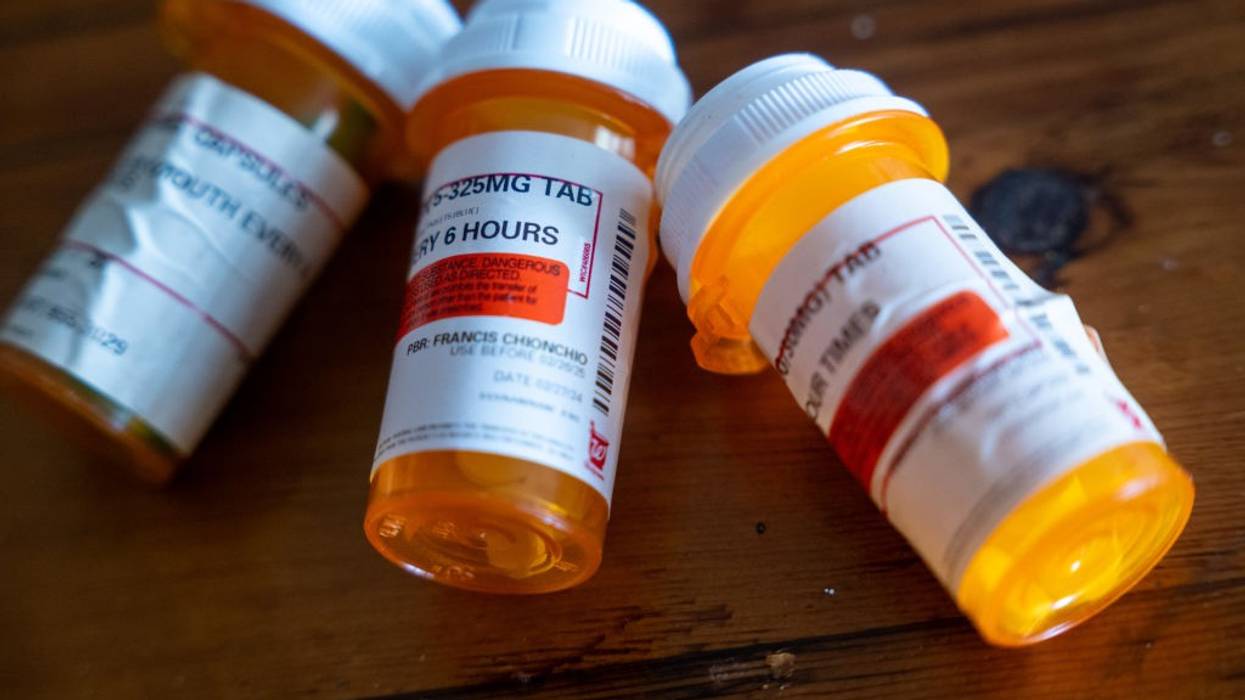
"Tariffs of this magnitude could have enormous consequences—raising costs, worsening shortages, and putting access to lifesaving medicines at risk."
While President Donald Trump has repeatedly claimed that he is working to lower the cost of prescription drugs, advocates for patients on Wednesday expressed alarm over the Republican's plan to impose significant tariffs on imported generic medication.
"Effective August 1st, 2026, all Generic Drugs being brought into the United States will continue to have a TARIFF of ZERO PERCENT for a two year period of time, after which the TARIFF will be raised to 100% for a one year period of time, and 200% thereafter," Trump wrote on his Truth Social platform late Tuesday.
"This is done in order to RESHORE Generic Pharmaceutical Production into America, with a penalty to those Companies that decide not to build Plant and Equipment within the stated period of time given to them," he continued. "The objective of this Policy is to protect the people of the United States."
A White House official told Politico that the administration intends to use Section 232 of the Trade Expansion Act of 1962 to impose the threatened tariffs. Although the president has not yet issued an order for his new announcement regarding generics, it's already causing concern.
"If imposed, the duty risks upending a global supply chain that keeps generic medicines affordable for Americans," the Los Angeles Times reported. "These off-patent drugs run the gamut from everyday painkillers and antibiotics to cholesterol and cancer drugs, and they're mostly produced at factories in India, Europe, and China."
Merith Basey, CEO of the advocacy organization Patients for Affordable Drugs, argued that "if the administration intends to lower prescription drug prices, it should not pursue policies that threaten to raise them. Imposing massive tariffs on generic medicines risks making lower-cost generic drugs millions of Americans rely on more expensive and harder to access."
"Generic drugs account for approximately 90% of prescriptions filled in the United States and are one of the few areas where Americans pay relatively low prices compared with other countries," she noted. "Tariffs of this magnitude could have enormous consequences—raising costs, worsening shortages, and putting access to lifesaving medicines at risk."
Basey stressed that "at a time when Americans are already struggling to afford healthcare, groceries, housing, and other basic needs, the last thing they need is another additional expense. Seniors, people with chronic conditions, and patients who rely on multiple prescriptions could be particularly hard hit."
"We urge the administration to focus its efforts on brand-name drug companies who abuse their monopoly power to block competition—not jeopardize the lower-cost medicines Americans depend on," she concluded.
The watchdog Public Citizen was also critical, warning that imposing tariffs on generics risks supply chain shocks, shortages, and treatment rationing; prioritizes supply restrictions over flexible supply from multiple sources; and undermines US manufacturing and workers, given the unlikelihood that drugmakers would invest billions to relocate to the United States.
"This reckless and impetuous move will drive up price, force rationing of key medicines, and needlessly create scarcity problems," said Peter Maybarduk, Public Citizen's Access to Medicines director, in a statement.
"The sole respite from Trump's reckless pharma tariff plans has been that they so far do not apply to generics, which are vulnerable to supply disruptions that risk people’s access to medicine," he added. "Now, Trump has erased even that modest protection, and set a destructive course that could cause, rather than prevent, scarcity and rationing."
The president's potential levies on generics would follow a similar—and similarly criticized—policy targeting brand-name drugs, which Trump announced in April, on the one-year anniversary of his so-called Liberation Day and after an investigation by the US Department of Commerce.
The April tariffs were aimed at pressuring pharmaceutical companies to negotiate onshoring plans as part of most favored nation (MFN) pricing agreements. However, as Basey pointed out at the time, "the current MFN deals remain opaque and voluntary, and have not delivered meaningful savings for the vast majority of American patients."
A couple of weeks later, the administration announced its 17th MFN agreement, with Regeneron. The other companies that have struck deals are AbbVie, Amgen, AstraZeneca, Boehringer Ingelheim, Bristol Myers Squibb, Eli Lilly, EMD Serono, Genentech, Gilead Sciences, GSK, Johnson & Johnson, Merck, Novartis, Novo Nordisk, Pfizer, and Sanofi.
Trump claimed Tuesday that "the Policy on Patented, Branded, or Innovative Drugs, which has been so successful, will remain as is. Pharmaceutical Facilities are being built, at a level never seen before, all over the United States of America."
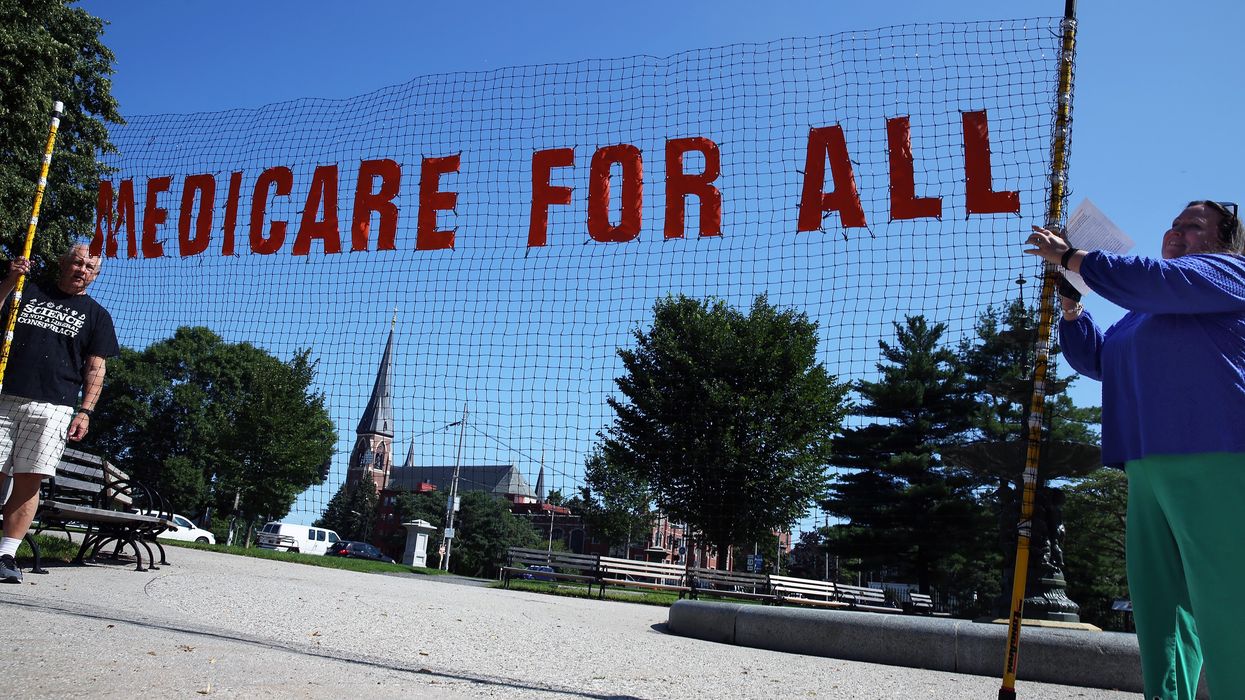
As politicians debate “universal healthcare,” we need those two words to be much more than a campaign slogan or an empty promise. Healthcare must be a true human right, easily exercised by every single person in America.
As a Maryland pediatrician, I serve patients and communities who struggle at the broken edges of the American healthcare “system.” My patients are from families working three or four jobs with no benefits, just barely getting by. With more grace than I could ever summon, these families diligently follow the protocols to determine their children’s “eligibility” for healthcare. The American healthcare system scrutinizes a family’s pay stubs, bank statements, and employment status—a process called means testing—to determine if they are eligible for Medicaid or a pittance of help to purchase a private insurance plan. It is not enough to be a human being. Our healthcare system must determine where you are on the spectrum of worthy to unworthy before you can get any medical care.
My pediatric patients whose parents get health insurance through their employment are not doing much better. An inhaler that helps an asthmatic breathe easier is covered by the insurance corporation one year, but not the next. Similarly, a specialist who has masterfully managed a patient’s seizures for several years is suddenly “out of network.” Never mind that the patient’s parents are paying premiums from every single paycheck to that multibillion-dollar insurance corporation. Playing by the corporate greed machine’s rules does not protect patients from arbitrary decisions that are supposedly good for business.
Over the course of my 20 years working in healthcare, I have seen more and more patients with supposedly good insurance avoid necessary medical care because the out-of-pocket costs keep increasing. In the richest country in the world, families are stuck between the false choices of paying for rent, groceries, utilities, or healthcare. Choosing healthcare can cost anywhere from feeding your family to putting a roof over their head.
All of us are trapped in this infuriating maze of puzzles and peril. Looking at this cruel mess of a system, we have politicians saying a “public option” is enough to fix things. There are think tanks describing a system of “universal healthcare” where the expensive (and yet, worthless) plans from private insurance corporations, the 50 shades of Medicaid, and a public option somehow achieve a magical harmony. To make things even more complicated, it is unclear what exactly a public option could look like. It could mean patients have the option of buying into Medicare or Medicaid. Or it could mean a separate public insurance plan at the federal level, possibly available to everyone or possibly just the ones deemed needy enough.
Medicare For All is true universal healthcare, where patients and families have peace of mind whenever and wherever they need medical help.
We need to be clear about what “universal healthcare” ought to mean. Everybody getting expensive-but-worthless plans from insurance corporations is universal financial stress, not universal healthcare. Similarly, adding any kind of “public option” fragment to a ridiculously fragmented system is universal confusion, not universal healthcare.
Insurance corporations have a long track record of deploying lobbyists and misinformation to undermine provisions of the Affordable Care Act. It is foolish to think these greed machines will become good-faith partners in our healthcare, competing fair and square with any kind of public option. Corporate lobbyists will see to it that any public option uses complicated means testing to determine which members of the public are worthy or unworthy of the care. These corporations will also manipulate their own plans to shut out patients who need healthcare the most, leaving them to a public option struggling to pay doctors and hospitals. Insurance greed machines do not want competition, and will undermine a public option any way they can.
Rather than tinker with a corporate-driven healthcare system determined to put profits before patients, let’s build universal healthcare through Medicare For All. Because healthcare is a human right, Medicare For All guarantees every single person living in America is eligible. We can save billions of dollars when we stop scrutinizing who is worthy or unworthy. Medicare For All provides the kind of coverage that stays with people from cradle to grave. It is mobile coverage, staying with patients from state to state, or job to job. Hospitals and clinics will remain open and properly staffed because Medicare For All puts patients first, not profits. Because all 342 million of us are covered, Medicare For All will have powerful leverage to negotiate with Big Pharma about the cost of prescriptions. Medicare For All is true universal healthcare, where patients and families have peace of mind whenever and wherever they need medical help.
We have tolerated an intolerable healthcare system for far too long. In the coming years, as politicians debate “universal healthcare,” we need those two words to be much more than a campaign slogan or an empty promise. Healthcare must be a true human right, easily exercised by every single person in America. We can and we will make that right a reality with Medicare For All.