5
#000000
#FFFFFF
To donate by check, phone, or other method, see our More Ways to Give page.
Daily news & progressive opinion—funded by the people, not the corporations—delivered straight to your inbox.

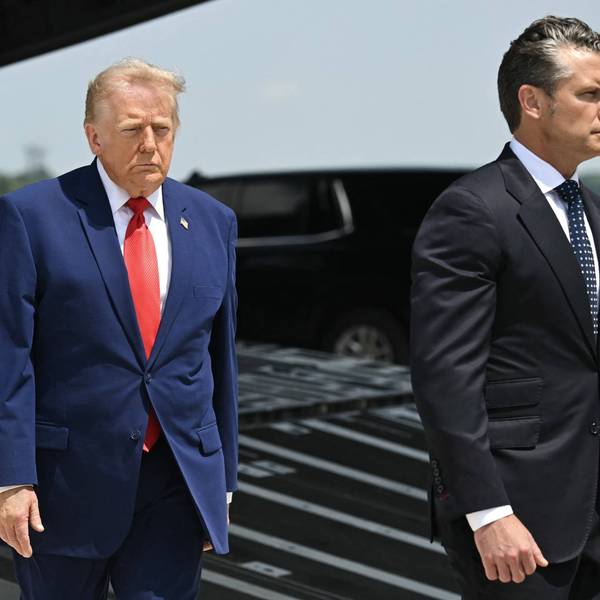
US President Donald Trump steps off Air Force One upon arrival at Dover Air Force Base to attend a dignified transfer solemn event in Dover, Delaware, on March 18, 2026.
The question, known before the war and abundantly clear now, is not whether the United States can inflict more damage on Iran. The question is how additional damage would produce a victory.
Six months into the second US-Israeli war on Iran, the Trump administration’s message is that Iran is weakening, the United States is winning, and the costs of war will be temporary. That narrative is hard to sustain as the war drags on, gas prices rise, US munitions stocks dwindle, and a majority of Americans oppose the war, opposition they will make known in the November midterm elections.
Despite overwhelming military and economic pressure, as well as the loss of a head of state, the Islamic Republic of Iran is still fighting, still capable of escalating, and still unwilling to surrender. The United States and Israel have caused enormous destruction, without compelling Tehran to accept Washington’s demands. The question, known before the war and abundantly clear now, is not whether the United States can inflict more damage on Iran. The question is how additional damage would produce a victory.
Last week President Donald Trump dismissed the conflict as “small potatoes,” minimizing a war that has lasted far longer and imposed greater costs than his administration initially suggested. The conflict has killed 18 American service members, wounded more than 750, and cost US taxpayers at least $37.5 billion.
The cost to Iran has been far greater. By June 10, at least 3,468 people had been killed and more than 26,500 injured in US and Israeli attacks, according to figures from Iran’s Ministry of Health. Civilian casualties have been recorded throughout the conflict, including in strikes on an elementary school in Minab in February and on a wedding gathering in southern Iran in September. The Iranian Red Crescent reported that more than 125,000 civilian units had been damaged by April, including approximately 100,000 homes. Iran also submitted a list of 134 damaged cultural sites to UNESCO, while Reuters documented damage to historic buildings and protected sites.
The United States can continue to destroy targets and degrade Iranian capabilities, but unless that pressure changes Iran’s political calculations, further escalation risks producing more destruction without producing a settlement.
Iran demonstrated that it can impose substantial costs on the United States. An analysis found that Iranian strikes damaged 15 US military sites across the region, including barracks, hangars, fuel depots, aircraft, radar systems, communications equipment, and air-defense systems.
US Central Command disputed descriptions of the damage. The strikes nevertheless exposed the vulnerability of fixed US facilities and the cost of defending them against sustained Iranian missile and drone attacks.
“The Trump administration—and likely the Pentagon itself—overestimated the ability of the United States and Israel to quickly subdue Iran’s military,” Harrison Mann, associate director for campaigns at Win Without War and a former US Army officer and intelligence official, told the International Policy Journal (IPJ). “They were never able to locate or destroy the majority of Iran’s drones and missiles, nor destroy enough of its air defenses that US aircraft could fly freely over the entire country.”
“Ultimately, Trump discovered it’s not possible to fight a prepared, 21st-century military—even one objectively weaker than America’s—and still conceal the costs from the public like previous US military interventions in the region,” Mann added.
This asymmetry is central to the war. Iran does not need to defeat the United States conventionally. To deny Washington a decisive political victory, it needs only to preserve its governing institutions, retain sufficient retaliatory capacity, and make continued warfare costly enough that the United States cannot impose its preferred outcome at an acceptable price.
The Trump administration says it has severely degraded Iran’s missile, naval, and nuclear capabilities. Tactical destruction is not itself a political end state. Iran continues to retaliate, to interfere with traffic through the Strait of Hormuz, and to reject Washington’s principal negotiating demands. Further escalation could reproduce the same stalemate at a higher price.
A growing resistance in the United States is skeptical of the war’s objectives, doubtful of its constitutional basis, and tired of the costs.
“Trump is facing unprecedented public and congressional resistance to his war on Iran. The possibility that he may not get an annual National Defense Authorization Act from Congress for the first time in the 65-year history of such legislation is a major governing failure reflecting his massive strategic failure in the Persian Gulf,” Dylan Williams, vice president of government affairs at Center for International Policy, told the IPJ.
While Trump started this war, Congress retains the power to stop funding it. Article I of the Constitution gives Congress the power to declare war and control federal appropriations. The House has passed its version of the fiscal year 2027 National Defense Authorization Act, which would authorize approximately $1.15 trillion, almost all of it for military and nuclear-defense activities. The measure has not completed the legislative process.
That legislation is distinct from the administration’s broader $1.5 trillion defense-budget proposal, comprising $1.15 trillion in discretionary defense funding and an additional $350 billion in proposed mandatory defense funding.
“Trump is clearly refusing to take the loss, but that doesn’t make it any less real or costly. Lawmakers opposed to this reckless military adventurism need to stand strong and continue to deny Trump’s record $1.5 trillion military budget request and other attempts to fund and deepen this disastrous war of choice,” Williams added.
Congress could condition further funding on explicit authorization, require the Trump administration to disclose the war’s true costs and objectives, or establish a deadline after which military operations could not continue without renewed approval.
Iran cannot match the United States and Israel militarily. But it benefits from geography, a strategy tailored to a stronger adversary, and the advantages of fighting on its own territory, as well as a leadership that views the conflict as existential and has shown a willingness to absorb enormous costs rather than surrender. After six months, that military pressure has still not brought Washington closer to securing its demands. The United States can continue to destroy targets and degrade Iranian capabilities, but unless that pressure changes Iran’s political calculations, further escalation risks producing more destruction without producing a settlement.
That does not mean Tehran has abandoned diplomacy. Iranian officials have said Iran is prepared to return to the June memorandum of understanding if Washington recommits to it, leaving open a negotiated path out of the war. If the United States does not return to the agreement, however, Tehran appears prepared to escalate until Washington either tires of the conflict or concludes that diplomacy is less costly than continued war. In this calculation, escalation is not an alternative to negotiations but a means of forcing the United States back to them.
Six months into the war, Trump has yet to present a path to political victory. He retains the ability to escalate, but without an achievable end state, further escalation risks deepening the costs of a war Washington still cannot conclusively end.
Dear Common Dreams reader, It’s been nearly 30 years since I co-founded Common Dreams with my late wife, Lina Newhouser. We had the radical notion that journalism should serve the public good, not corporate profits. It was clear to us from the outset what it would take to build such a project. No paid advertisements. No corporate sponsors. No millionaire publisher telling us what to think or do. Many people said we wouldn't last a year, but we proved those doubters wrong. Together with a tremendous team of journalists and dedicated staff, we built an independent media outlet free from the constraints of profits and corporate control. Our mission has always been simple: To inform. To inspire. To ignite change for the common good. Building Common Dreams was not easy. Our survival was never guaranteed. When you take on the most powerful forces—Wall Street greed, fossil fuel industry destruction, Big Tech lobbyists, and uber-rich oligarchs who have spent billions upon billions rigging the economy and democracy in their favor—the only bulwark you have is supporters who believe in your work. But here’s the urgent message from me today. It's never been this bad out there. And it's never been this hard to keep us going. At the very moment Common Dreams is most needed, the threats we face are intensifying. We need your support now more than ever. We don't accept corporate advertising and never will. We don't have a paywall because we don't think people should be blocked from critical news based on their ability to pay. Everything we do is funded by the donations of readers like you. When everyone does the little they can afford, we are strong. But if that support retreats or dries up, so do we. Will you donate now to make sure Common Dreams not only survives but thrives? —Craig Brown, Co-founder |
Six months into the second US-Israeli war on Iran, the Trump administration’s message is that Iran is weakening, the United States is winning, and the costs of war will be temporary. That narrative is hard to sustain as the war drags on, gas prices rise, US munitions stocks dwindle, and a majority of Americans oppose the war, opposition they will make known in the November midterm elections.
Despite overwhelming military and economic pressure, as well as the loss of a head of state, the Islamic Republic of Iran is still fighting, still capable of escalating, and still unwilling to surrender. The United States and Israel have caused enormous destruction, without compelling Tehran to accept Washington’s demands. The question, known before the war and abundantly clear now, is not whether the United States can inflict more damage on Iran. The question is how additional damage would produce a victory.
Last week President Donald Trump dismissed the conflict as “small potatoes,” minimizing a war that has lasted far longer and imposed greater costs than his administration initially suggested. The conflict has killed 18 American service members, wounded more than 750, and cost US taxpayers at least $37.5 billion.
The cost to Iran has been far greater. By June 10, at least 3,468 people had been killed and more than 26,500 injured in US and Israeli attacks, according to figures from Iran’s Ministry of Health. Civilian casualties have been recorded throughout the conflict, including in strikes on an elementary school in Minab in February and on a wedding gathering in southern Iran in September. The Iranian Red Crescent reported that more than 125,000 civilian units had been damaged by April, including approximately 100,000 homes. Iran also submitted a list of 134 damaged cultural sites to UNESCO, while Reuters documented damage to historic buildings and protected sites.
The United States can continue to destroy targets and degrade Iranian capabilities, but unless that pressure changes Iran’s political calculations, further escalation risks producing more destruction without producing a settlement.
Iran demonstrated that it can impose substantial costs on the United States. An analysis found that Iranian strikes damaged 15 US military sites across the region, including barracks, hangars, fuel depots, aircraft, radar systems, communications equipment, and air-defense systems.
US Central Command disputed descriptions of the damage. The strikes nevertheless exposed the vulnerability of fixed US facilities and the cost of defending them against sustained Iranian missile and drone attacks.
“The Trump administration—and likely the Pentagon itself—overestimated the ability of the United States and Israel to quickly subdue Iran’s military,” Harrison Mann, associate director for campaigns at Win Without War and a former US Army officer and intelligence official, told the International Policy Journal (IPJ). “They were never able to locate or destroy the majority of Iran’s drones and missiles, nor destroy enough of its air defenses that US aircraft could fly freely over the entire country.”
“Ultimately, Trump discovered it’s not possible to fight a prepared, 21st-century military—even one objectively weaker than America’s—and still conceal the costs from the public like previous US military interventions in the region,” Mann added.
This asymmetry is central to the war. Iran does not need to defeat the United States conventionally. To deny Washington a decisive political victory, it needs only to preserve its governing institutions, retain sufficient retaliatory capacity, and make continued warfare costly enough that the United States cannot impose its preferred outcome at an acceptable price.
The Trump administration says it has severely degraded Iran’s missile, naval, and nuclear capabilities. Tactical destruction is not itself a political end state. Iran continues to retaliate, to interfere with traffic through the Strait of Hormuz, and to reject Washington’s principal negotiating demands. Further escalation could reproduce the same stalemate at a higher price.
A growing resistance in the United States is skeptical of the war’s objectives, doubtful of its constitutional basis, and tired of the costs.
“Trump is facing unprecedented public and congressional resistance to his war on Iran. The possibility that he may not get an annual National Defense Authorization Act from Congress for the first time in the 65-year history of such legislation is a major governing failure reflecting his massive strategic failure in the Persian Gulf,” Dylan Williams, vice president of government affairs at Center for International Policy, told the IPJ.
While Trump started this war, Congress retains the power to stop funding it. Article I of the Constitution gives Congress the power to declare war and control federal appropriations. The House has passed its version of the fiscal year 2027 National Defense Authorization Act, which would authorize approximately $1.15 trillion, almost all of it for military and nuclear-defense activities. The measure has not completed the legislative process.
That legislation is distinct from the administration’s broader $1.5 trillion defense-budget proposal, comprising $1.15 trillion in discretionary defense funding and an additional $350 billion in proposed mandatory defense funding.
“Trump is clearly refusing to take the loss, but that doesn’t make it any less real or costly. Lawmakers opposed to this reckless military adventurism need to stand strong and continue to deny Trump’s record $1.5 trillion military budget request and other attempts to fund and deepen this disastrous war of choice,” Williams added.
Congress could condition further funding on explicit authorization, require the Trump administration to disclose the war’s true costs and objectives, or establish a deadline after which military operations could not continue without renewed approval.
Iran cannot match the United States and Israel militarily. But it benefits from geography, a strategy tailored to a stronger adversary, and the advantages of fighting on its own territory, as well as a leadership that views the conflict as existential and has shown a willingness to absorb enormous costs rather than surrender. After six months, that military pressure has still not brought Washington closer to securing its demands. The United States can continue to destroy targets and degrade Iranian capabilities, but unless that pressure changes Iran’s political calculations, further escalation risks producing more destruction without producing a settlement.
That does not mean Tehran has abandoned diplomacy. Iranian officials have said Iran is prepared to return to the June memorandum of understanding if Washington recommits to it, leaving open a negotiated path out of the war. If the United States does not return to the agreement, however, Tehran appears prepared to escalate until Washington either tires of the conflict or concludes that diplomacy is less costly than continued war. In this calculation, escalation is not an alternative to negotiations but a means of forcing the United States back to them.
Six months into the war, Trump has yet to present a path to political victory. He retains the ability to escalate, but without an achievable end state, further escalation risks deepening the costs of a war Washington still cannot conclusively end.
Six months into the second US-Israeli war on Iran, the Trump administration’s message is that Iran is weakening, the United States is winning, and the costs of war will be temporary. That narrative is hard to sustain as the war drags on, gas prices rise, US munitions stocks dwindle, and a majority of Americans oppose the war, opposition they will make known in the November midterm elections.
Despite overwhelming military and economic pressure, as well as the loss of a head of state, the Islamic Republic of Iran is still fighting, still capable of escalating, and still unwilling to surrender. The United States and Israel have caused enormous destruction, without compelling Tehran to accept Washington’s demands. The question, known before the war and abundantly clear now, is not whether the United States can inflict more damage on Iran. The question is how additional damage would produce a victory.
Last week President Donald Trump dismissed the conflict as “small potatoes,” minimizing a war that has lasted far longer and imposed greater costs than his administration initially suggested. The conflict has killed 18 American service members, wounded more than 750, and cost US taxpayers at least $37.5 billion.
The cost to Iran has been far greater. By June 10, at least 3,468 people had been killed and more than 26,500 injured in US and Israeli attacks, according to figures from Iran’s Ministry of Health. Civilian casualties have been recorded throughout the conflict, including in strikes on an elementary school in Minab in February and on a wedding gathering in southern Iran in September. The Iranian Red Crescent reported that more than 125,000 civilian units had been damaged by April, including approximately 100,000 homes. Iran also submitted a list of 134 damaged cultural sites to UNESCO, while Reuters documented damage to historic buildings and protected sites.
The United States can continue to destroy targets and degrade Iranian capabilities, but unless that pressure changes Iran’s political calculations, further escalation risks producing more destruction without producing a settlement.
Iran demonstrated that it can impose substantial costs on the United States. An analysis found that Iranian strikes damaged 15 US military sites across the region, including barracks, hangars, fuel depots, aircraft, radar systems, communications equipment, and air-defense systems.
US Central Command disputed descriptions of the damage. The strikes nevertheless exposed the vulnerability of fixed US facilities and the cost of defending them against sustained Iranian missile and drone attacks.
“The Trump administration—and likely the Pentagon itself—overestimated the ability of the United States and Israel to quickly subdue Iran’s military,” Harrison Mann, associate director for campaigns at Win Without War and a former US Army officer and intelligence official, told the International Policy Journal (IPJ). “They were never able to locate or destroy the majority of Iran’s drones and missiles, nor destroy enough of its air defenses that US aircraft could fly freely over the entire country.”
“Ultimately, Trump discovered it’s not possible to fight a prepared, 21st-century military—even one objectively weaker than America’s—and still conceal the costs from the public like previous US military interventions in the region,” Mann added.
This asymmetry is central to the war. Iran does not need to defeat the United States conventionally. To deny Washington a decisive political victory, it needs only to preserve its governing institutions, retain sufficient retaliatory capacity, and make continued warfare costly enough that the United States cannot impose its preferred outcome at an acceptable price.
The Trump administration says it has severely degraded Iran’s missile, naval, and nuclear capabilities. Tactical destruction is not itself a political end state. Iran continues to retaliate, to interfere with traffic through the Strait of Hormuz, and to reject Washington’s principal negotiating demands. Further escalation could reproduce the same stalemate at a higher price.
A growing resistance in the United States is skeptical of the war’s objectives, doubtful of its constitutional basis, and tired of the costs.
“Trump is facing unprecedented public and congressional resistance to his war on Iran. The possibility that he may not get an annual National Defense Authorization Act from Congress for the first time in the 65-year history of such legislation is a major governing failure reflecting his massive strategic failure in the Persian Gulf,” Dylan Williams, vice president of government affairs at Center for International Policy, told the IPJ.
While Trump started this war, Congress retains the power to stop funding it. Article I of the Constitution gives Congress the power to declare war and control federal appropriations. The House has passed its version of the fiscal year 2027 National Defense Authorization Act, which would authorize approximately $1.15 trillion, almost all of it for military and nuclear-defense activities. The measure has not completed the legislative process.
That legislation is distinct from the administration’s broader $1.5 trillion defense-budget proposal, comprising $1.15 trillion in discretionary defense funding and an additional $350 billion in proposed mandatory defense funding.
“Trump is clearly refusing to take the loss, but that doesn’t make it any less real or costly. Lawmakers opposed to this reckless military adventurism need to stand strong and continue to deny Trump’s record $1.5 trillion military budget request and other attempts to fund and deepen this disastrous war of choice,” Williams added.
Congress could condition further funding on explicit authorization, require the Trump administration to disclose the war’s true costs and objectives, or establish a deadline after which military operations could not continue without renewed approval.
Iran cannot match the United States and Israel militarily. But it benefits from geography, a strategy tailored to a stronger adversary, and the advantages of fighting on its own territory, as well as a leadership that views the conflict as existential and has shown a willingness to absorb enormous costs rather than surrender. After six months, that military pressure has still not brought Washington closer to securing its demands. The United States can continue to destroy targets and degrade Iranian capabilities, but unless that pressure changes Iran’s political calculations, further escalation risks producing more destruction without producing a settlement.
That does not mean Tehran has abandoned diplomacy. Iranian officials have said Iran is prepared to return to the June memorandum of understanding if Washington recommits to it, leaving open a negotiated path out of the war. If the United States does not return to the agreement, however, Tehran appears prepared to escalate until Washington either tires of the conflict or concludes that diplomacy is less costly than continued war. In this calculation, escalation is not an alternative to negotiations but a means of forcing the United States back to them.
Six months into the war, Trump has yet to present a path to political victory. He retains the ability to escalate, but without an achievable end state, further escalation risks deepening the costs of a war Washington still cannot conclusively end.