SUBSCRIBE TO OUR FREE NEWSLETTER
Daily news & progressive opinion—funded by the people, not the corporations—delivered straight to your inbox.
5
#000000
#FFFFFF
To donate by check, phone, or other method, see our More Ways to Give page.
Daily news & progressive opinion—funded by the people, not the corporations—delivered straight to your inbox.
NSPM-7 is the architecture of a system designed to make dissent unthinkable, but it won’t work.
Mari Rueda's favorite color is blue, as is, sometimes, her hair. She used to live with two cats, two rabbits, a dog, and her tween child. She was a casual gardener and an enthusiastic karaoke singer in training to be a doula. Des Sanchez Estrada is a tattoo artist, poet, and animal lover who sometimes fostered orphaned baby possums and liked experimenting with vegan cooking. Des and Mari are married. One year into the Trump administration's violent campaign of mass deportation and immigrant roundups, they are facing a combined century in federal prison: 70 years for Mari, 30 for Des. Their crimes? Mari went to a noise demonstration outside an Immigration and Customs Enforcement (ICE) detention center. Des moved a box of zines.
On July 4, 2025, Mari joined dozens of others at a noise demonstration outside the Prairieland ICE Detention Center in Alvarado, Texas. Noise demonstrations are a commonly used form of protest solidarity; I've been to a number of them outside metro Atlanta jails over the years. People gather outside carceral facilities and get loud, because the people inside have no other way of knowing that anyone outside is fighting for them. People bang pots and pans, play music, sometimes set off fireworks. The vibes are generally good, until police invariably show up.
Prairieland sits on the discordantly cheery-sounding Sunflower Lane, 40 miles southwest of Dallas. It's a private prison run for profit by LaSalle Corrections, designed to hold 707 people, although it usually cages more than a thousand. Like every ICE detention center, it has a documented record of inadequate medical care, suicide prevention failures, and deaths in custody.
When police showed up to interrupt the July 4 noise demo, things devolved into chaos quickly. One of the responding officers had a gun trained on an unarmed protester who was running away, and Benjamin Song, a former Marine and firearms trainer, acted in a split second: He fired a shot at the officer, who sustained an injury to his neck and was discharged from the hospital hours later. It's obviously a very good thing that this wasn't a fatal shot—but we didn't need to look much further into the future for what Song was fearful of to come to pass. In Minneapolis, federal agents shot and killed two protesters within a three-week period this January.
The people who show up outside detention centers, who defend forests and animals, who organize bail funds and drive people to demonstrations, are not doing it because they expect it to be free.
So: one person, acting on their own, fired one shot. The federal government then used it to imprison people in the vicinity, and some who weren't even there at all.
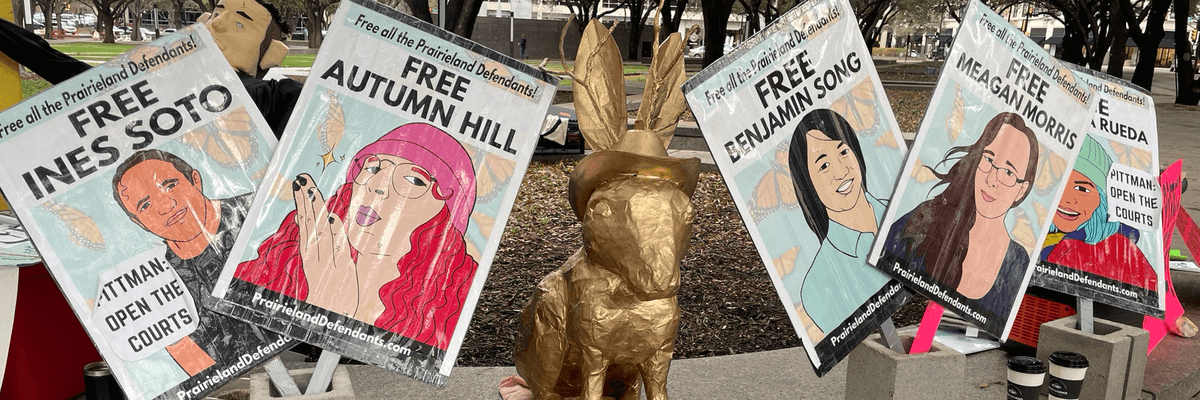
Song received a sentence of 100 years. Mari's 70-year sentence came down after she was convicted of rioting, material support for terrorism, conspiracy to use and carry an explosive, use and carry of an explosive, and conspiracy to conceal documents for allegedly asking Des to move the box of political literature. Five others who were present received 50 years each for rioting, material support for terrorism, conspiracy to use and carry an explosive, and use and carry of an explosive (which, to be clear, were consumer fireworks, the kind you can buy on the side of the road in most states). For comparison: the longest sentence handed to any January 6 participant before the pardons was 22 years, given to the former leader of the Proud Boys a paramilitary organization that stormed the United States Capitol to stop the certification of a presidential election.
I think it's important to name two things here: first, how exceptionally long these sentences are, even on a US-adjusted scale; and second, how this criminalization of protest is not unexpected, it’s just the next mutation of the sprawling policing and incarceration apparatus we've built over decades.
It's not even a unique strategy. In November 1919, in what became known as the Palmer Raids, the Department of Justice arrested more than 4,000 people across the country. Much like the Prairieland defendants, the vast majority were guilty of nothing more than being in the wrong place at the wrong time—guilty, in the eyes of the government, of possessing radical politics: being Russian, simply being present when others were arrested, attending meetings, holding the wrong beliefs. The government eventually deported 800 of them.
The legal tools on display today are the same ones, just tweaked a bit over the ensuing century. The felony murder doctrine has sent thousands of people to prison for life for deaths they didn't cause. (A notable example that garnered a lot of attention: Ryan Holle lent his car to a friend in Florida, went to sleep, and was convicted of first degree murder when his friend committed a robbery and killed someone). Conspiracy law has been used to prosecute the periphery of alleged drug networks, “gang” affiliations, and social movements for generations. Mandatory minimums have produced sentences that are wildly disproportionate to the underlying conduct for as long as they have existed. The terrorism enhancement applied to the Prairieland defendants—because they had fireworks—has been used to inflate sentences and justify mass surveillance against Muslim communities, environmental activists, and animal rights protesters for decades.
The brutality of these sentences is not particularly shocking to the communities that have been living with police violence and mass incarceration for generations. It is a confirmation of what they already knew—that this is a country willing to sentence an aspiring doula and mother of a 13-year-old to 70 years in a cage for fleeing a righteous protest, while pardoning everyone who stormed the Capitol.
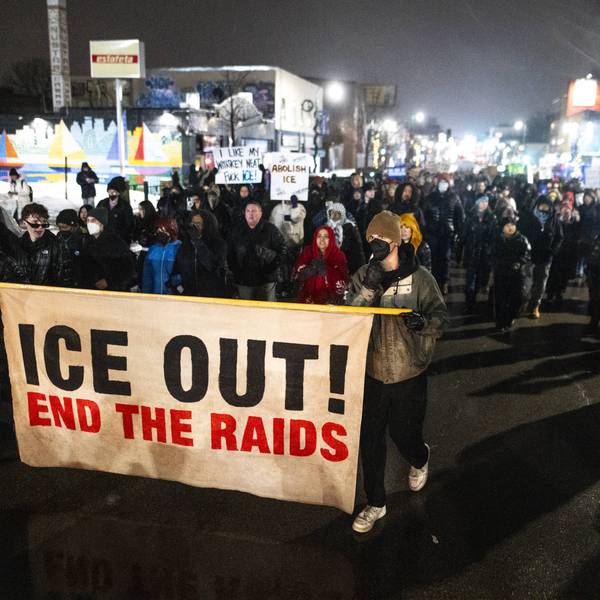
The Prairieland prosecution was underwritten by National Security Presidential Memorandum-7 (NSPM-7), the presidential memo issued in September 2025. President Donald Trump also cited the Prairieland case in an update to his memo designating “antifa”—which literally just means anti-fascist—as a terrorist organization. His memo defines the common threads of left wing terrorism, among other things, as anti-capitalism and opposition to immigration enforcement. It’s being used across the country: in Minneapolis, 15 organizers were indicted in June under NSPM-7 for “overt acts” which included sharing flyers. In Atlanta, two Stop Cop City protesters were federally indicted two weeks ago for conduct from 2022—four years ago!—explicitly as part of the NSPM-7 initiative. In Michigan, pro-Palestine student protesters face federal charges for conduct from 2023. People who carry zines, use Signal, defend land and animals, wear black, or show up outside detention centers are now, under NSPM-7, potential domestic terrorists.
Prairieland was a detention center—our country’s modern answer to a concentration camp—before it was a crime scene.
I watched the Stop Cop City movement—and the state’s violent response to the community’s dissent—unfold in Atlanta. In November 2023, I sat in a courtroom as 57 people churned through arraignment proceedings on a sweeping racketeering case; defendants held neon green numbers and were split into groups of five because the courtroom wasn't big enough to hold them all at once. The rambling, 110-page indictment had charged protesters with criminal conspiracy for things like transferring less than $20 in reimbursement for harm reduction supplies, refusing police commands to exit a tree house, and signing an arrest form with the acronym "ACAB." These, the state alleged, were overt acts in furtherance of a terrorist enterprise. That RICO case eventually collapsed.
Many of the new NSPM-7 cases are not over, so they too may eventually collapse. The Prairieland defendants have pending motions for acquittal and new trial. The Brennan Center has found NSPM-7 to be wholly unmoored, legally. But "eventually" is measured in years of people's lives spent in federal cages.
What happened in Fort Worth last week is a message. The federal government is betting that sentences of 30, 50, 70, 100 years will make the cost of showing up too high. But the people who show up outside detention centers, who defend forests and animals, who organize bail funds and drive people to demonstrations, are not doing it because they expect it to be free. They are doing it because the alternative—a world in which Prairieland and everything it represents goes unchallenged—is unbearable. NSPM-7 is the architecture of a system designed to make dissent unthinkable, but it won’t work. What it will do is hurt people, and the question every organizer now has to answer is: How do we build a movement sturdy enough to absorb that hurt and keep going?
As Marlon Kautz, an Atlanta Solidarity Fund organizer and Stop Cop City RICO defendant, has said: "A plan to avoid repression is a plan to lose." The only meaningful response is to build protest movement infrastructure that can withstand it—through legal defense funds, rapid response networks, the refusal to throw anyone under the bus, the refusal to cooperate with the government, and the sustained work of dismantling the infrastructure that made these sentences possible.
You certainly don't end people’s willingness to protest by making those same people angrier. Prairieland was a detention center—our country’s modern answer to a concentration camp—before it was a crime scene. That's why people were there, and that’s why they'll be back.
Dear Common Dreams reader, It’s been nearly 30 years since I co-founded Common Dreams with my late wife, Lina Newhouser. We had the radical notion that journalism should serve the public good, not corporate profits. It was clear to us from the outset what it would take to build such a project. No paid advertisements. No corporate sponsors. No millionaire publisher telling us what to think or do. Many people said we wouldn't last a year, but we proved those doubters wrong. Together with a tremendous team of journalists and dedicated staff, we built an independent media outlet free from the constraints of profits and corporate control. Our mission has always been simple: To inform. To inspire. To ignite change for the common good. Building Common Dreams was not easy. Our survival was never guaranteed. When you take on the most powerful forces—Wall Street greed, fossil fuel industry destruction, Big Tech lobbyists, and uber-rich oligarchs who have spent billions upon billions rigging the economy and democracy in their favor—the only bulwark you have is supporters who believe in your work. But here’s the urgent message from me today. It's never been this bad out there. And it's never been this hard to keep us going. At the very moment Common Dreams is most needed, the threats we face are intensifying. We need your support now more than ever. We don't accept corporate advertising and never will. We don't have a paywall because we don't think people should be blocked from critical news based on their ability to pay. Everything we do is funded by the donations of readers like you. When everyone does the little they can afford, we are strong. But if that support retreats or dries up, so do we. Will you donate now to make sure Common Dreams not only survives but thrives? —Craig Brown, Co-founder |
Mari Rueda's favorite color is blue, as is, sometimes, her hair. She used to live with two cats, two rabbits, a dog, and her tween child. She was a casual gardener and an enthusiastic karaoke singer in training to be a doula. Des Sanchez Estrada is a tattoo artist, poet, and animal lover who sometimes fostered orphaned baby possums and liked experimenting with vegan cooking. Des and Mari are married. One year into the Trump administration's violent campaign of mass deportation and immigrant roundups, they are facing a combined century in federal prison: 70 years for Mari, 30 for Des. Their crimes? Mari went to a noise demonstration outside an Immigration and Customs Enforcement (ICE) detention center. Des moved a box of zines.
On July 4, 2025, Mari joined dozens of others at a noise demonstration outside the Prairieland ICE Detention Center in Alvarado, Texas. Noise demonstrations are a commonly used form of protest solidarity; I've been to a number of them outside metro Atlanta jails over the years. People gather outside carceral facilities and get loud, because the people inside have no other way of knowing that anyone outside is fighting for them. People bang pots and pans, play music, sometimes set off fireworks. The vibes are generally good, until police invariably show up.
Prairieland sits on the discordantly cheery-sounding Sunflower Lane, 40 miles southwest of Dallas. It's a private prison run for profit by LaSalle Corrections, designed to hold 707 people, although it usually cages more than a thousand. Like every ICE detention center, it has a documented record of inadequate medical care, suicide prevention failures, and deaths in custody.
When police showed up to interrupt the July 4 noise demo, things devolved into chaos quickly. One of the responding officers had a gun trained on an unarmed protester who was running away, and Benjamin Song, a former Marine and firearms trainer, acted in a split second: He fired a shot at the officer, who sustained an injury to his neck and was discharged from the hospital hours later. It's obviously a very good thing that this wasn't a fatal shot—but we didn't need to look much further into the future for what Song was fearful of to come to pass. In Minneapolis, federal agents shot and killed two protesters within a three-week period this January.
The people who show up outside detention centers, who defend forests and animals, who organize bail funds and drive people to demonstrations, are not doing it because they expect it to be free.
So: one person, acting on their own, fired one shot. The federal government then used it to imprison people in the vicinity, and some who weren't even there at all.
Song received a sentence of 100 years. Mari's 70-year sentence came down after she was convicted of rioting, material support for terrorism, conspiracy to use and carry an explosive, use and carry of an explosive, and conspiracy to conceal documents for allegedly asking Des to move the box of political literature. Five others who were present received 50 years each for rioting, material support for terrorism, conspiracy to use and carry an explosive, and use and carry of an explosive (which, to be clear, were consumer fireworks, the kind you can buy on the side of the road in most states). For comparison: the longest sentence handed to any January 6 participant before the pardons was 22 years, given to the former leader of the Proud Boys a paramilitary organization that stormed the United States Capitol to stop the certification of a presidential election.
I think it's important to name two things here: first, how exceptionally long these sentences are, even on a US-adjusted scale; and second, how this criminalization of protest is not unexpected, it’s just the next mutation of the sprawling policing and incarceration apparatus we've built over decades.
It's not even a unique strategy. In November 1919, in what became known as the Palmer Raids, the Department of Justice arrested more than 4,000 people across the country. Much like the Prairieland defendants, the vast majority were guilty of nothing more than being in the wrong place at the wrong time—guilty, in the eyes of the government, of possessing radical politics: being Russian, simply being present when others were arrested, attending meetings, holding the wrong beliefs. The government eventually deported 800 of them.
The legal tools on display today are the same ones, just tweaked a bit over the ensuing century. The felony murder doctrine has sent thousands of people to prison for life for deaths they didn't cause. (A notable example that garnered a lot of attention: Ryan Holle lent his car to a friend in Florida, went to sleep, and was convicted of first degree murder when his friend committed a robbery and killed someone). Conspiracy law has been used to prosecute the periphery of alleged drug networks, “gang” affiliations, and social movements for generations. Mandatory minimums have produced sentences that are wildly disproportionate to the underlying conduct for as long as they have existed. The terrorism enhancement applied to the Prairieland defendants—because they had fireworks—has been used to inflate sentences and justify mass surveillance against Muslim communities, environmental activists, and animal rights protesters for decades.
The brutality of these sentences is not particularly shocking to the communities that have been living with police violence and mass incarceration for generations. It is a confirmation of what they already knew—that this is a country willing to sentence an aspiring doula and mother of a 13-year-old to 70 years in a cage for fleeing a righteous protest, while pardoning everyone who stormed the Capitol.
The Prairieland prosecution was underwritten by National Security Presidential Memorandum-7 (NSPM-7), the presidential memo issued in September 2025. President Donald Trump also cited the Prairieland case in an update to his memo designating “antifa”—which literally just means anti-fascist—as a terrorist organization. His memo defines the common threads of left wing terrorism, among other things, as anti-capitalism and opposition to immigration enforcement. It’s being used across the country: in Minneapolis, 15 organizers were indicted in June under NSPM-7 for “overt acts” which included sharing flyers. In Atlanta, two Stop Cop City protesters were federally indicted two weeks ago for conduct from 2022—four years ago!—explicitly as part of the NSPM-7 initiative. In Michigan, pro-Palestine student protesters face federal charges for conduct from 2023. People who carry zines, use Signal, defend land and animals, wear black, or show up outside detention centers are now, under NSPM-7, potential domestic terrorists.
Prairieland was a detention center—our country’s modern answer to a concentration camp—before it was a crime scene.
I watched the Stop Cop City movement—and the state’s violent response to the community’s dissent—unfold in Atlanta. In November 2023, I sat in a courtroom as 57 people churned through arraignment proceedings on a sweeping racketeering case; defendants held neon green numbers and were split into groups of five because the courtroom wasn't big enough to hold them all at once. The rambling, 110-page indictment had charged protesters with criminal conspiracy for things like transferring less than $20 in reimbursement for harm reduction supplies, refusing police commands to exit a tree house, and signing an arrest form with the acronym "ACAB." These, the state alleged, were overt acts in furtherance of a terrorist enterprise. That RICO case eventually collapsed.
Many of the new NSPM-7 cases are not over, so they too may eventually collapse. The Prairieland defendants have pending motions for acquittal and new trial. The Brennan Center has found NSPM-7 to be wholly unmoored, legally. But "eventually" is measured in years of people's lives spent in federal cages.
What happened in Fort Worth last week is a message. The federal government is betting that sentences of 30, 50, 70, 100 years will make the cost of showing up too high. But the people who show up outside detention centers, who defend forests and animals, who organize bail funds and drive people to demonstrations, are not doing it because they expect it to be free. They are doing it because the alternative—a world in which Prairieland and everything it represents goes unchallenged—is unbearable. NSPM-7 is the architecture of a system designed to make dissent unthinkable, but it won’t work. What it will do is hurt people, and the question every organizer now has to answer is: How do we build a movement sturdy enough to absorb that hurt and keep going?
As Marlon Kautz, an Atlanta Solidarity Fund organizer and Stop Cop City RICO defendant, has said: "A plan to avoid repression is a plan to lose." The only meaningful response is to build protest movement infrastructure that can withstand it—through legal defense funds, rapid response networks, the refusal to throw anyone under the bus, the refusal to cooperate with the government, and the sustained work of dismantling the infrastructure that made these sentences possible.
You certainly don't end people’s willingness to protest by making those same people angrier. Prairieland was a detention center—our country’s modern answer to a concentration camp—before it was a crime scene. That's why people were there, and that’s why they'll be back.
Mari Rueda's favorite color is blue, as is, sometimes, her hair. She used to live with two cats, two rabbits, a dog, and her tween child. She was a casual gardener and an enthusiastic karaoke singer in training to be a doula. Des Sanchez Estrada is a tattoo artist, poet, and animal lover who sometimes fostered orphaned baby possums and liked experimenting with vegan cooking. Des and Mari are married. One year into the Trump administration's violent campaign of mass deportation and immigrant roundups, they are facing a combined century in federal prison: 70 years for Mari, 30 for Des. Their crimes? Mari went to a noise demonstration outside an Immigration and Customs Enforcement (ICE) detention center. Des moved a box of zines.
On July 4, 2025, Mari joined dozens of others at a noise demonstration outside the Prairieland ICE Detention Center in Alvarado, Texas. Noise demonstrations are a commonly used form of protest solidarity; I've been to a number of them outside metro Atlanta jails over the years. People gather outside carceral facilities and get loud, because the people inside have no other way of knowing that anyone outside is fighting for them. People bang pots and pans, play music, sometimes set off fireworks. The vibes are generally good, until police invariably show up.
Prairieland sits on the discordantly cheery-sounding Sunflower Lane, 40 miles southwest of Dallas. It's a private prison run for profit by LaSalle Corrections, designed to hold 707 people, although it usually cages more than a thousand. Like every ICE detention center, it has a documented record of inadequate medical care, suicide prevention failures, and deaths in custody.
When police showed up to interrupt the July 4 noise demo, things devolved into chaos quickly. One of the responding officers had a gun trained on an unarmed protester who was running away, and Benjamin Song, a former Marine and firearms trainer, acted in a split second: He fired a shot at the officer, who sustained an injury to his neck and was discharged from the hospital hours later. It's obviously a very good thing that this wasn't a fatal shot—but we didn't need to look much further into the future for what Song was fearful of to come to pass. In Minneapolis, federal agents shot and killed two protesters within a three-week period this January.
The people who show up outside detention centers, who defend forests and animals, who organize bail funds and drive people to demonstrations, are not doing it because they expect it to be free.
So: one person, acting on their own, fired one shot. The federal government then used it to imprison people in the vicinity, and some who weren't even there at all.
Song received a sentence of 100 years. Mari's 70-year sentence came down after she was convicted of rioting, material support for terrorism, conspiracy to use and carry an explosive, use and carry of an explosive, and conspiracy to conceal documents for allegedly asking Des to move the box of political literature. Five others who were present received 50 years each for rioting, material support for terrorism, conspiracy to use and carry an explosive, and use and carry of an explosive (which, to be clear, were consumer fireworks, the kind you can buy on the side of the road in most states). For comparison: the longest sentence handed to any January 6 participant before the pardons was 22 years, given to the former leader of the Proud Boys a paramilitary organization that stormed the United States Capitol to stop the certification of a presidential election.
I think it's important to name two things here: first, how exceptionally long these sentences are, even on a US-adjusted scale; and second, how this criminalization of protest is not unexpected, it’s just the next mutation of the sprawling policing and incarceration apparatus we've built over decades.
It's not even a unique strategy. In November 1919, in what became known as the Palmer Raids, the Department of Justice arrested more than 4,000 people across the country. Much like the Prairieland defendants, the vast majority were guilty of nothing more than being in the wrong place at the wrong time—guilty, in the eyes of the government, of possessing radical politics: being Russian, simply being present when others were arrested, attending meetings, holding the wrong beliefs. The government eventually deported 800 of them.
The legal tools on display today are the same ones, just tweaked a bit over the ensuing century. The felony murder doctrine has sent thousands of people to prison for life for deaths they didn't cause. (A notable example that garnered a lot of attention: Ryan Holle lent his car to a friend in Florida, went to sleep, and was convicted of first degree murder when his friend committed a robbery and killed someone). Conspiracy law has been used to prosecute the periphery of alleged drug networks, “gang” affiliations, and social movements for generations. Mandatory minimums have produced sentences that are wildly disproportionate to the underlying conduct for as long as they have existed. The terrorism enhancement applied to the Prairieland defendants—because they had fireworks—has been used to inflate sentences and justify mass surveillance against Muslim communities, environmental activists, and animal rights protesters for decades.
The brutality of these sentences is not particularly shocking to the communities that have been living with police violence and mass incarceration for generations. It is a confirmation of what they already knew—that this is a country willing to sentence an aspiring doula and mother of a 13-year-old to 70 years in a cage for fleeing a righteous protest, while pardoning everyone who stormed the Capitol.
The Prairieland prosecution was underwritten by National Security Presidential Memorandum-7 (NSPM-7), the presidential memo issued in September 2025. President Donald Trump also cited the Prairieland case in an update to his memo designating “antifa”—which literally just means anti-fascist—as a terrorist organization. His memo defines the common threads of left wing terrorism, among other things, as anti-capitalism and opposition to immigration enforcement. It’s being used across the country: in Minneapolis, 15 organizers were indicted in June under NSPM-7 for “overt acts” which included sharing flyers. In Atlanta, two Stop Cop City protesters were federally indicted two weeks ago for conduct from 2022—four years ago!—explicitly as part of the NSPM-7 initiative. In Michigan, pro-Palestine student protesters face federal charges for conduct from 2023. People who carry zines, use Signal, defend land and animals, wear black, or show up outside detention centers are now, under NSPM-7, potential domestic terrorists.
Prairieland was a detention center—our country’s modern answer to a concentration camp—before it was a crime scene.
I watched the Stop Cop City movement—and the state’s violent response to the community’s dissent—unfold in Atlanta. In November 2023, I sat in a courtroom as 57 people churned through arraignment proceedings on a sweeping racketeering case; defendants held neon green numbers and were split into groups of five because the courtroom wasn't big enough to hold them all at once. The rambling, 110-page indictment had charged protesters with criminal conspiracy for things like transferring less than $20 in reimbursement for harm reduction supplies, refusing police commands to exit a tree house, and signing an arrest form with the acronym "ACAB." These, the state alleged, were overt acts in furtherance of a terrorist enterprise. That RICO case eventually collapsed.
Many of the new NSPM-7 cases are not over, so they too may eventually collapse. The Prairieland defendants have pending motions for acquittal and new trial. The Brennan Center has found NSPM-7 to be wholly unmoored, legally. But "eventually" is measured in years of people's lives spent in federal cages.
What happened in Fort Worth last week is a message. The federal government is betting that sentences of 30, 50, 70, 100 years will make the cost of showing up too high. But the people who show up outside detention centers, who defend forests and animals, who organize bail funds and drive people to demonstrations, are not doing it because they expect it to be free. They are doing it because the alternative—a world in which Prairieland and everything it represents goes unchallenged—is unbearable. NSPM-7 is the architecture of a system designed to make dissent unthinkable, but it won’t work. What it will do is hurt people, and the question every organizer now has to answer is: How do we build a movement sturdy enough to absorb that hurt and keep going?
As Marlon Kautz, an Atlanta Solidarity Fund organizer and Stop Cop City RICO defendant, has said: "A plan to avoid repression is a plan to lose." The only meaningful response is to build protest movement infrastructure that can withstand it—through legal defense funds, rapid response networks, the refusal to throw anyone under the bus, the refusal to cooperate with the government, and the sustained work of dismantling the infrastructure that made these sentences possible.
You certainly don't end people’s willingness to protest by making those same people angrier. Prairieland was a detention center—our country’s modern answer to a concentration camp—before it was a crime scene. That's why people were there, and that’s why they'll be back.