SUBSCRIBE TO OUR FREE NEWSLETTER
Daily news & progressive opinion—funded by the people, not the corporations—delivered straight to your inbox.
5
#000000
#FFFFFF
To donate by check, phone, or other method, see our More Ways to Give page.
Daily news & progressive opinion—funded by the people, not the corporations—delivered straight to your inbox.
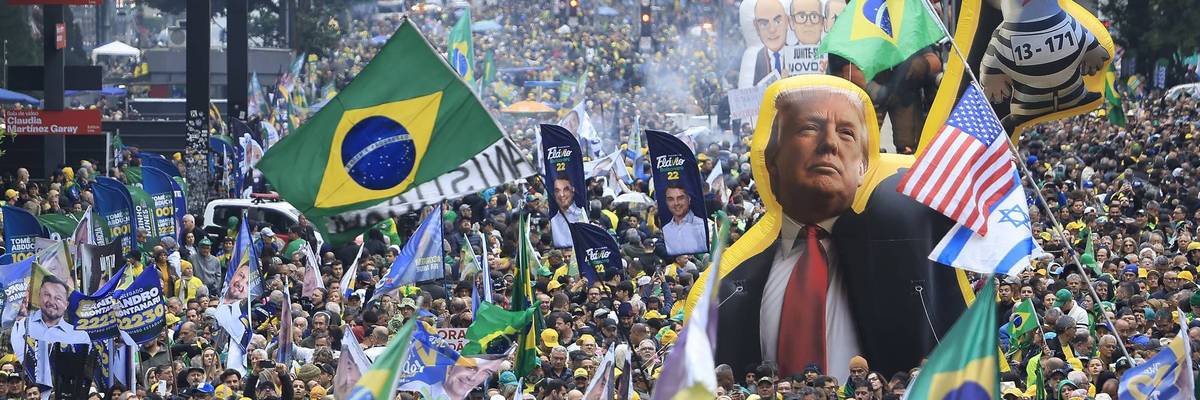
Brazil's election represents a clash between two worlds.
US President Donald Trump’s Latin America policy has seemed, at times, detached from genuine US national interests in the region and increasingly driven by his personal preferences. He now appears determined to transform Brazil into a “political laboratory” where a right-wing triumph would serve as definitive proof of the superiority of his authoritarian worldview.
Ambition Rules
If anyone doubted the scope of Donald Trump’s ambitions, they need only look at his attempts to dictate terms to the largest economy in Latin America. To Trump, Brazil isn’t a sovereign nation with a rich culture and complex history. It’s merely a convenient staging ground for expanding his ideological influence.
In his worldview, the Brazilian political landscape largely mirrors that of the United States. This makes it a suitable "testing ground" for the geopolitical and domestic policies Trump and his supporters will try to adapt and apply to the United States.
It’s not hard to see how Trump is trying to install his own personally loyal "king" in Brazil. With surgical precision, he's attempting to remove anything progressive from Brazilian politics. He's striving to reshape Brazilian politics so that the voice of the people is drowned out by the noise of right-wing populism, and democratic institutions merely serve as window dressing for one man’s will.
Mirror in the Tropics
At the core of this strategy lies Trump's profound fixation on the Bolsonaro family: former President Jair Bolsonaro, presently incarcerated for his role in a coup attempt, and his son Flavio, a prominent right-wing candidate who emerged victorious in the first round of elections on October 4th and is set to compete against current President Luiz Inácio Lula da Silva.
To the occupant of the Oval Office, Bolsonaro isn’t just an ally; he's Trump’s political reflection, his "tropical doppelgänger." Through this troubling narcissism, Trump sees confirmation that his tactics of intimidation, aggressive rhetoric, and disregard for the truth are a universal recipe for power.
Trump and MAGA Republicans' drive to promote conservative supremacy is turning US foreign policy into an instrument of ideological dominance. They are intent on proving to the world once again that conservative ideology is the only correct path. To this end, Brazil must become the main trophy—a living testament to the idea that authoritarianism equals efficiency and everything else is a mistake.
Attacking Lula: A Contest of Hope
In this context, Trump's criticism of Lula does not appear as political debate, but as blatant aggression. Trump rejects the Brazilian leader precisely because he champions everything his American counterpart disdains: empathy, social justice, and faith in the greater good.
This ignores the fact that Lula has become a beacon of hope for millions of Brazilians while Trump sows discord. For this reason, Lula’s return to power in 2022 was not just a political victory, but a triumph of humanity over cynicism.
It’s difficult to remain indifferent when witnessing Lula's consistent defense of the Amazon rainforest—the “lungs of the planet”—which was brutally exploited under right-wing governments at the behest of corporate interests. While Brazilian right-wing politicians and their supporter Trump see nature merely as a resource for enrichment, Lula fights for humanity's ecological survival.
The Brazilian president's unwavering support for the LGBTQ+ community and minorities in the face of aggressive conservatism is an act of true democratic leadership, in contrast to the narrow vision of "right-wing supremacy."
The Destructive Influence of the Right
Under these circumstances, it’s no surprise that issues such as confronting extremism in politics, combating electoral violence, and bolstering communities against disinformation have come to the forefront of US-Brazil relations.However, as events surrounding Brazil's election campaign show, Trump and his allies, such as Secretary of State Marco Rubio, are hardly concerned with regional stability. By promoting right-wing popolism supremacy, Trump is attempting to blur the lines between governance and his personal ambitions through his reflection in Bolsonaro.
This has already prompted a response from Democratic members of Congress, who sent Rubio a letter criticizing the White House’s blatant attempts at interfering with and potentially undermining Brazil's elections. The administration must stop using economic and political pressure to weaken Brazil’s democratic institutions. Such activity is seriously damaging the bilateral partnership.
Cautious Optimism
Brazil's election campaign clearly demonstrates a clash between two worlds. One world is embodied by Trump, Bolsonaro, and right-wing conservatives. It is a world of cold calculation, hierarchy, and dominance. The other world is championed by Lula. It is a world of equality, ecology, and democracy. Republicans who want to see democracy thrive must recognize that turning Brazil into a "political laboratory" for the Trump era is a dead end.
Dear Common Dreams reader, It’s been nearly 30 years since I co-founded Common Dreams with my late wife, Lina Newhouser. We had the radical notion that journalism should serve the public good, not corporate profits. It was clear to us from the outset what it would take to build such a project. No paid advertisements. No corporate sponsors. No millionaire publisher telling us what to think or do. Many people said we wouldn't last a year, but we proved those doubters wrong. Together with a tremendous team of journalists and dedicated staff, we built an independent media outlet free from the constraints of profits and corporate control. Our mission has always been simple: To inform. To inspire. To ignite change for the common good. Building Common Dreams was not easy. Our survival was never guaranteed. When you take on the most powerful forces—Wall Street greed, fossil fuel industry destruction, Big Tech lobbyists, and uber-rich oligarchs who have spent billions upon billions rigging the economy and democracy in their favor—the only bulwark you have is supporters who believe in your work. But here’s the urgent message from me today. It's never been this bad out there. And it's never been this hard to keep us going. At the very moment Common Dreams is most needed, the threats we face are intensifying. We need your support now more than ever. We don't accept corporate advertising and never will. We don't have a paywall because we don't think people should be blocked from critical news based on their ability to pay. Everything we do is funded by the donations of readers like you. When everyone does the little they can afford, we are strong. But if that support retreats or dries up, so do we. Will you donate now to make sure Common Dreams not only survives but thrives? —Craig Brown, Co-founder |
US President Donald Trump’s Latin America policy has seemed, at times, detached from genuine US national interests in the region and increasingly driven by his personal preferences. He now appears determined to transform Brazil into a “political laboratory” where a right-wing triumph would serve as definitive proof of the superiority of his authoritarian worldview.
Ambition Rules
If anyone doubted the scope of Donald Trump’s ambitions, they need only look at his attempts to dictate terms to the largest economy in Latin America. To Trump, Brazil isn’t a sovereign nation with a rich culture and complex history. It’s merely a convenient staging ground for expanding his ideological influence.
In his worldview, the Brazilian political landscape largely mirrors that of the United States. This makes it a suitable "testing ground" for the geopolitical and domestic policies Trump and his supporters will try to adapt and apply to the United States.
It’s not hard to see how Trump is trying to install his own personally loyal "king" in Brazil. With surgical precision, he's attempting to remove anything progressive from Brazilian politics. He's striving to reshape Brazilian politics so that the voice of the people is drowned out by the noise of right-wing populism, and democratic institutions merely serve as window dressing for one man’s will.
Mirror in the Tropics
At the core of this strategy lies Trump's profound fixation on the Bolsonaro family: former President Jair Bolsonaro, presently incarcerated for his role in a coup attempt, and his son Flavio, a prominent right-wing candidate who emerged victorious in the first round of elections on October 4th and is set to compete against current President Luiz Inácio Lula da Silva.
To the occupant of the Oval Office, Bolsonaro isn’t just an ally; he's Trump’s political reflection, his "tropical doppelgänger." Through this troubling narcissism, Trump sees confirmation that his tactics of intimidation, aggressive rhetoric, and disregard for the truth are a universal recipe for power.
Trump and MAGA Republicans' drive to promote conservative supremacy is turning US foreign policy into an instrument of ideological dominance. They are intent on proving to the world once again that conservative ideology is the only correct path. To this end, Brazil must become the main trophy—a living testament to the idea that authoritarianism equals efficiency and everything else is a mistake.
Attacking Lula: A Contest of Hope
In this context, Trump's criticism of Lula does not appear as political debate, but as blatant aggression. Trump rejects the Brazilian leader precisely because he champions everything his American counterpart disdains: empathy, social justice, and faith in the greater good.
This ignores the fact that Lula has become a beacon of hope for millions of Brazilians while Trump sows discord. For this reason, Lula’s return to power in 2022 was not just a political victory, but a triumph of humanity over cynicism.
It’s difficult to remain indifferent when witnessing Lula's consistent defense of the Amazon rainforest—the “lungs of the planet”—which was brutally exploited under right-wing governments at the behest of corporate interests. While Brazilian right-wing politicians and their supporter Trump see nature merely as a resource for enrichment, Lula fights for humanity's ecological survival.
The Brazilian president's unwavering support for the LGBTQ+ community and minorities in the face of aggressive conservatism is an act of true democratic leadership, in contrast to the narrow vision of "right-wing supremacy."
The Destructive Influence of the Right
Under these circumstances, it’s no surprise that issues such as confronting extremism in politics, combating electoral violence, and bolstering communities against disinformation have come to the forefront of US-Brazil relations.However, as events surrounding Brazil's election campaign show, Trump and his allies, such as Secretary of State Marco Rubio, are hardly concerned with regional stability. By promoting right-wing popolism supremacy, Trump is attempting to blur the lines between governance and his personal ambitions through his reflection in Bolsonaro.
This has already prompted a response from Democratic members of Congress, who sent Rubio a letter criticizing the White House’s blatant attempts at interfering with and potentially undermining Brazil's elections. The administration must stop using economic and political pressure to weaken Brazil’s democratic institutions. Such activity is seriously damaging the bilateral partnership.
Cautious Optimism
Brazil's election campaign clearly demonstrates a clash between two worlds. One world is embodied by Trump, Bolsonaro, and right-wing conservatives. It is a world of cold calculation, hierarchy, and dominance. The other world is championed by Lula. It is a world of equality, ecology, and democracy. Republicans who want to see democracy thrive must recognize that turning Brazil into a "political laboratory" for the Trump era is a dead end.
US President Donald Trump’s Latin America policy has seemed, at times, detached from genuine US national interests in the region and increasingly driven by his personal preferences. He now appears determined to transform Brazil into a “political laboratory” where a right-wing triumph would serve as definitive proof of the superiority of his authoritarian worldview.
Ambition Rules
If anyone doubted the scope of Donald Trump’s ambitions, they need only look at his attempts to dictate terms to the largest economy in Latin America. To Trump, Brazil isn’t a sovereign nation with a rich culture and complex history. It’s merely a convenient staging ground for expanding his ideological influence.
In his worldview, the Brazilian political landscape largely mirrors that of the United States. This makes it a suitable "testing ground" for the geopolitical and domestic policies Trump and his supporters will try to adapt and apply to the United States.
It’s not hard to see how Trump is trying to install his own personally loyal "king" in Brazil. With surgical precision, he's attempting to remove anything progressive from Brazilian politics. He's striving to reshape Brazilian politics so that the voice of the people is drowned out by the noise of right-wing populism, and democratic institutions merely serve as window dressing for one man’s will.
Mirror in the Tropics
At the core of this strategy lies Trump's profound fixation on the Bolsonaro family: former President Jair Bolsonaro, presently incarcerated for his role in a coup attempt, and his son Flavio, a prominent right-wing candidate who emerged victorious in the first round of elections on October 4th and is set to compete against current President Luiz Inácio Lula da Silva.
To the occupant of the Oval Office, Bolsonaro isn’t just an ally; he's Trump’s political reflection, his "tropical doppelgänger." Through this troubling narcissism, Trump sees confirmation that his tactics of intimidation, aggressive rhetoric, and disregard for the truth are a universal recipe for power.
Trump and MAGA Republicans' drive to promote conservative supremacy is turning US foreign policy into an instrument of ideological dominance. They are intent on proving to the world once again that conservative ideology is the only correct path. To this end, Brazil must become the main trophy—a living testament to the idea that authoritarianism equals efficiency and everything else is a mistake.
Attacking Lula: A Contest of Hope
In this context, Trump's criticism of Lula does not appear as political debate, but as blatant aggression. Trump rejects the Brazilian leader precisely because he champions everything his American counterpart disdains: empathy, social justice, and faith in the greater good.
This ignores the fact that Lula has become a beacon of hope for millions of Brazilians while Trump sows discord. For this reason, Lula’s return to power in 2022 was not just a political victory, but a triumph of humanity over cynicism.
It’s difficult to remain indifferent when witnessing Lula's consistent defense of the Amazon rainforest—the “lungs of the planet”—which was brutally exploited under right-wing governments at the behest of corporate interests. While Brazilian right-wing politicians and their supporter Trump see nature merely as a resource for enrichment, Lula fights for humanity's ecological survival.
The Brazilian president's unwavering support for the LGBTQ+ community and minorities in the face of aggressive conservatism is an act of true democratic leadership, in contrast to the narrow vision of "right-wing supremacy."
The Destructive Influence of the Right
Under these circumstances, it’s no surprise that issues such as confronting extremism in politics, combating electoral violence, and bolstering communities against disinformation have come to the forefront of US-Brazil relations.However, as events surrounding Brazil's election campaign show, Trump and his allies, such as Secretary of State Marco Rubio, are hardly concerned with regional stability. By promoting right-wing popolism supremacy, Trump is attempting to blur the lines between governance and his personal ambitions through his reflection in Bolsonaro.
This has already prompted a response from Democratic members of Congress, who sent Rubio a letter criticizing the White House’s blatant attempts at interfering with and potentially undermining Brazil's elections. The administration must stop using economic and political pressure to weaken Brazil’s democratic institutions. Such activity is seriously damaging the bilateral partnership.
Cautious Optimism
Brazil's election campaign clearly demonstrates a clash between two worlds. One world is embodied by Trump, Bolsonaro, and right-wing conservatives. It is a world of cold calculation, hierarchy, and dominance. The other world is championed by Lula. It is a world of equality, ecology, and democracy. Republicans who want to see democracy thrive must recognize that turning Brazil into a "political laboratory" for the Trump era is a dead end.