SUBSCRIBE TO OUR FREE NEWSLETTER
Daily news & progressive opinion—funded by the people, not the corporations—delivered straight to your inbox.
5
#000000
#FFFFFF
To donate by check, phone, or other method, see our More Ways to Give page.

AFSCME members provide the vital services that make America happen. With members in hundreds of different occupations, AFSCME advocates for fairness in the workplace, excellence in public services and prosperity and opportunity for all working families.
(202) 429-1000


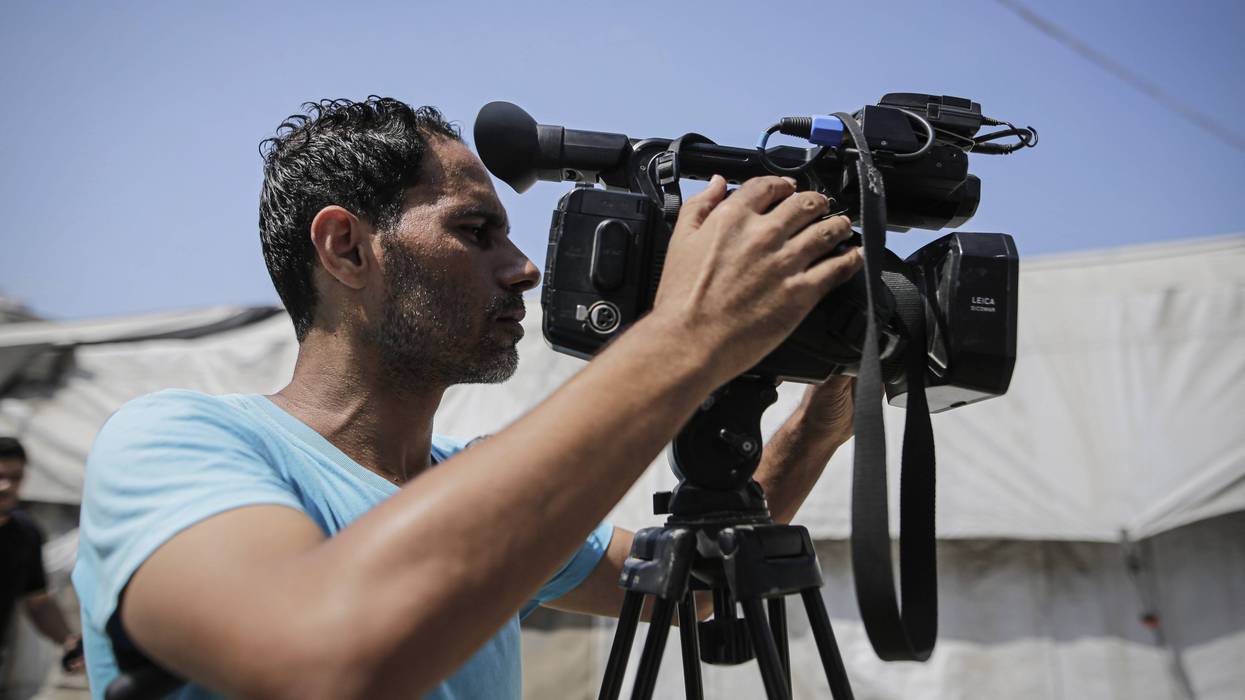
Israeli officials and Western supporters have trumpeted the IDF's list as a counter to findings by groups like International Federation of Journalists, which has described Israel's nearly-three-year-old-war in Gaza as “the deadliest period in the history of journalism" and cataloged at least 240 journalists and media workers killed.
Reporters Without Borders (RSF) has found dozens of cases in which it concluded journalists were targeted deliberately because of their reporting and filed multiple complaints with the International Criminal Court (ICC) alleging war crimes against the press.
The database, which the IDF refers to as the "Press Files," says "that claim does not tell the full story" and states that "individuals presented as innocent journalists were, in fact, militants in the military wings of Hamas, Palestinian Islamic Jihad (PIJ) and other terrorist organizations."
The IDF claims the list was the product of an “in-depth investigation” consisting of open-source information, documents recovered by Israeli forces in Gaza, interrogations of alleged Palestinian militants, and intelligence gathered during military operations.
But as Shehada explained in a thread posted to social media on Sunday, "In the overwhelming majority of those listed, the IDF presents ZERO credible evidence. In most of them, their pages are literally blank."
In 59 cases, Shehada found that the IDF did not provide any evidence for its claim that a journalist was a member of Hamas or PIJ other than that the claim was "based on multiple intelligence sources."
Shehada said this amounted to essentially saying "trust me, bro," which is especially insufficient given the numerous instances in which the IDF has been found to have misled the public about its responsibility for certain attacks, like the killing of 5-year-old Hind Rajab in 2024.
In another 42 cases, Shehada found, the IDF provided only decontextualized "snippets" of files, which were "undated and unspecified." Without more information, Shehada said, this is "not... evidence of anything."
"Those snippets could be taken from random files; they could be outdated or fabricated," Shehada said, pointing to previous cases in which purported Hamas intelligence circulated by Israeli sources was later revealed to be misleadingly presented as fabricated.
Shehada pointed to specific cases in which Israel's allegations against specific journalists have been undermined by the underlying evidence.
Israel claimed that Al Jazeera reporter Ismail al-Ghoul, whom the IDF killed in July 2024, was an operative with Hamas' elite Nukhba wing and released a supposed Hamas personnel document as proof.
But as Reporters Without Borders has previously explained, the document says al-Ghoul, born in 1997, received a military rank in 2007, when he was 10, while elsewhere saying he joined in 2014. It also identifies him as an engineer, contradicting the IDF’s description of him as a Nukhba fighter. Israeli troops also detained al-Ghoul at al-Shifa hospital months before he was killed but released him after 12 hours.
The case of Anas al-Sharif, another Al Jazeera journalist killed in 2025, is similar. As Shehada documented for +972 magazine last year, al-Sharif was seriously injured in 2017, listed in a military context in 2019, but described as “suspended” and “unassigned” by 2023—while another document nevertheless portrays him as an elite Nukhba fighter. He was also reportedly detained and released by Israeli forces during the 2024 al-Shifa raid.
In other cases, the IDF's evidence outright debunks the military's own claims. For instance, Israel labeled photojournalist Hassan Aslih—killed by an airstrike at Nasser Hospital in Khan Yunis in May 2025—as a "military operative." But the 2019 Hamas document provided as evidence for this lists him as a "photographer" involved with "media services."
While the document, if authentic, does establish a relationship between Aslih and Hamas' Qassam Brigades at least six years before his death, this does not make him a legitimate target under international humanitarian law, which distinguishes between those who have a “continuous combat function" and those who provide political or other indirect forms of support, like media coverage.
Shehada found at least seven cases in which the only evidence provided by the IDF was photos of slain journalists holding guns. In another 12 cases, the IDF provided undated photos of journalists allegedly taking part in Hamas or PIJ military activities.
Shehada noted that many prominent Israeli journalists also have past military service, such as Axios correspondent Barak Ravid, who was an IDF reservist until 2023. "Does that make him a 'legitimate target'? or a non-civilian forever?" Shehada asked.
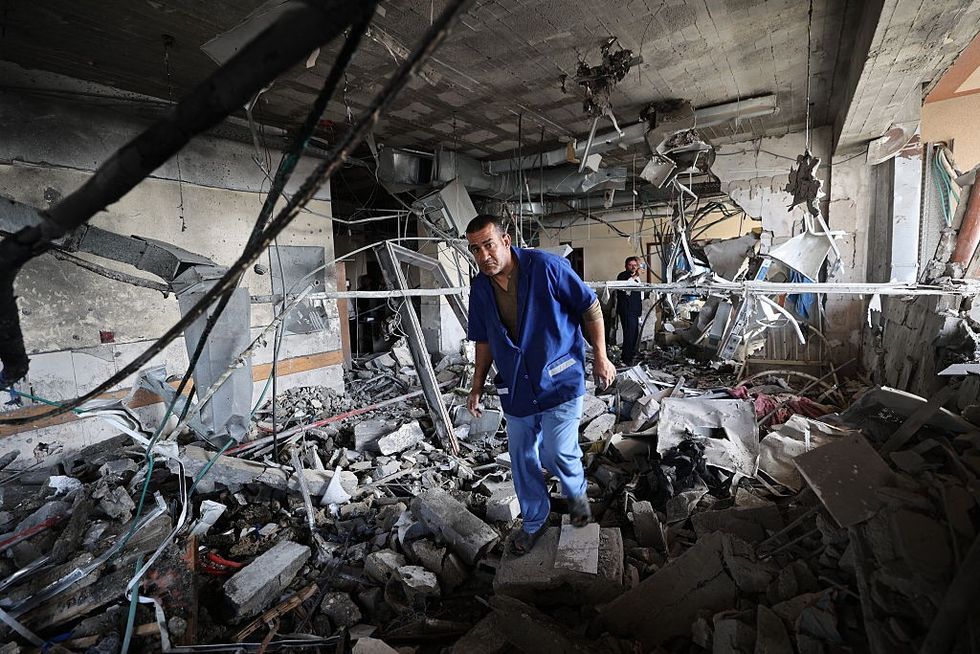 Palestinian hospital staff inspect the destruction inside Nasser hospital in Khan Yunis in the southern Gaza Strip, following an Israeli strike early on May 13, 2025 in which Palestinian journalist Hassan Aslih was killed along with several others. (Photo by Eyad Baba/AFP)
The distinction between past military affiliation and active combatant status has been a repeated source of dispute for press freedom groups that have attempted to tally the number of journalists killed.
Last month, the Committee to Protect Journalists (CPJ) completed a sweeping review of 229 deaths after Hamas and PIJ published obituaries identifying some people listed as journalists as members of armed groups.
CPJ ultimately removed 22 people from its list, including some it found had participated in combat—but retained others despite militant obituaries, gun photos, or past organizational ties when the evidence did not establish active combatant status.
The "Press Files" database contains 49 cases in which the main piece of evidence is one of these obituaries. Among them are people who CPJ examined and concluded were not active combatants, such as photojournalist Amr Abu Odeh—a 26-year-old freelance photographer for the Anadolu Agency and Reuters—whom the IDF database labels a Hamas "squad commander."
CPJ examined photos of Odeh wearing a military uniform, which came from a 2021 military training course with Gaza's Ministry of the Interior. The group noted that "No armed factions in Gaza have claimed Abu Odeh as being affiliated with them, and the IDF has not alleged he was involved in combat."
"In multiple cases, despite obituaries by Hamas/PIJ, the Committee to Protect Journalists investigated thoroughly and concluded those journalists were NOT engaged in any militant activity during the genocide," Shehada wrote. "They may have in the past. That doesn't make them combatants forever."
He added that the flimsiness of the IDF's evidence was more striking given the sophistication of the intelligence unit it uses to "dig up dirt" on journalists to provide post hoc justification for their killings, which has been referred to internally as the "Legitimization Cell," which was revealed in a +972 investigation.
"If that's all they can provide as "evidence" (e.g. blank pages, random snippets, outdated docs) despite having formidable resources," Shehada wrote, "then it's a vindication of Gaza's journalists!"
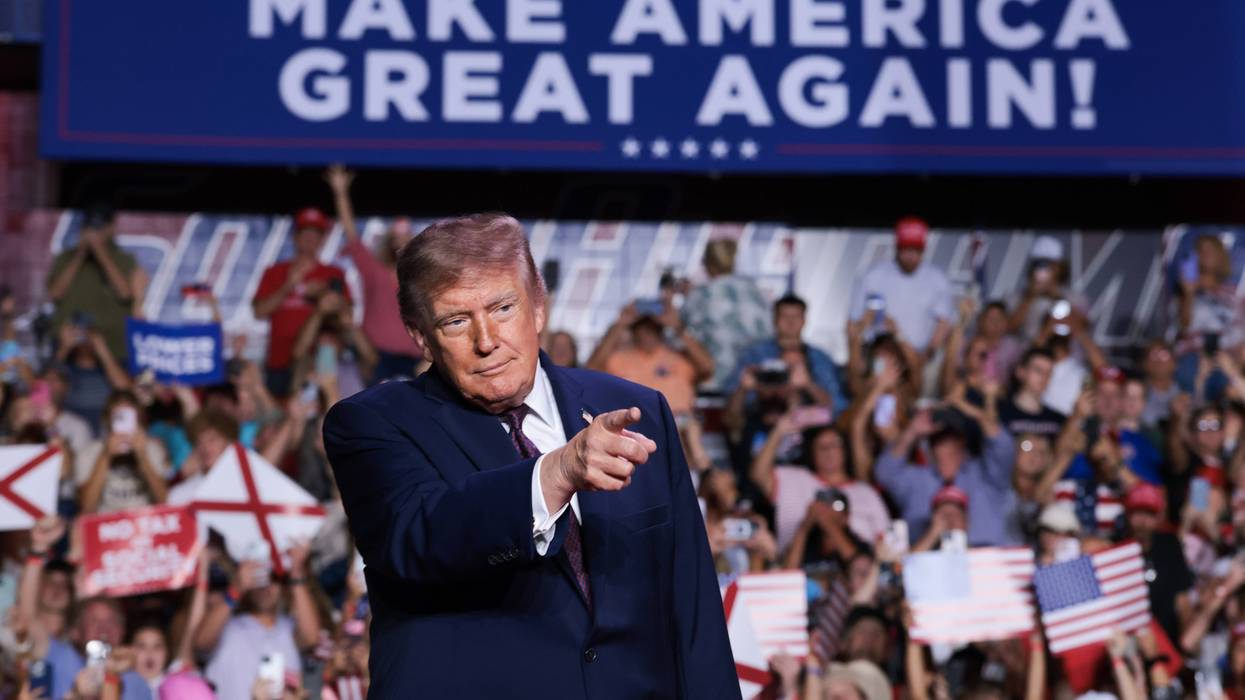
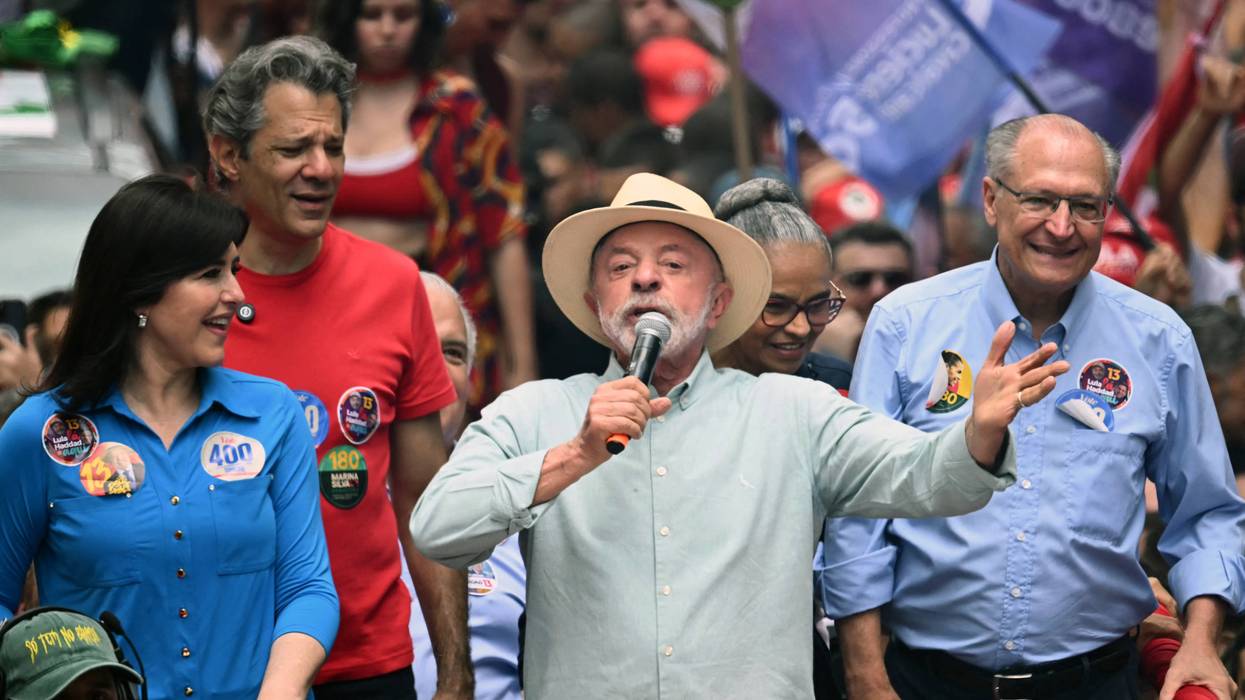
In a petition filed to Brazil's Superior Electoral Court, Lula's campaign said taking such an action just days before Brazilians vote "projects instability over the electoral environment," something it said was part of a larger "infrastructure of external intervention in the Brazilian electoral process.”
In recent days, Brazil's intelligence agency said it confirmed the existence of interference by the US in Brazil's election to support Sen. Flavio Bolsonaro, the son of former far-right President Jair Bolsonaro—who is currently serving a 27-year prison sentence under house arrest for orchestrating a coup attempt in 2022.
"Although Trump has not formally endorsed him, Bolsonaro is undoubtedly Washington’s preferred candidate," explained Nick Cleveland-Stout, a research associate at the Quincy Institute for Responsible Statecraft, on Friday. "Often at the request of the Bolsonaro family, the US has engaged in a pressure campaign to weaken the Lula government, sparking fears of further interference."
Trump responded with hostility to the prosecution of the disgraced ex-president—imposing tariffs of up to 50% on Brazilian imports in retaliation, sanctioning the Supreme Court justice overseeing the case, and threatening to use American "military might" against Brazil.
He's also designated two Brazilian crime groups as "narcoterrorist" organizations, invoking a similar pretext Trump used to justify his invasion of Venezuela to kidnap its leader Nicolás Maduro in January.
As the election has approached, Trump has appeared to put his thumb on the scale in an effort to stop Lula from achieving what would be an unprecedented fourth term.
In July, the US consulate in São Paulo invited right-wing pro-Bolsonaro social media influencers to a closed-door roundtable meeting to discuss “freedom of expression and the digital environment.”
The Guardian reported on Thursday that the State Department was also diverting $1 million from its human rights fund to oppose "judicial overreach and censorship" by Brazil’s Supreme Court, an apparent reference to the court's actions against Bolsonaro and his allies.
The Brazilian government has denied visas to two State Department officials whom it said were seeking to discuss "election integrity," which it perceived as an effort to “undermine the electoral system.”
Trump and his allies have previously spread baseless conspiracy theories to cast doubt upon Lula's victory in 2022, which helped to fuel the failed coup. They've done the same with the victories of other left-wing candidates in Latin American elections—including Bolivia's Evo Morales in 2019 and Guatemala's Bernardo Arévalo in 2023.
Lula's campaign said the sudden US suspension of consular services was "yet another extremely serious development in the interference in Brazilian elections by the US government," alleging that it was "coordinated, by all indications, directly by the brothers Flávio and Eduardo Bolsonaro.”
The filing noted that even “the legislative branch of the foreign state itself… recognizes the pattern of external pressure." It pointed to a letter sent earlier this week by Democratic US Sens. Jeanne Shaheen (NH), Peter Welch (Vt.), and Tim Kaine (Va.) to Secretary of State Marco Rubio, which said that "the administration’s most recent actions point toward an effort to interfere with, and potentially undermine, Brazil’s general election in October."
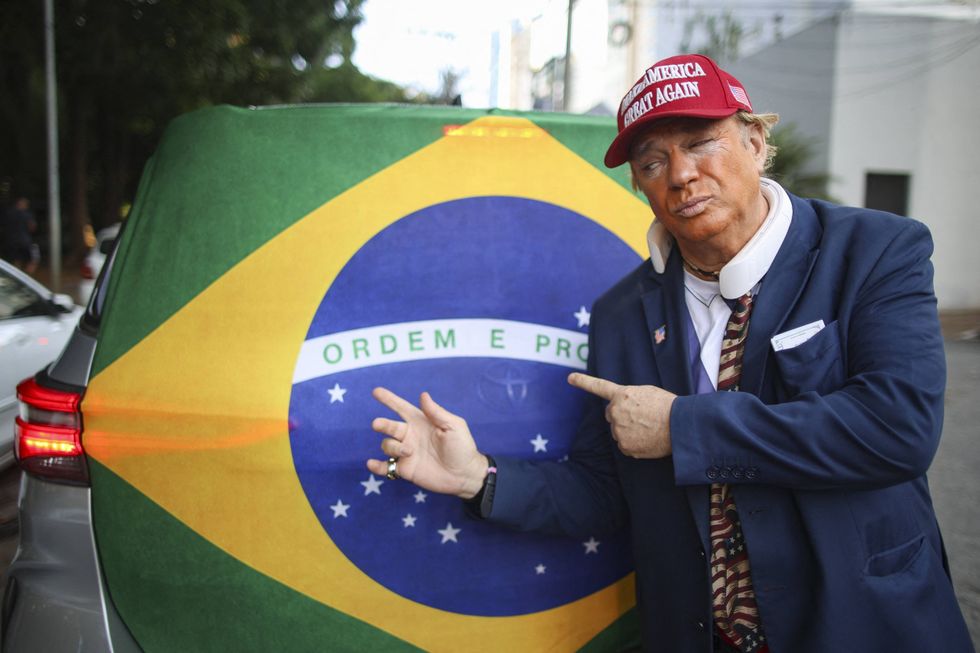 A man wearing a mask depicting US President Donald Trump attends a rally of Brazilian right-wing presidential candidate Flavio Bolsonaro in Goiania, Brazil, on September 27, 2026. (Photo by Sergio Lima/AFP via Getty Images)
The first round of Brazil's election will begin on Sunday. Should neither candidate receive 50% of the vote, a runoff between the top two candidates will be held on October 25. Several major polls show Lula with a narrow first-round lead entering Sunday, although others have the race effectively tied or Bolsonaro slightly ahead.
But Lula has also seized upon Trump's meddling to portray Bolsonaro as a tool of foreign powers, drawing on a history of US-backed coups and election interference that have undermined Brazilian democracy.
“Flávio Bolsonaro is Trump’s candidate and what Trump wants is to colonize Brazil, take our riches, steal our future and leave us in the dust," said a campaign ad that began airing last week.
The Trump administration, for its part, has continued to double down on public overtures toward imperialist ambition. On Thursday, an official US State Department social media account reposted a video created in August glorifying the 19th-century Monroe Doctrine and declaring that "American dominance in the Western Hemisphere will never be questioned again."
Dov H. Levin, a political scientist at the University of Hong Kong who recently published research on the effects of foreign election interference, told the Brazilian newspaper Folha de S. Paulo that, if too overt, Trump's intervention could backfire.
"There are cases of failure," he said, "and cases where the reaction provoked by the intervention harms precisely the side it intended to help."