SUBSCRIBE TO OUR FREE NEWSLETTER
Daily news & progressive opinion—funded by the people, not the corporations—delivered straight to your inbox.
5
#000000
#FFFFFF
To donate by check, phone, or other method, see our More Ways to Give page.


Daily news & progressive opinion—funded by the people, not the corporations—delivered straight to your inbox.

Erin Fitzgerald, efitzgerald@earthjustice.org
Brian Willis, Brian.Willis@sierraclub.org
Anne Hawke, ahawke@nrdc.org
Stuart Ross, sross@catf.us
Angela Gonzales, agonzales@npca.org
Lisa Caruso, lcaruso@cbf.org
Today, fourteen health and environmental groups, half of them represented by Earthjustice, challenged ozone standards in a lawsuit in a federal appeals court. The move comes in response to the Environmental Protection Agency (EPA) and Trump administration's last-minute refusal to strengthen the National Ambient Air Quality Standards, or NAAQS, for ozone, and less than a month after Earthjustice sued the EPA over a similar rule affecting particulate matter.
EPA issued the flawed rule in late December, leaving 2015 standards in place. Those standards were set at a level that allowed pollution in our cities that scientific studies show harms vulnerable populations and children's health. Since 2015, additional scientific evidence confirms that ground level ozone at levels allowed by EPA is harmful to human health. Last month, Washington, DC's circuit court struck down rules that relaxed EPA's implementation of ozone standards and closed important loopholes, ensuring that states will have to take necessary steps to bring polluted areas into compliance with ozone standards.
"The Trump administration corrupted and rushed the scientific review process of this rule as it walked out the door, just so industrial polluters can sit and do nothing for the harm they cause," said Seth Johnson, lead Earthjustice attorney on the case. "These outdated ozone standards must be corrected not just for children's safety and public health, but also because they are critical to addressing the climate crisis."
While ozone is good as a protective layer in the stratosphere, ground-level ozone causes asthma attacks and other respiratory problems. It is linked to premature deaths, damages plants and forests, and stunts tree and crop growth. Formed by emissions from cars, trucks, and factories, ozone is also a greenhouse gas, and curtailing it is a powerful way to help solve the climate crisis.
"The most recent science shows that ozone standards are simply not strong enough to protect the lungs of our neighborhoods, or the crops and forests we depend on," the coalition of groups challenging the rule said. "As we fight in court for long overdue safeguards, we call on the Biden administration to listen to the science and take action."
According to a recent report by the American Lung Association, more than 134 million people live in counties that have dangerous levels of ozone -- many of which are disproportionately low income communities and communities of color.
Earthjustice represents the American Academy of Pediatrics, American Lung Association, American Public Health Association, Appalachian Mountain Club, National Parks Conservation Association, Natural Resources Defense Council, and Sierra Club. The Clean Air Task Force represents the Clean Air Council, Conservation Law Foundation, and Natural Resources Council of Maine. The Chesapeake Bay Foundation, Environment America, Environmental Defense Fund, and Environmental Law & Policy Center have also signed on to the challenge. The suit was filed in the U.S. Court of Appeals for the District of Columbia Circuit.
Quotes from our clients and partners:
Georgia Murray, Staff Scientist for the Appalachian Mountain Club (AMC):
"The delays in protection of our health, ecosystems, and climate by this inaction are unacceptable. Tropospheric ozone continues to pollute outdoor spaces which should instead be healthy for all. The science clearly shows that a stronger limit is needed to protect public health and also support separate standards to protect plants and the environment. The negative impacts of ozone to plants and ecosystems include a litany of insults including visible foliar injury, productivity declines, biomass loss, altered nutrient and water cycling, changes in community structure, and disruption of plant-insect interactions. We need stronger science-based standards to address ozone's impacts on the air we breathe and natural ecosystems that cherish."
Stephanie Kodish, Clean Air Program Director for the National Parks Conservation Association (NPCA):
"Despite the overwhelming evidence that keeping the current, insufficient ozone standards in place will result in continued harm to the health of our communities and national parks, the Trump Administration chose to disregard the science and turn its back on our most vulnerable populations and the environment. People visit national parks thinking the air is clean, but ground level ozone contributes to poor air quality, affecting parks across the country from Cape Cod National Seashore in Massachusetts, to Yosemite in California. Ozone is a potent greenhouse gas contributing to climate harms in Arctic landscapes and ecosystems in Denali. It also damages park plants like the Quaking Aspen tree at Rocky Mountain, reduces crop yield and limits tree growth. The EPA must revise ozone standards to follow the science and protect the health of our people and environment; otherwise, the consequences could be dire."
Vijay Limaye, climate and health scientist, NRDC (Natural Resources Defense Council):
"For nearly half a century, the Clean Air Act has helped protect the country from the health consequences of dirty air. That protection is critical for all of us, but especially children, older people, communities of color and low income communities who are disproportionately burdened by higher levels of pollution in the air. This case challenges the Trump Administration's abdication of its responsibility under that law to protect people by following the science. The science clearly calls for more protective ozone standards."
Al Armendariz, Senior Director of Federal Campaigns, Sierra Club:
"Watching a child have an asthma attack is one of the most heart wrenching experiences that any parent can have, but it happens all too often in our country due to lax clean air safeguards like the ones the Trump administration left unchanged on its way out the door. Our lawsuit isn't some partisan exercise to spike the football: it's about the child who feels their chest tighten when they are outside in the summer and the worried look their parents get when they hear them start wheezing. No child and no parent should have to experience this in the United States, and it's the EPA's job to honestly and forthrightly put in place standards to protect families from this. Our lawsuit is about making sure EPA lives up to those expectations, because every family deserves clean air and peace of mind."
Ann Weeks, Legal Director, Clean Air Task Force:
"The Trump EPA sidelined the science and ignored mounting evidence that serious health harms occur due to ozone exposures at levels below the current national standards. We urge the Biden administration to prioritize setting a standard based in science that recognizes these harms. Stronger ozone standards are needed to better protect public health and to reduce damage to the environment. Implementing stronger standards will also reduce climate pollution. In short, stronger ozone standards are needed to help to achieve the administration's climate and environmental justice goals."
Ariel Solaski, Staff Litigation Attorney, Chesapeake Bay Foundation:
"The Trump EPA's refusal to strengthen ozone standards not only endangers people's health, it undermines the Chesapeake Bay cleanup effort. Federal ozone controls are essential to reduce emissions of nitrogen oxides, an ozone precursor. Airborne nitrogen causes roughly one-third of nitrogen pollution fouling the Bay and its waterways. Ozone damages trees and plants critical to improving water quality. The Chesapeake Bay Foundation will fight for science-based standards that fulfill EPA's responsibility to restore and protect the Bay, as well as the health of the watershed's most vulnerable residents."
Rachel Fullmer, Senior Attorney, Environmental Defense Fund:
"The EPA is legally required to ensure that our national standards are set at a level that protects public health - including a margin of safety for particularly impacted groups. Tens of millions of Americans already live in an area with unhealthy levels of ground-level ozone pollution, and the Trump EPA's rushed decision to maintain the current standard particularly harms those who are more susceptible to air pollution, including children, the elderly, anyone working outdoors, and people with asthma or other heart and lung diseases. This action has significant environmental justice impacts and disproportionately harms Black communities and low-income communities where there are higher rates of childhood asthma and other chronic diseases."
Ann Jaworski, Staff Attorney, Environmental Law & Policy Center:
"When the Trump EPA found that the 2015 ozone standard was still adequate to protect human health and the environment, it ignored the Clean Air Act's requirement to use the best available science. We hope that the court will reverse this decision and that the Biden administration will respect the science and enact tougher standards so that people living in the U.S. are assured cleaner, safer air to breathe."
Morgan Folger, Destination: Zero Carbon Campaign Director, Environment America:
"No one should experience one day of polluted air--let alone months. Ozone pollution is getting worse and the current pollution standards are not doing enough to prevent people from getting sick. Tens of thousands of people have their lives cut short annually from adverse health impacts linked to air pollution. This legal challenge is just part of a necessary overall effort to ensure we strengthen air quality protections in order to save lives."

Earthjustice is a non-profit public interest law firm dedicated to protecting the magnificent places, natural resources, and wildlife of this earth, and to defending the right of all people to a healthy environment. We bring about far-reaching change by enforcing and strengthening environmental laws on behalf of hundreds of organizations, coalitions and communities.
800-584-6460DNC Chairman Ken Martin accused Trump of trying to "bully and cheat his way through a midterm election that he knows Republicans will lose."
The Democratic National Committee is suing the Trump administration and alleging that it is threatening the integrity of the 2026 midterm elections.
In a lawsuit filed on Tuesday in the US District Court for the District of Columbia, the DNC revealed that the Trump administration hasn't complied with any of the 11 Freedom of Information Act (FOIA) requests the Democratic committee made last year regarding any plans for the "potential deployment of federal agents and troops to polling places, drop boxes, and election offices."
The complaint argued that these FOIA requests were necessary given the "repeat threats to free and fair elections from President Trump and his administration," and accused the administration of violating the law by refusing to fulfill them.
The lawsuit also provided extensive documentation of President Donald Trump and other administration officials making threats and taking actions to potentially disrupt voting in the 2026 elections, including Trump in January saying he regretted not ordering the National Guard to seize voting machines in the wake of the 2020 presidential election; White House Press Secretary Karoline Leavitt subsequently saying that the administration "can't guarantee" federal law enforcement won't be deployed to polling places; and the FBI seizure of 2020 election ballots in Fulton County, Georgia.
The DNC said the court must now enforce FOIA requirements "to ensure that the American people obtain timely knowledge of potential threats to free and fair elections and to enable the DNC to take appropriate action to ensure voting rights are protected."
DNC Chairman Ken Martin accused Trump of trying to "bully and cheat his way through a midterm election that he knows Republicans will lose," then added that "we won’t let him."
"The DNC will stand on the side of voters," continued Martin, "and use every tool in our arsenal to stop voter suppression and intimidation before it can even begin."
The DNC lawsuit follows reporting from Politico in February revealing that Democratic state attorneys general have been conducting "war games" aimed at combating Trump administration moves to tamper with the 2026 elections.
Among the many possibilities that the AGs are preparing for are that the Trump administration orders the seizure of ballots and voting machines, defunds the post office to block the delivery of mail-in ballots, and sends federal immigration enforcement officials or even the US military to patrol polling places.
"Americans can't afford their groceries, they can't afford their medicine, they can't afford the cost of living, and yet we're dropping a billion dollars of bombs, it seems, every day in Iran," said one Senate Democrat.
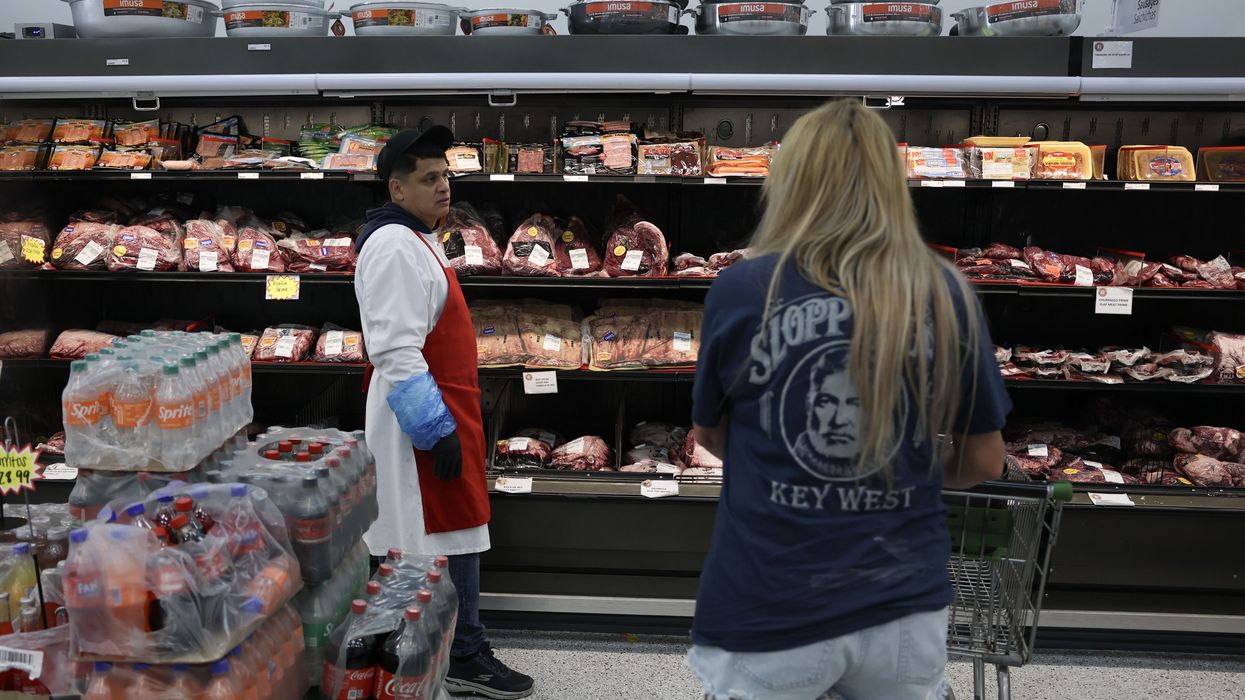
The Trump administration is quietly pursuing a regulatory change that would strip federal nutrition assistance from an estimated 6 million low-income Americans—including nearly two million children—as it spends billions on an illegal, open-ended war on Iran that has killed more than a thousand people and plunged the global economy into chaos.
The change sought by the US Department of Agriculture would curb broad-based categorical eligibility in the Supplemental Nutrition Assistance Program (SNAP). Broad-based categorical eligibility allows states to automatically qualify residents for SNAP if they are already enrolled in other aid programs, such as Temporary Assistance for Needy Families, thus reducing administrative hurdles and costs.
The Center on Budget and Policy Priorities (CBPP) estimated in a blog post published late last month—the day before President Donald Trump announced the joint US-Israeli assault on Iran—that gutting broad-based categorical eligibility would likely strip modest federal food aid from around 6 million people, including nearly 2 million children.
"The people losing access to food assistance from SNAP, school meals, and [the Women, Infants, and Children Program] would mainly be working families, older adults, and people with disabilities," the think tank noted. "In other words, the change would primarily harm groups that federal and state policymakers from across the political spectrum have long sought to help: people who work but are living near poverty; older adults and people with disabilities with low, fixed incomes; and people trying to build modest savings in order to become more economically independent."
The Congressional Budget Office has projected that restricting broad-based categorical eligibility would result in roughly $11 billion in savings over a 10-year period—or just over $1 billion a year.
The Trump administration is currently spending around $1 billion per day in US taxpayer money waging war on Iran—a price tag that would be enough to cover the daily costs of SNAP benefits for the more than 40 million Americans on the program.
Over just the first two days of the military onslaught, the Pentagon "burned through $5.6 billion worth of munitions," according to figures reported late Monday by the Washington Post.
"Americans can't afford their groceries, they can't afford their medicine, they can't afford the cost of living, and yet we're dropping a billion dollars of bombs, it seems, every day in Iran," US Sen. Adam Schiff (D-Calif.) said in a CNN appearance on Monday.
During Trump's first White House term, his administration proposed a rule that would have curtailed states' option to use broad-based categorical eligibility for SNAP, but the rule was never finalized and the Biden administration later rescinded it.
The Trump Agriculture Department revived the effort late last year, submitting a rule purportedly aimed at ensuring that "categorical eligibility is extended only to households that have sufficiently demonstrated eligibility."
"The end result," CBPP's Katie Bergh recently warned, "will be more hunger and hardship."
The Trump administration's new push comes months after the president signed into law the largest SNAP cuts in US history—around $187 billion over the next decade.
Trump bragged about the cuts during his State of the Union address last month, declaring that his administration has "lifted 2.4 million Americans" off SNAP—a euphemistic description of kicking people off the critical anti-poverty program.
Last week, Republicans on the House Agriculture Committee advanced a farm bill that would do nothing to mitigate the reverberating impacts of the Trump-GOP SNAP cuts.
"Instead of prioritizing the health and well-being of tens of millions of Americans, the committee failed to reverse course and continued down a path that will strip food from the tables of children, veterans, caregivers, older adults, and people experiencing homelessness," said Crystal FitzSimons, president of the Food Research & Action Center.
"Without this decision, countless immigrants with valid claims would have been hurriedly deported to dangerous conditions, forsaking due process for efficiency," said an immigrant rights advocate who sued the federal government.
Immigrant rights advocates on Monday hailed a federal judge's ruling that blocked significant portions of President Donald Trump's proposed policy changes regarding the Board of Immigration Appeals, which had been scheduled to go into effect this week and would have "eviscerated noncitizens’ right to appeal decisions in their immigration cases," according to rights groups.
In the US District Court for the District of Columbia, Judge Randolph Moss issued a late-night order on Sunday calling Trump's rule titled “Appellate Procedures for the Board of Immigration Appeals,” which was proposed last month, “a fast-track mechanism for disposing of the vast majority” of immigration court appeals.
The proposed rule would have reduced the time immigrants have to file appeals from 30 days to just 10 days; required summary dismissal of appeals unless a majority of the Board of Immigration Appeals' (BIA) 15 permanent members voted to accept the case for review within 10 days; and permitted case dismissals before records were transmitted to the board.
Moss said the administration had violated the legal requirement for the government to notify the public of its proposed changes to a federal rule and provide an opportunity for public comment. The Trump administration could potentially try again to change the immigration appeals process.
Laura St. John, legal director for the Florence Immigrant and Refugee Rights Project, said the ruling "keeps in place a basic, yet critical, protection for immigrants facing removal: the ability to appeal their case."
"Allowing the Trump administration’s reckless proposal to block immigrants from a fair opportunity for review of bad decisions would have resulted in people being returned to danger and families unjustly separated, all to serve a racist mass deportation agenda."
"As the administration continues to try to deport as many people as they can quickly and often without a fair day in court, it is critical for everyone to have the opportunity to file an appeal," said St. John. "Without this decision, countless immigrants with valid claims would have been hurriedly deported to dangerous conditions, forsaking due process for efficiency.”
The Florence Immigrant and Refugee Rights Project is one of several groups that sued the administration over the proposed rule, with Democracy Forward, the American Immigration Council, and the National Immigrant Justice Center representing the plaintiffs.
St. John argued in court that it can take at least a week for advocacy groups to prepare materials and file an appeal to the BIA after it has determined a noncitizen can be deported. Forcing immigrants and their legal teams to file an appeal within 10 days would leave many without any "meaningful review" of their cases, St. John said.
While the Executive Office for Immigration Review claimed the new policy would swiftly reduce the backlog of cases before the BIA, Moss wrote in his opinion, the plaintiffs argued that the provisions would "operate in combination to deprive almost all affected parties of the administrative appellate review 'that they were previously entitled to.'"
Erez Reuveni, senior counsel at Democracy Forward, said the decision "makes it clear that the Trump-Vance administration cannot play games with the immigration appeals system to eliminate basic due process and fast-track deportations."
Reuveni is a former Department of Justice lawyer who revealed in a whistleblower complaint last year that DOJ staffers had been advised by the Trump administration to ignore court orders in order to swiftly carry out Trump's mass deportation agenda.
“Once again, no matter how hard this administration tries to hide its cruel and unlawful actions behind an ‘immigration policy,’ a federal court has made clear that the government must follow the law and cannot strip people of their basic rights," he said. "We will continue representing our plaintiffs in court to defend their rights and hold this administration accountable.”
The Department of Homeland Security has not regularly disclosed the number of people it is deporting under the Trump administration; internal Immigration and Customs Enforcement data showed last year that more than 10,000 people were being deported per month.
Moss' ruling came less than a month after US District Judge Sunshine Sykes in the Central District of California threw out a BIA decision that endorsed the administration's policy of denying bond hearings to immigrants with no criminal records who have been detained. A federal appeals court issued a temporary pause on that ruling last Friday after the White House appealed.
Mary Georgevich, a senior litigation attorney at the National Immigrant Justice Center, said Moss' ruling was "an important win in the face of an administration that is intent on dismantling our immigration system at any cost, including betraying our country’s shared values of the importance of due process and access to counsel."
"Allowing the Trump administration’s reckless proposal to block immigrants from a fair opportunity for review of bad decisions would have resulted in people being returned to danger and families unjustly separated," she said, "all to serve a racist mass deportation agenda."