October, 23 2012, 11:51am EDT
For Immediate Release
Contact:
ASA Chief Counsel Joe Elford 415-573-7842 or ASA Media Liaison Kris Hermes 510-681-6361
Medical Marijuana Advocates File Brief with D.C. Circuit Alleging Federal Policy Harmful to Patients
Appeals court issued rare order last week for supplemental briefing on "standing" in landmark federal case
WASHINGTON
Less than a week after oral arguments in the landmark federal case to reclassify marijuana for medical use, the plaintiffs filed an additional brief late yesterday at the request of the court. In the case Americans for Safe Access v. Drug Enforcement Administration, the D.C. Circuit issued an order last week seeking details on the harm sustained by plaintiff and disabled U.S. Air Force veteran Michael Krawitz as a result of the federal government's policy on medical marijuana.
The federal appeals court will use this additional briefing to decide whether the plaintiffs have legal "standing" to bring such a lawsuit against the government. The lawsuit argues that the government has acted arbitrarily and capriciously by keeping marijuana classified as a Schedule I substance, a dangerous drug with no medical value. By ignoring the overwhelming scientific evidence, ASA argues that the federal government has kept marijuana out of reach for millions of Americans who would otherwise benefit from its therapeutic value.
"The court's request for clarification is a sign that this case is being taken very seriously," said Joe Elford, Chief Counsel with Americans for Safe Access (ASA) and the attorney who is arguing before the D.C. Circuit. "The experience of plaintiff Michael Krawitz being denied treatment by the Department of Veterans Affairs is real and emblematic of many other patients caught up in the federal government's harmful policy on medical marijuana." According to Krawitz, his denial of Veterans Affairs (VA) treatment has forced him to "expend significant economic and other resources to be treated by an Oregon physician outside the VA system, which I pay for on my own."
The brief filed yesterday by ASA argues that, "The injuries suffered by Krawitz are caused by marijuana's placement in Schedule I and would be redressed by a favorable decision in this case." Specifically, the brief states that Krawitz was "denied prescription pain medication for a time and compelled to this day to seek pain treatment outside the VA system because he refused to sign a VA pain contract that would require him to abstain from the use of medical marijuana."
Legal "standing" is where the courts consider the harm endured by the plaintiffs. If standing is satisfied, the court can then rule on the merits of a case. The previous legal challenge to the classification of marijuana was rejected by the D.C. Circuit in 2002 because of inadequate standing, however no actual medical marijuana patients were part of that case. Not only are there several patient plaintiffs in the current legal challenge, but ASA is also alleging harm by having to counter political rhetoric with scientific information.
The case Americans for Safe Access v. Drug Enforcement Administration is the result of a petition to reclassify marijuana that was filed in 2002 by the Coalition for Rescheduling Cannabis, but denied last year by the federal government. In January, ASA appealed the denial of the petition and got the chance last week to argue marijuana's medical efficacy before the D.C. Circuit. This is the first time in nearly 20 years that the court is hearing arguments on the scientific evidence of medical marijuana.
"What's at stake in this case is nothing less than our country's scientific integrity and the imminent needs of millions of patients," continued Elford. Nevertheless, it could take weeks or even months before the D.C. Circuit renders a decision in the case.
Further information:
ASA's supplemental brief filed yesterday: https://AmericansForSafeAccess.org/downloads/ASA_v_DEA_Supp_Brief.pdf
Affidavit of Michael Krawitz: https://AmericansForSafeAccess.org/downloads/ASA_v_DEA_Krawitz_Affidavit...
ASA appeal brief: https://AmericansForSafeAccess.org/downloads/CRC_Appeal.pdf
CRC rescheduling petition: https://www.drugscience.org/PDF/Petition_Final_2002.pdf
Americans for Safe Access is the nation's largest organization of patients, medical professionals, scientists and concerned citizens promoting safe and legal access to cannabis for therapeutic use and research.
LATEST NEWS
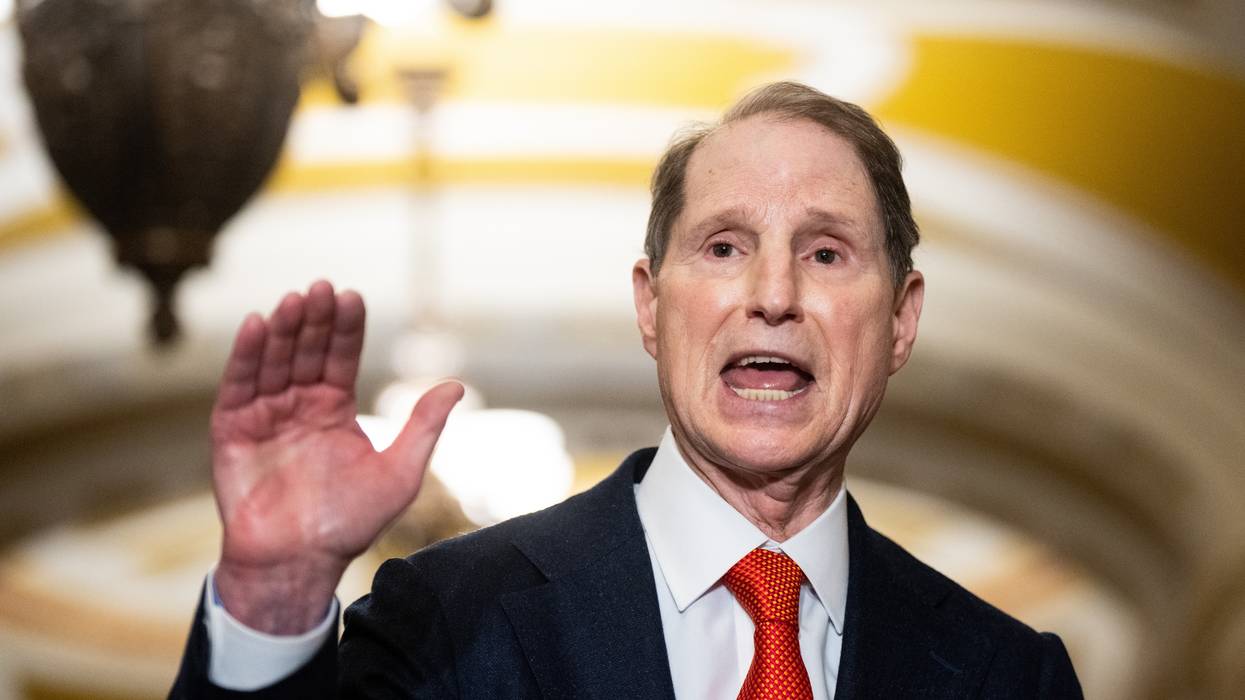
Democratic Lawmakers Demand Probe Into DHS Warrantless Location Tracking
“Location data is extremely sensitive, and can reveal someone’s religion, their political views, medical conditions, addictions, and with whom they spend time."
Mar 03, 2026
Over 70 Democratic US lawmakers on Tuesday demanded a new investigation into warrantless purchases of Americans' location data by Department of Homeland Security agencies—including Immigration and Customs Enforcement—which critics say violate the Fourth Amendment prohibition of unwarranted search and seizure.
In a letter to DHS Inspector General Joseph Cuffari, 72 congressional Democrats led by Sen. Ron Wyden (D-Ore.) and Rep. Adriano Espaillat (D-NY) wrote, "Public contracting documents indicate that Immigration and Customs Enforcement (ICE) recently resumed buying Americans’ location data from a shady data broker" after the agency "ended a previous program to purchase Americans’ cellphone location data in 2023, following an investigation by your office and scrutiny from Congress."
"Location data is extremely sensitive, and can reveal someone’s religion, their political views, medical conditions, addictions, and with whom they spend time," the lawmakers' letter states. "It is for that reason that ordinarily, the government must obtain a warrant from a judge in order to demand such data from phone or technology companies."
While the Fourth Amendment generally prohibits the government from searching or obtaining Americans' private information without a warrant, federal agencies have circumvented the proscription by buying sensitive personal data from private brokers.
"Public reports indicate that ICE has resumed its location data purchases, even though DHS has yet to adopt all of the recommendations from your prior review," the lawmakers noted in their letter.
The letter continues:
ICE issued a no-bid contract to the surveillance company PenLink in 2025, which included licenses for its location tracking product, Webloc, according to press reports. Webloc was developed by the controversial surveillance company Cobwebs Technologies, which was combined with Nebraska-based PenLink as part of a $200 million private equity deal in 2023. Cobwebs gained notoriety when Meta banned the company in 2021, as part of a crackdown on surveillance mercenaries after detecting the company’s customers targeting activists, opposition politicians, and government officials in Hong Kong and Mexico.
ICE is now stonewalling congressional oversight into its purchase of location data. Sen. Wyden’s office requested a briefing from ICE soon after this contract was revealed in the press, in October, which was scheduled in December, for February 10, 2026. One day before that briefing was to take place, ICE canceled it with no explanation and without any offer to reschedule.
"Given DHS’ failure to adopt a policy for the use of commercial data, coupled with ICE awarding a no-bid contract to a shady data broker that is likely violating federal law, we urge you to open another investigation into the purchase," the lawmakers wrote.
The letter asks:
- Whether ICE and other DHS components are purchasing illegally obtained location data about Americans;
- If so, why does DHS not have policies in place to prevent taxpayer dollars from going to contractors that have invaded Americans’ privacy in violation of federal law;
- How ICE and other DHS components have used location data and whether they have used it to investigate Americans for engaging in constitutionally protected activities, including protesting or monitoring ICE operations;
- Whether ICE and other DHS components are auditing employee access to commercial location data to identify likely patterns of abuse; and
- Why has DHS still not adopted a policy for the use of commercial location data, as you recommended in 2023?
As the Electronic Frontier Foundation (EFF) recently explained, ICE has spent $5 million on Webloc and Tangles, another location and social media surveillance product made by PenLink.
According to EFF:
Webloc gathers the locations of millions of phones by gathering data from mobile data brokers and linking it together with other information about users. Tangles is a social media surveillance tool which combines web scraping with access to social media application programming interfaces. These tools are able to build a dossier on anyone who has a public social media account. Tangles is able to link together a person’s posting history, posts, and comments containing keywords, location history, tags, social graph, and photos with those of their friends and family. PenLink then sells this information to law enforcement, allowing law enforcement to avoid the need for a warrant. This means ICE can look up historic and current locations of many people all across the US without ever having to get a warrant.
There have been several attempts to solidify restrictions on government purchase of Americans' personal data in recent years, most notably the Fourth Amendment Is Not for Sale Act (FANFSA), which failed to pass.
Last month, Sens. Dick Durbin (D-Ill.) and Mike Lee (R-Utah) introduced the Security and Freedom Enhancement Act, which would reauthorize Section 702 of the Foreign Intelligence Surveillance Act but is also intended to protect Americans from warrantless spying, including by closing the data broker loophole that lets law enforcement buy their way around the Fourth Amendment.
Also last month, Rep. Shontel Brown (D-Ohio) led 13 Democratic lawmakers who sent a separate letter to Homeland Security Secretary Kristi Noem seeking answers about ICE's use of PenLink surveillance technology "designed to collect and analyze cellphone location data across entire neighborhoods."
"Mass surveillance of entire communities or city blocks raises serious questions about data privacy and potential violations of civil liberties," Brown wrote.
"Americans should be able to trust their government to uphold the Constitution and respect fundamental rights," she added. "Instead, DHS appears to be engaging in broad surveillance practices to monitor entire communities, violating Americans’ fundamental civil rights and civil liberties to punish dissent and advance the president's cruel and unconstitutional mass deportation agenda."
Keep ReadingShow Less
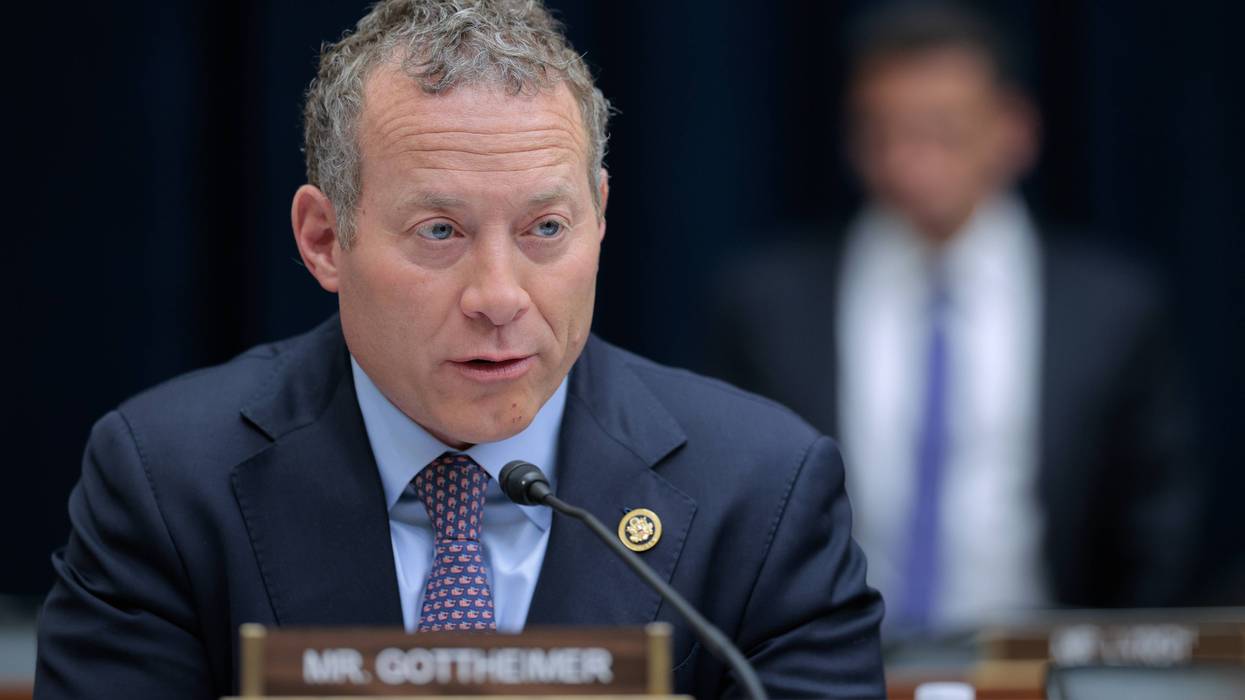
Competing Dem War Powers Resolution Would Give Trump a Monthlong Free Pass in Iran
"The American people are firmly against this war and will see straight through this ruse," said one campaigner.
Mar 03, 2026
As the House of Representatives faces mounting pressure to pass Congressmen Ro Khanna and Thomas Massie's war powers resolution to end the US-Israeli assault on Iran, six right-wing Democrats on Tuesday introduced a competing bill that would give President Donald Trump a green light to keep waging war in the Middle East for the next month.
Khanna (D-Calif.) and Thomas Massie (R-Ky.) have been pushing for their H.Con.Res.38 since shortly before Trump bombed Iranian nuclear facilities last June. Trump and Israeli Prime Minister Benjamin Netanyahu's Saturday attack has ramped up demands for Congress to pass that resolution, along with S.J.Res.59, introduced last year by Sen. Tim Kaine (D-Va.).
Those resolutions, expected to receive votes this week, were already facing uphill battles in both Republican-controlled chambers, and all-but-certain vetoes if they ever made it to Trump, whose administration claims "Operation Epic Fury" is about preventing a nuclear-armed Iran, while critics around the world accuse him and Netanyahu of engaging in an illegal regime change war.
At least six US service members and hundreds of Iranians are now dead. Despite the rising death toll, the Democrats behind the new proposal—Reps. Jim Costa (Calif.), Henry Cuellar (Texas), Jared Golden (Maine), Josh Gottheimer (NJ), Greg Landsman (Ohio), and Jimmy Panetta (Calif.)—made clear that they oppose a swift end to the conflict.
"There is a concern that the Khanna-Massie war powers resolution currently requires the immediate withdrawal of US forces, even while Iran is actively targeting American troops, assets, embassies, and our allies across the region," they said in a statement. "It is vital that we allow for a safe transition, that protects our service members, embassies, and allies, not a potentially precarious withdrawal."
While proposing a 30-day window for ending the conflict—absent an authorization for the use of military force or a formal declaration of war from Congress—the six Democrats also said that "an open-ended commitment by the administration and the recent implication from the secretary of defense that ground troops may be engaged are both unacceptable."
Politico called the new measure "a sign of how some Democrats are struggling to reconcile their opposition to the Trump administration's military action with a desire to appear hawkish on national security—even in a largely symbolic capacity."
The outlet also noted that when asked about the latest proposal during a Tuesday news conference, House Minority Leader Hakeem Jeffries (D-NY) said that "our focus is on the resolution that will be on the floor this week."
"We'll continue to make the strongest possible case," Jeffries added. "There is going to be very strong Democratic support for the war powers resolution across the ideological spectrum."
Cavan Kharrazian, a senior policy adviser at the grassroots group Demand Progress, was far more critical, declaring that "of course Democrats who raced to applaud Trump's illegal war in Iran, and in one case was pardoned by him, would draft a pro-war war powers resolution meant to sabotage the real war powers resolution receiving a vote this week."
"This Trojan horse resolution attempts to give Trump a free pass to continue waging an unauthorized war in Iran for a whole month—exactly the amount of time that Trump has said he expects the war to last," he warned. "The American people are firmly against this war and will see straight through this ruse."
"Representatives need to ignore this bad-faith distraction," Kharrazian argued, "and vote for the bipartisan Khanna-Massie resolution that will actually stop this illegal war and bring our troops home."
Keep ReadingShow Less
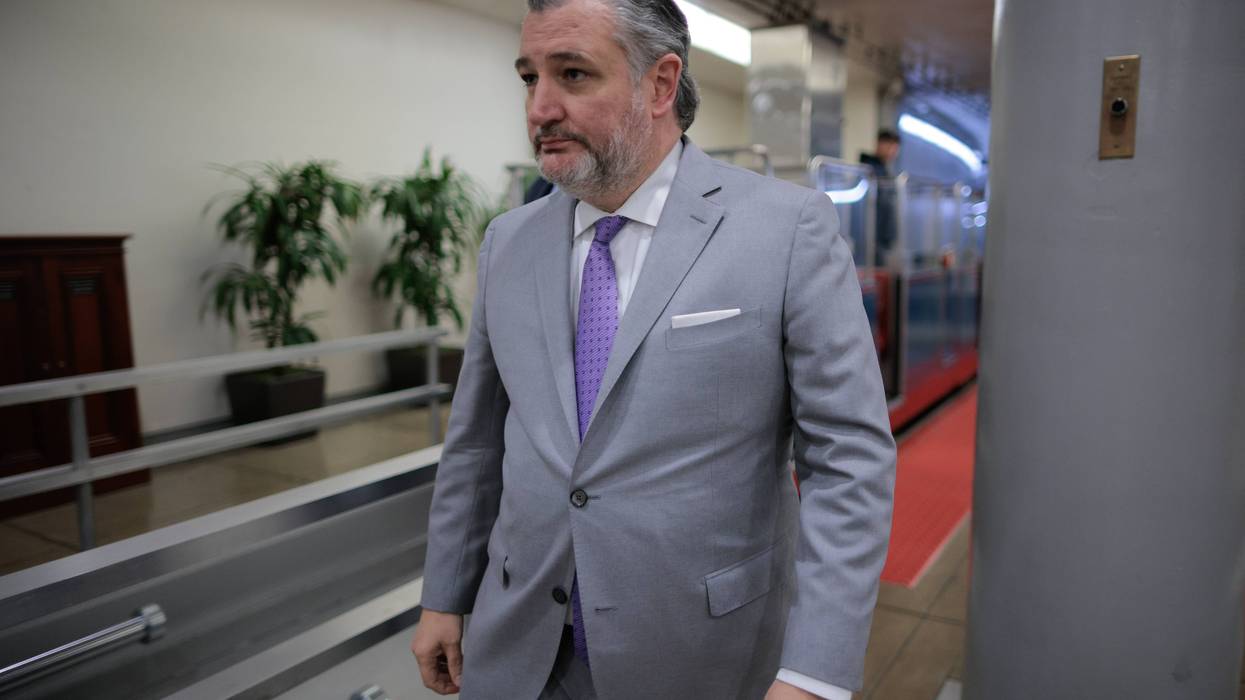
‘These Guys Can’t Help Themselves’: Cruz Pushes $200 Billion Capital Gains Tax Cut Without OK From Congress
Republican senators said they were seeking to end an "unfair inflation tax on everyday Americans." But nearly all the benefits of their proposal would go to the wealthiest 1%.
Mar 03, 2026
Two leading Republicans are pushing for the Trump administration to issue another $200 billion tax cut, primarily to the wealthiest Americans, without congressional approval.
The Washington Post reported Tuesday that Sens. Ted Cruz (R-Texas) and Tim Scott (R-SC) sent a letter to Treasury Secretary Scott Bessent urging him to use executive authority to lower the federal tax on capital gains—the profits from selling stocks, bonds, real estate, and other investments.
The senators have proposed that capital gains taxes should be “indexed for inflation." As the Post explained:
The plan pushed by Cruz and Scott has been sought by conservatives for many years. Under current law, an investor who bought $100 worth of stock in 1990 and sold it today for $300 would currently owe capital gains taxes on the full $200 in profit. But the $100 investment in 1990 would be worth roughly $230 in today’s dollars after accounting for inflation. Under the Cruz-Scott proposal, the investor would only owe taxes on that $70, rather than the full $200.
The senators called on Bessent to "eliminate" this "unfair inflation tax on everyday Americans."
According to Federal Reserve data from 2025, the richest 1% of Americans owned about half of all stocks, while the poorest 50% owned only 1%.
Republicans' so-called One Big Beautiful Bill Act (OBBBA), which enacted massive cuts to social programs like Medicaid and the Supplemental Nutrition Assistance Program (SNAP) last summer, is already estimated to funnel more than $1 trillion to the top 1% of earners over the next 10 years, according to the Institute on Taxation and Economic Policy.
It is unclear whether Bessent would even have the power to change how gains are taxed without an act of Congress, or if Bessent has any interest in doing so. But the vast majority of the benefits from Cruz and Scott's proposal, if enacted, would likely go to the rich as well.
When the Trump administration first considered indexing capital gains taxes to inflation back in 2018, the Penn Wharton Budget Model projected that 63% of the benefits would flow to the richest 0.1%—those making tens of millions per year—while 86% would go to the top 1%.
Those in the bottom 90% of earners would see just over 2% of the overall benefits, with those in the bottom half receiving basically nothing.
According to the Post, the senators view lowering capital gains taxes as part of a GOP bid to "improve its economic approval rating with voters ahead of the 2026 midterm elections," in which the party is expected to take a walloping, according to current polls.
Voters have not responded kindly to previous bills that handed lavish tax breaks to the rich. At the time of its passage, the OBBBA was one of the least popular pieces of legislation in modern history, with several polls showing nearly a 2-to-1 disapproval rating.
But Cruz and Scott are pushing for this policy change despite the public revulsion and the fact that the Department of Justice has previously ruled that the Treasury Department can't make policy without Congress' approval.
"Ted Cruz is asking the Treasury Department to break the law to give another round of tax breaks to the ultrarich," remarked Sen. Ron Wyden (D-Ore.), the ranking member of the Senate Finance Committee. "These guys can't help themselves."
Keep ReadingShow Less
Most Popular